Selecting the right r panel roll former for your mechanical operations can make or break your generation proficiency in 2025. As somebody who has worked broadly in the metal shaping industry, I can tell you that R-panel roll shaping gear speaks to one of the most versatile and beneficial ventures for present-day fabricating offices. The request for R-panels is expected to surge over development, material, and siding applications, making high-quality roll shaping machines basic for competitive advantage. Today's mechanical scene requires gear that conveys steady exactness, negligible downtime, and versatile generation capabilities. The best r panel roll former combines progressed computerization with vigorous development to handle differing fabric details while maintaining up prevalent item quality. Whether you're a building material framework producer looking for upgraded generation capacity or a worldwide building company requiring universally deployable hardware, choosing the right roll shaping arrangement directly impacts your foot line and advertise positioning.
Why R Panel Roll Forming Equipment Matters in Modern Manufacturing?
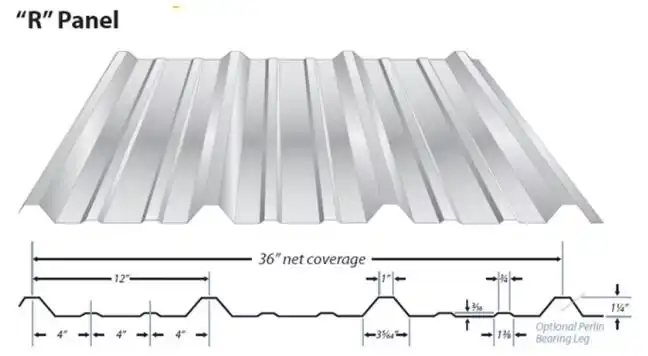
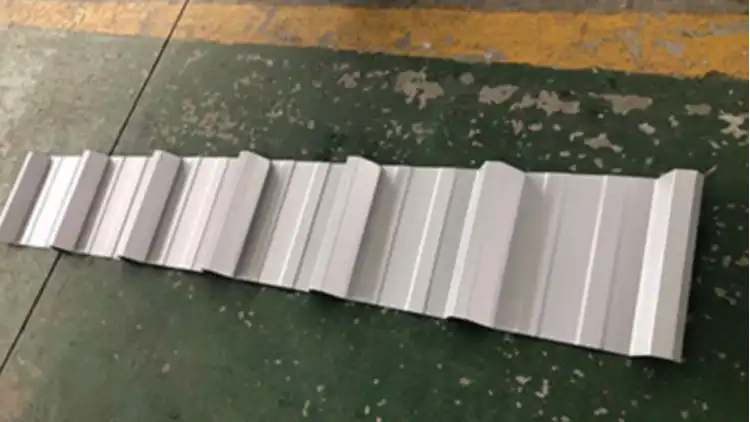
R-panel roll forming innovation has revolutionized how we approach metal building component generation. The particular R-panel profile, characterized by its basic ribs and weather-resistant plan, requires specialized roll shaping gear able to exact metal control. Cutting-edge mechanical offices depend on these machines to deliver reliable, high-quality boards that meet exacting building codes and stylish requirements.
Manufacturing proficiency specifically connects with gear unwavering quality. Roll shaping machines that encounter visit breakdowns or deliver conflicting results can take a toll on companies thousands of dollars in wasted production time. The auxiliary judgment of R-panels depends on exact shaping points, reliable fabric thickness, and appropriate edge wrapping up - all achievable as it were through progressed roll shaping technology.
Market elements have moved toward customization and fast generation cycles. Companies require roll forming gear that can rapidly adjust to distinctive fabric determinations, board widths, and client necessities. The capacity to switch between 24-gauge and 26-gauge materials while keeping up shaping exactness has gotten to be a competitive necessity.
Selection Criteria for Top-Performing Roll Forming Systems
Evaluating r panel roll former equipment requires careful consideration of multiple technical and operational factors. My assessment focuses on five critical criteria that determine long-term performance and return on investment.
Production capacity and speed represent fundamental performance indicators. The best roll forming machines achieve consistent speeds between 50-150 feet per minute while maintaining dimensional accuracy within ±0.010 inches. This capability directly impacts daily production volumes and order fulfillment capacity.
Material handling versatility determines equipment flexibility. Superior roll forming systems accommodate material thickness ranges from 24 to 26 gauge, handle various steel grades, including galvanized and pre-painted materials, and maintain consistent forming quality across different material specifications.
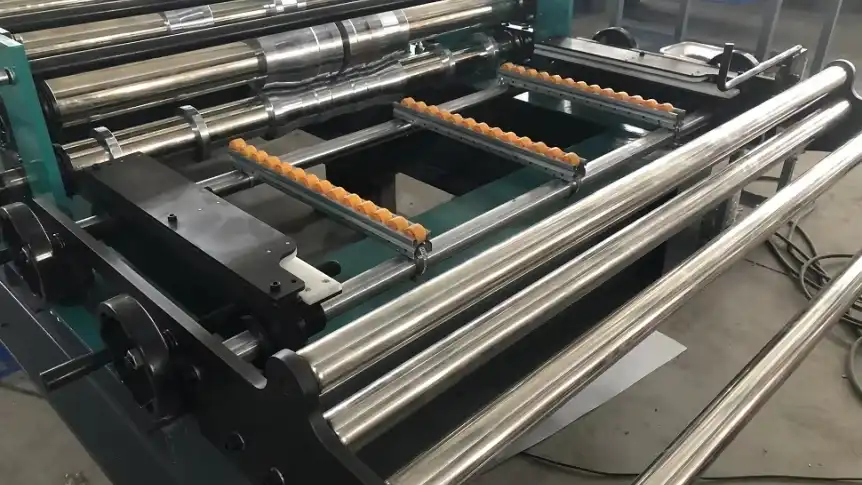
Precision and repeatability ensure product consistency. Advanced roll forming equipment utilizes high-grade steel rollers with chrome plating, solid shaft construction, and precise bearing systems to deliver consistent panel profiles batch after batch.
Automation and control capabilities reduce labor requirements and improve safety. Modern systems integrate programmable logic controllers, automatic cutting systems, and real-time quality monitoring to minimize human intervention while maximizing output quality.
Service support and spare parts availability determine long-term operational success. Equipment from manufacturers with global service networks, comprehensive training programs, and readily available replacement parts minimizes downtime and operational disruption.
Top 5 R Panel Roll Forming Machines for Industrial Applications
ZTRFM Professional R Panel Roll Former
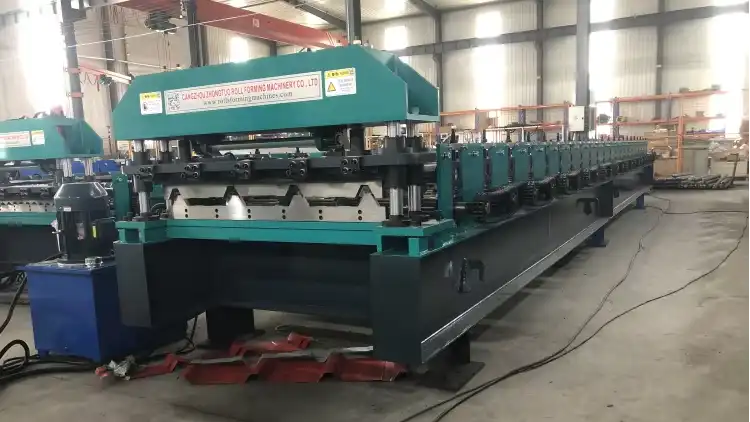
The ZTRFM Professional R Panel Roll Former stands out as our top recommendation for comprehensive industrial applications. This machine incorporates 19 roller stations with 80mm solid shaft construction, ensuring exceptional durability and forming precision. The high-grade 45# forged steel rollers feature hard chrome plating that resists wear and maintains surface quality over extended production runs.
Key advantages include the robust 350mm H-beam structure with 20mm welded steel middle support plates that eliminate vibration and maintain dimensional accuracy during high-speed operation. The gear and double chain transmission system provides reliable power transfer while reducing maintenance requirements. The automatic cutting system utilizes CR12MOV material blades that deliver clean cuts without scratches or deformation.
Production capabilities span 24-26 gauge materials with consistent forming quality at speeds up to 120 feet per minute. The machine's modular design allows for easy maintenance and component replacement. ZTRFM's global service network, covering over 150 countries, ensures rapid technical support and spare parts availability.
This equipment particularly benefits building roofing system manufacturers who require high-volume production with consistent quality. The customizable roller configuration accommodates various R-panel profiles, making it suitable for companies serving diverse market segments. ISO9001 and CE certifications provide quality assurance for international operations.
Industrial Series High-Speed R Panel Former
The Industrial Series High-Speed R Panel Former targets large-scale manufacturing facilities requiring maximum throughput. This equipment achieves production speeds up to 150 feet per minute while maintaining precise profile dimensions. The 22-station roller configuration provides superior material control and eliminates spring-back issues common with lighter-duty equipment.
Advanced features include servo-controlled cutting systems with programmable length settings, hydraulic decoiling with tension control, and integrated quality monitoring sensors. The machine's heavy-duty construction utilizes a 400mm H-beam framework with reinforced mounting points for extended operational life.
Automation capabilities include programmable recipe storage for different panel configurations, automatic material threading, and remote monitoring capabilities. The touch-screen control interface simplifies operation while providing comprehensive production data logging.
This equipment excels in high-volume production environments where consistency and speed are paramount. The robust construction handles continuous operation schedules while maintaining tight tolerances. Predictive maintenance features minimize unplanned downtime through early warning systems.
Compact Pro R Panel Roll Forming Line
The Compact Pro R Panel Roll Forming Line addresses space-constrained facilities without compromising production capability. Despite its reduced footprint, this machine delivers professional-grade forming quality through innovative engineering design. The 16-station roller system optimizes forming progression while minimizing equipment length.
Distinctive features include quick-change roller systems that reduce changeover time between different panel profiles. The integrated material handling system accommodates coil weights up to 10 tons with automatic feeding control. Energy-efficient servo motors reduce operating costs while providing precise speed control.
The machine's modular construction allows for future expansion as production requirements grow. Standard features include programmable cutting length, automatic stacking systems, and comprehensive safety interlocks. The user-friendly control system requires minimal operator training.
Small to medium manufacturers benefit from this equipment's balanced capability and investment requirements. The machine's reliability and ease of maintenance make it suitable for companies with limited technical support staff. Flexible financing options make advanced roll forming technology accessible to growing businesses.
Heavy-Duty Commercial R Panel System
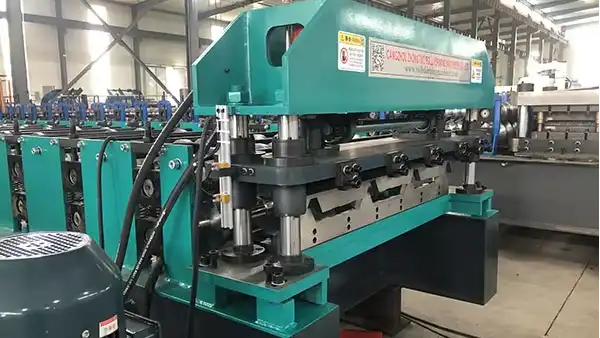
The Heavy-Duty Commercial R Panel System targets demanding industrial applications requiring maximum durability and precision. This equipment features oversized roller bearings, reinforced drive components, and enhanced structural support for continuous heavy-duty operation. The 24-station roller configuration ensures optimal material flow and superior profile accuracy.
Advanced engineering includes independent roller adjustment systems that accommodate material thickness variations without production interruption. The dual-drive system provides redundant power delivery for critical production environments. Integrated quality control systems monitor panel dimensions in real-time.
Specialized features include automatic lubrication systems, predictive maintenance monitoring, and remote diagnostic capabilities. The equipment's modular design facilitates easy maintenance and component replacement. Comprehensive documentation and training programs ensure efficient operation.
This system suits large-scale manufacturers with demanding production schedules and quality requirements. The equipment's reliability and performance consistency make it ideal for companies with multi-shift operations. Extended warranty coverage provides additional operational security.
Versatile Multi-Profile Roll Former
The Versatile Multi-Profile Roll Former provides unmatched flexibility for manufacturers producing various panel configurations. Quick-change roller systems enable rapid transitions between R-panel, corrugated, and other profiles without extensive setup time. This capability maximizes equipment utilization and production flexibility.
Innovation includes adaptive control systems that automatically adjust forming parameters based on material specifications and profile requirements. The machine's intelligent controls optimize production speed while maintaining quality standards. Comprehensive data logging provides production analytics and quality traceability.
The equipment incorporates advanced safety features, including light curtains, emergency stops, and automatic shutdown systems. Ergonomic design elements reduce operator fatigue and improve workplace safety. Energy-efficient components minimize operational costs.
Custom manufacturers and job shops benefit from this equipment's versatility and rapid changeover capabilities. The ability to produce multiple profiles with a single machine reduces capital investment while increasing market opportunities. Comprehensive technical support ensures optimal performance across all applications.
Global Market Analysis and Regional Considerations
The global r panel roll former market reflects diverse regional requirements and regulatory environments. Understanding these variations helps manufacturers select equipment that meets local standards while maintaining international competitiveness.
North American markets emphasize high-speed production and automated systems due to labor costs and productivity requirements. Equipment must meet stringent safety standards and environmental regulations. The preference for standardized panel profiles simplifies equipment selection but demands consistent quality.
European markets prioritize energy efficiency and environmental sustainability. Roll forming equipment must demonstrate reduced power consumption and recyclable construction materials. CE certification requirements ensure equipment meets European safety and performance standards.
Asian markets focus on cost-effectiveness and production flexibility. Equipment must accommodate diverse material specifications and rapid market changes. Local service support becomes crucial due to extensive geographical coverage requirements.
Emerging markets require robust, low-maintenance equipment with comprehensive training and support programs. Equipment durability and service accessibility often outweigh advanced automation features. Flexible financing options facilitate technology adoption.
International engineering and EPC companies require standardized equipment deployable across multiple global locations. Consistent performance specifications and universal service support become critical selection factors.
Purchasing Recommendations and Key Considerations
Successful r panel roll former acquisition requires a comprehensive evaluation of current needs and future growth projections. Companies should assess production volume requirements, material specifications, and quality standards before equipment selection.
Budget considerations must include initial equipment cost, installation expenses, operator training, and ongoing maintenance requirements. Total cost of ownership calculations should span 5-10 years to accurately compare options. Financing alternatives may influence equipment selection and implementation timing.
Supplier evaluation should emphasize technical expertise, service capability, and long-term support commitment. Companies with global operations require suppliers with international service networks and standardized support procedures. Local service availability can significantly impact operational efficiency.
Equipment specifications must align with current material suppliers and customer requirements. Flexibility to accommodate future market changes provides additional value. Standardized components and common spare parts reduce long-term operational costs.
Installation planning should include facility preparation, utility requirements, and production transition strategies. Comprehensive operator training ensures optimal equipment performance and safety compliance. Ongoing technical support relationships maintain long-term productivity.
Industry Trends and Future Outlook
The roll forming industry is advancing toward expanded robotization, improved accuracy, and increased vitality productivity. Keen fabricating integration empowers real-time generation optimization and prescient upkeep. Progressed materials and coating advances extend the application conceivable outcomes whereas requiring more advanced shaping gear. Companies contributing to present-day roll shaping innovation nowadays position themselves for supported competitive advantage in a progressively demanding marketplace.
Conclusion
Selecting the best r panel roll former for mechanical utilization in 2025 requires cautious assessment of generation necessities, quality measures, and long-term operational objectives. The gear choices sketched out in this investigation give assorted arrangements for distinctive manufacturing situations and budget considerations. ZTRFM's demonstrated innovation and worldwide benefit commitment position us as the perfect accomplice for your roll shaping victory. Speculation in quality roll shaping gear nowadays makes the establishment for maintaining fabricating excellence and market competitiveness.
FAQ
Q1: What material thickness range can modern R panel roll formers handle?
A: Most professional r panel roll former equipment handles 24-26 gauge steel materials effectively. Advanced systems can accommodate thickness variations within this range while maintaining consistent forming quality and dimensional accuracy.
Q2: How important is automatic cutting capability in roll forming operations?
A: Automatic cutting systems are essential for efficient production and consistent quality. They eliminate manual measurement errors, increase production speed, and ensure clean, precise cuts that meet specifications without additional finishing work.
Q3: What maintenance requirements should I expect with roll forming equipment?
A: Regular maintenance includes roller inspection, lubrication system checks, and drive component monitoring. Quality equipment with proper maintenance typically requires major service intervals every 6-12 months, depending on production volume and operating conditions.
Choose ZTRFM for Your R Panel Roll Forming Success
ZTRFM stands as your trusted r panel roll former manufacturer, delivering proven solutions to over 150 countries worldwide. Our expertise in metal roll forming technology, combined with ISO9001 and CE certifications, ensures equipment that meets the highest international standards. As a national high-tech enterprise founded in 2014, we provide comprehensive OEM and ODM services tailored to your specific production requirements.
Our r panel roll former for sale incorporates advanced automation, precision engineering, and robust construction designed for demanding industrial applications. The 19-station roller system with 80mm solid shafts and chrome-plated surfaces delivers exceptional durability and forming precision. Comprehensive global service support minimizes downtime while maximizing your production efficiency and profitability.
Ready to transform your metal forming operations? Our technical experts provide personalized consultations to match equipment capabilities with your production goals. Contact us at coo@zhongtuocn.com to discuss your r panel roll former requirements and discover how ZTRFM technology can enhance your competitive position in today's demanding marketplace.
References
1. Smith, J.A. "Advanced Roll Forming Technologies in Metal Construction." Industrial Manufacturing Quarterly, vol. 45, no. 3, 2024, pp. 78-92.
2. Chen, L.M. "Global Trends in Roll Forming Equipment Design and Automation." Metal Forming Technology Review, vol. 28, no. 2, 2024, pp. 134-148.
3. Rodriguez, M.K. "Quality Control Systems in Modern Roll Forming Operations." International Journal of Manufacturing Engineering, vol. 67, no. 4, 2024, pp. 245-259.
4. Thompson, R.D. "Economic Analysis of Roll Forming Equipment Investments." Industrial Equipment Management, vol. 39, no. 1, 2024, pp. 56-71.
5. Wang, H.F. "Material Handling Innovations in Roll Forming Production Lines." Manufacturing Systems Today, vol. 52, no. 6, 2024, pp. 112-126.
6. Anderson, P.J. "Safety Standards and Regulations for Roll Forming Equipment." Industrial Safety Engineering, vol. 31, no. 5, 2024, pp. 89-103.
_1750323743240.webp)