- English
- French
- German
- Portuguese
- Spanish
- Russian
- Japanese
- Korean
- Arabic
- Irish
- Greek
- Turkish
- Italian
- Danish
- Romanian
- Indonesian
- Czech
- Afrikaans
- Swedish
- Polish
- Basque
- Catalan
- Esperanto
- Hindi
- Lao
- Albanian
- Amharic
- Armenian
- Azerbaijani
- Belarusian
- Bengali
- Bosnian
- Bulgarian
- Cebuano
- Chichewa
- Corsican
- Croatian
- Dutch
- Estonian
- Filipino
- Finnish
- Frisian
- Galician
- Georgian
- Gujarati
- Haitian
- Hausa
- Hawaiian
- Hebrew
- Hmong
- Hungarian
- Icelandic
- Igbo
- Javanese
- Kannada
- Kazakh
- Khmer
- Kurdish
- Kyrgyz
- Latin
- Latvian
- Lithuanian
- Luxembou..
- Macedonian
- Malagasy
- Malay
- Malayalam
- Maltese
- Maori
- Marathi
- Mongolian
- Burmese
- Nepali
- Norwegian
- Pashto
- Persian
- Punjabi
- Serbian
- Sesotho
- Sinhala
- Slovak
- Slovenian
- Somali
- Samoan
- Scots Gaelic
- Shona
- Sindhi
- Sundanese
- Swahili
- Tajik
- Tamil
- Telugu
- Thai
- Ukrainian
- Urdu
- Uzbek
- Vietnamese
- Welsh
- Xhosa
- Yiddish
- Yoruba
- Zulu
What Is A Hat Channel Machine Used For?
When I first walked into a metal fabrication workshop three years ago, I noticed rows of gleaming machinery humming with purpose. One machine caught my attention—a long, precise apparatus methodically transforming flat steel coils into perfectly shaped profiles. That was my introduction to the hat channel machine. This specialized roll-forming equipment converts metal sheets into hat-shaped profiles, essential for ceiling systems, wall framing, and structural applications. Through progressive roller stations, it creates consistent, high-strength channels that solve critical construction challenges while maintaining exceptional dimensional accuracy and production speed.
Understanding the Core Purpose of Hat Channel Roll Forming Equipment
The journey of understanding this equipment begins with recognizing what problems it solves. Traditional metal-bending methods struggle with consistency. I've seen contractors reject entire batches because manual bending created profiles with uneven dimensions. A quality roll forming machine eliminates this headache entirely.
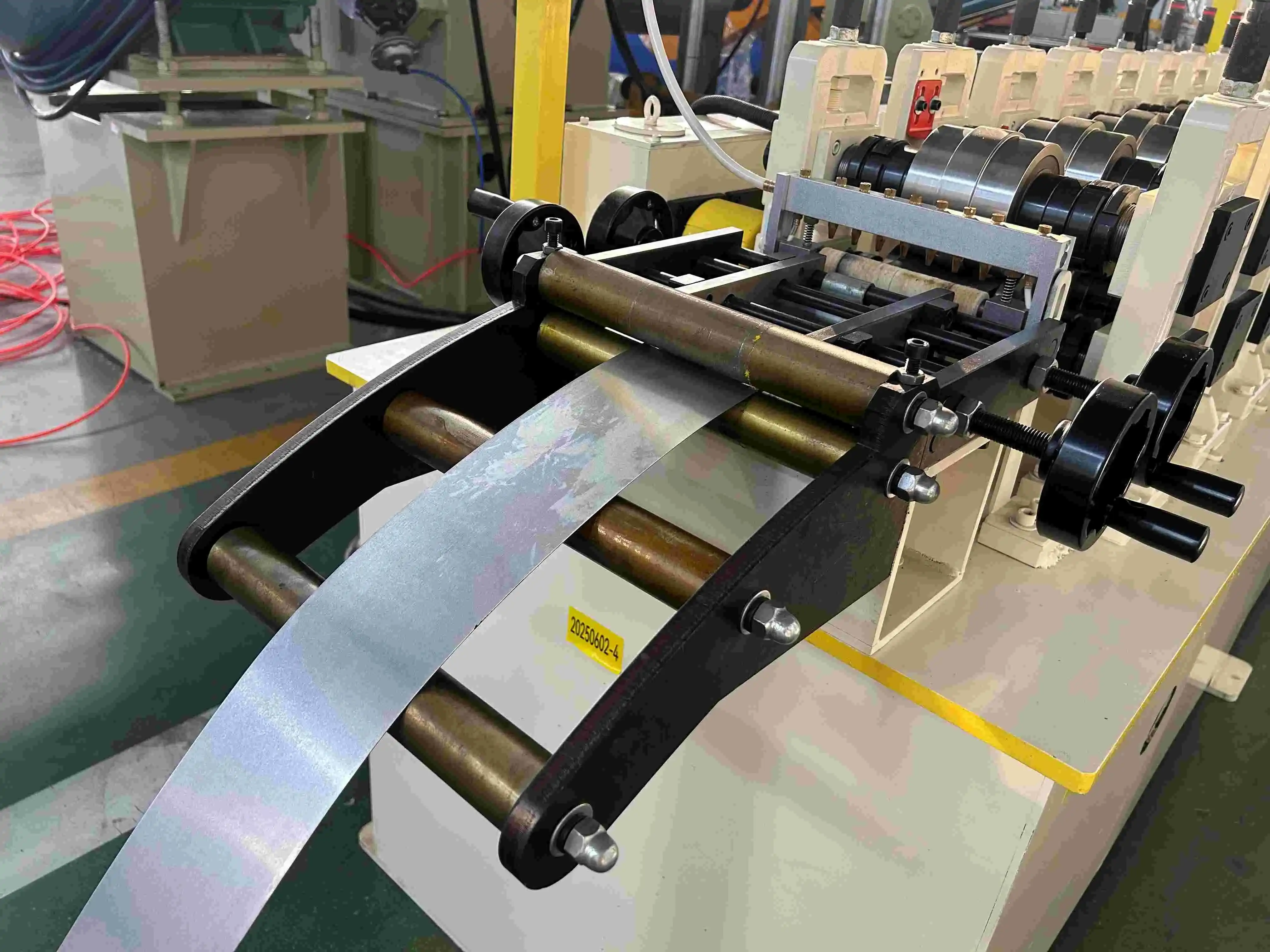
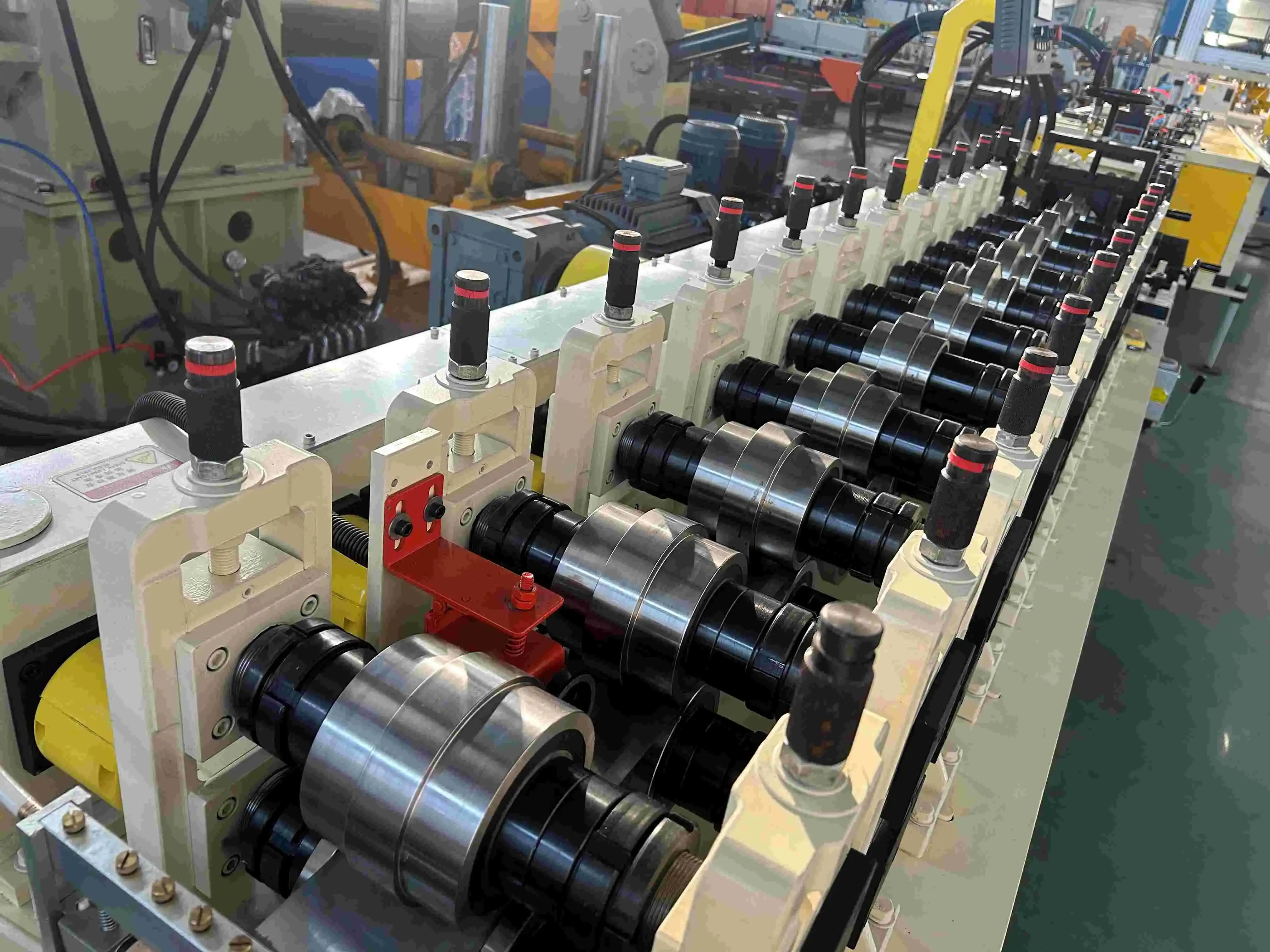
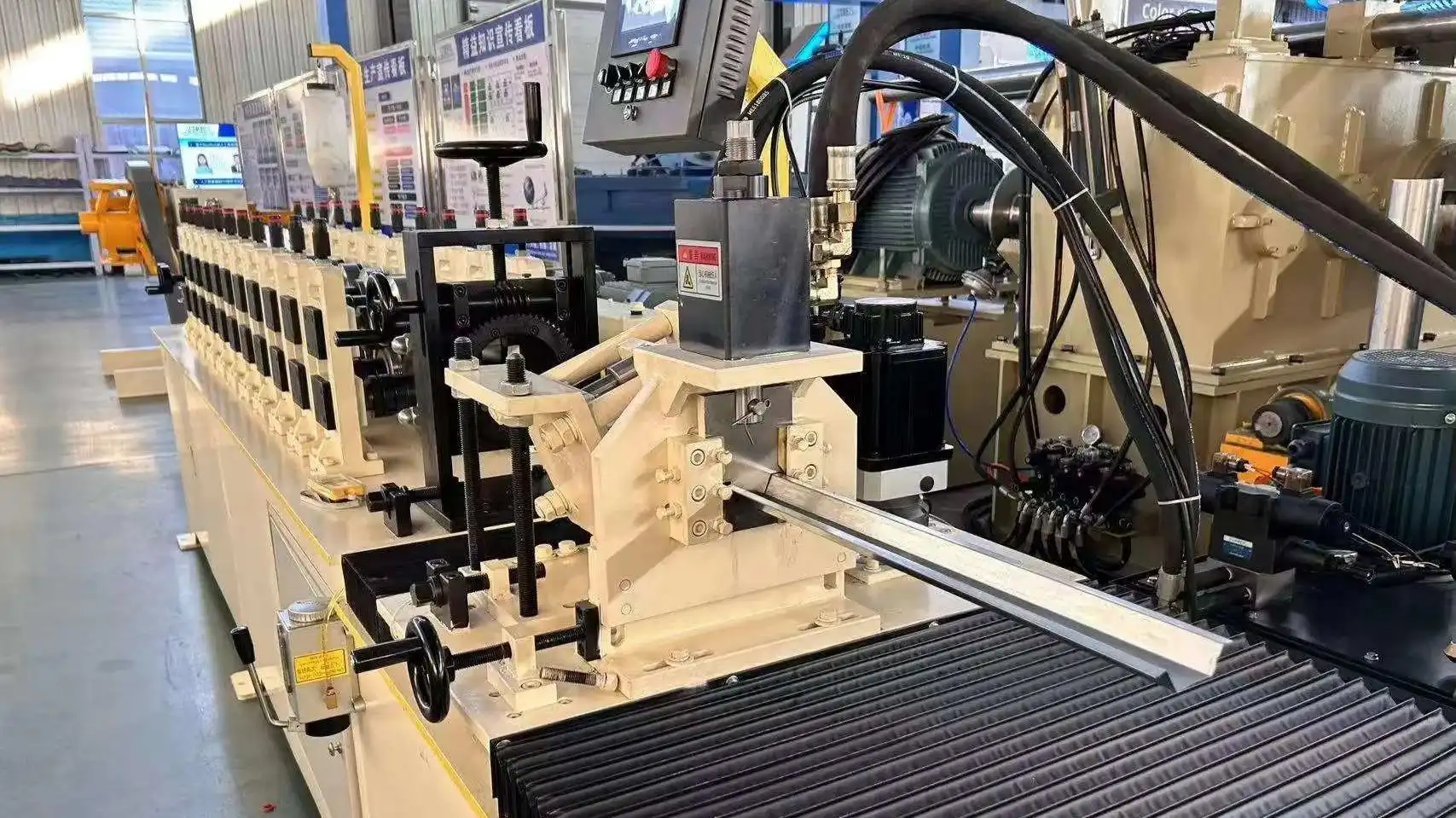
These machines work through cold forming technology. Metal coils enter the system and pass through multiple roller stations—typically 10 to 18, depending on profile complexity. Each station gradually bends the material into the characteristic "hat" or "omega" shape without heating. This cold forming process actually strengthens the metal through work hardening, increasing structural integrity.
The technical specifications matter tremendously. Most equipment handles galvanized steel thickness from 0.3 mm to 1.2 mm, with roller shafts ranging from 40mm to 80mm in diameter. The rollers themselves—crafted from GCr15 or Cr12MoV die steel—undergo vacuum heat treatment reaching HRC 58-62 hardness. This ensures longevity even when processing high-tensile G550 steel grades.
Seven Critical Applications That Drive Industry Demand
Ceiling Furring Systems for Commercial Construction
Walk into any modern office building, and you're looking at those overhead channels. These profiles create the framework supporting suspended ceiling tiles and drywall. The machine produces channels with exact web heights and flange widths—critical for maintaining level surfaces across expansive spaces.
I spoke with a contractor in Dubai who shared how inconsistent profiles caused a nightmare during a hotel renovation for the hat channel machine. Ceilings sagged unevenly, requiring costly rework. Switching to machine-formed channels eliminated those issues entirely. The automated production ensures each profile maintains tolerances within ±0.5mm, preventing installation headaches.
Seismic-Resistant Structural Framing
In earthquake-prone regions, building codes demand rigorous standards. Hat channels produced through precision roll forming provide the necessary strength and consistency. The cold forming process increases yield strength, creating profiles that maintain structural integrity during seismic events.
Engineers specify these channels because testing proves their reliability. The continuous forming process eliminates weak points that might exist in welded or bolted assemblies. When lives depend on structural performance, this consistency becomes non-negotiable.
Ventilated Facade and Rainscreen Cladding Systems
Modern architecture increasingly features ventilated facades—exterior cladding separated from building walls to allow air circulation. Hat channels serve as the spacer framework, preventing moisture buildup that leads to mold and structural decay.
The machine's inline punching capability adds tremendous value here. Drainage holes can be precisely positioned during production, eliminating secondary operations. A manufacturer in Germany told me this feature alone reduced their production costs by 23% while improving quality consistency.
Metal Roofing Batten Systems
Traditional wood purlins rot, warp, and attract termites—especially in humid climates. Steel hat channels eliminate these problems entirely. The machine creates profiles with wide top flanges providing ample surface area for securing roof panels.
Coastal construction particularly benefits from this application. Salt air destroys wood rapidly, but galvanized steel channels withstand decades of exposure. The machine's ability to process various coatings—galvanized, Galvalume, or pre-painted steel—offers flexibility for different environmental conditions.
Industrial Shelving and Racking Components
Warehouse logistics depend on reliable storage systems. Hat channels form the backbone of heavy-duty shelving, providing both strength and adjustability. The precision forming ensures consistent slot positioning for modular assembly.
A logistics company in Poland shared impressive data: shelving built with machine-formed channels showed 40% better load distribution compared to press-brake alternatives. The continuous grain structure from roll forming eliminates stress concentration points that cause premature failure.
HVAC Duct Support Structures
Commercial HVAC systems require robust support frameworks for the hat channel machine. Hat channels provide the ideal solution—strong enough to support heavy ductwork yet lightweight enough to minimize structural load. The machine's ability to punch mounting holes in line streamlines installation dramatically.
Mechanical contractors value the dimensional consistency. When every channel matches specifications exactly, installation crews work faster with fewer adjustments. This translates directly to reduced labor costs and faster project completion.
Solar Panel Mounting Systems
The renewable energy boom drives demand for reliable mounting structures. Hat channels form the foundational framework for both rooftop and ground-mounted solar arrays. The machine's precision ensures proper panel alignment, critical for optimal energy capture.
UV resistance matters tremendously in this application. Machines equipped to handle specialized coatings produce channels that withstand decades of sun exposure without degradation. A solar installer in Australia reported zero structural failures across 500+ installations using properly coated machine-formed channels.

Key Advantages That Set Quality Equipment Apart
Superior equipment delivers benefits extending far beyond basic profile production. Speed stands paramount—modern machines operate at 25-50 meters per minute, dramatically outpacing alternative methods. This throughput directly impacts profitability for high-volume manufacturers.
Material efficiency represents another critical advantage. Automated cut-to-length systems minimize scrap waste. I've reviewed production data showing waste rates below 2% with properly configured equipment—a stark contrast to the 8-12% typical with manual cutting methods.
Surface protection matters tremendously for finished product quality. Quality machines feature hard-chrome-plated rollers (0.05mm thickness) that prevent zinc buildup and scratching on pre-galvanized coils. This preserves the corrosion-resistant coating that extends product lifespan.
The structural rigidity of the machine itself determines output consistency. Heavy-duty H-beam welded frames dampen vibration, maintaining profile tolerances within ±1mm over 6-meter runs. Cheaper machines with lighter frames produce profiles with dimensional drift—a subtle issue causing major installation problems.
Drive systems separate professional equipment from basic models. Gearbox transmission provides reliable torque for processing high-tensile materials without slippage. Chain drives offer cost advantages but require more frequent maintenance and adjustment.
Understanding the Manufacturing Process Flow
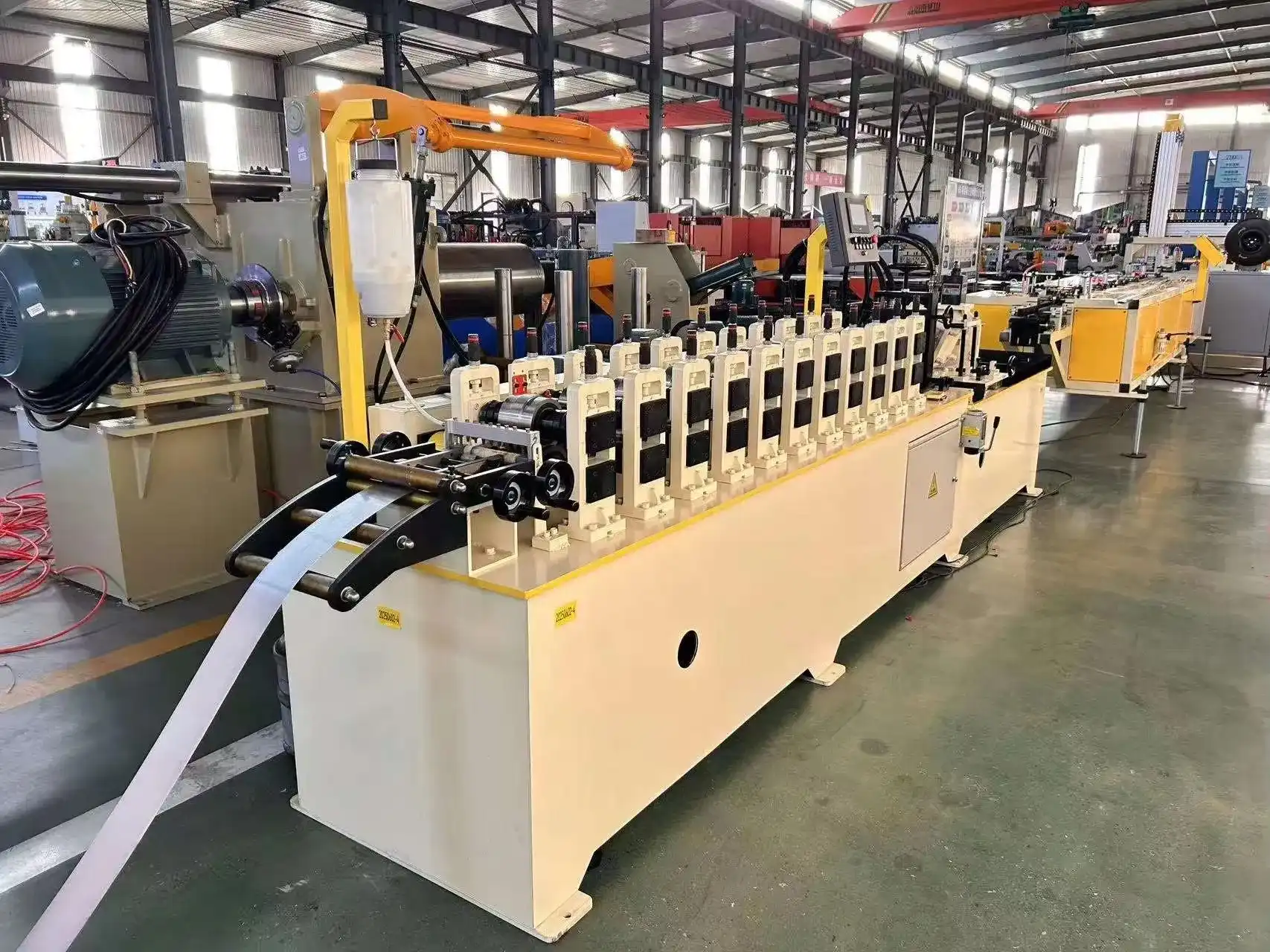
Raw material enters through a hydraulic decoiler that maintains consistent tension throughout production. This tension control prevents material distortion that would compromise final dimensions. Many manufacturers include manual backup decoilers as contingency equipment.
The material passes through entrance guides, ensuring perfect centerline alignment for the hat channel machine. Even slight misalignment at this stage magnifies through subsequent forming stations, causing twisted profiles—a common quality complaint I hear from buyers.
Progressive forming stations gradually shape the profile through carefully calculated bend sequences. Engineering software like COPRA calculates optimal station configurations based on material properties and desired profile geometry. This precision prevents springback issues that plague poorly designed equipment.
Inline punching stations (when included) create holes, slots, or notches as specified. Servo-controlled punching ensures precise positioning regardless of production speed. This integration eliminates costly secondary operations while improving accuracy.
Cutting systems vary significantly between machines. Basic stop-to-cut hydraulic shears average 15-25 meters per minute with clean, burr-free cuts. Flying shears mounted on tracked carriages achieve 50+ meters per minute but carry higher initial costs. The choice depends on production volume requirements and budget constraints.
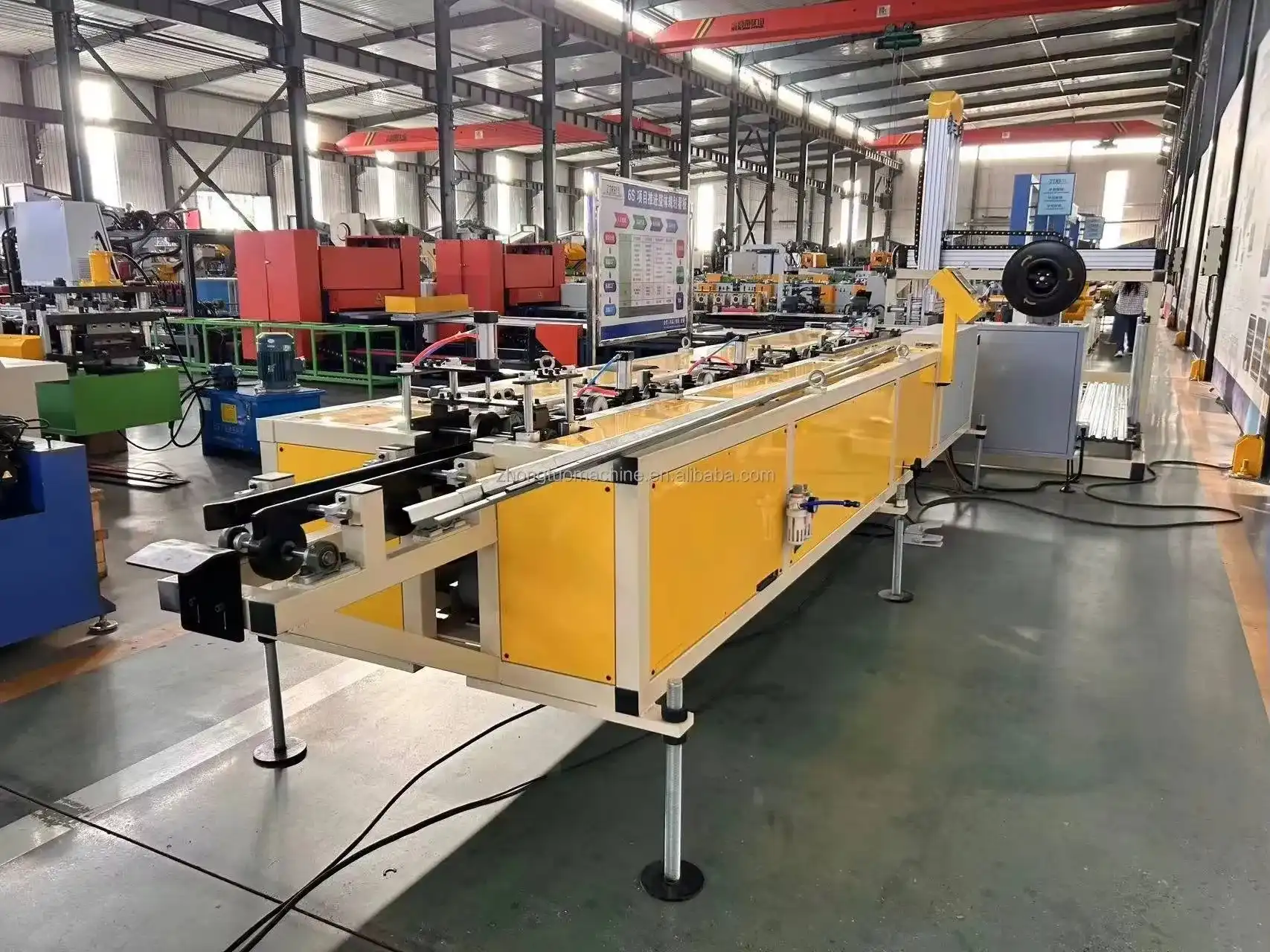
Exit tables or run-out systems support finished profiles, preventing deformation before packaging. Insufficient support here ruins otherwise perfect profiles—something I learned watching a frustrated operator deal with bent product from inadequate run-out length.
Quality Control Standards That Matter
Dimensional verification forms the foundation of quality assessment. Cross-sectional measurements must match CAD specifications within tolerances—typically ±0.5mm for critical dimensions. Professional buyers conduct sample testing before accepting equipment or production runs.
Material hardness testing confirms proper heat treatment of forming rollers. Insufficient hardness leads to rapid wear, creating grooves that damage material surfaces and compromise dimensions. Rebound hardness testing provides quick verification without destructive sampling.
Cut quality inspection examines both precision and edge condition. Cuts must be square within 1 degree and free from burrs that pose injury risks during installation. Deformation at cut ends indicates insufficient cutting force or dull blades requiring attention.
Continuous run testing reveals issues invisible during short demonstrations. A 30-minute uninterrupted production run monitors hydraulic temperature stability, motor amperage, and dimensional consistency. This simulates real-world conditions, exposing potential reliability problems.
Surface finish inspection catches roller damage before it creates scrap. Any scratches, dents, or zinc buildup on forming rollers transfers to every subsequent profile. Daily roller inspection prevents costly production losses.
Conclusion
Hat channel machines transform modern construction through reliable, high-speed production of critical structural components. From ceiling systems to solar mounting frameworks, these specialized roll forming machines solve dimensional consistency challenges while improving material efficiency and production economics. Understanding the applications, technical specifications, and quality standards helps buyers make informed equipment decisions. The right machine—backed by experienced supplier support—becomes a competitive advantage, driving profitability and market growth.
FAQ
1. Can one machine produce different profile sizes?
Most machines are optimized for a single profile drawing to maximize stability and precision. Adjustable models exist using spacer systems or automated width changes, but they cost substantially more and require skilled setup. I generally recommend dedicated machines for high-volume production and adjustable units only when product variety justifies the added complexity and expense.
2. How do you handle springback with high-tensile steel?
High-strength materials attempt to return to their original flat state after forming. Quality machines incorporate over-bending stations that form slightly beyond the target angle, compensating for springback. A final straightener (often called a Turk's head) ensures the profile exits with true 90-degree angles and straight geometry.
3. What determines maximum production speed?
Drive system capacity and cutting method create speed limitations. Flywheel drives paired with flying shears achieve the highest speeds—up to 50 meters per minute. Standard hydraulic stop-to-cut systems average 15-25 meters per minute. Inline punching operations also impact net speed depending on the hole quantity and complexity.
4. How often do cutting blades need replacement?
Blade lifespan depends on material type and production volume. Processing mild steel, blades typically require sharpening every 100,000-150,000 cuts. Stainless steel reduces this significantly. Using Cr12MoV blade material extends longevity considerably. Regular lubrication of shear components prevents premature wear and ensures consistent cut quality.
Partner With ZTRFM for Reliable Hat Channel Machine Solutions
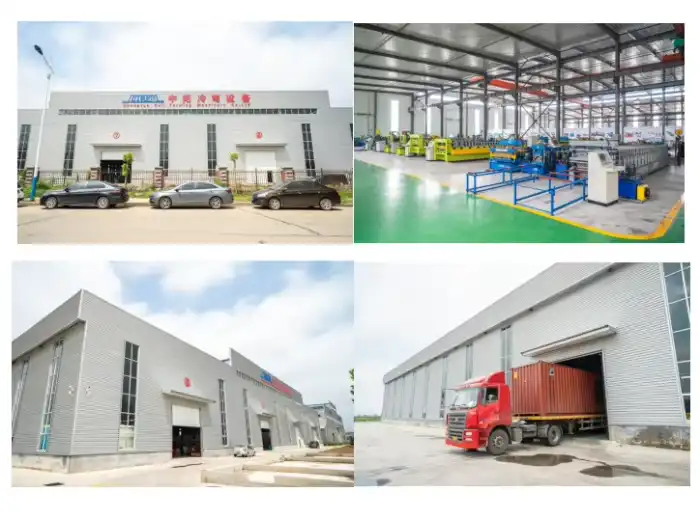
Finding the right hat channel machine supplier means partnering with a manufacturer who understands your production challenges. At ZTRFM (Cangzhou Zhongtuo), we've delivered precision roll forming equipment to over 150 countries since 2014. Our ISO9001 and CE certified machines combine robust construction with intelligent automation—exactly what demanding manufacturers require. Whether you're scaling production or entering new markets, our engineering team provides customized solutions backed by comprehensive training and responsive support. Contact us at zhongtuorollforming@gmail.com to discuss your specific requirements and discover why leading manufacturers trust ZTRFM for their metal forming needs.
References
1. American Iron and Steel Institute. (2021). Cold-Formed Steel Framing Design Guide. Washington: AISI Publications.
2. Chen, H. & Liu, W. (2019). Roll Forming Handbook: Manufacturing Processes and Equipment. Munich: Carl Hanser Verlag.
3. International Code Council. (2020). International Building Code: Structural Requirements for Light-Gauge Steel. Country Club Hills: ICC Publications.
4. Halmos, G.T. (2018). Roll Forming and Roll Bending: A Practical Guide to Process Selection. New York: Industrial Press.
5. European Committee for Standardization. (2019). EN 1993-1-3: Design of Steel Structures - Cold-Formed Thin Gauge Members. Brussels: CEN Publications.
6. Yu, W. & LaBoube, R.A. (2020). Cold-Formed Steel Design: Fifth Edition. Hoboken: John Wiley & Sons.
_1750323743240.webp)