- English
- French
- German
- Portuguese
- Spanish
- Russian
- Japanese
- Korean
- Arabic
- Irish
- Greek
- Turkish
- Italian
- Danish
- Romanian
- Indonesian
- Czech
- Afrikaans
- Swedish
- Polish
- Basque
- Catalan
- Esperanto
- Hindi
- Lao
- Albanian
- Amharic
- Armenian
- Azerbaijani
- Belarusian
- Bengali
- Bosnian
- Bulgarian
- Cebuano
- Chichewa
- Corsican
- Croatian
- Dutch
- Estonian
- Filipino
- Finnish
- Frisian
- Galician
- Georgian
- Gujarati
- Haitian
- Hausa
- Hawaiian
- Hebrew
- Hmong
- Hungarian
- Icelandic
- Igbo
- Javanese
- Kannada
- Kazakh
- Khmer
- Kurdish
- Kyrgyz
- Latin
- Latvian
- Lithuanian
- Luxembou..
- Macedonian
- Malagasy
- Malay
- Malayalam
- Maltese
- Maori
- Marathi
- Mongolian
- Burmese
- Nepali
- Norwegian
- Pashto
- Persian
- Punjabi
- Serbian
- Sesotho
- Sinhala
- Slovak
- Slovenian
- Somali
- Samoan
- Scots Gaelic
- Shona
- Sindhi
- Sundanese
- Swahili
- Tajik
- Tamil
- Telugu
- Thai
- Ukrainian
- Urdu
- Uzbek
- Vietnamese
- Welsh
- Xhosa
- Yiddish
- Yoruba
- Zulu
What is a slitting machine and how does it work?
In the world of metal processing, efficiency and precision are paramount. Enter the slitting machine, a powerhouse of productivity that revolutionizes the way we handle sheet metal and coils. This article delves into the intricacies of slitting machines, exploring their functionality, applications, and the pivotal role they play in modern manufacturing.
What is a slitting machine, and what materials can it process?
A slitting machine, also known as a coil slitter or slitting line, is a specialized piece of equipment designed to cut large rolls of metal or other materials into narrower strips. This process is crucial in various industries, including automotive, construction, and electronics, where precise metal strips are required for further manufacturing processes.
The versatility of slitting machines is truly remarkable. They can process a wide array of materials, including:
- Steel (galvanized, stainless, and carbon)
- Aluminum
- Copper
- Brass
- Tin
- Plastic films
- Paper
- Foil
This adaptability makes slitting machines indispensable in numerous manufacturing sectors. They can handle materials of varying thicknesses, from thin foils to robust metal sheets, accommodating widths up to several meters.
The ability to process such a diverse range of materials with precision is what sets slitting machines apart. They can achieve tolerances as tight as ±0.1mm, ensuring consistent quality across large production runs. This level of accuracy is crucial for industries where even slight variations can lead to significant issues in downstream processes.
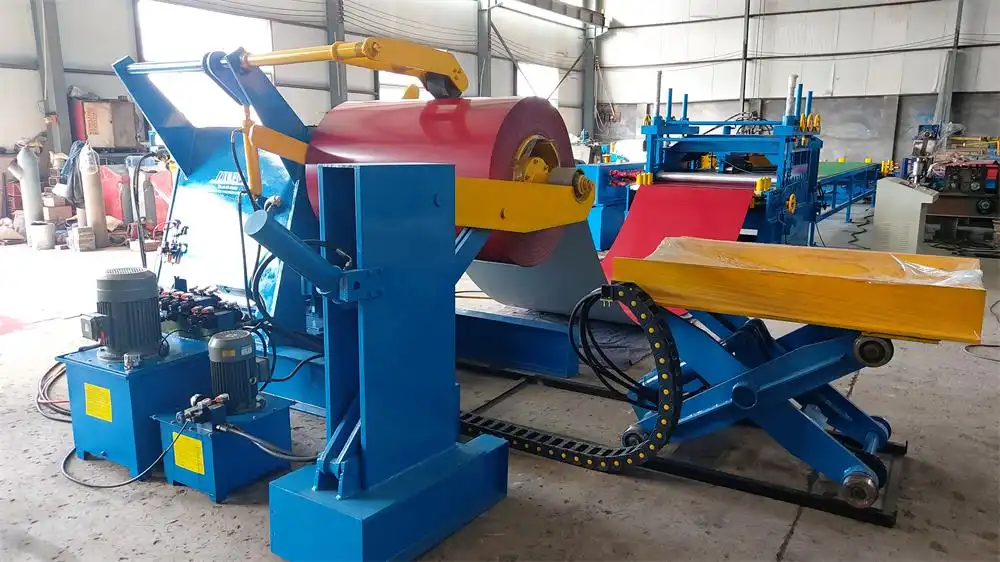
Slitting machine process overview: unwind, blade, rewind
The slitting process, while complex in its engineering, follows a straightforward principle. It can be broken down into three main stages: unwinding, slitting, and rewinding.
Unwinding
The process begins with the unwinding of the master coil. This coil, which can weigh several tons, is loaded onto an uncoiler. The uncoiler's job is to feed the material into the slitting machine at a controlled rate. It must maintain consistent tension to ensure smooth operation and prevent material deformation.
Slitting
As the material feeds into the machine, it encounters the heart of the slitting machine - the slitting head. This component houses a series of circular knives or blades arranged on shafts. The material passes between these upper and lower blades, which cut it into strips of predetermined widths.
The precision of this stage is crucial. The blades must be perfectly aligned and sharpened to ensure clean cuts without burrs or edge deformation. Advanced slitting machines use computer-controlled positioning systems to adjust blade spacing, allowing for quick changes between different strip widths.
Rewinding
After slitting, the newly cut strips are rewound onto separate recoilers. This stage requires careful tension control to ensure the strips are wound tightly and evenly. Many modern slitting machines incorporate tension measurement and control systems to maintain optimal winding conditions throughout the process.
The rewinding process can vary depending on the end-use of the material. Some applications might require the strips to be wound onto multiple small coils, while others might need them wound onto a single large coil.
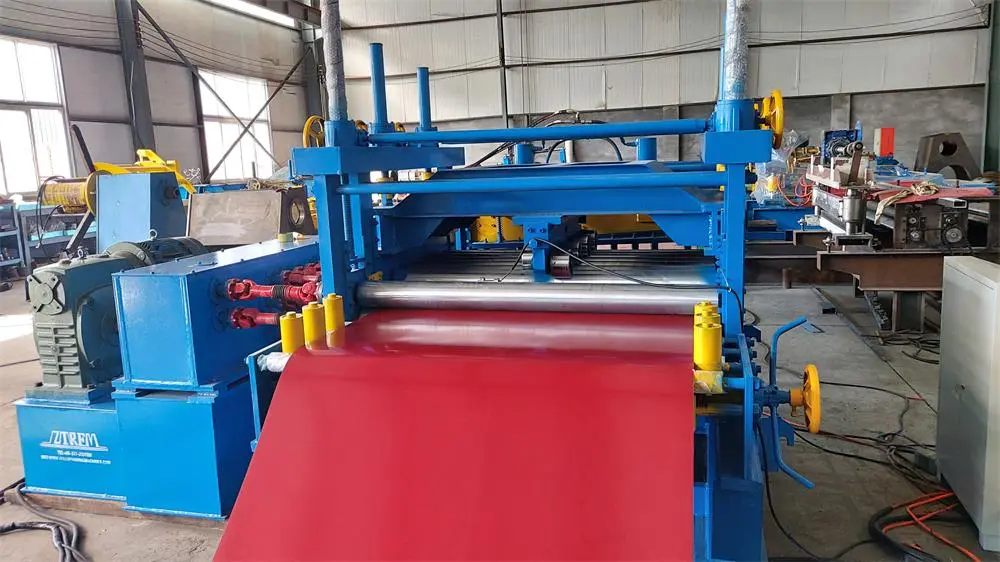
Key workflow steps of a slitting machine
While the basic process of slitting is straightforward, the workflow of a modern slitting machine involves several key steps that ensure efficiency, precision, and safety:
Coil Loading and Positioning
The process begins with loading the master coil onto the uncoiler. This is often done using overhead cranes or specialized coil handling equipment. The coil must be correctly positioned and secured to ensure smooth unwinding.
Threading
Once loaded, the leading edge of the coil is threaded through the machine. This can be a manual process in smaller machines, but larger, more advanced slitters often have automatic threading systems that reduce setup time and improve safety.
Blade Setup
Before slitting begins, the blades must be set to the correct positions to achieve the desired strip widths. In modern machines, this is typically done through a computer-controlled system that allows for quick and precise adjustments.
Tension Control
Throughout the slitting process, maintaining proper tension is crucial. This is achieved through a combination of braking on the uncoiler and pull from the recoiler. Many machines use dancer rolls or load cells to measure and adjust tension in real-time.
Edge Trimming
Some slitting lines include an edge trimming station that removes a small amount of material from the edges of the coil. This ensures straight, clean edges on the final product and can help remove any damaged or oxidized material.
Scrap Management
The slitting process inevitably produces some scrap, particularly from edge trimming. Efficient slitting machines incorporate scrap management systems that collect and remove this waste material, often winding it onto separate reels for recycling.
Quality Control
Many modern slitting lines incorporate inline quality control measures. These might include thickness gauges, surface inspection systems, or width measurement tools that ensure the final product meets specifications.
Coil Removal and Packaging
Once slitting is complete, the newly formed coils must be removed from the recoiler. This is often done using coil carts or overhead cranes. The coils are then typically wrapped or packaged for protection during storage and transport.
Data Logging and Reporting
Advanced slitting machines often include systems for logging production data. This can include information on coil weights, strip widths, production speeds, and quality metrics. This data is valuable for process optimization and quality assurance.

Safety Considerations in Slitting Machine Operation
Safety is paramount in the operation of slitting machines. These powerful devices work with heavy coils and sharp blades, necessitating robust safety measures:
- Emergency Stop Systems: Easily accessible emergency stop buttons are placed at strategic locations around the machine.
- Safety Guards: Physical barriers prevent operators from accessing dangerous areas during operation.
- Light Curtains: These optical safety devices stop the machine if an object or person enters a dangerous area.
- Lockout/Tagout Procedures: Strict protocols for machine shutdown during maintenance or blade changes.
- Operator Training: Comprehensive training programs ensure operators understand both the machine's operation and all safety procedures.
Maintenance and Optimization
Regular maintenance is crucial for the longevity and performance of slitting machines. This includes:
- Blade Sharpening and Replacement: Dull blades can lead to poor cut quality and increased scrap.
- Lubrication: Regular lubrication of moving parts ensures smooth operation and reduces wear.
- Alignment Checks: Periodic checks and adjustments of blade alignment maintain cutting precision.
- Tension System Calibration: Regular calibration of tension measurement and control systems ensures consistent product quality.
Optimization of slitting machine operation often involves analyzing production data to identify areas for improvement. This might include adjusting cutting speeds, optimizing coil widths to reduce scrap, or fine-tuning tension settings for different materials.
Advancements in Slitting Machine Technology
The field of slitting machine technology is continuously evolving. Some recent advancements include:
- Servo-Driven Systems: Replacing hydraulic systems with servo motors for more precise control and energy efficiency.
- Advanced Materials: Development of new blade materials and coatings for improved durability and cut quality.
- Industry 4.0 Integration: Incorporating IoT sensors and data analytics for predictive maintenance and real-time process optimization.
- Automated Setup: Systems that can automatically adjust blade positions, tension, and other parameters based on job specifications.
- Vision Systems: Advanced cameras and image processing for real-time quality control and defect detection.
Environmental Considerations
As industries worldwide focus on sustainability, slitting machine manufacturers are also addressing environmental concerns:
- Energy Efficiency: Development of more energy-efficient drive systems and regenerative braking to recover energy during deceleration.
- Scrap Reduction: Advanced nesting software and precision control systems help minimize material waste.
- Lubricant Management: Implementation of closed-loop lubrication systems to reduce lubricant consumption and prevent environmental contamination.
- Noise Reduction: Design improvements and sound-dampening technologies to reduce operational noise levels.
Conclusion
The slitting machine stands as a testament to the ingenuity of modern manufacturing. Its ability to precisely and efficiently process a wide range of materials makes it an indispensable tool in numerous industries. Slitting machine supplier innovations continue to enhance performance and reliability. As technology continues to advance, we can expect these machines to become even more efficient, precise, and versatile, further cementing their role in the future of manufacturing.
Are you looking to enhance your manufacturing capabilities with a state-of-the-art slitting machine? Look no further than Cangzhou Zhongtuo Roll Forming Machinery Co., Ltd. As a national-level high-tech enterprise with over a decade of export experience, we specialize in designing and manufacturing cutting-edge cold roll forming machines, including advanced slitting lines. Our machines are exported to over 150 countries and regions worldwide, meeting the highest international standards for quality and safety. Whether you need a custom solution for your unique production requirements or are looking for a reliable, high-performance slitting machine, our expert team is ready to assist you. Don't let outdated equipment hold your business back. Upgrade your production line with a Zhongtuo slitting machine and experience the difference in precision, efficiency, and quality. Contact us today at coo@zhongtuocn.com to discuss how we can help optimize your metal processing operations.
References
1. Johnson, R. (2022). Advanced Metal Slitting Techniques in Modern Manufacturing. Journal of Industrial Engineering, 45(3), 278-295.
2. Smith, A., & Brown, B. (2021). Precision and Efficiency: The Evolution of Slitting Machines. International Journal of Metalworking Technology, 18(2), 112-129.
3. Lee, C., et al. (2023). Industry 4.0 Integration in Metal Processing: A Case Study of Smart Slitting Machines. Automation in Manufacturing, 29(4), 401-418.
4. García-López, M., & Fernández-Martínez, R. (2020). Environmental Impact Assessment of Slitting Processes in Steel Manufacturing. Journal of Cleaner Production, 256, 120432.
_1750323743240.webp)