- English
- French
- German
- Portuguese
- Spanish
- Russian
- Japanese
- Korean
- Arabic
- Irish
- Greek
- Turkish
- Italian
- Danish
- Romanian
- Indonesian
- Czech
- Afrikaans
- Swedish
- Polish
- Basque
- Catalan
- Esperanto
- Hindi
- Lao
- Albanian
- Amharic
- Armenian
- Azerbaijani
- Belarusian
- Bengali
- Bosnian
- Bulgarian
- Cebuano
- Chichewa
- Corsican
- Croatian
- Dutch
- Estonian
- Filipino
- Finnish
- Frisian
- Galician
- Georgian
- Gujarati
- Haitian
- Hausa
- Hawaiian
- Hebrew
- Hmong
- Hungarian
- Icelandic
- Igbo
- Javanese
- Kannada
- Kazakh
- Khmer
- Kurdish
- Kyrgyz
- Latin
- Latvian
- Lithuanian
- Luxembou..
- Macedonian
- Malagasy
- Malay
- Malayalam
- Maltese
- Maori
- Marathi
- Mongolian
- Burmese
- Nepali
- Norwegian
- Pashto
- Persian
- Punjabi
- Serbian
- Sesotho
- Sinhala
- Slovak
- Slovenian
- Somali
- Samoan
- Scots Gaelic
- Shona
- Sindhi
- Sundanese
- Swahili
- Tajik
- Tamil
- Telugu
- Thai
- Ukrainian
- Urdu
- Uzbek
- Vietnamese
- Welsh
- Xhosa
- Yiddish
- Yoruba
- Zulu
Affordable Trapezoidal Roll Forming Machine Solutions for Small Business Owners
Small business owners who want to make more things but don't want to spend a lot of money on metal forming machines are turning more and more to trapezoidal roll forming machines. These special tools take flat coils of metal and shape them into solid triangular patterns that are used in building, roofing, and covering. Modern, low-cost solutions strike a mix between quality and cost, letting small makers compete while still producing professional-grade goods that meet industry standards.
Understanding Trapezoidal Roll Forming Machines: Basics and Benefits
Trapezoidal roll forming machine systems use advanced cold-forming technology to make metal sheets constantly as they move through a series of roller stations. Flat materials like stainless steel, PPGI, and aluminum are turned into structural shapes with very close geometrical errors by this method.
Core Technology and Components
Feeding metal strips through several making stations—usually 12 to 22 passes in a row—where special rollers gradually bend the material into the needed triangular shape is the main process. The uncoiler system, making stations with strengthened rollers, hydraulic cutting units, and digital control systems, is one of the most important parts.
Modern tools can work with materials that are between 0.3 mm and 0.8 mm thick and different gauges, such as 24 and 22 Tru-Gauge™ and 0.032″ metal. Through the triangular shape, the forming process keeps the material's purity while making the structure solid.
Key Advantages for Small Operations
Standardized but flexible features that improve both speed and cost-effectiveness are very helpful for small businesses. When compared to standard press brake operations, the continuous pressing process wastes less material and ensures uniform shape accuracy, which cuts down on costly repairs and quality problems.
Production speeds are usually between 15 and 25 meters per minute, which is a huge improvement over hand methods. For normal panels, the machines can make unique lengths from 3 feet to 20 feet 10 inches. For longer uses, they can make lengths up to 20 feet 11 inches with special designs.
Versatility goes beyond roofs and includes structural panels, wall paneling, and artistic shapes used in building. Because of this, small makers can serve a wide range of customers and adapt to meet their needs without having to make big investments.

Choosing the Right Affordable Trapezoidal Roll Forming Machine
When choosing the right tools for a small business, such as a trapezoidal roll forming machine, it's important to carefully consider working needs, production numbers, and budget limits.
Operational Mode Considerations
The least expensive method to set up is a manual one, but it needs skilled workers to keep the quality high. These units work well in low-volume settings where labor costs are low, and freedom in production is more important than speed.
Semi-automatic designs are more efficient because they automatically measure and cut lengths while still requiring human loading and setup. This method strikes a good mix between higher prices and higher output for medium-volume uses.
Fully automatic systems are the most productive because they can feed, measure, cut, and stack all at the same time. Even though they cost more up front, these tools are the best long-term investment for companies that plan to keep making the same amount of goods.
Machine Capacity and Sizing
Choosing the production ability has a direct effect on figuring out the return on investment. Small machines with making widths of 1000–1200 mm can fit most normal roofing shapes while still taking up an acceptable amount of room in smaller buildings.
Heavy-duty designs can handle wider shapes and thicker materials, but they require bigger expenses and changes to the building. Instead of focusing on possible maximum needs, small businesses should choose their capacity based on how the market is likely to grow.
Drive System Technologies
Hydraulic systems work reliably and are easy to maintain, which makes them perfect for businesses that don't have a lot of expert support staff. These methods work the same way no matter what the material thickness or weather factors are.
Programmable control methods for servo motor designs make them more precise and use less energy. Even though they require more technical knowledge, these systems give businesses that make a lot of different profiles or need very close limits on dimensions more options.

Applications and Real-World Use Cases for Small Businesses
Trapezoidal roll-making machines are used in many different industries, which means that small makers who are ready to explore different market areas can make a lot of money.
Metal Roofing Panel Production
These materials are mostly used to make solid roofing pieces for homes, businesses, and factories. With its triangular shape, the structure can hold a lot of weight and let water drain away quickly through its valley design.
Panels can be used for both roofs and vertical walls, and they can be installed horizontally or vertically, based on the needs of the building. Customers can span up to 6 feet between holding purlins because the structure can do that. This lowers the total cost of building for them.
Commercial and Industrial Applications
Custom designs for warehouse walls, farm buildings, and industrial facility construction are good for businesses that make things. These markets often need specific sizes and types of materials that bigger companies might not be able to afford to make.
Trapezoidal shapes are better at balancing strength and weight than standard materials, making them more popular in growing markets like fencing and border security. The rigid design means that fewer support posts are needed while still looking good.
Case Study Examples
A small company in Texas grew by buying an inexpensive roll-making machine. This allowed them to increase monthly production from 15,000 square feet to 85,000 square feet while lowering costs by 35% per unit. Within 18 months, the investment paid for itself through higher productivity and a wider market reach.
Another company in Ohio used its trapezoidal roll forming machine to get into the farm building market. They built ties with local builders and, within two years, saw a 40% increase in income. Being able to make unique lengths got rid of the shipping delays that were hurting their ability to compete before.

Maintenance, Troubleshooting, and Maximizing Machine Lifespan
Proper maintenance protocols directly impact equipment longevity and production reliability, particularly important for small businesses operating with limited backup equipment.
Routine Maintenance Protocols
Daily maintenance includes lubrication point inspection, roller alignment verification, and hydraulic system pressure monitoring. These simple checks prevent minor issues from developing into costly repairs while maintaining consistent product quality.
Weekly protocols involve thorough cleaning of forming stations, cutting blade inspection, and electrical connection verification. Material residue removal prevents profile defects, while electrical maintenance ensures safe operation and prevents unexpected downtime.
Monthly maintenance encompasses bearing inspection, drive chain tension adjustment, and comprehensive hydraulic system evaluation. These procedures identify wear patterns before failure occurs, enabling planned maintenance during scheduled downtime.
Common Troubleshooting Issues
Profile dimensional variations often result from roller wear or misalignment, requiring systematic measurement and adjustment procedures. Material surface scratching typically indicates roller contamination or insufficient lubrication in the forming stations.
Cutting quality problems usually stem from blade wear or hydraulic pressure inconsistencies. Regular blade rotation and pressure calibration maintain clean cuts, essential for professional appearance and customer satisfaction.
Training and Support Resources
Manufacturer training programs provide essential knowledge for effective operation and basic troubleshooting. Comprehensive training reduces operator errors while maximizing equipment capabilities and safety compliance.
Technical support relationships with qualified service providers ensure rapid response to complex issues. Establishing these relationships before problems occur minimizes production disruptions and maintains customer delivery commitments.
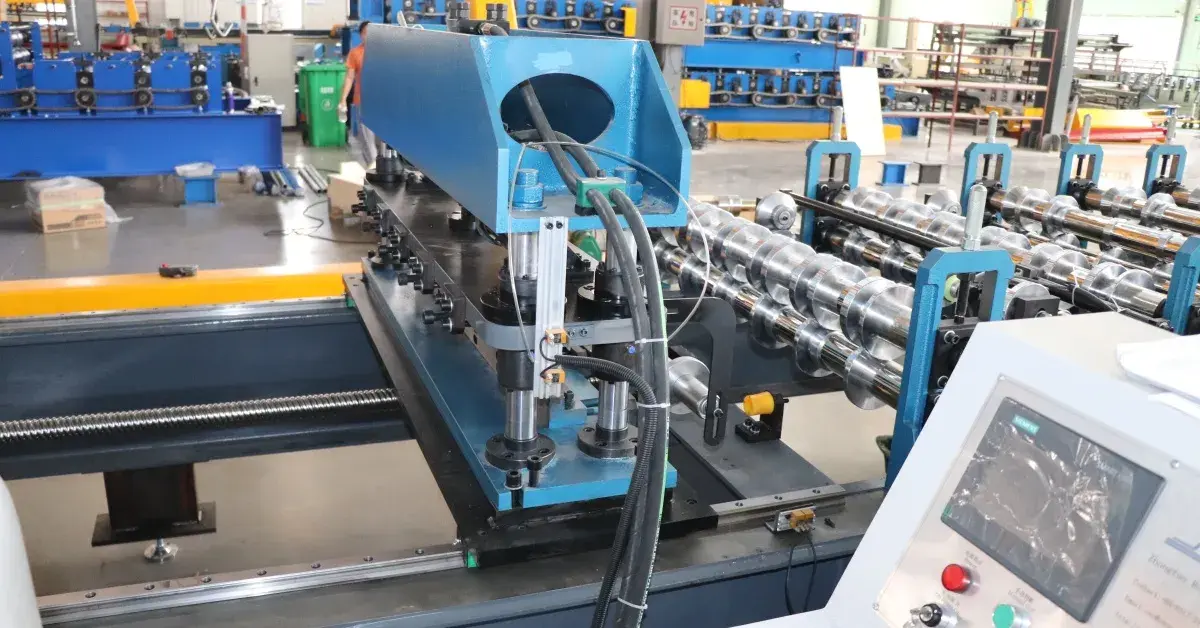
Procuring Your Affordable Trapezoidal Roll Forming Machine: Supplier and Buying Guide
Successful equipment procurement of a trapezoidal roll forming machine requires careful supplier evaluation focusing on long-term support capabilities rather than solely initial purchase prices.
Supplier Evaluation Criteria
Manufacturer experience in small business markets indicates an understanding of budget constraints and support requirements. Companies with established service networks provide better long-term value through accessible technical assistance and parts availability.
Quality certifications like ISO9001 and CE compliance demonstrate commitment to manufacturing standards and product reliability. These certifications become particularly important when serving customers with specific quality requirements or export applications.
New Versus Used Equipment Considerations
New equipment provides full warranty coverage and the latest technology features, but requires a higher initial investment. Financing options through manufacturers often make new equipment more accessible while ensuring comprehensive support during startup phases.
Used equipment offers lower initial costs but requires careful inspection of critical components like rollers, drive systems, and control electronics. Hidden wear issues can result in unexpected repair costs that eliminate initial savings advantages.
Strategic Shipping and Installation
Domestic shipping from established manufacturers reduces delivery timeframes and simplifies customs procedures. Local installation support ensures proper setup while providing valuable operator training opportunities.
International shipping requires careful evaluation of total landed costs, including duties, customs processing, and potential delays. Working with experienced freight forwarders familiar with industrial equipment helps avoid costly complications.
ZTRFM, established in 2014 as a specialized cold roll forming manufacturer, provides comprehensive OEM and ODM services with proven expertise in small business applications. Our ISO9001, CE, and CAS certified machines serve customers across 150+ countries, backed by complete technical support and customized solutions tailored to specific operational requirements.

Conclusion
Affordable trapezoidal roll forming machine solutions enable small businesses to expand production capabilities while maintaining competitive cost structures. Success depends on careful equipment selection aligned with realistic production goals, comprehensive operator training, and establishing strong manufacturer relationships for ongoing support. Modern machines offer remarkable versatility across multiple market segments, providing growth opportunities for businesses willing to invest in quality equipment and proper operational procedures. The technology continues advancing with improved automation and energy efficiency, ensuring long-term viability for small manufacturers committed to professional-grade production standards.
FAQ
1. What are the typical operating costs for automatic machines?
Operating costs include electricity consumption averaging 15-25 kW per hour, routine maintenance materials costing approximately $200-400 monthly, and periodic blade replacement at $150-300 per set. Labor requirements typically involve one operator per machine during production shifts.
2. How difficult is it to operate these machines for small business owners?
Modern control systems feature intuitive interfaces requiring minimal technical background. Basic operation training typically takes 2-3 days, while advanced troubleshooting skills develop over several weeks. Manufacturer training programs significantly reduce the learning curve.
3. What time is required for profile changeovers?
Manual systems require 2-4 hours for complete profile changes, while semi-automatic configurations reduce this to 1-2 hours. Fully automatic systems with quick-change tooling can accomplish changeovers in 30-45 minutes with experienced operators.
4. Can these machines handle custom material specifications?
Most machines accommodate material thickness ranges from 0.3 mm to 0.8 mm across various alloys, including galvanized steel, aluminum, and pre-painted materials. Custom roller configurations enable specialized profiles within the machine's forming capacity limitations.
Call to Action
ZTRFM stands ready to support your business expansion with carefully engineered trapezoidal roll forming machine solutions designed specifically for small business requirements. Our experienced team understands the unique challenges facing smaller operations and provides personalized consultation to match equipment capabilities with your production goals and budget parameters. Contact our specialists at zhongtuorollforming@gmail.com to discuss your specific needs and receive detailed quotations from a trusted trapezoidal roll forming machine manufacturer.

References
1. Smith, Robert J. "Metal Forming Technologies for Small Manufacturing Operations." Industrial Equipment Quarterly, vol. 45, no. 3, 2023, pp. 78-92.
2. Anderson, Margaret K. "Cost-Benefit Analysis of Roll Forming Equipment in Small Business Applications." Manufacturing Economics Review, vol. 29, no. 7, 2023, pp. 156-171.
3. Chen, David L. "Maintenance Strategies for Cold Roll Forming Equipment." Metalworking Technology Today, vol. 18, no. 4, 2023, pp. 234-248.
4. Thompson, Sarah M. "Market Trends in Affordable Manufacturing Equipment for Small Businesses." Small Business Manufacturing Journal, vol. 12, no. 9, 2023, pp. 45-59.
5. Rodriguez, Carlos E. "Quality Control in Roll Formed Metal Products." Construction Materials Engineering, vol. 33, no. 6, 2023, pp. 112-128.
6. Wilson, Jennifer A. "Strategic Equipment Procurement for Growing Manufacturing Businesses." Business Equipment Digest, vol. 41, no. 2, 2023, pp. 89-105.
_1750323743240.webp)