- English
- French
- German
- Portuguese
- Spanish
- Russian
- Japanese
- Korean
- Arabic
- Irish
- Greek
- Turkish
- Italian
- Danish
- Romanian
- Indonesian
- Czech
- Afrikaans
- Swedish
- Polish
- Basque
- Catalan
- Esperanto
- Hindi
- Lao
- Albanian
- Amharic
- Armenian
- Azerbaijani
- Belarusian
- Bengali
- Bosnian
- Bulgarian
- Cebuano
- Chichewa
- Corsican
- Croatian
- Dutch
- Estonian
- Filipino
- Finnish
- Frisian
- Galician
- Georgian
- Gujarati
- Haitian
- Hausa
- Hawaiian
- Hebrew
- Hmong
- Hungarian
- Icelandic
- Igbo
- Javanese
- Kannada
- Kazakh
- Khmer
- Kurdish
- Kyrgyz
- Latin
- Latvian
- Lithuanian
- Luxembou..
- Macedonian
- Malagasy
- Malay
- Malayalam
- Maltese
- Maori
- Marathi
- Mongolian
- Burmese
- Nepali
- Norwegian
- Pashto
- Persian
- Punjabi
- Serbian
- Sesotho
- Sinhala
- Slovak
- Slovenian
- Somali
- Samoan
- Scots Gaelic
- Shona
- Sindhi
- Sundanese
- Swahili
- Tajik
- Tamil
- Telugu
- Thai
- Ukrainian
- Urdu
- Uzbek
- Vietnamese
- Welsh
- Xhosa
- Yiddish
- Yoruba
- Zulu
Comparing Trapezoidal and Corrugated Sheet Roll Forming Machines: Key Differences Explained
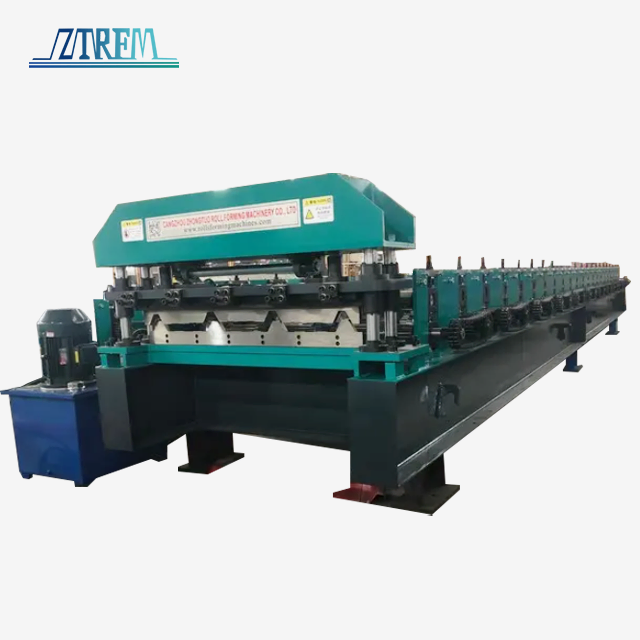
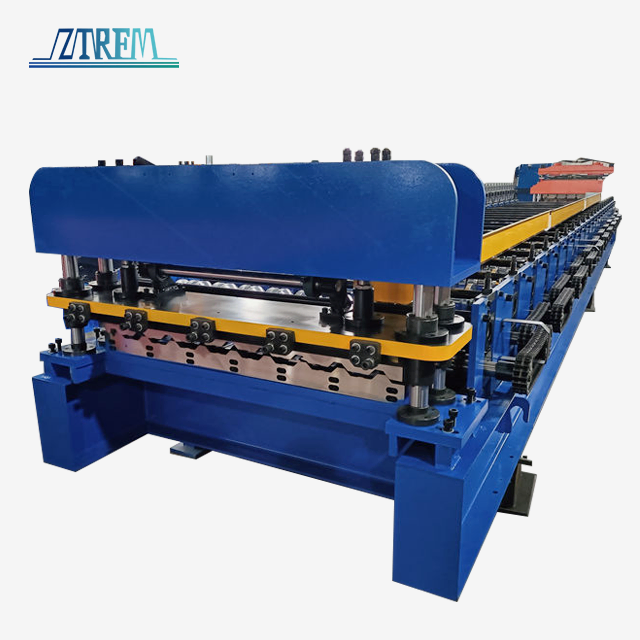
Choosing between trapezoidal and corrugated sheet roll forming machines fundamentally depends on your project requirements and end-use applications. A trapezoidal sheet roll forming machine produces panels with angular, geometric profiles ideal for structural strength, while corrugated machines create wave-patterned sheets optimised for flexibility and drainage. Understanding these core distinctions—profile geometry, load-bearing capacity, and application versatility—helps manufacturers select equipment that aligns with production goals, material specifications, and market demands.
Understanding Profile Geometries: The Foundation of Your Decision
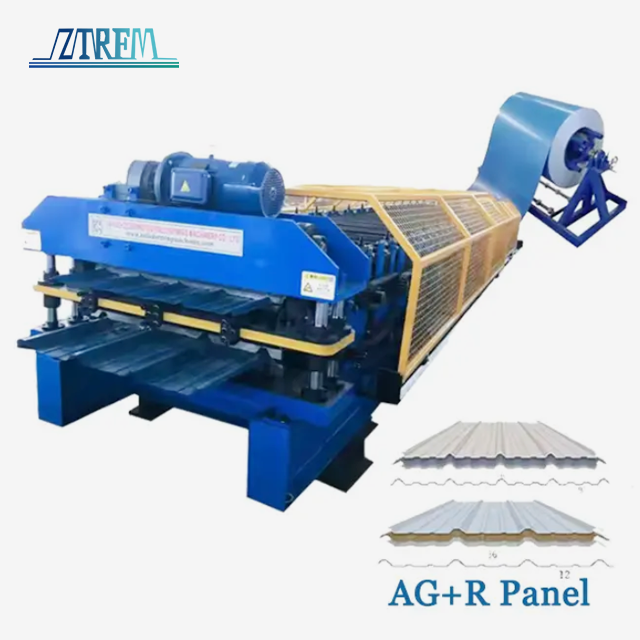
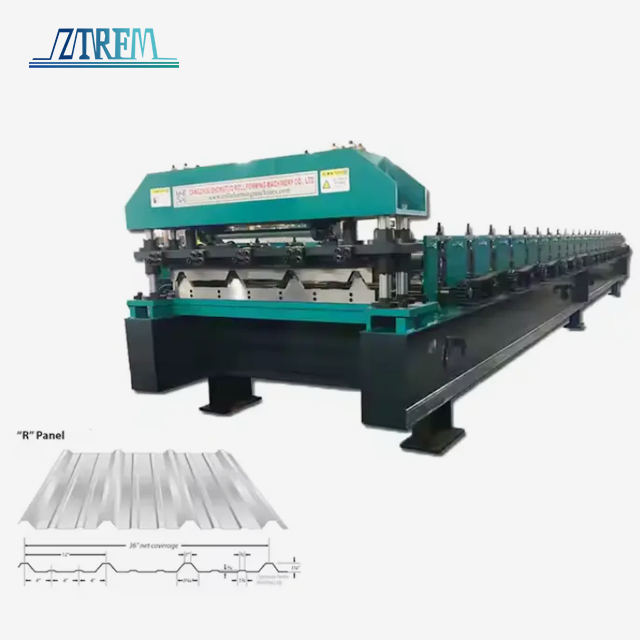
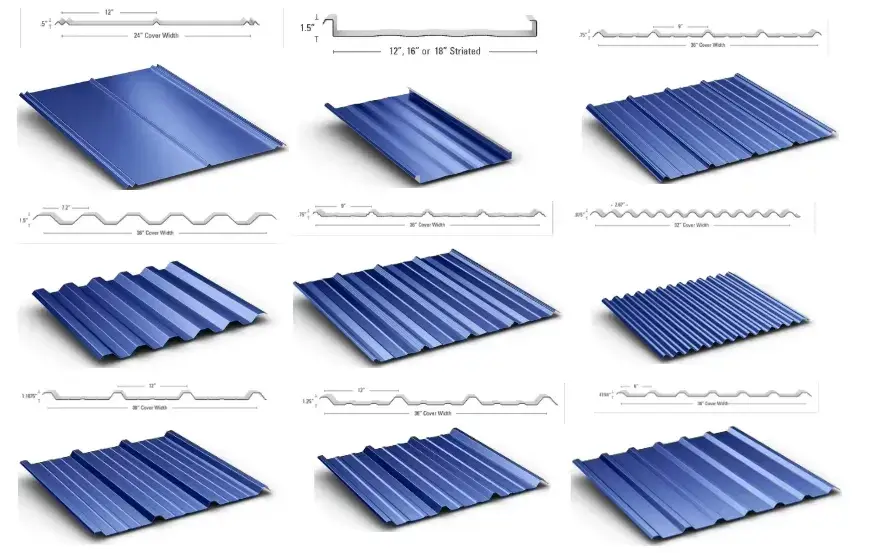
The most visible difference between these two machine types lies in the panel profiles they produce. Trapezoidal profiles feature sharp, defined angles forming a series of trapezoid shapes across the sheet width. These angular ribs provide exceptional load distribution and structural integrity.
Corrugated profiles display rounded, wave-like patterns with smooth curves. The sinusoidal design offers superior flexibility and drainage characteristics. Material stress distribution differs significantly between the two profiles during forming operations.
Three Core Geometry Differences:
- Rib Shape: Trapezoidal panels contain flat tops with angled sides; corrugated sheets have continuous curved surfaces.
- Depth Consistency: Trapezoidal profiles maintain uniform depth across ribs; corrugated waves may vary in amplitude.
- Edge Configuration: Trapezoidal edges allow easier overlapping for weathertight sealing; corrugated edges require specialised fasteners.
If you need roofing systems spanning 6 feet or more without intermediate supports, trapezoidal profiles deliver superior structural performance. When drainage and material flexibility matter most—such as agricultural buildings or temporary structures—corrugated sheets prove more suitable.
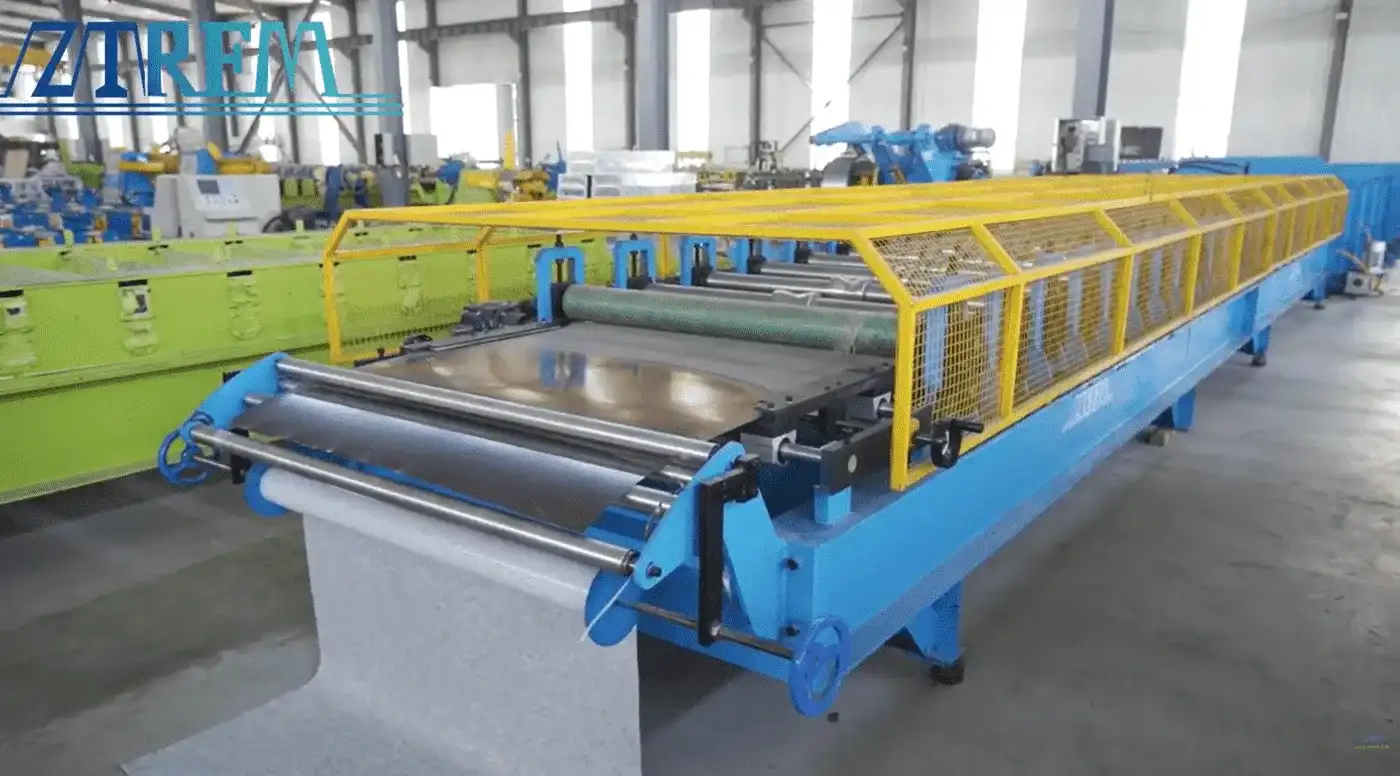
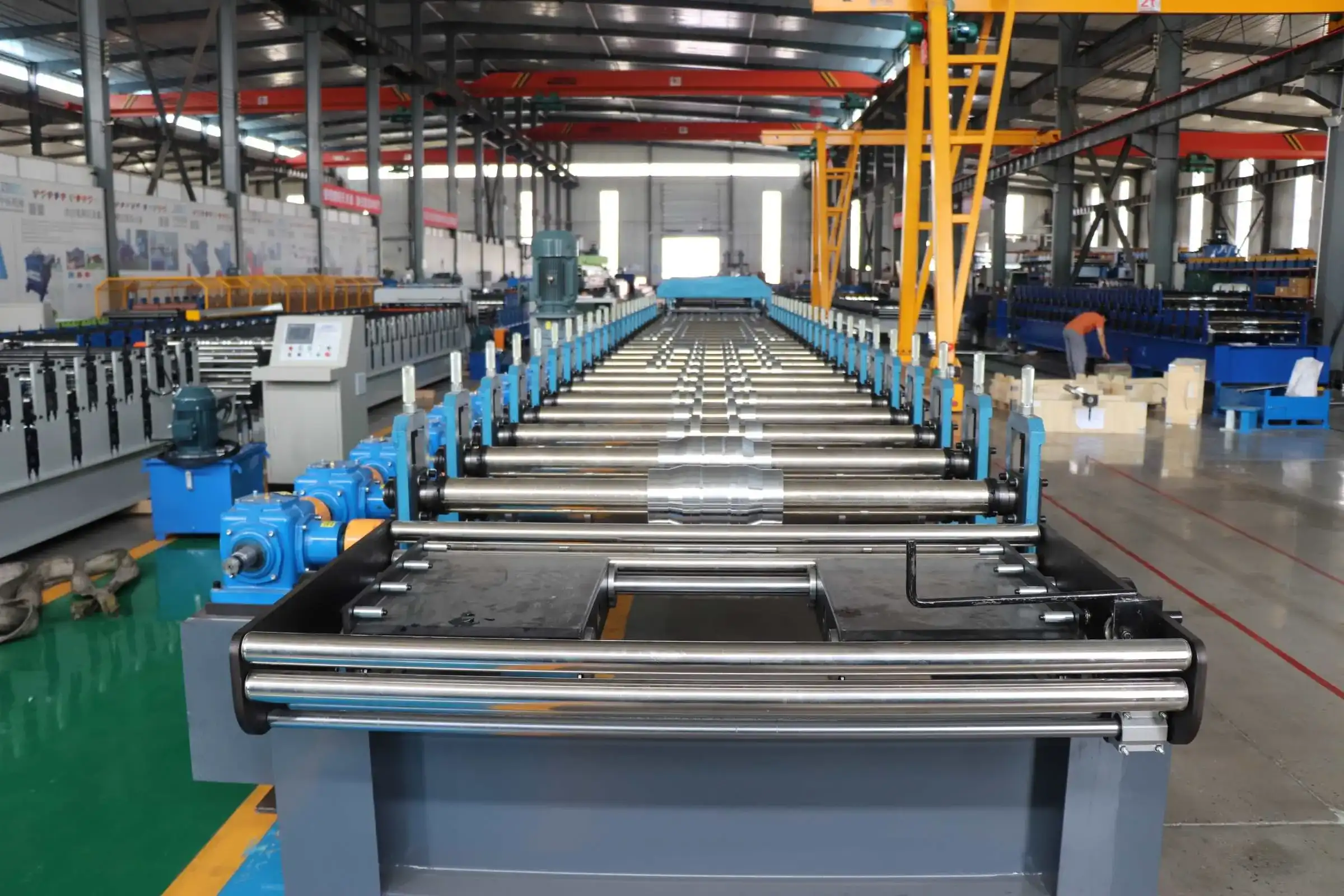
The forming process for each profile type demands different roller station configurations. Trapezoidal machines typically utilise 22-28 forming stations to achieve precise angular bends. Corrugated equipment often requires 16-20 stations due to the gradual curvature formation.
Structural Performance and Load-Bearing Capacity Analysis
Load-bearing capabilities represent a critical selection factor for building roofing system manufacturers and light steel structure producers. Trapezoidal sheets demonstrate measurably higher strength-to-weight ratios in structural testing.
Independent laboratory tests reveal trapezoidal panels withstand concentrated loads 35-40% better than equivalent-thickness corrugated sheets. The geometric efficiency of angular profiles creates superior moment of inertia, directly translating to enhanced span capabilities.
Comparative Load Performance Data:
- Trapezoidal 0.5mm Steel (spanning 5 feet): Supports 120 kg/m² uniform load with <15mm deflection
- Corrugated 0.5 mm Steel (same span): Supports 75 kg/m² before exceeding 15 mm deflection threshold
- Impact Resistance: Trapezoidal profiles absorb 28% more energy during point-load testing.
Material thickness requirements differ between applications. Corrugated sheets often need 0.1-0.15 mm additional thickness to match trapezoidal structural performance. This thickness differential impacts both material costs and finished weight considerations.
If you need panels serving dual roles as structural decking and weather barriers, trapezoidal forming equipment becomes essential. When aesthetic flexibility and material economy outweigh maximum load capacity—decorative facades or interior partitions—corrugated machines offer advantages.
The roll forming speed directly affects production economics. Modern trapezoidal sheet roll-forming machines operate at 45-60 metres per minute while maintaining tight tolerances. Corrugated equipment typically achieves 50-70 metres per minute due to simpler curve profiles requiring less forming force.
Machine Design and Technical Specifications Comparison
Equipment architecture reveals significant operational differences between machine types. Both systems share fundamental roll forming principles yet diverge in execution details that affect maintenance, changeover efficiency, and product versatility.
Roller Station Configuration:
- Trapezoidal machines employ progressive forming sequences with incremental angle increases per station. Each roller set adds 3-5 degrees to the profile angle. Precision alignment becomes critical—misalignment exceeding 0.2 mm causes material stress concentration and appearance defects.
- Corrugated systems use gradual radius formation across stations. The continuous curve development distributes material stress more evenly. Roller maintenance intervals extend 20-30% longer compared to angular profile machines due to reduced contact pressure points.
Key Technical Specification Differences:
- Specification Trapezoidal Systems Corrugated Systems Typical Stations 22-28 rows 16-22 rows Shaft Diameter 75-90 mm 65-80 mm Motor Power: 5.5-7.5 kW, 4-5.5 kW Forming Pressure Higher (angular bends) Lower (gradual curves) Tolerance Range: ±0.8-1.0 mm, ±1.0-1.5 mm
- Material compatibility spans similar ranges for both machine types. PPGI, galvanised steel, and aluminium materials from 0.3-1.0 mm thickness process effectively on either system. Aluminium forming requires specialised roller coatings—hard chrome plating prevents material adhesion during high-speed operation.
- If you need rapid profile changeovers for varied product lines, consider modular roller designs. ZTRFM's automatic changeover system reduces profile switching time from 4 hours to 45 minutes. This feature particularly benefits metal structure manufacturers producing diverse specifications.
- Control system sophistication directly impacts production quality consistency. PLC-based automation manages forming speed, cutting length, and hydraulic pressure with ±1mm cutting tolerance. Advanced systems integrate thickness sensors that automatically adjust roller gaps, compensating for material variation.
Production Efficiency and Operational Considerations
Manufacturing throughput depends on multiple interacting factors beyond raw machine speed. Material handling, cutting precision, and quality control integration determine actual production capacity.
Changeover Speed and Flexibility:
- Profile switching frequency significantly affects overall equipment effectiveness, especially for trapezoidal sheet roll forming machines which typically use 22–28 forming stations. Unlike corrugated systems with simpler curves, trapezoidal machines require precise angular alignment across all stations. Modern trapezoidal sheet roll forming machines address this challenge through modular roller cassettes and automated gap adjustment. For example, ZTRFM’s system reduces profile changeover time from 4 hours to 45 minutes by using pre-calibrated cassettes and PLC-controlled positioning. This is particularly valuable for manufacturers producing multiple trapezoidal panel specifications (e.g., different rib heights, widths, or thicknesses).
Three Efficiency-Impacting Factors Specific to Trapezoidal Forming:
- Angular Bend Consistency: Each station adds 3–5 degrees of bend; misalignment >0.2mm causes visible defects on trapezoidal ribs.
- Material Flow Control: Trapezoidal profiles generate higher forming forces, requiring precise decoiler tension to avoid wrinkling at sharp corners.
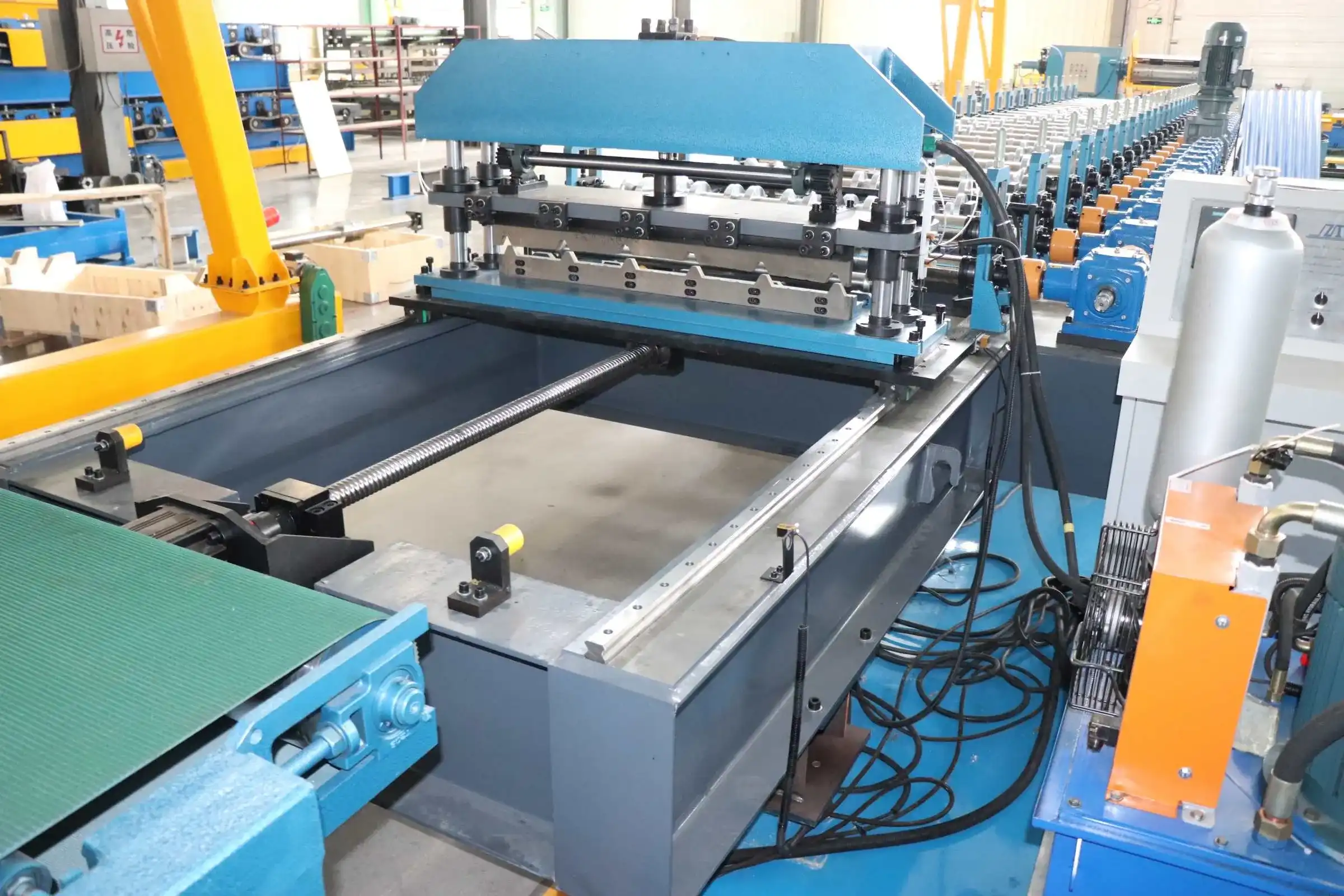
- Cutting Synchronisation: Hydraulic cutting with servo positioning must match the panel’s asymmetric geometry to maintain ±1mm length tolerance.
If you need to produce custom-length trapezoidal panels from 3 to 20 feet efficiently, hydraulic cutting systems with CR12MoV blades must be precisely synchronised with the machine’s 22–28 forming stations. Unlike corrugated profiles, trapezoidal sheets require cut timing that accounts for asymmetric rib geometry; otherwise, angular distortion occurs at the cut edge. A trapezoidal sheet roll forming machine equipped with servo-positioned hydraulic cutting achieves ±1mm length tolerance while maintaining sharp corner profiles, meeting architectural specifications without secondary processing.
Scrap rate control directly impacts material costs and operational profitability. Properly maintained trapezoidal forming equipment achieves <2% scrap rates during steady-state production. Start-up waste and profile transitions contribute an additional 3-5% material loss.
Automation levels vary significantly across price points and manufacturer capabilities for trapezoidal sheet roll forming machines. Entry-level systems require manual length measurement and cutting initiation. Fully automated production lines integrate:
- Automatic stacking with counting systems
- Profile dimension verification using laser measurement
- Material tracking through RFID-enabled coil identification
- Predictive maintenance monitoring via vibration sensors
International engineering companies prioritising global deployment reliability require standardised control interfaces and multi-voltage compatibility. ISO 9001 and CE certification validate equipment safety and performance consistency across markets.
Application Versatility: Matching Machines to Market Needs
End-use applications determine optimal machine selection more than any single technical specification. Understanding target market requirements prevents costly equipment mismatches.
Building Envelope Applications:
- Trapezoidal profiles dominate commercial and industrial roofing where structural performance matters. The 24-gauge steel panels spanning 6 feet without purlins reduce structural costs by eliminating intermediate supports. Vertical wall applications benefit from the weather-tight interlocking panel edges.
- Corrugated sheets excel in agricultural buildings, temporary structures, and applications prioritising drainage over maximum strength. The curved profile sheds water efficiently while accommodating thermal expansion better than angular profiles.
Speciality Market Considerations:
- Composite sandwich panel manufacturers often prefer trapezoidal face sheets. The flat rib surfaces bond more effectively with foam core materials. Adhesive contact area increases 25-30% compared to curved corrugated surfaces.
- If you need to supply residential metal roofing markets, consider aesthetic preferences. Trapezoidal profiles project modern, industrial aesthetics. Corrugated sheets evoke traditional barn-style appearances popular in rural residential applications.
- Colour-coated steel processing requires specialised considerations regardless of profile type. Pre-painted materials demand chrome-plated rollers and reduced forming pressure to prevent coating damage. Production speeds decrease 15-20% when processing premium coated materials.
Material Gauge and Length Capabilities:
- Standard equipment handles 22-24 gauge steel efficiently. Heavier gauges up to 20 (1.0 mm) require upgraded motor power and reinforced frame construction. Aluminium processing—particularly .032" thickness—needs different roller materials to prevent galvanic reactions.
- Custom length production from 3 to 20 feet 10 inches accommodates most architectural requirements. Longer panels up to 20 feet 11 inches demand extended runout tables and careful handling systems. Transportation logistics often limit practical panel lengths despite machine capabilities.
Investment Analysis: Balancing Costs and Production Goals
Equipment acquisition represents substantial capital investment requiring careful financial analysis. Initial purchase price comprises only one component of total ownership costs.
Pricing Structure Considerations:
- Entry-level trapezoidal sheet roll forming machine models start at $25,000-35,000 for basic manual systems. Mid-range automated equipment with PLC controls and hydraulic cutting ranges: $45,000-75,000. Premium high-speed production lines with full automation exceed $100,000.
- Corrugated machine pricing typically runs 10-15% lower for comparable automation levels. The simpler roller geometries and fewer forming stations reduce manufacturing complexity and costs.
Total Cost of Ownership Factors:
- Maintenance Requirements: Annual maintenance costs average 3-5% of equipment value for properly operated systems.
- Spare Parts Availability: Long-term supplier relationships ensure replacement component access—critical for continuous production.
- Energy Consumption: A 5.5 kW motor operation for 8 hours daily costs approximately $150-200 monthly at industrial electricity rates
- Operator Training: Comprehensive training programmes reduce startup learning curves from weeks to days
If you need to minimise initial investment while maintaining quality output, consider mature equipment models from established manufacturers. ZTRFM provides proven designs with simplified maintenance and comprehensive technical support, ideal for startups and small manufacturers.
Production volume projections determine equipment payback periods for trapezoidal sheet roll forming machines. High-speed machines producing 50+ metres per minute justify premium pricing when running multi-shift operations. Lower-volume producers benefit from flexible mid-range equipment.
Customisation capabilities affect both initial costs and long-term value. Standard machines accommodate common profiles efficiently. Custom roller designs for proprietary profiles add $5,000-15,000 but create competitive differentiation.
Maintenance and Long-Term Reliability Factors
Equipment longevity and consistent performance depend heavily on maintenance practices and component quality. Understanding maintenance requirements prevents costly production interruptions.
Critical Maintenance Components:
- Roller wear represents the primary consumable element in roll forming operations. Chrome-plated 45# steel rollers typically achieve 500,000-800,000 meters of production before requiring refurbishment. Material type and thickness significantly impact wear rates—aluminium processing extends roller life versus abrasive galvanised coatings.
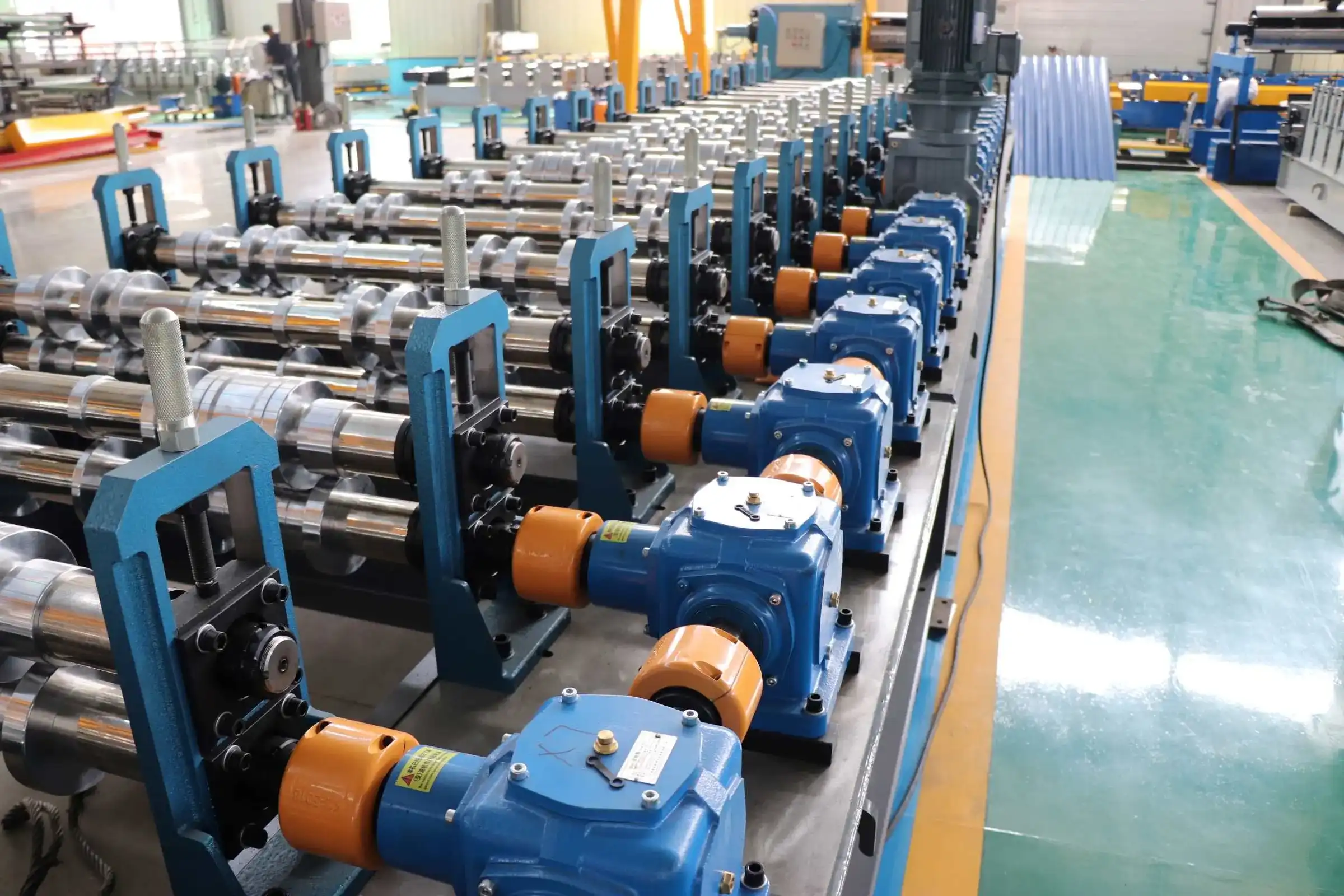
- Gearbox transmission systems require oil changes every 2,000 operating hours. High-quality synthetic lubricants extend service intervals and reduce friction-related energy losses. The cast iron machine frame provides vibration damping, protecting precision components from fatigue damage.
Preventive Maintenance Schedule:
- Daily: Visual roller inspection, lubrication point checks, material feed alignment verification
- Weekly: Cutting blade examination, hydraulic fluid level confirmation, control system backup
- Monthly: Drive chain tension adjustment, roller gap measurement, electrical connection inspection
- Quarterly: Complete roller removal and cleaning, gearbox oil sampling, structural frame alignment check
If you need to maximise uptime in continuous production environments, establish relationships with suppliers offering rapid spare parts delivery. ZTRFM maintains comprehensive parts inventories supporting equipment across 150+ countries with expedited shipping capabilities.
Troubleshooting capabilities separate experienced operators from novices. Common issues include:
- Profile dimension drift: Usually indicates roller wear or mounting misalignment
- Material wrinkling: Often caused by excessive forming speed or inadequate material tension
- Inconsistent cutting lengths: Points to encoder calibration needs or hydraulic pressure fluctuation
Advanced control systems with diagnostic capabilities reduce troubleshooting time by 60-70%. Real-time monitoring alerts operators to developing issues before quality impacts occur.
Technology Integration and Future-Ready Equipment Selection
Modern manufacturing environments demand equipment integration with broader production management systems. Connectivity and automation capabilities increasingly influence purchasing decisions.
Industry 4.0 Compatibility:
- Leading manufacturers now offer machines with Ethernet connectivity and OPC-UA communication protocols. These standards enable integration with enterprise resource planning (ERP) systems and manufacturing execution systems (MES).
- Production data collection provides valuable insights:
- Real-time equipment efficiency monitoring
- Material consumption tracking per product
- Quality metrics trending and analysis
- Predictive maintenance scheduling based on actual usage patterns
If you need to build smart factories or modernise existing operations, prioritise equipment with open communication architectures. Proprietary control systems create integration obstacles and vendor lock-in situations.
Automation Technology Advances:
- Energy efficiency upgrades also address trapezoidal-specific demands. Variable frequency drives (VFDs) on trapezoidal machines reduce energy consumption by 20–25%, but more importantly, they allow slower acceleration during the initial angular bending stages, preventing material springback. Regenerative braking systems capture energy during the high-torque deceleration required after forming sharp trapezoidal ribs—a feature less critical for gradual corrugated curves.
- Energy efficiency upgrades also address trapezoidal-specific demands. Variable frequency drives (VFDs) on trapezoidal machines reduce energy consumption by 20–25%, but more importantly, they allow slower acceleration during the initial angular bending stages, preventing material springback. Regenerative braking systems capture energy during the high-torque deceleration required after forming sharp trapezoidal ribs—a feature less critical for gradual corrugated curves.
ZTRFM Trapezoidal Sheet Roll Forming Machine Advantages
Selecting the right trapezoidal sheet roll forming machine manufacturer impacts long-term production success beyond initial equipment delivery. ZTRFM combines engineering expertise with a comprehensive support infrastructure:
Engineering Excellence and Customisation Capability:
- Material Versatility: Process PPGI, galvanised steel, and aluminium from 0.3-1.0 mm thickness with consistent quality across the entire specification range
- Width Flexibility: Standard 1000mm and 1250mm configurations with custom widths available to match specific market requirements
- High-Speed Production: Achieve 60 metres per minute forming speed without compromising dimensional accuracy or surface finish quality.
- Precision Construction: 80 mm solid shaft diameter and 45# steel rollers with hard chrome plating deliver years of reliable operation.
- Robust Frame Design: 350 H steel construction provides the rigidity necessary for maintaining tight tolerances during continuous production.
- Advanced Cutting System: Hydraulic cutting with CR12MoV blades produces burr-free edges within ±1mm tolerance, eliminating secondary finishing operations.
Operational Reliability and Support Infrastructure:
- Proven Control Technology: PLC-based automation systems for trapezoidal sheet roll forming machines offer intuitive operation with minimal training requirements while maintaining industrial reliability standards.
- Global Certification Compliance: ISO 9001, CE, and CAS certifications validate equipment safety and performance consistency across international markets.
- Comprehensive Technical Documentation: Detailed operation manuals, maintenance schedules, and troubleshooting guides support in-house technical teams.
- Multi-Voltage Compatibility: Standard 380V/50Hz/3-phase configuration with customisation options for regional electrical standards
- Rapid Installation Support: Experienced technical teams ensure smooth equipment commissioning and operator training.
Long-Term Partnership Value:
- Extended Warranty Coverage: Comprehensive protection for critical components provides operational security during production ramp-up periods.
- Spare Parts Availability: Maintained inventory and expedited shipping to 150+ countries, minimising potential production interruptions.
- Technical Consultation Services: Engineering support for profile design optimisation and production process improvements
- Capacity Expansion Planning: Scalable solutions supporting business growth from startup operations to multi-line facilities
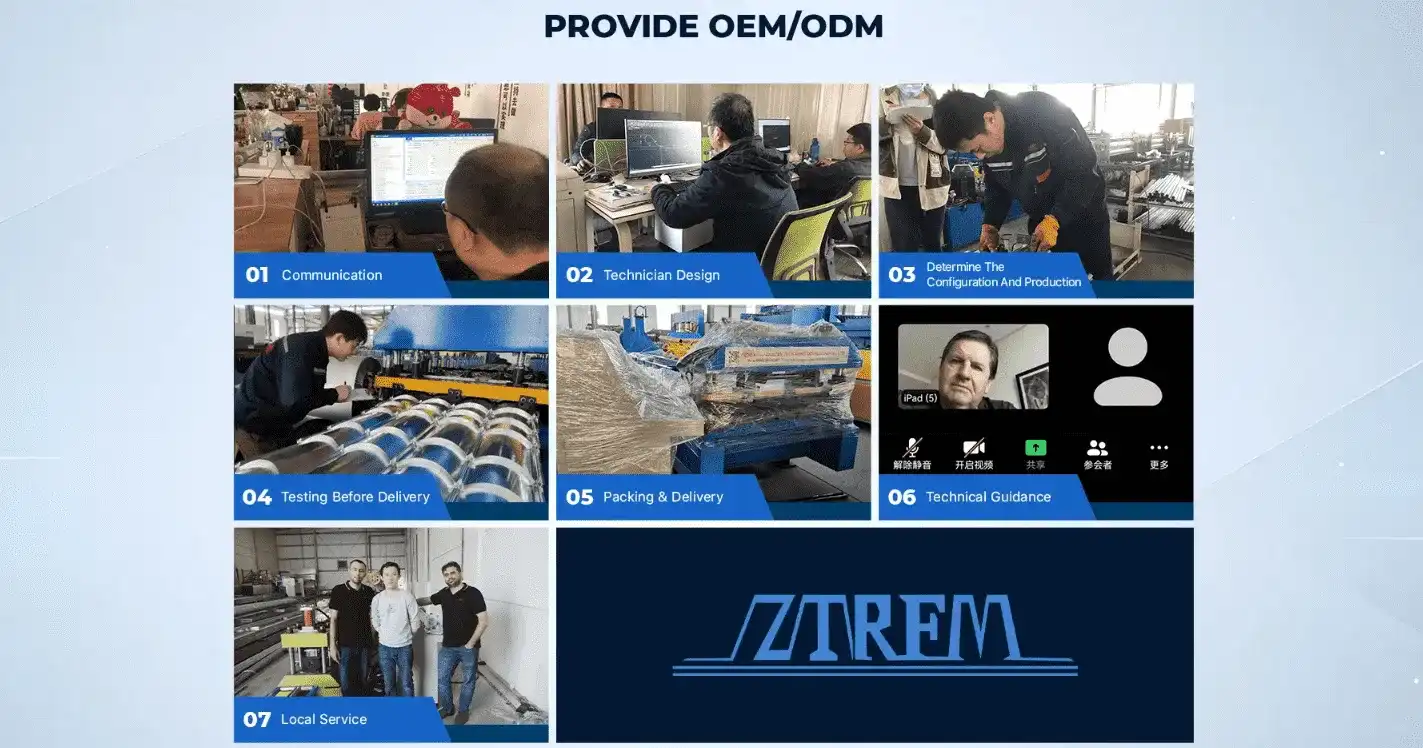
- OEM/ODM Capabilities: Custom machine configurations and private labelling options for distributors and systems integrators
Quality Assurance and Testing Protocols:
- Factory Acceptance Testing: Complete operational verification before shipment ensures equipment meets specifications.
- Material Compatibility Validation: Testing with customer-supplied materials confirms processing capability for specific applications.
- Documentation Package: Detailed inspection reports and performance data provide equipment baseline references.
- Remote Diagnostic Capability: Connected systems enable expert technical support without site visits for many troubleshooting scenarios.
Economic Advantages for Various Customer Segments:
- High-Volume Producers: Equipment durability and high-speed capability reduce per-unit production costs while maintaining quality.
- Flexible Manufacturers: Customisable roller configurations and quick-change systems support diverse product portfolios.
- Emerging Market Entrants: Mature equipment designs with simplified maintenance reduce technical barriers and startup risks.
- International Project Companies: Standardised construction and global support networks enable multi-site deployments.
- Value-Conscious Buyers: Competitive pricing combined with low operating costs delivers attractive total ownership economics.
Equipment selection fundamentally shapes manufacturing capability and competitive positioning, including the trapezoidal sheet roll forming machine. ZTRFM's decade of specialised experience in cold roll forming technology translates to machinery that operates reliably, maintains precision throughout service life, and adapts to evolving production requirements.
Conclusion
The choice between trapezoidal and corrugated sheet roll forming machines depends on structural requirements, application demands, and production objectives. Trapezoidal systems excel in load-bearing applications requiring maximum strength and weather-tight construction. Corrugated equipment offers flexibility and drainage advantages for less demanding applications. Successful equipment selection balances technical specifications, operational capabilities, and total ownership costs while partnering with manufacturers providing reliable global support. Understanding these distinctions empowers informed decisions, driving manufacturing success.
Partner with ZTRFM for Your Trapezoidal Sheet Roll Forming Machine Needs
As a leading trapezoidal sheet roll forming machine manufacturer, ZTRFM delivers precision equipment backed by a decade-long expertise and global support infrastructure. Our machines combine high-speed production capability, customizable configurations, and proven reliability across 150+ countries. Whether scaling startup operations or expanding established production facilities, our engineering team provides tailored solutions matching exact specifications. Contact zhongtuorollforming@gmail.com to discuss your project requirements and discover how our technology enhances your manufacturing competitiveness.
References
1. Smith, J.R. & Patterson, M.K. (2021). Cold Roll Forming Technology: Principles and Industrial Applications. Manufacturing Engineering Press.
2. International Association of Cold Roll Forming Engineers. (2022). Technical Standards for Metal Profile Forming Equipment. IACRF Publications.
3. Chen, W. & Roberts, D.L. (2020). Comparative Analysis of Sheet Metal Profile Geometries in Structural Applications. Journal of Manufacturing Processes, 48(3), 215-228.
4. Building Research Institute. (2023). Performance Testing Standards for Metal Roofing Systems. Construction Materials Division Technical Report Series.
5. Anderson, T.M. (2022). Equipment Selection Criteria for Metal Forming Operations: A Cost-Benefit Framework. Industrial Engineering Quarterly, 35(2), 112-134.
6. Global Metal Forming Association. (2023). Industry Trends in Roll Forming Automation and Quality Control Technologies. Annual Technical Conference Proceedings.