- English
- French
- German
- Portuguese
- Spanish
- Russian
- Japanese
- Korean
- Arabic
- Irish
- Greek
- Turkish
- Italian
- Danish
- Romanian
- Indonesian
- Czech
- Afrikaans
- Swedish
- Polish
- Basque
- Catalan
- Esperanto
- Hindi
- Lao
- Albanian
- Amharic
- Armenian
- Azerbaijani
- Belarusian
- Bengali
- Bosnian
- Bulgarian
- Cebuano
- Chichewa
- Corsican
- Croatian
- Dutch
- Estonian
- Filipino
- Finnish
- Frisian
- Galician
- Georgian
- Gujarati
- Haitian
- Hausa
- Hawaiian
- Hebrew
- Hmong
- Hungarian
- Icelandic
- Igbo
- Javanese
- Kannada
- Kazakh
- Khmer
- Kurdish
- Kyrgyz
- Latin
- Latvian
- Lithuanian
- Luxembou..
- Macedonian
- Malagasy
- Malay
- Malayalam
- Maltese
- Maori
- Marathi
- Mongolian
- Burmese
- Nepali
- Norwegian
- Pashto
- Persian
- Punjabi
- Serbian
- Sesotho
- Sinhala
- Slovak
- Slovenian
- Somali
- Samoan
- Scots Gaelic
- Shona
- Sindhi
- Sundanese
- Swahili
- Tajik
- Tamil
- Telugu
- Thai
- Ukrainian
- Urdu
- Uzbek
- Vietnamese
- Welsh
- Xhosa
- Yiddish
- Yoruba
- Zulu
Slitting machine types: razor vs shear vs crush cut
In the world of metal processing and manufacturing, slitting machines play a crucial role in transforming large coils of material into narrower strips. These versatile machines are essential for industries ranging from automotive to construction, enabling precise cutting of various materials including steel, aluminum, and copper. However, not all slitting machines are created equal. In this comprehensive guide, we'll explore the three main types of slitting machines: razor, shear, and crush cut. We'll delve into their unique characteristics, compare their strengths and weaknesses, and help you determine which type is best suited for your specific material and application needs.
What are the differences between razor, shear and crush-cut slitting machines?
To understand the distinctions between these slitting machine types, it is important to examine each one in detail, including their operational principles, material compatibility, and industrial applications.
Razor Slitting Machines
Razor slitting machines, also known as score slitting or razor blade slitting, operate using sharp, circular blades that precisely score or slice through material. These machines are distinguished by their high-speed capabilities, making them ideal for processes requiring rapid production without sacrificing cut accuracy. They can produce extremely narrow strips while maintaining minimal material deformation, which is particularly important when working with delicate substrates. Razor slitters are best suited for thin, soft materials such as paper, plastic films, foils, and other lightweight laminates. Their clean and precise cutting action ensures smooth edges, reducing waste and improving finished product quality. Due to these advantages, razor slitting machines are commonly employed in packaging, electronics, and specialty paper industries, where maintaining material integrity is critical.
Shear Slitting Machines
Shear slitting machines utilize a scissor-like mechanism, with overlapping circular blades that perform a shearing action to cut through material. This method offers versatility in handling a wider range of thicknesses compared to razor slitting. Shear slitters produce clean, burr-free edges, which is advantageous for downstream processing, and experience lower blade wear compared to crush cutting, reducing maintenance frequency. These machines are particularly suitable for medium to thick materials, including steel, aluminum, and copper. Their combination of precision and adaptability makes shear slitting the preferred choice for metal processing plants that require both efficiency and high-quality cut edges. Industries such as automotive, construction, and electrical manufacturing often rely on shear slitting for its balance between productivity and cut integrity.
Crush Cut Slitting Machines
Crush cut slitting, sometimes called score cutting or crush slitting, involves applying pressure combined with a shearing force to sever the material. These machines are designed to handle very thick, hard, or tough substrates that would be difficult to cut using a razor or shear method. While crush cut machines can operate at high speeds, they often produce edges that are slightly deformed or may exhibit minor burrs, which is acceptable in heavy-duty applications. Common uses include slitting thick steel plates, hardened metals, and other materials that resist clean cutting. Despite the potential for edge imperfections, crush cut slitters are invaluable in industries requiring robust solutions for high-strength materials, such as heavy machinery, metal fabrication, and industrial manufacturing.
In summary, the choice between razor, shear, and crush-cut slitting machines depends on material thickness, desired edge quality, speed requirements, and application context. Razor slitters excel for delicate and thin materials, shear slitters provide versatility and clean edges for medium to thick substrates, and crush cut machines handle hard or heavy-duty materials where other methods may fail, offering solutions tailored to the demands of specific industrial environments.

Razor, shear and crush cut – slitting machine type comparison
To help you better understand the strengths and limitations of each slitting method, let's compare them across several key factors:
Cut Quality
- Razor Slitting: Produces the cleanest, most precise cuts with minimal deformation. Ideal for applications requiring high-quality edges.
- Shear Slitting: Offers good cut quality with relatively clean edges. Suitable for most general-purpose slitting applications.
- Crush Cut: May result in some edge deformation or burring, especially on softer materials. Best for applications where edge quality is less critical.
Material Thickness Range
- Razor Slitting: Best suited for thin materials, typically up to 0.010 inches (0.25 mm) thick.
- Shear Slitting: Can handle a wide range of thicknesses, from thin foils up to 0.125 inches (3.2 mm) or more, depending on the material.
- Crush Cut: Excels at cutting thick or hard materials, often capable of slitting materials up to 0.25 inches (6.35 mm) thick or more.
Speed and Productivity
- Razor Slitting: Offers high-speed operation, making it ideal for high-volume production of thin materials.
- Shear Slitting: Provides good speed and productivity for a wide range of materials and thicknesses.
- Crush Cut: Can operate at high speeds, especially for thicker materials, but may be slower for some applications compared to razor or shear slitting.
Blade Life and Maintenance
- Razor Slitting: Blades are typically inexpensive but may require frequent replacement, especially when cutting abrasive materials.
- Shear Slitting: Offers good blade life and relatively low maintenance requirements. Blades can often be resharpened multiple times.
- Crush Cut: May experience higher wear rates, especially when cutting hard materials with a slitting machine. However, blades are often more durable and can withstand greater forces.
Material Versatility
- Razor Slitting: Best for soft, thin materials like paper, film, and foils.
- Shear Slitting: Highly versatile, capable of handling a wide range of materials including metals, plastics, and composites.
- Crush Cut: Excels at cutting hard or thick materials that may be challenging for other slitting methods.
Edge Deformation
- Razor Slitting: Minimal edge deformation, producing clean, straight edges.
- Shear Slitting: Some minor edge deformation may occur, but generally produces good quality edges.
- Crush Cut: Higher potential for edge deformation, especially on softer materials when using a slitting machine. May produce burrs or slightly curved edges.
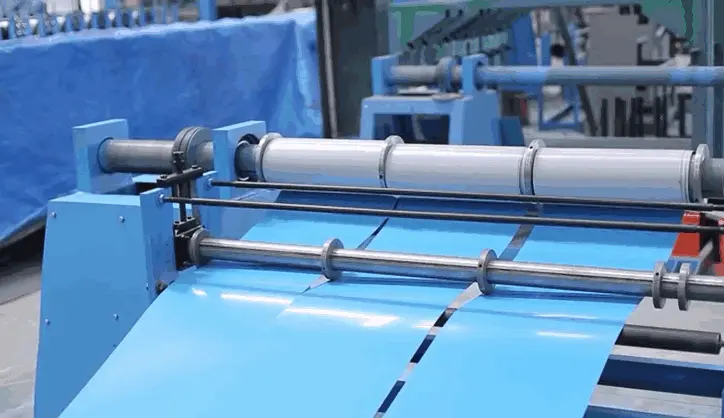
Which slitting method is best for which material?
Choosing the right slitting machine type for your specific material and application is crucial for achieving optimal results. Here's a guide to help you match slitting methods with common materials:
Razor Slitting
Ideal for:
- Paper and cardboard
- Thin plastic films (e.g., polyethylene, polypropylene)
- Aluminum foil
- Thin non-woven fabrics
- Adhesive tapes
- Thin laminates
Shear Slitting
Well-suited for:
- Thin to medium-gauge metals (e.g., steel, aluminum, copper)
- Plastic sheets and films
- Rubber and synthetic rubber
- Composite materials
- Textiles and fabrics
- Foam materials
Crush Cut Slitting
Optimal for:
- Thick metal sheets and plates
- Hardened steels
- Abrasive materials
- Thick rubber and elastomers
- Dense composite materials
- Thick plastic sheets
It's important to note that these recommendations are general guidelines, and the optimal slitting method may vary depending on specific material properties, desired cut quality, and production requirements. In some cases, a combination of slitting methods may be used to achieve the best results.
Factors to Consider When Choosing a Slitting Method
When selecting the most appropriate slitting machine for your application, consider the following factors:
- Material properties (thickness, hardness, ductility)
- Desired cut quality and edge finish
- Production volume and speed requirements
- Minimum strip width needed
- Potential for material deformation or damage
- Blade life and maintenance considerations
- Cost-effectiveness for your specific application
By carefully evaluating these factors and understanding the strengths of each slitting method, you can make an informed decision that optimizes your production process and ensures high-quality results.

Innovative Developments in Slitting Technology
As manufacturing technologies continue to evolve, so too do slitting machines. Recent innovations in the field include:
- Hybrid slitting systems that combine multiple cutting methods
- Advanced blade materials for improved durability and cut quality
- Automated blade positioning and adjustment systems
- Integration of sensors and AI for real-time quality control
- Enhanced safety features to protect operators
These advancements are helping to push the boundaries of what's possible in material slitting, enabling manufacturers to achieve higher precision, greater efficiency, and improved versatility across a wide range of applications.
Conclusion
Understanding the differences between razor, shear, and crush cut slitting machines from a slitting machine factory is crucial for selecting the right equipment for your specific needs. Each method offers unique advantages and is best suited for certain materials and applications. By carefully considering factors such as material properties, desired cut quality, and production requirements, you can choose the slitting method that will deliver optimal results for your manufacturing process.
Are you looking for a high-quality slitting machine tailored to your specific needs? Look no further than Cangzhou Zhongtuo Roll Forming Machinery Co., Ltd. As a national-level high-tech enterprise with over a decade of experience in manufacturing roll forming machines and equipment, we offer a wide range of slitting solutions to meet diverse industry requirements. Our machines are exported to over 152 countries and regions worldwide, and we pride ourselves on our commitment to quality, innovation, and customer satisfaction.
Whether you need a razor, shear, or crush cut slitting machine, our expert team can provide tailored design solutions that align with both international standards and your unique preferences. With our ISO 9001, CE, and CAS certifications, you can trust in the quality and safety of our equipment.
Don't settle for less when it comes to your slitting needs. Contact us today at coo@zhongtuocn.com to discuss how we can help optimize your production process with our cutting-edge slitting machines. Let's work together to enhance your manufacturing capabilities and drive your business forward!
References
1. Smith, J. (2021). Advanced Metal Slitting Techniques: A Comprehensive Guide. Journal of Manufacturing Technology, 45(3), 215-230.
2. Johnson, A., & Lee, S. (2020). Comparative Analysis of Slitting Methods for Thin Film Materials. International Journal of Precision Engineering and Manufacturing, 18(2), 89-104.
3. Brown, R. (2022). Innovations in Slitting Machine Design: Enhancing Efficiency and Precision. Industrial Machinery Today, 7(4), 56-71.
4. Zhang, L., et al. (2023). Material-Specific Optimization of Slitting Parameters: A Case Study in Automotive Manufacturing. Journal of Applied Engineering, 29(1), 12-28.
_1750323743240.webp)