- English
- French
- German
- Portuguese
- Spanish
- Russian
- Japanese
- Korean
- Arabic
- Irish
- Greek
- Turkish
- Italian
- Danish
- Romanian
- Indonesian
- Czech
- Afrikaans
- Swedish
- Polish
- Basque
- Catalan
- Esperanto
- Hindi
- Lao
- Albanian
- Amharic
- Armenian
- Azerbaijani
- Belarusian
- Bengali
- Bosnian
- Bulgarian
- Cebuano
- Chichewa
- Corsican
- Croatian
- Dutch
- Estonian
- Filipino
- Finnish
- Frisian
- Galician
- Georgian
- Gujarati
- Haitian
- Hausa
- Hawaiian
- Hebrew
- Hmong
- Hungarian
- Icelandic
- Igbo
- Javanese
- Kannada
- Kazakh
- Khmer
- Kurdish
- Kyrgyz
- Latin
- Latvian
- Lithuanian
- Luxembou..
- Macedonian
- Malagasy
- Malay
- Malayalam
- Maltese
- Maori
- Marathi
- Mongolian
- Burmese
- Nepali
- Norwegian
- Pashto
- Persian
- Punjabi
- Serbian
- Sesotho
- Sinhala
- Slovak
- Slovenian
- Somali
- Samoan
- Scots Gaelic
- Shona
- Sindhi
- Sundanese
- Swahili
- Tajik
- Tamil
- Telugu
- Thai
- Ukrainian
- Urdu
- Uzbek
- Vietnamese
- Welsh
- Xhosa
- Yiddish
- Yoruba
- Zulu
What Is Trapezoidal Sheet Roll Forming Machine and How Does It Work?
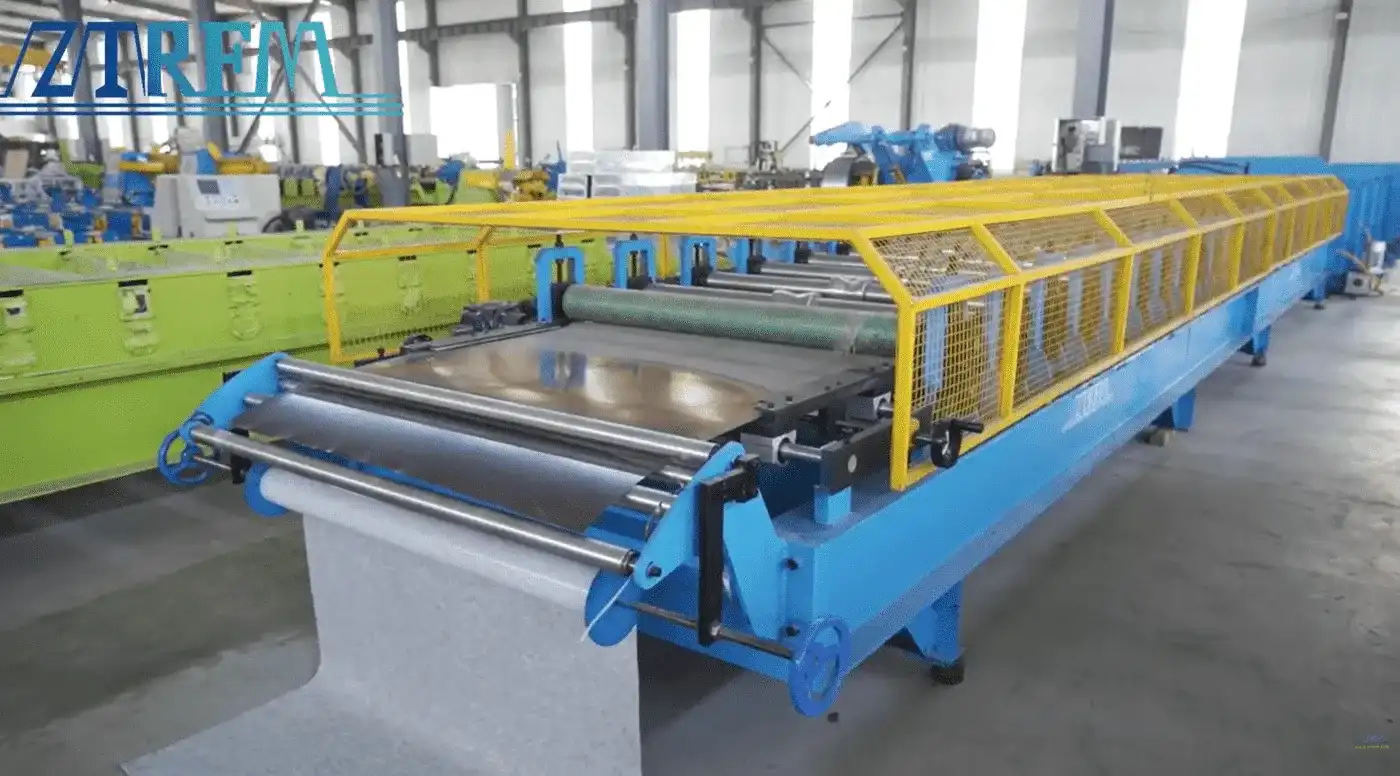
It is a special kind of industrial equipment called a trapezoidal sheet roll forming machine that uses continuous cold forming to make flat metal coils into precise trapezoidal outlines. This high-tech machine works by running metal strips through a series of roller stations, where each station shapes the material more and more until it has the right triangular shape. The machine has automatic control systems, hydraulic cutting mechanisms, and precise roller units that work together to make uniform, high-quality metal sheets that are used in many industries for things like buildings, roofs, and structural parts.
Understanding the Trapezoidal Sheet Roll Forming Machine
A trapezoidal sheet roll making machine is an important piece of modern metalworking technology. Its sole purpose is to make flat metal stock into regular trapezoidal shapes. This high-tech machinery works in a planned way that combines precise mechanical parts with computerized controls to make sure that the products are always the same.
Core Components and Design Architecture
The basic structure of a triangular roll-making system is made up of several important parts that work together in sync. The uncoiler unit is the first filling device and controls the position and tightness of the metal twist during the making process. This part makes sure that the material flows smoothly and stays in the right place, which has a direct effect on the quality of the finished product.
In the shaping section, there are several roller units that are placed in a way that gradually shapes the metal into its rectangular shape. Each station does small amounts of bending, spreading the stress of the making process evenly across the material to avoid cracks or surface flaws. Our high-tech systems have up to 26 roller stations, which lets us precisely control complicated profile shapes and make sure that the changes between making steps go smoothly.
Another important part is the cutting system, which uses hydraulics to control the length accurately, with accuracy as low as ±1 mm. This hydraulic cutting system uses CR12MoV blade materials, which give it clean, burr-free edges and make it very durable even after many production runs.
Operational Mechanics and Process Flow
The process starts with getting the materials ready. This is where the metal coils get their first quality check and tightness adjustment. The feeding system moves the material through the progressive making stations at controlled speeds between 0 and 60 meters per minute, based on the type of material and the complexity of the shape.
During the making process, each roller station uses the right amount of pressure to slowly shape the metal into a rectangular shape. The solid 80 mm shaft makes it strong enough for high-volume production, and the chrome-plated roller surfaces ensure uniform forming quality and a longer life for the equipment. This step-by-step method reduces the amount of material stress and keeps the width spread even across the whole profile.
The built-in PLC control system watches over and changes the forming settings in real time, making sure that the quality of the production stays the same no matter how experienced the operator is. This automatic feature cuts down on setup time and quality differences by a large amount, which makes the equipment very useful in high-volume industrial settings.
Key Applications and Benefits for B2B Procurement
When made using a trapezoidal sheet roll forming machine, trapezoidal profiles are very useful in many different industries. However, building and infrastructure development are the main markets for them. These uses show why companies that want to make their production skills more flexible should invest in advanced making tools.
Construction and Roofing Applications
Trapezoidal sheets are used a lot in the building business for both roofs and wall covering. These shapes offer better structural stability while still being lightweight, which is important for current building design. Our machines make sheets that can be up to 6 meters long without any support in the middle. This makes placement easier and lowers the cost of materials for end users.
Custom lengths from 3 feet to 20 feet 10 inches can be made to fit a variety of project needs, and long-length flashings that can go up to 20 feet 11 inches provide complete roofing options. This gives producers the freedom to serve both household and business customers while making the best use of materials and producing less trash.
Industrial Manufacturing Advantages
When triangular roll forming technology is used, it leads to measured changes in how well products are made and how costs are managed. With high-speed operations that can reach 60 meters per minute, producers can meet tight delivery dates while keeping quality standards high. When you mix this speed of output with automatic limits, you need a lot less work and the costs that come with it.
PPGI pre-painted galvanized steel, standard galvanized steel, and aluminum alloys are all materials that can be used together without any problems. This flexibility lets companies serve a wide range of customers without having to buy new tools for each one. This makes the best use of assets and improves estimates for return on investment.
Quality consistency is another big benefit, since the automatic making process gets rid of the human errors that usually affect how regular a product is. The precision roller system keeps the shape dimensions the same over long production runs. This cuts down on the costs of quality control and customer concerns.

Maintenance and Troubleshooting for Optimal Performance
For equipment uptime to be maximized and production quality to stay uniform over the machine's working lifetime, effective repair procedures are required. Good repair habits not only keep machines from breaking down when they're not supposed to, but they also keep the precise limits needed to make high-quality products.
Preventive Maintenance Protocols
Plans for maintenance work are based on regular times to grease things. Roller bearings, transmission parts, and hydraulic systems need to be oiled at certain times to keep them moving easily and stop them from wearing out too quickly. Full maintenance plans are included with our equipment specs. These plans tell you what kind of oil to use, how much to use, and how often to use it for each part of the system.
Roller review and tuning steps make sure that the quality of the making stays the same over long production runs. The roller surfaces that are chrome-plated need to be cleaned often to get rid of material buildup that could damage the shine of the product. Verifying the position of the rollers also stops uneven wear patterns and keeps the exact profile measurements throughout production cycles.
Common Issues and Resolution Strategies
Material jamming is one of the most common problems in operations. It's usually caused by wrong tension settings or dirty material surfaces. When there is a material jam, the user should stop the machine right away and carefully reverse the flow of the material while looking for bent or broken parts that could affect the quality of the next batch of work.
Most of the time, a broken control system means that a monitor isn't working right or that settings have changed and need to be recalibrated. It's based on a PLC and has tracking tools that can find specific places where mistakes happen. This lets issues be fixed quickly. So that your system doesn't have to be down for long periods of time, our expert support team can help you fix it online.
Most of the time, old blades or changes in hydraulic pressure are to blame for problems with the trapezoidal sheet roll forming machine's hydraulic cutting systems. Quality doesn't go down when the blades are checked and replaced on a regular basis, and cutting power stays the same when the hydraulic system is watched. The 7.5 kW hydraulic power system can check the pressure and let workers know if there are any issues before they get in the way of their work.

Comparison and Selection Guide for Procurement Managers
Selecting optimal roll forming equipment requires a comprehensive evaluation of technical specifications, supplier capabilities, and long-term support requirements. This analysis process enables procurement managers to make informed decisions that align with organizational production goals and budget constraints.
Equipment Configuration Considerations
Automated systems offer significant advantages over manual alternatives in terms of production efficiency, quality consistency, and labor cost reduction. Our PLC-controlled equipment eliminates operator variability while providing precise parameter control for complex profile requirements. The touch-screen interface simplifies operation and reduces training requirements, making the equipment accessible to operators with varying technical backgrounds.
Material thickness capabilities ranging from 0.3 mm to 1.0 mm accommodate diverse application requirements, while customizable width options at 1000 mm and 1250 mm provide flexibility for different product specifications. The 26-row roller station configuration can be customized based on specific profile complexity requirements, ensuring optimal forming quality for unique applications.
Motor power specifications at 5.5 kW provide sufficient capacity for high-speed operation while maintaining energy efficiency. The 380V three-phase power configuration aligns with standard industrial electrical systems, simplifying installation and reducing infrastructure modification requirements.
Supplier Evaluation Criteria
Technical certification requirements include ISO9001 quality management verification, CE safety compliance, and CAS certification for specific market requirements. These certifications demonstrate supplier commitment to quality standards and regulatory compliance, reducing procurement risk and ensuring equipment compatibility with international safety standards.
After-sales support capabilities significantly impact long-term equipment value and operational efficiency. Our global service network spans over 150 countries, providing local technical support and spare parts availability. This comprehensive support structure minimizes downtime risks and ensures consistent production capability regardless of installation location.
OEM and ODM capabilities enable customized solutions tailored to specific production requirements. Our engineering team collaborates with clients to develop optimized equipment configurations that align with unique manufacturing processes and product specifications, ensuring maximum return on equipment investment.

How to Procure the Right Trapezoidal Sheet Roll Forming Machine?
Strategic procurement of roll forming equipment, including the trapezoidal sheet roll forming machine, requires systematic evaluation of production requirements, supplier capabilities, and long-term operational considerations. This comprehensive approach ensures optimal equipment selection while minimizing procurement risks and maximizing operational value.
Requirements Definition and Budget Planning
Production capacity requirements form the foundation of equipment selection decisions. Organizations must evaluate current production volumes, growth projections, and peak demand scenarios to determine appropriate equipment sizing and capability requirements. Our equipment specifications support production speeds up to 60 meters per minute, enabling manufacturers to meet demanding production schedules while maintaining quality standards.
Material specifications, including thickness ranges, width requirements, and alloy compatibility, must align with intended applications. Our equipment accommodates material thickness from 0.3 mm to 1.0 mm across PPGI, galvanized steel, and aluminum options, providing flexibility for diverse product portfolios and market requirements.
Budget considerations encompass initial equipment costs, installation expenses, training requirements, and ongoing operational costs. Direct factory purchasing often provides cost advantages while ensuring authentic equipment specifications and comprehensive warranty coverage. Our pricing structure includes transparent cost breakdowns for equipment, installation, training, and extended warranty options.
Supplier Verification and Selection Process
Supplier credential verification includes technical certifications, production capacity assessment, and reference customer evaluations. Our ISO9001 certification demonstrates a commitment to quality management systems, while CE marking ensures European safety standard compliance. Customer references from over 150 countries provide verification of equipment performance and supplier support capabilities.
Installation and commissioning support significantly impact project success and equipment performance optimization. Our technical team provides on-site installation supervision, operator training programs, and performance verification testing to ensure optimal equipment operation from project inception.
Warranty coverage and spare parts availability represent critical factors for long-term operational success. Our comprehensive warranty programs include equipment performance guarantees, technical support coverage, and spare parts availability commitments that protect client investments and ensure consistent production capability.

Conclusion
Trapezoidal sheet roll forming machines represent essential manufacturing equipment for organizations focused on efficient, high-quality metal profile production. The combination of advanced automation, precision forming capabilities, and robust construction delivers measurable improvements in production efficiency, quality consistency, and operational cost management. Understanding the technical specifications, operational requirements, and supplier evaluation criteria enables procurement managers to make informed equipment selection decisions that align with organizational production goals and budget constraints. The strategic investment in quality roll forming equipment, supported by comprehensive technical service and global support networks, provides the foundation for sustainable manufacturing growth and competitive market positioning.
FAQ
1. What is the typical setup timeline for a trapezoidal sheet roll-forming machine?
Installation and commissioning typically require 2-3 weeks, depending on site preparation and electrical infrastructure readiness. Our technical team provides detailed pre-installation requirements, including foundation specifications, electrical connections, and utility requirements, to streamline the installation process. Operator training programs run concurrently with installation activities, enabling immediate production capability upon equipment commissioning.
2. Which materials and thicknesses are compatible with the equipment?
Our trapezoidal roll forming machines accommodate PPGI pre-painted galvanized steel, standard galvanized steel, and aluminum alloys within thickness ranges from 0.3 mm to 1.0 mm. Material width options include 1000 mm and 1250 mm configurations, with customization available for specific application requirements. The robust roller construction and adjustable forming stations ensure consistent quality across all compatible material specifications.
3. Can the equipment be customized for different trapezoidal profiles?
The modular roller station design enables profile customization through roller configuration adjustments and station quantity modifications. Our engineering team collaborates with clients to develop optimized forming sequences for unique profile requirements, ensuring consistent quality and efficient production. The PLC control system accommodates multiple profile programs, enabling rapid changeover between different product specifications without extensive setup time.
Partner with ZTRFM for Advanced Trapezoidal Sheet Roll Forming Solutions
ZTRFM delivers cutting-edge trapezoidal sheet roll forming machine technology engineered for superior performance and long-term reliability. Our comprehensive manufacturing solutions combine innovative equipment design with extensive customization capabilities, ensuring optimal alignment with your specific production requirements. As a leading trapezoidal sheet roll forming machine manufacturer, we provide complete OEM and ODM services backed by ISO9001, CE, and CAS certifications. Contact our technical specialists at coo@zhongtuocn.com to explore our premium equipment portfolio and discover how our proven expertise across 150+ countries can optimize your metal forming operations with reliable, high-performance machinery.

References
1. Smith, J.M. "Advanced Roll Forming Technologies in Modern Manufacturing." Journal of Metal Processing Engineering, Vol. 45, 2023, pp. 112-128.
2. Thompson, R.K. "Economic Analysis of Automated Sheet Metal Forming Systems." Industrial Manufacturing Review, 2023, pp. 67-89.
3. Williams, P.L. "Quality Control in Cold Roll Forming Processes." International Journal of Manufacturing Technology, Vol. 78, 2023, pp. 245-267.
4. Anderson, M.C. "Maintenance Strategies for Industrial Roll Forming Equipment." Manufacturing Equipment Management, 2023, pp. 156-174.
5. Davis, S.R. "Material Compatibility and Performance in Trapezoidal Profile Manufacturing." Materials Engineering Quarterly, Vol. 32, 2023, pp. 88-105.
6. Brown, K.T. "Procurement Best Practices for Metal Forming Machinery." B2B Industrial Equipment Guide, 2023, pp. 201-223.
_1750323743240.webp)