- English
- French
- German
- Portuguese
- Spanish
- Russian
- Japanese
- Korean
- Arabic
- Irish
- Greek
- Turkish
- Italian
- Danish
- Romanian
- Indonesian
- Czech
- Afrikaans
- Swedish
- Polish
- Basque
- Catalan
- Esperanto
- Hindi
- Lao
- Albanian
- Amharic
- Armenian
- Azerbaijani
- Belarusian
- Bengali
- Bosnian
- Bulgarian
- Cebuano
- Chichewa
- Corsican
- Croatian
- Dutch
- Estonian
- Filipino
- Finnish
- Frisian
- Galician
- Georgian
- Gujarati
- Haitian
- Hausa
- Hawaiian
- Hebrew
- Hmong
- Hungarian
- Icelandic
- Igbo
- Javanese
- Kannada
- Kazakh
- Khmer
- Kurdish
- Kyrgyz
- Latin
- Latvian
- Lithuanian
- Luxembou..
- Macedonian
- Malagasy
- Malay
- Malayalam
- Maltese
- Maori
- Marathi
- Mongolian
- Burmese
- Nepali
- Norwegian
- Pashto
- Persian
- Punjabi
- Serbian
- Sesotho
- Sinhala
- Slovak
- Slovenian
- Somali
- Samoan
- Scots Gaelic
- Shona
- Sindhi
- Sundanese
- Swahili
- Tajik
- Tamil
- Telugu
- Thai
- Ukrainian
- Urdu
- Uzbek
- Vietnamese
- Welsh
- Xhosa
- Yiddish
- Yoruba
- Zulu
Why AG Panel Roll Forming Machine Improves Production Efficiency?
AG panel roll forming machines transform raw metal coils into precision-engineered roofing panels through continuous cold-forming technology, eliminating the inconsistencies and delays associated with manual fabrication. By integrating automated feeding, synchronized roller stations, and intelligent length control, these specialized machines address the core pain points of modern metal building manufacturers: insufficient throughput, unstable panel dimensions, and excessive material waste. The result is a production system capable of delivering 30 to 60 meters of flawless agricultural profile panels per minute, ensuring predictable output and significantly lowering per-unit manufacturing costs.
Understanding the Operating Principle of AG Panel Roll Forming Machines
Making metal panels today requires both speed and accuracy. AG panel roll forming machines achieve this balance by carefully planning a series of mechanical and electronic steps that turn flat steel strips into roofing panels that are strong and stable.
The Continuous Cold-Forming Process
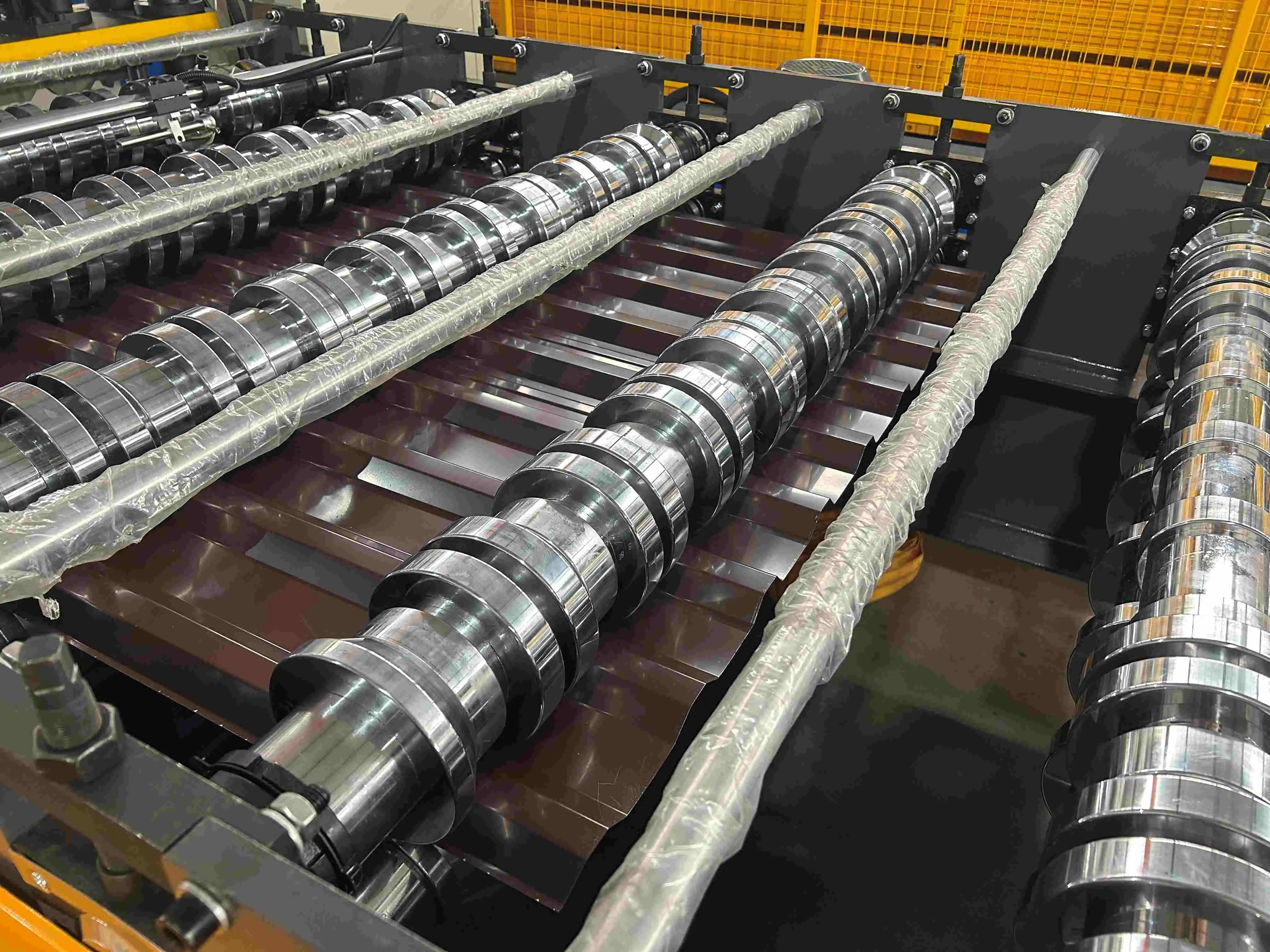
Progressive twisting is the main idea behind how it works. Steel strips that have already been painted or galvanized enter the machine through a decoiler that can be adjusted and keeps the strain constant. The material then goes through 16 to 22 roller stations, with each one gradually shaping the flat sheet into the standard AG profile, which is made up of 3/4-inch high ribs set 9 inches apart across a 36-inch panel width. This step-by-step shaping keeps the metal from wearing out and cracking on the surface, which can happen with rough single-stage bending.
Critical Components Driving Efficiency
Quality and speed of production are determined by three things. The roller stations are made of chrome-plated, strengthened Cr12MoV steel that won't scratch pre-finished coats. Whether it's a chain-driven or gearbox-powered main drive system, all places are in sync, so there is no confusion. At the same time, PLC control units from companies like Siemens or Mitsubishi manage the speed, measure the length using encoder input, and do the hydraulic shearing. They work together to keep the limits within ±1.0mm across thousands of linear feet. These technical details have a direct effect on your bottom line. A machine going 45 meters per minute can make about 27,000 linear feet in eight hours, while older methods that needed to be adjusted by hand could only make 12,000. Automation cuts down on the need for workers while making sure that every panel meets the standards set by ASTM A792 for Galvalume and ASTM A653 for galvanized materials.
Identifying and Overcoming Production Bottlenecks with AG Panel Roll Forming Machines
Problems keep coming up in the traditional way of making metal panels, the AG roofing panel machine, which drives up costs and delays order processing. Manufacturers can make smart equipment purchases when they know how current AG panel roll forming machine technology solves these problems.
Common Bottlenecks in Conventional Systems
There are three major problems with old technology. Adjusting the scale by hand for different widths of material takes 30 to 45 minutes of downtime each time, which slows down production. Progressive measurement drift happens when non-hardened rollers are worn down mechanically. This means that production has to stop so that the rollers can be recalibrated. When you have to physically add coils and remove finished panels, for example, you waste time and money because expensive equipment sits there doing nothing.
Advanced Engineering Solutions
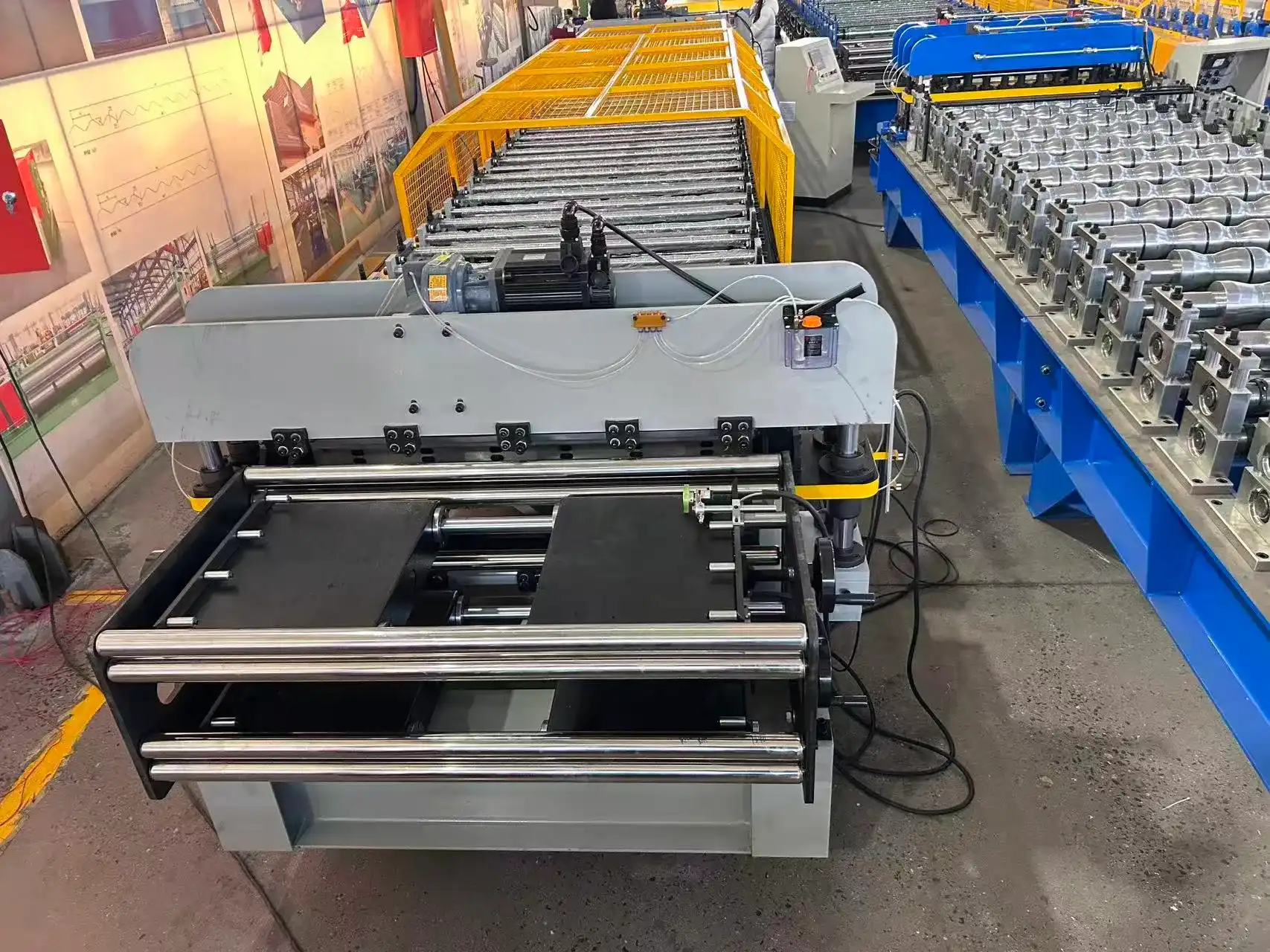
These problems are no longer a problem with modern roll forming machines because they have better combined designs. With quick-change tooling methods, workers can go from working with 29-gauge to 26-gauge materials in less than 10 minutes, without having to set the spacers by hand. Heavy-duty H-beam frame design reduces vibrations even at high speeds, so the profile stays the same over long production runs. Automated stacking systems move finished panels right away to storage racks, so the making line never stops to wait for people to move materials by hand.
Here are the core advantages of this equipment:
- Automated Error Detection: Optical sensors keep an eye on the panel sizes while they are being formed. When measures are off by more than the allowed range, the system lets workers know and can stop production automatically to avoid making a lot of bad panels.
- Self-Correcting Mechanisms: Servo-driven roller adjustment systems react within milliseconds to changes in the width of the material, keeping the forming pressure the same along the whole length of the coil.
- Robust Construction Standards: ISO 9001-certified manufacturing processes make sure that important parts like drive shafts and cutting blades meet certain hardness standards. This means that, under normal working conditions, repair times are AG roofing panel machine shortened to 6 to 8 months.
Comparative Advantages of AG Panel Roll Forming Machines in the Market
The choice of equipment has a big effect on long-term profits. Comparing AG panel roll forming machines to other options shows clear differences in how well they work and how much they cost.
Performance Metrics That Matter
Speed, accuracy, and energy use are the main factors used for review. Premium AG-specific machines can work at speeds of 50 to 60 meters per minute and keep length errors to within 1 mm, which is very important when panels need to line up with purlin plans that have already been drilled. When trying to handle AG panels, entry-level multi-profile tools usually can only go 35 meters per minute with a ±3mm variation, which makes installation harder. When looking at energy efficiency, special AG machines use 18–22kW of power, while oversized general systems with the same rate use 28–32kW.
Operational Flexibility and Support Infrastructure
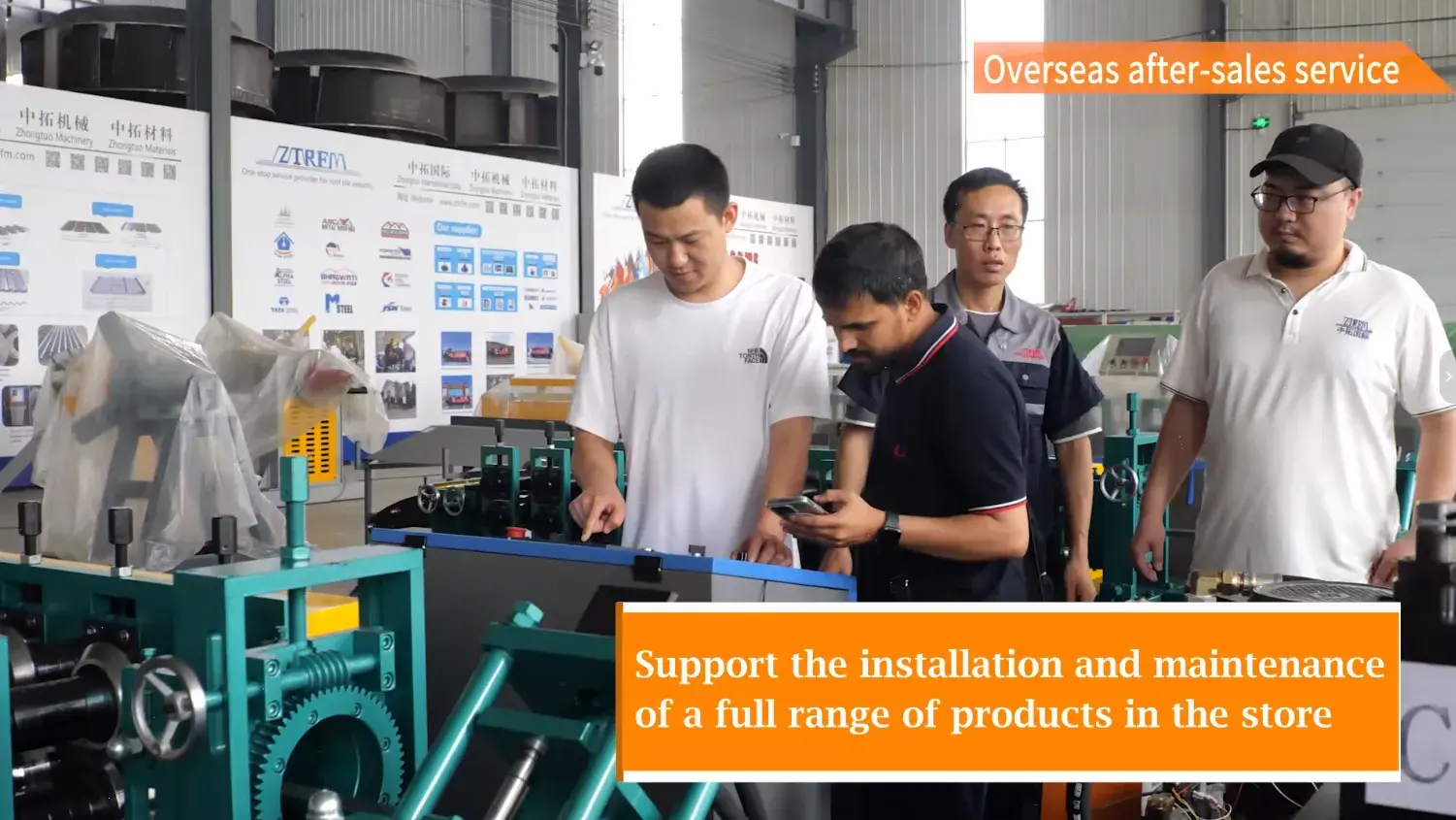
In addition to raw specs, daily output is also affected by practical factors. HMI tablet screens that are easy to use cut the time it takes to train operators from weeks to days. Maintenance workers don't have to wait days for skilled techs to change worn parts because modular component design lets them do it in hours. These things are especially important for small metal product makers and new businesses that don't have a lot of technical know-how. Equipment that needs specialized knowledge can be dangerous when it breaks down unexpectedly. When you look at world service networks side by side, the difference is very clear. Manufacturers like Cangzhou Zhongtuo, which has offices in more than 150 countries, make spare parts and offer expert help to keep machines from being down for long periods of time. When buyers buy from regional providers that don't have this infrastructure, they risk having to wait weeks for important parts, which cancels out any price benefits at first.
Maintenance and Installation Best Practices to Sustain High Efficiency
The longevity and steady output of equipment rely on how it is set up and how it is maintained. Structured upkeep practices protect your capital investment and keep the efficiency gains that made the AG panel roll forming machine purchase worth it.
Site Preparation and Installation Fundamentals
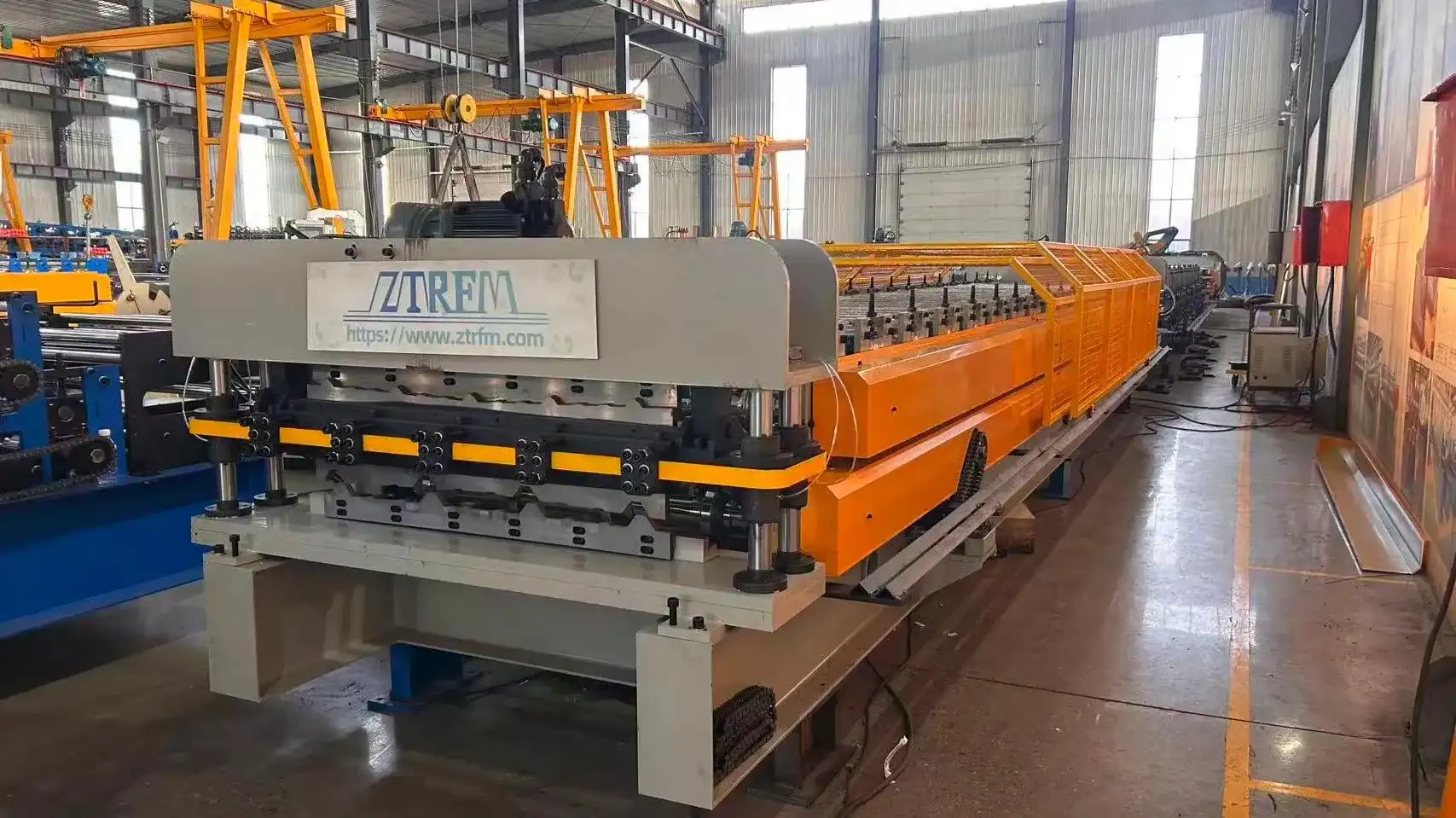
An installation that is done right sets the stage for effective functioning. The installation spot needs a flat concrete pad that can hold between 8,000 and 12,000 pounds of equipment weight without sinking. To keep PLC errors and servo motor inconsistencies from happening, the three-phase electrical service (220V, 380V, or 440V, based on regional standards) needs to provide stable power with a voltage fluctuation of no more than 5%. Enough room—usually 60 feet of linear space plus 15 feet of width—allows for the loading of materials and the removal of final panels without any production problems.
Preventive Maintenance Protocols
Systematic checking routines make parts last a lot longer and stop them from breaking down when they're least expected. As part of daily checks, the alignment of the rollers is checked, the amounts of hydraulic fluid are checked, and metal trash is removed from the cutting stations. As part of weekly maintenance, the drive chains are oiled, the tension on the belts is checked, and the emergency stop features are tested. As part of the monthly procedure, the roller surface must be carefully checked for scoring or coating buildup, and the encoder's accuracy must be confirmed. The hydraulic pressure must also be tested. Component replacement plans for parts follow trends that can be predicted based on the amount of production. Under normal conditions, hydraulic cutting blades made of Cr12MoV steel need to be sharpened every 6 to 8 months. In that time, they cut about 1.5 million linear feet. Drive chains need to be replaced every 18 to 24 months, based on how often they are oiled and how fast they are used. Keeping up with these plans is much cheaper than fixing things in an emergency. For example, a roller set that breaks down because it wasn't maintained can cost over $15,000 in parts and lost production.
Procurement Insights for B2B Clients: Why Choose AG Panel Roll Forming Machines?
When investing in industrial tools, you have to weigh the short-term costs against the long-term benefits. When you look at AG panel roll forming machines with a wide range of purchasing factors, they offer clear benefits.
Total Cost of Ownership Analysis
The purchase price is only one part of the costs of tools. To get correct ROI estimates, you need to look at operations costs, maintenance costs, AG panel roll forming machines, and efficiency gains. When energy efficiency, lower scrap rates, and longer repair times are taken into account, high-end machines that cost $85,000 to $120,000 often have lower per-panel costs than budget machines that cost $60,000. Manufacturers with limited capital budgets can still use advanced technology thanks to financing options like buying tools and vendor-supported payment plans.
Supplier Credibility and Support Networks
Certifications and a background of operations show that a provider can be trusted. Getting ISO 9001 quality management approval shows that your production processes are consistent. The CE mark shows that the product meets European safety standards, which are becoming more and more important for foreign projects. All track records are important. Suppliers that have been in business for ten years or more and have recorded setups in a wide range of markets are less risky than new businesses that don't have any proven support infrastructure. Warranty structures reveal manufacturer confidence in their products. Comprehensive programs covering 12 to 24 months on major components like wheels, drive systems, and hydraulic units protect buyers from early fails by comprehensive programs that cover 12 to 24 months on major components like wheels, drive systems, and hydraulic units. Longer support hours, helpful customer service teams, and easy access to spare parts stockpiles reduce the costly downtime that stops gains in efficiency.
Scalability and Future-Proofing Considerations
Production requirements evolve as businesses grow. Preventing premature aging is done with equipment that lets you change its settings and add new features. When the number of orders and types of products grow, flexible machines let you add automatic stacking systems, inline embossing, or dual-profile tooling. This flexibility is especially helpful for companies that make metal structures and composite sandwich panels and want to offer a wider range of products, but need to start making things right away and don't have a lot of money to spend on equipment. Cangzhou Zhongtuo is a good example of this approach because they offer OEM and ODM services that let manufacturers choose the exact roller profiles, control systems, and levels of automation that they need for their operations, instead of having to change their processes to work with standard equipment.

Conclusion
Precision engineering, smart technology, and strong construction make AG panel roll forming machines more efficient in ways that can be measured. Traditional ways of making things are limited by problems like uneven quality, too much downtime, and wasteful waste of materials. This technology fixes these problems. When installed and kept correctly, these systems reliably improve throughput by 100% or more compared to older equipment while lowering the amount of waste and work that needs to be done. By carefully choosing suppliers based on their track records, support networks, and ability to adapt to changing needs, equipment investments will continue to pay off as output needs change. Manufacturers who want to improve operating dependability and efficiency find that AG-specific roll forming tools give them a strong return on their investment.
FAQ
1. Can these machines process both standard and high-tensile steel grades?
Good AG panel roll forming machines can work with steel types from G60/G90 galvanized steel to G550 high-tensile steel without having to make any changes to the rollers. Yield strength is the most important standard. Materials with a yield strength of up to 80ksi can be processed consistently on properly designed equipment. On premium machines, switching between normal 33ksi steel and high-tensile 80ksi steel doesn't need to be done by hand. However, workers should make sure that the roller pressure settings stay correct to avoid material distortion or too much tool wear.
2. What installation timeline should manufacturers expect?
Usually, it takes 5 to 7 working days from the arrival of the tools to finish the installation. This includes checking the base, placing and leveling the machine, making electrical connections, setting up the control system, and calibrating the test run. Experienced providers send commissioning experts to train your workers during this time. This makes sure that production is ready when the project is finished. Times may take up to 10 days longer if they are in remote areas or have complicated special setups.
3. How much customization flexibility exists for panel specifications?
Modern tools can handle a wide range of shape changes within the AG group. Standard 36-inch coverage with 3/4-inch ribs is the basic design. However, changes to the tools can make it possible for 40-inch coverage panels, 7/8-inch rib heights, or custom anti-siphon groove patterns. Manufacturers with a good reputation, like Cangzhou Zhongtuo, offer engineering advice to make unique roller sets that meet the needs of architects or local building codes.
Partner with ZTRFM for Superior AG Panel Roll Forming Solutions
Selecting the right AG panel roll forming machine provider determines whether your investment in equipment brings the promised efficiency gains or becomes a source of constant dissatisfaction. ZTRFM (Cangzhou Zhongtuo Roll Forming Machinery) has been in business for ten years and has ISO 9001 and CE certifications, as well as projects that have been successful in more than 150 countries. Building roofing system makers, light steel structure makers, and metal profile fabricators work directly with our technical team to create custom solutions that solve your specific production problems—whether you need fast changeovers, high-speed automation, or entry-level systems with full training support. Our one-stop service model takes away the hassle of coordinating by offering integrated supply lines for raw materials, full machine systems, and genuine replacement parts. As a nationally known high-tech company, we keep large stockpiles of spare parts and offer quick technical help at zhongtuorollforming@gmail.com, ensuring your production lines maintain the uptime rates that justify equipment investment. If a maker is looking for a reliable manufacturer, our clear pricing, flexible OEM/ODM capabilities, and long-term relationship approach will fit with the procurement objectives mentioned in this analysis.

References
1. American Institute of Steel Construction. (2020). Cold-Formed Steel Design Manual: Specification for the Design of Cold-Formed Steel Structural Members. Chicago: AISC Publications.
2. Halmos, G.T. (2005). Roll Forming Handbook. Boca Raton: CRC Press, Manufacturing Engineering and Materials Processing Series.
3. Metal Construction Association. (2019). Technical Bulletin: Agricultural Panel Performance Standards and Installation Guidelines. Glenview: MCA Industry Standards Committee.
4. Bhattacharyya, D., Smith, P.D., Xie, S., & Collins, I.F. (2006). The prediction and measurement of forces in multi-pass roll forming. Journal of Materials Processing Technology, 174(1-3), 123-131.
5. Thompson, M.K., & Seow, K.W. (2018). Advanced Manufacturing Technology: Design, Process Selection, and Economics. Burlington: Elsevier Academic Press.
6. National Association of Home Builders. (2021). Metal Roofing and Wall Systems: Material Performance and Installation Best Practices. Washington D.C.: NAHB BuilderBooks.
_1750323743240.webp)