- English
- French
- German
- Portuguese
- Spanish
- Russian
- Japanese
- Korean
- Arabic
- Irish
- Greek
- Turkish
- Italian
- Danish
- Romanian
- Indonesian
- Czech
- Afrikaans
- Swedish
- Polish
- Basque
- Catalan
- Esperanto
- Hindi
- Lao
- Albanian
- Amharic
- Armenian
- Azerbaijani
- Belarusian
- Bengali
- Bosnian
- Bulgarian
- Cebuano
- Chichewa
- Corsican
- Croatian
- Dutch
- Estonian
- Filipino
- Finnish
- Frisian
- Galician
- Georgian
- Gujarati
- Haitian
- Hausa
- Hawaiian
- Hebrew
- Hmong
- Hungarian
- Icelandic
- Igbo
- Javanese
- Kannada
- Kazakh
- Khmer
- Kurdish
- Kyrgyz
- Latin
- Latvian
- Lithuanian
- Luxembou..
- Macedonian
- Malagasy
- Malay
- Malayalam
- Maltese
- Maori
- Marathi
- Mongolian
- Burmese
- Nepali
- Norwegian
- Pashto
- Persian
- Punjabi
- Serbian
- Sesotho
- Sinhala
- Slovak
- Slovenian
- Somali
- Samoan
- Scots Gaelic
- Shona
- Sindhi
- Sundanese
- Swahili
- Tajik
- Tamil
- Telugu
- Thai
- Ukrainian
- Urdu
- Uzbek
- Vietnamese
- Welsh
- Xhosa
- Yiddish
- Yoruba
- Zulu
AG Panel Roll Forming Machine Buying Tips for Importers
When looking for an AG panel roll forming machine, buyers should make sure they know how accurate the profiles are, how much material the machine can handle, and how reliable the provider is. These specialized systems take metal tubes and turn them into agricultural-style roofing panels with exact rib patterns. These panels usually have a 36-inch coverage and 3/4-inch high ribs spaced 9 inches apart. To make sure your investment gives you consistent quality while meeting changing market needs in the manufacturing and building sectors, you need to carefully consider technical specs, production throughput, gauge compatibility, and long-term service support.
Understanding AG Panel Roll Forming Machines and Their Key Benefits
Learn about AG panel roll forming machines and the main benefits they offer. This technology represents a high-tech cold-processing system designed to make farm-shaped metal roofing and siding panels. Unlike traditional manufacturing tools, this technology solves important problems in the industry by using precise engineering and computerized controls.
Feeding galvanized or pre-painted steel strips through a carefully planned series of roller stations—usually 16 to 22 passes—that gradually shape the material without damaging its protective cover or structural integrity is what the process is all about. This way of constant bending gets rid of the problems that come with manual brake-forming.
Core Mechanics and Process Flow
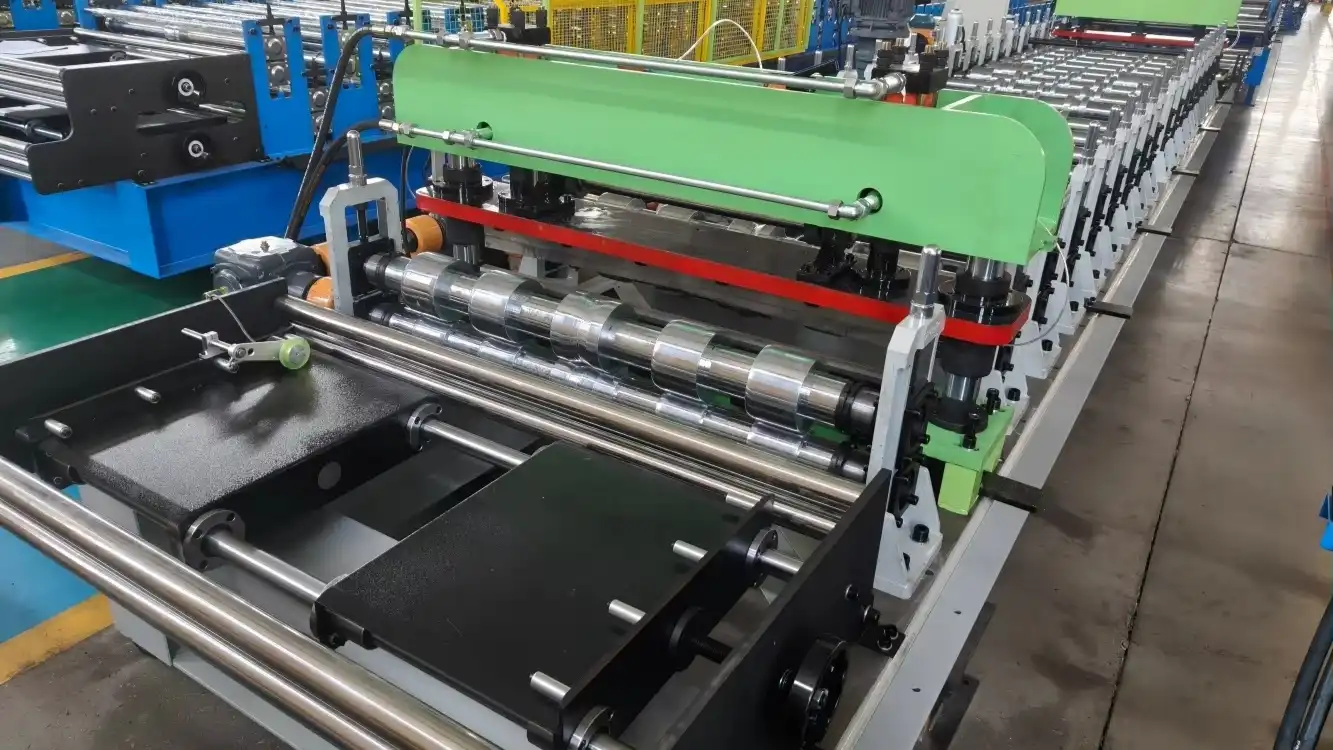
A tension-controlled decoiler lets raw materials into the machine and keeps the feeding pressure steady. The coil is then sent through a series of timed forming stations. Here, high-quality Cr12MoV rollers that have been heated and chrome-plated to a thickness of 0.05 mm slowly make the signature AG shape. Modern lines move at speeds of 30 to 60 meters per minute, which is much faster than older ways of making things. A PLC control system with encoder feedback makes sure that the cut-to-length accuracy is within ±1.0mm, which is perfect for business-building projects that need to meet strict standards.
Tangible Production Advantages
When manufacturers buy these tools, they get a lot of instant operational benefits. Speeding up production gets rid of bottlenecks in large orders, which is especially important during busy building seasons. The precise roller design fixes the "oil canning" issue that keeps happening with smaller 29-gauge and 26-gauge metals, making panels that look flat and professional, which makes the product easier to sell. Accurate anti-siphon groove formation makes sure that the side-laps are weathertight, which stops the water capillary action that damages cheap panel systems.
Automation makes the workplace safer and less reliant on human labor. Instead of changing the brakes and measuring cuts by hand, operators use settings that have already been coded. This reduces mistakes and waste. Optimized power consumption—usually 15kW to 22kW for whole lines—makes them more energy efficient than multiple processing tools that work on their own.
Equipment Variety and Configuration Options
On the market for AG panel making machine, you can find everything from semi-automatic entry-level models that are good for new businesses to fully automated lines with built-in stacking systems. Manual switching machines are good for companies that get the same kinds of orders over and over, while rapid-adjustment systems are better for companies that need to change specifications a lot. Large-scale makers can use high-speed models with a throughput of 60m/min, while standard models with a throughput of 30m/min are a good mix between cost and volume for regional fabricators.

Critical Factors to Consider When Buying a Panel Roll Forming Machine
An honest estimate of output needs and a thorough technical review are the first steps to successful procurement. If importers don't do this basic work first, they often end up with expensive problems when their equipment doesn't meet their needs.
Production Capacity and Material Specifications
Figure out how much power your panels are expected to produce each year in linear feet, taking into account how much they will grow over the next 15 to 20 years. For comparison, compare this number to the machine's rated speeds. However, keep in mind that in real life, throughput is usually only 70 to 80% of the highest specs because of changes in materials, quality checks, and setup time. When choosing an AG panel, think about the gauge range your market needs. For residential work, 29-gauge (0.36mm) is common, and 26-gauge (0.46mm) is common for farm buildings. However, some commercial uses need 24-gauge capability.
Panel width ability is just as important. Standard AG profiles have a net spread of 36 inches, but if your customers want different widths, make sure your line can handle them. The ability to handle coils affects the continuation of production. For example, heavier-duty 3-ton systems change over less often than bigger decoilers that can handle 5–10-ton coils.
Technical Specifications That Impact Quality
Panel quality is directly affected by the number of forming stations. Standard profiles can be handled well by 16-pass systems, but 22-pass setups spread out the forming stress more evenly, which lowers metal fatigue and springback problems. This is especially important when working with high-tensile G550 steel. The quality of the roller material decides how long it will last. For example, 45# steel that has been properly heat treated can last for years under regular use, while lower-quality materials need to be replaced more often, which stops production.
The design of a drive system affects how reliable it is. When it comes to synchronization across all stations, gearbox transmission systems are better than chain drives. However, quality chain systems from reputable manufacturers work effectively when they are properly kept. When you use hydraulic cutting devices with Cr12MoV blades, the edges stay sharp for about 6 to 8 months before they need to be sharpened again. Lower-grade blades, on the other hand, get dull quickly and make rough cuts that need to be finished again.
Cost-Benefit Analysis: Manual Versus Automatic Systems
The starting cost of manual machines is 30–40% less, but they need trained workers and can't make things as fast. With manual systems, one person is usually in charge of 20 to 25 panels an hour. On the other hand, 40 to 60 panels an hour can be made by automated lines with set length controls and automatic stacking with little to no supervision. Figure out how much labor will cost over three years. For businesses that run one or more shifts, the savings from not having to hire as many people for automated lines usually make up for the higher buy prices within 18 to 24 months.
Maintenance ease should also be thought about. Simpler manual systems can be fixed by people in-house with basic mechanical skills, but troubleshooting on automatic lines with complex PLCs may need factory-certified techs, which raises the cost of ongoing service.

How to Choose the Right AG Panel Roll Forming Machine for Your Business
To match the tools of an AG panel making machine to practical needs, you need to do more than just compare prices. You need to carefully think about each option and make a decision.
Defining Selection Criteria
Set up weighted factors that show what's most important to you. Manufacturers of roofing systems that want to make a lot of them should focus on speed and automation. On the other hand, startups that don't have a lot of money might put more weight on starting cost and ease of upkeep. It doesn't matter how big or small a business is; quality standards must be met at all times. Dimensional accuracy, surface finish integrity, and shape consistency all have a direct effect on customer happiness and return rates.
Warranty coverage shows how confident the maker is. Standard 12-month guarantees cover flaws, but top providers that offer 24- to 36-month coverage on important parts like gearboxes and roller shafts show that they care about quality. For foreign buyers, after-sales support is very important. Suppliers with regional service centers, English-speaking expert staff, and extra parts storage lower the risk of downtime compared to those who need to air-freight parts from factories abroad.
Segmenting Requirements by Business Type
To meet the needs of a wide range of customers, companies that make building roofing systems need strong, fast machines with flexible tools. If a company that makes light steel structures sells both AG panels and other types, they need to be able to switch between them quickly. Composite panel makers should look into tools that have roller pressure that can be changed so that they can work with structures made of multiple layers of material without hurting the foam cores or protection films.
Small companies that make metal goods are better off using tried-and-true "workhorse" models instead of new, cutting-edge designs that are still having trouble getting used to each other. International engineering companies need to be able to use equipment that has been certified to meet multiple standards, such as ISO, CE, and local building codes, on a variety of project sites around the world.
Vetting Suppliers and Building Trust
Certifications give people a basic level of trust. For example, ISO 9001 factory standards make sure that production methods are always the same, and CE marking proves that products are safe for European markets. But certificates don't always mean that something is suitable. Ask buyers in similar industries for customer references, and then contact those buyers directly to find out how well the equipment works, how quickly service is responded to, and whether parts are available.
Even though they cost a lot, factory trips get rid of shocks. By looking at production sites, you can learn about how they control quality, how they find parts, and how skilled their engineers are. When traveling isn't an option, video plant tours are a good choice. Case studies that show projects that worked well in tough conditions (like harsh temperatures, high-volume operations, or processing of specialized materials) go beyond marketing claims to show that the company is technically competent.
This all-around method is shown by Cangzhou Zhongtuo, which has sold tools to more than 150 countries since 2014 and has ISO9001, CE, and CAS certifications. Their track record in a variety of markets shows that they can adapt to changing customer needs and regulatory settings.

Procurement Tips: How to Get the Best Deals and Ensure a Smooth Import Process
Throughout the buying cycle, strategic sourcing means finding a balance between lowering costs and reducing risk.
Sourcing Channels and Price Determinants
When compared to distributor markups, direct factory purchases usually save buyers 15 to 25 percent, but importers have to handle shipping, customs clearance, and installation planning on their own. Authorized wholesalers offer localized support, make it easier to file warranty claims, and often keep parts in stock, which makes their higher prices worth it for buyers who value ease. Verified B2B platforms like Alibaba offer buyer safety and seller screening, but the end price is affected by how commissions are set up.
The base price of the machine is only 60–70% of the total landing cost. You need to think about ocean freight (which depends on the weight of the machine but is usually between 8,000 and 15,000 kg), customs taxes (check your country's HTS codes), insurance, installation services, and training for the user. For normal setups, lead times are 30 to 60 days. For customized tooling or non-standard specs, lead times are 75 to 90 days. Plan your buying plans carefully to avoid delays in production or expensive air freight.
Negotiation Strategies and Contract Protections
Better prices are available when you commit to buying more. Suppliers often give discounts of 5–10% for large orders or long-term partnerships. Payment terms affect how much cash you have on hand. Standard terms call for a 30% deposit and the remaining 70% to be paid before shipping. However, buyers who have bought from us before may be able to arrange letters of credit or staged payments tied to installation goals.
The rules of the warranty should be carefully read. Define what normal wear and tear is and what flaws are. Also, say how long you expect repair calls to take and whether new parts should be sent by air freight (which is fast but expensive) or sea freight (which is cheap but slow). Service level agreements that spell out the longest times of downtime and how long they will be fixed protect against long output stops.
Installation and training options keep operations from going wrong. Professional installation by factory workers makes sure that the levels, electrical connections, and initial parameter setting are done correctly. Your team will be able to get the most out of the equipment from the very first day they get comprehensive operating training that covers basic troubleshooting, routine changes, and preventive maintenance procedures.

Maintaining and Optimizing Your AG Panel Roll Forming Machine
Proactive repair practices keep tools working well for longer, keep the standard of the output high, and cut down on unnecessary downtime.
Preventive Maintenance Protocols
Every day, checks of the AG panel roll forming machine should be made to make sure that the rollers are lined up correctly, that the gears and chain drives are properly oiled, and that the hydraulic fluid is in good shape. As part of the weekly maintenance, the cutting areas are cleaned of metal shavings, the guide rails are checked for wear, and the emergency stop features are tested. Every month, there are steps that need to be taken to make sure that the belt tension is correct and that the PLC backup methods are followed so that the program doesn't get lost.
Critical wear points include the forming rollers (especially the first and last stations, where bending stress is highest), the cutting blades, which get metal fatigue from repeated shearing cycles, and the guide bearings, which control the movement of the coil side to side. Setting up replacement plans for parts based on what the maker says is the best way to avoid catastrophic failures. For example, replacing worn rollers before they damage panel surfaces costs a lot less than throwing away production runs that were flawed.
Troubleshooting Common Issues
Panel flat areas that ripple or oil can usually have too much roller pressure or uneven coil tension. Using precise measuring tools, change the settings for the entry guide tension brake and check that the forming stations are lined up parallel to each other. If finished panels have twists or cambers, it means the shafts are not lined up correctly. Laser alignment services make sure that all roller axes stay perfectly straight.
When hydraulic cutting leaves burrs or rough edges, it means the blades are dull and need to be sharpened or replaced. Cutting blades that work with Grade 80 high-tensile steel wear out faster than those that work with regular grades. Keep track of the linear footage that is made and plan for blade service ahead of time. Inconsistent panel lengths are a sign of encoder calibration drift. To get back to ±1.0mm accuracy standards, reset the encoder using reference measures.
Optimizing Performance and Planning Upgrades
Material choice is the first step in process improvement. By running regular groups of coils, the number of adjustments and waste from setup panels can be kept to a minimum. It takes less time to switch between gauges when production runs are planned by thickness (all 29-gauge orders are run before moving to 26-gauge orders). Even though they cost more at first, automated stacking systems get rid of the need for human handling and make storage safer for panels.
As powers change, technology updates make tools more useful. Putting encoder-based PLC systems into older manual length controls makes them more accurate and lowers the amount of work that operators have to do. When compared to fixed-speed motors, adding servo-driven feeding systems improves the accuracy of speed control. Upgrading to tablet HMIs makes operations easier for employees with less experience and records production data for study of efficiency.
Conclusion
When you want to import an AG panel roll forming machine, you need to carefully look at its technical specs, the qualifications of the seller, the logistics of getting it, and how it needs to be maintained. To be successful, you need to make sure that the equipment you buy fits your production needs and that you work with dependable makers that offer strong support after the sale. The tools change the way metal is formed because they are more accurate, faster, and more consistent than human methods. Strategic buyers who take the time to carefully research suppliers, agree to full-service packages, and set up disciplined repair programs get the best return on investment and gain market-leading benefits.
FAQ
1. Are AG Panel Roll Forming Machines Process Both Galvanized and Aluminum Coils?
These systems can work with galvanized steel, Galvalume, and pre-painted steel rolls that meet ASTM A653 and A792 standards without any changes. When handling aluminum, adjustments need to be made because aluminum doesn't bounce back as steel does. Roller pressure needs to be lowered, and adding more making stations helps keep the material from cracking. Some makers make designs that are designed for aluminum and use roller profiles that are made for that material.
2. What Delivery Timelines Should Importers Expect When Ordering?
Standard setup machines are sent out 30 to 45 days after the deposit is received. Custom tooling for shapes that aren't standard adds 15 to 20 days to the production timeline. Getting ocean freight to US ports usually takes 25 to 35 days, but this depends on where the goods leave from and where they are going. Overall, allow 60 to 90 days from the time you place your order until the equipment arrives, plus extra time for customs clearance, transport to your location, and installation.
3. How Do Maintenance Requirements Differ Between Manual and Automatic Systems?
Manual machines have easier mechanical systems that need basic maintenance like lubrication, alignment checks, and regular roller inspections. These are all jobs that people with basic mechanical knowledge can do. Automatic systems have PLC parts, servo motors, and hydraulic systems that need to be able to fix electrical problems and maybe even need help from a plant technician for software problems. However, automatic systems often have self-diagnostic features that make finding problems easier than when you have to do it by hand for purely mechanical problems.
Partner with ZTRFM for Your AG Panel Roll Forming Machine Needs
To get the most out of your metal panel production, you need to find the right AG panel roll forming machine provider who knows how hard your business is. ZTRFM offers complete solutions backed by ISO9001, CE, and CAS certifications. They do this by combining cutting-edge tech with production know-how they've built up since 2014. Our equipment is used by roofers, steel structure builders, and metal makers in more than 150 countries. It can be set up in any way that fits your gauge needs and production rate.
We offer full help from the first meeting through delivery and beyond. Our technical team helps you choose the best machine setup, handles the details of exporting, and gives your crew hands-on training so they can make the most of the equipment from the very first day. Email zhongtuorollforming@gmail.com to talk about your needs with skilled experts who know about panel forming technology and buying things from other countries. Find out why top makers choose ZTRFM as their long-term partner for dependable, high-performance roll forming options at low, factory-direct prices.

References
1. American Iron and Steel Institute. (2021). Cold-Formed Steel Framing Design Guide. Washington, DC: AISI.
2. Halmos, G.T. (2005). Roll Forming Handbook. Boca Raton: CRC Press.
3. Metal Construction Association. (2020). Technical Bulletin: Agricultural Panel Installation and Performance Standards. Glenview, IL: MCA.
4. Bhattacharyya, D., Smith, P.D., & Yee, C.H. (1984). The Prediction of Deformation Length in Cold Roll Forming. Journal of Mechanical Working Technology, 9(2), 181-191.
5. Zhang, L., & Lin, J. (2019). Optimization of Roll Forming Process Parameters for Metal Roofing Panels. International Journal of Advanced Manufacturing Technology, 103(5-8), 2847-2859.
6. Building Metal Products Alliance. (2022). Best Practices for Specifying and Installing Metal Roofing Systems. Cleveland, OH: BMPA Publications.
_1750323743240.webp)