- English
- French
- German
- Portuguese
- Spanish
- Russian
- Japanese
- Korean
- Arabic
- Irish
- Greek
- Turkish
- Italian
- Danish
- Romanian
- Indonesian
- Czech
- Afrikaans
- Swedish
- Polish
- Basque
- Catalan
- Esperanto
- Hindi
- Lao
- Albanian
- Amharic
- Armenian
- Azerbaijani
- Belarusian
- Bengali
- Bosnian
- Bulgarian
- Cebuano
- Chichewa
- Corsican
- Croatian
- Dutch
- Estonian
- Filipino
- Finnish
- Frisian
- Galician
- Georgian
- Gujarati
- Haitian
- Hausa
- Hawaiian
- Hebrew
- Hmong
- Hungarian
- Icelandic
- Igbo
- Javanese
- Kannada
- Kazakh
- Khmer
- Kurdish
- Kyrgyz
- Latin
- Latvian
- Lithuanian
- Luxembou..
- Macedonian
- Malagasy
- Malay
- Malayalam
- Maltese
- Maori
- Marathi
- Mongolian
- Burmese
- Nepali
- Norwegian
- Pashto
- Persian
- Punjabi
- Serbian
- Sesotho
- Sinhala
- Slovak
- Slovenian
- Somali
- Samoan
- Scots Gaelic
- Shona
- Sindhi
- Sundanese
- Swahili
- Tajik
- Tamil
- Telugu
- Thai
- Ukrainian
- Urdu
- Uzbek
- Vietnamese
- Welsh
- Xhosa
- Yiddish
- Yoruba
- Zulu
Warehouse Roofing Machinery: Using Trapezoidal Sheet Roll Forming for Durable Roofing Solutions
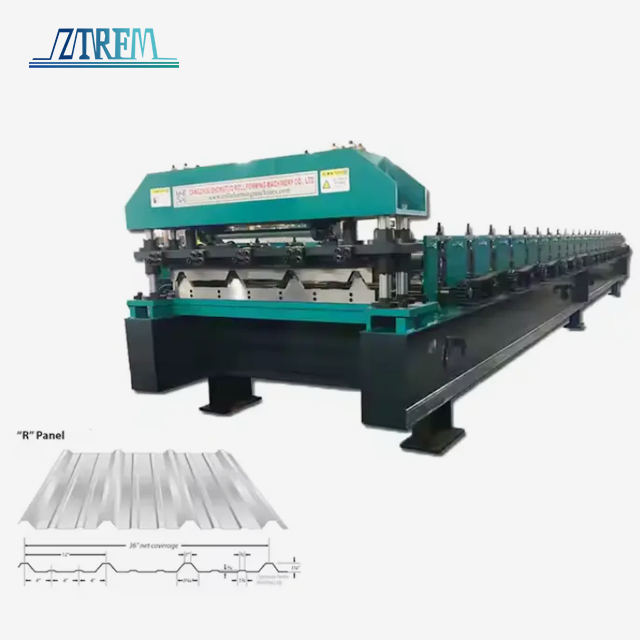
Trapezoidal sheet roll forming machines are the best option for commercial buildings that require long-lasting roofing. Through constant cold-forming processes, these precision systems turn flat metal coils into structurally better panels. This makes profiles that can hold a lot of weight and keep out the weather. This technology is used to make leak-proof, low-maintenance roof covers for warehouses that store temperature-sensitive goods or work in tough climates. Modern machines make panels that are up to six feet long between supports while keeping margins within one millimeter. They do this by combining advanced PLC controls with heavy-duty roller systems. This feature directly leads to shorter construction times and lower total ownership costs for companies that make building systems and people who plan projects.
Understanding Trapezoidal Sheet Roll Forming Machines
Trapezoidal sheet roll forming machines: An Introduction
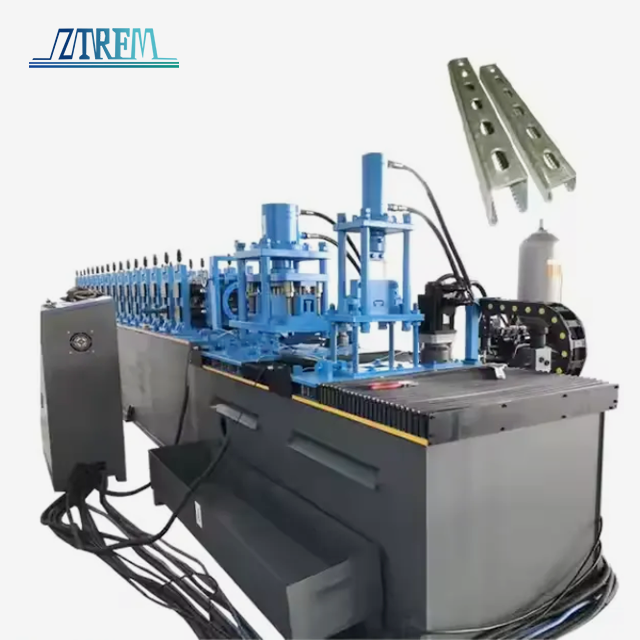
Roll-forming technology has changed the way we make parts for building roofs. Metal coils move through a series of roller stations, each making small bends until the final shape is formed, unlike traditional press braking techniques, which require individual bends.
How the Cold-Forming Process Works
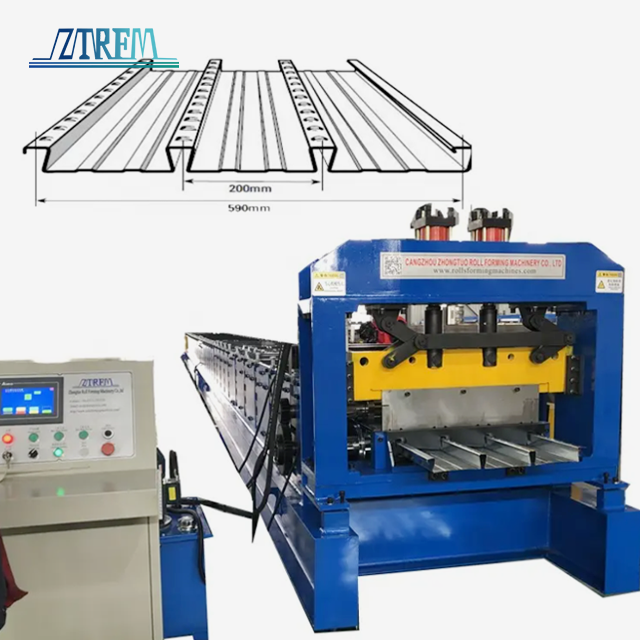
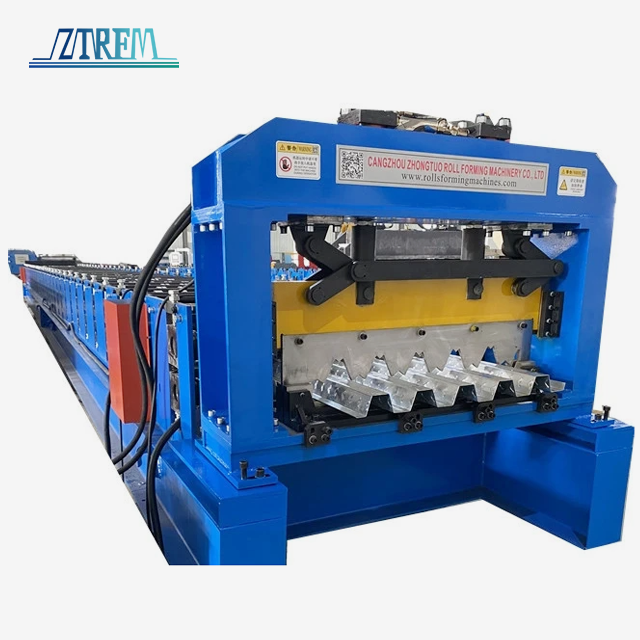
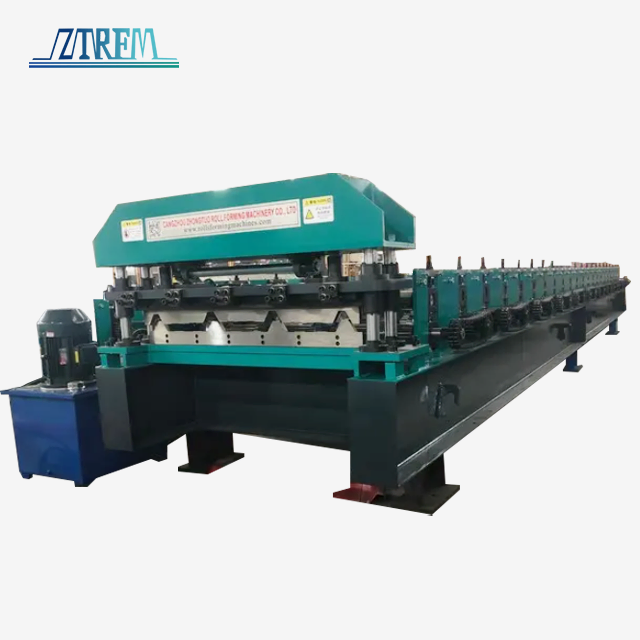
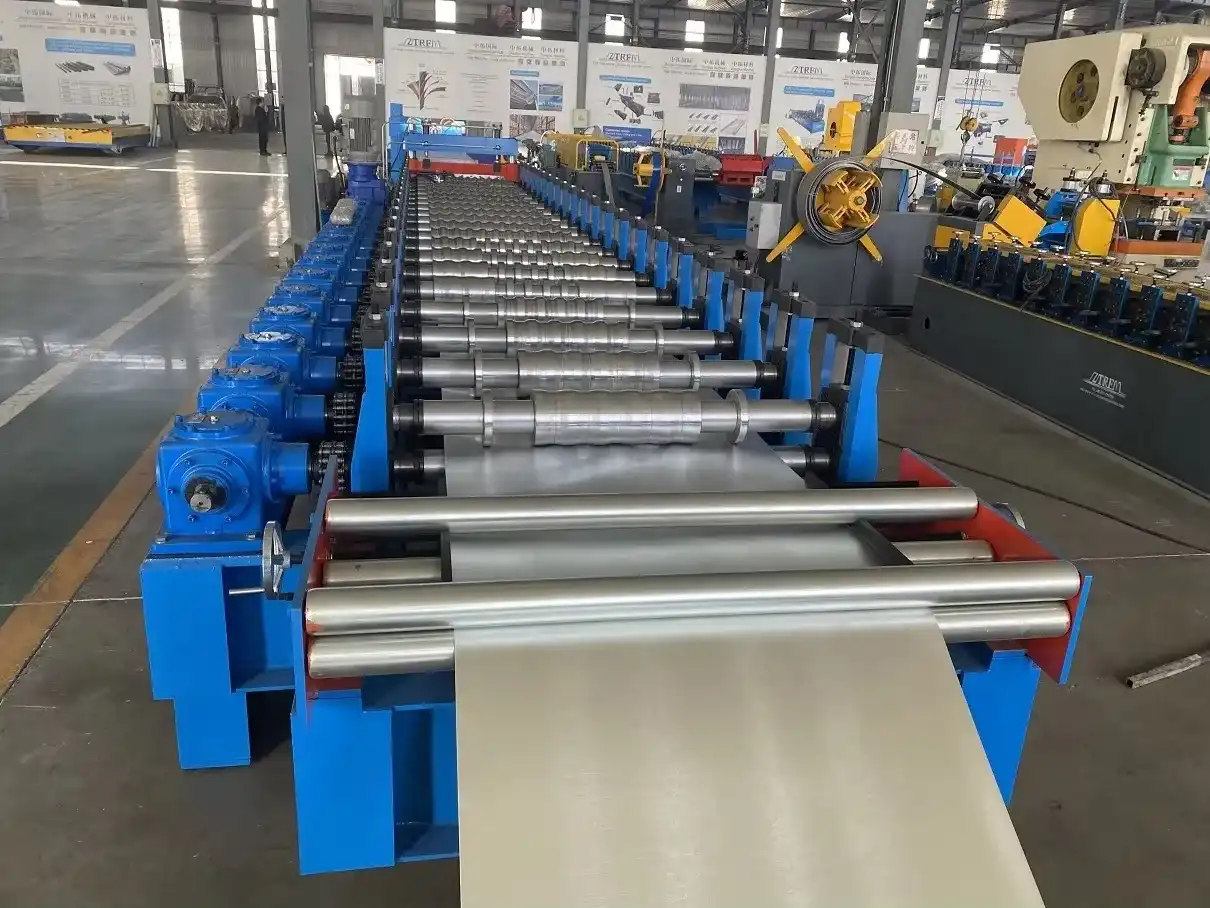
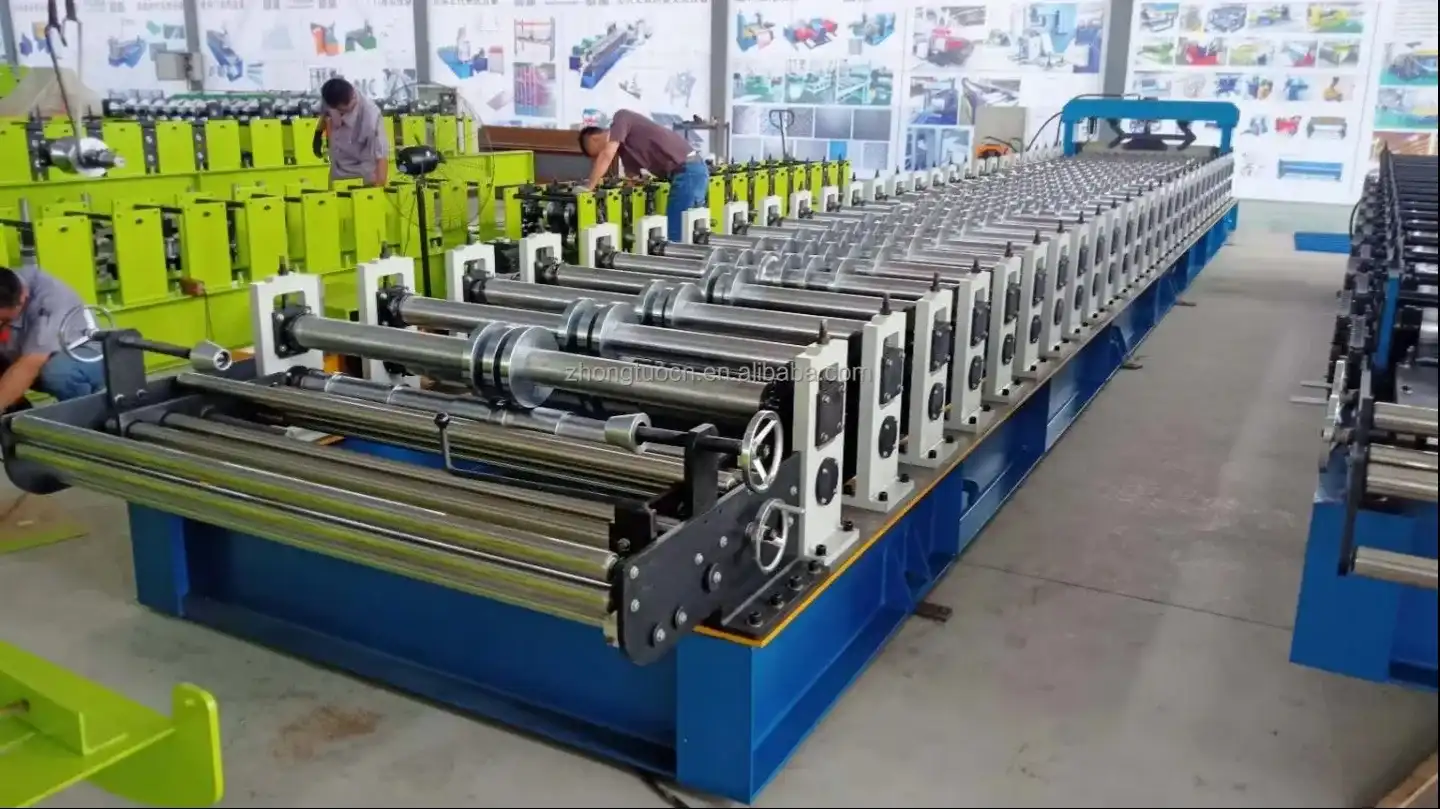
The machine passes galvanized steel that has already been painted, bare galvanized coils, or aluminum sheets into a set of perfectly machined roller pairs through entry guides. Each time through, the coil bends a little more, and over time, it takes on the trapezoid shape that makes these panels strong. Our systems use 26 roller stations made of 45# steel that have been hard chrome plated. This makes sure that the surface finishes don't get scratched even after millions of production runs. The solid 80mm shafts keep the profile shape constant, which is important for making sure panels fit together correctly on the job site.
The natural strength-to-weight ratio of trapezoidal shapes makes them very useful for warehouse uses. The changing high and low parts provide moment resistance, which lets panels span farther between purlins—up to six feet, depending on the gauge of the material and the load needs in the area. This makes the structure more efficient, so less steel is needed. This cuts down on the cost of materials and labor.
Material Versatility and Production Capacity
Modern tools can work with substrates that are between 0.3 mm and 1 mm thick, and they can handle both 22-gauge and 24-gauge Tru-Gauge materials, as well as 0.032-inch metal. Different covering needs can be met by material widths of 1000mm or 1250mm, and custom lengths from three feet to over 20 feet get rid of the need for field joining on many warehouse projects. Long flashings that reach almost 21 feet cover those tricky details where shorter pieces could lead to leaks.
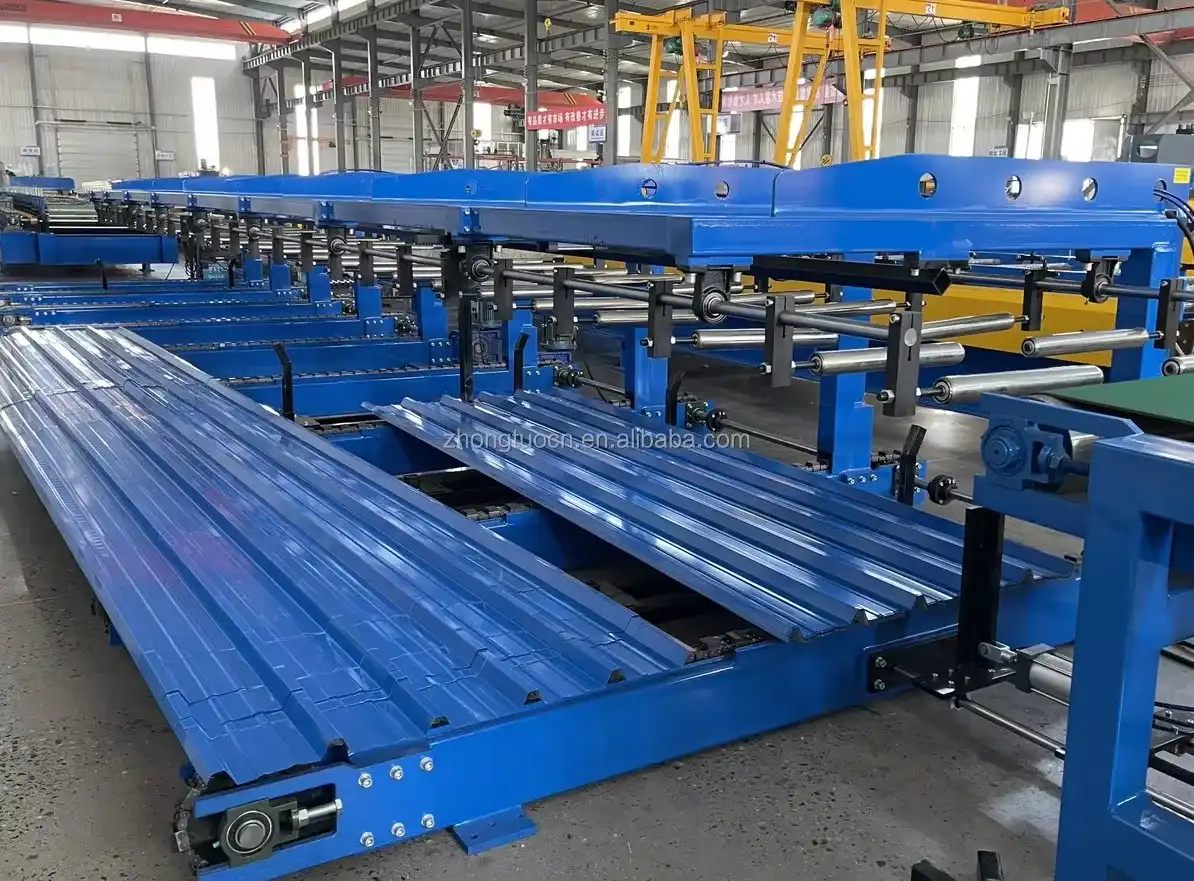
Our high-speed systems can go as fast as 60 meters per minute. They are powered by 5.5kW motors that are connected to gearbox gears that keep the systems from vibrating like chain-driven systems do. This steadiness is very important when working with pre-painted materials, since protecting the surface is what determines the value of the finished product. The hydraulic cutting system uses CR12MoV blades to make cuts with an accuracy of ±1mm that are free of burrs. This means that panels arrive at construction sites ready to be put up right away without any extra work being done.

Comparing Roofing Sheet Roll Forming Technologies for Warehouse Use
To choose the right making technology, you need to know how the different panel shapes meet the needs of different buildings. There are a number of roll-formed goods that can be used to cover warehouses, but their structural features and assembly requirements are very different.
Trapezoidal Versus Corrugated Sheet Production
Corrugated panels have rounded, wave-like shapes that look great in domestic settings where both function and appearance are important. The smooth curves efficiently drain water and give the structure a classic look that many building codes require. But the rounded shape is less rigid than sharp shapes, so the spaces between the purlins need to be closer when the loads are the same.
Trapezoidal panels, which are also sometimes called IBR (Inverted Box Rib) sheets, have flat areas in between angled ribs that make them more resistant to bending. Because of this geometric benefit, structure spans can be larger, which directly lowers the number of steel purlins that are needed to build a warehouse. The flat valleys also make it easy to attach things like solar panel brackets, ventilation systems, and repair walkways. The perfectly made side laps with anti-capillary grooves offer better weather sealing that corrugated profiles can't match for buildings near the coast or in places where it rains a lot.
Manual Operation Versus Fully Automated Systems
Modest manufacturers that create a modest quantity each day or need to change profiles often should utilize entry-level manual tools. Operators manually input cut lengths, observe material feed, and engage the hydraulic shear. The initial expenditure is low, but work expenses build up rapidly, and body size variations make field placement harder.
Fully automated systems use PLC-based controllers to hold various manufacturing recipes and allow touchscreen panel specification changes. Automated systems control material feeding, cutting, and production numbers. Servo-driven components eliminate profile differences that delay installation and increase return expenses. Modern PLC controllers optimize motor performance, saving 15–20% more power per panel than constant-speed manual choices.
For buildings above 200,000 square feet, automated systems pay for themselves in 18 to 24 months via total cost of ownership. Better consistency reduces scrap from 4–5% to 2%, and quicker changeovers allow for low-cost panel manufacturing of varying lengths.
Warranty Considerations and Service Networks
Reliability of equipment has a direct effect on work promises and delivery times for customers. When properly maintained, machines with vacuum-heated rollers that are rated to HRC 58–62 hardness have service lives that are longer than ten years. About every 200,000 cycles, cutting blade parts need to be sharpened or replaced. This makes blade accessibility and replacement ease important evaluation criteria.
A full guarantee should cover both replacing parts and getting professional help when you need it. In places with unstable power sources, look for makers that include voltage stabilizers as standard equipment. PLC and servo motor failures due to electrical spikes can cause expensive downtime. The best warranty plans cover more than just parts. They also offer online diagnostic help and faster shipping of extra parts, because they know that every hour of lost production costs money.
Selecting the Right Trapezoidal Sheet Roll Forming Machine for Your Warehouse Project
Which Trapezoidal Sheet Roll Forming Machine to Get for Your Warehouse Project
Matching the skills of your tools to the needs of the project will determine whether your investment pays off as planned or becomes a constant source of annoyance. Before agreeing to a certain machine setup, you should carefully consider a number of important factors.
Assessing Production Volume Requirements
First, figure out what your reasonable yearly production goals are in terms of square footage or linear meters. A building that wants to make 500,000 square feet a year needs a lot of different skills than one that only wants to make 100,000 square feet. Machine speed rates are a good place to start, but actual throughput varies on how often materials are changed and how experienced the crew is.
When we run constant production of standard lengths at 60 meters per minute, our processes make about 12,000 to 15,000 linear feet in eight hours. To account for setup time and material changes, facilities that handle a lot of custom orders with regular length changes should figure out speeds that are 60 to 70 percent of their possible maximum speeds. Knowing these facts keeps you from having to make expensive investments in too much capacity or, even worse, in equipment that is too small and slows down production.
Customization Options and OEM Capabilities
Most warehouse roofing jobs can be done with standard machines, but for specific needs, machines can be customized. Adjustments can be made to the ranges of material thickness, the number of roller stations, and the sizes of the machines. We often set up systems for specific coil widths that work with our customers' supply lines, or we change the profiles of the rollers to make unique panel designs that are covered by patents held by our clients.
OEM agreements are more than just putting badges on cars. For true OEM teamwork to happen, engineers need to be involved in profile development, prototype testing to make sure that the forming parameters are correct, and ongoing technical help as production grows. When looking at different providers, find out what kind of engineering skills they have and if they are willing to sign non-disclosure deals to protect your intellectual property. In busy markets, being able to make exclusive profiles helps you stand out from the competition.
Evaluating Supplier Credentials and Support Infrastructure
Technical credentials demonstrate a company's safety and quality commitment. ISO9001 accreditation proves quality management techniques are documented, and CE marking proves product safety. The CAS certifies that something fulfills local requirements. In addition to paperwork, licensed manufacturers follow corrective action, calibration, and part tracking processes that unskilled competitors don't.
When projects cross continents, global delivery knowledge is crucial. Manufacturers that sell to over 150 countries know export documentation, container packing, and time zone installation coordination. National high-tech corporation Cangzhou Zhongtuo invests in innovation and has great technical talents. We can manage complex forming issues that other vendors would prefer to delegate.
Installation and training distinguish excellent suppliers from transaction-focused ones. Full starting support includes levelling and anchoring the machine, verifying electrical connections, setting up the hydraulic system, and testing the safety system. Your crew should be taught to operate the equipment, perform routine maintenance, and solve simple faults so they can fix little issues without aid.
Maintaining Optimal Performance of Your Trapezoidal Sheet Roll Forming Machine
How to Keep Your Trapezoidal Sheet Roll Forming Machine Running at Its Best
Maintenance habits have a big impact on how long equipment lasts and how well it consistently produces results. Machines that are well taken care of last for decades, while machines that aren't taken care of break down early and make profiles that are less stable over time.
Establishing Routine Inspection Schedules
Daily inspections should ensure that gears and hydraulic tanks have enough oil, that there are no weird sounds that might indicate bearing wear, and that all safety interlocks operate. Weekly maintenance checks roller surfaces, emergency stop systems, and electrical wires for damage or burning.
The machine's weekly maintenance checks drive chain tension (if required), roller alignment using dial indicators, and cutting blade sharpness using a sample panel. The hard-chrome-plated rollers don't wear down rapidly, although coil lubricant loss reduces forming precision. Regular chemical cleaning maintains surfaces in excellent condition so pre-painted materials may be manufactured without scratches.
An annual examination by qualified experts should measure the rollers' complete run-out, verify hydraulic pressure at maximum load, and ensure that PLC backup procedures secure program data. Write down these checks to create maintenance records for guarantee claims and equipment sales.
Troubleshooting Common Operational Challenges
Roller alignment issues or material width variations produce profile dimension defects. If panels have varying rib heights, verify the material gauge in many places on the coil—suppliers may supply material outside specifications. Changing the roller orientation requires high-precision measurement instruments if the material is fine. If you're not trained, don't adjust the rollers since the erroneous spacing might create issues throughout the creating procedure.
Sometimes flat panel parts exhibit oil canning, a perceptible wave, since the material wasn't stretched sufficiently during forming or the roller speeds weren't matched. Changing the entrance guide pressure and ensuring the motor speed is the same at all roller stations usually fixes these aesthetic issues. Even chrome-plated rollers with surface scratches on pre-painted materials need to be changed because something gets trapped in the spaces between them or the chrome plating is destroyed.
Hydraulic cutting system failures cause incomplete cuts or excessive burrs. Low hydraulic pressure indicates pump or seal issues that must be addressed immediately. Dull blades reduce cut quality. Avoid waiting until the blades stop cutting to schedule blade service. Sharp CR12MoV blades eliminate leak routes and returns by cleaning and fitting edges properly during panel installation.
Operator Training and Best Practices
Skilled workers are your first line of defense against problems with quality and safety. Comprehensive training programs should cover how to handle materials safely so that coils don't get damaged, the right way to start up and shut down a machine, and how to spot strange sounds or behaviors while it's running. Operators need to know exactly which problems need to be shut down right away and which ones can be left running until the next planned repair time.
Tell your workers to keep production logs where they can write down any strange events, changes in material quality, or small changes they make during their jobs. These records are very helpful for finding trends that show when a part is about to break or for fixing problems that happen only sometimes. Creating a culture where workers feel responsible for the state of their equipment has measurable benefits compared to situations where repair teams are the only ones who take care of machines.

Procurement Strategies and Purchasing Insights for Warehouse Roofing Machinery
When you buy roll forming tools, you're making a big financial investment that needs more than just comparing prices. There are different ways to acquire a business, and each has its own benefits that rely on your operational growth and financial situation.
New Equipment Versus Pre-Owned Alternatives
Buying new equipment from a reliable company like ZTRFM comes with a guarantee, the ability to incorporate the latest technology, and the ability to be customized to your exact needs. Our systems are structurally stable in a way that cheaper options can't match, thanks to their 350 H-steel machine frames and high-quality parts. Leasing or manufacturer payment plans are two ways to finance tools. These choices spread out the need for capital over several years, which makes managing cash flow easier.
Buying used equipment is cheaper, but there are risks that come with not knowing how well it was maintained, how worn out its parts are, and whether the technology will become outdated. Machines that don't have PLC controls or that use chain drives instead of gearbox transmissions may seem like good deals at first, but they end up being less efficient over time and costing more to maintain. If you're thinking about buying used equipment, make sure it has been thoroughly inspected by experienced technicians and that there are full service records that show all the work that was done on the machine over its lifetime.
Understanding Market Pricing and Value Indicators
Trapezoidal sheet roll forming machines' pricing depends on their features, customization, and extras. Basic manual systems cost $25,000–$35,000. Based on the number of roller stations and hydraulic system complexity, fully automated high-speed machines with complicated controls cost $65,000 to $120,000.
Compare the price to the advantages. Does the price cover installation, user training, and the first additional parts? What is covered by the guarantee and how long? Machines with voltage protectors, remote troubleshooting tools, and extended warranties are worth the additional cost since they reduce ownership risks and downtime.
Ordering in bulk saves contractors and manufacturers money when using the same equipment at many locations. Because it decreases sales expenses and simplifies processing, several dealers provide 8–12% discounts on purchases of three or more devices. Flexible payment arrangements, including deposits, progress payments, and acceptance payments, might help you organize your money.
Initiating Supplier Engagement and Technical Discussions
Start the procurement process with detailed requirements on production quantities, panel profiles, material kinds, floor space, and power supply characteristics. Clear requirements allow suppliers to supply the right-sized equipment instead of generic solutions that must be replaced at considerable expense. Include unique demands, such as roller materials for abrasive coatings or safe electrical systems.
Request complete part lists, mechanical drawings, and electrical layouts. This information aids construction layout, utility setup, and spare part inventory. Reliable vendors offer extensive technical documentation; declining to do so casts doubt on equipment quality and manufacturer stability.
Shipping protocols and delivery timeframes must be discussed early, particularly when conducting business internationally. Standard lead times are four to twelve weeks, depending on design complexity and production volume. Container shipping, customs clearance, and delivery to your building take time. By scheduling equipment shipment after facility preparation, you may avoid costly storage costs and hasty installations.
Conclusion
Manufacturers of warehouse roofs can meet the growing demand for long-lasting, low-cost building coverings by buying trapezoidal sheet roll forming machines. The technology ensures uniform panel quality at production speeds that can handle large-scale projects while still being able to adapt to unique needs. Buying tools from well-known companies that have delivered goods all over the world, have a strong support network, and have clear quality control systems in place lowers the risks of implementation and saves the long-term value of the investment. When starting a new production line or increasing an existing one, making sure that the machine's power meets the real needs of production is key to getting the best return on investment and staying competitive in tough industrial markets.
FAQ
1. What material thicknesses can trapezoidal roll forming machines process?
Standard tools can work with materials that are between 0.3 mm and 1 mm thick. They can also handle popular warehouse roofing sizes like 22 and 24 Tru-Gauge steel as well as 0.032-inch aluminum. Custom designs let you go up to 1.2mm for heavy-duty structure uses that need to hold more weight. When trapezoidal sheet roll forming machines are set up correctly, materials with yield strengths of up to G550 (550 MPa) can be processed successfully.
2. How do I prevent surface damage on pre-painted materials?
Rollers that are hard-chrome-plated and have a coating width of 0.05 mm have smooth touch areas that keep the finish's integrity. By synchronizing the line speed across all roller sites, material doesn't slip and get scratched. Nylon-coated rollers or entry-stage protective film applicators offer extra safety during forming for high-gloss results. Cleaning the rollers on a regular basis gets rid of the coil grease dust that breaks down the surface over time.
3. What warranty coverage should I expect?
Parts and expert help are usually covered by full warranties for 12 to 24 months after the date of commissioning. Important parts like wheel joints and hydraulic systems are covered by premium manufacturers for longer periods of time. Look for guarantee terms that include remote diagnostic help, faster shipping of extra parts, and clear promises about how long it will take to respond. Some sellers let you buy with an extended warranty that gives you extra safety for an extra few years.
Partner with ZTRFM for Superior Trapezoidal Sheet Roll Forming Solutions
For warehouse roofing jobs, you need tools that give you clear performance benefits and reliable long-term use. ZTRFM makes trapezoidal sheet roll forming machines that use cutting-edge tech that has been tested and proven in over 150 countries. Our systems are approved by ISO9001, CE, and CAS. They are made of strong 350 H-steel, have precision-machined rollers that are hard chrome-plated, and have PLC controls that make them easy to use and give consistent results. As a national high-tech company that opened in 2014, we offer full OEM and ODM services for custom profile creation, as well as full training and installation services. You can email our technical team at zhongtuorollforming@gmail.com to talk about your unique production needs and find out why top manufacturers of trapezoidal sheet roll forming machines choose ZTRFM for their most important warehouse roofing machinery needs.
References
1. Smith, J.R., & Anderson, M.K. (2022). Cold Roll Forming Technology: Engineering Principles and Industrial Applications. Manufacturing Press International.
2. Chen, L., Wang, H., & Rodriguez, P. (2023). "Structural Performance Analysis of Trapezoidal Metal Roofing Panels in Industrial Buildings." Journal of Construction Steel Research, Vol. 198, pp. 412-428.
3. Thompson, D.E. (2021). Metal Building Systems: Design, Fabrication and Installation Standards. American Institute of Steel Construction.
4. International Building Code Council (2023). IBC 2024: Structural Design Requirements for Metal Roof Deck Systems. ICC Publications.
5. Martinez, A.S., & Liu, Y. (2022). "Comparative Life Cycle Assessment of Roll-Formed Versus Press-Braked Metal Roofing Components." Sustainable Manufacturing Quarterly, Vol. 15, No. 3, pp. 78-94.
6. National Roofing Contractors Association (2023). Technical Manual for Metal Panel Roof Systems: Installation and Performance Standards. NRCA Technical Publications.