- English
- French
- German
- Portuguese
- Spanish
- Russian
- Japanese
- Korean
- Arabic
- Irish
- Greek
- Turkish
- Italian
- Danish
- Romanian
- Indonesian
- Czech
- Afrikaans
- Swedish
- Polish
- Basque
- Catalan
- Esperanto
- Hindi
- Lao
- Albanian
- Amharic
- Armenian
- Azerbaijani
- Belarusian
- Bengali
- Bosnian
- Bulgarian
- Cebuano
- Chichewa
- Corsican
- Croatian
- Dutch
- Estonian
- Filipino
- Finnish
- Frisian
- Galician
- Georgian
- Gujarati
- Haitian
- Hausa
- Hawaiian
- Hebrew
- Hmong
- Hungarian
- Icelandic
- Igbo
- Javanese
- Kannada
- Kazakh
- Khmer
- Kurdish
- Kyrgyz
- Latin
- Latvian
- Lithuanian
- Luxembou..
- Macedonian
- Malagasy
- Malay
- Malayalam
- Maltese
- Maori
- Marathi
- Mongolian
- Burmese
- Nepali
- Norwegian
- Pashto
- Persian
- Punjabi
- Serbian
- Sesotho
- Sinhala
- Slovak
- Slovenian
- Somali
- Samoan
- Scots Gaelic
- Shona
- Sindhi
- Sundanese
- Swahili
- Tajik
- Tamil
- Telugu
- Thai
- Ukrainian
- Urdu
- Uzbek
- Vietnamese
- Welsh
- Xhosa
- Yiddish
- Yoruba
- Zulu
Quality Control Methods for Roofing Sheet Making Machine
Systematic inspection, accurate measuring, and process validation are the most important parts of quality control in the metal roofing industry. The R101 Roofing Sheet Making Machine uses built-in dimensional verification through automatic sensors, real-time PLC tracking, and standard testing procedures for materials. The R101 shows how the design of equipment directly affects the uniformity of output. Its 18-station forming process and hydraulic cutting system keep the accuracy at ±2 mm. Effective quality control includes checking the material before production, keeping track of parameters during the process, and checking the dimensions of the sheet after it has been formed to make sure that every sheet meets the structural and aesthetic standards for tough industrial uses.
Understanding Quality Challenges in Roofing Sheet Production
Defects in the manufacturing process hurt both customer trust and profits. The most common problems we see in the creation of roofing sheets are surface scratches, uneven profile dimensions, and stress cracks in the material. Not properly calibrating the rollers, cutting blades that are worn out, or uneven raw material qualities can all cause these flaws. When a building worker gets panels that have obvious roller marks or dimensions that aren't within the acceptable range, it takes longer to install, and there are more warranty claims.
The effect on the budget goes beyond the direct costs of rework. One batch of bad sheets can slow down a whole building project, hurt ties with suppliers, and trigger penalty terms in business-to-business contracts. When purchasing managers look at new equipment, they know that saving money up front on machinery often means losing money in the long run because of high scrap rates and unhappy customers.
Common Defects and Their Root Causes
Profile variation usually comes from three places. Roller wear causes slow dimensional drift, which changes exact forming stations into places where variations happen. During cutting processes, changes in hydraulic pressure cause length mistakes that get worse over time. Changes in the hardness of the material, especially when working with full-hard G550 steel without the right machine setup, cause spring-back that changes the shape of the finished profile.
Surface quality problems need the same amount of care. During the making process, prepainted steel coils need to be handled carefully. If the rollers are dirty or the forming speed is too fast, lines are left that go through protective layers and expose the base to corrosion. These flaws are especially expensive because they aren't seen until after the finish has been installed and has been exposed to the weather.
Impact on B2B Relationships
OEM partners and foreign engineering firms put the dependability of their suppliers ahead of short-term price gains. If a maker has trouble with quality control, the costs keep going up: faster replacement orders, calls to technical support, and finally, lost contracts. We've seen well-known suppliers lose big accounts because their output wasn't always constant, which made clients use secondary checking methods that weakened the efficiency gains that made overseas buying worth it.

Core Quality Control Methods Applied to Roofing Sheet Making Machines
A key part of quality assurance is making sure that measurements are correct. The R101 Roofing Sheet Making Machine has measurement procedures at three important stages: checking the material, keeping an eye on the process, and checking the finished product. Before production starts, coil thickness gauges make sure that the material specs match the order requirements. This keeps problems from happening later that could be caused by differences in the gauges.
Integrated Sensor Systems
Quality control goes from being a reactive review to a proactive process management when real-time tracking is used. The Delta PLC system in the R101 keeps track of the forming speed, fluid pressure, and motor load all the time. The 5.7-inch tablet instantly warns workers when parameters stray from set limits. This stops defective sheets from entering the production stream. This closed-loop feedback system lowers the amount of scrap by finding problems right away, instead of waiting until the end of the shift to find them.
When working with covered materials, keeping an eye on the temperature is especially helpful. When forming, too much friction causes heat that softens protected layers. This makes adhesion places where covering material can stick to rollers. Automated temperature monitors change the speed before thermal buildup hits dangerous levels. This keeps the surface's structure over long production runs.
Material Testing Protocols
Verification of raw materials is more than just measuring their width. Tensile strength testing makes sure that the steel grade meets the requirements. This keeps stronger alloys from being too strong for the machine to shape. Coating adhesion tests on coils that have already been sprayed show which batches haven't had enough time to dry, so they would fail when put through the mechanical stress of roller making. These validations upstream protect both the tools and the quality of the end product.
For full quality assurance, these are the exact inspection steps we use:
- Pre-Production Verification: Before production starts, the thickness of the coil is measured five times across its width using digital micrometres to make sure that the material is consistent within a ±0.02 mm range. Coating flaws that can't be seen in normal shop lighting can be seen when the surface is inspected under adjusted lighting. The material approval review makes sure that the chemical make-up and mechanical qualities match the production requirements. This keeps the forming process from having any problems.
- In-Process Monitoring: The R101 has 18 forming stations, and three of them have measurement places in the middle where digital callipers check that the shape is changing as it forms. The cutting system has hydraulic pressure gauges that make sure the blade contact force stays in the best range of 35–42 bar. This keeps the material from deforming too much or not cutting all the way through. The main motor (5.5 kW) and the hydraulic unit (4 kW) are synchronised in terms of speed. This keeps the flow of material steady and stops changes in stress that cause waviness or stretching.
- Post-Forming Inspection: Coordinate measuring tools are used to do a full three-dimensional analysis on every hundredth sheet to make sure that the 1,250 mm profile width is within error along the whole length. Checking the surface quality with a raking light can find small roller lines or damage to the finish that needs to be fixed in the process. Checking the length against the programmed measurements shows that the hydraulic shear stays within its ±2 mm cutting accuracy standard during production runs.
These stacked validation methods add extra checks that find errors wherever they come from. A dirty roller found during in-process tracking stops surface flaws that couldn't have been predicted by pre-production checks. Material hardness changes that pass the first tests can be seen by watching the load on the forming station. This lets you fix the problem before the quality of the profile goes down.

Performance Optimization in Roll Forming Equipment for Quality Enhancement
When equipment design properly meets both goals, production speed and quality excellence don't have to be at odds with each other. The R101 has several technical features that make it possible to keep tight dimensional limits while reaching line speeds of up to 15 m/min. These features get rid of the usual tradeoffs between speed and quality. Because the 70 mm diameter shaft system is stiff, it doesn't bend when it's under load, and the roller spacing stays the same even when the machine is running nonstop with 0.8 mm thick material.
Collecting data is the first step in finding bottlenecks. Production logs show whether delays are caused by moving materials, adjusting machines, or stopping for quality reasons. We've looked at hundreds of installation sites and regularly find that 60% of unplanned downtime is due to poor preventative maintenance, not to problems with the equipment itself. Regularly checking the rollers every 500,000 rounds stops the wear and tear that leads to measurement drift, so the output stays the same without the need for emergency repairs.
Automation Technology Advantages
The programmable logic controller in the roofing sheet making machine handles levels of complexity that would be too much for a person to handle by hand. Programming the length through the tablet gets rid of the measurement mistakes that come with using mechanical stops or counting by hand. Automatic cut sequencing keeps panel lengths the same no matter how experienced the user is. This makes sure that output is the same across shifts and production plants. This software is especially helpful for companies that sell to markets where accurate measurements directly affect the cost of installation work.
Quality control success is directly linked to how efficiently energy is used. The 16 mm wall-plate H-beam frame design keeps vibrations to a minimum, which would have caused random changes in the making process otherwise. Less shaking means longer bearing life and better roller alignment, which means fewer maintenance tasks that stop output and increase the chance of mistakes when putting the machine back together. When the R101 is working at its most efficient, its 380V three-phase power use stays related to its real production load, without the waste that often happens in systems that aren't well thought out.

Comparing Quality Control Features Across Equipment Options
To choose the right equipment, you need to know how changes in form affect how it works. The R101's 18 forming stations are an intentional technical choice that spreads the bending stress over a wider range of values than machines with 12 or 14 stations. This softer forming process lowers material strain, which stops spring-back effects and work-hardening that make it harder to control the dimensions of high-strength steel types.
When purchasing, workers should compare different pieces of equipment; they shouldn't just look at general performance claims but should also look at specific features that help improve quality. Rollers that are chrome-plated don't wear down easily, which is what causes pattern transfer onto finished sheets. Roller surfaces that are precisely ground keep the micro-level softness that is needed for working with pre-painted materials. The R101's roller material and surface treatment directly affect how long it keeps up the quality standards of new tools in industrial settings.
User Experience Data
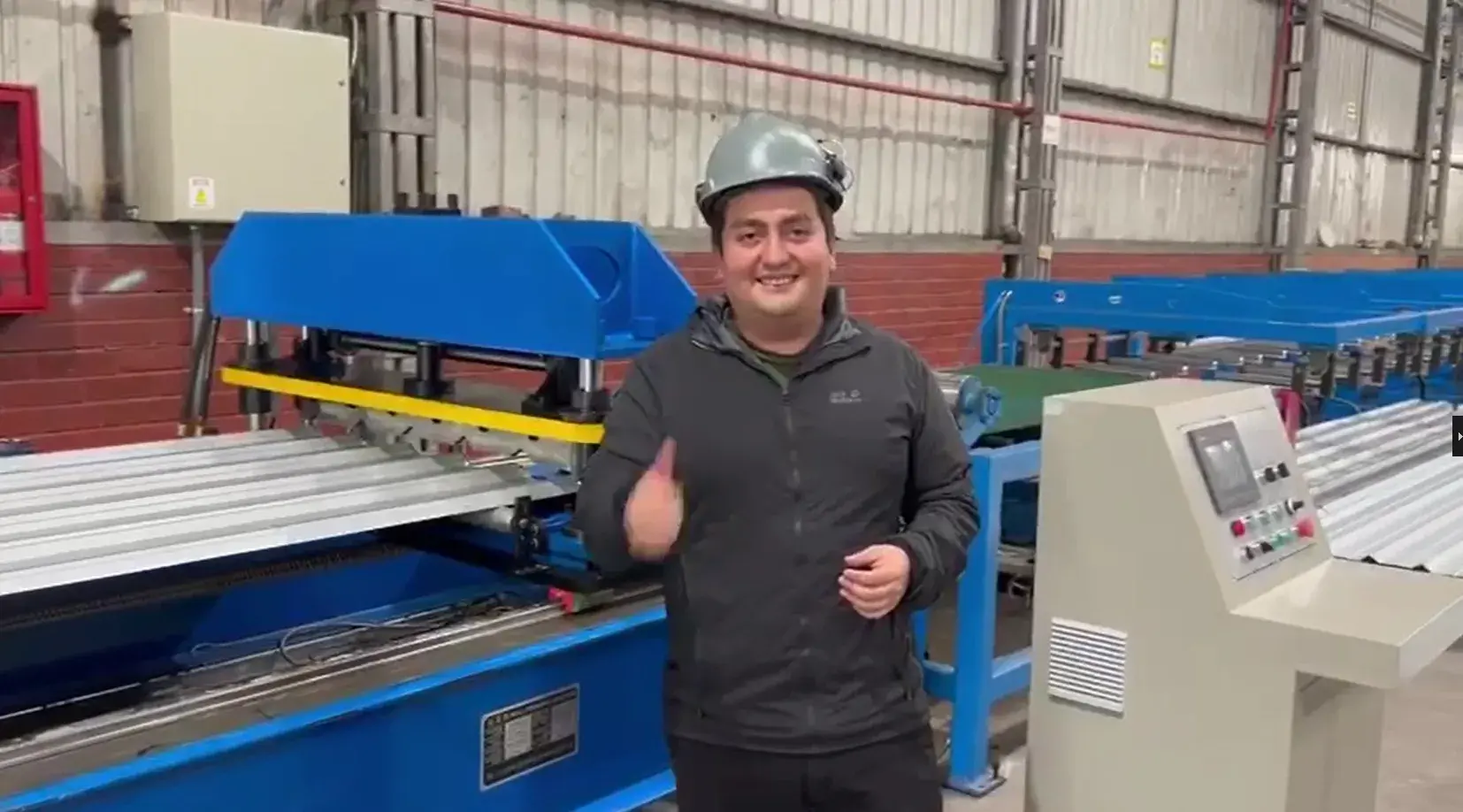
Customers in other countries who use R101 systems say the quality is better than with older tools. Installation sites that work with Galvalume coils for agricultural use report covering damage rates below 0.3%, which is a lot lower than the average of 2% in the industry for the same amount of production. Manufacturers of home roofs say that better dimensional stability has cut the need for field adjustments by 40%. This means that installations go faster and customers don't have to call back as often.
The total cost study includes more than just the price of buying the equipment. It also includes the costs of running it over its entire life. The length of time a cutting blade lasts has a direct effect on both the cost of replacing it and the time lost during blade changes. The R101's Cr12MoV tool steel blades, which have been heat-treated to an HRC 58–62 toughness, can make about 800,000 cuts in 0.5 mm galvanised steel, which is a lot more than the usual 300,000 cuts that standard blade materials can make.
Maintenance and Quality Sustenance Practices for Roll Forming Systems
The skill of equipment doesn't mean much without regular maintenance. The R101 roofing panel machine needs regular upkeep that covers both its motor parts and its control systems. Using ISO VG 220 gear oil to grease roller bearings every 500 hours stops the increased friction that raises temperatures and causes measurements to be off. After the first six months of breaking in, the hydraulic oil should be changed with ISO 46 grade fluid once a year to keep the cutting pressure stable, which is important for accurate length measurements.
Instead of waiting for quality to clearly go down, calibration testing should be done on a regular basis in a roofing sheet-making machine. Digital measuring tools that check the roller gap settings every three months can pick up on the slow wear that changes dimensions before they show up in finished goods. The Delta PLC system keeps track of production factors, which lets you compare present performance to the standards set during the initial commissioning. Deviations of more than 5% need to be looked into before they affect the quality of the result.
Troubleshooting Quality Deviations
Early detection of symptoms lets you fix problems before they get worse and cause big business problems. Profile waviness along the length of the sheet means that the material tension is not even. This is usually fixed by checking the 5-ton decoiler brake's setting and making sure that the feed and forming sections are moving at the same speed. Different cut lengths indicate that hydraulic pressure is changing, which needs to be checked by inspecting the filter and comparing the pressure gauge to the system's 4 kW pump standard.
Surface flaws need to be looked into right away because continuing to use the machine will spread the contamination to other blade surfaces, affecting more products. Stopping production to clean the rollers turns out to be much cheaper than fixing more faulty sheets. Cleaning procedures with approved chemicals get rid of coating leftovers without hurting the chrome plating. This brings back the quality of the surface without having to buy new rollers or refinish them.
Authorised service help adds to the knowledge that can be found in-house upkeep. The technical support network at Cangzhou Zhongtuo lets you do online tests by analysing PLC data. This lets you find parameter drift before you have to go to the site. Access to original substitute parts ensures compatibility and performance, avoiding the quality problems that come with aftermarket parts that don't meet the right material specs or measurements.
Conclusion
When making roofing sheets, quality control depends on methods that include designing the tools, keeping an eye on the process, and doing regular maintenance. The R101 shows how precise engineering, automated feedback systems, and strong building can work together to make output that meets strict B2B standards every time. Accuracy in measurements within ±2 mm, protection of surface quality through proper roller design, and process stability from PLC control all work together to make production reliable. When manufacturers put quality first, they gain a competitive edge through lower scrap rates, happier customers, and more efficient operations. Systematic repair and proactive troubleshooting keep things running smoothly over a longer period of time. This protects the investments made in equipment while meeting the global markets' demands for consistent product quality.

FAQ
1. How does the R101 maintain uniform thickness across the sheet width?
During shaping, the machine doesn't change the thickness of the material. For thickness to be uniform, the coil provider must provide regular material. The 18-station making process bends the material into a profile shape without stretching it, so the gauge stays the same. Quality control is all about making sure that the standards of the coils that come in match the requirements for production. This keeps differences in width from getting into the process.
2. What certifications validate the machine's quality compliance?
The R101 is made in a factory that is certified by ISO 9001 and has a CE mark for electrical safety. These certificates show that the equipment follows the rules for quality control around the world and the safety rules in Europe. Components are chosen based on well-known standards. For example, the Delta PLC system and hydraulic parts come from approved sources so that the whole supply chain can be tracked.
3. Can the R101 be customised for specific quality standards?
Customisation takes into account things like how well the materials work together and the size needs. Changes to the roller shape allow for different sheet geometries while keeping the accuracy of the form. Programming in the control system changes the speed and pressure settings for different types of material. Adding an inspection station lets you add measurement methods that are specific to the client right into the production line. This makes quality control automatic and based on specific requirements.
Partner with a Trusted R101 Roofing Sheet Making Machine Manufacturer
To get great output, you need tools that are built on tried-and-true engineering concepts and come with full support in the R101 Roofing Sheet Making Machine. ZTRFM has ten years of experience in cold-roll forming technology and can offer systems that meet the strict requirements of foreign business-to-business buying. Our R101 model is always getting better thanks to feedback from installations in 150 different countries. It now has quality control tools that deal with problems that come up in real manufacturing.
We encourage buying managers and engineering teams to look into how the features of our tools can help you meet your production needs. Clear price information, detailed technology specs, and the ability to make changes all help people make smart decisions. You can email our team at zhongtuorollforming@gmail.com to get full advice that includes machine demos, help with application engineering, and a total cost analysis.

References
1. Halmos, G. T. (2006). Roll Forming Handbook. Manufacturing Engineering Series, CRC Press.
2. American Iron and Steel Institute (2017). Cold-Formed Steel Design Manual. Washington, DC: AISI Standards Committee.
3. Bhattacharyya, D., Smith, P. D., Yee, C. H., & Collins, I. F. (1984). The prediction of deformation length in cold roll-forming. Journal of Mechanical Working Technology, 9(2), 181-191.
4. ISO 9001:2015. Quality Management Systems — Requirements. International Organization for Standardization.
5. Lindgren, M. (2007). Cold roll forming of a U-channel made of high strength steel. Journal of Materials Processing Technology, 186(1-3), 77-81.
6. Traub, T., Chen, P., & Groche, P. (2017). Experimental and numerical investigation of the bending zone in roll forming. International Journal of Mechanical Sciences, 131-132, 956-970.
_1750323743240.webp)