- English
- French
- German
- Portuguese
- Spanish
- Russian
- Japanese
- Korean
- Arabic
- Irish
- Greek
- Turkish
- Italian
- Danish
- Romanian
- Indonesian
- Czech
- Afrikaans
- Swedish
- Polish
- Basque
- Catalan
- Esperanto
- Hindi
- Lao
- Albanian
- Amharic
- Armenian
- Azerbaijani
- Belarusian
- Bengali
- Bosnian
- Bulgarian
- Cebuano
- Chichewa
- Corsican
- Croatian
- Dutch
- Estonian
- Filipino
- Finnish
- Frisian
- Galician
- Georgian
- Gujarati
- Haitian
- Hausa
- Hawaiian
- Hebrew
- Hmong
- Hungarian
- Icelandic
- Igbo
- Javanese
- Kannada
- Kazakh
- Khmer
- Kurdish
- Kyrgyz
- Latin
- Latvian
- Lithuanian
- Luxembou..
- Macedonian
- Malagasy
- Malay
- Malayalam
- Maltese
- Maori
- Marathi
- Mongolian
- Burmese
- Nepali
- Norwegian
- Pashto
- Persian
- Punjabi
- Serbian
- Sesotho
- Sinhala
- Slovak
- Slovenian
- Somali
- Samoan
- Scots Gaelic
- Shona
- Sindhi
- Sundanese
- Swahili
- Tajik
- Tamil
- Telugu
- Thai
- Ukrainian
- Urdu
- Uzbek
- Vietnamese
- Welsh
- Xhosa
- Yiddish
- Yoruba
- Zulu
AG Panel Roll Forming Machine Design and Working Principle
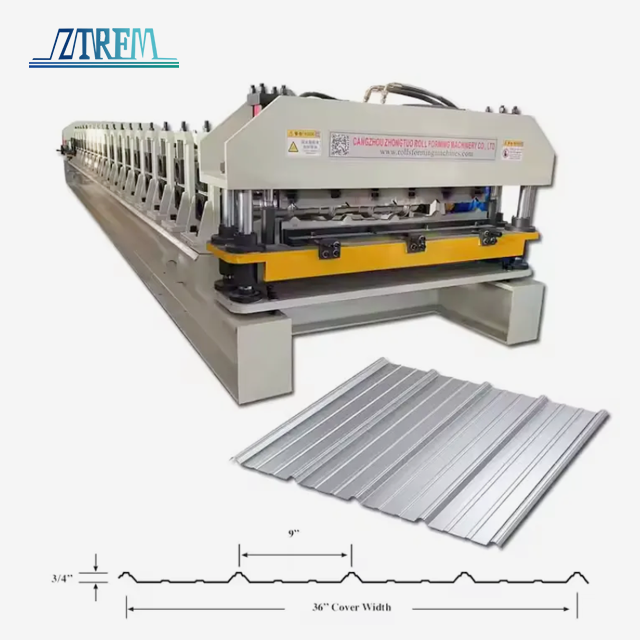
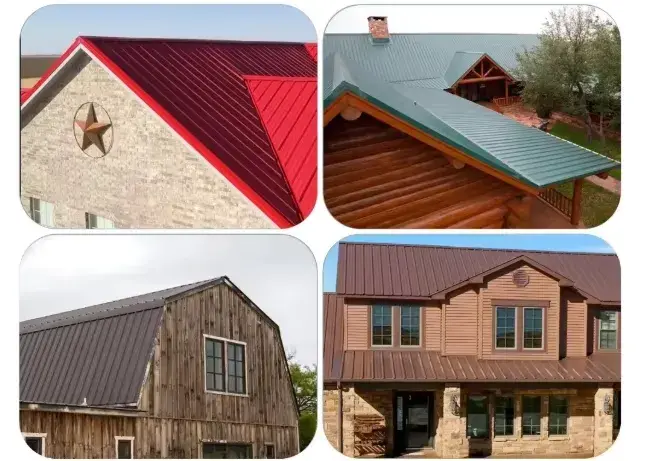
An AG panel roll forming machine is a specialized industrial cold-processing system designed to manufacture 'Agricultural' profile metal roofing and siding panels from galvanized steel or pre-painted coils. This equipment solves key production challenges by eliminating 'oil canning' in thinner gauge metals with precision roller design, ensuring weather-tight side-laps with accurately formed anti-syphon grooves, and maximising coil yield efficiency to lower production costs per linear foot. Understanding its design and working principle helps manufacturers select equipment that delivers consistent quality and operational reliability.
Understanding AG Panel Roll Forming Machine Design
The design architecture of an AG panel roll forming machine directly impacts production efficiency and product quality. We've witnessed how thoughtful engineering translates into measurable improvements in output and material utilization across various manufacturing environments.
Core Components and System Integration
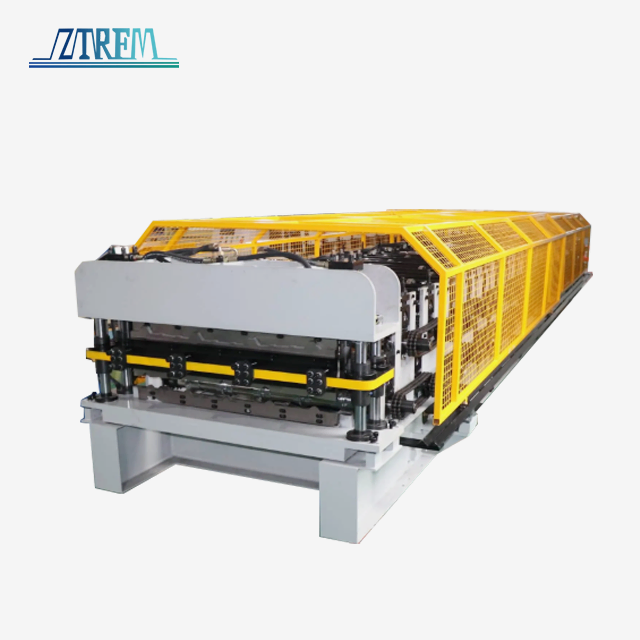
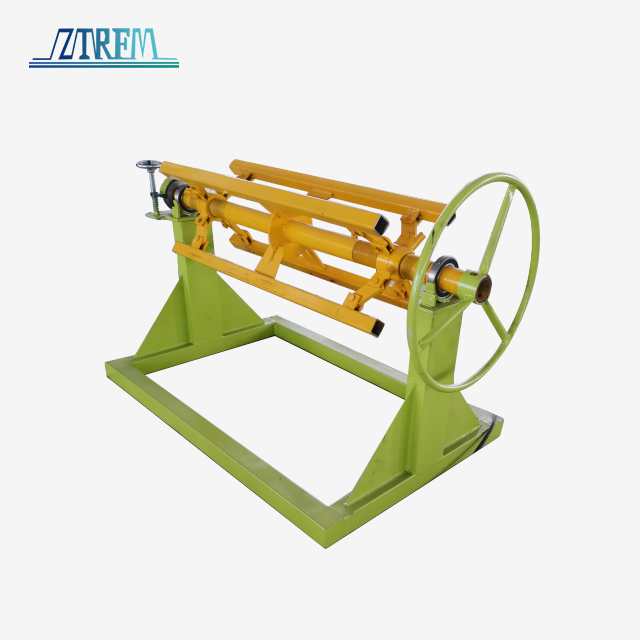
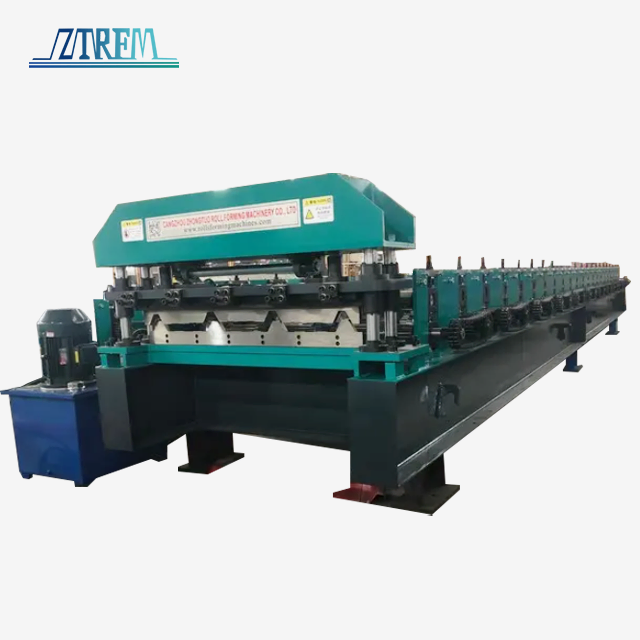
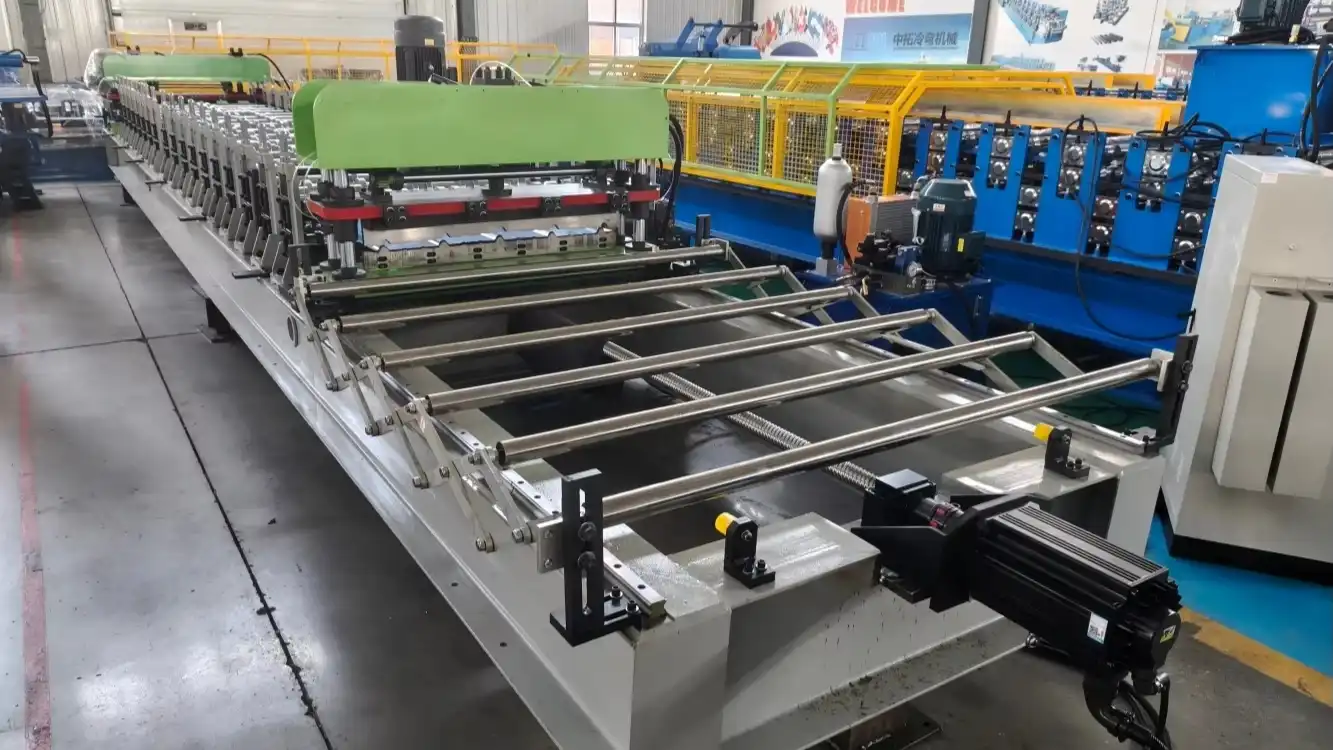
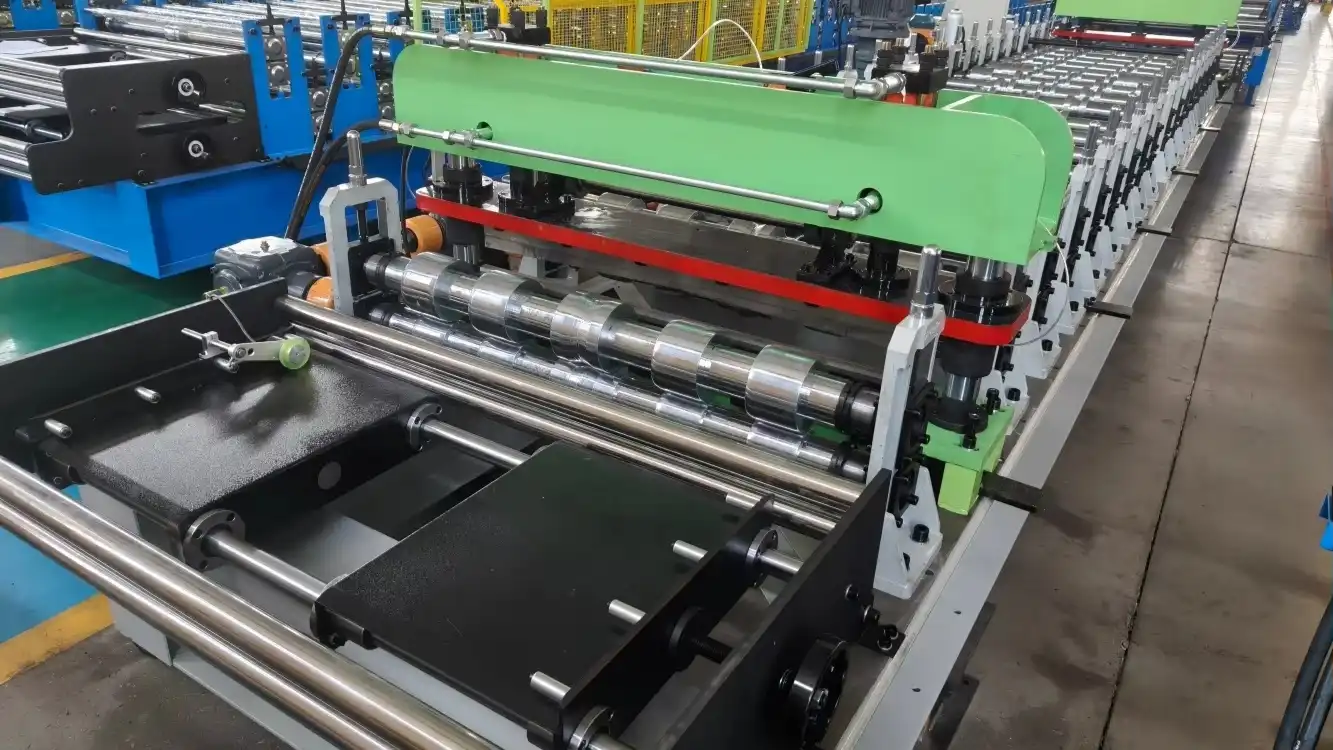
The AG panel roll forming machine comprises several interconnected components that work together seamlessly. The uncoiler holds and feeds metal coils into the production line, maintaining consistent tension to prevent material buckling. Roll stations—typically 16 to 22 passes—gradually shape the flat metal into the desired AG profile featuring 3/4-inch-high major ribs at 9-inch centers. The hydraulic cutting system uses Cr12MoV blades to shear panels to precise lengths, while the hydraulic unit powers all mechanical movements. The control panel, usually equipped with PLC systems from Mitsubishi or Siemens, orchestrates the entire operation with encoder feedback for length tolerance within ±1.0mm.
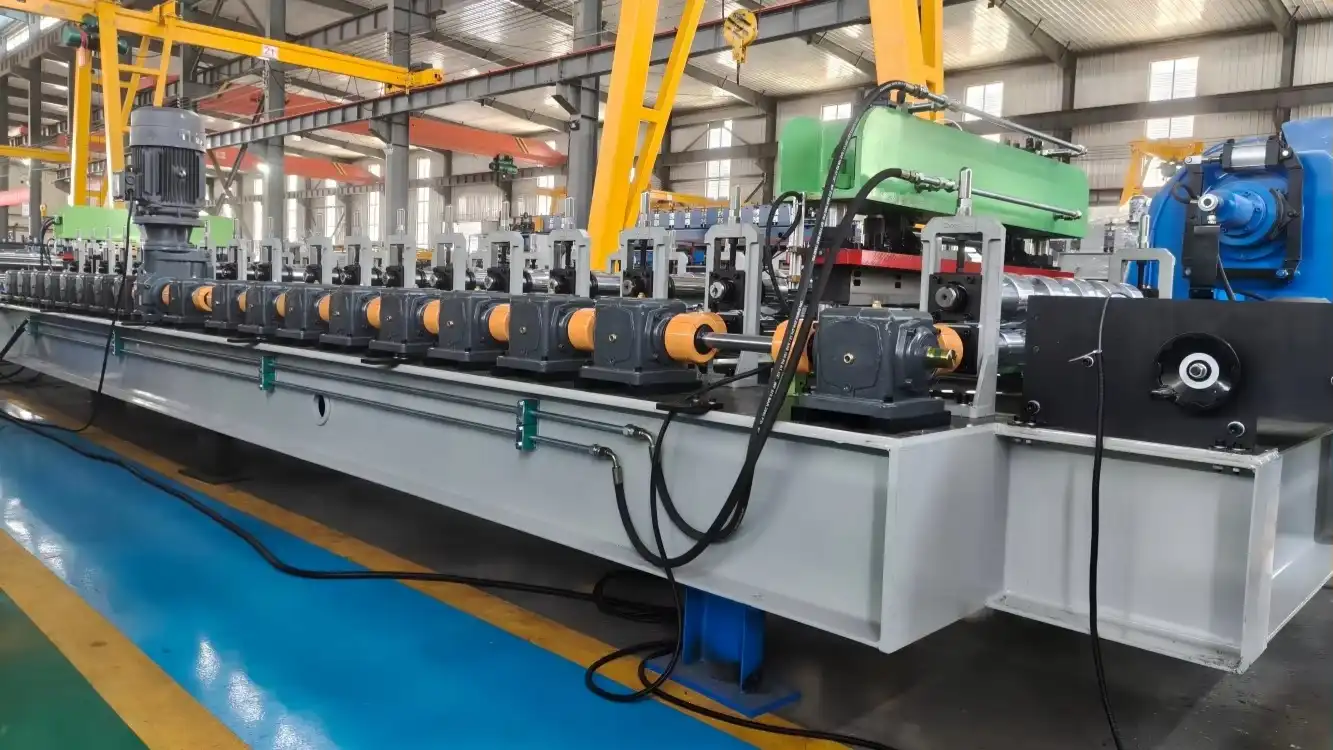
Material flows through an entry guide system that aligns the coil before forming begins. The roll stations use high-grade 45# steel or Cr12MoV rollers, heat-treated and hard chrome-plated to 0.05mm thickness, preventing surface scratching on painted coils. This integration ensures smooth material progression from raw coil to finished panel without interruption.
Unique Design Features
Modularity stands as a defining characteristic of modern AG panel roll forming equipment. Manufacturers can configure machines to accommodate different production volumes and facility constraints. Compact layouts optimise floor space utilisation, which is particularly valuable for manufacturers operating in existing buildings with limited square footage. Advanced automation features include servo motor-driven systems that adjust speed dynamically based on material properties and production requirements.
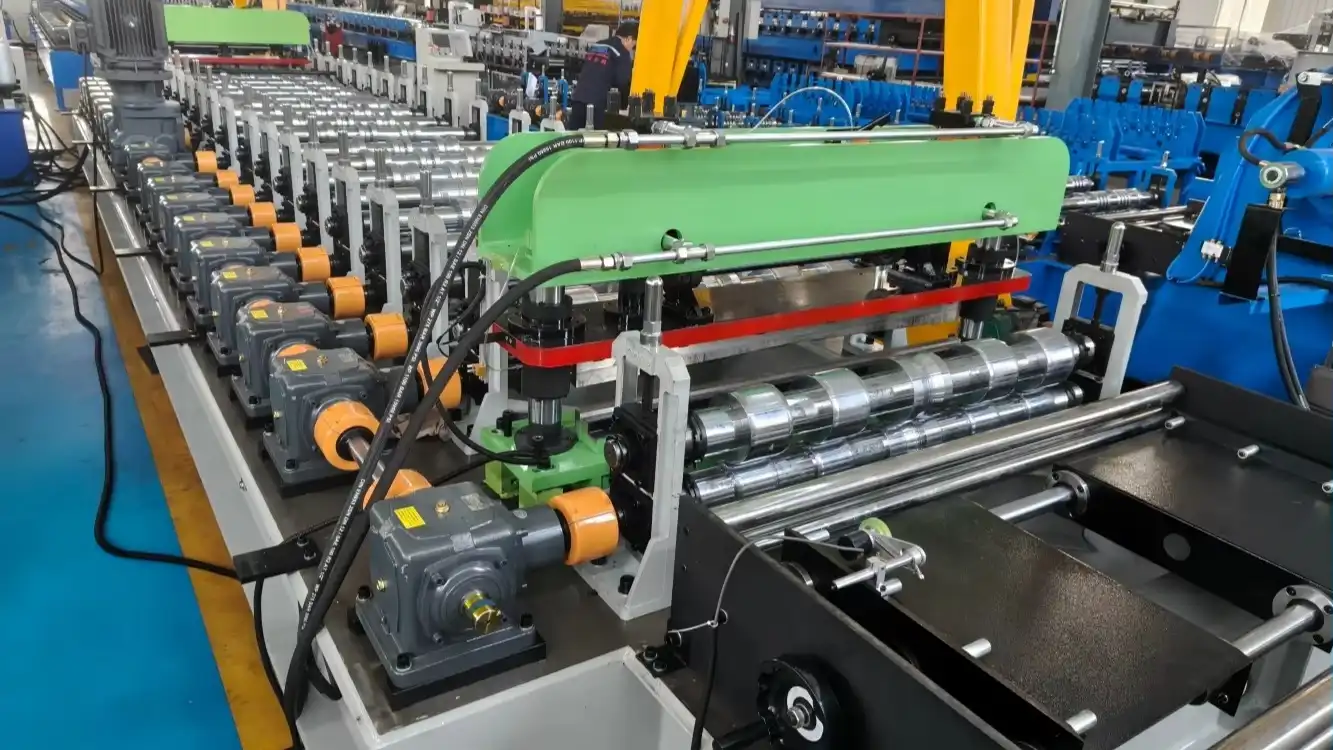
The robust H-beam chassis dampens vibration during high-speed operation, ensuring profile consistency across thousands of linear feet. Heavy-duty chain drives or gearbox transmissions maintain synchronisation across all stations, preventing misalignment that could compromise panel quality. Machines designed to handle both 29-gauge and 26-gauge steel without manual adjustment demonstrate the engineering sophistication built into premium equipment.
Available Model Variations
Equipment ranges from manual configurations suitable for small-scale operations to fully automatic systems designed for industrial-grade production. Manual models require operators to set cutting lengths and manage basic functions, keeping initial investment lower while maintaining quality output. Semi-automatic versions introduce programmable length controls and automated cutting, reducing labor requirements. Fully automatic systems integrate real-time monitoring, predictive maintenance alerts, and remote diagnostics capabilities.
Industrial-grade machines operate at speeds from 30m/min to 60m/min, supporting high-volume production demands. The cutting system integration varies as well—some machines employ flying cut-off systems that shear panels without stopping material flow, while others use stationary cutting for applications requiring ultra-precise length tolerances. Understanding these variations helps procurement professionals match equipment capabilities to specific production objectives.
How AG Panel Roll Forming Machines Work: The Working Principle Explained
The operational workflow follows a logical sequence that transforms flat metal coils into finished roofing panels. We've observed how each stage contributes to the final product's structural integrity and aesthetic appeal.
Operational Workflow Stages
Installing pre-painted or galvanised steel coils on the uncoiler starts raw material loading. The entrance guide system straightens coil sets and aligns strip centrelines with roll stations. Progressive roll forming gives the AG profile additional bends as the material travels through subsequent stations. Deformation is controlled without tearing or thinning.
Technological Innovations
Servo motor-driven automation represents a significant advancement over conventional drive systems. These motors provide instant torque adjustments, responding to material resistance variations that occur when processing different gauge thicknesses or yield strengths. PLC-based controls store multiple profile programs, enabling quick changeovers when switching between production runs.
Real-time monitoring systems track key parameters, including forming pressure, motor load, and cutting blade position. Sensors detect anomalies before they cause production defects, triggering alerts that allow operators to make corrections. Data logging capabilities provide insights into equipment performance trends, supporting continuous improvement initiatives. These technological features collectively reduce downtime and enhance product consistency.
Practical Application Case Study
A post-frame building manufacturer in the Midwest implemented a high-speed AG panel roll-forming machine to replace their manual brake press operation. Production capacity increased from 800 linear feet per shift to 2,400 linear feet, while labor requirements decreased by 60%. Panel flatness improved measurably—oil canning issues that affected approximately 12% of brake-pressed panels dropped to less than 2% with the roll-forming process.
Quality benchmarks met ASTM A792 specifications for Galvalume-coated steel, with coverage width tolerance maintained within ±1/8 inch. The manufacturer reported complete payback on equipment investment within 18 months through increased throughput and reduced material waste. Customer testimonials highlighted the superior weather-tightness of roofing systems installed with these consistently formed panels, validating the production quality improvements.
Benefits of Using AG Panel Roll Forming Machines for B2B Clients
Adopting roll-forming technology delivers measurable advantages that impact both operational metrics and product market positioning. These benefits address the core concerns B2B clients face when evaluating production equipment investments.
Enhanced Operational Efficiency
Production cycles accelerate dramatically compared to traditional forming methods. Automated systems run continuously with minimal operator intervention, freeing skilled workers for quality control and maintenance tasks rather than repetitive manual operations. Faster throughput directly correlates to improved order fulfilment capabilities, enabling manufacturers to accept larger contracts and respond quickly to seasonal demand spikes.
Labor cost savings accumulate through reduced staffing requirements and decreased overtime expenses during peak production periods. Energy efficiency improvements result from optimised motor sizing and variable-speed drives that consume power proportional to actual load. These operational improvements strengthen competitive positioning in price-sensitive markets.
Precise Material Utilization
Consistent forming precision decreases scrap panels and edge trimming, reducing material waste. Machines with tight dimensional tolerances eliminate wasteful safety margins, optimising coil yield. Cost savings are significant when processing expensive coated materials or high-tensile steel grades.
Press braking causes more internal stress than forming, which reduces springback and encourages producers to over-bend panels. Water infiltration causes callbacks and reputation loss, so accurate anti-syphon groove creation is crucial. These material utilisation improvements boost panel profitability.
Superior Product Quality
Uniform panel thickness throughout the profile cross-section ensures structural performance matches engineering specifications. The gradual forming process avoids the work-hardening and micro-cracking risks associated with sharp bends created by press brakes. Versatile profile options allow manufacturers to serve diverse market segments from agricultural buildings to residential barndominiums.
Surface finish quality remains pristine because chrome-plated rollers don't scratch protective coatings. Panels nest perfectly when stacked, simplifying packaging and transportation logistics. End-users benefit from weather-tight installations that perform reliably across decades of service life. These quality attributes support premium pricing strategies and build long-term customer loyalty.
Maintenance and Longevity Support
Practical maintenance requirements remain manageable even for manufacturers with limited technical staff. The AG panel roll former's daily inspections focus on cleaning debris from the cutting mechanisms and verifying the hydraulic fluid levels. Cr12MoV blades typically require sharpening every 6-8 months under standard production volumes, with the process completed by local machine shops.
Manufacturer-backed warranty services provide confidence during the equipment adoption phase. Cangzhou Zhongtuo, with ISO9001, CE, and CAS certifications, offers comprehensive technical support backed by experience serving customers across 150+ countries. Spare parts availability through established supply chains minimizes downtime when components eventually require replacement after years of service.
How to Choose the Right AG Panel Roll Forming Machine: A Procurement Guide?
Selecting appropriate equipment requires a systematic evaluation of production requirements matched against machine capabilities. This procurement framework helps decision-makers avoid costly mismatches between equipment specifications and operational needs.
Evaluating Production Requirements
Basic machine design factors depend on panel size. The typical 36-inch net coverage AG profile determines roll station width, but producers must ensure their material suppliers have appropriate coils. Low-volume operations may need 30m/min, whereas high-volume producers need 60m/min.
Automation preferences weigh upfront investment and long-term labour expenses. Startups with little capital may use manual arrangements and pay more per panel for labour. Fast payback calculations help established manufacturers justify completely automated systems when replacing obsolete equipment. Machines designed for 29-gauge to 26-gauge steel can't process 22-gauge material without adjustments.
Comparing Equipment Alternatives
Roll forming machines offer distinct advantages over press brake operations when producing identical profiles repeatedly. Setup time drops from hours to minutes, and output consistency improves dramatically. However, press brakes maintain advantages for custom profiles produced in small quantities where roll station tooling investment can't be justified.
Manual configurations suit manufacturers producing multiple panel types who value tooling change flexibility over automation speed. Automatic systems deliver superior economics for dedicated AG panel production lines running extended shifts. Scalability considerations should account for business growth projections—modular designs allow capability expansion without replacing entire production lines.
Key Procurement Considerations
Pricing models vary significantly based on specifications and customization requirements. Standard configurations from established manufacturers provide cost predictability, while highly customised solutions require detailed quotations. Global shipping logistics deserve attention—equipment dimensions and weight impact freight costs, customs duties, and delivery timelines.
Installation services ensure proper levelling, power connections, and initial calibration. Training programmes transfer operational knowledge to production teams, covering routine maintenance, troubleshooting procedures, and quality control methods. Post-sale support distinguishes reliable suppliers from vendors who disappear after equipment delivery. Cangzhou Zhongtuo provides comprehensive customer assistance, including OEM customization options, technical consultations, and responsive spare parts fulfilment.
Future Trends and Innovations in AG Panel Roll Forming Machine Technology
Industry evolution continues to accelerate as manufacturers adopt advanced technologies that enhance capabilities and reduce operational costs. Staying informed about these trends helps procurement professionals make future-proof investment decisions.
Smart Manufacturing Integration
Roll forming machines become data-generating assets in factory execution systems with IoT connectivity. Performance measurements from dozens of sensors are uploaded to cloud platforms for remote access. Industry 4.0 standards integrate with ERP systems to automatically update production schedules and inventory needs.
Predictive maintenance algorithms detect bearing wear, hydraulic pressure degradation, and motor inefficiencies before failures. Maintenance staff is warned in advance to schedule repairs during planned downtime rather than reacting to unforeseen problems. Smart manufacturing reduces equipment lifespan TCO.
Materials and Design Advancements
Continuous improvements in roll station materials extend tooling life and enable the processing of increasingly high-tensile steel grades. Aerospace-derived coating technologies reduce friction and wear, maintaining forming accuracy through millions of cycles. Enhanced durability translates directly to lower operating costs and extended replacement intervals.
Advanced finite element analysis software allows engineers to optimise roller profiles for specific material properties, reducing the number of required forming stations while maintaining quality. Lighter machine frames constructed from high-strength alloys reduce foundation requirements and facilitate installation in multi-storey facilities. These design refinements demonstrate an ongoing commitment to performance improvement.
Quality Control and Service Expansion
AI-driven vision systems inspect panels continuously, detecting surface defects, dimensional variations, and forming anomalies in real-time. Defective panels are automatically flagged for sorting, preventing quality issues from reaching customers. Machine learning algorithms improve detection accuracy over time, adapting to subtle variations in material characteristics.
Global service network expansion ensures technical support reaches customers regardless of geographic location. Regional parts warehouses shorten replacement component delivery times, minimizing production disruptions. Cangzhou Zhongtuo exemplifies this approach, maintaining support infrastructure that serves clients across six continents with consistent responsiveness. Modular designs simplify upgrades, allowing manufacturers to enhance capabilities incrementally as technologies mature.
Conclusion
The AG panel roll forming machine represents sophisticated engineering designed to solve specific production challenges in the metal building industry. Its design integrates multiple systems that work cohesively to transform raw coils into finished panels with exceptional consistency. Understanding the working principle—from material loading through progressive forming to precision cutting—enables manufacturers to optimise operations and maintain competitive advantages. Benefits, including enhanced efficiency, reduced waste, and superior quality, justify equipment investments for businesses ranging from startups to established manufacturers. Careful procurement evaluation, matching production requirements to machine capabilities, ensures long-term satisfaction. Emerging technologies promise continued improvements in automation, quality control, and operational intelligence, positioning roll forming equipment as a cornerstone of modern metal panel manufacturing.
FAQ
1. Can the equipment handle different steel gauges without adjustments?
Premium machines process standard agricultural gauges from 29 ga to 26 ga without manual spacer changes due to engineered tolerance ranges. Significant thickness jumps to 24 ga may require minor gap adjustments depending on material yield strength. This flexibility supports diverse production requirements without extensive downtime.
2. What maintenance intervals apply to hydraulic cutting components?
Cr12MoV blades typically need sharpening every 6-8 months under normal 8-hour shift operations. Actual intervals vary based on high-tensile steel processing volumes—Grade 80 materials accelerate wear compared to standard yield strengths. Regular inspection helps identify dulling before the cut quality deteriorates.
3. How can manufacturers prevent panel rippling issues?
Oil canning on flat sections usually results from excessive roller pressure or uneven coil tension. Corrections involve adjusting the entry guide tension brake or fine-tuning intermediate roller gaps. Proper initial setup and periodic calibration maintain a flat surface finish throughout production runs.
4. Does the machine accommodate aluminum coils?
Yes, though aluminium's different spring-back characteristics compared to steel require pressure adjustments. Some production lines offer aluminium-specific configurations with additional stations to prevent material cracking. Material compatibility verification during procurement prevents processing limitations after installation.
Partner With a Trusted AG Panel Roll Forming Machine Supplier
ZTRFM (Cangzhou Zhongtuo) stands ready to help your manufacturing operation achieve new levels of productivity and quality with our proven AG panel roll-forming machines. Our engineering team brings decades of experience designing equipment that addresses real production challenges—from eliminating oil canning defects to maximizing material yield efficiency. We understand that selecting the right roll-forming equipment represents a significant investment decision, which is why we provide comprehensive consultations to match machine specifications precisely to your production requirements.
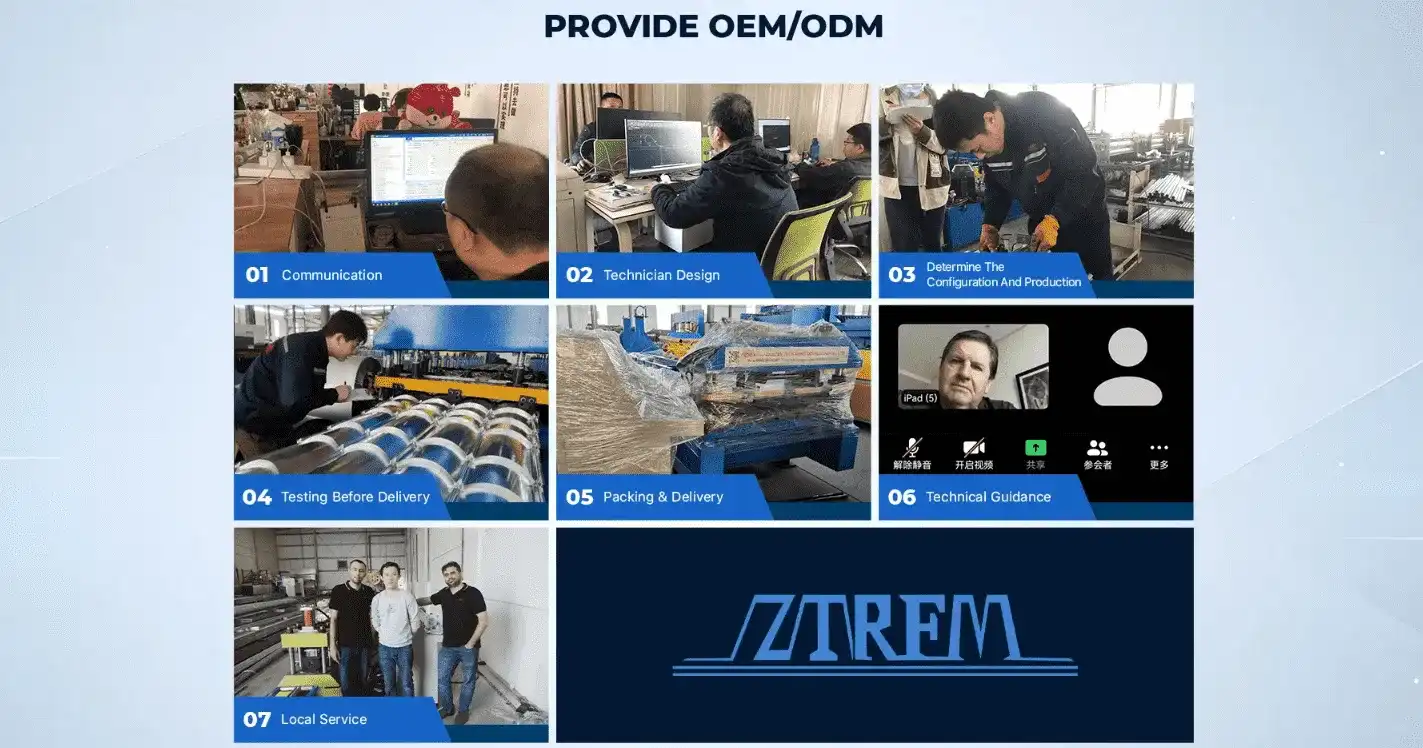
Our manufacturing facility holds ISO9001, CE, and CAS certifications, demonstrating our commitment to quality standards recognized globally. Clients across 150+ countries rely on our equipment for their metal panel production needs, backed by responsive technical support and readily available spare parts. Whether you need a standard configuration for immediate delivery or a customised solution incorporating specific automation features, our OEM and ODM capabilities ensure you receive equipment perfectly suited to your operations.
Contact us at zhongtuorollforming@gmail.com to discuss your AG panel roll forming machine requirements. We'll provide detailed specifications, production samples, and transparent pricing information that supports your procurement decision. Visit rollformingmachinemanufacturer.com to explore our complete equipment range and discover how ZTRFM delivers manufacturing solutions that strengthen your competitive position.
References
1. American Iron and Steel Institute. "Cold-Formed Steel Design Manual: Roll Forming Process Specifications." AISI Technical Standards, 2022.
2. Metal Construction Association. "Best Practices for Agricultural Building Panel Production." MCA Industry Guidelines, 2021.
3. International Journal of Advanced Manufacturing Technology. "Precision Control Systems in Roll Forming Operations." Volume 118, Issue 7, 2023.
4. Federation of European Producers of Steel for Packaging. "Material Properties and Forming Characteristics of Coated Steel Products." FEPSA Technical Report, 2022.
5. Society of Manufacturing Engineers. "Automation Technologies in Metal Forming Equipment." SME Industry White Paper, 2023.
6. National Frame Builders Association. "Metal Panel Performance Standards for Post-Frame Construction." NFBA Technical Bulletin, 2021.