- English
- French
- German
- Portuguese
- Spanish
- Russian
- Japanese
- Korean
- Arabic
- Irish
- Greek
- Turkish
- Italian
- Danish
- Romanian
- Indonesian
- Czech
- Afrikaans
- Swedish
- Polish
- Basque
- Catalan
- Esperanto
- Hindi
- Lao
- Albanian
- Amharic
- Armenian
- Azerbaijani
- Belarusian
- Bengali
- Bosnian
- Bulgarian
- Cebuano
- Chichewa
- Corsican
- Croatian
- Dutch
- Estonian
- Filipino
- Finnish
- Frisian
- Galician
- Georgian
- Gujarati
- Haitian
- Hausa
- Hawaiian
- Hebrew
- Hmong
- Hungarian
- Icelandic
- Igbo
- Javanese
- Kannada
- Kazakh
- Khmer
- Kurdish
- Kyrgyz
- Latin
- Latvian
- Lithuanian
- Luxembou..
- Macedonian
- Malagasy
- Malay
- Malayalam
- Maltese
- Maori
- Marathi
- Mongolian
- Burmese
- Nepali
- Norwegian
- Pashto
- Persian
- Punjabi
- Serbian
- Sesotho
- Sinhala
- Slovak
- Slovenian
- Somali
- Samoan
- Scots Gaelic
- Shona
- Sindhi
- Sundanese
- Swahili
- Tajik
- Tamil
- Telugu
- Thai
- Ukrainian
- Urdu
- Uzbek
- Vietnamese
- Welsh
- Xhosa
- Yiddish
- Yoruba
- Zulu
Best AG Panel Roll Forming Machine for Roofing Panels
Agricultural building makers can get high-quality AG panel roll-making machine options from these plants. The machine makes metal plates with special rib patterns that can stand up to the heavy snow and strong winds that often happen on farms. An AG panel roll forming machine makes it easy for manufacturers to quickly turn coils of galvanized steel or Galvalume into long-lasting roofing and wall panels. If you choose the right parts and keep them in good shape, this equipment will work reliably for decades to make farm panels.
Introduction
The AG panel roll forming machine is a specialized piece of industrial equipment made for making roofing and wall panels for farms. Unlike regular roll formers that are used for business or home profiles, this machine makes panels with wide flat profiles and triangular ribs that are very strong and can hold a lot of weight. These panels are great for barns, equipment sheds, grain storage facilities, and housing for animals. These tools are now necessary for metal building makers who work in agriculture, where long-lasting and weatherproof buildings are very important. The need for farm metal buildings around the world keeps rising. This means that AG panel roll formers are a good investment for companies that want to make more products or make their production more efficient.
Understanding AG Panel Roll Forming Machines and Working Principles
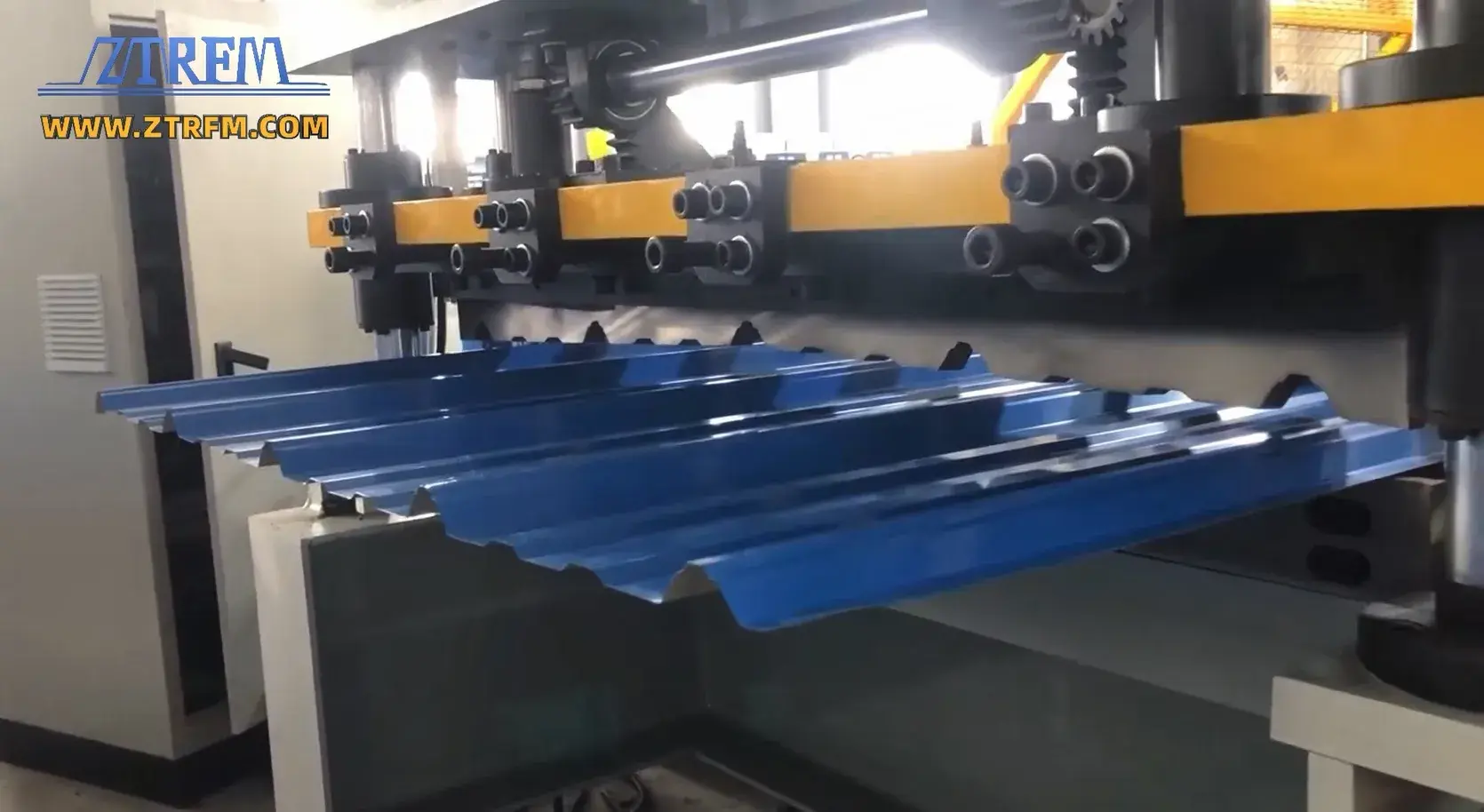
The machine is run by continuous cold-forming technology. There is no need to use heat to slowly shape flat metal coils into final panel shapes. Each pair of rollers slowly turns the metal into the final form of the panel as it moves through a number of roller stations. When it's made for farming, the ribs have to stay the same height and shape so that water can drain well, screws can be fixed firmly, and the structure stays strong over time. When you roll form something instead of pressing or using a press brake, the material works harder all the way along the panel. This makes the thing stronger in the end.
Core Components and Operational Structure
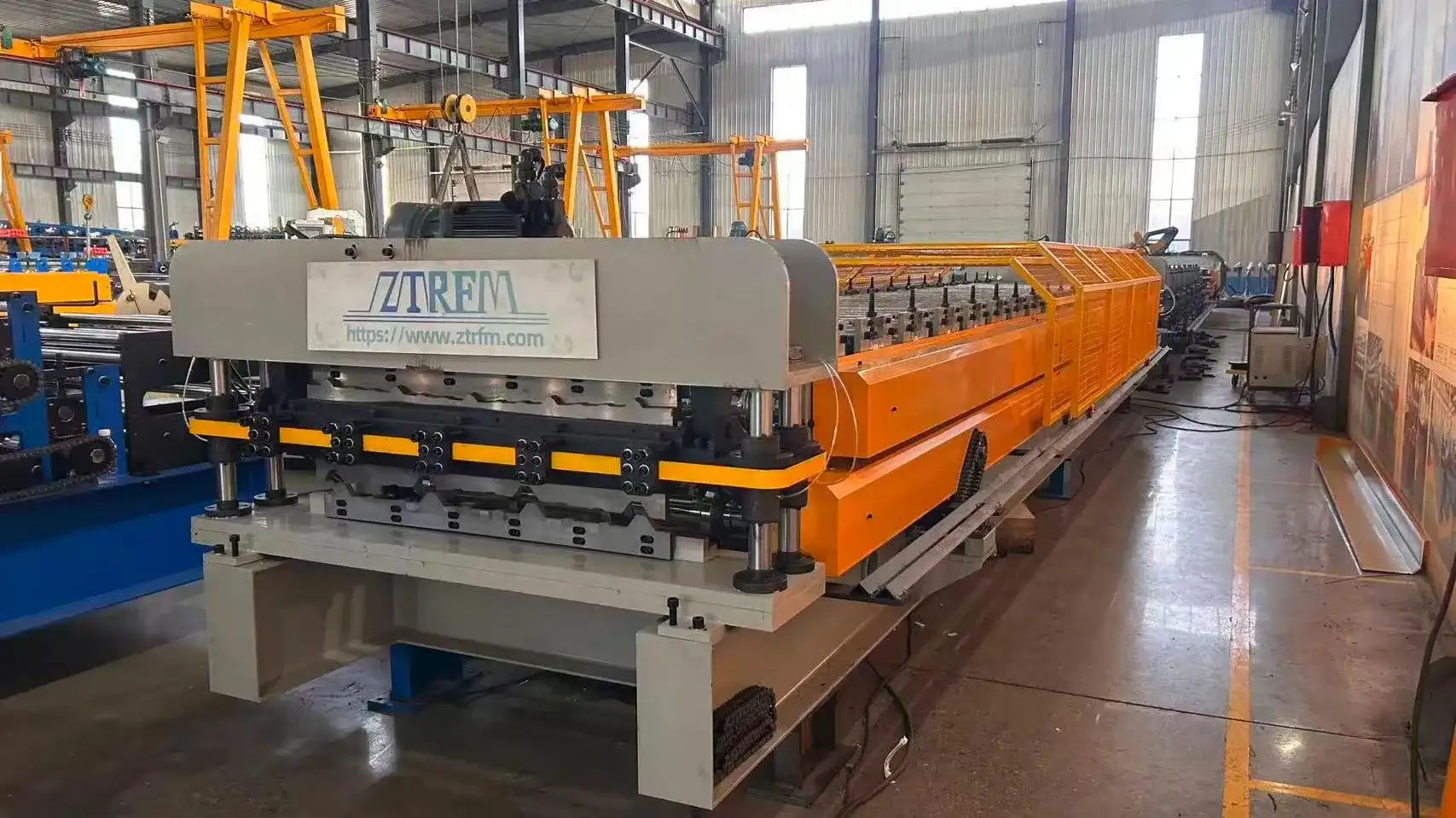
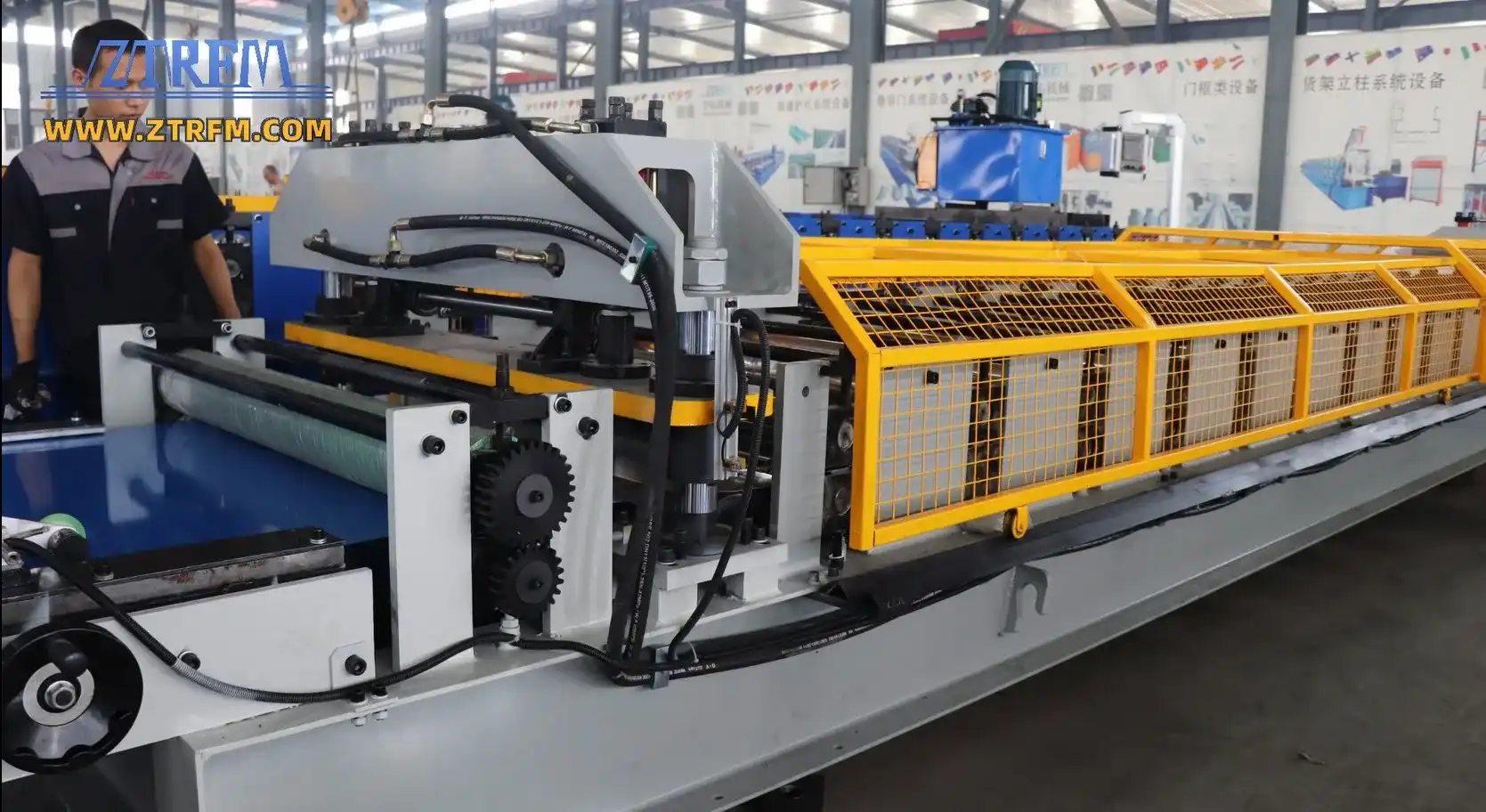
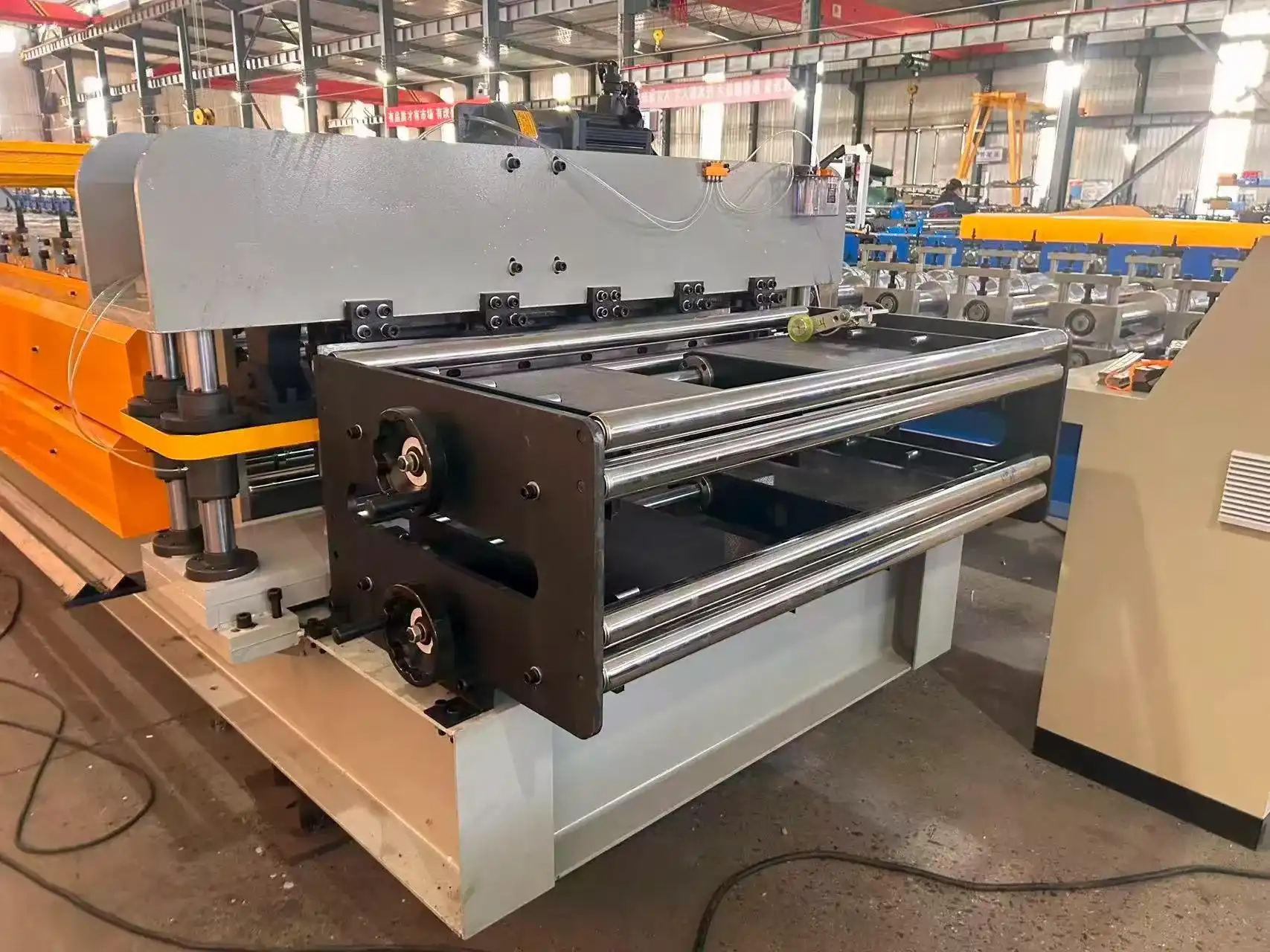
A standard AG panel roll press has a few important parts that work together without any problems. The uncoiler keeps the metal twisted and lets go of it at a measured strain. The input guides the strip as it goes into the forming area. Between 15 and 19, making points shapes the outline step by step. Panels are cut to exact lengths by the hydraulic cutting device. All actions are coordinated by a programmed logic processor (PLC). Heavy H-beam steel, usually 300mm to 350mm tall, is used to make the main frame. Reinforced support plates are welded at regular intervals. When working with 24-gauge or 26-gauge materials, which are popular in farm buildings, this strong structure can handle high forming forces.
Automation Features and Process Control
Modern AG panel roll formers have advanced PLC-based control systems that precisely sync the feeding speed, forming processes, and cutoff length. A tablet display makes it easy for operators to set panel lengths, production numbers, and speed settings. Automatic stacking systems pick up finished panels at the end, where they are discharged. This cuts down on the need for more workers and keeps panels from getting damaged while they are being handled. Some high-end models have online testing features that let sellers figure out problems without having to go to the site. With these automated features, one person can run the whole production line, from filling the coils to packing the final panels.
Compatible Materials and Specifications
Many metal surfaces are used to build on farms, and AG panel roll-making tools (AG panel roll-forming machines) can work with them. As long as it meets ASTM A653 standards, galvanized steel doesn't rust and doesn't cost too much. Galvalume is a product made of aluminum and zinc that meets ASTM A792. It lasts longer in harsh farm environments. You can also use coils that have already been painted. This lets people make color-matched panels without having to paint them after they are made. A range between 0.4 mm and 0.8 mm, or 26-gauge to 22-gauge, is the standard range for depth of material. Depending on the farming shape that is needed, coverage widths are generally between 24 and 36 inches, and rib heights are between 0.75 and 1.25 inches. When panels cover a larger area, they need fewer panels per building, which speeds up the process of putting them up.
Common Operational Challenges and Solutions
The AG panel roll former's function can be affected by a number of operating issues. When rollers aren't lined up right, finished panels turn to one side instead of staying straight. This is called panel camber. Bearings that are worn out or uneven roller pressure are common causes of rib height that isn't regular. When cutting dies are dull, the edges of the cuts are rough or bent and need to be finished again. These problems can be avoided with regular upkeep. Roller alignment should be checked once a month, drive chains should be oiled once a week, and cutting blades should be replaced every 200,000 linear meters of production. Maintenance staff training programs cut down on downtime and make tools last a lot longer.
Comparing AG Panel Roll Formers with Other Metal Forming Equipment
When evaluating AG panel roll forming machines against alternative forming methods, several factors merit consideration. Compared to press brakes, AG panel roll forming machines offer higher sustained output rates of 15 to 20 meters per minute, along with better dimensional consistency across long production runs. However, press brakes provide more flexibility for short runs and custom profiles. Stamping presses can achieve very high speeds but require expensive tooling and produce less uniform panel flatness. The choice depends primarily on production volume requirements. For facilities producing over 10,000 linear feet of agricultural panels per day, a dedicated AG panel roll forming machine is clearly superior.
Roll Forming Versus Press Brake Operations
Continuous roll forming eliminates the start-stop cycles inherent in press brake operations. When switching from press brake forming to roll forming, manufacturers typically see output increases of 300 percent or more. Setup time for profile changes on a press brake may take hours, while AG panel roll formers with quick-change tooling systems can switch profiles in under one hour. Material waste also differs significantly. Press brake operations often generate scrap rates of 5 to 8 percent due to end trimming and setup test pieces. Roll forming typically achieves scrap rates below 2 percent of coil input.
Hydraulic Versus Electric Drive Systems
AG panel roll formers are available with either hydraulic or electric drive systems. Hydraulic drives provide higher torque for processing thicker materials, such as 22-gauge steel, for extreme snow load applications. However, hydraulic systems require more maintenance, including regular oil changes and seal replacements. Electric servo drives offer better energy efficiency, reducing power consumption by 20 to 30 percent compared to hydraulic systems. They also provide more precise speed control and quieter operation. For most agricultural panel applications, electric servo drives represent the better long-term investment despite higher initial costs.
Manual, Semi-Automatic, and Fully Automatic Configurations
AG panel roll formers are available in three configuration levels. Manual systems suit low-volume producers running under 5,000 linear feet per day. These require operator intervention for length measurement and cutting. Semi-automatic systems include automatic length control and cutting but require manual stacking. Fully automatic systems integrate coil loading, forming, cutting, stacking, and even packaging with minimal operator intervention. While fully automatic systems cost more initially, they reduce labor costs dramatically and are essential for high-volume production environments.
Key Benefits of Choosing the Best AG Panel Roll Forming Machine
Investing in a quality AG panel roll former delivers multiple benefits that directly impact profitability. Higher output rates allow manufacturers to fulfill larger orders faster. Consistent panel quality reduces installation problems and customer complaints. Lower labor costs improve profit margins on every panel sold. These benefits typically result in return on investment within 18 to 36 months, depending on production volume and local labor rates.
Enhanced Production Efficiency and Automation
A well-configured AG panel roll former produces panels continuously, eliminating start-stop cycles that waste time and energy. Output increases of 300 percent or more are common when switching from press brake operations to roll forming. The automation features described earlier allow one operator to manage production that previously required three or four workers. For manufacturers serving regional agricultural markets, this efficiency advantage creates significant competitive positioning.
Precision Manufacturing and Quality Consistency
Roll forming through multiple stations ensures consistent rib height and flatness across every panel produced. Typical dimensional tolerances achieved by quality AG panel roll formers include width within plus or minus 1 millimeter, length within plus or minus 2 millimeters, and camber under 3 millimeters over a 10-meter panel length. These tolerances meet or exceed the requirements specified in agricultural building codes and ensure trouble-free installation in the field.
Durability, Maintenance, and Operational Longevity
With proper maintenance following the manufacturer's recommendations, AG panel roll formers last over 15 years of continuous operation. The key wear components include forming rollers, bearings, drive chains, and cutting blades. Rollers typically require replacement after 500,000 linear meters of production. Bearings last 2 to 3 years under normal use. Drive chains need replacement every 3 to 5 years. Cutting blades require sharpening or replacement every 200,000 linear meters. Following a scheduled maintenance program maximizes equipment lifespan and prevents unexpected downtime.
Energy Efficiency and Environmental Considerations
Continuous roll forming consumes less energy per linear foot of AG panel produced than intermittent methods such as press brake operations. The difference arises because AG panel roll forming maintains a consistent speed and load, while press brakes repeatedly start and stop. Modern electric servo drives further reduce power consumption by 20 to 30 percent compared to traditional hydraulic systems. For manufacturers tracking sustainability metrics, AG panel roll forming machines contribute to lower carbon footprints per unit of production. Additionally, the reduced scrap rates mentioned earlier mean less material waste sent to recycling or landfill.
Procurement Guide for Buying AG Panel Roll Forming Machines
Selecting the right AG panel roll forming machine requires careful assessment of production requirements, budget constraints, and supplier capabilities. The following sections provide practical guidance for procurement decisions.
Assessing Your Production Requirements
Begin by determining your expected daily output in linear feet. Low-volume producers running under 5,000 feet per day may find manual or semi-automatic configurations sufficient. Medium-volume producers running 5,000 to 15,000 feet daily should consider semi-automatic or fully automatic systems. High-volume producers exceeding 15,000 feet daily require fully automatic lines with integrated stacking. Next, identify the material gauges you will process most frequently. Light agricultural applications, such as equipment sheds, work well with 26-gauge steel. Heavy snow-load regions require 24-gauge or even 22-gauge material. Finally, determine which panel profiles you need to produce. Single-profile machines cost less but limit flexibility. Multi-profile machines with quick-change tooling cost more but serve diverse market requirements.
Understanding Price Ranges and Investment Considerations
AG panel roll former prices vary significantly based on configuration and features. Entry-level manual machines start around $30,000 to $50,000. Semi-automatic systems typically range from $50,000 to $80,000. Fully automatic lines with stacking and remote diagnostics range from $80,000 to $150,000 or more. Custom tooling for non-standard profiles adds $10,000 to $25,000, depending on complexity. Return on investment calculations should consider labor savings, material waste reduction, and increased throughput. Most manufacturers report payback periods between 18 and 36 months for appropriately sized equipment.
Evaluating Warranties, Installation, and After-Sales Support
Look for at least 12-month warranties on all mechanical components. Electrical systems should carry similar coverage. Suppliers should provide on-site commissioning to verify proper operation before production begins. Operator training programs should cover safety procedures, normal operation, quality inspection, and routine maintenance. Responsive technical support is essential for minimizing downtime. Verify that spare parts are available locally or can be shipped within 48 hours. Ask for references from other agricultural panel manufacturers who have purchased similar equipment.
Identifying Trusted Manufacturers and Suppliers
Verify potential suppliers' experience with agricultural panel tooling, specifically, not just general roll forming equipment. Request sample panels produced on the machine you intend to purchase. Inspect these samples for consistent rib height, flatness, and cut quality. Check customer references, particularly those in similar production environments. Confirm that the supplier maintains an adequate inventory of spare parts for the specific model you are considering. Established suppliers with international experience typically provide better long-term support than local resellers with limited technical capabilities.
Case Studies and Real-World Applications
Agricultural Building Manufacturer Expands Capacity
A Midwest post-frame building supplier installed a fully automatic AG panel roll former with electric servo drives and automatic stacking. Before installation, they purchased pre-formed panels from a regional supplier, paying a 25 percent premium and waiting up to two weeks for delivery. After installation, daily output increased from effectively zero to 25,000 linear feet. Labor required for panel production dropped from four operators to one. The equipment paid for itself within 14 months.
Metal Supply Center Adds Agricultural Panel Line
A metal service center serving farm construction markets added an AG panel roll former to produce just-in-time panels for local contractors. Previously, contractors bought standard-length panels from national suppliers and cut them to size on site, wasting 10 to 15 percent of material. By cutting to exact order lengths, the service center achieved 15 percent material savings while charging premium prices for custom-length panels. The machine paid for itself in 22 months.
Custom Profile Development for Architectural Application
An equipment manufacturer developed a custom 1.25-inch rib profile for a client requiring extra load capacity for high-snow-load regions. The standard 0.75-inch rib profile available on off-the-shelf AG panel roll forming machines did not meet the client's structural requirements. The manufacturer designed and fabricated custom roller tooling within four weeks. The resulting AG panel roll-forming machine produced panels that passed all load tests and has operated reliably for over five years.
Conclusion
Selecting the best AG panel roll forming machine requires balancing production volume requirements, material specifications, budget constraints, and supplier capabilities. These machines deliver superior efficiency, consistent quality, and rapid return on investment for agricultural building manufacturers. The initial capital investment is substantial, but the long-term benefits, including reduced labor costs, lower material waste, and increased throughput, make AG panel roll formers a sound business decision for any serious agricultural panel producer. Work with experienced suppliers who provide quality tooling, responsive technical support, and comprehensive operator training.
FAQ
1. What material thickness range can AG panel roll-forming machines process?
Most AG panel roll formers process 24-gauge through 26-gauge steel, corresponding to 0.5mm to 0.7mm thickness. Heavy-duty models with reinforced frames and higher horsepower motors can handle 22-gauge (0.8 mm) for extreme snow load applications. Always verify the machine's rated capacity before purchasing, as processing materials thicker than rated will damage rollers and reduce equipment life.
2. How often do forming rollers require replacement?
Quality rollers manufactured from hardened 45# forged steel with chrome plating last over 500,000 linear meters of production with proper maintenance. Replace rollers when panel dimensional tolerances exceed plus or minus 1.5mm, when surface marks appear consistently on finished panels, or when rib height varies by more than 0.5mm along a panel length.
3. Can one machine produce multiple panel profiles?
Yes, with additional roller tooling sets designed for each profile. Changing profiles typically takes 2 to 4 hours with standard bolted connections. Quick-change systems featuring removable roller stands reduce changeover time to under one hour. Some manufacturers offer turret-style systems that store multiple tooling sets, allowing profile changes in minutes.
Partner With ZTRFM for Superior Agricultural Panel Forming Solutions
ZTRFM (Cangzhou Zhongtuo) has supplied roll forming equipment, including AG panel roll forming machines, to agricultural building manufacturers in over 150 countries since 2014. We offer complete AG panel roll former solutions, including custom tooling design, installation, operator training, and lifetime technical support. Our machines feature robust H-beam construction, precision-ground rollers, and advanced PLC controls. Contact us at zhongtuorollforming@gmail.com for detailed proposals and pricing information tailored to your specific production requirements.


References
1. American Society for Testing and Materials. (2022). ASTM A653/A653M Standard Specification for Steel Sheet, Zinc-Coated (Galvanized) or Zinc-Iron Alloy-Coated (Galvannealed) by the Hot-Dip Process. ASTM International, West Conshohocken, PA.
2. Metal Construction Association. (2021). Technical Bulletin on Agricultural Panel Installation and Performance Standards for Metal Roofing Systems. MCA Publications, Glenview, Illinois.
3. Roll Forming Corporation Technical Committee. (2023). Guidelines for Cold Roll Forming Equipment Selection and Operational Best Practices in Metal Panel Manufacturing. International Association of Roll Forming Engineers.
4. National Frame Builders Association. (2020). Post-Frame Building Design Manual: Material Specifications and Construction Standards for Agricultural Structures. NFBA Press, Lawrence, Kansas.
5. Sheet Metal Forming Technology Institute. (2022). Comparative Analysis of Metal Forming Technologies: Press Brake Operations Versus Continuous Roll Forming Systems. SMFTI Research Paper Series, Volume 18.
6. Machinery Reliability Institute. (2021). Predictive Maintenance Strategies for Industrial Roll Forming Equipment: Maximizing Uptime and Component Longevity. MRI Technical Publication, Chicago, Illinois.
_1750323743240.webp)