- English
- French
- German
- Portuguese
- Spanish
- Russian
- Japanese
- Korean
- Arabic
- Irish
- Greek
- Turkish
- Italian
- Danish
- Romanian
- Indonesian
- Czech
- Afrikaans
- Swedish
- Polish
- Basque
- Catalan
- Esperanto
- Hindi
- Lao
- Albanian
- Amharic
- Armenian
- Azerbaijani
- Belarusian
- Bengali
- Bosnian
- Bulgarian
- Cebuano
- Chichewa
- Corsican
- Croatian
- Dutch
- Estonian
- Filipino
- Finnish
- Frisian
- Galician
- Georgian
- Gujarati
- Haitian
- Hausa
- Hawaiian
- Hebrew
- Hmong
- Hungarian
- Icelandic
- Igbo
- Javanese
- Kannada
- Kazakh
- Khmer
- Kurdish
- Kyrgyz
- Latin
- Latvian
- Lithuanian
- Luxembou..
- Macedonian
- Malagasy
- Malay
- Malayalam
- Maltese
- Maori
- Marathi
- Mongolian
- Burmese
- Nepali
- Norwegian
- Pashto
- Persian
- Punjabi
- Serbian
- Sesotho
- Sinhala
- Slovak
- Slovenian
- Somali
- Samoan
- Scots Gaelic
- Shona
- Sindhi
- Sundanese
- Swahili
- Tajik
- Tamil
- Telugu
- Thai
- Ukrainian
- Urdu
- Uzbek
- Vietnamese
- Welsh
- Xhosa
- Yiddish
- Yoruba
- Zulu
Custom Metal Profiles with Trapezoidal Sheet Roll Forming Technology: A Complete Guide
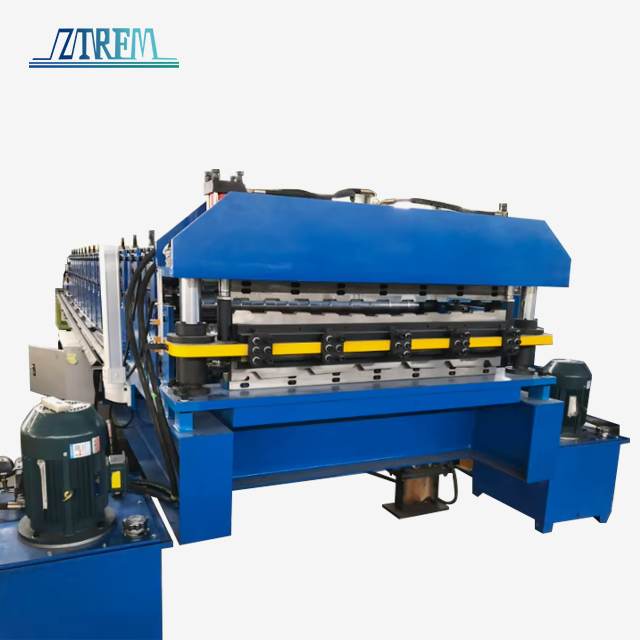
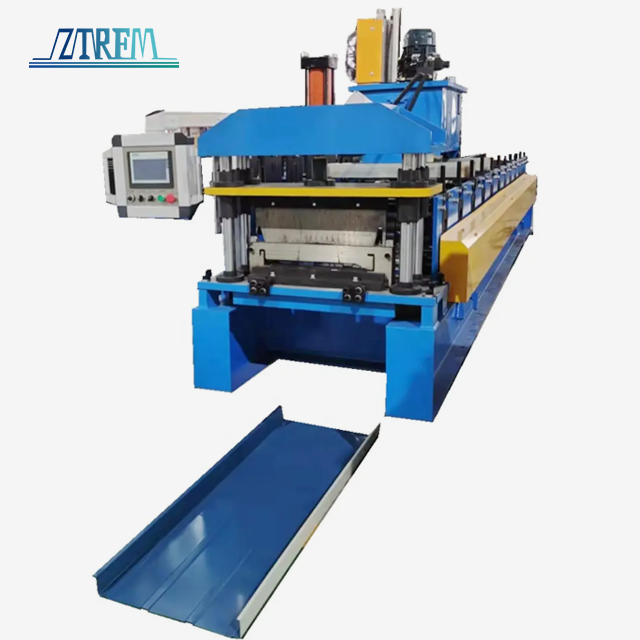
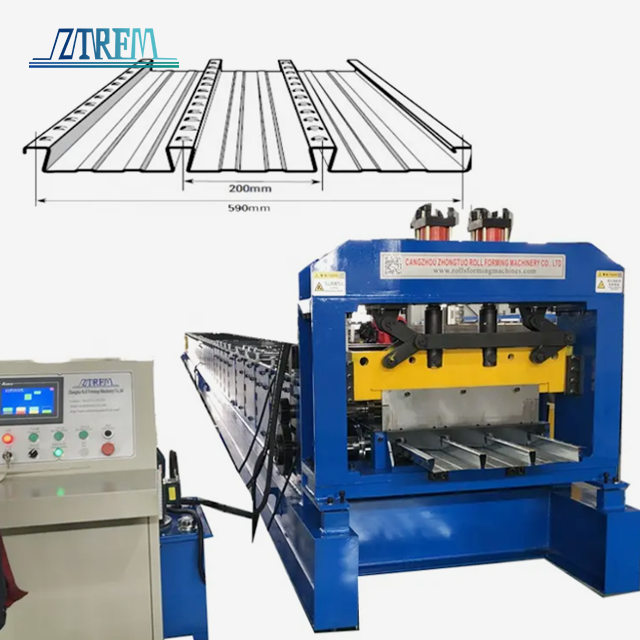
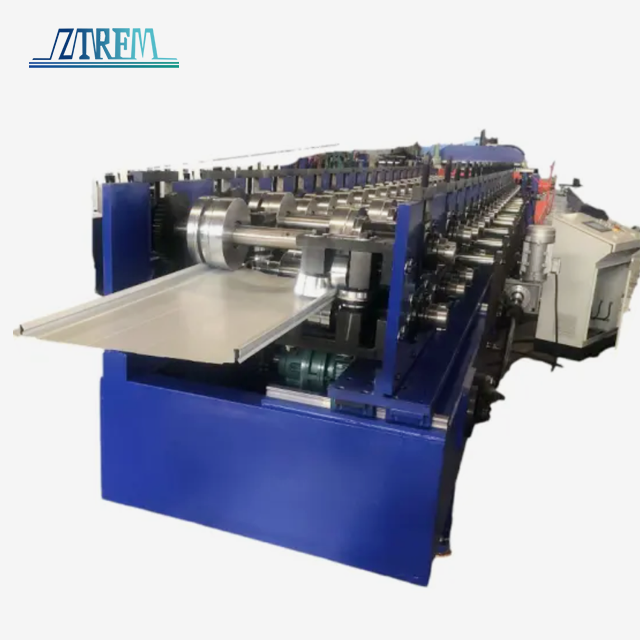
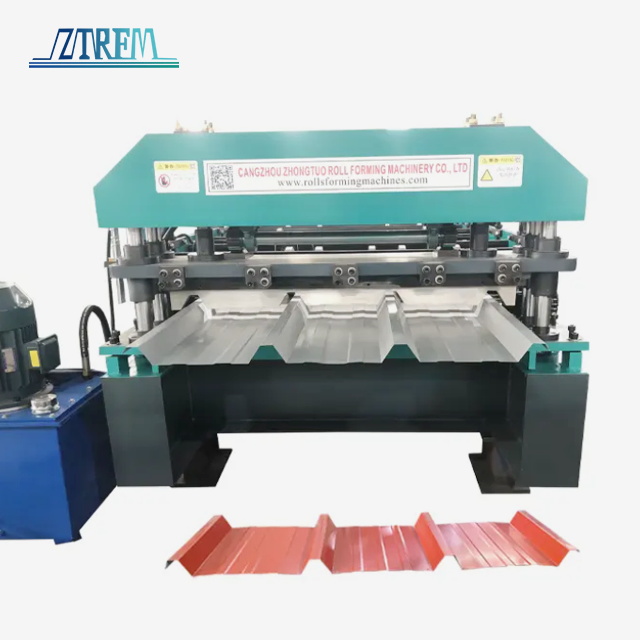
Manufacturing custom metal profiles demands precision, speed, and reliability. A trapezoidal sheet roll forming machine addresses these needs by transforming flat metal coils into structurally robust roofing and wall panels through continuous cold-forming. This specialised equipment processes materials like PPGI, galvanised steel, and aluminium into distinctive trapezoidal profiles that offer superior strength-to-weight ratios. The technology eliminates manual bending inconsistencies while dramatically increasing production throughput. Whether you're producing roofing systems for commercial warehouses or architectural cladding for residential projects, understanding this forming process helps you select equipment that aligns with your production goals and quality standards.
Why Trapezoidal Profiles Dominate Modern Construction?
The geometric advantage of trapezoidal panels lies in their structural efficiency. Unlike flat sheets, the angled ribs create enhanced rigidity that allows wider spacing between supporting purlins. This design reduces overall construction costs while maintaining load-bearing capacity.
Building roofing system manufacturers particularly value this profile shape for water management. The raised ribs direct rainwater efficiently while the anti-capillary grooves prevent moisture infiltration at overlapping joints. In coastal environments where salt spray accelerates corrosion, the precise forming capability ensures protective coatings remain intact throughout the bending process.
Light steel structure manufacturers benefit from the profile's versatility. The same roll forming line produces panels suitable for vertical wall applications and horizontal roof installations. This adaptability reduces capital investment while expanding product offerings. The trapezoidal geometry also creates natural air channels when installed, improving building ventilation and reducing thermal stress on materials.
International engineering firms specify these profiles for pre-engineered buildings because standardised dimensions simplify global deployment. The consistent cross-sectional accuracy means panels produced in different facilities maintain identical stacking characteristics and installation requirements.
Core Components That Define Production Capability
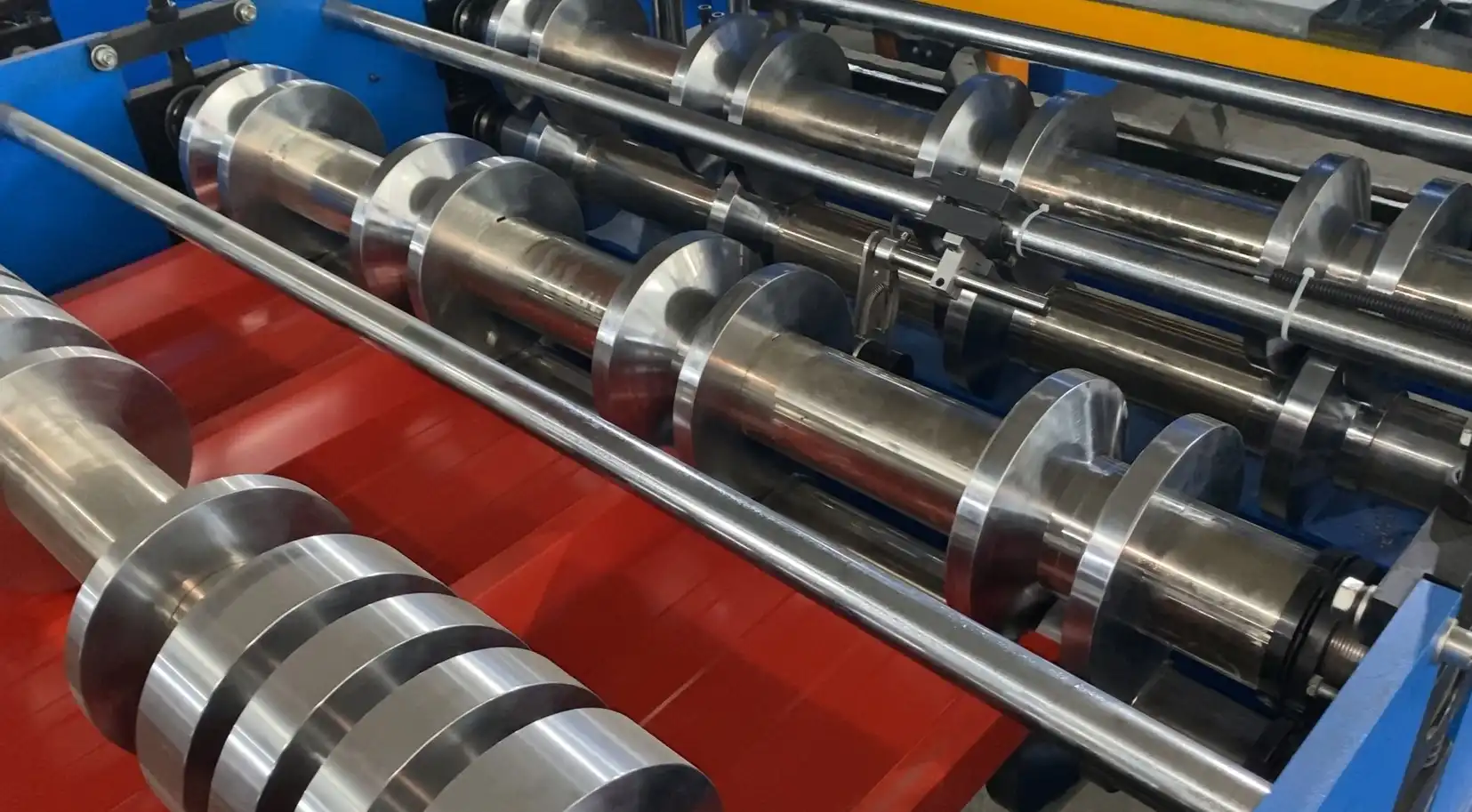
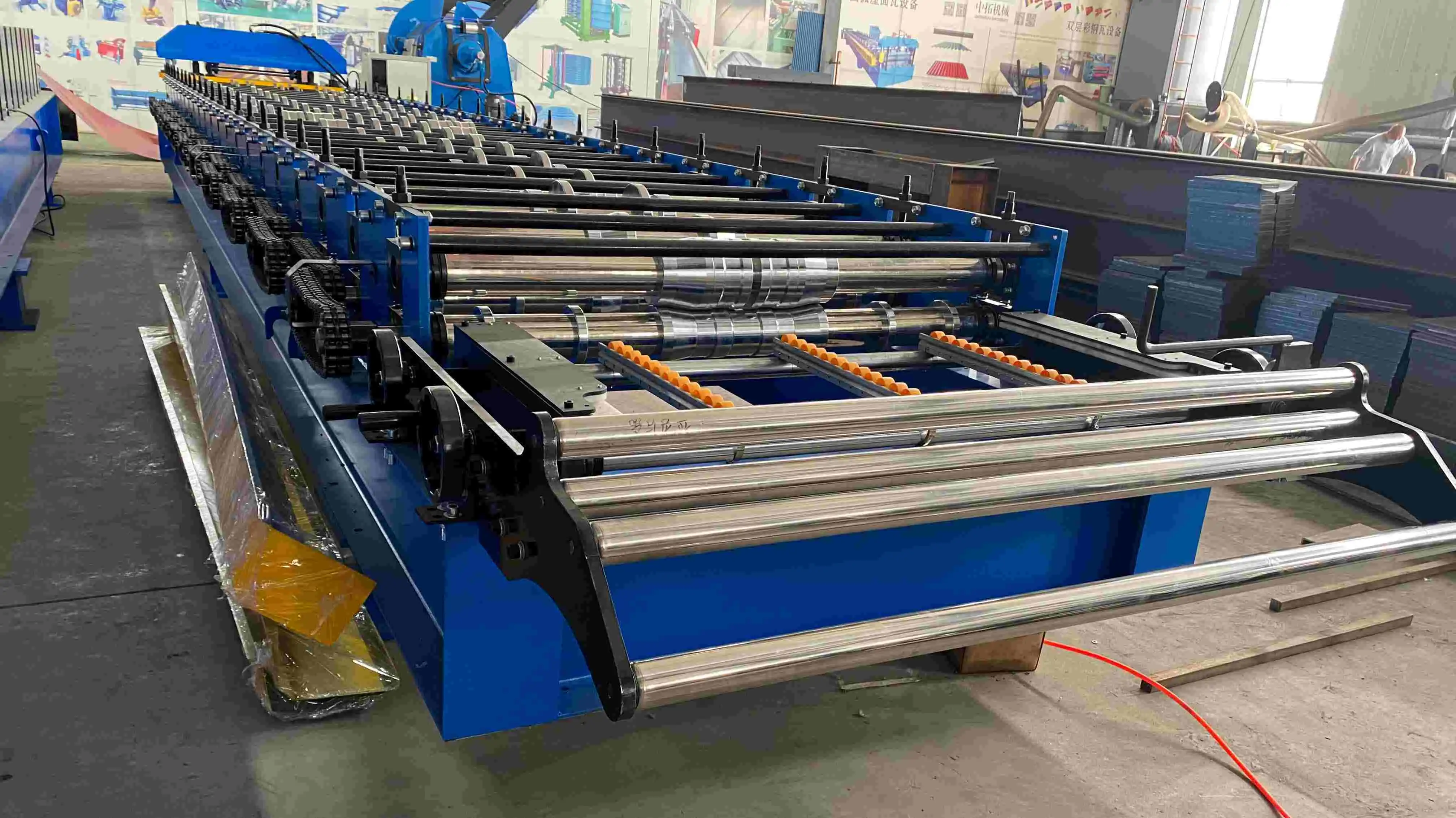
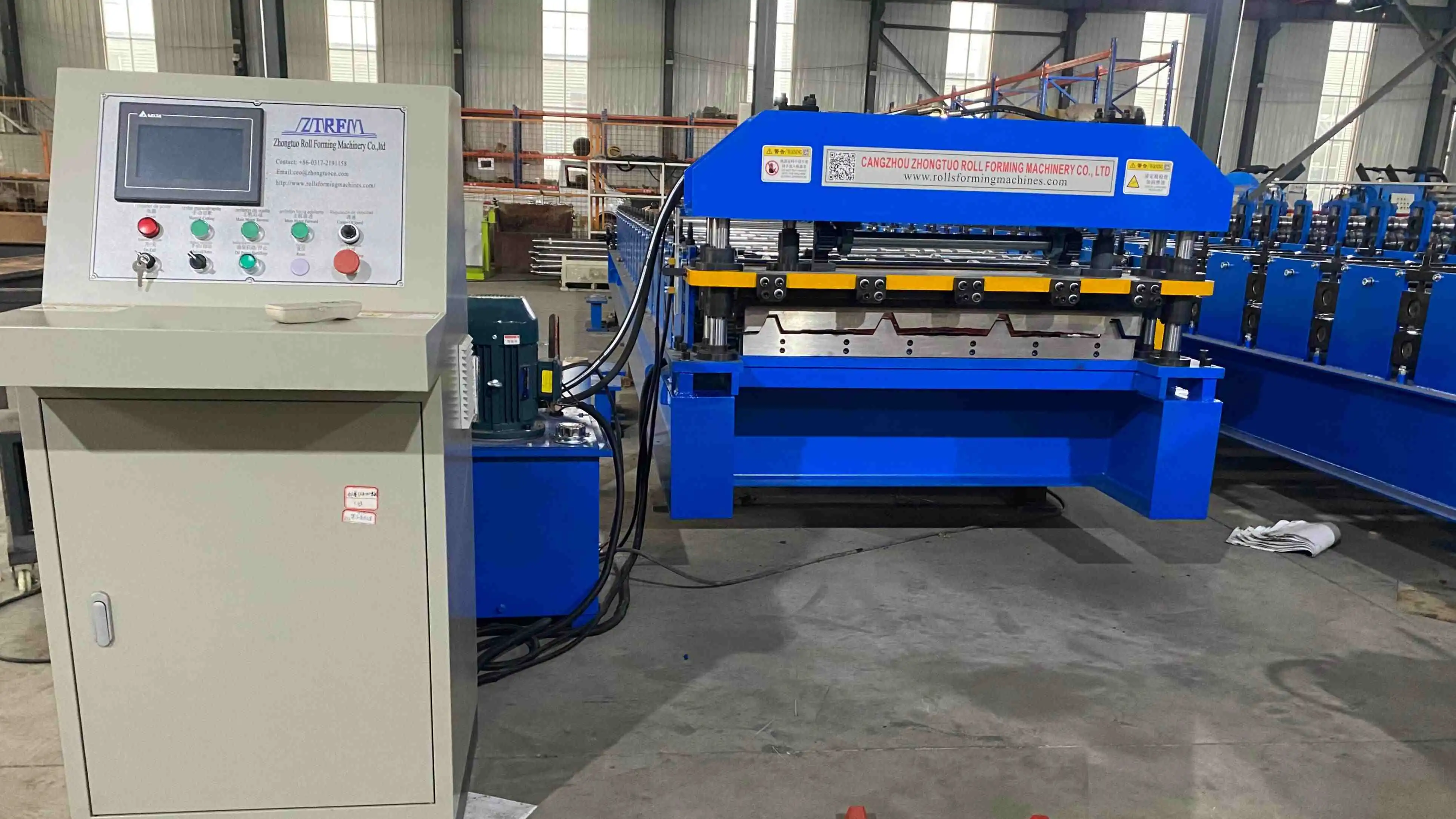
Understanding the mechanical architecture helps you evaluate equipment quality. The roller station configuration determines profile accuracy and surface finish. Premium cold roll forming machines utilise 18 to 26 roller passes, each incrementally shaping the metal without compromising thickness.
Shaft diameter directly impacts production stability. Solid steel shafts ranging from 70mm to 90mm resist deflection under continuous operation. Manufacturers using inferior hollow shafts encounter gradual dimensional drift as internal stresses accumulate. The shaft material grade matters equally—#45 high-grade steel provides necessary hardness while maintaining machinability for precision tolerancing.
Roller material selection affects both product quality and maintenance cycles. Cr12MoV die steel rollers undergo vacuum heat treatment, reaching HRC 58-62 hardness. The subsequent chrome plating creates a mirror-smooth surface that prevents coating damage on pre-painted materials. Composite sandwich panel manufacturers processing sensitive architectural finishes cannot compromise on this specification.
The hydraulic cutting system represents another critical subsystem. Traditional mechanical shears create burrs exceeding 0.1 mm in height, which initiate corrosion and pose handling risks. Advanced systems using CR12MoV cutting blades maintain tolerances within ±1mm across thousands of cuts. This consistency matters when producing panels for projects requiring exact length matching.
Drive mechanisms influence both speed capability and energy efficiency in a trapezoidal sheet roll forming machine. Chain drive systems offer simplicity but require frequent adjustment. Gearbox transmission delivers consistent power distribution across roller stations, enabling stable operation at speeds approaching 60 metres per minute without inducing vibrations that mark panel surfaces.
Customisation Options That Match Your Production Strategy
Small metal product manufacturers entering the market often prioritise affordability and simplicity. Entry-level sheet metal forming equipment with manual width adjustment and basic PLC controls meets initial capacity needs. These configurations process standard 0.3-0.6 mm thickness materials at moderate speeds, allowing startups to establish market presence without excessive capital commitment.
Established roofing sheet production operations demand different capabilities. Multi-profile flexibility becomes valuable when serving diverse project specifications. Automatic changeover systems enable switching between different trapezoidal geometries—adjusting rib height, pitch, and effective coverage width within minutes rather than hours. This agility transforms a single roll-forming line into multiple virtual production assets.
Metal structure manufacturers producing architectural components need integrated processing capabilities. Inline punching stations add mounting holes during forming, eliminating secondary operations. Servo-driven positioning systems locate holes with repeatable accuracy across panel lengths exceeding 20 feet. Online embossing stations create strengthening patterns or decorative textures without disrupting production flow.
Material thickness capacity separates general-purpose machines from heavy-duty variants. Standard equipment handles 0.3-0.8mm steel effectively. Projects requiring structural panels from 1.0 to 1.2 mm high-yield steel demand reinforced frame construction and increased motor capacity. The 350H steel frame architecture provides the necessary rigidity to maintain tolerances when processing these thicker gauges.
Control system sophistication impacts operational efficiency and quality consistency. Basic relay logic suffices for fixed-length production runs. PLC-based automation with touchscreen interfaces enables batch management, where operators program multiple jobs with varying lengths and quantities. The system automatically adjusts cutting sequences and tracks production counts, reducing setup errors and material waste.
Addressing Common Production Challenges
Inconsistent trapezoidal rib height is a frequent defect caused by improper roller gap settings or worn forming stations. For trapezoidal sheet roll forming machines, maintaining rib height tolerance within ±0.5 mm is critical because deviations affect panel stacking and water drainage. Regular calibration of the first six roller passes—which shape the ribs—eliminates this issue. Another common problem is inadequate anti-capillary groove formation.
These micro-grooves require precise roller tip radii; any deviation above 0.2 mm allows moisture wicking into overlapping joints, compromising roof sealing. Advanced trapezoidal roll formers incorporate optical inspection stations immediately after the forming zone to verify groove geometry in real time. Additionally, springback in high-strength steel (≥550 MPa yield) distorts trapezoidal angles.
Machines with overbending compensation—where the final roller pass applies a 2–3° excess angle—counteract springback, delivering consistent 90° sidewall angles, including trapezoidal sheet roll forming machines. Lastly, coating scratching on PPGI materials occurs at tight bend radii. Using polished Cr12MoV rollers with a surface roughness of Ra ≤ 0.1 μm eliminates this problem specifically for trapezoidal profiles.
Selecting Equipment That Supports Long-Term Growth
Building roofing system manufacturers should evaluate speed capabilities against realistic production scenarios. A machine rated at 60 metres per minute may spend significant time in cutting and acceleration cycles. Effective throughput depends on average panel length—longer runs amortise setup time more efficiently. Calculate actual output using your typical order mix rather than the theoretical maximum speed.
Composite sandwich panel manufacturers face unique material handling challenges. Multilayer structures with foam cores or polymer films require precise pressure control to avoid crushing or delamination. Roll-forming machines designed for these applications feature adjustable roller pressures and specialised guides that support fragile materials throughout the forming zone.
International engineering companies prioritising global deployment need equipment meeting multiple certification standards. ISO9001 certification verifies quality management systems covering design, manufacturing, and testing procedures. CE marking indicates compliance with European safety directives, essential for projects in EU markets. These certifications reduce approval timelines when equipment crosses borders for large-scale projects.
Light steel structure manufacturers should investigate servo motor integration for enhanced precision. Traditional forming relies on mechanical stops for length measurement. Servo-controlled systems measure actual material travel, compensating for slippage and thermal expansion. This technology delivers consistent accuracy regardless of environmental conditions or material variations.
The control system architecture impacts future expandability. Modular PLC platforms accommodate additional input/output modules when you integrate supplementary equipment like embossing stations or edge trimming devices. Closed-loop feedback systems monitoring hydraulic pressure and motor current enable predictive maintenance, alerting operators to developing issues before failures occur.
Implementation Considerations and Operator Training
Installing a trapezoidal sheet roll forming machine requires attention to profile geometry parameters, not just general foundation levelling. Operators must be trained to adjust the roller station spacing for different trapezoidal pitches—common variants include T35 (130mm rib spacing), T50 (150mm), and T60 (200mm). Without understanding these geometric presets, changeovers take hours instead of minutes.
Electrical integration for the trapezoidal sheet roll forming machine must include a length encoder mounted directly on the material path, not on the feed rollers, because trapezoidal panels have uneven surface contact points. Training should cover how to programme the PLC for anti-capillary groove. Verification: the system compares actual groove depth (measured by laser sensor) against the target value (typically 0.3–0.5 mm) and rejects out-of-tolerance sections automatically.
Another machine-specific skill is adjusting the side trimming knives to maintain effective coverage width—a T55 trapezoidal panel requires a 1050mm cover width from a 1250mm coil. Operators must learn to calculate scrap width and set trim positions accordingly. Finally, emergency stop logic on trapezoidal formers differs from other roll formers: because trapezoidal ribs create air pockets during sudden stops, the deceleration sequence must slow the motor before engaging the brake to prevent panel buckling. Certification programmes for these specific competencies ensure production readiness.
Global Service Networks and Long-Term Partnership Value
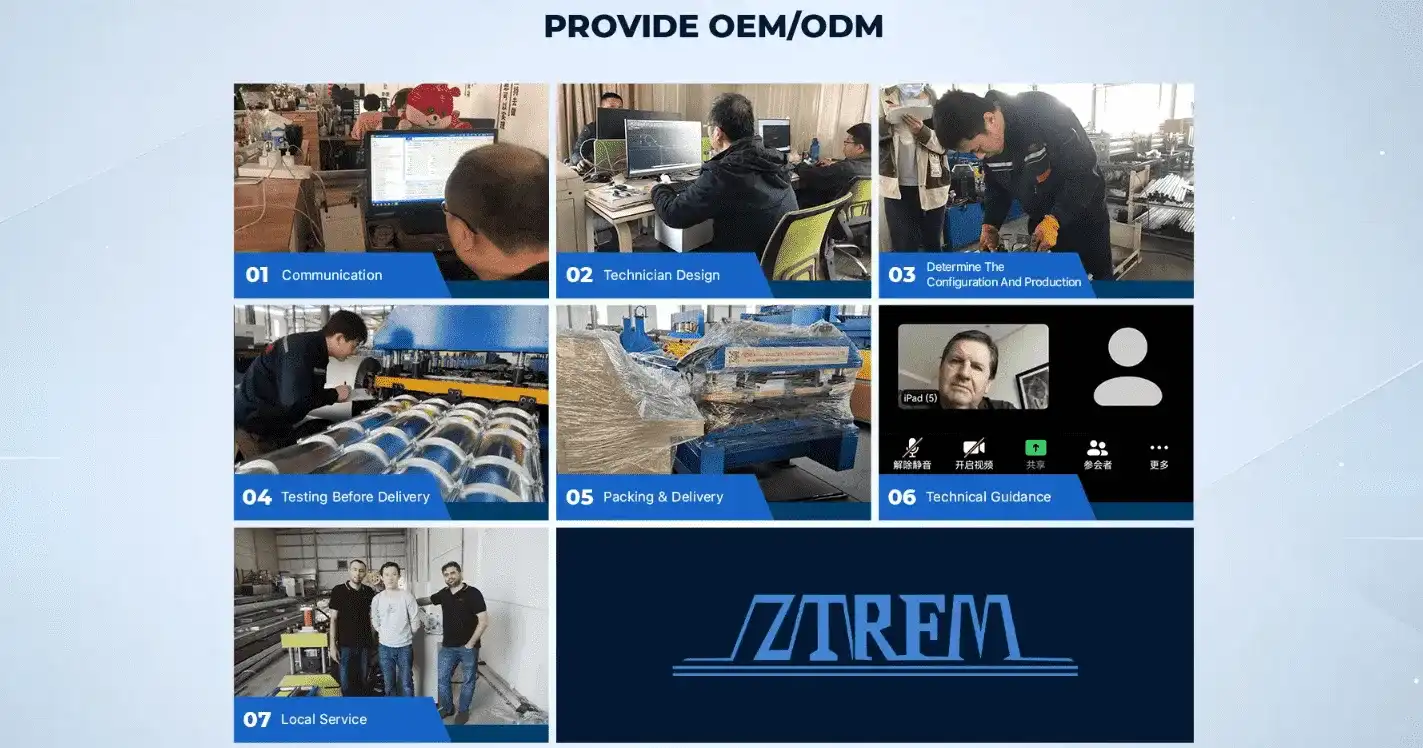
Equipment reliability depends partly on responsive technical support. Time zone differences challenge real-time troubleshooting when manufacturers operate exclusively from single locations. Global service networks with regional technicians minimise downtime through rapid on-site response. Video conferencing capabilities enable expert consultation regardless of geographic separation.
Spare parts availability protects production schedules. Critical components like cutting blades, hydraulic seals, and bearings should ship within days rather than weeks. Manufacturers maintaining regional distribution centres reduce logistics delays. Standardised component selection simplifies sourcing—proprietary designs create vendor lock-in and inventory complications.
Long-term supply chain partnerships extend beyond initial equipment sales. As building codes evolve and architectural trends shift, profile designs require modification. Manufacturers offering engineering support for roller redesign enable product line adaptation without replacing entire machines. This collaborative approach protects capital investments over decades of operation.
Technology upgrades breathe new life into ageing equipment. Retrofitting modern PLC controls onto mechanically sound machines improves accuracy and adds features unavailable at original purchase. Motor replacement with energy-efficient alternatives reduces operating costs. Evaluating manufacturers' commitment to legacy equipment support reveals their long-term partnership orientation.
Training programmes evolve with workforce turnover. Manufacturers providing ongoing education ensure new operators achieve proficiency quickly. Remote training modules accommodate scheduling constraints while maintaining instruction quality. Certification programmes validate skill levels, supporting quality assurance initiatives and ISO compliance requirements.
Conclusion
In conclusion, a trapezoidal sheet roll forming machine is a critical investment for manufacturers seeking precision, efficiency, and scalability in modern construction applications. From structural advantages to advanced customisation and automation, this equipment enables consistent, high-quality panel production across diverse industries. By understanding key components, production challenges, and long-term operational needs, businesses can select solutions that maximise ROI and ensure sustainable growth. Partnering with a reliable manufacturer further enhances performance, technical support, and future adaptability. Ultimately, the right machine not only improves productivity but also strengthens your competitive position in the global metal forming market.
Partner with ZTRFM for Advanced Roll Forming Solutions
Selecting the right trapezoidal sheet roll forming machine manufacturer impacts your production capability for years. ZTRFM combines engineering expertise with comprehensive support, delivering equipment tailored to your specifications. Our ISO9001 and CE certified systems operate successfully across 150+ countries, serving building roofing system manufacturers, light steel structure producers, and international engineering firms. Experience stable high-speed performance, customizable profiles, and responsive technical guidance. Contact zhongtuorollforming@gmail.com to discuss your project requirements and receive detailed specifications matched to your production objectives.
References
1. Halmos, G. T. (2006). Roll Forming Handbook. Manufacturing Engineering Series. CRC Press.
2. Bhattacharyya, D., & Smith, P. D. (2012). Metal Forming: Mechanics and Metallurgy (4th ed.). Cambridge University Press.
3. Cui, Z., & Gao, L. (2018). Metallurgy and Design of Alloys with Hierarchical Microstructures. Elsevier Science.
4. Shivpuri, R., & Altan, T. (2004). Cold and Hot Forging: Fundamentals and Applications. ASM International Handbook Series.
5. Lange, K. (Ed.). (1985). Handbook of Metal Forming. Society of Manufacturing Engineers.
6. Hosford, W. F., & Caddell, R. M. (2011). Metal Forming: Mechanics and Metallurgy (4th ed.). Cambridge University Press.