- English
- French
- German
- Portuguese
- Spanish
- Russian
- Japanese
- Korean
- Arabic
- Irish
- Greek
- Turkish
- Italian
- Danish
- Romanian
- Indonesian
- Czech
- Afrikaans
- Swedish
- Polish
- Basque
- Catalan
- Esperanto
- Hindi
- Lao
- Albanian
- Amharic
- Armenian
- Azerbaijani
- Belarusian
- Bengali
- Bosnian
- Bulgarian
- Cebuano
- Chichewa
- Corsican
- Croatian
- Dutch
- Estonian
- Filipino
- Finnish
- Frisian
- Galician
- Georgian
- Gujarati
- Haitian
- Hausa
- Hawaiian
- Hebrew
- Hmong
- Hungarian
- Icelandic
- Igbo
- Javanese
- Kannada
- Kazakh
- Khmer
- Kurdish
- Kyrgyz
- Latin
- Latvian
- Lithuanian
- Luxembou..
- Macedonian
- Malagasy
- Malay
- Malayalam
- Maltese
- Maori
- Marathi
- Mongolian
- Burmese
- Nepali
- Norwegian
- Pashto
- Persian
- Punjabi
- Serbian
- Sesotho
- Sinhala
- Slovak
- Slovenian
- Somali
- Samoan
- Scots Gaelic
- Shona
- Sindhi
- Sundanese
- Swahili
- Tajik
- Tamil
- Telugu
- Thai
- Ukrainian
- Urdu
- Uzbek
- Vietnamese
- Welsh
- Xhosa
- Yiddish
- Yoruba
- Zulu
Best Stud and Track Roll Forming Machine for Drywall Framing
When you're building modern structures with metal framing, a reliable stud and track roll forming machine becomes the backbone of your operation. These specialized manufacturing systems transform galvanised steel coils into precision C-shaped studs and U-shaped tracks, which form the skeleton of interior walls, partitions, and ceiling frameworks. For procurement managers evaluating equipment options, choosing the right machine directly affects production throughput, dimensional accuracy, scrap rates, and ultimately, your project profitability. The right equipment delivers consistent profiles meeting ASTM C645 standards while minimizing material waste and labor costs.
Introduction
The global construction industry increasingly uses light-gauge steel frame systems for commercial, modular, and renovation projects. Plasterboard framing components, especially metal studs and tracks, require manufacturing machinery that can produce thousands of linear feet daily with precise tolerances. Roll forming machinery selection affects construction quality, manufacturing speed, and efficiency. This paper covers technical concerns, performance measurements, and procurement strategies for engineers, facility managers, distributors, and EPC businesses investing in metal frame manufacturing lines. Understanding how machine capabilities affect production requirements helps you avoid costly mistakes and develop strong supplier relationships.
Understanding Stud and Track Roll Forming Machines for Drywall Framing
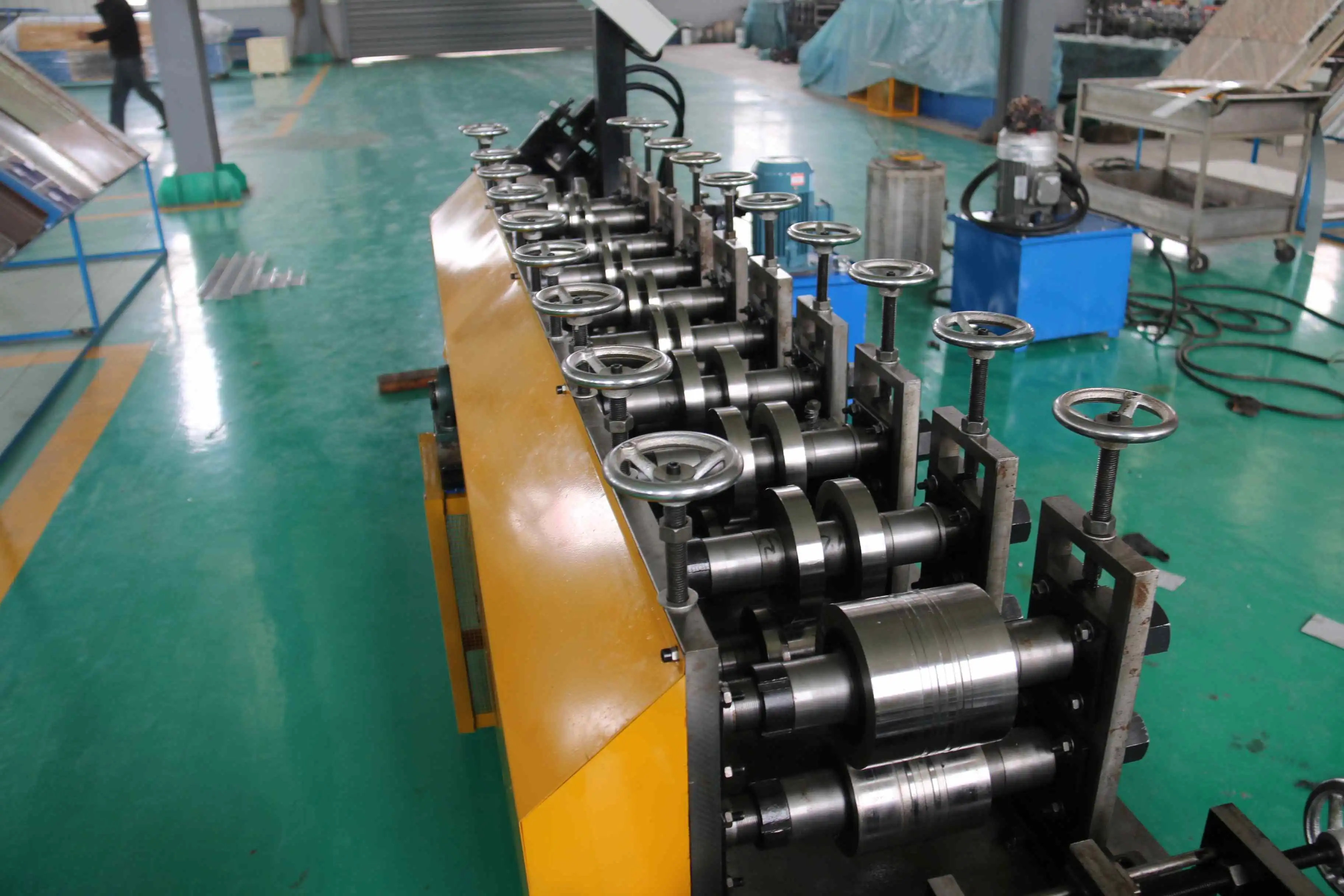
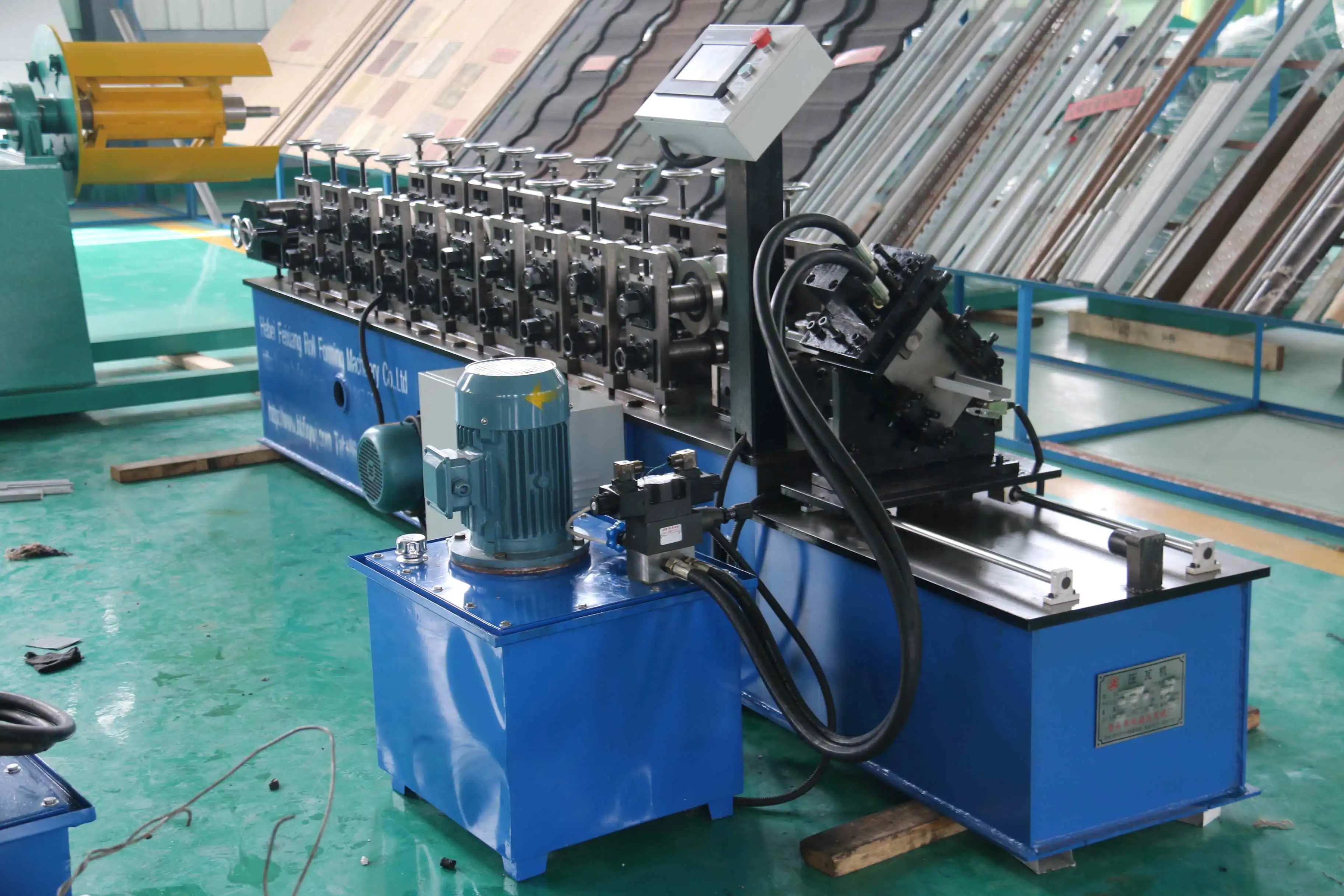
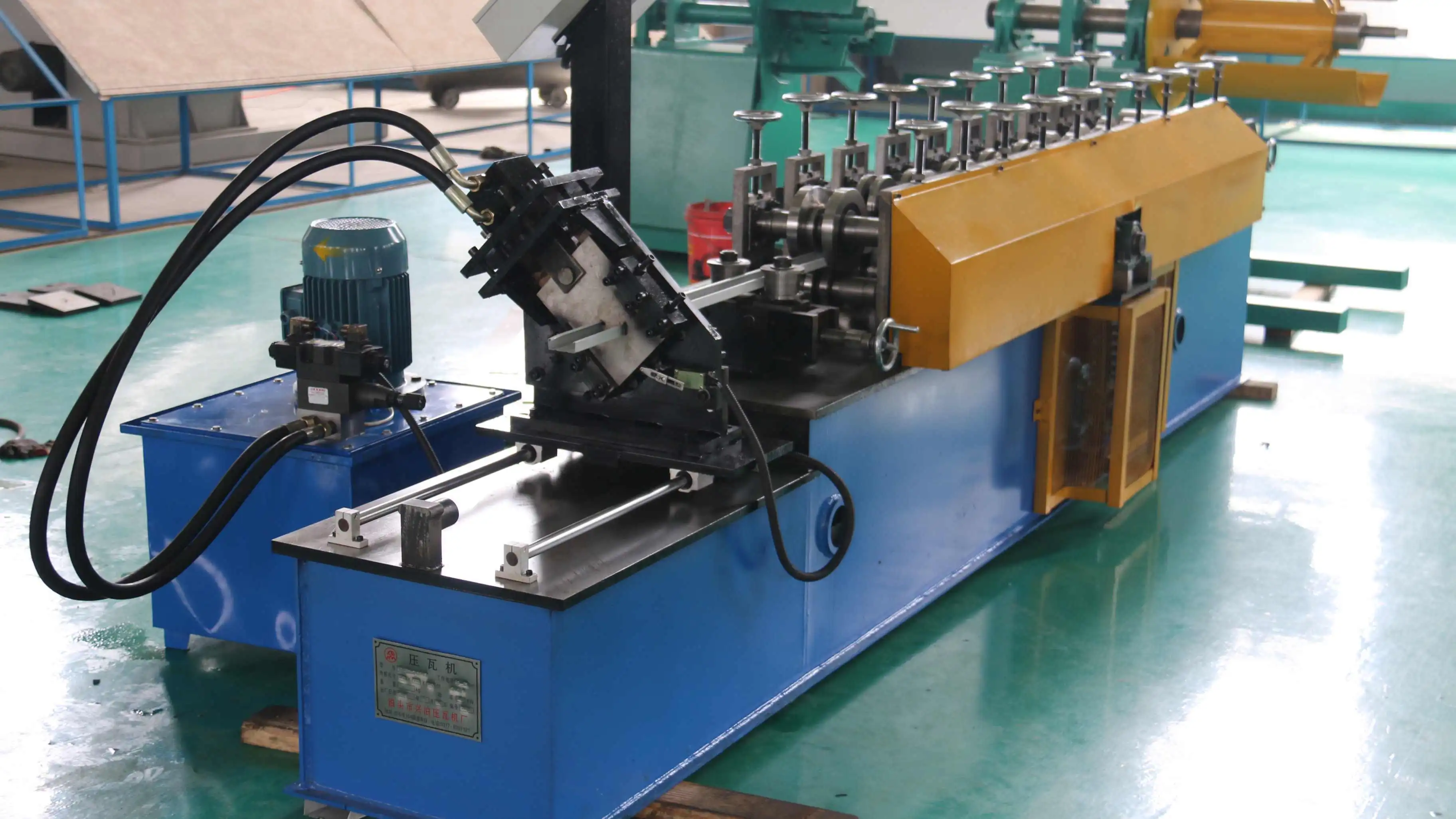
Cold roll forming technology systematically bends continuous strips of galvanised steel through sequential roller stations, gradually shaping flat coils into structural profiles without heat or cutting. A typical production line includes a decoiler that holds steel coils weighing up to several tons, feeding mechanisms that guide material through precision roller dies, forming stations where progressive bends create the desired cross-section, hydraulic or mechanical cutting systems that shear profiles to exact lengths, and automated control systems managing the entire process.
How do Stud and Track Profiles Differ?
C-shaped studs serve as vertical framing members spanning floor to ceiling, featuring a web with flanges on both edges and often small return lips that add rigidity. U-shaped tracks function as horizontal top and bottom plates, guiding studs into position and securing the frame assembly. The dimensional relationship between these components determines installation ease—studs must slide smoothly into tracks while maintaining alignment. Equipment producing both profiles often incorporates quick-change tooling that switches between geometries in under thirty minutes.
Material Specifications and Structural Performance
Galvanised steel from 22 gauge (0.8mm) to 16 gauge (1.6mm) thickness is used in most plasterboard framing, with yield strengths between 33 ksi and 80 ksi depending on application. Residential non-load-bearing partitions use thinner materials, while commercial projects requiring fire resistance or structural capacity use larger gauges. Roll forming equipment must accommodate this thickness range without losing precision. Profile widths range from 3 to 6 inches, with flange heights from 1.25 to 2 inches to accommodate plasterboard thicknesses and insulation.
Critical Machine Components Affecting Output Quality
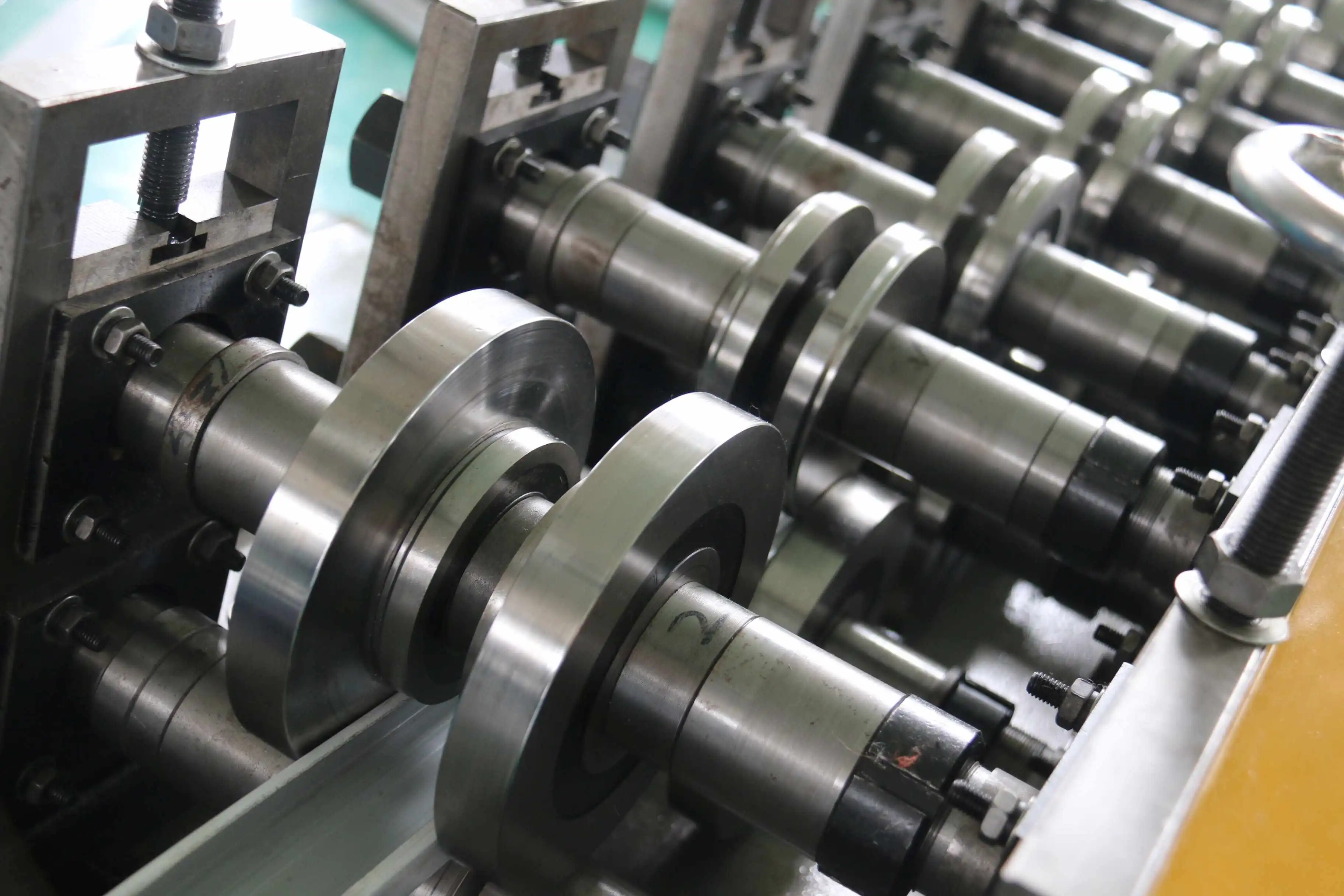
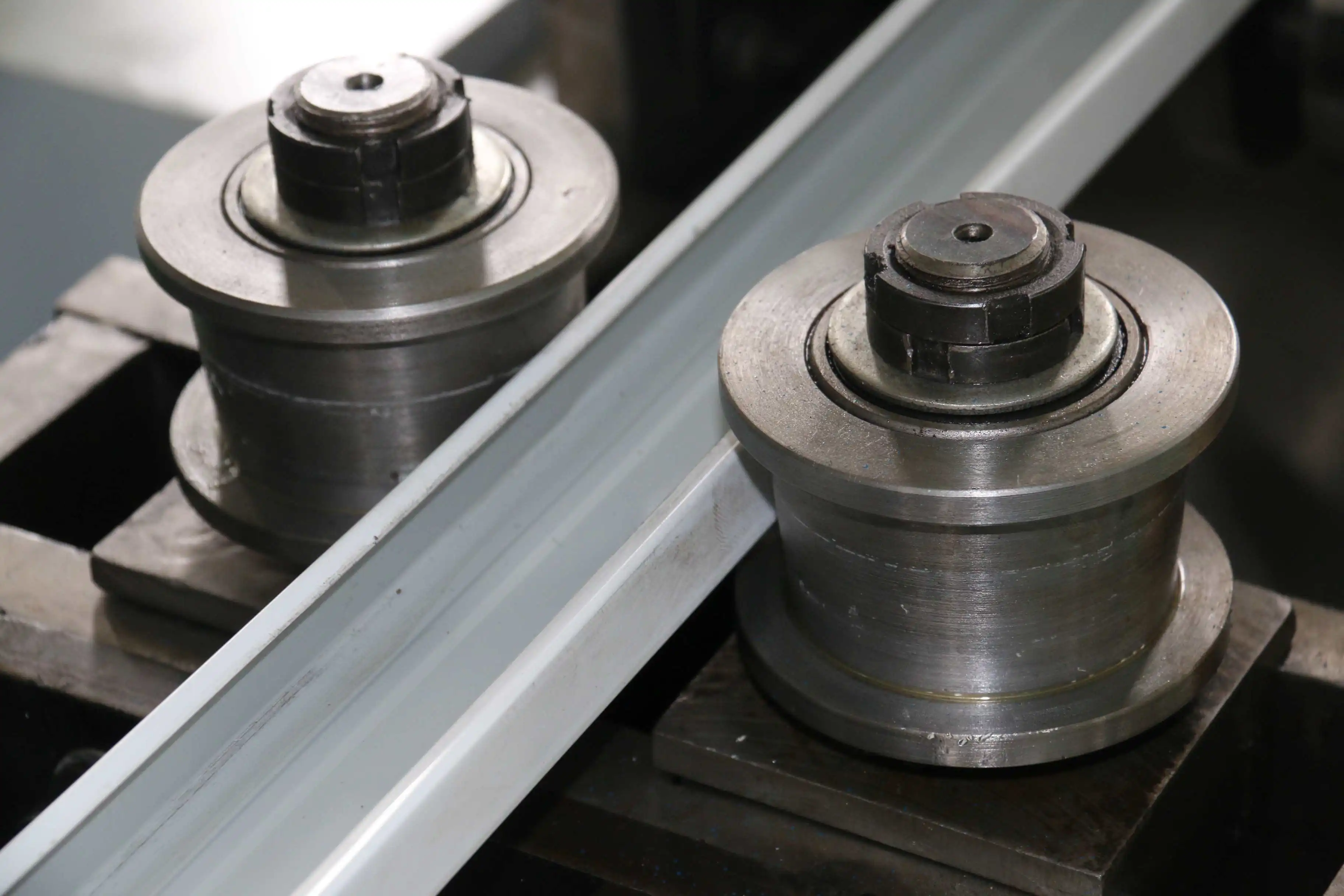
Roller dies represent the heart of any forming system. High-grade tool steel rollers—often CR12 or equivalent—undergo heat treatment to achieve 58-62 HRC hardness, resisting wear from continuous steel contact. Shaft assemblies constructed from 45# steel provide torsional rigidity that prevents deflection under forming loads. Drive systems using chain transmission or gearbox configurations deliver consistent power across all roller stations. PLC control platforms from established manufacturers coordinate feeding speed, cutting cycles, and length measurement, ensuring repeatable accuracy across production runs. Hydraulic cutting mechanisms equipped with hardened blades slice through steel cleanly, producing burr-free ends that protect installers and facilitate assembly.
Key Benefits and Applications of Track Stud Roll Forming Machines
Waste Reduction and Material Efficiency
Roll forming produces less scrap than stamping or cutting. Producing coil stock directly from the uncoiler to the completed profile limits waste to startup scrap and edge trimming. Modern techniques cut material waste by 40%, increasing yield and profitability. Automated cutting solutions prevent field cutting that leaves unwanted remains and raises disposal costs when manufacturing custom lengths for projects.
Production Speed and Scalability
Modern equipment operates at speeds ranging from 8 to 120 meters per minute, depending on profile complexity and material thickness. A mid-range system producing 10 meters per minute generates approximately 2,400 linear meters during an eight-hour shift—enough framing for substantial commercial projects. Production scalability becomes crucial when project timelines compress or order volumes surge. Machines engineered for extended duty cycles maintain output consistency across multiple shifts, supporting just-in-time delivery schedules that minimise inventory carrying costs for both distributors and contractors.
Energy Efficiency and Environmental Considerations
Modern designs use servo motor drives that spend energy proportional to load formation rather than peak capacity. A typical 7.5kW main motor uses less electricity than older hydraulic systems but delivers comparable torque. Efficiency reduces operational expenses and environmental impact, which is vital for manufacturers seeking sustainability certifications or meeting consumer environmental requirements. Cold forming reduces carbon footprint by eliminating energy-intensive heating from hot rolling.
Application Diversity Across Construction Sectors
Beyond standard drywall framing, these machines produce components for ceiling suspension systems, industrial shelving structures, and architectural metalwork. Manufacturers serving multiple market segments benefit from equipment offering quick profile changeover, enabling economic production of small speciality batches alongside high-volume standard profiles. OEM clients supplying building material distributors require consistent quality across large production runs, while custom fabricators need flexibility to accommodate unique architectural specifications.
Comparing Different Types of Track Stud Roll Forming Machines
Equipment selection involves balancing production requirements against capital investment and operational complexity. Several machine categories address different manufacturing scenarios, each with distinct performance characteristics and cost structures.
Manual vs. Automated Control Systems
Manually operated entry-level machines require users to designate cutting spots, trigger shearing mechanisms, and physically gauge dimensional accuracy. These systems are ideal for low-volume production or startups with minimal financing. However, labour costs add up quickly, and measuring mistakes raises scrap rates. PLC-controlled automated systems eliminate manual measuring. Input lengths using touchscreen interfaces, and the machine feeds, cuts, and counts automatically. Production uniformity improves greatly, and one operator may operate numerous units.
Hydraulic vs. Mechanical Cutting Systems
Hydraulic cutting assemblies use pressurised oil to drive shearing blades through steel profiles. These systems deliver smooth, powerful cuts with minimal vibration, producing clean edges on heavier gauge materials. Maintenance involves regular hydraulic fluid service and seal inspection. Mechanical cutting relies on flywheel energy storage and cam-actuated blade movement. These designs typically cost less initially and eliminate hydraulic fluid maintenance but may produce slightly rougher cuts on thicker materials and generate more noise during operation.
Standard vs. Customizable Profile Capabilities
Fixed-geometry machines efficiently generate one profile dimension but lack flexibility when product needs alter. Dedicated equipment is simpler and cheaper for commodity manufacturers. Adjustable cassette-style tooling or servo-controlled roller positioning devices accommodate varied profile widths and flange heights. Job shops and bespoke fabricators handling different customer demands need quick-change capabilities. A premium price for flexible equipment pays off in market flexibility and the ability to adapt quickly to specification changes without capital reinvestment.
Integrated Punching and Hole-Making Options
Basic roll forming machines produce unpunched profiles, so secondary operations are needed to add service holes for electrical conduit and plumbing penetrations. Integrated punching stations positioned within the forming line create these features during production, eliminating handling and setup for separate processes. The additional tooling investment and maintenance complexity must be weighed against labor savings and production flow improvements. Projects requiring numerous custom hole patterns benefit most from integrated punching, while standard framing production may not justify the added complexity.
Procurement Considerations: How to Choose the Best Track Stud Roll Forming Machine
Effective equipment selection aligns stud and track roll forming machine capabilities with your production environment, quality standards, and business growth plans. Procurement decisions that extend beyond the initial purchase price also consider lifetime operating expenses, technical support availability, and supplier reliability.
Production Volume and Speed Requirements
Calculate daily production targets using order patterns and acceptable growth estimates. Actual output accounts for setup time, material changes, and routine maintenance, although a 10-metre-per-minute machine produces 4,800 meters per eight-hour shift. Multiple machines or faster equipment may be needed for 10,000+ metre daily operations. Conversely, overbuying capacity locks capital in underutilised assets. Correct demand forecasting prevents manufacturing bottlenecks and needless investment.
Dimensional Accuracy and Tolerance Control
Construction applications demand tight tolerances, ensuring proper fit-up during assembly. Profile width variations exceeding ±0.5mm create installation difficulties, while flange inconsistencies compromise drywall attachment. Equipment specifications should clearly state achievable tolerances across the full material thickness range. Requesting sample profiles from demonstration machines allows physical verification of dimensional consistency. Tolerance capability directly affects your rejection rates, rework costs, and customer satisfaction.
Material Thickness Range and Gauge Flexibility
Check if candidate machines meet all material specifications. For most plasterboard framing, 22-gauge to 16-gauge steel equipment works. Some operations need larger structural components, so make sure machines can process thicker materials without roller damage or deflection. Some manufacturers provide extendable capacity—lighter-duty units that take heavier gauge components when your product mix changes.
Supplier Reputation and Technical Support
Equipment reliability is less important than provider responsiveness when technical difficulties develop. Consider technical support, replacement parts, and service history when choosing a supplier. Troubleshooting is faster with local companies. ISO 9001 and CE certificates validate quality management systems. Global delivery suppliers know worldwide shipping logistics, customs documentation, and market voltage/frequency compatibility. ZTRFM's operations in over 150 countries and localised support networks reflect this worldwide competency.
Training and Operator Education
Sophisticated equipment delivers promised performance only when operators understand proper setup, adjustment, and maintenance procedures. Comprehensive training programmes covering machine operation, routine maintenance, basic troubleshooting, and safety protocols help protect your investment. On-site commissioning assistance ensures successful startup and provides hands-on training in your actual production environment. Ongoing technical consultation helps optimise production parameters as you gain experience or introduce new materials.
Customization and Integration Capabilities
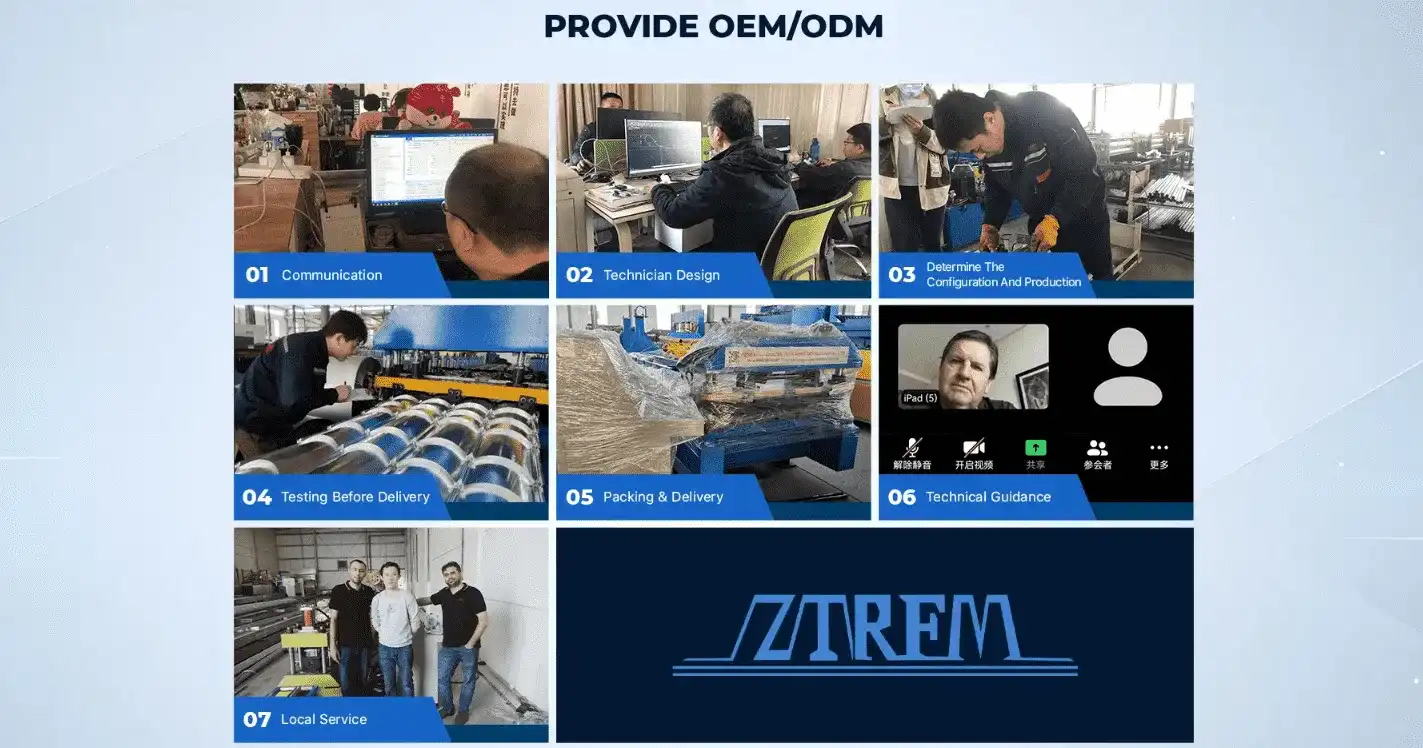
Standard machines suit many applications, but specialized requirements may demand custom engineering. Profile geometries outside standard dimensions, unusual material specifications, or integration with existing production equipment may require tailored solutions. Suppliers offering ODM and OEM services design equipment matching your exact specifications. This customization capability proves particularly valuable for manufacturers developing proprietary products or serving niche markets with unique requirements.
Maintenance, Troubleshooting, and Optimizing Performance
Consistent machine performance requires systematic maintenance practices and prompt attention to developing problems. Proactive care prevents catastrophic failures that halt production and generate expensive emergency repairs.
Routine Maintenance Schedules
Daily inspections should verify proper lubrication at all bearing points, confirm hydraulic fluid levels and hose conditions, and examine roller surfaces for material buildup or damage. Weekly maintenance includes thorough cleaning of the forming area, inspection of chain drives for proper tension and wear, and verification that cutting blade edges remain sharp and aligned. Monthly service involves detailed roller examination under magnification to detect early signs of wear, complete lubrication system service, and electrical connection inspection. Annual maintenance requires complete machine disassembly for comprehensive component inspection, bearing replacement as needed, and precision alignment verification.
Common Operational Issues and Solutions
Dimensional drift—where profile measurements slowly deviate from specification—typically indicates roller wear or alignment problems. Systematic measurement of critical dimensions across multiple profiles identifies which roller stations require adjustment or replacement. Material surface scratching suggests contaminated or damaged rollers, requiring thorough cleaning or resurfacing. Inconsistent cutting lengths point to encoder problems, PLC calibration errors, or mechanical slippage in the feeding system. Methodical troubleshooting, isolating each potential cause, prevents replacing components unnecessarily.
When to Request Supplier Support?
Certain situations exceed in-house troubleshooting capabilities and warrant factory technical assistance. Persistent problems resisting multiple corrective attempts, electrical or control system faults requiring specialized diagnostic equipment, and structural issues affecting machine alignment or frame integrity all benefit from manufacturer involvement. Established suppliers maintain technical hotlines and remote diagnostic capabilities that resolve many issues without site visits, minimizing production interruptions.
Conclusion
Selecting the best equipment for metal framing production requires balancing technical specifications, supplier capabilities, and total cost of ownership. The best stud and track roll forming machine for your operation meets current production demands while accommodating reasonable growth, delivers dimensional accuracy matching your quality standards, and comes from a supplier committed to long-term technical support. Carefully evaluating machine capabilities against your specific requirements—production volume, material specifications, profile dimensions, and quality expectations—helps ensure a successful equipment investment. The procurement process represents more than a transaction; it establishes a partnership with your equipment supplier that influences production efficiency and profitability for years ahead.
FAQ
1. What factors most significantly affect the price of metal framing equipment?
Equipment pricing reflects several key variables. Production speed capability directly influences cost—machines producing 60+ meters per minute command premiums over 10-metre models due to enhanced drive systems and precision components. Material thickness capacity affects structural requirements and roller specifications. Automated features, including PLC controls, servo motors, and integrated punching stations, add functionality and cost. Customization for non-standard profiles requires engineering time and specialized tooling. Brand reputation and country of manufacture create price variations, with established manufacturers typically commanding higher prices supported by proven reliability and comprehensive support networks.
2. How long does a typical installation and commissioning take?
Standard equipment installation requires approximately three to five days from delivery to production readiness. This timeline includes mechanical positioning and levelling, electrical connection and safety verification, hydraulic system setup, control system configuration, and initial production testing. Complex customised systems or integrated production lines may extend this period to two weeks. Supplier-provided commissioning services ensure proper setup and provide operator training during initial production runs. Planning for this commissioning period prevents unrealistic production schedule expectations during equipment startup.
3. Can these machines process materials other than galvanised steel?
Most roll forming equipment accommodates various metallic materials within its thickness and yield strength ratings. Hot-rolled steel, pre-painted steel, and aluminum are commonly processed alternative materials. Each material has unique forming characteristics: aluminium's lower yield strength makes forming easier but requires careful handling to avoid surface damage, while pre-painted steel needs protective roller coatings to prevent finish scratching. Consult with equipment suppliers regarding specific material compatibility before committing to alternative substrates, as roller hardness and forming sequences may require optimisation for consistent results.
Partner with ZTRFM for Your Metal Framing Production Needs
Your search for a dependable stud and track roll forming machine supplier ends with ZTRFM. Since 2014, we've engineered precision metal forming solutions serving manufacturers across 150+ countries, combining national high-tech enterprise innovation with practical production expertise. Our equipment handles 16-gauge to 22-gauge galvanised steel, producing profile widths from 3 to 6 inches with ±0.5mm tolerances and maximum yield strengths of 80ksi. ISO9001, CE, and CAS certifications validate our quality management systems, while comprehensive OEM and ODM services customize equipment to your exact specifications. Contact zhongtuorollforming@gmail.com today to discuss your production requirements with our engineering team, or visit rollformingmachinemanufacturer.com to explore our complete equipment portfolio and request detailed specifications as a qualified stud and track roll-forming machine manufacturer.
References
1. American Iron and Steel Institute (AISI). Cold-Formed Steel Framing Design Guide. Washington, DC: AISI, 2020.
2. Brown, Michael J., and Peterson, Sarah L. "Advances in Roll Forming Technology for Construction Applications." Journal of Manufacturing Processes 45 (2019): 312-328.
3. Halmos, George T. Roll Forming Handbook. Boca Raton: CRC Press, 2021.
4. International Code Council. International Building Code Requirements for Cold-Formed Steel Framing. Country Club Hills, IL: ICC, 2021.
5. Smith, David R. "Quality Control Protocols in Metal Framing Manufacturing." Construction Equipment and Technology 38, no. 4 (2022): 67-81.
6. Yu, Wei-Wen, and LaBoube, Roger A. Cold-Formed Steel Design. Hoboken: John Wiley & Sons, 2020.