- English
- French
- German
- Portuguese
- Spanish
- Russian
- Japanese
- Korean
- Arabic
- Irish
- Greek
- Turkish
- Italian
- Danish
- Romanian
- Indonesian
- Czech
- Afrikaans
- Swedish
- Polish
- Basque
- Catalan
- Esperanto
- Hindi
- Lao
- Albanian
- Amharic
- Armenian
- Azerbaijani
- Belarusian
- Bengali
- Bosnian
- Bulgarian
- Cebuano
- Chichewa
- Corsican
- Croatian
- Dutch
- Estonian
- Filipino
- Finnish
- Frisian
- Galician
- Georgian
- Gujarati
- Haitian
- Hausa
- Hawaiian
- Hebrew
- Hmong
- Hungarian
- Icelandic
- Igbo
- Javanese
- Kannada
- Kazakh
- Khmer
- Kurdish
- Kyrgyz
- Latin
- Latvian
- Lithuanian
- Luxembou..
- Macedonian
- Malagasy
- Malay
- Malayalam
- Maltese
- Maori
- Marathi
- Mongolian
- Burmese
- Nepali
- Norwegian
- Pashto
- Persian
- Punjabi
- Serbian
- Sesotho
- Sinhala
- Slovak
- Slovenian
- Somali
- Samoan
- Scots Gaelic
- Shona
- Sindhi
- Sundanese
- Swahili
- Tajik
- Tamil
- Telugu
- Thai
- Ukrainian
- Urdu
- Uzbek
- Vietnamese
- Welsh
- Xhosa
- Yiddish
- Yoruba
- Zulu
High-Speed Solar Strut Channel Roll Forming Machine for Industrial Use
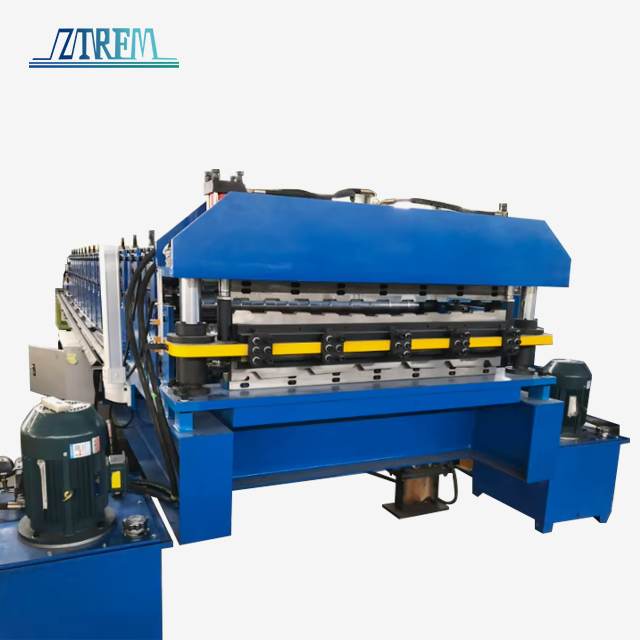
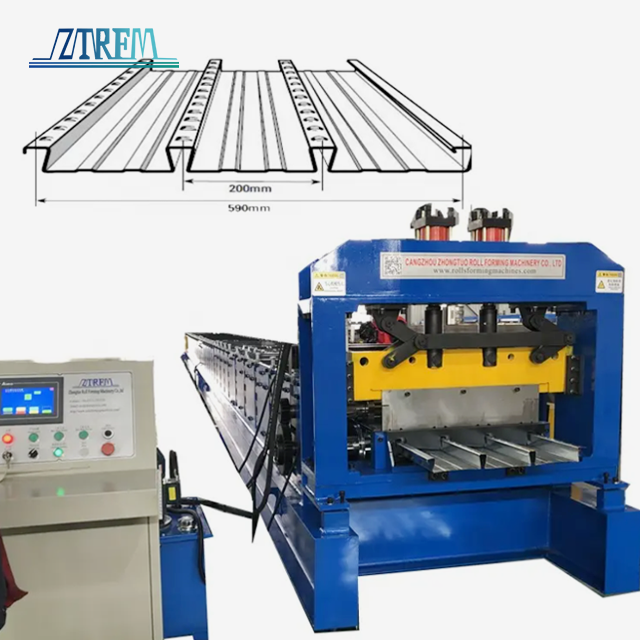
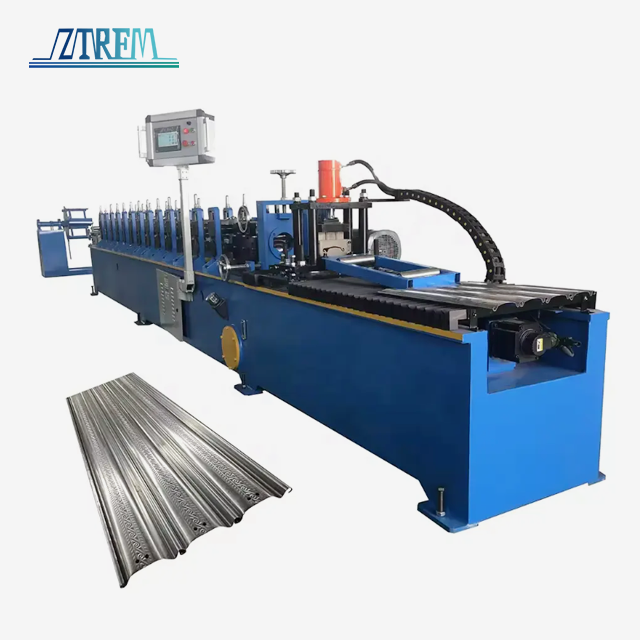
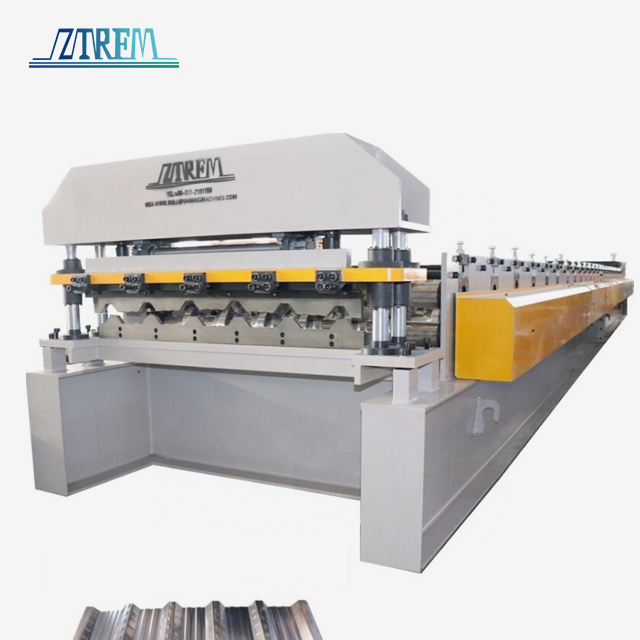
The High-Speed Solar Strut Channel Roll Forming Machine is specialized industrial equipment designed to turn coiled steel into precision structural profiles that are essential for photovoltaic mounting systems. Our machine integrates automated decoiling, levelling, hydraulic punching, and cutting processes, delivering consistent channel profiles at a rate of 8 meters per minute. Built with 24 precision rollers and a robust 25mm steel frame, this equipment addresses the core challenge facing solar mounting manufacturers: producing standardized yet durable strut channels that maintain dimensional accuracy throughout high-volume production runs while minimizing material waste and labor costs.
Understanding High-Speed Solar Strut Channel Roll Forming Machines
Core Functions and Industrial Purpose
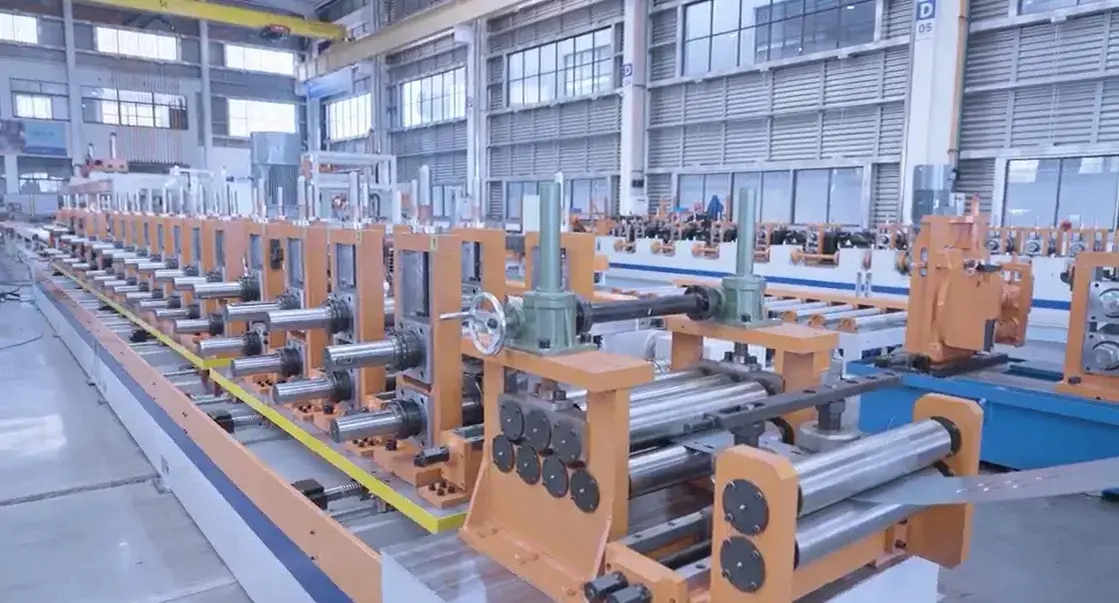
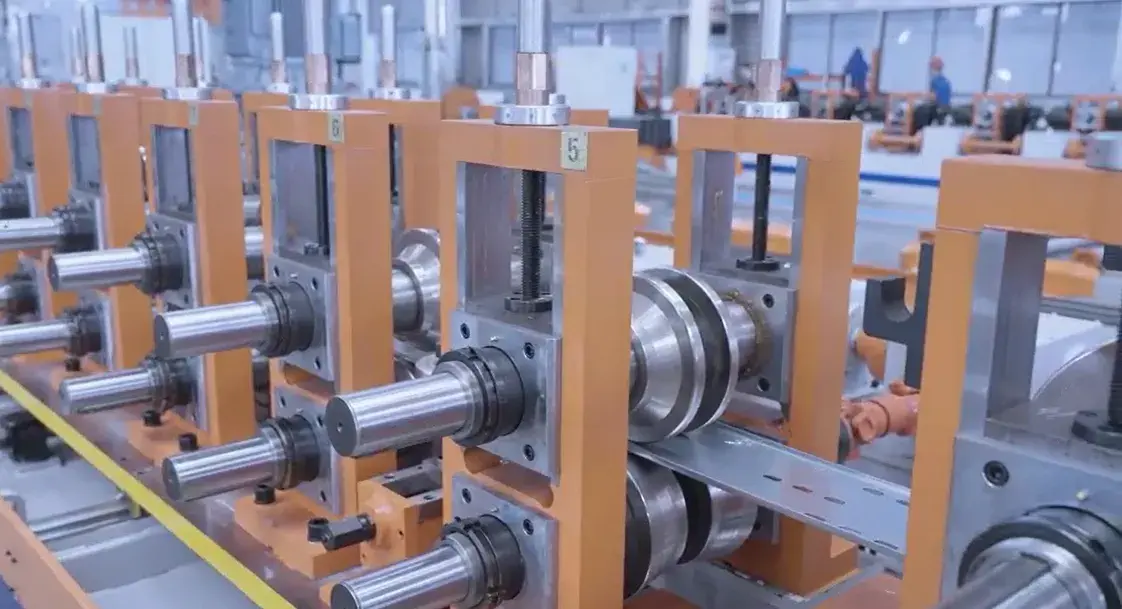
Roll forming technology represents a cold-working process where metal coils pass through consecutive roller stations, gradually bending into predetermined profiles without compromising material strength. Unlike stamping or welding processes that alter molecular structure, our machine maintains the original tensile properties of galvanised or aluminium-zinc-coated steel. The 24-roller configuration ensures incremental forming, preventing surface cracking or deformation that typically occurs in aggressive bending operations. This is relevant significantly for solar mounting applications, where structural integrity directly correlates with system longevity and safety compliance.
Technical Architecture and Automation Features
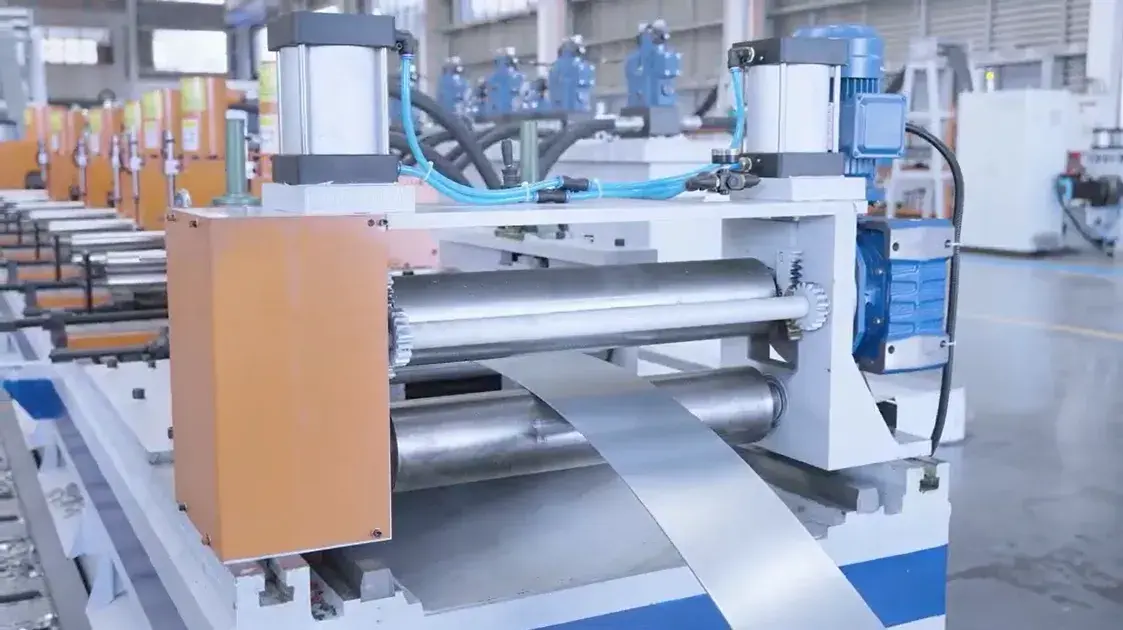
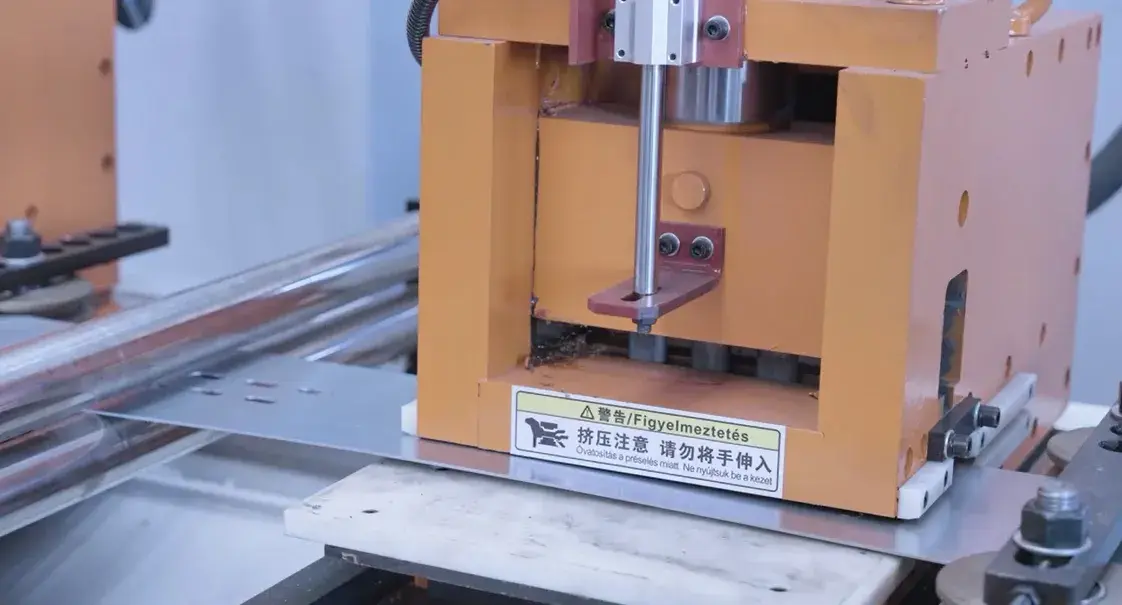
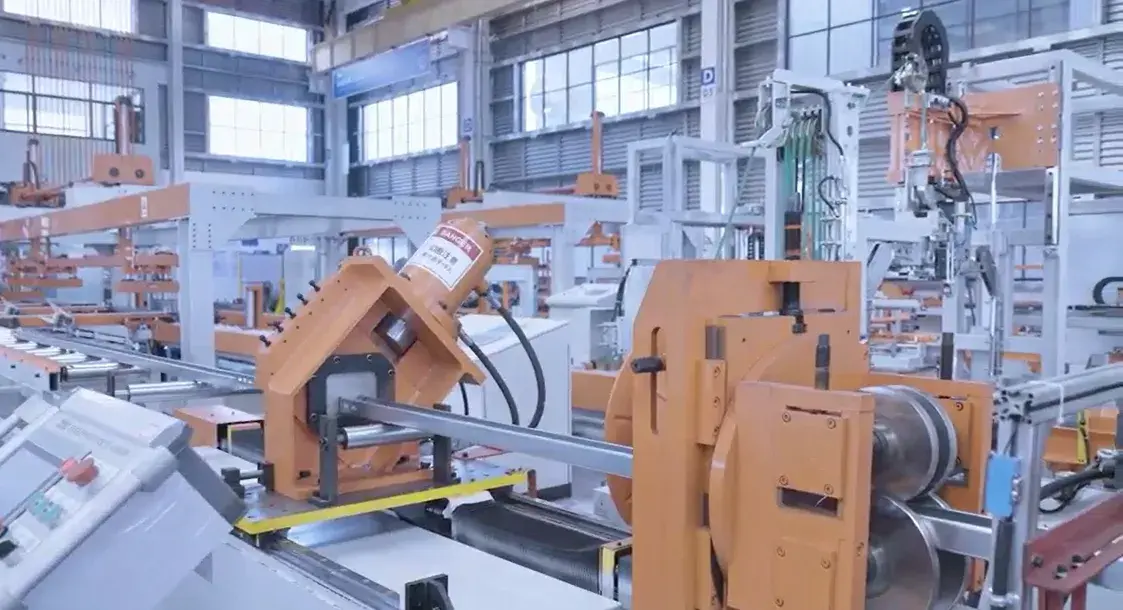
The machine architecture comprises several integrated subsystems working in synchronised coordination. The decoiler accepts steel coils ranging from 1.5 to 2.5 mm in thickness, feeding material through a levelling station that eliminates residual coil curvature. Material then advances to the hydraulic punching unit powered by an 11 kW hydraulic station, creating elongated slots critical for adjustable mounting hardware. Our double-chain transmission system connects the 22 kW main motor to the forming section, where GCR15 steel rollers—chrome-treated for durability—shape the profile through precise incremental bends. The PLC control system manages feeding speed, punching intervals, and cut lengths with ±1.5mm tolerance accuracy.
This level of automation transforms production economics. Traditional fabrication methods require separate punching, bending, and cutting operations, each introducing handling time and alignment errors. Our integrated approach reduces labor requirements by approximately 60% while maintaining consistent output quality across extended production runs.
Material Compatibility and Processing Capabilities
The equipment accommodates feeding widths from 90mm to 230mm, enabling production of various strut channel dimensions, including 41x41 mm, 41x21 mm, and 41x62 mm profiles commonly specified in solar racking designs. The 80mm diameter shafts manufactured from 45# forged steel provide sufficient rigidity to prevent deflection when processing thicker gauge materials. Hydraulic shearing, utilising Cr12 mould steel blades with quenched hardness ratings of 58-62 HRC, delivers clean cuts without burrs that could compromise installer safety or accelerate corrosion at cut edges.
Benefits and Applications of High-Speed Solar Strut Channel Roll Forming Machines
Production Efficiency and Output Capacity
Under continuous operation, the solar support channel roll former of the machine produces 480 meters of finished channel every hour at 8 meters per minute. This throughput capacity lets utility-scale solar project manufacturers fulfil huge orders without production bottlenecks. Due to the steady forming pace, the metal cools uniformly, avoiding residual stress concentrations from warping during shipping or installation.
Energy efficiency boosts operational profitability. Compared to several standalone machines doing identical processes, the 22 kW main motor consumes low power relative to output volume. Modern pump technology reduces heat generation and maintenance, using 11 kW for the hydraulic system.
Industrial Applications Beyond Solar Mounting
While designed primarily for photovoltaic racking systems, the strut channels produced are employed in applications across diverse industrial sectors. Electrical contractors utilize these profiles for cable tray supports in commercial buildings, where the slotted design permits flexible hardware placement without field drilling. HVAC installation teams employ strut channels as mounting frameworks for ductwork and equipment hangers, appreciating the load-bearing capacity relative to profile weight. Warehouse operations incorporate these channels into modular racking systems, where adjustability accommodates changing storage requirements. This versatility means manufacturers can diversify revenue streams beyond solar-specific projects, improving business resilience during market fluctuations.
Maintenance Requirements and Operational Longevity
Proper maintenance protocols extend equipment lifespan while preserving output quality. The chrome-treated forming rollers resist surface wear from continuous steel contact, typically requiring replacement only after processing several thousand tons of material. The double-chain transmission system needs regular lubrication and tension inspection—routine procedures that maintenance staff can perform without specialized training. The hydraulic punching unit requires periodic seal inspection and fluid quality monitoring, standard practices in industrial hydraulics. The machine's modular design permits component access without complete disassembly, reducing downtime during preventive maintenance intervals. We recommend quarterly inspection schedules for production environments operating multi-shift cycles.
Comparing High-Speed Solar Strut Channel Roll Forming Machines with Traditional Alternatives
Speed and Precision Performance Metrics
Coil cutting, press brake forming, and secondary punching are traditional fabrication steps. All processes add material handling time and dimensional tolerances. With our integrated roll-forming method, intermediate handling is eliminated while retaining a ±1.5 mm tolerance throughout the profile. Multi-section racking system installers need precision since misaligned holes cause assembly issues and structural stress. Roll-formed channels have more consistent cross-sectional dimensions than press-brake-produced ones, which vary with operator technique and tool wear, according to independent testing.
Automation Levels and Workforce Implications
Manual fabrication systems require operators at each process stage: material handling, machine operation, and quality inspection. Semi-automated systems might integrate punching with forming, but still need manual loading and unloading. Our fully automated configuration requires one operator to monitor the PLC interface, intervening only for coil changes or dimensional adjustments. This automation doesn't eliminate employment—it redirects labor toward higher-value activities like quality assurance and preventive maintenance. Manufacturers report that automated systems reduce repetitive strain injuries and improve workplace safety by minimising manual material handling.
Durability Considerations and Service Support
The machine frame, constructed from 25mm-thick 45# steel, provides structural stability that prevents alignment drift during extended operation. This contrasts with lighter-gauge fabrications that may require frequent calibration. Component selection prioritises long-term reliability: forged steel shafts resist fatigue cracking, hardened cutting blades maintain edge sharpness through thousands of cuts, and sealed bearing assemblies exclude contaminants. We back this durability with comprehensive after-sales support, including remote troubleshooting, rapid spare parts delivery, and on-site technical assistance when required. Our global service network spans over 150 countries, ensuring manufacturers can access support regardless of installation location.
Procurement Guide: Selecting and Buying the Right Machine
Matching Equipment Capabilities to Production Requirements
Procurement decisions begin with accurate demand forecasting. Manufacturers supplying regional solar installers need a different capacity than those serving utility-scale EPC contractors. Calculate anticipated monthly tonnage requirements, then factor a 30% capacity buffer for growth and maintenance downtime. Our machine's 8-metre-per-minute speed suits mid- to high-volume operations; lower-volume producers might consider our entry-level models with reduced forming speeds. Evaluate your typical order profile dimensions—if production focuses on 41x41 mm channels, confirm the machine's feeding width range accommodates this specification with minimal adjustment.
Customization options warrant careful consideration. Solar support channel roll former. Do projects require non-standard hole patterns? Our hydraulic punching system accepts custom die sets for specialized configurations. Will you process pre-painted steel requiring special roller coatings to prevent finish damage? These details influence equipment specifications and require clarification during procurement discussions. We provide engineering consultations that review production requirements and recommend optimal configurations, avoiding over-specification that raises costs or under-specification that limits operational flexibility.
Supplier Evaluation and Sourcing Considerations
China is a leading roll-forming equipment manufacturer due to its metallurgical expertise and low prices. However, supplier selection goes beyond cost comparisons. Engineering capabilities—can manufacturers simulate roller design and material flow? For operations in regulated marketplaces, check ISO 9001 and CE safety certifications. Customer references from similar production companies and independent installation volume verification are needed.
Cangzhou Zhongtuo, a cold roll forming specialist for over ten years, is a complete supplier. Our engineers optimise roller designs before production using modern CAD and forming simulation tools, reducing commissioning trial-and-error. We document quality control throughout manufacture and perform dimensional inspections at critical assembly phases. Our export experience in over 150 countries helps us understand international shipping logistics, customs documentation, and voltage compatibility requirements, preventing costly installation delays.
Financial Considerations and Investment Options
Equipment pricing reflects specifications, with high-speed automated systems representing significant capital investments. New machines typically range from $35,000 to $60,000, depending on customization requirements and included features. Budget-conscious buyers sometimes consider refurbished equipment, though this introduces uncertainty regarding remaining component life and warranty coverage. We recommend prioritising new equipment for production-critical applications, viewing the investment through the total cost of ownership rather than the initial purchase price.
Some manufacturers offer flexible financing arrangements, including leasing programmes that preserve working capital for raw material inventory and operational expenses. When evaluating financing options, consider maintenance obligations, upgrade provisions, and end-of-lease equipment disposition. We work with established leasing partners familiar with manufacturing equipment, streamlining approval processes for qualified buyers. Our sales team provides detailed quotations that itemise all components, shipping costs, and optional features, enabling accurate budget planning without hidden charges emerging during installation.
Future Trends and Innovations in Solar Strut Channel Roll Forming Machines
Emerging Control Technologies and Precision Enhancement
The roll-forming industry uses servo motor technology for finer speed control and rapid torque adjustment than AC motors. Servo-driven machines accelerate and decelerate faster, saving scrap during production starts and order changeovers. Predictive algorithms in advanced PLC systems alter forming settings based on real-time material property variations to compensate for coil thickness or hardness changes. Intelligent controls reduce operator intervention and preserve output quality.
IoT integration is another technological frontier. Sensors send motor current draw, hydraulic pressure, and forming force data to cloud analytics platforms. Machine learning algorithms predict component failures and notify maintenance before they happen. The predictive strategy turns reactive repairs into scheduled interventions, greatly minimising unplanned downtime. We're creating IoT-ready machine configurations that give manufacturers mobile performance dashboards for remote production monitoring.
Sustainability Initiatives and Environmental Compliance
Environmental regulations increasingly influence manufacturing equipment design. Modern roll forming machines incorporate energy recovery systems that capture hydraulic heat for facility climate control, improving overall energy efficiency. Material optimisation software calculates optimal coil utilisation patterns, reducing trim waste that otherwise contributes to scrap volumes. We're researching forming techniques for recycled steel grades, supporting circular economy initiatives within the solar industry. These sustainability features resonate with manufacturers pursuing environmental certifications and customers demanding transparent supply chain practices.
The renewable energy sector's continued expansion drives sustained demand for solar mounting components. Industry analysts project annual growth rates exceeding 15% through 2030 as utility-scale solar projects accelerate worldwide. This growth creates opportunities for manufacturers equipped with efficient production technology capable of meeting quality standards while controlling costs. Advanced roll forming machines position manufacturers competitively within this expanding market, providing the production capacity and consistency that major project developers require from approved supplier networks.
Conclusion
FAQ
1. What production capacity can this machine achieve during standard operation?
Operating at 8 meters per minute under continuous running conditions, the machine produces approximately 480 linear meters hourly. Actual daily output depends on coil change frequency, order specifications requiring dimensional adjustments, and scheduled maintenance intervals. Manufacturers typically calculate effective capacity at 70-75% of the theoretical maximum to account for these operational realities, yielding approximately 2,500 to 3,000 meters per eight-hour shift.
2. How does automation reduce long-term operating expenses?
Automated operation consolidates multiple process steps previously requiring separate equipment and operators. Labor cost reductions represent the most immediate savings, with single-operator supervision replacing multi-person crews. Consistency improvements reduce material waste from dimensional errors and rework requirements. Predictive maintenance capabilities minimise emergency repair costs and unplanned downtime that disrupts delivery schedules. Combined, these factors typically result in 40-50% lower per-unit production costs than traditional methods.
3. Can the equipment accommodate custom profile dimensions beyond standard specifications?
The machine design permits customization for non-standard profile requirements through roller set modifications. Our engineering team analyses requested dimensions, performs forming simulations, and fabricates custom roller sets machined to precise specifications. Width adjustments within the 90-230mm feeding range require minimal modifications, while height variations need new roller designs. We maintain detailed documentation of custom configurations, ensuring replacement rollers match original specifications during future maintenance cycles.
Partner with ZTRFM for Superior Solar Strut Channel Roll-Forming Solutions
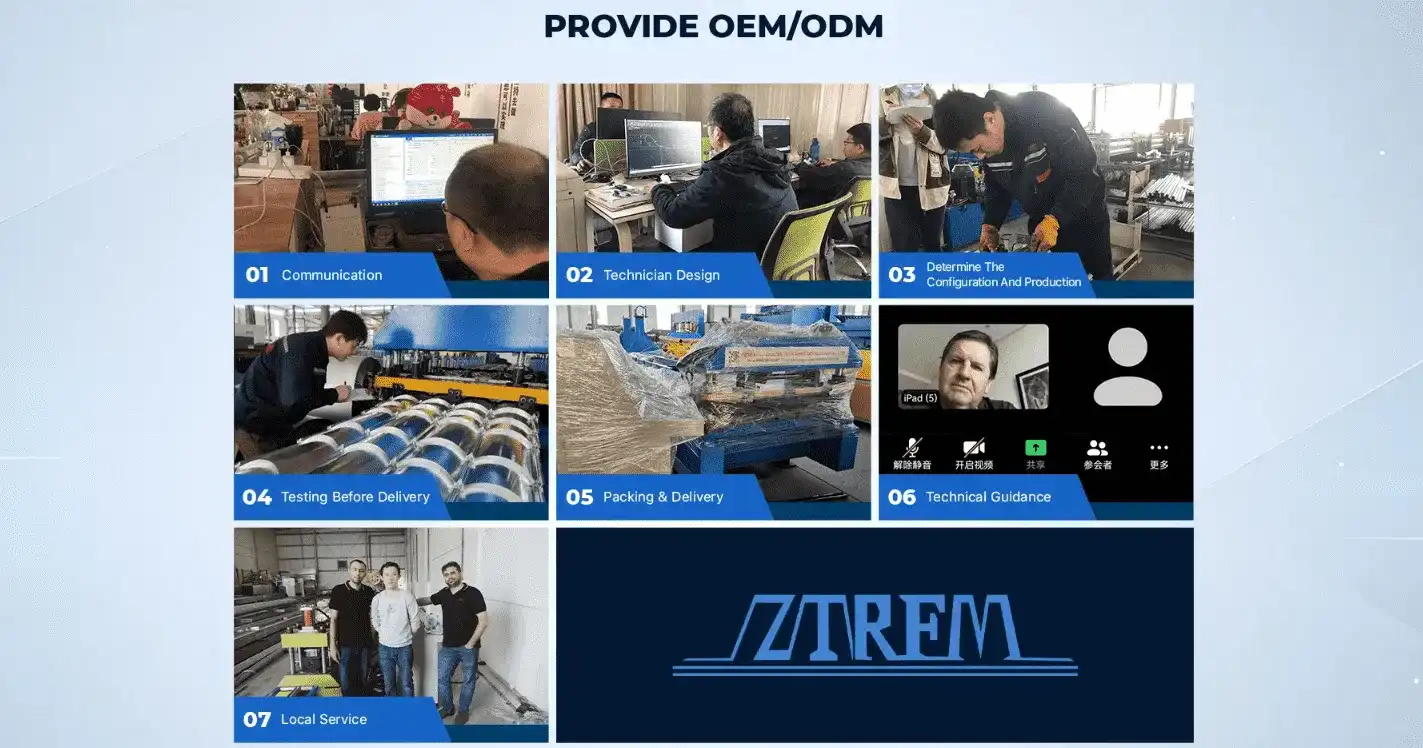
ZTRFM combines over a decade of specialised roll-forming expertise with comprehensive manufacturing capabilities that support your production goals from initial consultation through ongoing technical support. As an established solar strut channel roll forming machine supplier, we deliver ISO 9001-certified equipment backed by CE safety compliance, providing confidence for operations in quality-conscious markets. Our engineering team collaborates with your production specialists to configure machines matching your specific throughput requirements, material specifications, and dimensional tolerances.
Beyond equipment delivery, we provide complete implementation support, including on-site installation supervision, operator training programmes, and responsive technical assistance via email at zhongtuorollforming@gmail.com. Our global spare parts distribution network ensures rapid component delivery, minimising downtime when maintenance needs arise. Whether you're establishing new production capacity or upgrading existing facilities, ZTRFM offers the technical knowledge and manufacturing excellence that transform equipment investments into lasting competitive advantages. Discover detailed specifications and request customised quotations at rollformingmachinemanufacturer.com.
References
1. American Iron and Steel Institute. (2022). Cold-Formed Steel Design Manual: Standards for Roll Forming Processes. Washington, DC: AISI Publications.
2. Solar Energy Industries Association. (2023). U.S. Solar Market Insight Report: Mounting Systems and Structural Component Analysis. Washington, DC: SEIA Research Division.
3. International Organization for Standardization. (2021). ISO 9001:2015 Quality Management Systems for Manufacturing Equipment. Geneva: ISO Standards Publication.
4. National Renewable Energy Laboratory. (2022). Structural Performance Standards for Photovoltaic Mounting Systems. Golden, CO: NREL Technical Reports.
5. Machinery's Handbook Editorial Board. (2023). Roll Forming Technology: Principles and Industrial Applications, 31st Edition. New York: Industrial Press.
6. European Committee for Standardization. (2021). EN 10346 Standards: Continuously Hot-Dip Coated Steel for Cold Forming Applications. Brussels: CEN Publications.