- English
- French
- German
- Portuguese
- Spanish
- Russian
- Japanese
- Korean
- Arabic
- Irish
- Greek
- Turkish
- Italian
- Danish
- Romanian
- Indonesian
- Czech
- Afrikaans
- Swedish
- Polish
- Basque
- Catalan
- Esperanto
- Hindi
- Lao
- Albanian
- Amharic
- Armenian
- Azerbaijani
- Belarusian
- Bengali
- Bosnian
- Bulgarian
- Cebuano
- Chichewa
- Corsican
- Croatian
- Dutch
- Estonian
- Filipino
- Finnish
- Frisian
- Galician
- Georgian
- Gujarati
- Haitian
- Hausa
- Hawaiian
- Hebrew
- Hmong
- Hungarian
- Icelandic
- Igbo
- Javanese
- Kannada
- Kazakh
- Khmer
- Kurdish
- Kyrgyz
- Latin
- Latvian
- Lithuanian
- Luxembou..
- Macedonian
- Malagasy
- Malay
- Malayalam
- Maltese
- Maori
- Marathi
- Mongolian
- Burmese
- Nepali
- Norwegian
- Pashto
- Persian
- Punjabi
- Serbian
- Sesotho
- Sinhala
- Slovak
- Slovenian
- Somali
- Samoan
- Scots Gaelic
- Shona
- Sindhi
- Sundanese
- Swahili
- Tajik
- Tamil
- Telugu
- Thai
- Ukrainian
- Urdu
- Uzbek
- Vietnamese
- Welsh
- Xhosa
- Yiddish
- Yoruba
- Zulu
Choosing Between Manual and Automatic Roofing Sheet Making Machine
As you watch sheets of metal being cut into precise roofing shapes on the factory floor, you start to wonder if you should R101 Roofing Sheet Making Machine buy controls that you can use by hand or go with controls that are fully automatic. Our team at Cangzhou Zhongtuo has helped hundreds of roofing makers make this exact choice over the past ten years. Your output ability, labor prices, and place in the market will all be affected by whether you choose manual or automatic roofing sheet-making machines. The R101 Roofing Sheet Making Machine is an advanced automatic system that combines cost with industrial-grade performance. This makes it especially appealing to growing makers who need reliable output without the complexity of very high-end systems. This guide shows you the real-world things you need to think about when buying business tools for the next ten years.
Understanding Manual and Automatic Roofing Sheet Making Machines
There is more to the difference between manual and automatic methods than just hitting buttons or turning a handle. When using manual roofing sheet equipment, the person using it has to physically control feeding speeds, keep an eye on making stations, measure lengths, and start cutting processes. These machines usually have basic motor drives and simple on-off settings. They need skilled workers who can use their eyes to judge how materials behave and change parameters accordingly. The operators measure each sheet by hand, mark where to cut, and use foot pedals or manual switches to turn on the hydraulic shears. Integrated control platforms in automatic systems change this workflow in a big way. Programmable logic controllers (PLCs) and touchscreen displays are used in more advanced tools to handle the whole production process. The automation takes care of synchronizing the speed of the material feeding, keeping an eye on the roller station, measuring the exact length with encoder input, and starting the hydraulic cutting without any help from a person. With this big step forward in technology, mistakes made by people are much less likely to happen, and the quality of the work is the same across shifts and workers.
Production Capacity Differences
Production speeds on manual systems are usually limited to 5 to 10 meters per minute because of how long it takes people to reply and how accurate their measurements are. Depending on the difficulty of the profile and the thickness of the material, an expert operator might be able to make 200 to 400 square meters in eight hours. These tools are used by new businesses, small fabrication shops, and companies that don't have set production plans and have equipment sitting idle between jobs. Automatic equipment for making roofing sheets moves at much faster speeds. Automatic tools in the middle range can go 15 to 25 meters per minute accurately, which is 600 to 1,200 square meters per shift. This productivity booster is very important when working on big contracts for business building projects, farm buildings, or government housing programs, where on-time delivery determines fines or bonuses.
Labor and Skill Requirements
Manual tools need trained automatic roofing sheet making machine metalworkers who know how materials spring back, how to spot making flaws, and how to make changes in real time. It's always hard to find and keep these skilled operators, especially in places where there aren't enough workers for production. It takes months to train new employees, and when operators don't trust their own judgment, the quality of the products they make can vary, which can hurt their relationships with customers. Automatic methods make it much easier to do things without much skill. After getting a lot of training at the start, operators mostly just watch touchscreen screens, enter production parameters, and do regular repair checks. The control system of the machine takes into account small changes in the material and keeps the forming pressure the same at all places. This spread of manufacturing skills makes it easier for businesses to quickly put together reliable production teams and makes them less vulnerable to losing key employees.
Evaluating the R101 Roofing Sheet Making Machine within the Market Context
Technical Specifications and Capabilities
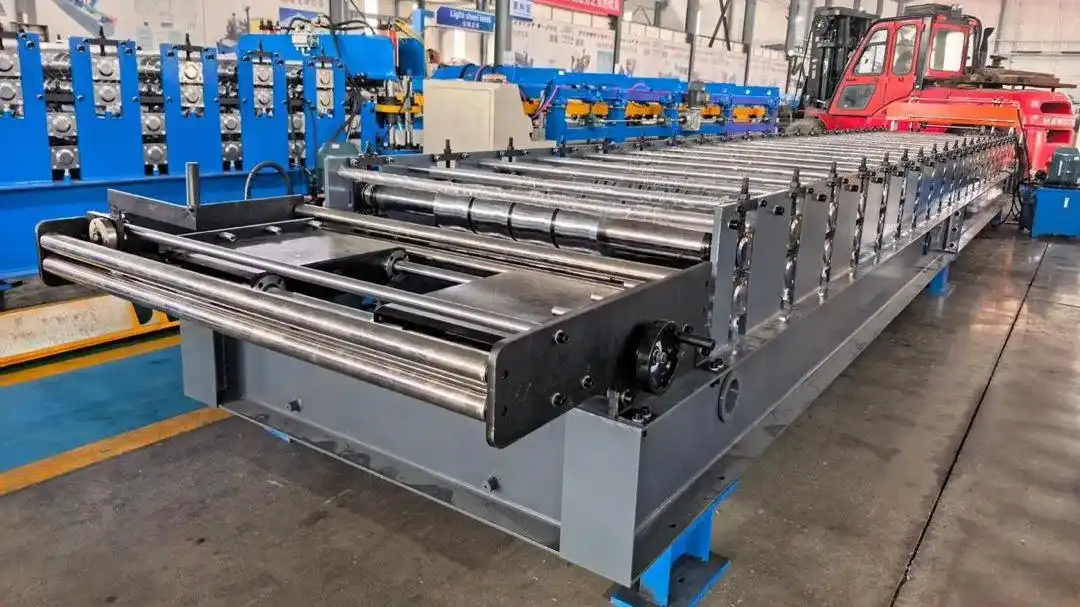
With a thickness range of 0.3 to 0.8 millimeters, the R101 Roofing Sheet Making Machine can work with steel strips that meet the most usual gauge requirements for roofing projects. This is important because different climate zones and building rules call for different thicknesses of materials. For example, secondary structures need lighter gauges while main weather shields need heavier ones. The machine can work with galvanized steel, prepainted coils, and aluminum-zinc alloys without hurting the protected coats. This means that the corrosion protection that buyers expect is kept. There are 18 units that make the flat coil stock into the final trapezoidal shape. This station count is the result of careful planning. If there are too few stations, there is a chance of material stress cracks and wrong measurements, and if there are too many stations, the equipment gets longer, costs more, and is harder to maintain. Each station has solid steel rods with a diameter of 70 millimeters that don't bend when loads are put on them during the forming process. This keeps the profile measurements the same across the width of the sheet.
Control System and Precision
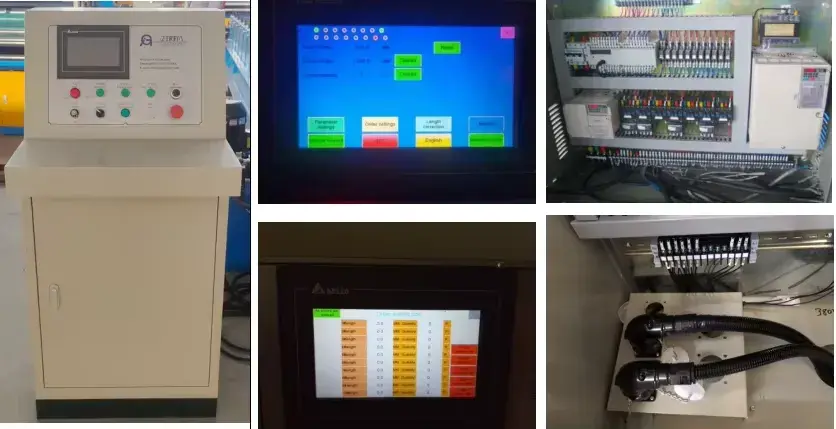
For the R101 Roofing Sheet Making Machine to work, it needs a Delta PLC and a 5.7-inch monitor. Through easy-to-use menus that are shown in multiple languages, operators enter the desired sheet lengths and output amounts. The PLC controls the speed of the filling and measures the length of each sheet. When a sheet hits a certain size, the hydraulic shear starts cutting automatically. The accuracy of the cuts stays within ±2 millimeters across production runs. This meets the design tolerances needed for roofing setups where sheets overlap and line up with structural purlins. This level of control accuracy gets rid of the waste that comes with human measurement methods. When making thousands of sheets for one job, even small mistakes in calculation add up to a lot of money spent on waste. The automatic length control also lets producers quickly switch between different sheet lengths without stopping production. This helps them meet the needs of a wide range of customers.
How to Decide Between Manual and Automatic Machines Based on Business Needs
Production Volume Analysis
For new companies that are just starting to make roofing sheets and don't see many orders coming in, buying hand tools might make sense. When monthly production is less than 10,000 square meters, and orders come in at random times, manual systems save money because they don't need as much capital. This means that cash can be used for marketing, stocking, and working capital needs. These companies can still build relationships with customers and get known in the market without investing in technology until they get enough orders to support higher equipment utilization rates. Automatic tools are a good investment for manufacturers who want to make medium- to large-scale products (more than 30,000 linear meters per month). The R101 Roofing Sheet Making Machine can make about 7,200 linear meters per normal shift, which means that a single machine working five days a week could easily handle 140,000 meters per month. This range of output is good for regional construction projects, farm building workers, and distributors of metal building parts who need to know when their orders will arrive.
Budget and Financial Considerations
Depending on the needs and supplier, the original investment for manual roofing sheet tools is usually automatic roofing sheet making machinebetween $8,000 and $15,000. Automatic machines cost more; good systems can range anywhere from $25,000 to $60,000, depending on how complex they are, how well-known the brand is, and what features they come with. When looked at by itself, this price difference seems big, but a good financial analysis looks at the payback times through reduced labor costs, higher productivity, and better quality. We've seen that companies that make more than the required amount of a product usually get their money back in 18 to 36 months through savings. Lowering labor costs has the most direct effect. For example, replacing three human workers who make $3,000 a month with one automatic machine worker who makes $3,500 a month saves about $5,500 a month, or $66,000 a year. Cutting precisely cuts down on waste, which saves an extra 2 to 5 percent on raw material costs. Consistency in quality also lowers guarantee costs and keeps customers coming back.
Workforce Capabilities and Labor Market Conditions
The supply of labor in a region has a big impact on choices about equipment. When it comes to keeping their businesses stable, manufacturers in places with tight job markets or high pay increases need automation. The other option, which is to constantly hire, train, and replace trained manual workers, leads to constant uncertainty that ruins growth plans and requires a lot of management time. Automatic tools can also handle changes in the workforce caused by age groups. When young people start working in the industry, they usually prefer using computers instead of doing hard physical work by hand. This group likes the R101 Roofing Sheet Making Machine's touchscreen interface and automated processes, which make it easier to hire people and raise the happiness and retention rates of current employees.
Procuring the R101 Roofing Sheet Making Machine: Where and How to Buy
Supplier Verification and Due Diligence
Manufacturers that are legitimate keep certificates that can be checked, such as ISO 9001 for quality management systems and CE compliance for electricity safety standards. Ask for pictures of these awards and check with the organizations that issued them to make sure they are real. These certifications and the fact that we are a nationally known high-tech company in China show that we are dedicated to making the best products and coming up with new ideas all the time. Testimonials and case studies from satisfied customers show how well the equipment works in real life and how quickly suppliers respond. Ask manufacturers in your area or business for examples, then get in touch with them to talk about their experiences. Video factory tours, which are becoming more popular on platforms like Zoom or Teams, let potential buyers see how things are made, how quality is checked, and how much is made without having to pay for expensive foreign travel.
Pricing Structure and Customization Options
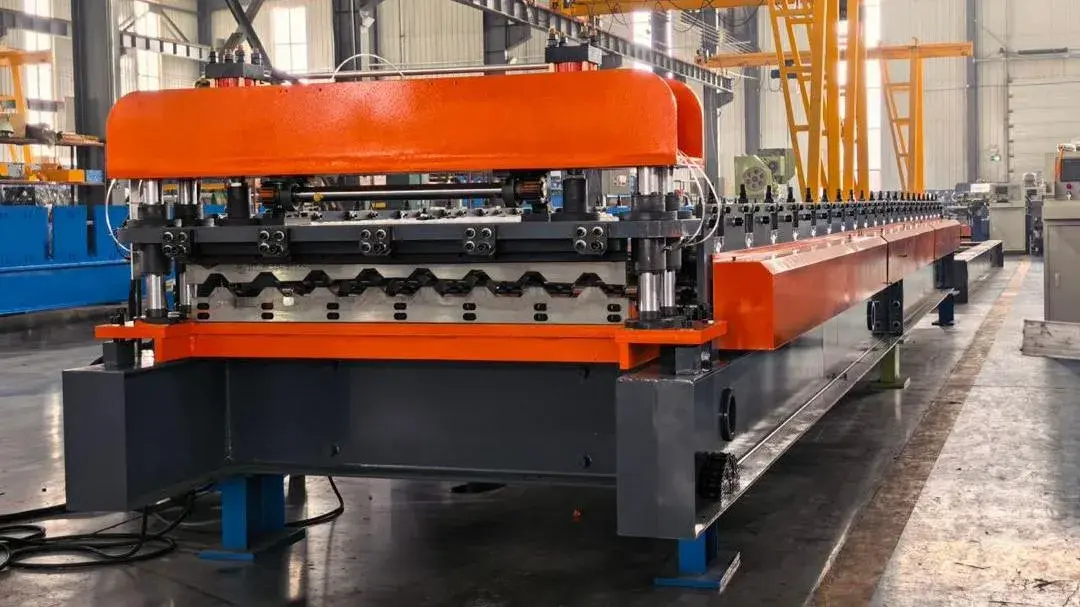
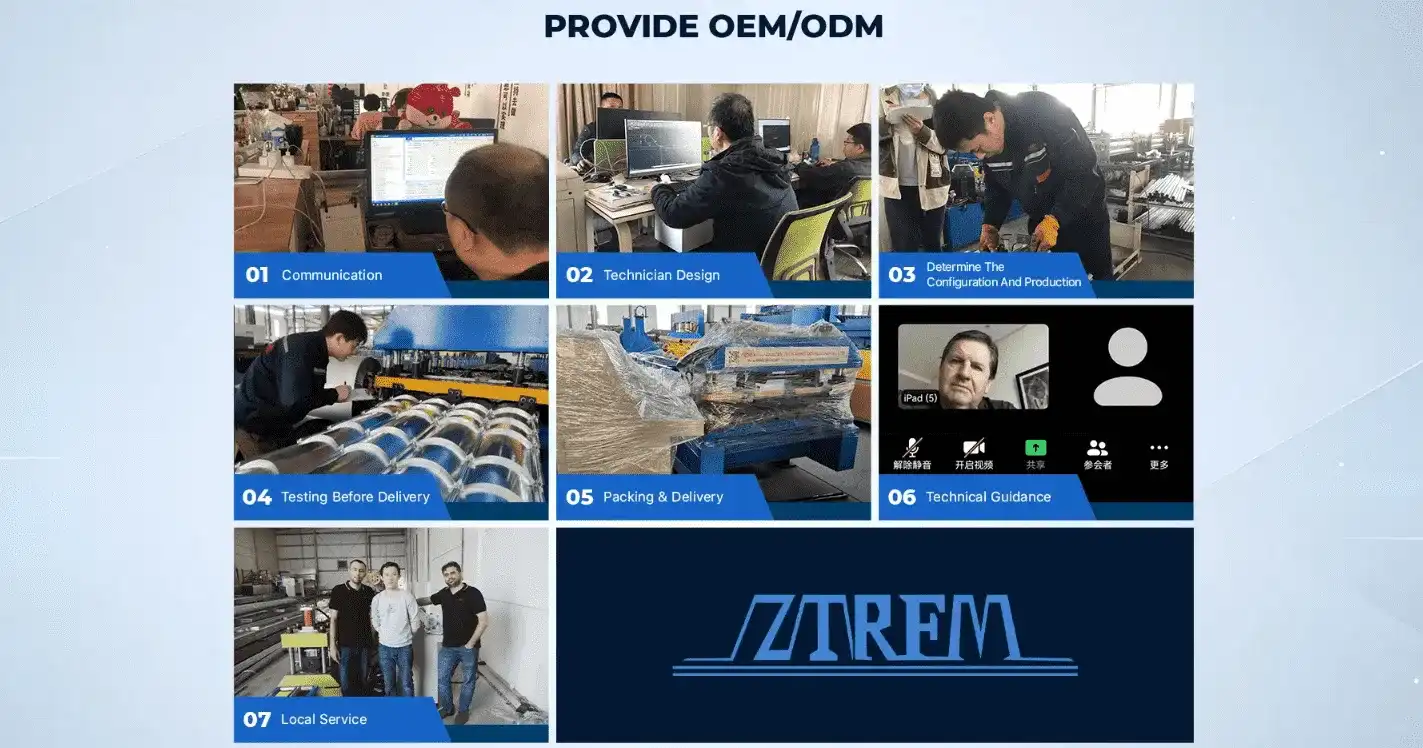
Standard R101 Roofing Sheet Making Machine designs meet the needs of most makers, but they R101 Roofing Sheet Making Machine can still be changed to meet unique needs. During the planning part, you can change the ranges of material thickness, the number of forming stations, and the brands of control systems. We can help makers who need private marking or special specs that match secret profiles with both OEM and ODM services. Buying in bulk can lead to better prices, especially for companies that want to build facilities that will make more than one product or for companies that sell tools to customers in the same area. Talk about more than just the unit price. You should also talk about payment terms, shipping plans, and any after-sales service packages that come with the product or can be added as extras. To keep your budget from being surprised, full quotes should list all costs, such as the price of the machine, any tools needed, shipping, insurance, and fitting services.
Logistics and Delivery Timelines
Depending on the location and shipping method, it usually takes 4 to 8 weeks for roll forming tools to arrive at a port after the order has been confirmed. Shipping in containers is a cheap way to move things, and the R101 Roofing Sheet Making Machine's size lets it fit in normal 40-foot containers. Air freight cuts arrival times by a huge amount, but it also increases the cost of shipping, so it's only worth it when equipment is needed quickly for production. Import taxes, clearing customs, and shipping from the port to the facility in the United States all take time and cost money that buyers need to plan for when they plan their projects. Experienced suppliers can help with paperwork and can suggest customs agents who are familiar with importing industrial tools to make the process go more smoothly. We keep in touch with logistics providers in all of the big areas, which makes it easier to send equipment.
Conclusion
The choice between manual and automatic roofing sheet-making equipment comes down to how well the machine's skills fit with the needs of the business and its growth goals. For new businesses with limited resources and limited production rates, manual methods are still useful because they provide entry points into manufacturing. Automatic equipment like the R101 Roofing Sheet Making Machine has a lot of benefits for established businesses that want to grow in a way that lasts. These benefits include higher productivity, stable quality, less reliance on labor, and higher profits. The R101 Roofing Sheet Making Machine is in a great spot in the market because it offers industrial-grade automation and accuracy without the cost and complexity of ultra-premium systems. Manufacturers who carefully think about their production needs, budget, and long-term goals are in a good situation to buy equipment that helps their business grow instead of holding it back. With the right machine, you can gain a competitive edge that lets you seize market opportunities and build your image by delivering high-quality goods on time.
FAQ
1. What advantages does the R101 offer over manual roofing sheet machines?
The R101 greatly improves efficiency over manual machines. It produces up to 15 meters per minute versus 5–10 meters manually, nearly tripling output. Its Delta PLC system ensures cutting accuracy within ±2 mm, reducing waste and errors. Automatic forming pressure keeps dimensions consistent, while one operator can replace two or three workers. The tablet display also simplifies operation and reduces training time.
2. How long does R101 installation typically require?
Professional installation of the R101 usually takes 2–3 business days if the site is ready with power, a level floor, and enough space. The process includes machine assembly, power connection, safety checks, forming station calibration, and test production. A professional setup is recommended to avoid alignment or technical issues that may affect long-term performance and production quality.
3. What maintenance practices keep the R101 performing optimally?
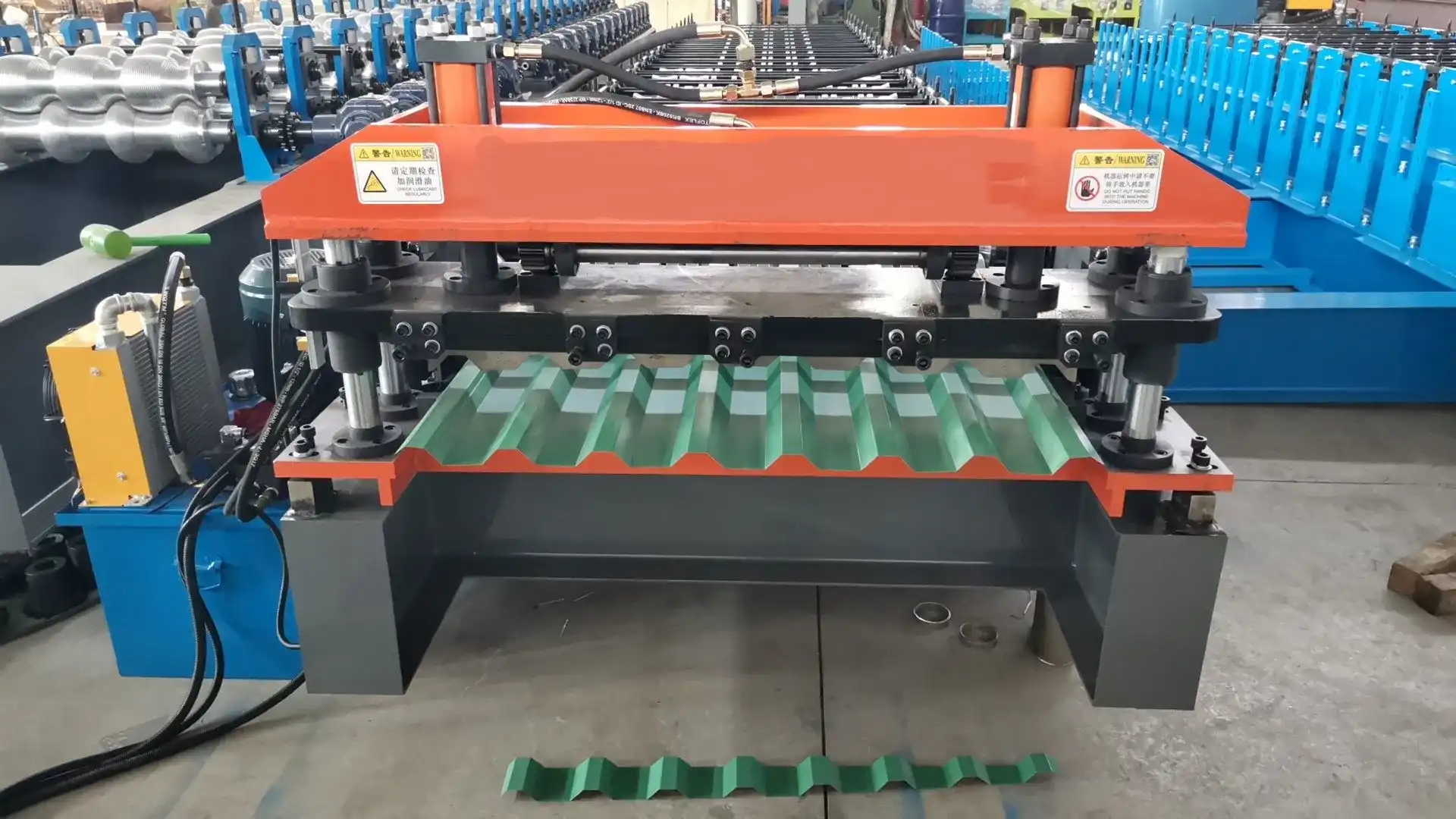
Daily maintenance includes checking roller surfaces, safety guards, and hydraulic pressure. Weekly lubrication of chains and bearings prevents wear. Monthly tasks include checking forming station alignment and hydraulic lines. Hydraulic oil should be replaced after six months, then yearly with #46 hydraulic fluid. The Cr12MoV cutting blade lasts 500,000–1,000,000 cuts, depending on material thickness and proper maintenance.
Partner with ZTRFM for Your R101 Roofing Sheet Making Machine Needs
When we work with a new client, ZTRFM adds ten years of specialized experience in cold roll forming technology to the table. Our R101 Roofing Sheet Making Machine is the perfect combination of performance and value for growing makers. It can operate automatically, cut precisely to within ±2mm, and produce at speeds of up to 15 meters per minute, all while taking up only 6.2 meters of space. As a producer that is ISO 9001 and CE certified and has delivered goods to more than 150 countries, we know the technical needs and customer service needs that are important for buying tools across borders. Our full range of services includes the ability to customize, thorough operator training, the supply of genuine parts, and quick technical support that keeps your production going smoothly. Get in touch with us at zhongtuorollforming@gmail.com to talk about your unique production needs and get a full quote from a provider of R101 Roofing Sheet Making Machine.
References
1. Smith, J. & Anderson, K. (2021). Cold Roll Forming Technology: Principles and Applications in Metal Construction. Industrial Manufacturing Press.
2. Thompson, R. (2020). "Automation ROI in Sheet Metal Fabrication: A Comparative Analysis." Journal of Manufacturing Systems and Economics, 45(3), 178-195.
3. Martinez, L. (2022). Equipment Selection Strategies for Metal Building Component Manufacturers. Construction Industry Publishing.
4. Chen, W. & Roberts, P. (2019). "Precision Control Systems in Automated Roll Forming Equipment." International Journal of Advanced Manufacturing Technology, 102(5-8), 2134-2149.
5. United States Department of Commerce. (2023). Industrial Machinery Import Guidelines and Standards Compliance. Government Printing Office.
6. Wilson, D. (2021). "Maintenance Best Practices for Hydraulic Systems in Metal Forming Equipment." Industrial Maintenance and Plant Operation Quarterly, 38(2), 67-83.
_1750323743240.webp)