- English
- French
- German
- Portuguese
- Spanish
- Russian
- Japanese
- Korean
- Arabic
- Irish
- Greek
- Turkish
- Italian
- Danish
- Romanian
- Indonesian
- Czech
- Afrikaans
- Swedish
- Polish
- Basque
- Catalan
- Esperanto
- Hindi
- Lao
- Albanian
- Amharic
- Armenian
- Azerbaijani
- Belarusian
- Bengali
- Bosnian
- Bulgarian
- Cebuano
- Chichewa
- Corsican
- Croatian
- Dutch
- Estonian
- Filipino
- Finnish
- Frisian
- Galician
- Georgian
- Gujarati
- Haitian
- Hausa
- Hawaiian
- Hebrew
- Hmong
- Hungarian
- Icelandic
- Igbo
- Javanese
- Kannada
- Kazakh
- Khmer
- Kurdish
- Kyrgyz
- Latin
- Latvian
- Lithuanian
- Luxembou..
- Macedonian
- Malagasy
- Malay
- Malayalam
- Maltese
- Maori
- Marathi
- Mongolian
- Burmese
- Nepali
- Norwegian
- Pashto
- Persian
- Punjabi
- Serbian
- Sesotho
- Sinhala
- Slovak
- Slovenian
- Somali
- Samoan
- Scots Gaelic
- Shona
- Sindhi
- Sundanese
- Swahili
- Tajik
- Tamil
- Telugu
- Thai
- Ukrainian
- Urdu
- Uzbek
- Vietnamese
- Welsh
- Xhosa
- Yiddish
- Yoruba
- Zulu
Top Features to Look for in the Best Trapezoidal Sheet Roll Forming Machine for Small Business
The way small metal roofing businesses work can be completely trapezoidal sheet roll forming machine changed by choosing the right trapezoidal sheet roll forming machine. These special tools take flat metal strips and turn them into structural roofing panels with trapezoidal ridges that make them very strong for their weight. For small makers, roofing workers, and newcomers to the metal building business, knowing which machine features really matter is the difference between making money and losing money. This guide goes over the important things you need to think about before buying roll-making equipment, such as the amount of automation and long-term service support, as well as the production capacity and fit of the materials. These tips will help you make a buying choice that supports long-term growth without overstretching your budget or office, whether you're making panels for home projects or business cladding uses.
Understanding the Core Features of a Trapezoidal Sheet Roll Forming Machine
Production Speed and Throughput Capacity
The speed of your business has a direct effect on how much money it makes. Beginner machines usually work at a speed of 10 to 15 meters per minute, which is fine for businesses that need to make 500 to 800 square meters every day. High-performance systems can go as fast as 60 meters per minute for large-scale production needs, while mid-range tools can go 25 to 40 meters per minute. For small businesses, the most important thing is to match speed to real order volume. Buying too much capacity wastes money and time, and not having enough flow causes problems during busy times.
Material Compatibility and Thickness Range
Your machine should be able to handle the types of materials that your market needs. Standard trapezoidal forming tools can work with 24-gauge and 22-gauge steel, as well as .032-inch aluminum, which is enough for most home and light business uses. Machines with multiple forming stations and wheel pressure that can be changed can handle a wider range of thicknesses without affecting the accuracy of the shape. When buyers ask for custom coatings or bigger panels for areas with a lot of wind, this freedom comes in handy.
Energy Efficiency and Operating Costs
The amount of power that motors use is a high ongoing cost. Machines that work well use main drive motors that are between 5.5kW and 7.5kW, and hydraulic systems that are around 7.5kW for cutting. Modern gearbox transmission systems lose less energy because they move power smoothly and reduce noise that wears things down too quickly. When figuring out how much it costs to run a business, you should figure out how much energy it uses during the normal work shifts of a trapezoidal sheet roll-forming machine. Differences of 2 to 3 kW between models add up over the years of use.
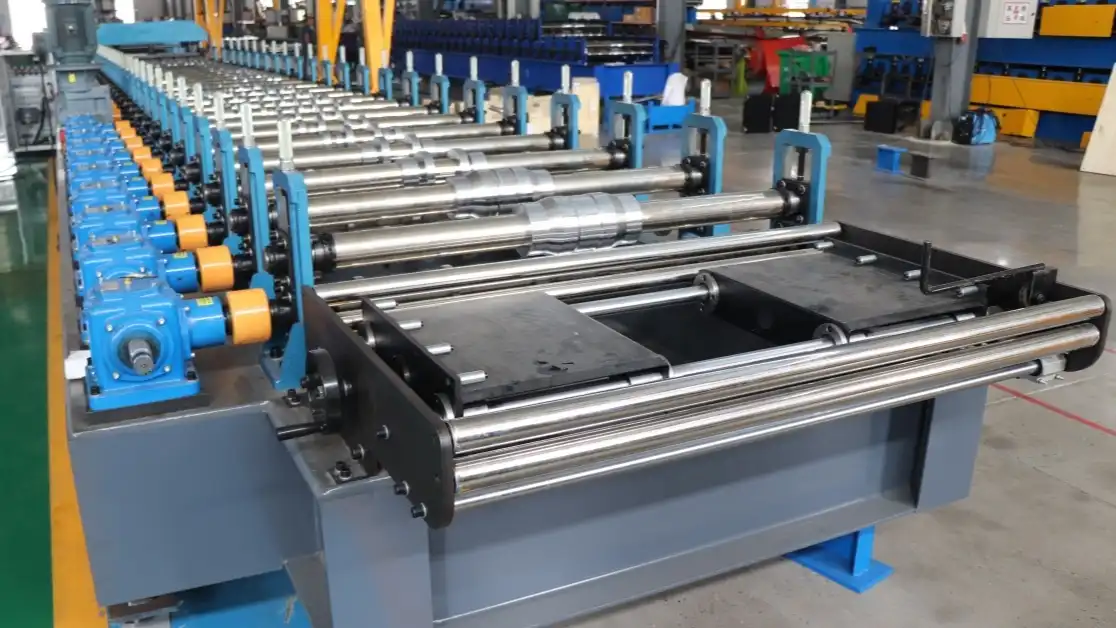
Essential Machine Features Tailored for Small Business Needs
User-Friendly PLC Control Systems
Today's trapezoidal sheet roll forming machine units have programmable logic systems that use touchscreens to handle the whole forming process. Quality PLC systems from companies like Siemens or Mitsubishi let workers enter the length, number, and shape of panels they want without needing a lot of technical training. The driver sets the feeding speed, engages the rollers, and cuts the material with hydraulics so that the length error is always within ±1mm. This level of automation lowers the amount of waste caused by human mistakes and lets less experienced workers do a good job after just a few hours of training.
Compact Footprint and Modular Design
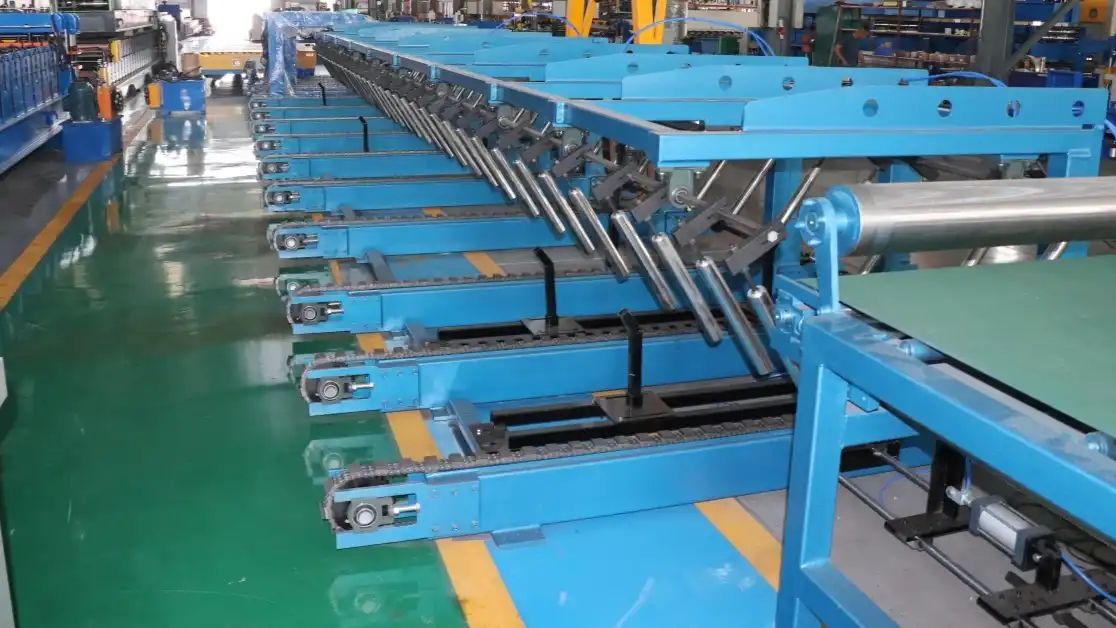
Small businesses that rent space need to be very careful about how they use their space. Well-thought-out machines have decoilers, making stations, and cutting systems all in 8–12 meter lengths and 1.5–2 meter widths. Some makers make equipment in stackable units, so as your business grows, you can add more embossing stations, perforation units, or stacking systems without having to buy big machines all at once. Before you buy anything, you should measure your production area and make sure there is enough room for moving materials on both the input and exit sides.
Maintenance Accessibility and Spare Parts Availability
Small businesses that don't have backup equipment lose money every time their equipment breaks down. Machines with easy-to-reach roller stations, quick-change tools, and standard parts make regular maintenance chores easier. The quality of the roller material is very important—45# forged steel with hard chrome finish (0.05mm thickness) is more resistant to wear than lighter materials. How many spare parts your provider has in stock and how long it takes to send them are both very important. If you have to wait three weeks for new CR12MoV steel cutting blades, your whole business could stop. Make sure parts are available before you commit to a maker. By knowing about these things, small businesses can avoid common mistakes that happen when tools seem like a good deal at first but cause ongoing problems because they are poorly designed or don't have enough support infrastructure.
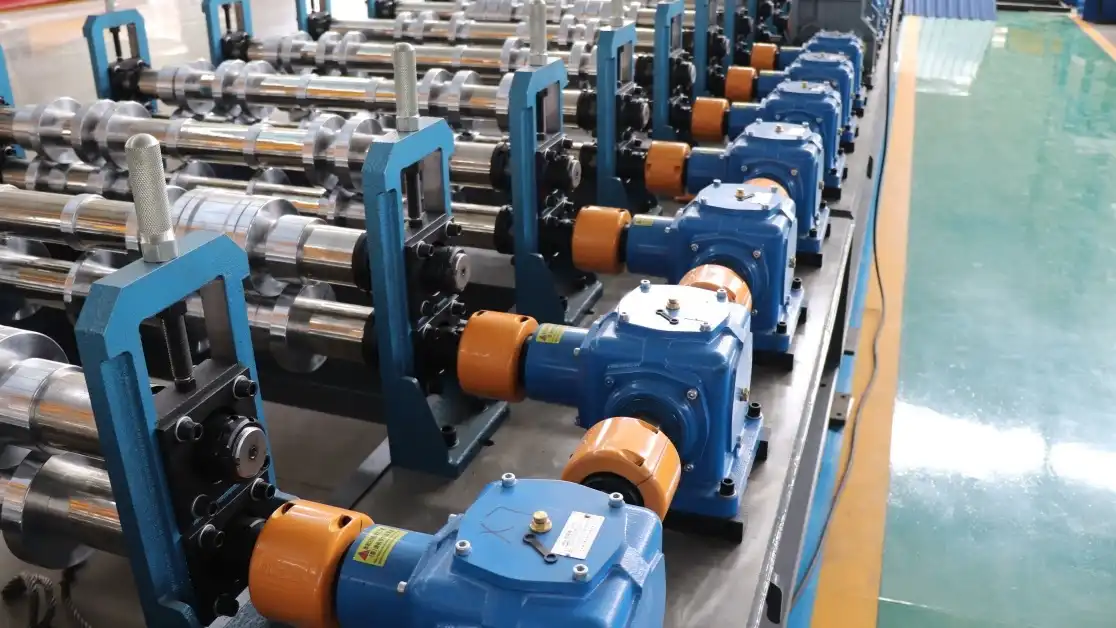
Comparing Top Machines: Making an Informed Purchase Decision
Profile Types and Production Flexibility
When it comes to how they are put together and how they are structurally, trapezoidal sheets are different from curved or sinusoidal shapes. The triangular shape can hold more weight, which makes it perfect for structural panels that span up to 6 feet between supports. Some machines can handle different lengths of input coils. For example, feeding 914mm (36-inch) material could make an R72 profile with 6 waves, a trapezoidal sheet roll forming machine, while feeding 1220mm (48-inch) coils could make an R101 profile with 8 waves. This can be done by making simple changes to the leveling bench. Because it can do two things at once, it doesn't need two separate tools to meet the needs of different customers.
Investment Analysis and Financing Options
Good trapezoidal sheet roll forming machine systems can be bought for anywhere from $15,000 for simple manual systems to $65,000 for fully automatic lines with lots of advanced features. When figuring out the return on investment, you should take into account things like higher production volumes, lower labor costs from technology, and higher scrap rates. A lot of wholesalers offer financial options that are good for small businesses, like lease-to-own programs or payment plans that are broken up into stages based on production goals. The numbers usually show that it's better to buy mid-range tools with good build quality than cheap machines that need to be fixed all the time or high-end systems that don't get used.
Manufacturer Credentials and Customization Capabilities
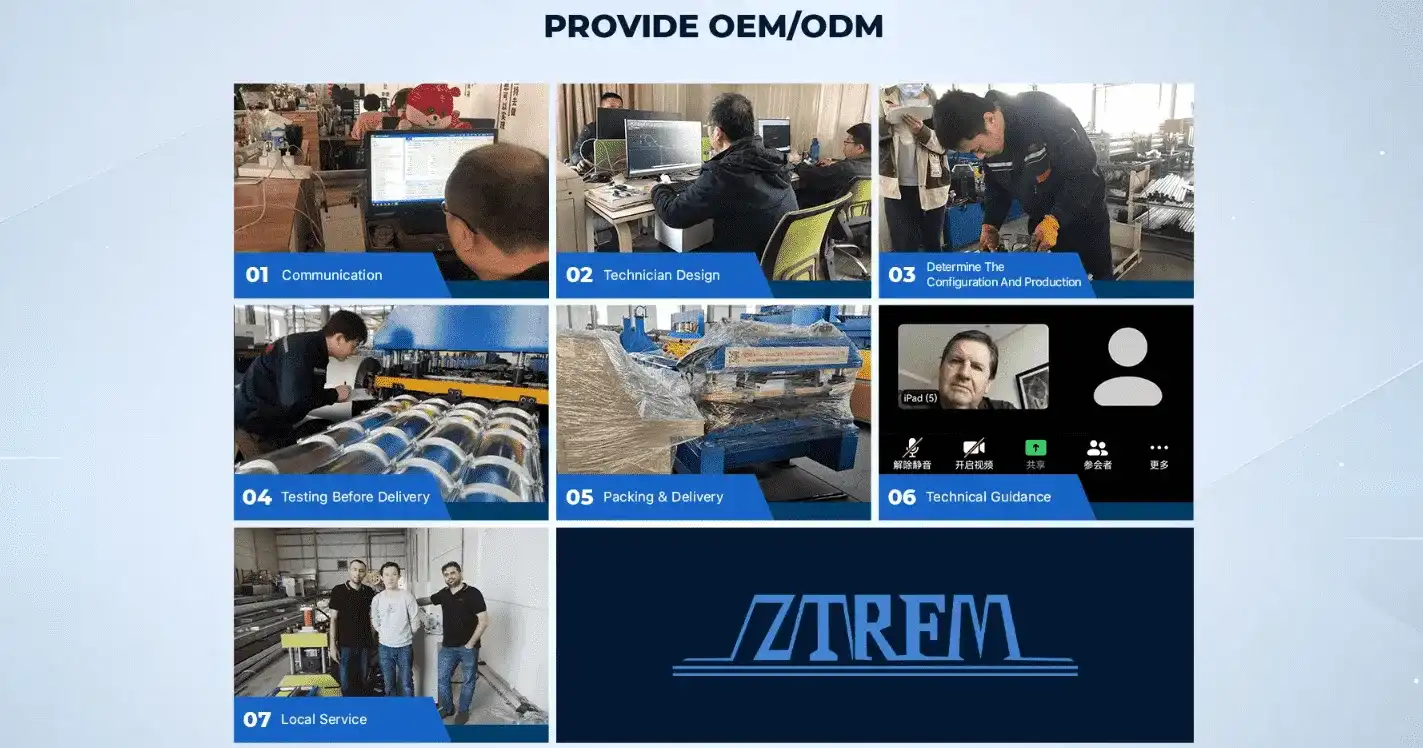
Manufacturers with a good reputation show that they can be trusted by having well-known licenses and track records. Check for the ISO9001 quality control approval, the CE mark for safety, and the CAS verification. Companies that have been around since 2014 or earlier have market stickiness, which means they'll still be around for future help needs. Check to see if the company offers OEM and ODM services, which means they can change the roller stations, machine width, or control systems to fit your unique output needs. Cangzhou Zhongtuo is a good example of this method because it has provided customized solutions to more than 150 countries while keeping a strong foundation for after-sales support. When making your choice, you should think about both your short-term and long-term budgets and working needs. This way, you can be sure that the tools you choose will help your business grow instead of holding it back.
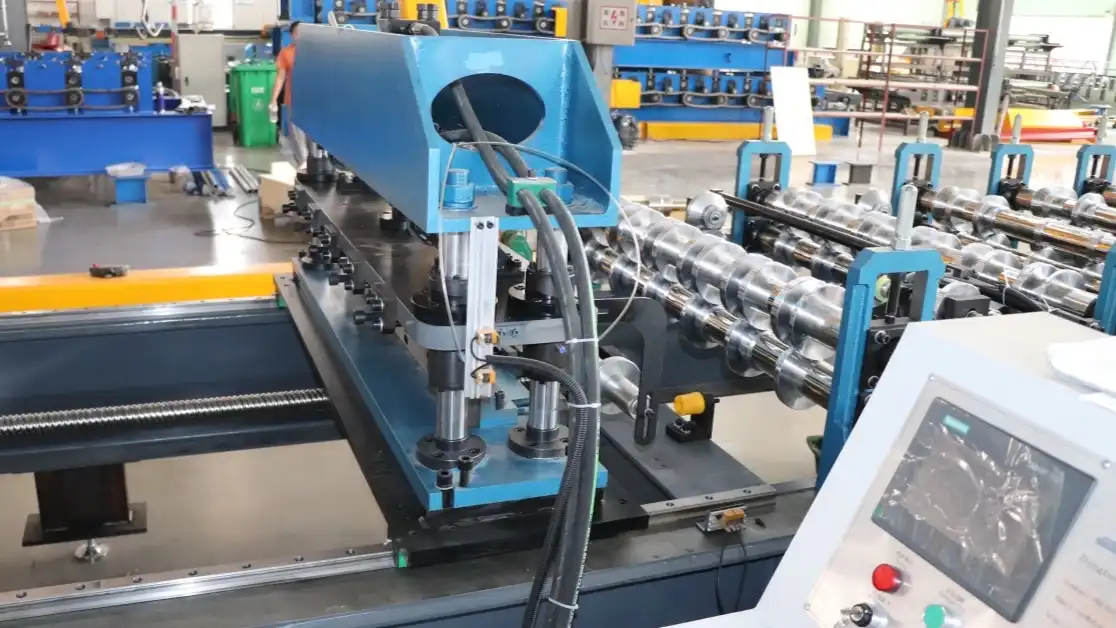
Optimizing Performance and Longevity of Your Machine
Operational Best Practices
Setting up the equipment correctly is the first step to getting the best output and extending the life of the equipment. Check that the material specs match the machine settings before starting a production run. Running 0.8mm steel through rollers that are designed for 0.4mm steel causes the rollers to wear out too quickly and the profile to become distorted. Gradually increasing the forming speed during starting keeps the drive components from being shocked by rapid loads. Operators should keep an eye out for strange noises or sounds that could mean that the bearings are misaligned or worn out and need quick attention. Handling the material correctly keeps the edges of the coils from getting damaged, which can scratch the roller surfaces and lower the quality of the finish on later panels.
Preventive Maintenance Schedules
Setting up regular repair schedules keeps things from breaking down at crucial times for production. Every day, you have to clean metal particles off of roller surfaces and check the amount of hydraulic fluid. Cutting blades should be checked for sharpness once a week. Dull CR12MoV blades make burrs that are bigger than the 0.1mm standard, which can start rust and make handling dangerous. As part of the machine's monthly maintenance, the drive chains are oiled, the shaft run-out is checked with dial indicators (too much run-out causes occasional denting), and the PLC system backups are tested. As part of the annual process, portable tests are used to check the hardness of the rollers against the HRC 58–62 standard, and all making stations are checked for alignment.
Quality Control Integration
Consistently high-quality output keeps customers coming back and cuts down on expensive returns. Stack-testing should be done where manufactured panels are packed together; gaps between stacked sheets show profile inconsistencies that affect how weathertight the panels are when they are placed. Using calipers to check the dimensions makes sure that the rib height, pitch, and effective width match the technical plans. Tracking these measures across production batches helps find roller wear that happens slowly before it affects orders to customers. This way, maintenance can be planned ahead of time instead of having to be done quickly in an emergency. When you follow these steps, your investment in equipment becomes a solid production tool that keeps its value and performance over time.
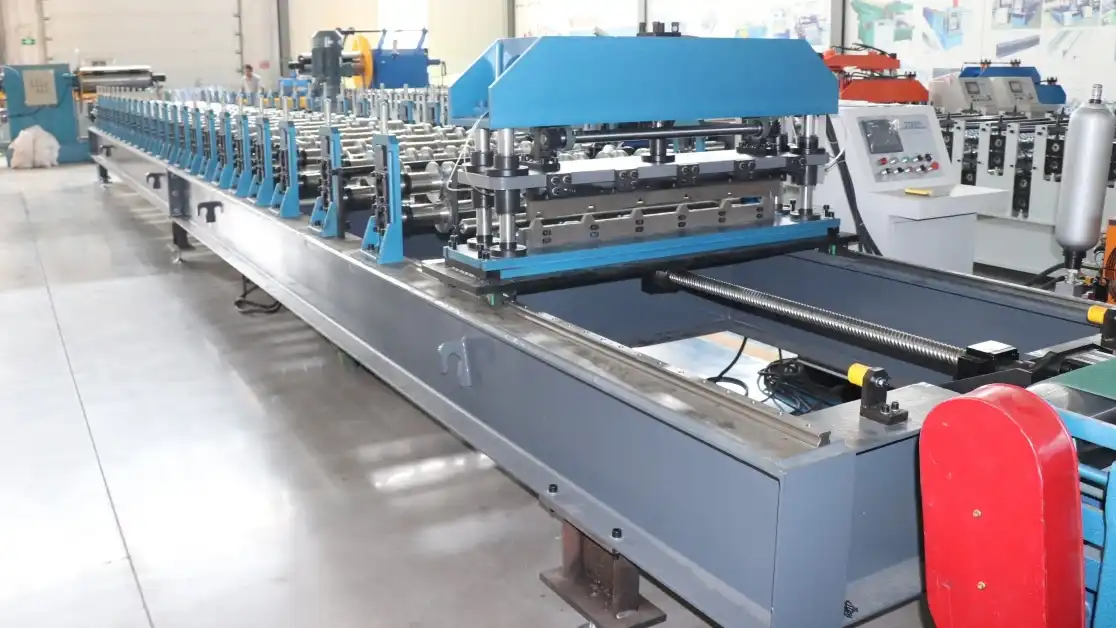
Procurement and After-Sales Support: What to Expect
Selecting Trustworthy Suppliers
Direct connections with manufacturers usually have benefits over networks of distributors, such as better prices, better technical contact, and faster customization. Ask for examples from companies that run similar production scales in similar markets when you're looking at possible suppliers. National high-tech business titles show that a company is financially stable and can innovate, as recognized by the government. When a company has a full online presence with technical documentation, video demos, and thorough specification sheets, it shows that trapezoidal sheet roll forming machine it is open about its business practices.
Warranty Coverage and Service Agreements
Standard guarantees cover motor parts for 12 to 18 months after installation, but make sure you look closely at the parts that aren't covered, like cutting blades and roller surfaces, which wear out quickly. Comprehensive service contracts should include reaction times for technical support questions. For non-emergency problems, 48 to 72 hours is a good range, while critical breakdowns should get same-day online troubleshooting help. Some makers offer video consultation services where techs use smartphone cameras to show your staff how to fix things. This cuts down on downtime by a huge amount compared to waiting for on-site visits. Support in English and contact lines that work with different time zones are very important for small companies in the U.S. that work with manufacturers in other countries.
Training and Technical Documentation
To use tools effectively, you need to be properly trained in more than just simple operation. You should also learn how to fix problems, make adjustments, and do preventative maintenance. Quality providers give full instructions with exploded-view diagrams, upkeep schedules, and how to fix common problems. Your key operators and support staff should be part of the initial training during installation. Video lessons should be recorded so that they can be watched again when staff changes happen. This sharing of information is very helpful when dealing with production problems on your own instead of only using outside expert help. By communicating clearly and making sure everyone understands each other, you can build strong relationships with your suppliers that will help your business grow as production needs change.
Conclusion
Getting the right trapezoidal sheet roll forming machine is important for small businesses that want to grow in the metal roofing market, which is very competitive. The most important features—production speed that matches real volume, material flexibility, easy-to-use controls, and strong construction—have a direct effect on profits by lowering costs and ensuring consistent quality output. Instead of just looking at the purchase price, it's better to look at the total ownership costs, which include things like energy use, upkeep, and provider support. As your customer base grows, machines that can handle different thicknesses and widths give you more operating freedom, and PLC automation means you don't need as many highly skilled workers. When you work with well-known makers that offer customization options and full after-sales support, buying equipment stops being a one-time cost and turns into an investment that helps you compete in your market.
FAQ
1. What material types can trapezoidal roll forming machines process?
PPGI (pre-painted galvanized steel), normal GI (galvanized steel), and aluminum coils with a thickness of 0.3mm to 1.0mm can all be handled by quality trapezoidal sheet roll forming machine tools. The material's width usually fits 1000mm or 1250mm coils, and some types can handle both widths by adjusting the levels. The type of material you choose relies on the market you're trying to reach. For example, lighter gauges are usually used for household roofing, while thicker specifications may be needed for business purposes to handle more weight.
2. How do I determine appropriate automation levels for my production volume?
Businesses that make less than 1,000 square meters of goods a week often get good results with semi-automated systems that have human decoiling and PLC-controlled making and cutting. Fully automated lines, such as driven decoilers and automatic stacking systems, help operations that cover more than 2,000 square meters per week. The choice to automate should take into account the cost of labor savings and the cost of new equipment, as well as the pay rates in your area and the expected growth in production over the next three to five years.
3. What strategies minimize downtime and maintenance costs?
Most unexpected breaks can be avoided by setting up daily cleaning plans, weekly blade checks, and monthly lubrication programs. Keeping in touch with suppliers who keep important extra parts in stock and can ship them quickly cuts down on the time it takes to fix problems when they happen. Teaching several employees basic fixing and adjustment steps creates operational support in case key people aren't available, which keeps production going while regular maintenance tasks are being done.
Partner with ZTRFM for Your Trapezoidal Sheet Roll Forming Machine Needs
Choosing the right provider for your trapezoidal sheet roll forming machine will decide whether your investment helps your business grow or causes ongoing problems with operations. Since 2014, ZTRFM (Cangzhou Zhongtuo Roll Forming Machinery) has been creating and making cold roll forming equipment. We've become a national high-tech company by constantly coming up with new ideas and providing solutions that are focused on our customers. Our trapezoidal forming machines have strong 350 H steel frames, carefully designed 45# steel rollers that are hard chrome-plated, and dependable PLC control systems that keep length accuracy within ±1mm even on production runs of up to 60 meters per minute. We can fully customize your OEM or ODM order by changing the machine width, roller setups, and material specs to fit your exact production needs. Our quality standards are backed by ISO9001, CE, and CAS certifications, and our projects have been successful in more than 150 countries. We bring this experience to every relationship with a client. Our full support includes training for operators, specific technical documents, and quick help after the sale to make sure your equipment works at its best for as long as it's supposed to. Email our team at zhongtuorollforming@gmail.com to talk about your unique output goals and get a proposal for the right equipment. As a well-known company that has worked with both small and large businesses for a long time, we can help you choose the best setup for your trapezoidal sheet roll forming machine based on your needs, your budget, and your ability to grow in the future.
References
1. Smith, J.R. & Thompson, M. (2021). Cold Roll Forming Technology: Principles and Applications in Modern Manufacturing. Industrial Press Publications.
2. American Iron and Steel Institute. (2022). Steel Framing Industry Technical Standards for Roll-Formed Profiles. AISI S240-20 Specification.
3. Chen, W.H. (2020). "Optimization of Roll Forming Process Parameters for Trapezoidal Profiles." Journal of Materials Processing Technology, 285, 116-127.
4. National Roofing Contractors Association. (2023). Metal Roofing Systems: Design, Installation and Performance Standards. NRCA Technical Manual.
5. Rodriguez, A. & Kim, S. (2022). "Economic Analysis of Automated Roll Forming Systems for Small-Scale Metal Building Component Manufacturers." International Journal of Production Economics, 241, 108-119.
6. Machinery's Handbook Editorial Team. (2023). Machinery's Handbook 31st Edition: Guide to Metal Forming Equipment Selection and Maintenance. Industrial Press Inc.
_1750323743240.webp)