- English
- French
- German
- Portuguese
- Spanish
- Russian
- Japanese
- Korean
- Arabic
- Irish
- Greek
- Turkish
- Italian
- Danish
- Romanian
- Indonesian
- Czech
- Afrikaans
- Swedish
- Polish
- Basque
- Catalan
- Esperanto
- Hindi
- Lao
- Albanian
- Amharic
- Armenian
- Azerbaijani
- Belarusian
- Bengali
- Bosnian
- Bulgarian
- Cebuano
- Chichewa
- Corsican
- Croatian
- Dutch
- Estonian
- Filipino
- Finnish
- Frisian
- Galician
- Georgian
- Gujarati
- Haitian
- Hausa
- Hawaiian
- Hebrew
- Hmong
- Hungarian
- Icelandic
- Igbo
- Javanese
- Kannada
- Kazakh
- Khmer
- Kurdish
- Kyrgyz
- Latin
- Latvian
- Lithuanian
- Luxembou..
- Macedonian
- Malagasy
- Malay
- Malayalam
- Maltese
- Maori
- Marathi
- Mongolian
- Burmese
- Nepali
- Norwegian
- Pashto
- Persian
- Punjabi
- Serbian
- Sesotho
- Sinhala
- Slovak
- Slovenian
- Somali
- Samoan
- Scots Gaelic
- Shona
- Sindhi
- Sundanese
- Swahili
- Tajik
- Tamil
- Telugu
- Thai
- Ukrainian
- Urdu
- Uzbek
- Vietnamese
- Welsh
- Xhosa
- Yiddish
- Yoruba
- Zulu
Understand the Basics of Cable Tray Roll Forming Machine
To make metal cable handling systems more efficient, a cable tray machine is the best tool for the job. The constant, automatic process of this specialized roll-forming equipment makes cable trays out of raw metal strips that are mostly made of coated steel, cold-rolled steel, or stainless steel. The cable tray machine cuts, decoils, punches, and rolls the metal, so it doesn't have to be bent by hand. It also makes shapes that are the right size and meet strict standards for electrical infrastructure. When people who work in buying know how this technology works, they can make choices that make production better and more efficient.
What Is a Cable Tray Roll Forming Machine and How Does It Work?
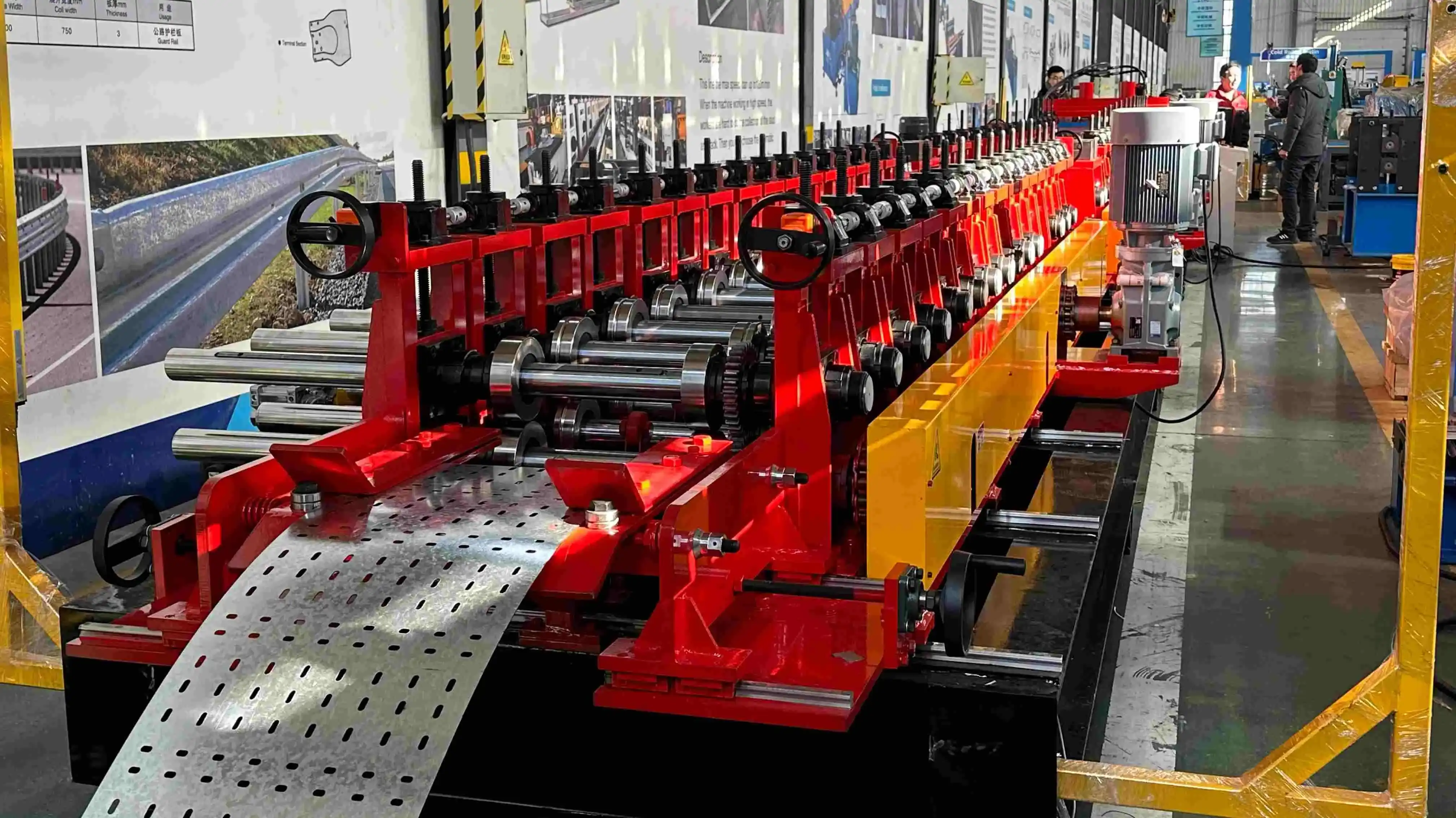
A cable tray roll-making machine is made to take flat metal sheets and shape them into three-dimensional structures that can hold wires. Progressive metal bending is used in this process. Carefully designed making stations shape the material without affecting its structural integrity.
Core Components and Operation
The machine is made up of several connected units that work together. The process starts with a decoiling unit that can handle coils that weigh up to 5 tons. As the material goes into the leveling area, it stays under strain. This step gets rid of any remaining stress and flattens the steel, which keeps it from twisting and ensures the quality of the result.
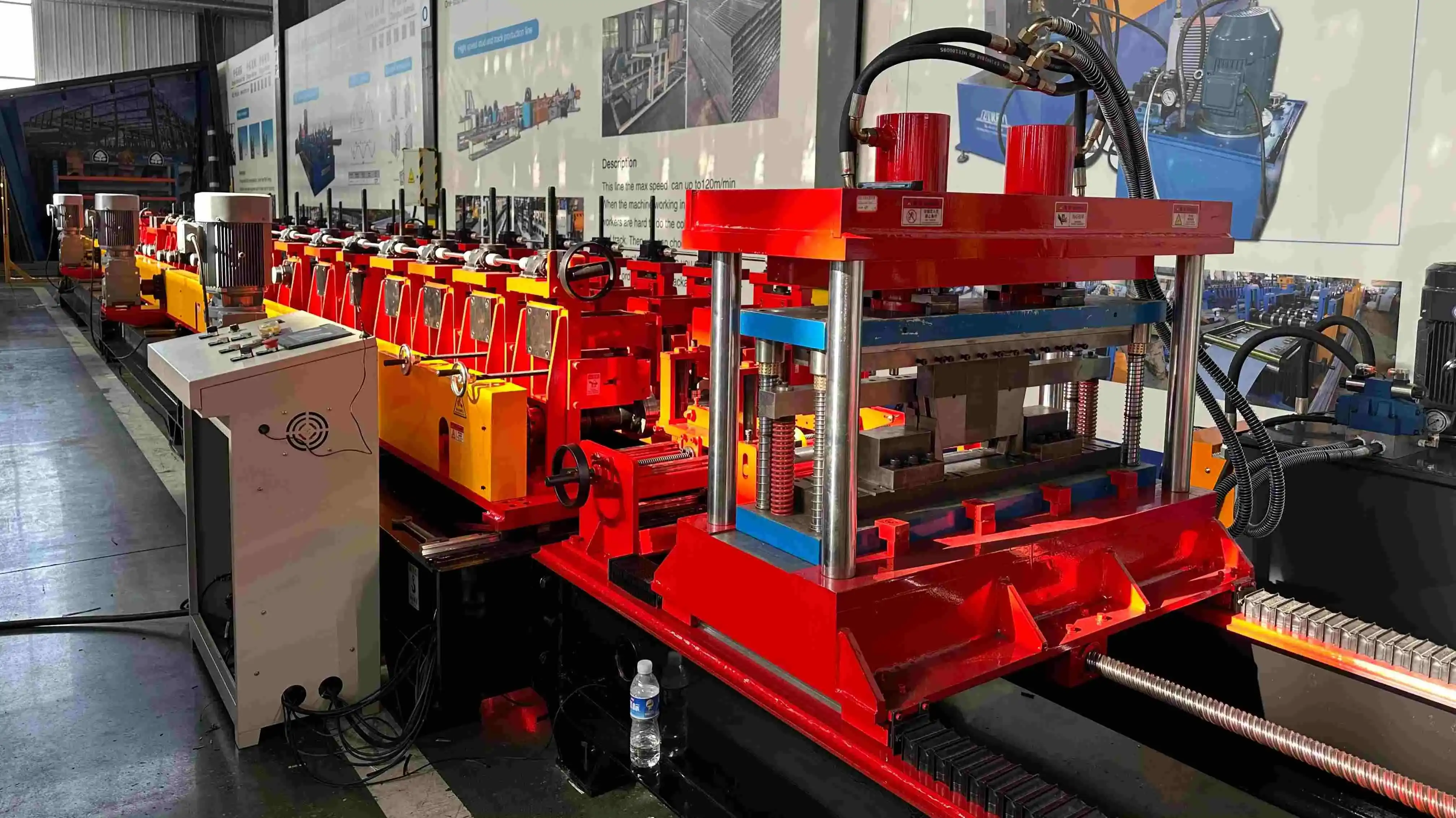
The material is then flattened and put through a hydraulic cutting press, which makes slots and holes based on the design. The dies are made of sharpened Cr12 steel and make clean holes that are needed for fitting and breathing. Modern systems have blades that can be adjusted, which lets the size of the wire tray be changed quickly without having to replace the dies.
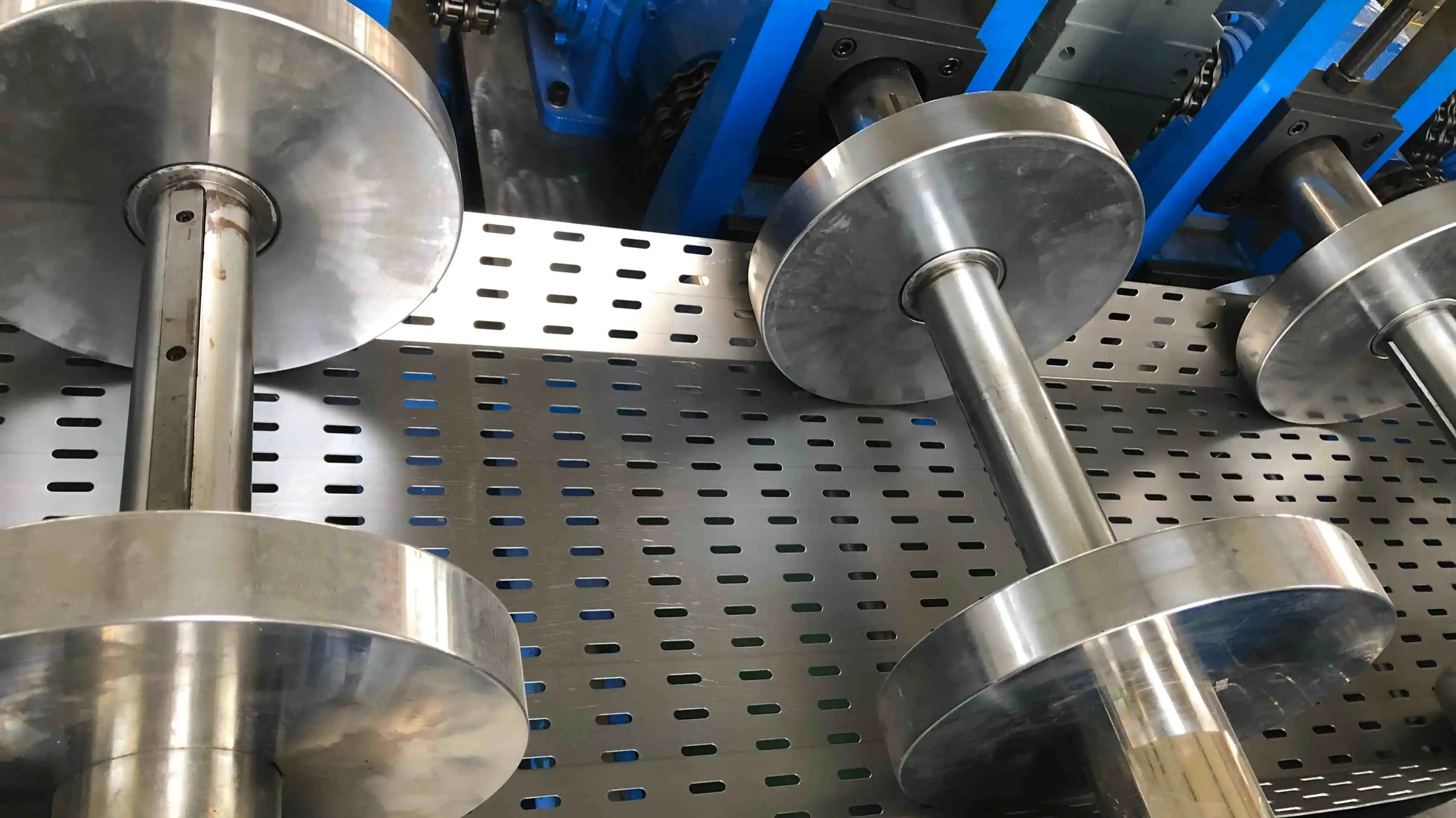
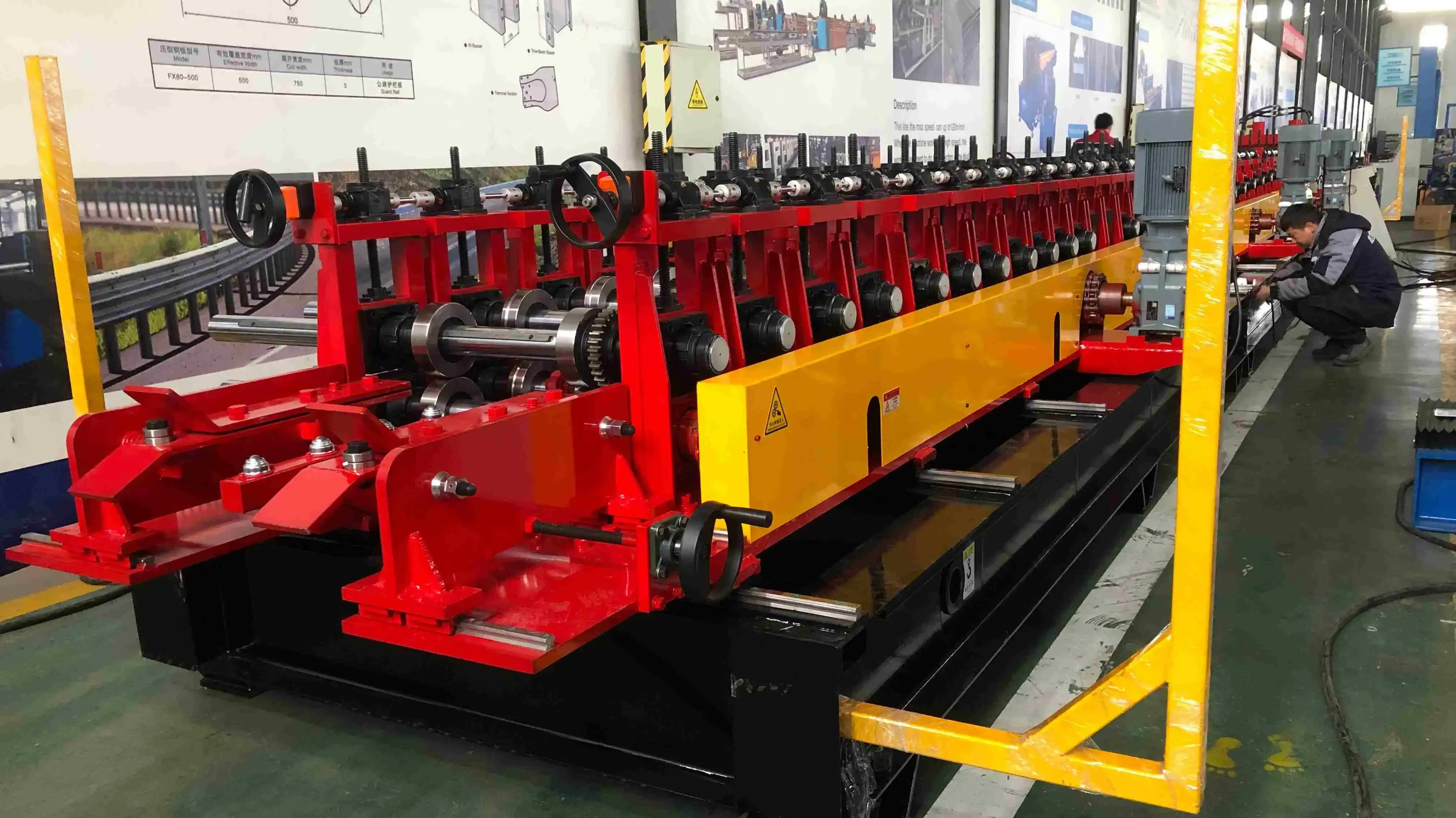
In the roll forming section, 14 sets of roller planes slowly bend the metal strip into the shape of a U-channel or a C-channel. The long-lasting chrome-plated GCr15 bearing steel used to make these rollers evenly distributes forming stress so that the steel doesn't crack. When working with heavy-gauge materials, the width of the roller tracks is very important for the process to be accurate and stable.
Automation and Control Systems
Machines that make cable trays can be automated in different ways to meet different output needs. Handwheels let workers change the width settings on manual systems, which makes them a cost-effective choice for smaller makers. Motorized changes in semi-automatic setups make them more efficient while still letting a user keep an eye on things.
The most efficient production lines are fully robotic and use PLC control systems to run the whole process, from bringing in materials to placing finished boxes. Touchscreens let operators set the lengths of the trays, the designs of punches, and the order of cuts. The hydraulic cutting tool makes sure that the cuts are accurate and leave few burrs, which makes fitting safer.
Automation makes things more consistent and faster. Integrated control systems make sure that the pressure is the same at all roller stations, which keeps size differences to a minimum. Real-time tracking picks up changes in the thickness of the material and instantly moves the rollers to keep production running smoothly.
Production Specifications and Material Compatibility
Cable tray machines can usually handle materials that are between 1.0 mm and 3.0 mm thick and have yield pressures of up to 550 MPa. Production speeds range from 10 to 25 meters per minute, depending on the thickness of the material and the number of holes. High-speed types are best for projects with a lot of work.
These tools can work with different kinds of steel and surface processes. Pre-galvanized steel works well in normal conditions, while hot-dip galvanized materials are better at resisting rust in tougher settings. Stainless steel is great for uses that need clean surfaces, like those that process food and drugs. Production is flexible because it's easy to make changes for different layers of material.
Types, Features, and Industry Applications of Cable Tray Machines
Cable tray machines come in various types, each designed to address specific production needs. Understanding these differences helps buyers choose systems that align with their business goals.
Equipment Classification
Cable tray manufacturing equipment can be categorized into several groups based on functionality. Standard machines produce solid-bottom and perforated trays with fixed width ranges, making them suitable for businesses seeking consistency. These machines are cost-effective and reliable, attracting small and emerging businesses.
High-speed production lines, including the cable tray machine, utilize advanced servo-driven punching systems to enhance output without compromising accuracy. These systems can produce complex hole patterns at speeds exceeding 30 strokes per minute, ideal for companies working on data center projects requiring high-density ventilated trays.
The most sophisticated option is a flexible manufacturing system, which allows for duplex roll forming to create trays of varying sizes on a single line. Controlled by servo motors and linear rails, these systems enable quick adjustments between profiles ranging from 100 mm to 900 mm wide. This flexibility simplifies inventory management and allows manufacturers to efficiently respond to custom orders.
Cable ladder machines differ from tray formers by producing side rails and rungs separately, which can be assembled into ladder-style supports. While both trays and ladders organize cables, ladders are better suited for heavy industrial cables, whereas trays protect sensitive wiring in commercial settings.
Key Features for Production
Several engineering factors affect how well and how long cable tray machines last in tough conditions. How the machine frame is built is very important for keeping it stable and reducing vibrations. Welded steel frames make the machines sturdy, which keeps the rollers in place during constant use and reduces the number of flaws in long products.
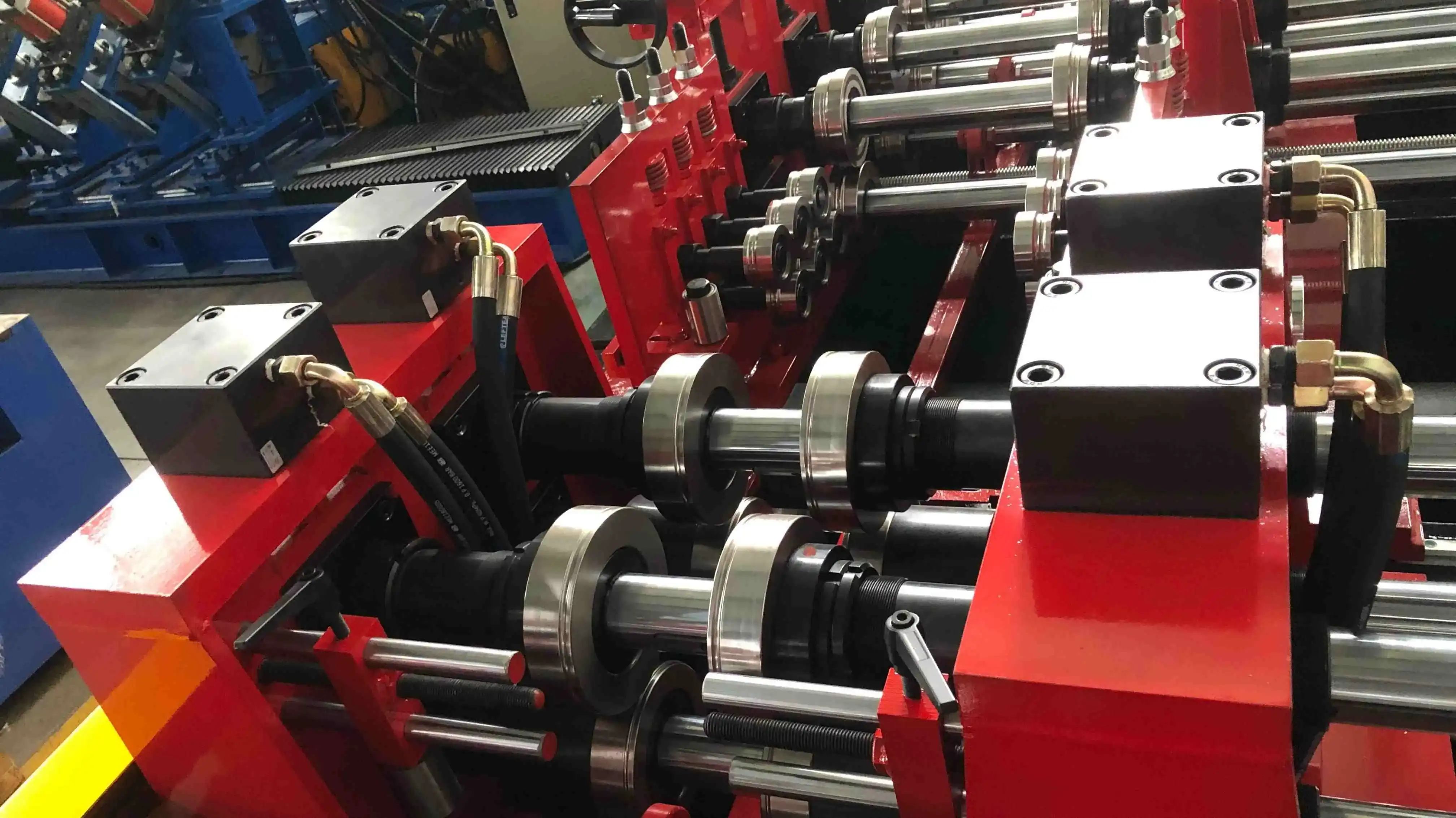
It is very important that the rollers are of good quality. High-end machines use GCr15 bearing steel rollers, which stay hard after being treated, so they last longer even on rough metal surfaces. Hard chrome finishing shields the zinc covering even more from damage and wear during the forming process.
The way cutting tools are made affects both the quality of the product and how well they work. Hydraulic shear systems keep the cutting force constant, which makes lines that are smooth and free of burrs. Flying shear designs let you cut continuously, so you don't have to stop and start, which slows down work.
Industry Applications
Cable boxes made by rolling are used in many different businesses. Power plants need heavy-gauge trays that can hold high-voltage wires. These trays are usually made of steel that is 2.5 mm to 3 mm thick. For telecommunications, precise cutting designs are needed to make open trays that let air flow around sensitive electronics.
Standard-gauge steel trays are strong and affordable for most electrical systems in business buildings. The equipment for this section strikes a good mix between speed and the ability to make normal lengths of 200 mm, 300 mm, and 400 mm.
Picking the right materials is important for both performance and ease of production. Galvanized steel is the most popular because it doesn't rust and is cheap. To keep the zinc layer safe while it's being formed, you need clean rollers and the best forming processes. Aluminum trays are lighter than steel trays, so they can be used in older buildings that have weight limits. However, the roller forces need to be carefully adjusted to keep the trays from deforming.
Maintenance and Safety Standards
Regular repair is needed to keep output going so that machines work at their best and don't break down when they're least expected. To keep the forming pressure from being uneven, shaft run-out tolerances should be checked during roller checks. Automatic lubrication systems protect bearing units and reduce the amount of work that needs to be done by hand.
To keep cutting performance stable, hydraulic systems need to have their fluids cleaned and their pressure stabilized. Hydraulic parts last longer when they are checked for oil and filters on a regular basis.
When roll-forming, safety steps are very important. Along the production line, emergency stop systems must be easy to get to, and pinch point guards must be in place to keep workers safe from moving parts. By getting CE approval, you can be sure that you're following international safety standards and that safety measures meet strict legal requirements.
How to Choose the Right Cable Tray Roll Forming Machine for Your Business?
Selecting the appropriate roll-forming equipment requires careful consideration of your long-term business goals, operational constraints, and production objectives. Manufacturers must balance short-term budget limitations against the anticipated costs and growth potential throughout the product's lifecycle.
Aligning Equipment with Production Needs
Assessing production estimates is essential when choosing the right equipment. For manufacturers targeting regional markets with moderate demand, standard-speed cable tray machines are often sufficient to get started. These systems typically cost 30–40% less than high-speed alternatives and are effective for businesses operating one shift.
For companies anticipating rapid growth, investing in expandable equipment is crucial. Semi-automatic systems can be upgraded over time, such as adding servo controls for pneumatic or hydraulic adjustments. This staged investment approach maximizes capital efficiency while maintaining options for future expansion.
Large-scale manufacturers serving national or international markets require fully automated production lines that can operate continuously across multiple shifts, such as a cable tray machine. Though these systems have higher initial costs—often two to three times that of basic models—they significantly reduce labor expenses and increase throughput. A fully automatic line can perform the work of multiple traditional systems, dramatically lowering per-unit labor costs and improving consistency.
Energy Efficiency and Operating Costs
Production costs are heavily influenced by equipment energy consumption, particularly in regions with high electricity rates. Hydraulic systems often use power consistently, even when idle. In contrast, servo-driven systems only consume energy during operation, potentially reducing electrical costs by 25–35%.
The energy required correlates with forming speed and punching frequency. Faster production rates necessitate higher hydraulic flow rates and motor power, which can increase operational costs. Manufacturers should identify the optimal production rate where speed improvements do not lead to excessive energy expenditures.
Supplier Reliability and Support
Equipment longevity and reliability depend on the manufacturer's support capabilities. Prospective buyers should research suppliers' track records and seek evidence of successful installations in similar production settings. Suppliers with international experience demonstrate their ability to provide timely technical assistance regardless of location.
Warranties reflect manufacturer's confidence in their products. Coverage lasting 12 to 18 months is typical, protecting customers during the critical commissioning phase. Extended warranties may be beneficial for companies lacking the expertise to address complex mechanical issues.
Training and Documentation Quality
Operator skill directly impacts productivity and equipment lifespan. Comprehensive training programs covering setup, maintenance, troubleshooting, and safety are vital for efficient operations. Suppliers offering extensive on-site training demonstrate their commitment to successful implementation.
Moreover, the quality of technical documentation varies among suppliers. Detailed manuals with diagrams and schematics aid maintenance staff in diagnosing and resolving issues quickly. Multilingual documentation is especially beneficial for international teams.
The Cable Tray Machine Manufacturing Process and Automation Advantages
To keep an eye on quality and make things run more smoothly, it's important to understand how cable trays are made. Modern production of wire trays shows how combined technology can turn raw materials into polished goods with little help from people.
Production Workflow Overview
At the decoiling station, raw material coils are put on mandrels that can hold 3 to 5 tons. This is where the production process starts. The coil is held in place by hydraulics, and materials are fed into the production line at speeds that are coordinated. During making, tension limits keep things from sliding and make sure they are lined up correctly.
The material then goes to the leveling unit, which has small-diameter rollers that get rid of the coil set, which is the curve left over from wrapping. This step of leveling is very important for keeping the sizes correct because flatness has a direct effect on how well the trays are shaped and how straight they are when they are finished.
The strip is leveled before going into a robot cutting press, which makes holes and slots according to patterns that have already been set. Servo motors make sure that the dies are placed precisely, to within ±0.5 mm. Hardened Cr12 steel dies make clean holes that don't tear or bend the edges.
After being punched, the material moves on to the roll-making section, which has 14 stations that slowly make the flat strip into a wire tray. This way of gradually shaping spreads stress evenly, which stops work hardening that could lead to breaking.
After being shaped, the tray is moved to a hydraulic cutting station. There, shear blades can be programmed to change length through PLCs, which means that unique shapes can be made without having to make any mechanical changes. The cutting method keeps the standard the same over long runs.
Lastly, finished trays are either put on run-out tables or moved by automatic stacking systems. This cuts down on the amount of work that needs to be done by hand, saves money on labor, and keeps damage to a minimum while the trays are being moved.
Quality Control Integration
At key places in the production process, quality checks are done. Initial checks make sure that the material size and finish are correct, which stops the processing of damaged coils. In-process tracking finds problems like worn punches during punching, making sure that quality is always the same.
Dimensional proof checks the profile's lengths after it has been formed, and load tests make sure the structure is strong enough to meet standards. Statistical process control finds patterns in dimensions so that changes can be made ahead of time to keep quality high.
Economic Impact of Automation
Integrated automation, including the cable tray machine, significantly enhances productivity, reducing direct labor needs by 60–75% compared to manual operations while increasing output. For medium-volume manufacturers, these labor savings often justify the investment in automation within 24 to 36 months.
Automation also improves consistency, reducing waste and rework costs. By minimizing size variations, automatic systems enhance product uniformity, leading to less scrap material and greater overall efficiency.
Moreover, quick-changeover systems facilitate rapid adjustments between product specifications, boosting flexibility and supporting just-in-time delivery models that lower inventory costs.
Emerging Technologies and Sustainability
Industry 4.0 concepts are increasingly influencing cable tray manufacturing. IoT sensors monitor production metrics and machine performance, allowing for proactive maintenance and improved decision-making via cloud-based dashboards.
Sustainability also plays a pivotal role in equipment design and material selection. Energy-efficient systems and optimized processes reduce electricity usage and material waste, ultimately benefiting both the environment and production costs. Companies that demonstrate sustainability improvements gain a competitive advantage in the market.
Conclusion
Cable tray roll Forming machines are important investments for companies that want to serve the growing global market for electrical infrastructure. Using integrated automated processes that are more consistent than manual fabrication methods, the technology turns raw metal coils into precisely formed cable management products. To choose the right equipment, you need to carefully look at the production needs, the suppliers, and the total costs, which include more than just the initial purchase price. Modern systems with servo controls, programmable automation, and quick-changeover options give businesses the operational flexibility they need to meet a wide range of customer needs while still keeping production costs low. When manufacturers work with experienced suppliers, they get access to tried-and-true technology and ongoing support that makes sure their equipment works well, and their businesses do well for a long time.
FAQ
1. What factors determine whether I need a manual or fully automatic cable tray forming system?
The main things that affect the decision are the amount of production and the cost of labor. Manual systems work best for businesses that make less than 500 tons a year and don't mind the inefficiencies of manual labor. When annual production goes over 1,500 tons or when labor costs make up more than 20% of manufacturing costs, fully automatic configurations become economically viable. The complexity of the product mix also affects automation decisions. For example, manufacturers that make 10 or more different tray sizes benefit a lot from automatic changeover systems that cut down on the time needed to set up between production runs. This calculation is also affected by the availability of skilled operators. Places with a shortage of technical workers may prefer automated systems that don't need as many specialized workers.
2. How often does maintenance need to be done on a cable tray machine, and what does normal maintenance include?
Every day, maintenance tasks like checking the roller surfaces visually and making sure the lubrication system works take about 15 to 20 minutes per shift. Checking the level of: hydraulic fluid level checks, cutting blade inspection, and electrical connection verification, consuming 1-2 hours. Monthly maintenance encompasses detailed roller alignment verification, hydraulic filter replacement, and control system diagnostics, typically requiring 4-6 hours of downtime. Annual overhauls include bearing replacement, hydraulic seal renewal, and comprehensive calibration, demanding 2-3 days of scheduled maintenance. Following this regimen maintains optimal performance and extends equipment life beyond 15 years of continuous operation.
3. Can cable tray forming machines be customized to produce unique profile designs for specialized applications?
Customization capabilities depend on profile complexity and production volume requirements. Standard machines accommodate width variations and perforation pattern changes through programmable controls and adjustable tooling. Unique cross-sectional profiles require a custom roller design, representing a significant engineering investment, economically justified for production volumes exceeding 200 tons annually. Reputable manufacturers maintain design engineering departments capable of developing specialized forming sequences and tooling configurations. The customization process typically involves profile analysis, roller design, prototype production, and testing—requiring 8-12 weeks from specification approval to production-ready equipment delivery.
Get Started with Your Cable Tray Production Line from ZTRFM
Maximizing your cable management system manufacturing capabilities demands a partnership with a proven Cable Tray Machine supplier. ZTRFM, backed by Cangzhou Zhongtuo's decade of cold Roll Forming expertise, delivers engineered solutions tailored to your specific production requirements. Our ISO9001 and CE-certified equipment combines precision engineering with reliable performance, supported by comprehensive global after-sales service spanning 150+ countries. Whether you're launching startup operations or expanding existing capacity, our technical team provides customized recommendations balancing productivity, automation levels, and investment parameters. Contact zhongtuorollforming@gmail.com today for detailed technical specifications, production samples, and competitive quotations.
References
1. Smith, J.R., & Williams, K.L. (2021). Advanced Metal Forming Technologies for Electrical Infrastructure Components. Industrial Press Publishing.
2. Chen, M., Kumar, P., & Zhang, H. (2022). "Roll Forming Process Optimization for Cable Tray Manufacturing." Journal of Manufacturing Processes and Systems, 45(3), 287-304.
3. International Electrotechnical Commission. (2020). IEC 61537: Cable Management - Cable Tray Systems and Cable Ladder Systems. Geneva: IEC Publications.
4. Rodriguez, A.F. (2023). Industrial Roll Forming: Equipment Selection and Process Design. McGraw-Hill Professional Engineering.
5. National Electrical Manufacturers Association. (2022). NEMA VE 1: Metal Cable Tray Systems. Rosslyn, VA: NEMA Standards Publication.
6. Thompson, D.W., & Park, S.H. (2021). "Automation Integration in Cold Roll Forming Operations: Economic Analysis and Implementation Strategies." International Journal of Production Economics, 238, 108-167.
_1750323743240.webp)