- English
- French
- German
- Portuguese
- Spanish
- Russian
- Japanese
- Korean
- Arabic
- Irish
- Greek
- Turkish
- Italian
- Danish
- Romanian
- Indonesian
- Czech
- Afrikaans
- Swedish
- Polish
- Basque
- Catalan
- Esperanto
- Hindi
- Lao
- Albanian
- Amharic
- Armenian
- Azerbaijani
- Belarusian
- Bengali
- Bosnian
- Bulgarian
- Cebuano
- Chichewa
- Corsican
- Croatian
- Dutch
- Estonian
- Filipino
- Finnish
- Frisian
- Galician
- Georgian
- Gujarati
- Haitian
- Hausa
- Hawaiian
- Hebrew
- Hmong
- Hungarian
- Icelandic
- Igbo
- Javanese
- Kannada
- Kazakh
- Khmer
- Kurdish
- Kyrgyz
- Latin
- Latvian
- Lithuanian
- Luxembou..
- Macedonian
- Malagasy
- Malay
- Malayalam
- Maltese
- Maori
- Marathi
- Mongolian
- Burmese
- Nepali
- Norwegian
- Pashto
- Persian
- Punjabi
- Serbian
- Sesotho
- Sinhala
- Slovak
- Slovenian
- Somali
- Samoan
- Scots Gaelic
- Shona
- Sindhi
- Sundanese
- Swahili
- Tajik
- Tamil
- Telugu
- Thai
- Ukrainian
- Urdu
- Uzbek
- Vietnamese
- Welsh
- Xhosa
- Yiddish
- Yoruba
- Zulu
Durable Trapezoidal Roll Forming Machine for Industrial Use: Choosing the Right Equipment
To choose the best trapezoidal roll-making machine for your business, you need to carefully consider a number of technical and operational factors. Precision roll forming technology is used by these specialized tools to turn flat metal coils into better-built rectangular shapes. Manufacturers can get regular production output while getting the most out of their equipment investment if they know the key specs, performance capabilities, and longevity features. Modern trapezoidal roll forming systems are more automated, let you change the size of the profiles, and use less energy, so they can be used in a wide range of commercial settings.
Understanding Trapezoidal Roll Forming Machines Core Functionality and Industrial Applications
Trapezoidal roll forming machines work by moving flat coils of steel or aluminum through a series of forming stations in a certain order. At each station, the material is bent more and more until it has the desired rectangular shape. This ongoing process keeps the outline measurements the same even when it's working at high speeds.
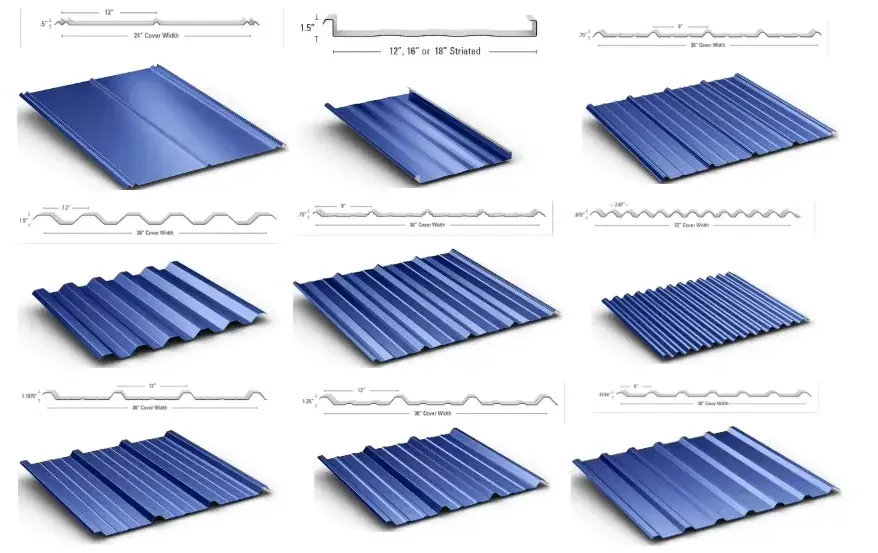
This technology is great for making parts of buildings, wall coverings, and roofs that need to be strong but not heavy. It is better for business building projects to use triangular forms instead of flat walls because they can hold more weight. There is less stress on the top of the panel because the structure is curved. This means that the building needs less stuff to stay strong.
These days' tools can handle a lot of different layers of metal, like 24 and 22 Tru-Gauge steel and .032-inch aluminum. Normal panels can be made in lengths from 3 feet to 20 feet 10 inches, and with the right tools, long flashings can be made up to 20 feet 11 inches long. These panels can be put up either vertically or horizontally, and they can be used on walls and roofs. The whole thing can span up to 6 feet between the supports.
Machine Types and Technical Specifications
Understanding the differences between roll-making methods is helpful for manufacturing processes. Heavy-duty industrial uses can benefit from hydraulically driven machines because they can shape thicker materials and more complicated shapes with great force. Electric motor systems let you precisely control the speed and use less energy, making them perfect for medium-sized production runs with regular material requirements.
The most advanced technology is servo motor-driven equipment, which can quickly switch between different profile setups and offer customizable accuracy. These systems work well with automatic systems for moving materials and checking for quality, which cuts down on the need for workers and makes production more consistent.
The speed of production changes a lot between machine types, from 30 to 150 feet per minute, based on the thickness of the material and the complexity of the shape. More advanced machines have PLC control systems with tablet displays that let workers quickly change settings and save many profile setups for quick changeovers.

Key Factors to Consider When Choosing Your Equipment
Production Volume and Operational Requirements
Looking at current and expected output rates is the first step in figuring out the best way to set up your trapezoidal roll forming machine tools. Even though they cost more at first, faster, more automatic methods are better for producers who make a lot of things. Within 18 to 24 months of operation, the extra money spent is usually back on its own thanks to higher efficiency and less need for workers.
Total output changes a lot when things can be moved around. People don't have to do as much work when machines have automatic decoiling systems, shaping units, and cut-to-length features. The quality of the result stays good. In order to choose the right machine size and output, you should think about how much material and how many produced goods your building can hold.
Quality standards also affect the choice of tools. For tasks that need precise measurements and a smooth surface, tools with advanced making station design and precise control systems are needed. For building projects with strict design requirements, it's common to need tools that can keep profile measurements within ±0.5 mm error ranges.
Performance Metrics and Cost Considerations
When you look at a machine's success, you have to look at a lot of different, linked things that go beyond the initial buy price. Energy use, upkeep needs, and worker economy are all examples of operating costs. Modern servo-driven systems usually use 20–30% less energy than older hydraulic types, but they are better at making precise shapes.
How easy it is to do upkeep has a big effect on how much it costs to run in the long run. Make sure it's easy to change worn parts and get to places where you need to grease things. This will cut down on scheduled downtime. When machines are built in modules, you can change just a few parts without having to shut down the whole system. This means that work can still be done while the machine is being fixed.
The image of the brand and the terms of the guarantee are important ways to lower the risk. Manufacturers that have been around for a while and have a good reputation usually offer full warranties and new parts that are easy to find. Global service networks make sure that professional help is always available, no matter where the site is. This is especially important for international businesses that need reliable tools.

Comparing Different Types of Trapezoidal Roll Forming Machines
Automation Levels and Technology Integration
To deal with a lack of workers and make production more consistent, manufacturing companies are looking for more and more automatic options. In basic manual systems, workers are needed to feed materials, measure their lengths, and cut them. These systems have lower start-up costs, but they can't make as much, and there is a chance that the quality will vary.
Semi-automated equipment has adjustable length settings and automatic cutting systems, but the materials still need to be moved by hand. These designs offer fair investment costs and better production efficiency, making them good for medium-volume businesses that need to meet a range of product needs.
Decoiling, bending, making, cutting, and arranging materials are all done automatically on fully automated production lines. Modern systems can check the quality in real time and change the setting automatically. These all-in-one solutions boost efficiency and guarantee uniform product quality, which makes the higher costs of investment for large-scale manufacturing processes worth it.
Speed and Budget Optimization Strategies
The speed at which production needs to go must be in line with true spending limits and operating goals. Most of the time, high-speed equipment that goes faster than 100 feet per minute costs 40 to 60 percent more than standard-speed equipment. But if there is enough desire in the market, the higher output can make the extra investment worth it.
To optimize your budget, you need to look at the total cost of ownership instead of just the buying price. When you buy directly from a well-known maker, you can often save 15 to 25 percent compared to buying through a middleman. You also get real insurance coverage and access to expert help.
The way prices change in the market shows that people always want mid-range gear like the trapezoidal roll forming machine that is both cheap and works well. Most of the time, these systems use tried-and-true technology and only a little automation. You don't have to pay a lot for fancy functions that you might not use very often because they work well.
Maintenance and Troubleshooting for Long-Term Durability
Common Operational Issues and Solutions
Sheet deformation problems often result from improper roll alignment or excessive forming speed for the material thickness. Regular calibration checks ensure forming rolls maintain proper spacing and parallel alignment. Adjusting production speed to match material characteristics prevents stress concentration that causes surface marking or dimensional variation.
Mechanical noise issues typically indicate worn bearings, insufficient lubrication, or loose fasteners. Implementing vibration monitoring systems enables early detection of developing problems before they cause significant damage. Regular lubrication schedules using manufacturer-specified grades prevent premature component wear while maintaining smooth operation.
Slow production cycles may result from control system malfunctions, hydraulic pressure variations, or motor performance degradation. Diagnostic capabilities built into modern control systems help identify specific component issues quickly. Maintaining spare parts inventory for critical components minimizes downtime when replacement becomes necessary.
Preventive Maintenance Best Practices
Scheduled inspection routines form the foundation of effective maintenance programs. Daily checks should include lubrication level verification, safety system functionality, and visual inspection of wear components. Weekly maintenance involves detailed examination of forming rolls, cutting blades, and drive system components.
Monthly maintenance schedules typically include bearing inspection and replacement as needed, hydraulic system pressure testing, and electrical connection verification. Annual maintenance involves comprehensive system calibration, safety system testing, and major component inspection to identify potential issues before they impact production.
Operator training programs ensure personnel understand proper machine operation and basic maintenance procedures. Well-trained operators can identify developing issues early while avoiding operational practices that accelerate component wear. Adherence to manufacturer guidelines prevents warranty issues while optimizing equipment lifespan.

Trusted Suppliers and Procurement Tips for B2B Buyers
Supplier Evaluation and Quality Verification
Selecting reliable manufacturers requires thorough evaluation of production capabilities, quality certifications, and customer support infrastructure. ISO 9001 certification indicates established quality management systems, while CE marking confirms compliance with European safety standards. These certifications provide confidence in manufacturing consistency and product reliability.
Manufacturing facility visits allow direct assessment of production capabilities and quality control processes. Observing equipment in operation at supplier facilities provides insights into build quality and attention to detail. Customer reference visits offer valuable perspectives on long-term equipment performance and supplier support quality.
Technical documentation quality reflects manufacturer expertise and customer support capabilities. Comprehensive operation manuals, maintenance guides, and troubleshooting resources indicate professional engineering support. Availability of training materials and technical assistance demonstrates commitment to customer success beyond initial equipment delivery.
New vs. Used Equipment Considerations
New equipment purchases provide complete warranty coverage, the latest technology features, and customization options to match specific requirements. Factory-direct relationships ensure authentic parts availability and technical support throughout equipment lifespan. New machines typically offer improved energy efficiency and automation capabilities compared to older alternatives.
Used equipment markets offer significant cost savings but require careful condition assessment and limited warranty coverage. Purchasing from reputable dealers who provide refurbishment services and limited warranties reduces risk while maintaining cost advantages. However, technology limitations and potential reliability issues must be considered against cost savings.
Factory-direct purchasing of trapezoidal roll forming machines eliminates distributor markups while ensuring authentic warranty coverage and direct manufacturer support. Online platforms expand supplier options for trapezoidal roll forming machines but require careful verification of manufacturer credentials and customer references. Logistics coordination and installation support for trapezoidal roll forming machines become purchaser responsibilities with direct supplier relationships.
Conclusion
Selecting durable trapezoidal roll forming equipment requires balancing performance requirements with budget constraints while ensuring long-term reliability. Modern machines offer impressive automation capabilities and energy efficiency improvements that justify investment costs through improved productivity. Understanding your specific production requirements, material specifications, and quality standards guides optimal equipment selection decisions. Partnering with established manufacturers who provide comprehensive technical support and readily available replacement parts ensures sustained operational success throughout the equipment's lifespan.
FAQ
1. What is the expected lifespan of a trapezoidal roll forming machine in industrial environments?
Well-maintained roll forming machines typically operate effectively for 15-20 years in standard industrial environments. Machines processing thicker materials or operating at maximum capacity may require major component replacement after 10-15 years. Regular maintenance and proper operation significantly extend equipment lifespan while maintaining production quality.
2. Can trapezoidal roll forming machines be customized for unique profile requirements?
Modern roll forming equipment offers extensive customization capabilities to produce specialized profile configurations. Manufacturers can modify forming station tooling to create custom trapezoidal dimensions, depths, and flange configurations. Custom tooling development typically requires 6-8 weeks lead time but enables production of proprietary profiles that provide competitive advantages.
3. What are the key maintenance duties to minimize equipment downtime?
Essential maintenance includes daily lubrication checks, weekly forming roll inspection, and monthly drive system evaluation. Keeping spare parts inventory for wear components like cutting blades and forming rolls prevents extended downtime. Following manufacturer maintenance schedules and operator training programs significantly reduces unexpected equipment failures.
Contact ZTRFM for Your Trapezoidal Roll Forming Machine Needs
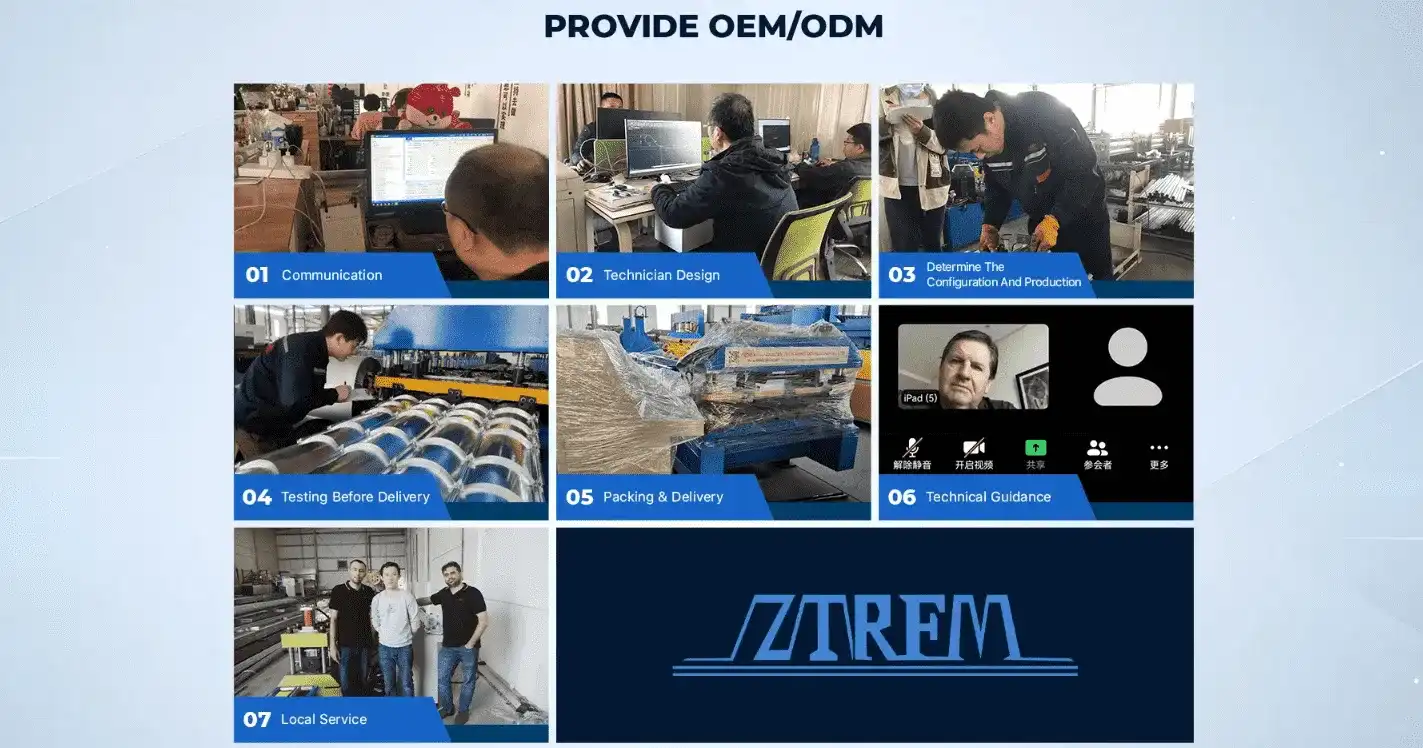
ZTRFM stands ready to provide customized trapezoidal roll forming solutions that optimize your production efficiency and manufacturing capabilities. Our comprehensive equipment line includes machines capable of processing 24 and 22 Tru-Gauge steel and .032-inch aluminum with custom lengths up to 20 feet 10 inches. As an established trapezoidal roll forming machine supplier with ISO9001, CE, and CAS certifications, we deliver proven technology to over 150 countries worldwide. Contact our technical specialists at coo@zhongtuocn.com to discuss your specific requirements and receive competitive pricing for equipment that enhances your operational success.
References
1. Smith, J.R., & Johnson, M.K. (2023). "Industrial Roll Forming Technology: Advances in Trapezoidal Profile Manufacturing." Journal of Manufacturing Engineering, 45(3), 78-92.
2. International Roll Forming Association. (2024). "Global Standards for Roll Forming Equipment Performance and Safety." IRFA Technical Publication 2024-01.
3. Chen, L., & Rodriguez, P. (2023). "Comparative Analysis of Roll Forming Machine Types for Industrial Applications." Manufacturing Technology Review, 31(7), 145-162.
4. Thompson, A.B. (2024). "Maintenance Strategies for Roll Forming Equipment Longevity." Industrial Maintenance Quarterly, 18(2), 34-48.
5. Miller, K.S., et al. (2023). "Energy Efficiency Improvements in Modern Roll Forming Systems." Sustainable Manufacturing Journal, 12(4), 201-215.
6. Global Manufacturing Research Institute. (2024). "Market Trends and Procurement Best Practices for Roll Forming Equipment." GMRI Industry Report 2024-15.
_1750323743240.webp)