- English
- French
- German
- Portuguese
- Spanish
- Russian
- Japanese
- Korean
- Arabic
- Irish
- Greek
- Turkish
- Italian
- Danish
- Romanian
- Indonesian
- Czech
- Afrikaans
- Swedish
- Polish
- Basque
- Catalan
- Esperanto
- Hindi
- Lao
- Albanian
- Amharic
- Armenian
- Azerbaijani
- Belarusian
- Bengali
- Bosnian
- Bulgarian
- Cebuano
- Chichewa
- Corsican
- Croatian
- Dutch
- Estonian
- Filipino
- Finnish
- Frisian
- Galician
- Georgian
- Gujarati
- Haitian
- Hausa
- Hawaiian
- Hebrew
- Hmong
- Hungarian
- Icelandic
- Igbo
- Javanese
- Kannada
- Kazakh
- Khmer
- Kurdish
- Kyrgyz
- Latin
- Latvian
- Lithuanian
- Luxembou..
- Macedonian
- Malagasy
- Malay
- Malayalam
- Maltese
- Maori
- Marathi
- Mongolian
- Burmese
- Nepali
- Norwegian
- Pashto
- Persian
- Punjabi
- Serbian
- Sesotho
- Sinhala
- Slovak
- Slovenian
- Somali
- Samoan
- Scots Gaelic
- Shona
- Sindhi
- Sundanese
- Swahili
- Tajik
- Tamil
- Telugu
- Thai
- Ukrainian
- Urdu
- Uzbek
- Vietnamese
- Welsh
- Xhosa
- Yiddish
- Yoruba
- Zulu
How do corrugated roof sheet roll forming machines work?
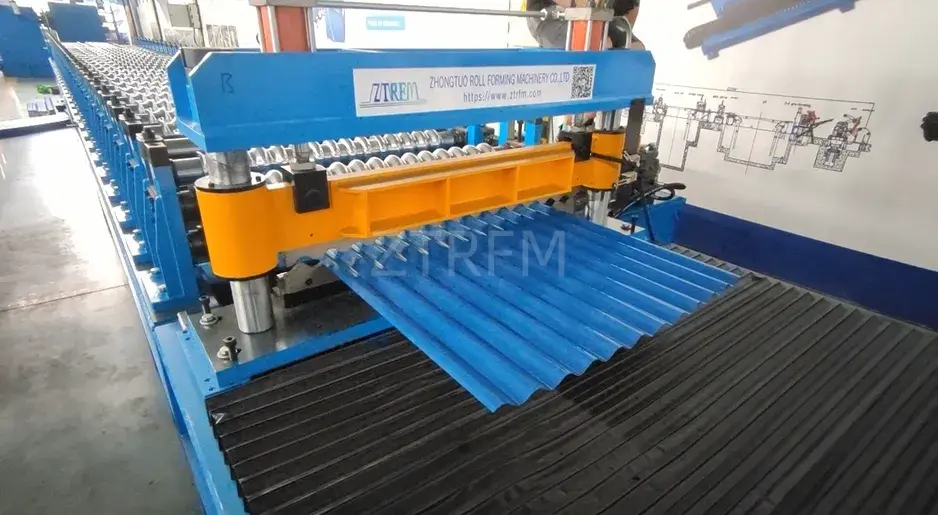
Using a series of roller stations to deform metal in a certain order is what makes the corrugated sheet-making machine work. The raw material, which is usually galvanised or pre-painted steel coil, goes through 18 carefully planned stations where dies are slowly shaped to make the corrugated profile. The continuously formed panels are then cut to the right lengths by hydraulic cutting systems. For commercial roofing uses, this controlled process makes sure that the dimensions are correct, the structure is strong, and the quality of the products is always the same.
Understanding Corrugated Roof Sheet Roll Forming Machines Core Components and Their Functions
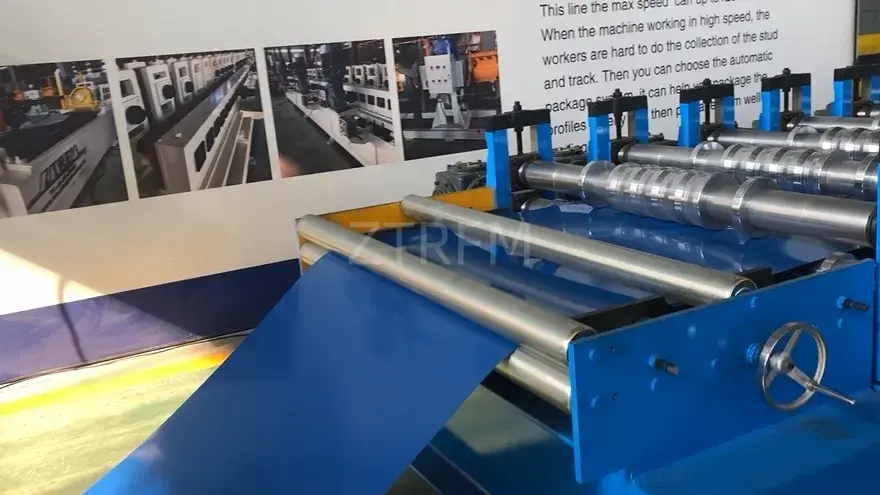
Integrated mechanical systems in metal forming equipment turn raw coils into finished roofing panels. The decoiling unit is where it all starts. Hydraulic systems can handle coil weights of up to 5 tonnes while keeping the material feed rates steady. There are different options for capacity to fit different production levels, and manual decoilers are a cheap option for lower-volume jobs.
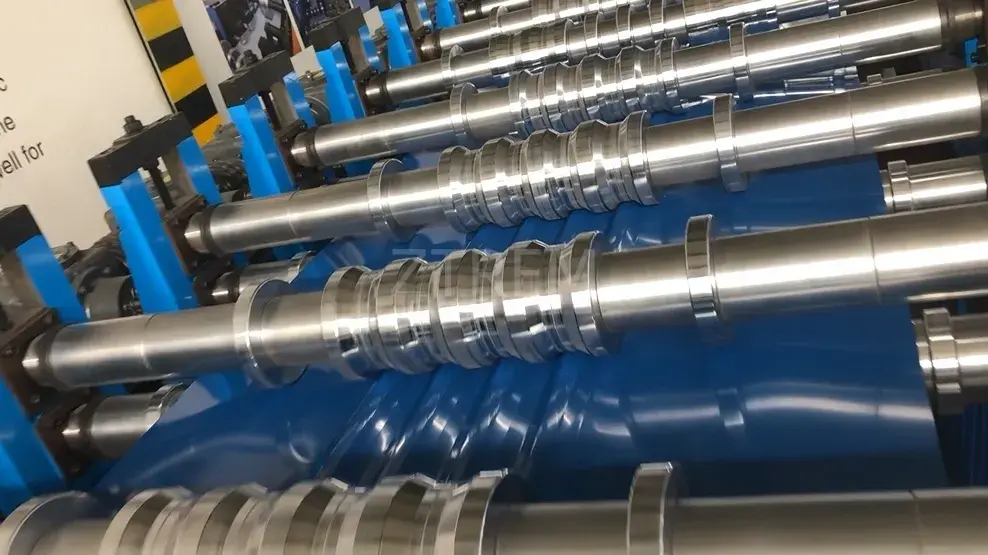
The most important part of the process is the forming section. Eighteen roller stations slowly change the shape of the metal, with each station applying a small amount of deformation. Rollers made from 45# steel are quenched to make them resistant to wear from metal-on-metal contact. 80 mm shaft diameters give the rigidity needed to keep the alignment when operational loads are applied, and tempered 45# steel shafts make them last for millions of production cycles.
Material Processing Capabilities
The types of equipment you have directly affect the products you can make. These machines can work with galvanised steel and pre-painted steel that is between 0.3 mm and 0.5 mm thick, which is the thickness range for most roofing materials. This range of thicknesses strikes a good balance between structural performance and material economy. It can be used in home, business, and light industrial settings.
The power from the 5.5 kW motor gets to the roller stations efficiently through the gearbox transmission system. This setup evenly distributes torque and lets you change the speed of the forming process depending on the material's properties and the complexity of the profile. Welded 350H steel frames for machines give them the structural stability needed to keep measurements accurate while they're running at high speeds.
Cutting and Control Systems
Hydraulic cutting systems make sure that the ends of panels are straight and clean, with no material distortion. With a dedicated 5.5kw hydraulic system, these cutters can consistently cut materials of different thicknesses while requiring minimal maintenance. For corrugated profiles, where uneven material presentation could lead to misalignment, the hydraulic method works better than mechanical shearing.
Control systems make sure that the feeding of materials, the speed of forming, the measuring of panel length, and cutting all happen at the same time. Modern machines often have PLC-based controllers that let operators set panel lengths, production quantities, and speed parameters using easy-to-understand screens. This automation cuts down on the time it takes to set up when switching between product specifications and the level of skill that is needed to run it consistently.
Types of Corrugated Sheet Making Machines and Their Core Differences
Manual and Semi-Automatic Configurations
Entry-level systems focus on being simple and saving money. Combining motor-driven forming sections with manual decoiling works well for businesses that only make a few types of panels for local markets. Operators load materials and check the quality of the forming, which keeps the cost of equipment low for new businesses or companies that want to see how the market responds to fully automated lines before committing to them.
Semi-automatic corrugated sheet making machines have programmable length control and automatic cutting, but they still need to be moved by hand. When compared to fully manual operations, this hybrid approach increases throughput without the need for the large capital investment of fully automating. Businesses that are growing steadily often find that semi-automatic configurations work best because they increase productivity while still allowing for operational flexibility.
Fully Automated Production Lines
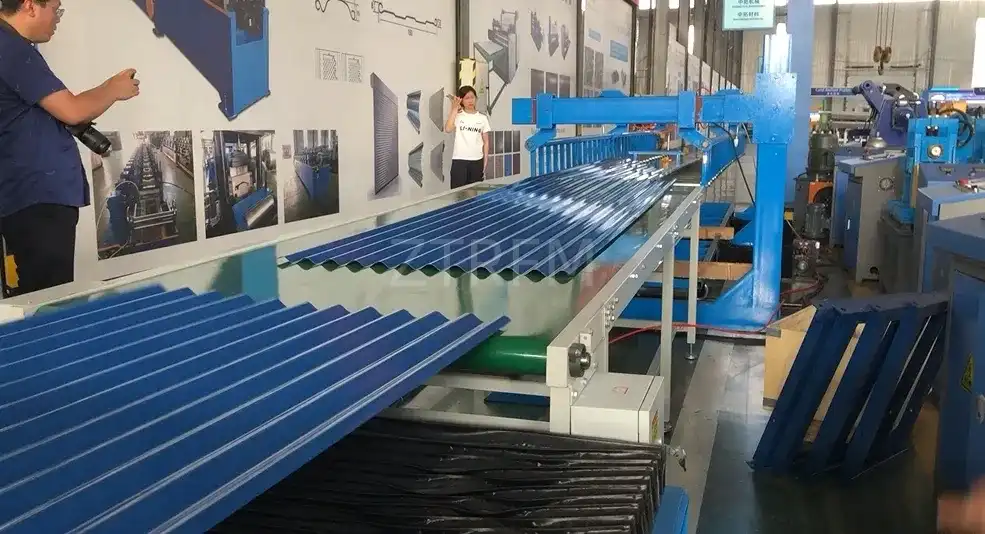
Integrated automation that reduces the need for labour and increases consistency is good for manufacturers who make a lot of things. The production flow is kept going with continuous feeding with material tracking, programmable forming, servo-controlled cutting, and automated stacking. These systems can go faster—often over 20 metres per minute—while keeping tolerances tighter than people could do by hand.
Automation also lets you keep a close eye on quality in more complex ways. Sensors pick up on changes in material thickness, alignment problems, and dimensional deviations in real time, making changes or sending out alerts before problems get worse. This feature comes in handy when making panels for tough jobs where consistent sizes affect how well they fit and how well they perform in bad weather.
Profile Complexity Variations
Machines can make different corrugated patterns in different ways. When compared to trapezoidal or custom architectural profiles, standard sinusoidal profiles need fewer forming stations and easier roller designs. Profile flexibility equipment usually has roller spacing that can be changed and roller sets that can be swapped out. This lets manufacturers serve a wide range of market segments without having to buy multiple dedicated machines.
The complexity of the profile and the maximum thickness of the material are directly related to the number of roller stations. For simple corrugated patterns, only 12 to 14 stations may be needed. For more complex profiles or thicker materials, 18 or more stations are needed to spread out the deformation more evenly. This slow shaping keeps the material from building up stress that could lead to cracks or surface flaws.
Key Benefits and Performance Metrics for B2B Buyers
Production Efficiency Advantages
Cold roll forming allows for continuous production that is much faster than traditional press-brake methods. Roll forming makes continuous lengths that are only limited by the size of the coil. Hydraulic presses make panels one at a time, with setup time between pieces. This means that standard profiles can be made at hourly rates that are five to ten times faster than with a press brake.
Because the process is continuous, there is no trim scrap between panels, so there is a lot less material waste. Programmable length control makes sure that panels meet specifications without the overcuts that happen when measurements are done by hand. When combined with faster production speeds, these improvements in efficiency often cut the cost of making a panel by 30 to 40 per cent compared to the old way of doing things.
Quality Consistency
When it comes to repeatable accuracy in dimensions, mechanical forming processes are hard to beat. Once they are set up correctly, roller stations keep the same profile shapes on thousands of panels, without drifting or changing. For big projects, where panels from different production runs have to fit together perfectly during installation, this consistency is very important.
The quality of the surface finish stays the same because the rollers only touch the profile ridges and edges, not the flat surfaces. When materials are pre-painted, the coating stays on during the forming process. This is different from press-brake operations, where tight bends can damage or flake off protective finishes. Preserving the surface coatings in this way makes the panels last longer and keep their good looks.
Critical Performance Metrics
People who work in procurement for a corrugated sheet-making machine should look at forming speed ranges because production needs vary a lot from one application to the next. Machines with speeds between 0 and 20 metres per minute can work with a variety of materials and profiles. On the other hand, businesses that only make standard products in large quantities might need machines with higher top speeds. Being able to change the speed lets operators find the best balance between quality and throughput based on how the material behaves.
The amount of power used directly affects how much it costs to run the equipment over its lifetime. The 5.5kw motor specification means that the power will be used efficiently for standard corrugated profiles that are between 0.3 and 0.5 mm thick. To figure out which equipment will save them the most money in the long run for their specific production mix, buyers should compare the amount of power they need to expected production volumes.
Maintenance schedules and the availability of parts have a big effect on the continuity of operations. Standardised parts, like 45# steel rollers with common hardening treatments, make it easier to find replacements for equipment than proprietary materials that need to be bought directly from the factory. Check the manufacturers' spare parts programmes, the quality of their documentation, and how quickly they respond to customer service requests. These things affect how quickly production can start up again after wear-related downtime.
How to Choose the Right Corrugated Sheet Roll Forming Machine for Your Business?
Assessing Production Requirements
More than anything else, volume projections determine what equipment to buy. If a business wants to make less than 50,000 square feet per month, manual or semi-automatic machines might be enough. But if they want to make 200,000 square feet or more, they need automated systems to meet demand quickly. Realistic predictions of volume keep people from investing too little, which slows growth, or too much, which builds capacity that isn't being used.
The complexity of the product mix affects the machine specification needs. Companies that make standard corrugated profiles in a few different styles don't need as much complex equipment as companies that make custom profiles in a number of gauges and with a range of coating options. If you clearly define your product strategy before you buy any equipment, you can be sure that the machine you buy will fit with how you position your business in the market.
Evaluating Manufacturer Credentials
Objective quality standards are set by global certification standards. The ISO9001 certification shows that the quality management is systematic, and the CE marking shows that the product meets European safety standards. These certifications show that manufacturers keep records of their processes, do regular audits, and are dedicated to always getting better. These are all things that are linked to reliable equipment and support quality.
Experiencing exports shows how mature manufacturing is and how well it is supported by infrastructure. Suppliers who have delivered to more than 150 countries show they can package, ship, help with installation, and provide cross-border service. This international experience is especially helpful for buyers in places that are far from manufacturing hubs because these suppliers know how to handle documentation needs, logistics, and technical support from afar.
Customisation and Support Services
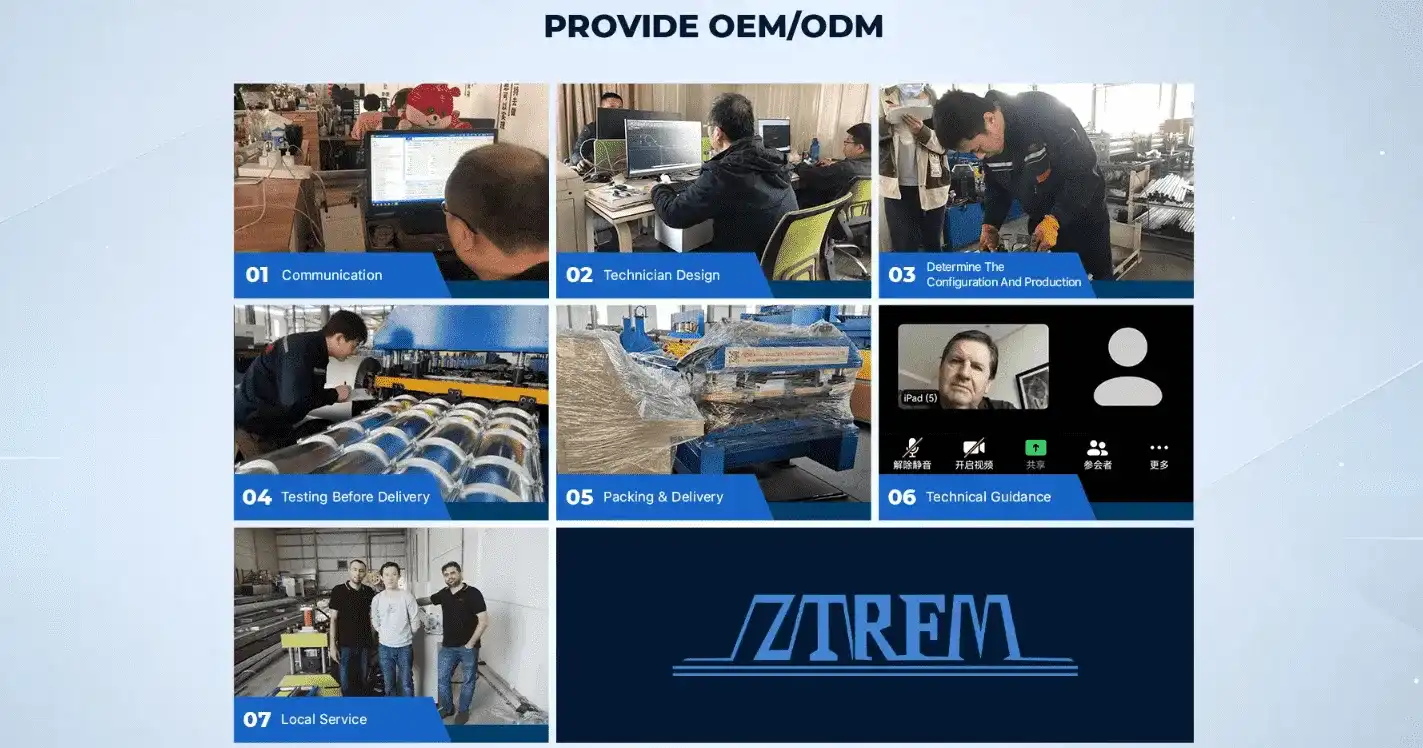
OEM and ODM capabilities let equipment be changed to fit the needs of a specific job. Manufacturers that offer engineering customisation can change the layout of the rollers, the way the control systems work, add new processes, or the way the materials are made to fit specific needs. As your business grows and product needs change beyond what was originally planned, this flexibility becomes useful.
How well you solve operational problems with your corrugated sheet-making machine depends on the quality of your technical support. Suppliers who offer thorough training during installation pass on knowledge that lowers the need for outside technicians. Having quick technical support via email, phone, or video chat makes it easier to fix problems quickly. Some manufacturers, like ZTRFM, keep support systems that work in all time zones around the world to make sure that you can get help when you need it.
Budget and Investment Analysis
Capital equipment is an investment that lasts for many years and needs a careful analysis of the finances. Comparing prices from different suppliers is a good way to get an idea of how much something will cost, but to fully evaluate an investment, you need to look at things like installation costs, operator training, spare parts inventory, expected maintenance costs, and the machine's expected lifespan. Sometimes, lower prices at first lead to higher long-term costs because of more repairs or a shorter useful life.
When estimating operational costs, it's important to think about things like energy use, maintenance labour, replacement parts, and expected downtime. Using machines that are energy-efficient by making the motors smaller and improving the way they are built can save you a lot of money over time. Equipment that is easy to maintain cuts down on labour costs and production interruptions, which cost indirectly through missed delivery dates.
Conclusion
Corrugated sheet-making machines are long-term investments that affect how competitive a factory is for years after they are bought. By understanding how they work, how their parts interact, and how well they perform, procurement professionals can compare options in a methodical way instead of just looking at prices. Starting with a raw coil and moving through a series of stations for shaping it into precisely cut panels shows how efficiently the industry works to turn raw materials into products that are ready for sale all the time.
When choosing the right equipment, it's important to weigh short-term budget limits against long-term operational costs, production capacity against the need for flexibility, and automation sophistication against the complexity of operations. Capital equipment investments come with risks, but working with manufacturers who show they know engineering, keep their quality certifications up to date, and offer full support services can help lower those risks. The ideas in this article give you the tools you need to have smart conversations with your suppliers and make sure your decisions are in line with your long-term business goals.
FAQ
1. What metal sheet types work with corrugated roll forming machines?
Within a thickness range of 0.3 to 0.5 mm, these machines can work with galvanised steel and steel that has already been painted. Corrosion-resistant galvanised materials are good for agricultural and industrial buildings, while pre-painted steel gives you options for how it looks in commercial and residential settings. Material tensile strength and coating adhesion affect forming parameters, so making sure that the equipment is compatible with the grades of material you're using during the specification process is the best way to get the best results.
2. How long does a profile changeover typically require?
How long it takes to switch between profiles depends on how the machine is built and how different the profiles are. For systems that are adjusted by hand, replacing all the roller sets and checking the alignment can take 4 to 8 hours. This time is cut down to two to four hours with semi-automatic changeover systems, and transitions can be made in thirty to sixty minutes with advanced quick-change cassette designs. Check your production mix against the changeover requirements to find the best system design for your needs.
3. Can these machines integrate into automated production lines?
Upstream and downstream automation are easy to connect to modern roll-forming equipment. Automatic coil handling systems keep feeding material, and programmable cutting works with equipment that stacks panels or packages them. Control system compatibility lets a production line work in sync when several processes run one after the other. Talking about integration needs during equipment specification ensures that the right communication protocols and mechanical interfaces are used so that automated operation goes smoothly.
Partner with ZTRFM for Reliable Corrugated Sheet Roll Forming Solutions
To make great products, you need equipment that works the same way in all kinds of tough production environments. Since 2014, ZTRFM has focused on designing and building cold roll forming machines, giving them the knowledge to solve the problems that manufacturers of roofing panels face every day. Our corrugated sheet making machine systems combine tried-and-true engineering with features that can be changed to fit the needs of any business. This lets businesses of all sizes reach their production goals quickly and easily.
As a national high-tech company that is certified by ISO9001, CE, and CAS, we keep quality standards that buyers from other countries depend on. Our equipment is used in over 150 countries, and our technical teams are experienced in installing it, training operators, and providing ongoing support in a wide range of manufacturing settings. Whether you're a well-known manufacturer looking to increase your production capacity or a new company just starting out, ZTRFM can help you find the right equipment for your needs.-forming
We provide full OEM and ODM services that change standard machine configurations to fit your exact needs. Our one-stop service approach makes buying easier and makes sure that all of the parts work together, from getting the raw materials to putting the machine together and supplying the accessories. Get in touch with our team at zhongtuorollforming@gmail.com to talk about your production needs with corrugated sheet making machine suppliers who know the technical and business factors that affect your equipment choices.
References
1. Smith, J.R. (2021). Metal Forming Processes: Technology and Equipment for Modern Manufacturing. Industrial Press Inc.
2. Thompson, M.A. & Chen, L. (2020). "Cold Roll Forming Engineering Principles for Architectural Metal Panels." Journal of Manufacturing Processes, 58, 234-247.
3. Rodriguez, P. (2022). Equipment Selection Strategies for Metal Building Component Manufacturing. Construction Industry Publishers.
4. Anderson, K.W. (2019). "Hydraulic Systems in Metal Forming: Design Considerations and Maintenance Protocols." International Journal of Machine Tools and Manufacture, 142, 78-92.
5. Williams, D. & Zhang, H. (2023). Roll Forming Technology: From Fundamentals to Advanced Applications. Springer Engineering Series.
6. Patterson, R.L. (2020). "Quality Control and Process Optimization in Continuous Metal Forming Operations." Manufacturing Engineering Quarterly, 35(2), 156-171.
_1750323743240.webp)