- English
- French
- German
- Portuguese
- Spanish
- Russian
- Japanese
- Korean
- Arabic
- Irish
- Greek
- Turkish
- Italian
- Danish
- Romanian
- Indonesian
- Czech
- Afrikaans
- Swedish
- Polish
- Basque
- Catalan
- Esperanto
- Hindi
- Lao
- Albanian
- Amharic
- Armenian
- Azerbaijani
- Belarusian
- Bengali
- Bosnian
- Bulgarian
- Cebuano
- Chichewa
- Corsican
- Croatian
- Dutch
- Estonian
- Filipino
- Finnish
- Frisian
- Galician
- Georgian
- Gujarati
- Haitian
- Hausa
- Hawaiian
- Hebrew
- Hmong
- Hungarian
- Icelandic
- Igbo
- Javanese
- Kannada
- Kazakh
- Khmer
- Kurdish
- Kyrgyz
- Latin
- Latvian
- Lithuanian
- Luxembou..
- Macedonian
- Malagasy
- Malay
- Malayalam
- Maltese
- Maori
- Marathi
- Mongolian
- Burmese
- Nepali
- Norwegian
- Pashto
- Persian
- Punjabi
- Serbian
- Sesotho
- Sinhala
- Slovak
- Slovenian
- Somali
- Samoan
- Scots Gaelic
- Shona
- Sindhi
- Sundanese
- Swahili
- Tajik
- Tamil
- Telugu
- Thai
- Ukrainian
- Urdu
- Uzbek
- Vietnamese
- Welsh
- Xhosa
- Yiddish
- Yoruba
- Zulu
How fast is a ceiling t grid roll forming machine?
Buying suspended ceiling manufacturing industrial equipment requires understanding the operating pace. It may make or break manufacturing efficiency. A ceiling t-grid roll forming machine with punching and cutting features operates at 15–20 m/min. This pace allows manufacturers to generate 60–80 standard-length Main Tee profiles per hour, depending on material and machine setup. How fast you can complete orders and how much you can make in the competitive architectural metal fabrication industry depends on how much you can manufacture.
Understanding Ceiling T Grid Roll Forming Machines
These technologies transform raw metal tubes into T-shaped profiles that are meticulously engineered to support suspended ceiling installations in homes and businesses. The equipment forms PPGI and GI bits continuously. Working ceiling T-grid roll-forming machines maintain high precision through synchronised operation.
Core Components and Working Principles
Multiple pieces work together to make up the mechanism. Decoilers can carry 1.5-tonne metal coils between 450 and 550 mm in diameter. The sturdy 45# steel rolling shaft, 50 mm wide, keeps material flowing smoothly during manufacturing. In the producing stations, high-quality Cr12 steel rollers slowly shape the flat strip into the traditional T-shape. Main and Cross Tees require 18 and 16 connecting stations, respectively. This multiple-station approach uniformly distributes forming stress, preventing material deformation and maintaining extremely tiny dimension accuracy.
Material Specifications and Processing
Based on component demands, the machine may handle varied amounts of material. T-bar top portions are made of 0.12–0.3 mm PPGI, which offers fitted ceilings a pleasant appearance. Bottom material, commonly GI, is 0.2–0.4 mm thick and offers load-bearing strength. Ceiling grid systems look and operate better when they can use two materials. Integrated punching tools patch holes and connect slots at defined times following part formation. The hydraulic cutting system cuts continuous forms into lengths to end the production cycle. This effective procedure eliminates hand-moving between processes, reducing labour costs and output errors.

Factors Influencing the Speed of Ceiling T Grid Roll Forming Machines
When procurement managers evaluate a ceiling t-grid roll forming machine speed and power, they must consider several elements that impact throughput. Understanding these aspects helps you align production goals with business constraints.
Automation Level and Machine Design
Advanced control systems greatly impact throughput. By accurately coordinating decoiler tension, roller synchronisation, and millisecond timing, PLC-based automation maintains forming speeds. Manual or semi-automatic solutions require manual checking every few rounds, reducing production by 30–40% compared to fully automated systems. Performance is also impacted by drive operation. The gear-driven systems we supply can reliably transmit power at all manufacturing stations. The 4kW cycloidal planetary gear speed reducer has adequate power and uses energy efficiently to run at its stated speeds for a long period without overheating or straining the equipment.
Material Characteristics Impact
Speeds depend on raw material quality. Production rates slow down because bigger-gauge steel requires more effort and time at each station. When creating heavy-duty profiles, GI material close to 0.4 mm thick requires more smoothly made angles than PPGI 0.12 mm thick, slowing output by 20–25%. Also crucial are surface coatings and material hardness. To avoid finish damage, pre-painted steel with protective layers needs gentler roller contact, slower speeds. However, typical galvanised material can be treated faster, especially when the form is simple.
Profile Complexity and Production Requirements
Ceiling T-grid roll-forming machine: Cross tee designs that require fewer punches may be manufactured faster than main tee forms with more connecting points. Each punching movement takes time because the hydraulic lifters must move out, puncture the material, then pull back in before the profile can move forward. Basic grid component machines can attain faster speeds, while specialist seismic-rated profile machines with added features operate more slowly. Maintenance greatly impacts performance over time. Roller bearings should be greased, outdated punched dies changed, and cutting blade locations set to keep machines running at their rated speeds throughout production shifts. Unrepaired damage creates friction, misalignment, and unscheduled downtime, slowing throughput.

Comparing Ceiling T Grid Roll Forming Machines by Speed and Efficiency
Before choosing the correct tools, you must understand how different configurations and producers balance speed and quality. Comparing ceiling t-grid roll forming machines' speed and performance requires an analysis of both manual and automated methods.
Roll Forming Versus Manual Methods
Traditional ceiling grids are made by hand-twisting metal, which produces 15 to 20 pieces per hour, requires talent, and has uneven results. With precise dimensions and regularity, automated roll production systems, such as a ceiling T grid roll forming machine, can create 60–80 pieces each hour. Companies that provide thousands of square metres of materials weekly for large commercial building projects will see a rapid return on investment from this efficiency boost. Cost-benefit studies go beyond production figures. Over a year's production, automated methods reduce waste from 8–12% by hand to less than 2%, saving a lot of money on supplies. The shift from ordinary shaping to quality control and machine tracking improves workplace safety and employee satisfaction.
High-Speed Model Comparisons
Depending on the model's sophistication and price, top-brand equipment often runs at 15–45 mph. Entry-level systems for firms and small producers function at 15 to 20 m/min, quick enough to enter the regional market without paying much. Automatic features, including servo-driven cutting and programmed profile changing, are available on mid-range machines at 25–35 m/min. Growing businesses launching new items or entering new markets will welcome these techniques. Big producers who serve national wholesalers employ premium high-speed setups at 40–45 m/min for maximum production. This justifies the increased expense. Our equipment punches and cuts at 0–20 m/min. It is a powerful entry-to-mid-range. This speed range balances production speed and precision, making it ideal for enterprises that require excellent quality and output.
Specialised Equipment Variations
Depending on profile complexity, AG panel roll formers for agricultural and industrial roofing operate at different speeds than ceiling T-grid machines. AG panel machines forming trapezoidal or corrugated profiles from 0.4–0.8 mm galvanised steel typically run at 12–18 m/min due to deeper rib depths and wider flange dimensions. Understanding these distinctions helps procurement teams select equipment suited for specific product categories rather than using general-purpose machines that compromise efficiency for either application.
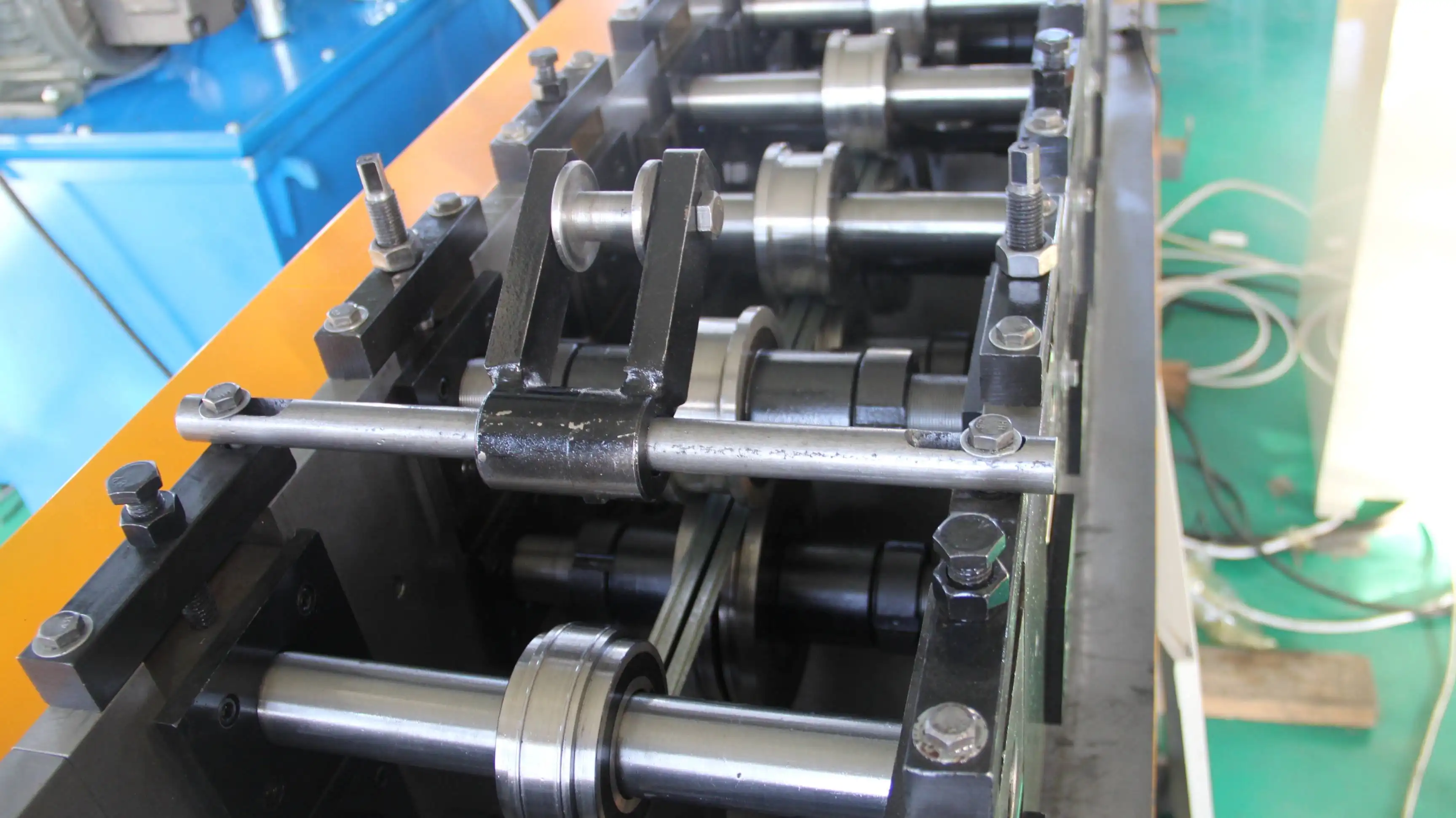
Optimising Production Speed: Operation Guide and Best Practices
You need more than powerful gear to attain top speeds. Operating excellence via setup, maintenance, and safety standards keeps production moving rapidly as long as the equipment lasts.
Preparation and Machine Setup
A good manufacturing run starts with careful planning. Coil loading onto the decoiler must be done appropriately to avoid edge tracking issues that slow things down. Operators should ensure that the coil's inner diameter fits the equipment's standards (our machines can handle widths between 450 and 550 mm) and firmly attach it to prevent unwinding issues. Keep rollers aligned when threading material through manufacturing stations. Even a tiny inaccuracy creates uneven forming pressures that restrict speed to prevent profile bending or roller damage. Setting aside a few minutes for setup will save hours of troubleshooting and production modifications.
Maintenance Routines for Sustained Performance
Equipment is checked regularly to ensure optimal performance. Daily checks include roller greasing areas, hydraulic fluid levels, and cutting blade sharpness. The weekly repair checks drive chain tension, electrical connections, and control system data. Cr12 roller material is wear-resistant, although even high-quality parts like those in the ceiling T-grid roll-forming machine need regular inspection. Checking roller surfaces for cutting or covering accumulation helps prevent speed loss as friction increases. Cleaning rollers weekly while producing PPGI profiles removes coating dust that can harm final surfaces and limit material flow. Punching die maintenance affects runtimes. Die dullness requires higher hydraulic pressure and longer rest intervals, slowing productivity. To maintain the punching action clean and the machine moving swiftly, the maker recommends sharpening or replacing dies every 100,000 to 150,000 strokes.
Safety Measures at High Speeds
Tools at their rated speeds pose safety risks. To employ immediately if material becomes trapped or other issues arise, emergency stop mechanisms must always be operating. High-speed manufacturing generates more noise; therefore, operators should wear safety eyewear and hearing protection. Moving goods at output stations requires coordination. The machine outputs completed profiles fast at 20 m/min; thus, they must be stacked to prevent damage and ensure worker safety. Using mobile run-out tables that match profile lengths reduces labour and streamlines manufacturing.

Procurement Insights: Selecting a Ceiling T Grid Roll Forming Machine Based on Speed
Strategically procuring equipment requires balancing short-term production demands with future growth. Choosing a ceiling T-grid roll-forming machine by speed requires a thorough examination of suppliers and machine specs.
Supplier Evaluation Criteria
Ceiling t grid roll forming machines and AG panel roll formers require different evaluation criteria based on their intended applications. For ceiling t grid equipment, key specifications include roller material (Cr12 steel), shaft diameter (50 mm 45# steel), and punching synchronisation. For AG panel roll formers, critical parameters include rib depth capacity, material gauge range (0.4–0.8 mm), and drive system torque. Procurement teams should assess suppliers based on their experience with each specific equipment type rather than treating them as interchangeable.
After-Sales Support and Warranty Coverage
Equipment warranties demonstrate that the manufacturer trusts it to last. Good buildings have 12–24-month coverage for frames, rollers, and driving systems. Businesses that need to keep producing and where downtime is expensive can consider longer guarantees or service contracts. Technical support impacts operations. When suppliers offer worldwide support, remote diagnostics, and fast part shipment, difficulties are minimised. How quickly a supplier responds to enquiries might indicate future assistance quality.
Price Versus Performance Analysis
Equipment prices vary depending on speed and technical complexity. Entry-level machines with manual decoilers and 15–20 m/min speeds cost $6,500–$15,000, depending on the number of forming stations and build quality. Mid-range systems with motor controls and adjustable features cost $20,000–$35,000. High-speed, high-end equipment costs over $40,000. Considering the cost per unit offers a better view of your investment than the purchase price. Considering how much the equipment will lose value over five years, a $12,000 machine that creates 60 pieces per hour costs $200 per thousand units. A $30,000 machine making 120 pieces per hour costs $125 per thousand pieces. This suggests that higher initial investments improve unit economics. Leases and purchases make it simpler for cash-strapped manufacturers to obtain modern equipment. So expanding organisations may employ complicated systems and lease agreements that extend payments over 36 to 60 months to align equipment costs with revenue.
Customisation and Lead Times
Most manufacturers estimate standard machines, including the ceiling T-grid roll-forming machine, arrive in 30–45 days. Custom configurations for unique profiles, punching patterns, or manufacturing line integration take 60–90 days. Procurement teams should integrate these deadlines when planning projects, especially when procuring tools for new contracts with start dates. The engineering provider's customisation choices demonstrate flexibility and understanding. OEM and ODM manufacturers can tune conventional systems to meet individual demands, balancing speed and quality for specialised applications. ZTRFM's one-stop service plan for raw materials, tools, and accessories simplifies vendor management and ensures part compatibility.

Conclusion
Operational speed is only one criterion in choosing a ceiling t-grid roll forming machine or an AG panel roll former, but it affects production costs and market position. For ceiling T-grid equipment, punching and cutting at 15–20 metres per minute balances productivity and accuracy. For AG panel roll formers, speed requirements vary based on rib height and material gauge. Manufacturers must consider speed, material handling, maintenance, and supplier support to identify solutions for specific production scenarios. By investing in the right equipment for each profile type, speed requirements may become a long-term competitive advantage in architectural metal production.
FAQ
1. What speeds do most ceiling T-grid roll-forming machines achieve?
Standard industrial equipment travels 15 to 30 metres per minute, entry-level systems are slower, and high-end ones 40 to 45 metres per minute. Punching and cutting machines need greater running time; thus, they only function at 15–20 metres per minute. Match your output quantity and order patterns to your speed for the most efficient ceiling t-grid roll forming machine operation.
2. How frequently does high-speed equipment require maintenance?
Keep everything functioning smoothly with daily lubrication and eye examinations. Weekly maintenance, such as monitoring the drive system and monthly assessments of the forming rollers and cutting dies, can prevent unplanned downtime. High-speed operation accelerates contact surface deterioration, making maintenance plans more necessary than with slower equipment.
3. Can existing machines be upgraded to increase production speeds?
How the equipment was created and its constraints determine upgrading. By adding servo cutting systems, motorising hand decoilers, and updating control software, speeds can increase by 15–25%. Basic difficulties like frame rigidity, drive motor capacity, and forming station count may restrict upgrades. In certain circumstances, buying new equipment may be cheaper than repairing existing equipment.
Partner with ZTRFM for Your Ceiling T Grid Production Needs
ZTRFM knows that speed numbers aren't everything when choosing a ceiling t-grid roll forming machine provider. Since 2014, our technical team has made high-quality solutions to assist them in building fast, accurate company construction equipment. Our machines' 45# steel rods, Cr12 rollers, and PLC control systems provide consistent performance throughout lengthy production runs. We provide customised solutions to meet your profile and production demands as a national high-tech corporation with ISO9001, CE, and CAS certifications. Our presence in over 150 countries means you can access reliable technical support and replacement parts wherever you work. If you're a new ceiling system manufacturer or a well-established one expanding production, our OEM and ODM services can customize platforms. Discuss your company goals with our technological professionals. Please email zhongtuorollforming@gmail.com for affordable prices on ceiling t grid roll forming machines for sale.

References
1. Smith, J. & Anderson, K. (2021). Cold Roll Forming Technology: Principles and Industrial Applications. Manufacturing Press International.
2. Chen, L. (2020). "Optimization of Production Speed in Metal Profile Roll Forming Systems." Journal of Manufacturing Processes and Equipment, 45(3), 287-301.
3. International Association of Roll Forming Manufacturers. (2022). Industry Standards for Ceiling Grid Production Equipment. Technical Publication Series.
4. Rodriguez, M. (2019). Suspended Ceiling Systems: Manufacturing, Installation, and Performance Standards. Construction Technology Publishers.
5. Zhang, W. & Kumar, R. (2023). "Comparative Analysis of Roll Forming Machine Configurations for Architectural Metal Products." Industrial Engineering Quarterly, 58(2), 112-128.
6. Thompson, D. (2020). Equipment Selection and Procurement Strategies for Metal Fabrication Industries. B2B Manufacturing Insights.
_1750323743240.webp)