- English
- French
- German
- Portuguese
- Spanish
- Russian
- Japanese
- Korean
- Arabic
- Irish
- Greek
- Turkish
- Italian
- Danish
- Romanian
- Indonesian
- Czech
- Afrikaans
- Swedish
- Polish
- Basque
- Catalan
- Esperanto
- Hindi
- Lao
- Albanian
- Amharic
- Armenian
- Azerbaijani
- Belarusian
- Bengali
- Bosnian
- Bulgarian
- Cebuano
- Chichewa
- Corsican
- Croatian
- Dutch
- Estonian
- Filipino
- Finnish
- Frisian
- Galician
- Georgian
- Gujarati
- Haitian
- Hausa
- Hawaiian
- Hebrew
- Hmong
- Hungarian
- Icelandic
- Igbo
- Javanese
- Kannada
- Kazakh
- Khmer
- Kurdish
- Kyrgyz
- Latin
- Latvian
- Lithuanian
- Luxembou..
- Macedonian
- Malagasy
- Malay
- Malayalam
- Maltese
- Maori
- Marathi
- Mongolian
- Burmese
- Nepali
- Norwegian
- Pashto
- Persian
- Punjabi
- Serbian
- Sesotho
- Sinhala
- Slovak
- Slovenian
- Somali
- Samoan
- Scots Gaelic
- Shona
- Sindhi
- Sundanese
- Swahili
- Tajik
- Tamil
- Telugu
- Thai
- Ukrainian
- Urdu
- Uzbek
- Vietnamese
- Welsh
- Xhosa
- Yiddish
- Yoruba
- Zulu
The Role of Sigma M Purlin Machine in Modern Structural Engineering
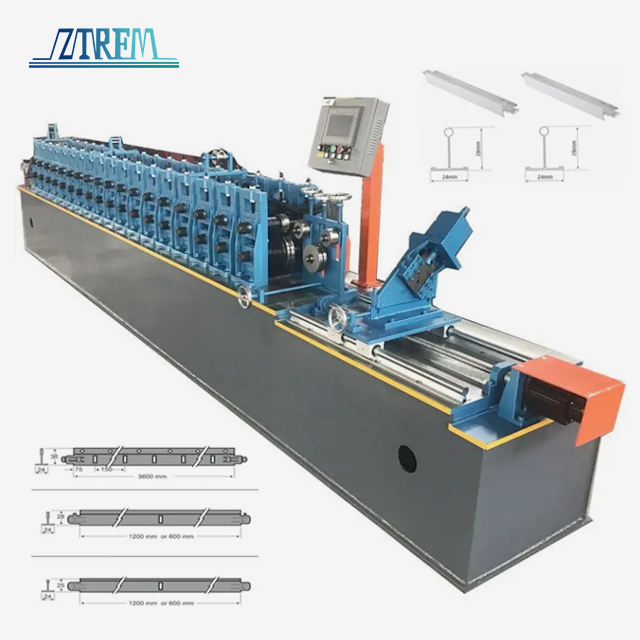
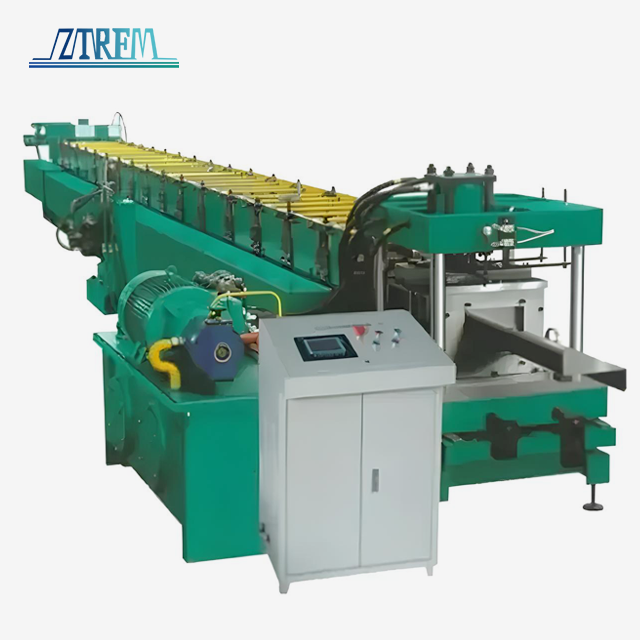
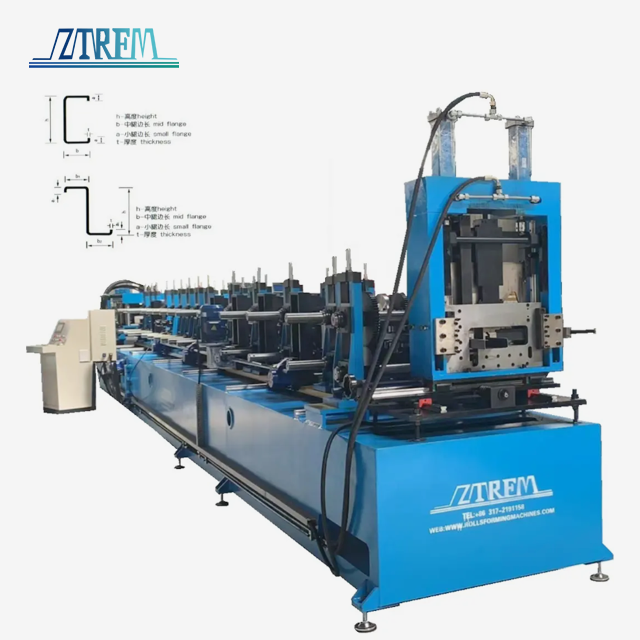
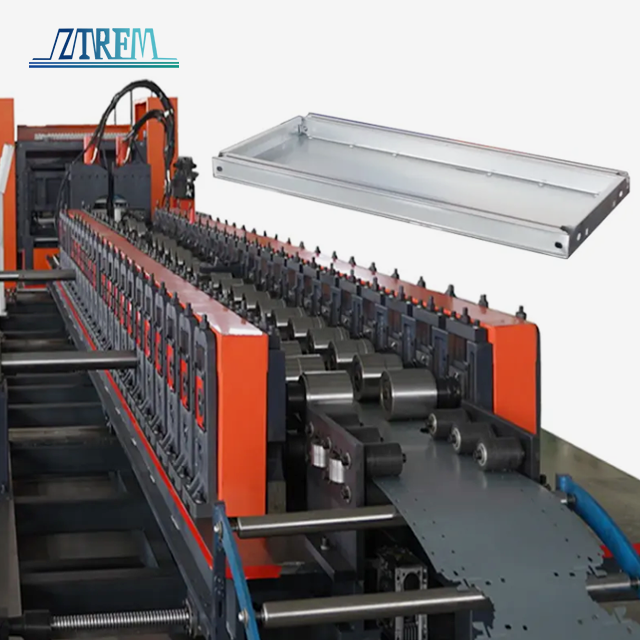
The sigma M purlin machine is used to create high-strength structural sections in commercial and industrial designs. This cold roll-forming technology creates Sigma- and M-shaped steel sections, which are more stable and can support more weight than purlin profiles. In complex building projects like massive warehouses and solar farms, Sigma M purlin machine precision and speed affect project timetables, material pricing, and structural strength.

Understanding the Sigma M Purlin Machine: Features, Operation, and Benefits
Core Components and Engineering Excellence
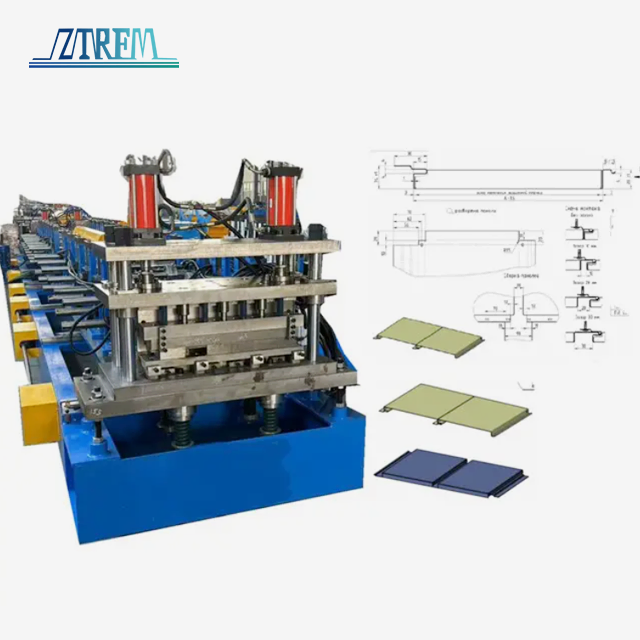
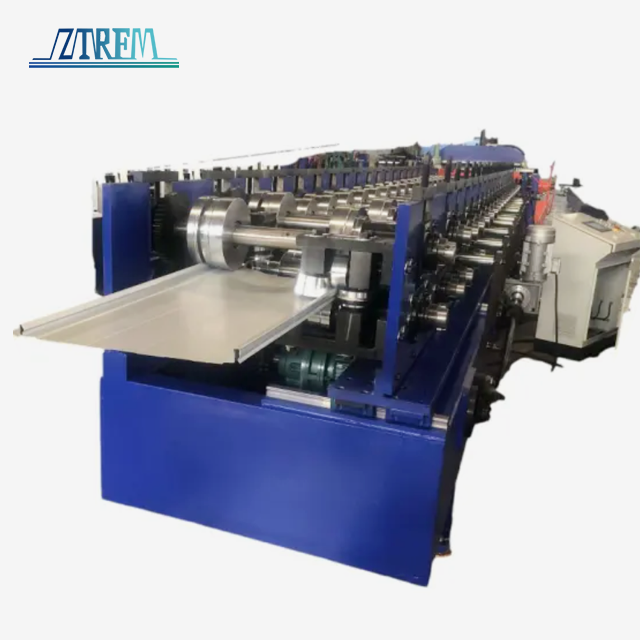
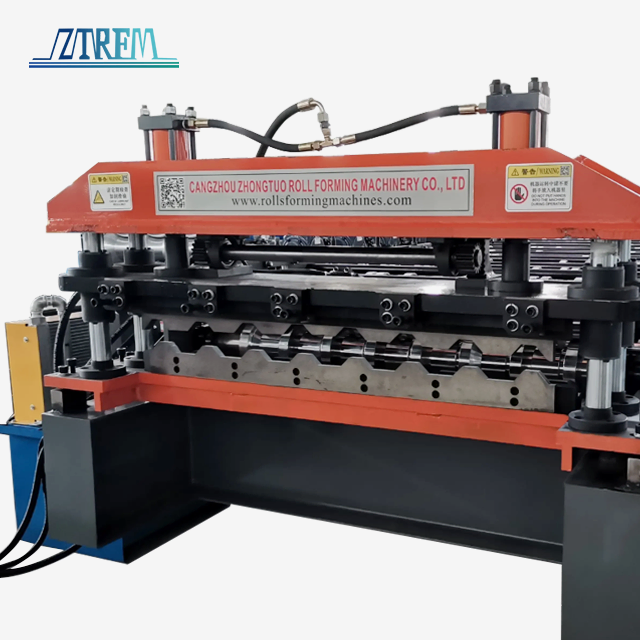
The modern Sigma M purlin machine and AG panel roll former represent two distinct cold roll-forming systems serving different structural applications. While Sigma M machines produce high-strength Sigma and M-shaped sections for heavy-load framing, the AG panel roll former creates corrugated roof and wall panels for agricultural and industrial buildings. Both systems rely on solid 40Cr steel shafts and precision roller stations, but their profile geometries, punching patterns, and typical material gauges differ significantly.
The transfer system equally distributes mechanical stress between manufacturing stations using a double-row chain architecture and shaft end support. This design keeps torque constant throughout profile shaping and greatly reduces wear on critical elements. The machines can manufacture metal at 15 metres per minute at 380V/60Hz/3P (which may be adjusted for local needs). It makes them competitive in high-efficiency industrial markets.
Operational Workflow and Automation Integration
The manufacturing process begins with coil filling. Galvanised or pre-painted steel sheets enter the Sigma M purlin machine feeding system here. Progressive manufacturing stations, generally 20–25, steadily form the flat material into the Sigma pattern. Each station bends tiny portions of the profile and sigma M purlin machine web-stiffened structure, depending on roller location.
Hydraulic pre-punching mechanisms in advanced versions ensure hole placement accuracy of ±0.5 mm. This overcomes the assembly issues procurement managers experience in large building projects. Servo-controlled cutting systems reduce profile distortion at cut ends, a quality concern that slows building site installation while allowing constant manufacturing.
Performance Advantages in Real-World Applications
Manufacturers who employ this technology report improved performance. Due to its stable cross-sectional shape, the structure has less twisting than regular channel sections. Working with high-tensile steels like G550 requires controlled cold working to preserve structure. Thinner gauge materials can be employed without reducing load-bearing capability.
The fact that modern transmission systems consume 15-20% less power than hydraulic ones is another bonus. The sturdy shaft design and high-quality bearing systems save maintenance and operating downtime. These performance features solve light steel structure producers' issues of switching swiftly and producing accurately.

Comparing Sigma M Purlin Machines: Making Informed Procurement Decisions
Profile Type Selection and Structural Requirements
You must understand how purlin-forming operations differ in different building circumstances to pick the correct sigma M purlin machine. Sigma profiles have distinctive centre webs with rings and lips for optimal load distribution. This form resists compressive load buckling better than C purlins. Sigma portions are handy when support posts are far apart.
Z purlins are ideal for continuous roofs because the overlapping parts make the structure continuous. However, C sections are still the most cost-effective for smaller loads. Equipment procurement professionals should check the machine's competencies against the structural engineering needs of the projects they wish to work on. Machines that handle numerous profiles assist manufacturers with several consumers. In targeted production situations, sigma M purlin machines generally improve dimensional homogeneity.
Automation Level Considerations
Choosing between automatic and manual operation affects ROI. For the sigma M purlin machine, PLC control systems, mainly Siemens or Delta computers, define settings for feeding rates, punching sequences, and cutting in fully automated lines. With these procedures, operators are less dependent on each other, and quality is consistent between shifts.
Manual or semi-automated systems demand more human support but cost less up front, making them excellent for fledgling firms or producers that need to make a modest volume of items. The decision point generally comes when a business produces 500 tonnes of goods annually. Automation saves money on labour and maintains quality, which offsets the greater equipment expenses.
Market Options and Supplier Reliability
In 2024, several well-known sigma M purlin machine manufacturers provide distinct perks. Teams should check ISO9001 and CE safety certificates when buying from vendors. These prove the merchant respects international engineering standards. Delivery expertise is crucial. Suppliers with international success generally have the technical documentation and support mechanisms needed for a flawless project.
Some firms provide 12-month warranties, while others offer three-year policies with authentic parts. Regional technical support and spare parts inventories can dramatically impact operational consistency. This applies notably to continuous-production manufacturers.

Procurement Guide: Buying Sigma M Purlin Machines for Global B2B Clients
Sourcing Strategies and Supplier Relationships
Looking for dependable sigma M purlin machine providers? Consider factory-direct manufacturers and certified wholesalers. Buying directly from the factory saves money and makes customisation easier. Particularly for OEM and ODM manufacturing demands that need machine adjustments. Cangzhou Zhongtuo, a 2014-founded manufacturer, coordinates the supply of raw materials, sigma M purlin machines, and accessories.
Auth. wholesalers' regional support and parts inventory reduce repair part delivery time. Check for export experience before buying from a foreign merchant. Manufacturers with delivery records in 150 or more countries generally have the logistical planning and administrative expertise for seamless customs clearance and installation.
Investment Analysis and Pricing Structures
Equipment prices vary greatly based on features, technology, and customisation. Company-friendly entry-level semi-automated systems cost $35,000 to $55,000 and can be swapped over by hand and type. Mid-range automation lines with servo control and quality tracking cost $75,000–$125,000. For experienced manufacturers looking to streamline their operations, these costs are optimum.
With rapid-changeover cassette systems, advanced material handling automation, and Industry 4.0 connectivity, high-end production lines can cost over $180,000 yet offer better output rates and more operating freedom. Bulk purchases might save 8–15%. Equipment leasing and supplier payment programmes can also assist you in managing cash flow while buying capital equipment.
After-Sales Support and Operational Continuity
The warranty should cover manufacturing defects and worn-out parts that need to be replaced. For hydraulic systems and control technologies, lengthier plans are available beyond the first year of full coverage. How easily replacement parts, notably Cr12MoV steel roller sets and punching dies, are available affects machine uptime during maintenance cycles.
Suppliers vary in technical support response time. Check whether service firms offer online diagnostics, technician arrival schedules, and operator training. Manufacturers who sell to international clients should offer multilingual technical documentation and 24-hour help lines to accommodate customers with different work schedules.

Best Practices for Operating and Maintaining Your Sigma M Purlin Machine
Safety Protocols and Production Optimisation
Thorough safety procedures save lives and preserve tools. Operators should take supplier-provided emergency shutdown, material handling, and machine guarding courses. Regular safety assessments in metalworking facilities ensure OSHA compliance by assessing equipment and movement dangers.
Optimising manufacturing requires material preparation. Making sure the coil is level and the same width throughout prevents profile problems. Monitoring the forming speed against the material gauge ensures that the proper tension is maintained during bending, reducing springback issues that must be rectified afterwards. Working with pre-painted materials requires careful temperature control since friction heat can harm the outer coatings.
Maintenance Schedules and Troubleshooting Approaches
Regular maintenance extends sigma M purlin machine life and saves downtime. Chain transmission parts should be lubricated daily, and roller surfaces should be visually inspected for wear. Weekly maintenance checks hydraulic fluid, electrical linkages, and punching die alignment.
Monthly deep maintenance checks concentricity, emergency stop functionality, and length-measuring encoders. Punch pins and dies need sharpening or replacement every 50,000 to 100,000 strokes, depending on material thickness and quality. Keep extensive repair logs to uncover patterns that can forecast part failure before it affects production schedules.
Fixing profile twist issues is typical. They generally indicate unequal roller pressure or damaged bearings. Most hole placement issues are caused by encoder calibration drift or feeding system movement. Quality won't deteriorate between manufacturing runs if you address these concerns immediately. This will defend your reputation with future clients who need consistent measurements for quick installation.

Future Trends and Innovations in Sigma M Purlin Machine Technology
Smart Manufacturing Integration
When business 4.0 is completely adopted, structural steel manufacturing will shift technology. The new Sigma M purlin machine increasingly features an Internet of Things (IoT) connection, allowing real-time production tracking and pre-planned repairs. Machine sensors assess vibration, temperature, and power use. Analytics tools detect modest performance issues before they become severe ones.
Remote diagnostics let equipment suppliers address issues without visiting the location. This greatly reduces technical problem response times. Cloud-based production management solutions integrate machine output data with inventory and order processing. This helps buying managers see how much can be made and how reliable delivery dates are.
Sustainability and Energy Efficiency Advances
Environmental restrictions and cost-cutting pressure make machine designers build energy-efficient sigma M purlin machines. Modern servo motor systems manage speed and positioning more accurately and efficiently than hydraulic drive systems. Regenerative braking systems store kinetic energy when a vehicle slows. This energy is returned to the facility's electrical systems, reducing use.
New materials provide environmental advantages beyond machine use. Each building unit uses less raw material because recycled steel and smaller-gauge high-strength materials may be produced. More construction codes are recognising that cold-formed steel is greener than hot-rolled steel. Forward-thinking fabricators prioritise material-efficient Sigma M purlin machines.
Customisation and Modular Production Capabilities
As the construction industry evolves towards prefabricated and modular building systems, adaptable manufacturing techniques that can create varied profile requirements without extensive changeover processes are needed. Modern sigma M purlin machines use programmed controllers to automatically modify roller positions and punch patterns. This cuts the changeover time from hours to minutes.
From traditional warehouse buildings to specific design purposes that need variable purlin widths, this independence, such as that offered by a Sigma M purlin machine, is especially valuable for producers that service a wide variety of clients. In marketplaces where project-specific demands are replacing commodity manufacturing, producers that can make small batch runs without sacrificing quality stand out.

Conclusion
The sigma M purlin machine and AG panel roll former are both essential assets for structural steel fabricators, each addressing distinct market requirements. Sigma M equipment delivers high-strength sections for warehouses and solar farms, while the AG panel roll former produces cost-effective cladding panels for agricultural sheds and industrial enclosures. Procurement decisions must evaluate profile geometry, output speed, tooling changeover flexibility, and after-sales support for each machine type separately.
Technical requirements must be balanced against operational demands, affordability, and long-term support when buying equipment. As the industry progresses towards smart manufacturing integration and environmental goals, technological decisions now will affect company competitiveness over the next decade.
FAQ
1. What distinguishes Sigma profiles from standard C or Z purlins?
Sigma profiles are web-stiffened with additional ribs to resist compressive and torsional stress. This structural benefit allows greater spans between support posts than with C sections of the same gauge, reducing steel utilisation in construction projects. This shape produces an excellent centre of gravity, keeping the structure stable throughout installation and usage. This fixes frequent building issues that raise labour costs on large construction sites.
2. How quickly can operators change production specifications between different profile sizes?
Modern automated tuning technology can change a web width from 200 mm to 300 mm in 15 minutes. Spacer-adjustment devices or cassette-type linear guide systems move the forming rollers using programmed controls for this fast movement. Automation is especially advantageous for firms that must fulfil a broad range of client demands because manual adjustment of sigma M purlin machines takes 45 minutes to two hours to switch, depending on user experience and change size.
3. What foundation requirements do these machines demand for optimal performance?
A reinforced concrete base at least 200 mm deep is needed because punching and cutting create dynamic vibrations. The base should contain levelling pads and support points to keep the machine frame from progressively sinking and affecting roller alignment and profile uniformity. Poor foundation preparation is a typical installation problem. Proper site preparation protects your investment from quality issues that develop over time.
4. Can high-tensile steel grades be processed without compromising material properties?
G550 grade high-tensile steel may be shaped with modern sigma M purlin machines by carefully managing the cold-working process. Progressive shaping gradually distributes tension between stations. This prevents bend radii from cracking due to concentrated bending forces. Good producers verify samples to ensure shaping doesn't reduce tensile strength. This ensures that final purlins retain structural engineers' load-bearing qualities.
Reach Out to ZTRFM for Your Manufacturing Solution
ZTRFM (Cangzhou Zhongtuo Roll Forming Equipment) perfected cold roll forming technology over 10 years ago to answer structural part producers' real-world issues. Our Sigma M purlin machine provider portfolio offers equipment installations for any sort of organisation, from startups to global corporations.
Our approach is unique since we provide complete assistance beyond equipment delivery. ISO9001, CE, and CAS-certified operator training, technical paperwork, and fast after-sales support are all available. We've established successful operations in over 150 countries, so we know how difficult global shopping can be. We'll assist with tool selection, customisation, and implementation.
Connect with our experts at zhongtuorollforming@gmail.com to learn how our manufacturing solutions may help you create more and beat the competition.

References
1. American Iron and Steel Institute. (2020). Cold-Formed Steel Design Manual: AISI S100-16 Standards for Cold-Formed Steel Structural Members. Washington, DC: AISI Publications.
2. Davies, J.M. (2019). Light Gauge Steel Structures: Recent Advances in Research and Applications. Journal of Constructional Steel Research, Volume 155, pp. 19-35.
3. European Committee for Standardization. (2018). EN 1993-1-3: Eurocode 3 - Design of Steel Structures, Part 1-3: General Rules - Supplementary Rules for Cold-Formed Members and Sheeting. Brussels: CEN Publications.
4. Hancock, G.J., Murray, T.M., & Ellifritt, D.S. (2021). Cold-Formed Steel Structures to the AISI Specification. Second Edition. New York: Marcel Dekker Publishing.
5. Yu, W.W. & LaBoube, R.A. (2022). Cold-Formed Steel Design: Fifth Edition. Hoboken, New Jersey: John Wiley & Sons, Incorporated.
6. Schafer, B.W. (2020). Review of Current Developments in Cold-Formed Steel Design. Thin-Walled Structures Journal, Volume 148, Article 106184, pp. 1-22.