- English
- French
- German
- Portuguese
- Spanish
- Russian
- Japanese
- Korean
- Arabic
- Irish
- Greek
- Turkish
- Italian
- Danish
- Romanian
- Indonesian
- Czech
- Afrikaans
- Swedish
- Polish
- Basque
- Catalan
- Esperanto
- Hindi
- Lao
- Albanian
- Amharic
- Armenian
- Azerbaijani
- Belarusian
- Bengali
- Bosnian
- Bulgarian
- Cebuano
- Chichewa
- Corsican
- Croatian
- Dutch
- Estonian
- Filipino
- Finnish
- Frisian
- Galician
- Georgian
- Gujarati
- Haitian
- Hausa
- Hawaiian
- Hebrew
- Hmong
- Hungarian
- Icelandic
- Igbo
- Javanese
- Kannada
- Kazakh
- Khmer
- Kurdish
- Kyrgyz
- Latin
- Latvian
- Lithuanian
- Luxembou..
- Macedonian
- Malagasy
- Malay
- Malayalam
- Maltese
- Maori
- Marathi
- Mongolian
- Burmese
- Nepali
- Norwegian
- Pashto
- Persian
- Punjabi
- Serbian
- Sesotho
- Sinhala
- Slovak
- Slovenian
- Somali
- Samoan
- Scots Gaelic
- Shona
- Sindhi
- Sundanese
- Swahili
- Tajik
- Tamil
- Telugu
- Thai
- Ukrainian
- Urdu
- Uzbek
- Vietnamese
- Welsh
- Xhosa
- Yiddish
- Yoruba
- Zulu
How to Operate a CZ Purlin Roll Former
Knowing how to use a CZ Purlin Roll Former well means knowing how it can make both C-shaped and Z-shaped solid steel purlins through a single, combined system, which is important. Unlike traditional machines that can only do one thing and need separate production lines for each profile, this advanced making machine uses computer-controlled robotics and servo motor technology to make profile changes quickly, usually in 5 to 10 minutes. At speeds of up to 22 meters per minute, the machine cuts galvanized steel coils into accurate structural parts. It is an important part of steel building frames, farming infrastructure, and industrial construction projects.
Understanding the CZ Purlin Roll Former and Its Workflow
Modern equipment for making purlins uses advanced cold-forming technology that was made to help makers of light steel structures improve their production efficiency. Through a progressive bending process that takes place across multiple roll stations without using heat, the CZ Purlin Roll Former shapes flat steel strips into structural parts. The zinc coating on the material is kept intact.
Core Components and Technical Framework
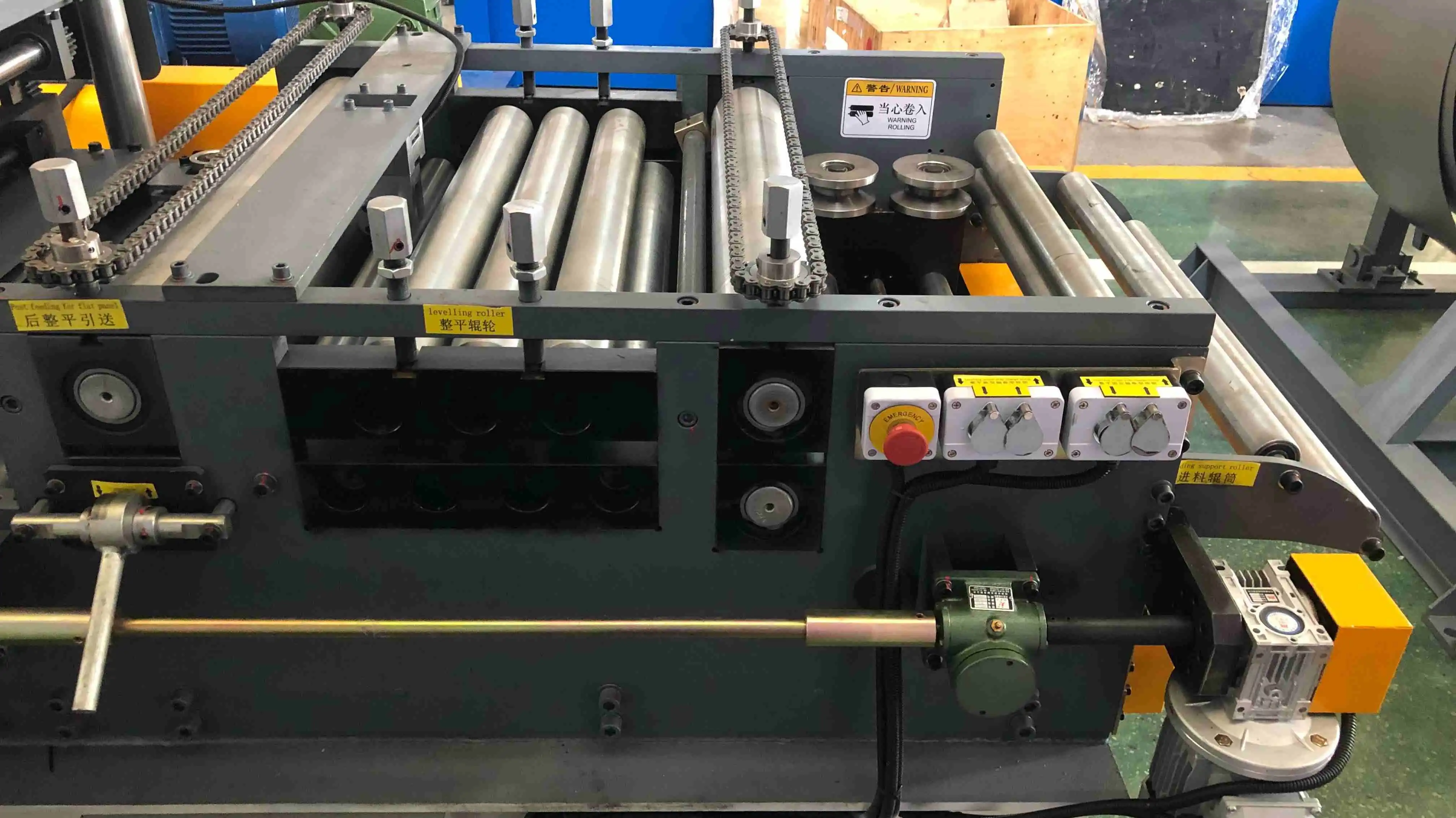
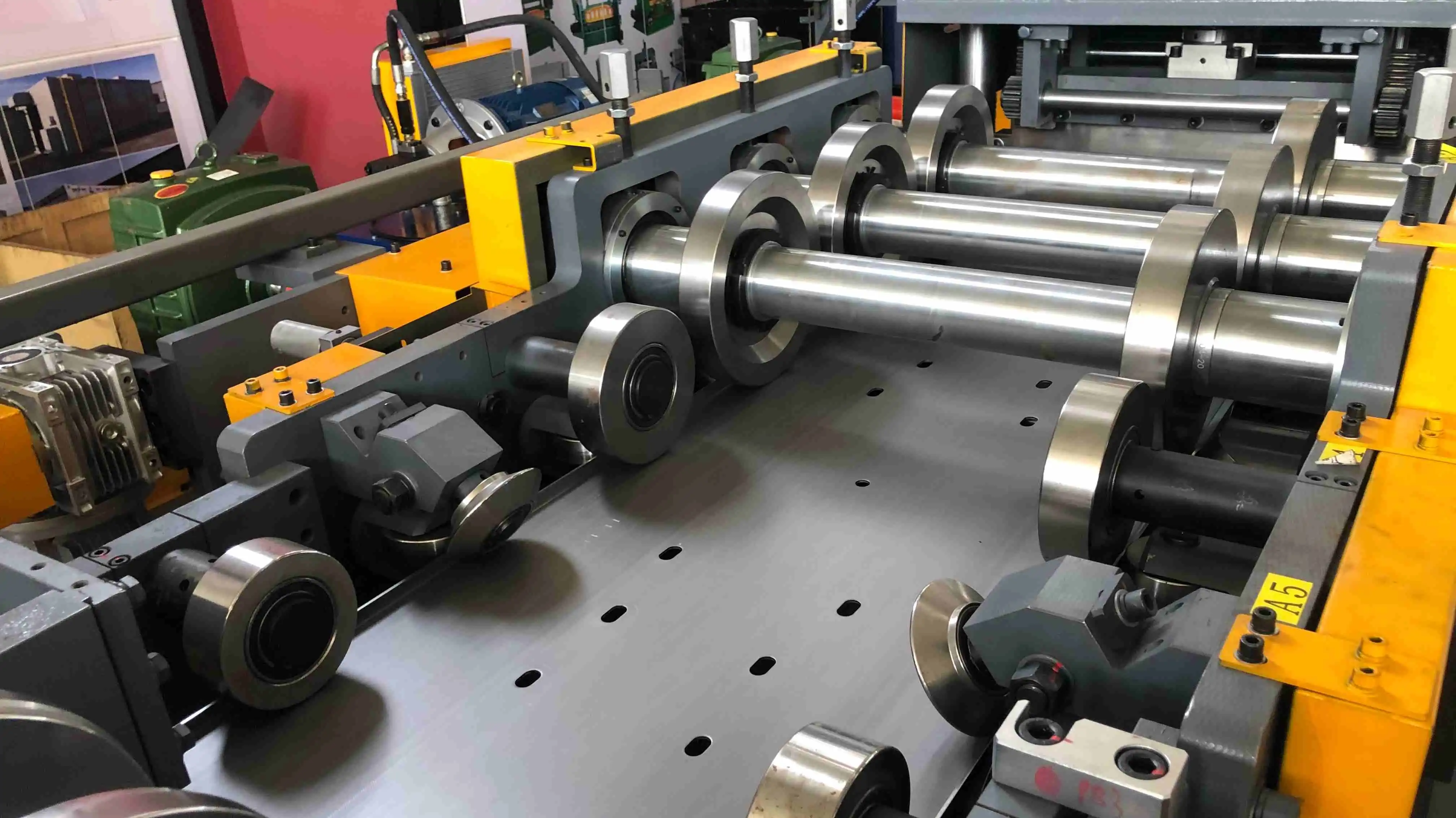
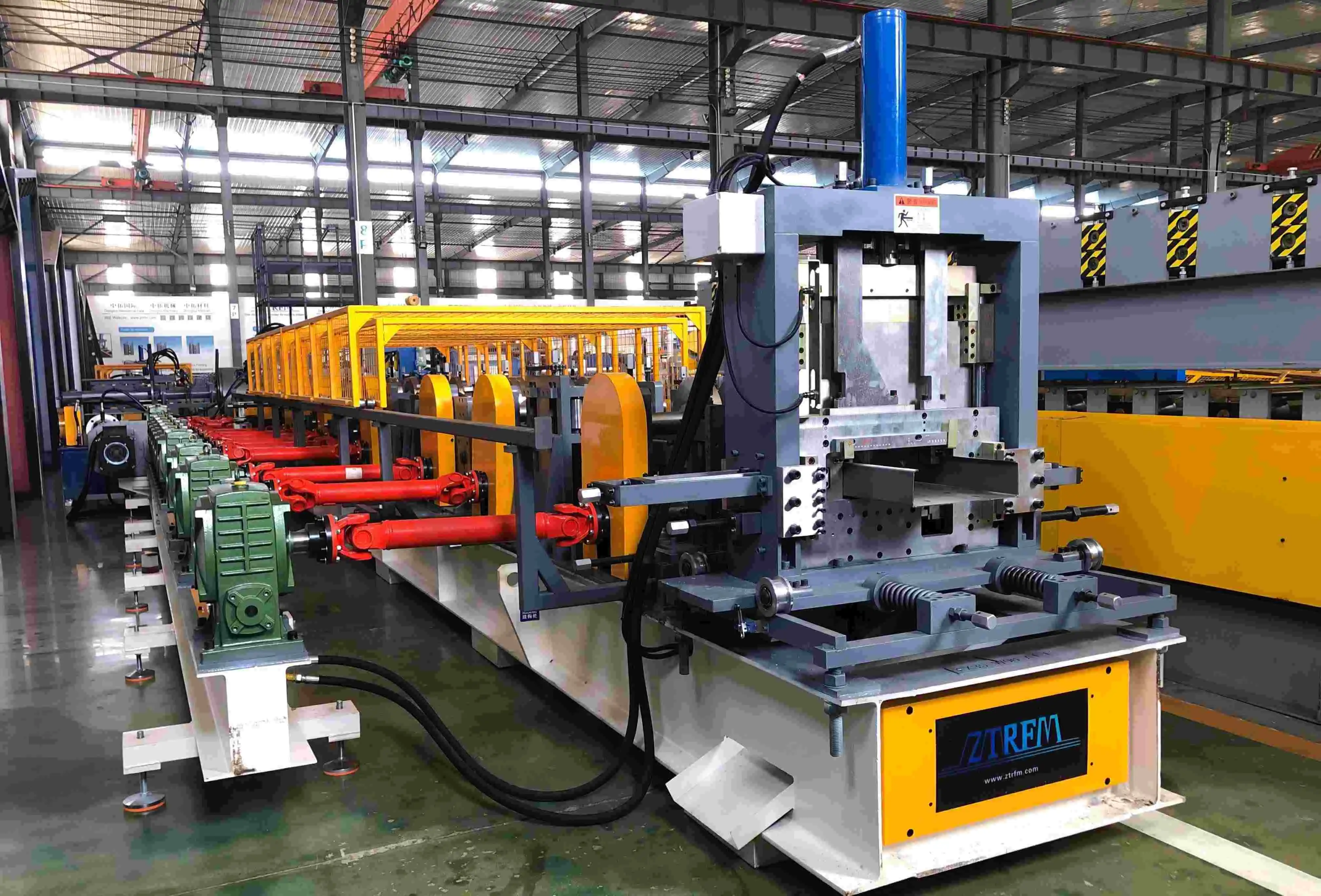
A typical automatic purlin machine is made up of several parts that work together and in sync with each other. At the entry point, a galvanized steel coil uncoiler with hydraulic expansion can handle coils that weigh up to 5 tons, and a servo-controlled moving system makes sure that the material always moves forward accurately within a ±1.0mm range. The main part of the system is made up of 16 to 20 roll-making stations. Each station has GCr15 hardened steel rollers that have been heated until the surface is HRC 58–62 so they can handle constant pressure against high-tensile G450- to G550-grade steel.
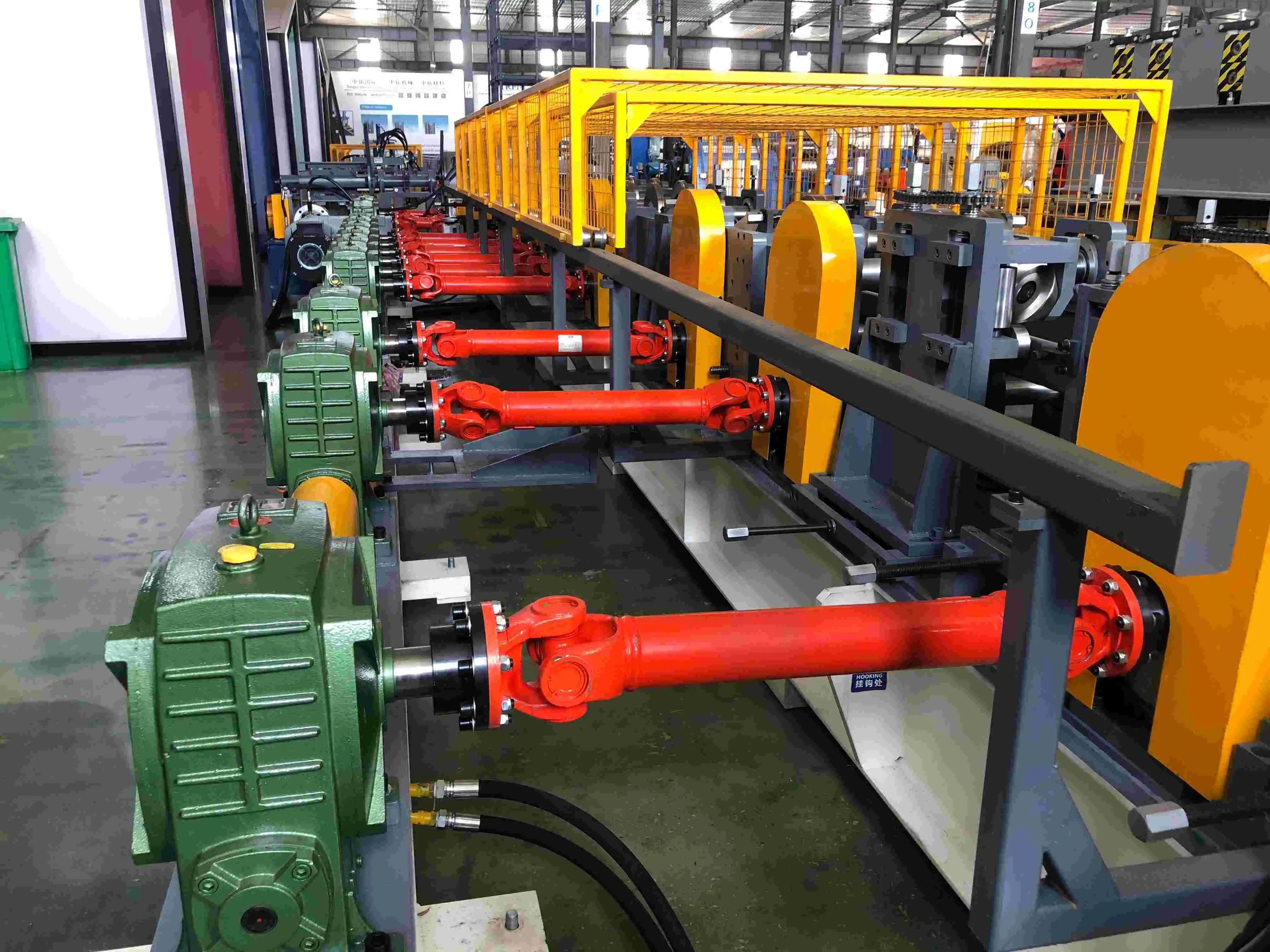
Our equipment's shafts are made of solid 40Cr steel and have diameters ranging from 70mm to 90mm. This keeps them from deflecting under heavy forming loads that could affect their accuracy. A PLC system, usually made up of Siemens or Mitsubishi programmable logic controllers connected to a tablet HMI panel, decides where each station is located. This lets workers enter measurement values digitally instead of adjusting mechanical parts by hand.
Workflow from Coil to Finished Purlin
Processing materials begins with coils on the uncoiler. Threading the steel strip through a levelling machine eliminates coil set and flattens the surface. In the roll forming section, progressive stations gently bend the strip into the desired C or Z shape. Between shaping, a hydraulic punching device creates mounting holes according to preset patterns. The holes are always ±1mm from the purlin ends.
After the profile form is excellent, the item proceeds through a post-cutting station with a flying shear or universal hydraulic cutter that can handle 40mm to 100mm heights without blade changes. The cutting equipment operates as the material moves, ensuring continuous output. The completed purlins are placed on a run-out table that automatically stacks them. They then undergo quality control and delivery.
Roll-forming stands' automated adjustment mechanisms allow size changes. Through the computer control interface, the system spins tooling stations or repositions roller assemblies to switch from C- to Z-sections. On fully automated systems, die changes take less than 10 minutes, compared to 4 to 8 hours by hand.
Step-by-Step Guide to Operating a CZ Purlin Roll Former
For operations to be safe and effective, they need to follow set processes for things like setting up the machines, keeping an eye on the production, and responding to problems. Knowing these operating steps helps keep downtime to a minimum and ensures that the quality of the output stays the same throughout production runs on the CZ Purlin Roll Former.
Pre-Operation Setup and Safety Verification
Before starting production, workers should do full safety checks that include checking the emergency stop, the position of the guards, and the hydraulic pressure. Check that all of the roll stations are lined up correctly based on the profile dimensions that were chosen by comparing the digital reading on the control panel to the production specs. The material you choose must be able to work with the machine. Galvanized steel between 0.8 mm and 3.0 mm thick, and its yield strength must not be higher than the machine's stated capacity.
Place the steel coil on the uncoiler mandrel and hold it in place with the air expansion system. This will make sure that the material unwinds in the right direction for shaping. As the machine is still being set up, physically feed the leading edge through the guide rollers, the leveler, and the first forming station. Manufacturers like ZTRFM offer professional installation services that include startup support, in which experts walk teams through the initial setup steps and help them find the best parameters.
Production Operation and Parameter Management
Turn on the control system and use the HMI to enter the production parameters, such as the cut length, purlin height, flange width, lip measurement, and hole pattern specs. The servo motor-driven feeding system will change the speed at which the material moves to meet the output rate that was chosen, which is usually between 15 and 22 meters per minute. Keep a close eye on the first few pieces and use calipers to measure important dimensions to make sure the shape fits the specs within ±1mm of the web and flange dimensions.
During the first production run, real-time changes may be needed to take into account differences in the material or the way that different types of high-tensile steel spring back. The PLC system shows where the making stations are and how much hydraulic pressure is in the system. This lets workers fine-tune roll gaps using digital inputs instead of turning cranks by hand. Keep the material tension steady from the unwinder to the automatic tension control system to stop the web from warping or the edges from becoming wavy.
Troubleshooting Common Operational Issues
Flange wave flaws usually mean that the forming pressure was too high or that the roll gap sets were off on the finishing passes. To fix this, either slowly lower the pressure on the last three places or turn on the built-in leveling unit at the machine's exit. If the places of the holes don't match what was planned, you should recalibrate the encoder input on the servo feeding motor and check the accuracy of the length measurement system on the punching station.
When material gets stuck, use the jog function on the control panel to quickly stop the machine and change the direction of the feed. Look for burrs on the tools or changes in the thickness of the material that are too big for the machine to handle at the jam position. Technical help is needed when PLC error codes show up, hydraulic systems lose pressure even though reservoir levels are fine, or the main drive system starts to vibrate in strange ways. In these cases, maker service must be contacted to keep the equipment from breaking.
Maintenance and Best Practices to Extend Machine Life
Systematic maintenance plans have a direct effect on the amount of time that production is up and running and how well the equipment works generally in CZ Purlin Roll Former manufacturing processes. Structured care routines stop sudden failures that stop production lines and cost a lot more to fix than the investments made in preventative maintenance.
Daily and Weekly Maintenance Routines
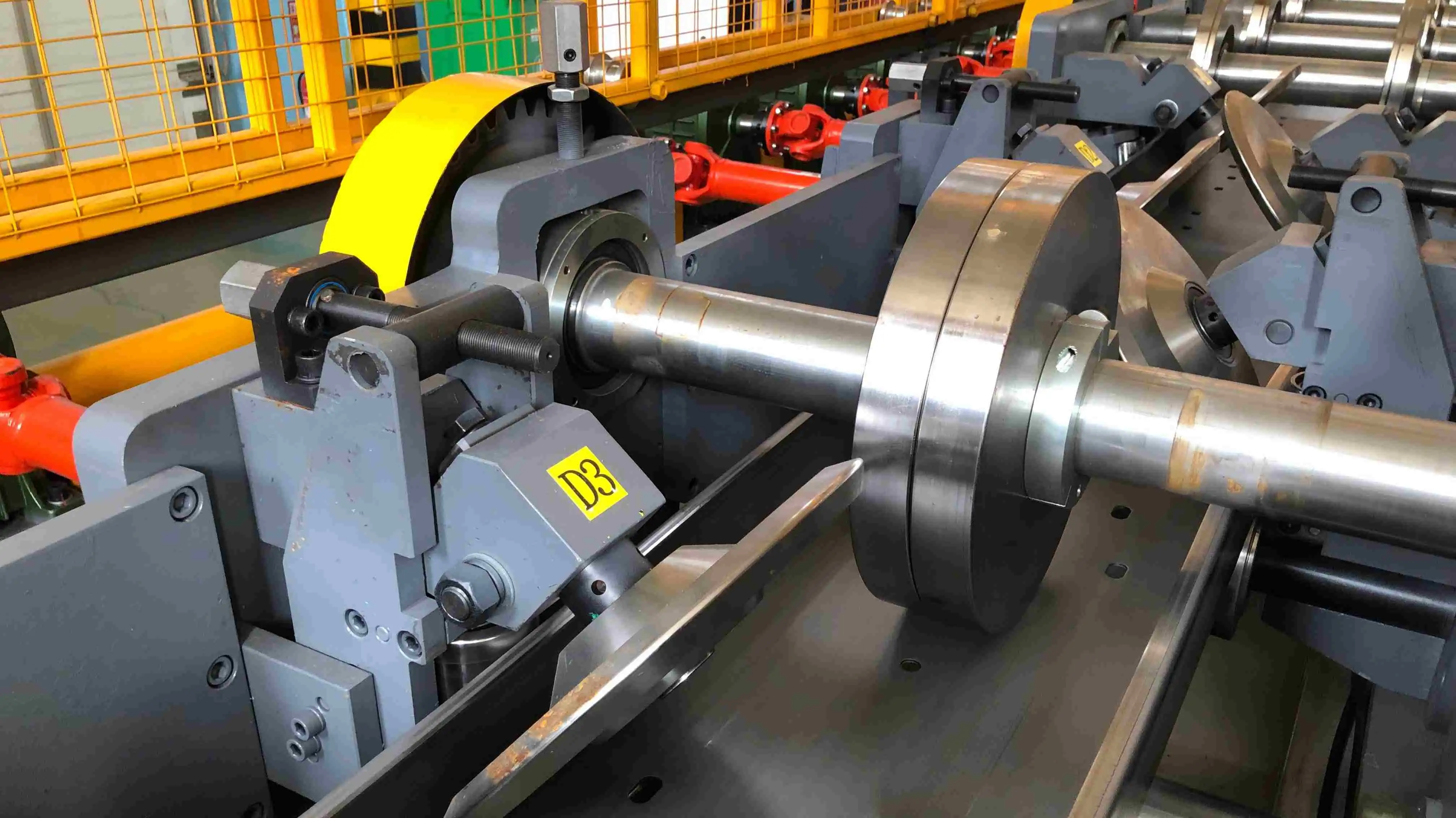
At the start of each production shift, the making rollers should be looked at visually for wear patterns, chips, or surface damage that could cause problems with the finished goods. Use non-abrasive cloths and approved liquids to clean the roller surfaces of metal bits and lubricant residue that have built up. Apply high-quality industrial oil to all chain drives as directed on the schedule placard that is attached to each lubrication spot. This should be done at least once every eight hours of operation.
Check the tank for hydraulic fluid levels and the lines for leaks, bulges, or surface cracks that mean they are about to break. The cutting station needs extra care. The sharpness of the blades should be checked once a week, and they should be sharpened or replaced when the quality of the cut gets worse, or burrs show up on the ends of the purlins. Servo motor cooling fans should not get too hot, which can damage electrical parts, so make sure there is no dust buildup on them.
Monthly Preventive Maintenance and Inspection Schedules
Full monthly maintenance checks the oil level in the engine and takes samples for pollution analysis. Every 2,000 hours of use or once a year, whichever comes first, you should change the transmission oil. Take off the covers of the roll-forming stations to check the shaft bearings for heat darkening or noise when they're turning. Replacing the bearings early is the best way to keep the shaft from getting badly damaged. Use micrometers to keep track of key roller diameters and plan roller refurbishment before diameter decreases reach 0.5 mm.
To keep programs from being lost when the power goes out, the PLC battery backup needs to be replaced every year. Electrical connection points all over the control box need to be checked for rust or looseness, and thermal imaging cameras can find hot spots that mean connections aren't working right before they break. Every 500 hours, hydraulic system filters need to be replaced, and pressure testing makes sure that the pump's performance stays within the manufacturer's guidelines.
Spare Parts Management and After-Sales Support
Keeping a stock of important extra parts reduces the amount of time that systems are down when they break. Hydraulic seal kits, cutting blades, drive chains, encoder units, and a set of widely used making rollers are all things that you need to keep on hand. Original equipment maker (OEM) parts are guaranteed to be the right size and made of the right material to meet the needs of the machine. Aftermarket replacements may be cheaper, but they may not work with the machine or wear out faster.
Support from well-known makers after the sale gives you professional help when you're having a hard time fixing a problem. Through internet-connected control systems, ZTRFM's global service network offers remote diagnostics. This lets techs look at machine data and working logs without having to visit the site. Most major parts come with warranties that last between 12 and 24 months. For businesses that need to guarantee maximum uptime, there are also longer service agreements that can be used.
Comparing CZ Purlin Roll Formers: How to Choose the Right Machine
When procurement teams look at cold forming tools, they have to look at a lot of technical and business factors to find solutions that meet output needs and stay within budget for a CZ Purlin Roll Former. Knowing the differences between types of tools and manufacturers can help you avoid costly problems where skills don't match up with operational needs.
Structural and Functional Differences
Dedicated C-section or Z-section machines are easy to use and require less money up front, but they aren't flexible when output needs change from one shape type to another. When it comes to convertible CZ types, they can be changed over manually, which takes 30 to 45 minutes, or automatically, which takes 5 to 10 minutes thanks to computer-controlled placement. The automated method works best for businesses that make a lot of profiles every day. The higher costs of the tools are justified by the savings in labor and downtime during changeovers.
Machines for beginners can make things 10 meters per minute, while industrial-grade systems can make things 25 meters per minute. When you go faster, you need stronger building. This means using heavier frame casting, precision-ground rollers, and servo-driven punching systems that work all the time instead of stop-and-punch systems that slow down production. Energy use is related to production capacity. Depending on the complexity of the shape and the width of the material, efficient machines use 20 to 35 kilowatts of energy.
Evaluation Criteria for Procurement Decisions
The building of the frame is the first thing that determines how long a machine will last. Cast iron bases are more rigid than welded steel frames, which can become out of line over time. Specifications for roller materials show how long they are expected to last. For example, in high-volume production settings, Cr12MoV die steel has better wear protection than normal tool steel. Different types of drive systems need different amounts of upkeep. For example, chain drives need to be adjusted and oiled on a regular basis, while gearbox systems don't need much attention.
When figuring out a price, you have to think about the total cost of ownership, which is more than just the buying price. Equipment that needs to be replaced often with consumables or that doesn't have extra parts easily available causes production to stop and expensive emergency shipping, which are hidden costs. When contractors or makers set up more than one production facility, they can use bulk buy rates. These discounts usually start at orders of three units or more.
New Equipment versus Pre-Owned Machines
When you buy new machinery, you get a guarantee, the latest technology, and the ability to customize it to fit your business needs. Modern control systems have easy-to-use interfaces, the ability to log production data, and the ability to watch from afar, which older equipment generations did not have. Financing plans through manufacturers or third-party lenders spread out capital costs over the lifecycles of equipment, keeping operating capital for goods and running costs.
Used tools are cheaper to buy, which makes them a good choice for new businesses or companies that want to test the market demand before committing to full-scale production. Risks include not knowing the past maintenance history, the possibility of hidden wear that means parts need to be replaced too soon, and old control systems that don't have spare parts available. Before buying, experienced technicians should do thorough checks to find out the mechanical state and remaining service life of the equipment. This helps people make smart decisions about how much to pay for used equipment.
Applications and Industry Use Cases of CZ Purlin Roll Formers
Dual-profile forming equipment is very flexible and can be used in a wide range of building and industrial manufacturing fields. CZ Purlin Roll Formers produce structural steel framing that is stronger, lasts longer, and is easier to install than other materials.
Steel Building and Warehouse Construction
A lot of the support for roof and wall panels in pre-engineered metal buildings comes from cold-formed purlins, which are secondary structural parts. C-sections are simple span purlins, and each piece rests on a rafter. Z-sections, on the other hand, can cover longer distances by lapping. This is possible because the geometry of the Z profile allows for layered overlap, which makes continuous beams that can handle higher loads across wider bay spacings. Purlins with gauge widths ranging from 14 to 20 are used for projects spanning 5,000 to 500,000 square feet. These differences are made by forming machines by making simple parameter changes instead of large tooling changes.
Agricultural buildings, like chicken coops and equipment storage barns, need structural parts that don't rust and can handle being exposed to chemicals from pesticides or animal waste and damp conditions. The hot-dip galvanized steel purlins that these tools make have a zinc covering that protects them and makes them last longer than 25 years in tough farming settings. The height can be changed from 40mm to 100mm, which can handle different building spans and roof layouts with different structural load needs.
Solar Mounting Structures and Industrial Applications
Heavy-gauge C-sections are used as main support rails in photovoltaic ground mounting systems. Solar panels are attached to these rails using clamp devices. For these uses, the panels need to have very exact hole patterns for connection points and to stay straight so that they don't get out of line, which lowers the efficiency of energy production. The servo motor control and automated punching systems of the machine make sure that the measurements are correct, and the twist errors are kept below 1 mm per meter of length.
The same forming technology is used by industrial companies that make shelving systems, wire management racks, and support brackets to make unique shapes that fit the designs of their products. Manufacturers of equipment sell roll forming tools to businesses that make a lot of these parts because stamping or welding can't match the speed and consistency of cold forming. The automatic operation cuts down on the need for workers and training, so managers can handle production with little to no specialized knowledge.
Client Success Examples
A steel building builder in the Midwest was able to make 40% more purlins after switching from separate C and Z machines to a combined CZ system with automatic changeover. Because there was no longer any pause between profile changes, the business was able to take on smaller special orders that it had turned down before because of the cost of setup time. In the same way, a Californian company that makes solar mounting structures cut the number of rejects from 3.2% to 0.8% by replacing older chain-driven machines that were less accurate in their placement with servo-controlled machines.
These operational improvements demonstrate how modern forming technology solves real production problems like limited speed and flexibility, inconsistent quality, and heavy labor requirements that make makers less competitive in steel building markets. Precision engineering, robotics, and years of experience in manufacturing work together to make equipment investments pay off by increasing output and lowering running costs.
Conclusion
To become a master CZ Purlin Roll Former operator, you need to know how the equipment works technically, follow set processes, and stick to strict preventative care plans. The machine can make both C and Z profiles through computer-controlled automation, which meets important efficiency needs in the steel building production industry. When making a procurement choice, the original capital costs should be weighed against the production speed needs, the changeover frequency needs, and the total ownership costs. These flexible forming systems give modern manufacturing businesses the accuracy, stability, and output they need to stay competitive, whether they're in the building construction, solar infrastructure, or industrial fabrication markets.
FAQ
1. What materials can a CZ purlin roll former process?
The machine can work with galvanized steel strips that are between 0.8 mm and 3 mm thick. It can handle material types like G450 and G550 high-tensile steel, which are often used in structural applications. There is no damage to the surface of hot-dip galvanized coatings up to 600g/m² as they go through making stations as long as the rollers keep the right surface finish. Special roller coats are needed to keep pre-painted steel and aluminum alloys from getting marks or coatings transferred during the rolling process.
2. How long does installation and commissioning take?
For normal setups, professional installation teams can usually finish mechanical assembly and electrical connections in 3 to 5 business days. Commissioning includes setting up parameters, doing test runs, and teaching operators. This adds about a week to the time it takes to go from delivery to full production capacity. Support from the manufacturer during this part makes sure that the system is set up correctly and meets the needs of the individual site.
3. What technical support is available after purchase?
Full after-sales service includes online diagnostics through control systems that are connected to the internet, expert help over the phone for problems with operation, and on-site service visits for serious problems that need to be fixed by hand. Video lessons, operation guides, and maintenance plans are all useful reference materials that internal maintenance teams can use throughout the life of an item.
Partner with ZTRFM for Your Purlin Production Needs
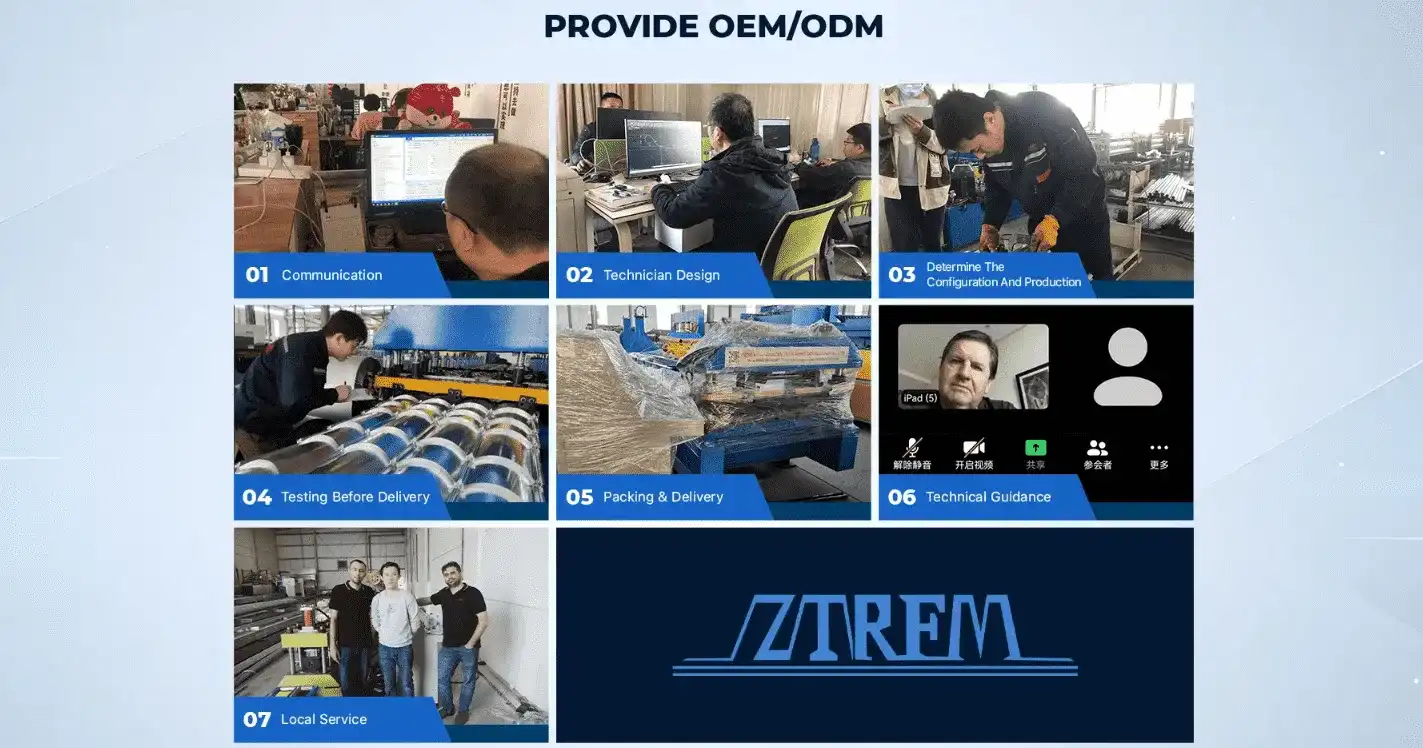
ZTRFM offers modern cold roll forming solutions that are backed by ISO9001, CE, and CAS certifications. Our successful installations in 150 countries show that we are experts in production around the world. Our CZ Purlin Roll Former has a servo motor for accuracy, GCr15 hardened rollers for longevity, and easy-to-use computer settings to help you get the most out of your production. We offer full OEM and ODM services, providing complete systems that are tailored to your unique structural steel needs, from moving raw materials to stacking finished products. Whether you're a company that makes light steel structures and needs quick changeovers or an engineering firm that needs certified equipment for foreign projects, our expert team can help you match machine specs to your production goals. You can email our experts at zhongtuorollforming@gmail.com to talk about your needs, get full specs from a reputable CZ Purlin Roll Former maker, or set up a video tour of our automated forming systems. We help you succeed by becoming your full-lifecycle partner, from choosing the right tools to helping with installation, teaching operators, supplying spare parts, and providing ongoing expert support.
References
1. American Iron and Steel Institute. (2022). Cold-Formed Steel Design Manual: Specification for the Design of Cold-Formed Steel Structural Members. Washington, DC: AISI Publications.
2. Chen, W., and Ye, J. (2019). Advanced Roll Forming Technology in Metal Construction. Journal of Manufacturing Processes and Equipment, 43(2), 156-172.
3. International Code Council. (2021). International Building Code: Structural Steel Requirements for Pre-Engineered Buildings. Country Club Hills, IL: ICC Publications.
4. Lindgren, M. (2020). Roll Forming Handbook: Process Design and Optimization. Boca Raton, FL: CRC Press Engineering Publications.
5. National Association of Architectural Metal Manufacturers. (2023). Technical Guidelines for Cold-Formed Steel Purlin Systems. Chicago, IL: NAAMM Standards Documentation.
6. Zhang, L., and Thompson, R. (2021). Automation and Quality Control in Modern Roll Forming Operations. International Journal of Advanced Manufacturing Technology, 112(5-6), 1847-1863.
_1750323743240.webp)