- English
- French
- German
- Portuguese
- Spanish
- Russian
- Japanese
- Korean
- Arabic
- Irish
- Greek
- Turkish
- Italian
- Danish
- Romanian
- Indonesian
- Czech
- Afrikaans
- Swedish
- Polish
- Basque
- Catalan
- Esperanto
- Hindi
- Lao
- Albanian
- Amharic
- Armenian
- Azerbaijani
- Belarusian
- Bengali
- Bosnian
- Bulgarian
- Cebuano
- Chichewa
- Corsican
- Croatian
- Dutch
- Estonian
- Filipino
- Finnish
- Frisian
- Galician
- Georgian
- Gujarati
- Haitian
- Hausa
- Hawaiian
- Hebrew
- Hmong
- Hungarian
- Icelandic
- Igbo
- Javanese
- Kannada
- Kazakh
- Khmer
- Kurdish
- Kyrgyz
- Latin
- Latvian
- Lithuanian
- Luxembou..
- Macedonian
- Malagasy
- Malay
- Malayalam
- Maltese
- Maori
- Marathi
- Mongolian
- Burmese
- Nepali
- Norwegian
- Pashto
- Persian
- Punjabi
- Serbian
- Sesotho
- Sinhala
- Slovak
- Slovenian
- Somali
- Samoan
- Scots Gaelic
- Shona
- Sindhi
- Sundanese
- Swahili
- Tajik
- Tamil
- Telugu
- Thai
- Ukrainian
- Urdu
- Uzbek
- Vietnamese
- Welsh
- Xhosa
- Yiddish
- Yoruba
- Zulu
Why Choose a Tr4/ Tr5 Roof Sheet Machine for Metal Roofing?
Getting the right roll-making tools is very important for your metal roofing production line. The Tr4/ Tr5 roof sheet machine stands out in today's market because it makes precise triangular shapes (TR4, TR5, and TR6) that meet structural needs while keeping production costs low. Continuous cold forming turns coil steel into interlocking roofing panels on these machines. This cuts down on waste and ensures uniform quality over thousands of square meters. Their ability to work with thicknesses between 0.3 and 1 mm at speeds of up to 25 meters per minute solves the main problem of how to balance speed with accuracy in measurements, which is something we hear from makers of roofing systems all the time.
Understanding TR4 and TR5 Roof Sheet Machines
What Defines a Trapezoidal Roll Forming System?
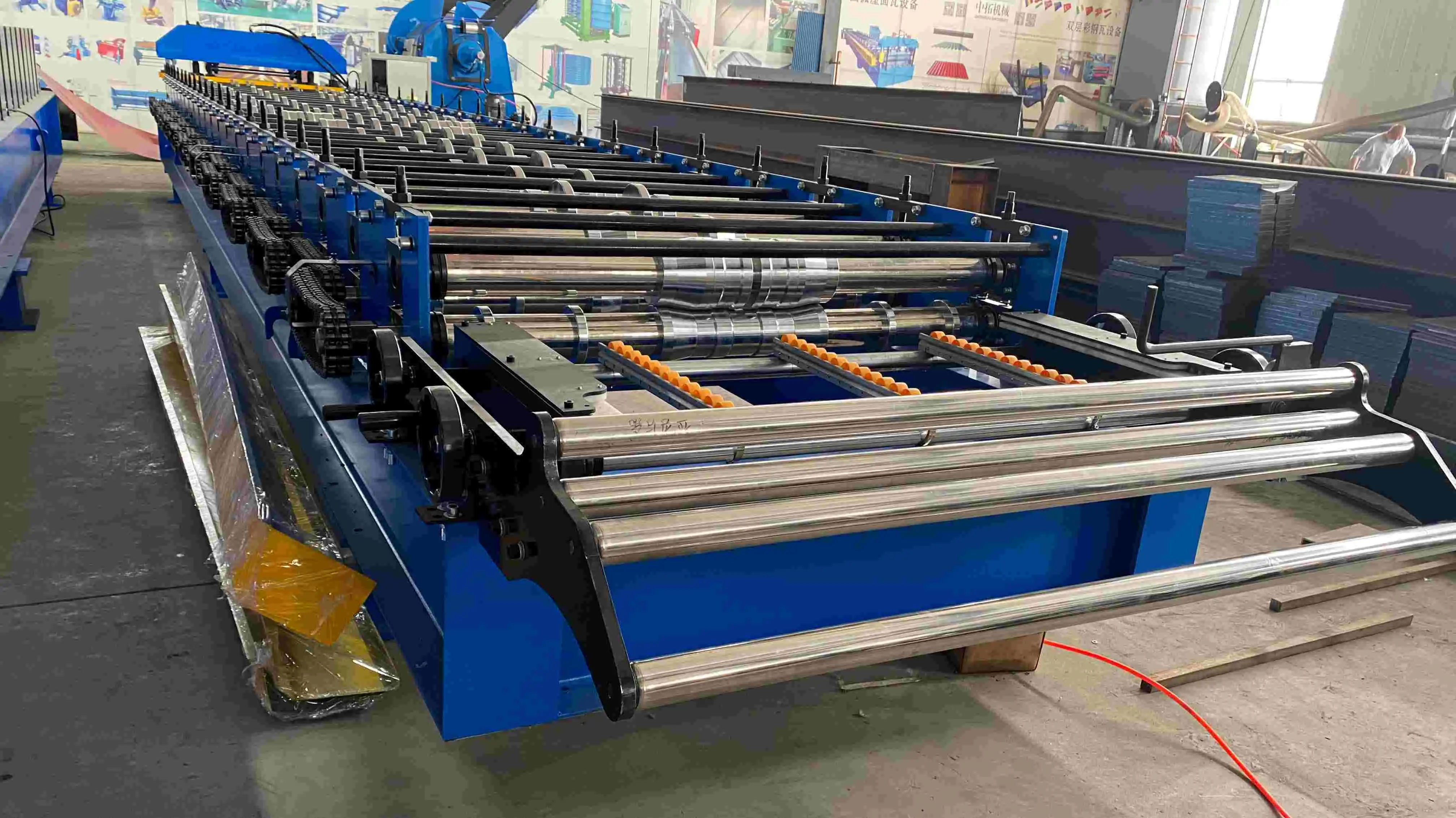
A trapezoidal roll former is a special piece of machinery that uses a series of roller stations to make flat metal coils into curved shapes. Unlike pressing or molding by hand, this cold forming method keeps the protective layer on pre-painted or galvanized steel while slowly bending it to add depth to the structure. The machine constantly feeds material through 13 to 15 forming stations, where each station makes the sheet a little bit smaller as it gets closer to its finished shape.
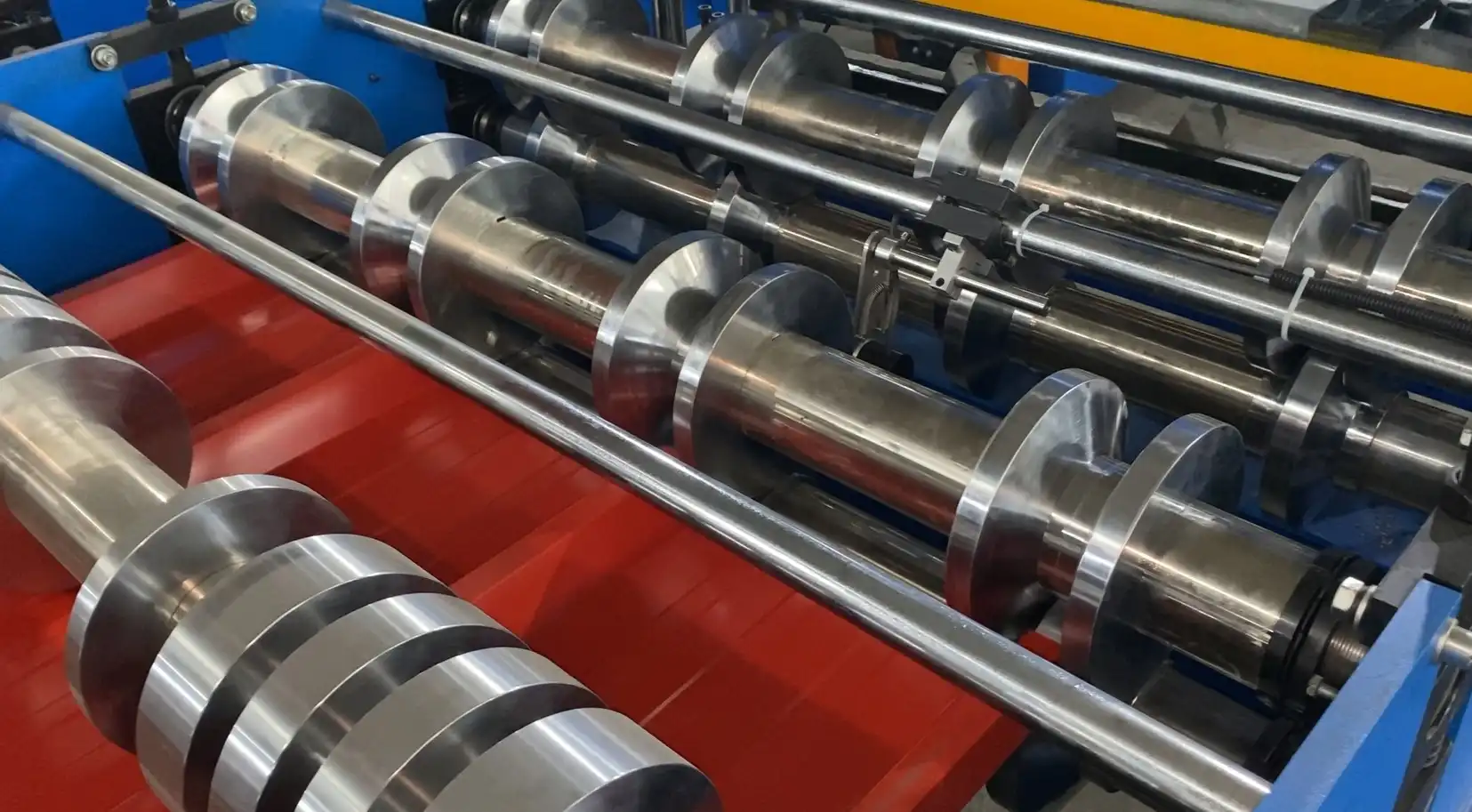
Over the past ten years, our engineering team at ZTRFM has improved this process by adding 45# steel wheels that are precision-ground and have a chrome finish to protect the surface. The system can handle galvanized, galvalume, and PPGI coils, so it can adapt to the different material tastes found in U.S. markets, from coastal areas that need better corrosion resistance to interior areas that want to save money.
Core Components and Working Principles
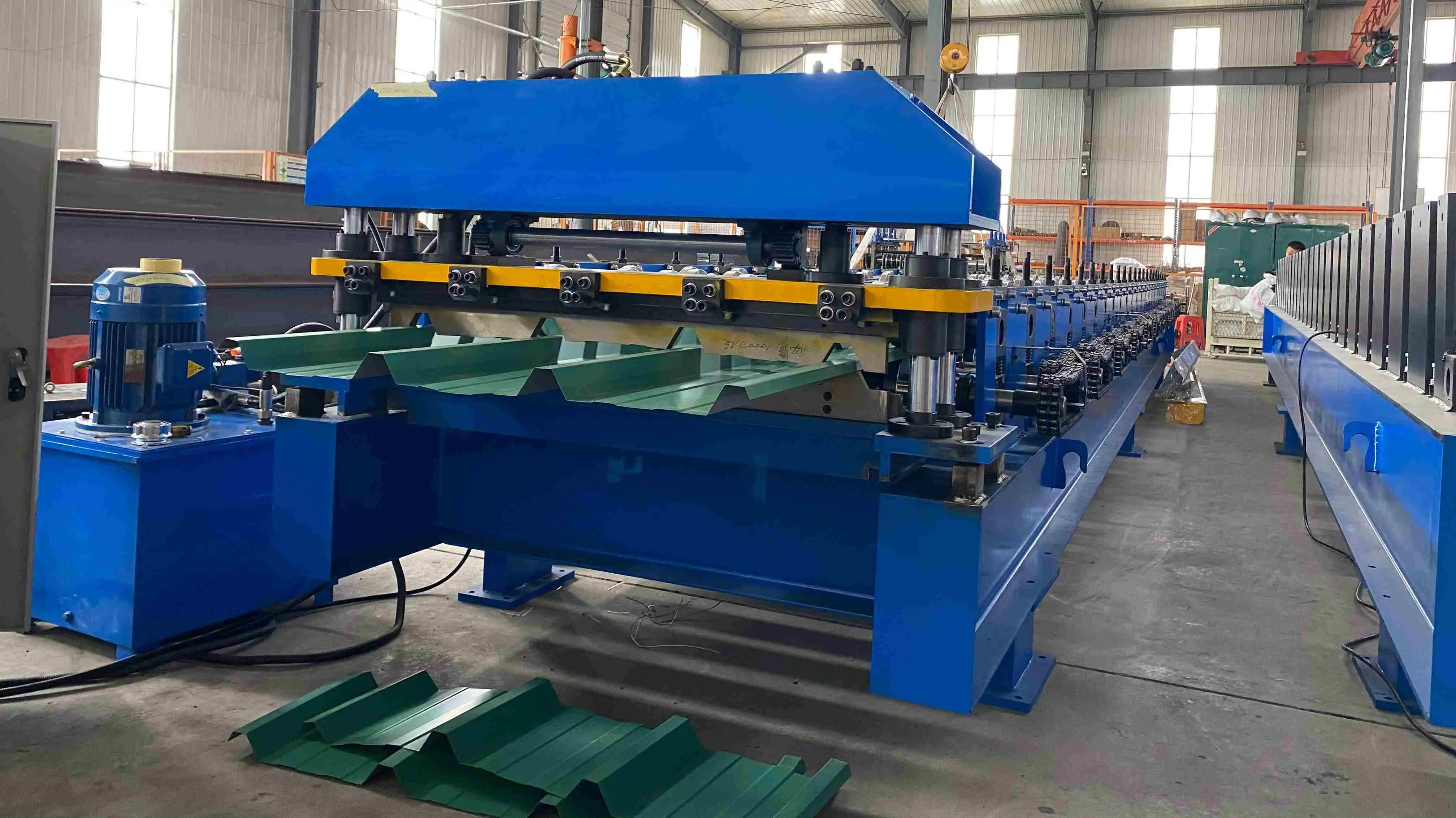
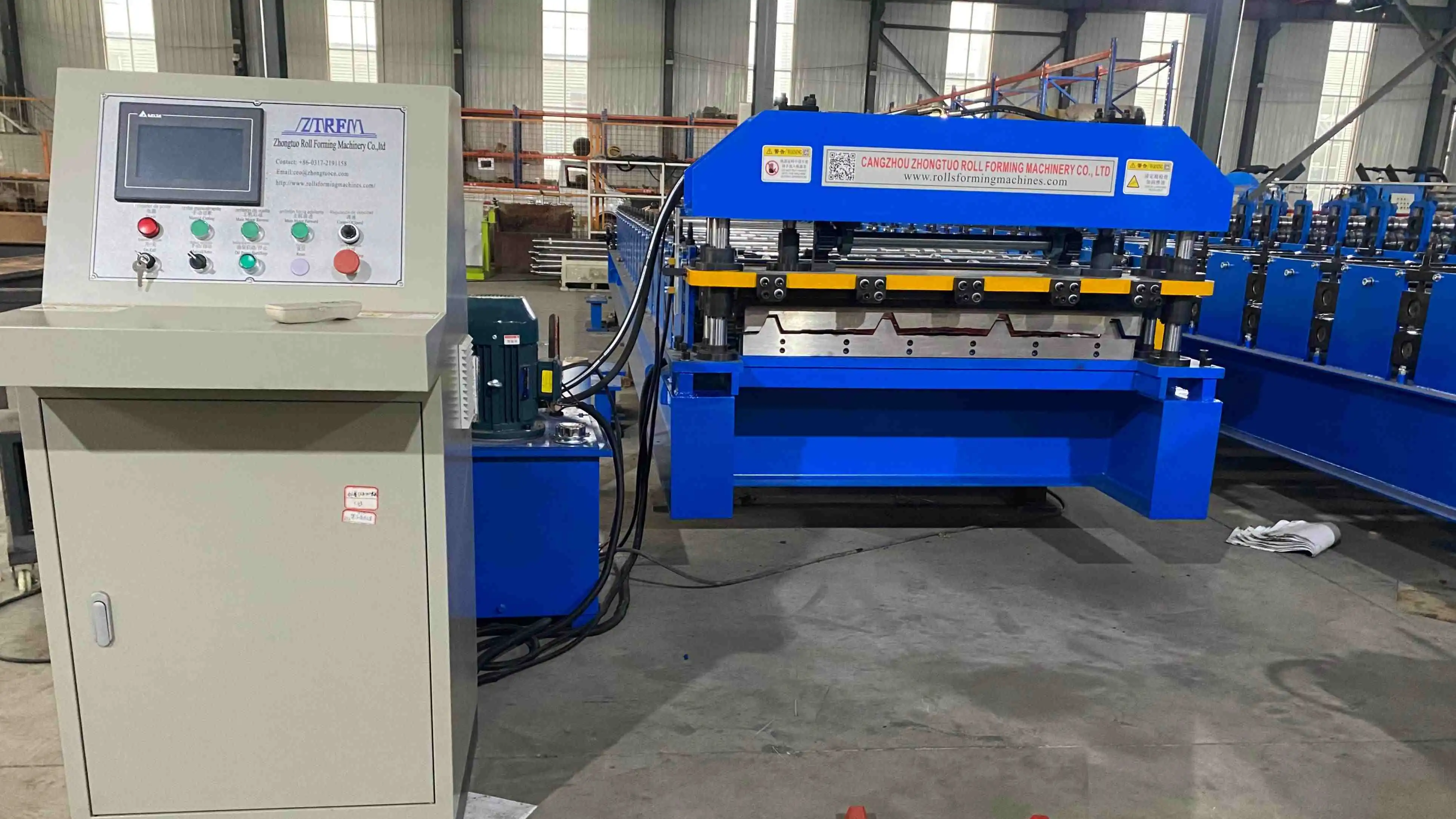
The machinery is made up of several parts that work together. Depending on the size of the output, a manual or hydraulic decoiler holds and releases the coil while keeping the strain in check. After that, the material goes through roller stations with 80 mm diameter shafts. Upper and lower dies gradually bend the sheet into triangular waves. A 4 kW hydraulic cutting unit is controlled by a PLC with a tablet that changes speeds, measures lengths, and sets the cut sequences.
This automation fixes a common problem: panels of different lengths make installation more difficult on-site. The control screen lets operators enter the sizes they want, and the machine then sends out sheets with a limit of ±1 mm. When roofing workers need panels that line up properly over long distances without having to be cut in the field, this level of accuracy is important.
Technical Specifications That Matter
With speeds between 15 and 25 meters per minute, makers can change the amount of work they do based on the needs of the project. Smaller businesses that work on cheap housing projects might only go 15 meters per minute to protect their initial investments. On the other hand, high-volume businesses that serve commercial builders speed up to 25 meters per minute during busy times. The thickness range of 0.3 to 1 mm covers normal roofing sizes, protecting the structure without using too much material.
As a business grows, it can choose from different stacking choices, such as manual run-out tables for starts on a budget or powered stackers for fully automated lines. Procurement teams like this modularity because they need tools that can be changed as production needs grow instead of becoming useless.
TR4 vs TR5 Roof Sheet Machines: Comparison and Decision-Making
Profile Geometry and Structural Performance
The Tr4/ Tr5 roof sheet machine TR4 shape has four ribs running across its width, which gives it an average cover width of about 1000 mm when side-lap overlap is taken into account. This configuration works well for living and commercial buildings that can hold a modest amount of weight. The TR5 shape has an extra fifth rib, which raises the section modulus and, in turn, the wind uplift resistance. This is very important for warehouses in hurricane-prone areas or industrial buildings that have to deal with a lot of HVAC loads.
Field data from setups we've helped with shows that TR5 panels can handle 15-20% more static loads than TR4 panels of the same size. This means that engineering companies that define roof systems will need fewer structural supports and lower framework costs, which will more than make up for the small increase in the cost of forming tools.
Cost Efficiency and Material Utilization
Profitability is directly affected by material output. When making standard panels, a TR4 machine set up for a 1000 mm coil width makes very little waste because the profile shape matches up with standard coil sizes. Some sources may not have as many 1200 mm coils on hand for TR5 setups that need to keep the proportional rib spacing. This could affect the lead time for raw materials.
The total amount of energy used during operation, including the main motor and hydraulic unit, stays about the same across all types, at 11 to 15 kW. But there are differences in how much can be made. For example, TR5's extra making complexity could slow speed by 10-15% on some machine sets. This is something to think about when figuring out how much each unit costs to make during high-volume runs.
Maintenance Demands and Operational Lifespan
Core parts for both types of profiles are the same; roller machining is what makes them different. Changing from making TR4s to TR5s used to require full roller changes, which took 4 to 6 hours of downtime. Modern double-layer or cassette-change systems cut this time down to less than an hour, which makes them appealing to makers who want to serve a wide range of customers. We added quick-change cassettes to new ZTRFM designs because roofing system makers were upset about the time they lost making products when profiles changed.
Material strength and covering care affect how long a roller lasts. Chrome-plated 45# steel rollers can usually handle more than a million linear meters of work before they need to be replaced, as long as they are kept in good order. This longevity solves a big problem for smaller companies that don't have their own machining capabilities—longer service intervals mean fewer downtimes and less reliance on technical help from outside the company.
Benefits of Choosing TR4/TR5 Roof Sheet Machines for Metal Roofing
Enhanced Production Efficiency and Scalability
High-speed forming at 25 m/min lets a single shift make more than 12,000 linear meters of material every day, which is enough for several medium-sized industrial roofing jobs to be done at the same time. This throughput is very important for builders who have to stick to tight building plans because of weather windows or penalty terms. We've seen clients get their money back on machine purchases in 18 to 24 months just by getting projects done faster and spending less on labor than when they did things by hand.
Scalability is more than just speed in Tr4/ Tr5 roof sheet machine. Roll forming lines are made up of separate modules that can be added on to in small steps. For example, driven stackers, automatic measuring systems, or dual uncoilers for continuous operation can all be added. Startups can start with basic parts and add on as demand grows, so they don't have to worry about spending too much money on capacity at the beginning. This method of investing in stages makes sense for small companies that make metal goods and want to get into the roofing business.
Seamless Integration and Energy Advantages
Trapezoidal forming lines can be added to existing production facilities without making major building changes. The machines usually take up an area 8 to 12 meters long, and they need standard three-phase power. 380V/50Hz or 440V/60Hz setups work with U.S. electricity standards. Installation, which includes alignment checks and test runs, takes three to five days, which doesn't interfere too much with current activities.
Energy economy comes from the way the cold form is made. When compared to thermal-forming methods, this method uses 40–60% less energy because it doesn't need to be heated as hot rolling or casting does. As energy prices rise in the U.S. and environmental rules get stricter, this advantage becomes more important. Some of our clients have used the energy savings to get LEED approval points for their buildings, which makes them more competitive for green building projects.
Maintenance Simplicity and Service Reliability
When we made our trapezoidal mowing systems, we made sure they would be easy to repair in the field. Cutting blades, drive chains, and hydraulic seals are all common wear parts that can be bought from industrial sources all over North America. This means that regular maintenance doesn't have to be sent overseas. The PLC control systems use Siemens or Delta platforms that most industrial workers are familiar with. This makes debugging easier.
Simple preventative maintenance plans include eye checks every day, greasing of the drive chains once a week, and alignment checks every month. This ease of use is very important for companies that don't have a lot of expert staff. During installation, we give full training to workers so they know how to do regular maintenance and spot early signs of component wear that could lead to production stops.
Procurement Guide: How to Buy TR4/TR5 Roof Sheet Machines
Identifying Qualified Manufacturers and Suppliers
To find reliable roll forming tools, you need to check the certifications and output history. The ISO 9001 certification shows that the quality is managed in a planned way, and the CE marking shows that the product meets safety and electromagnetic compatibility standards that are necessary for U.S. imports. We suggest getting lists of references from past clients and, if possible, visiting the plant in person or through videoconferencing to get a better idea of how well it can make things.
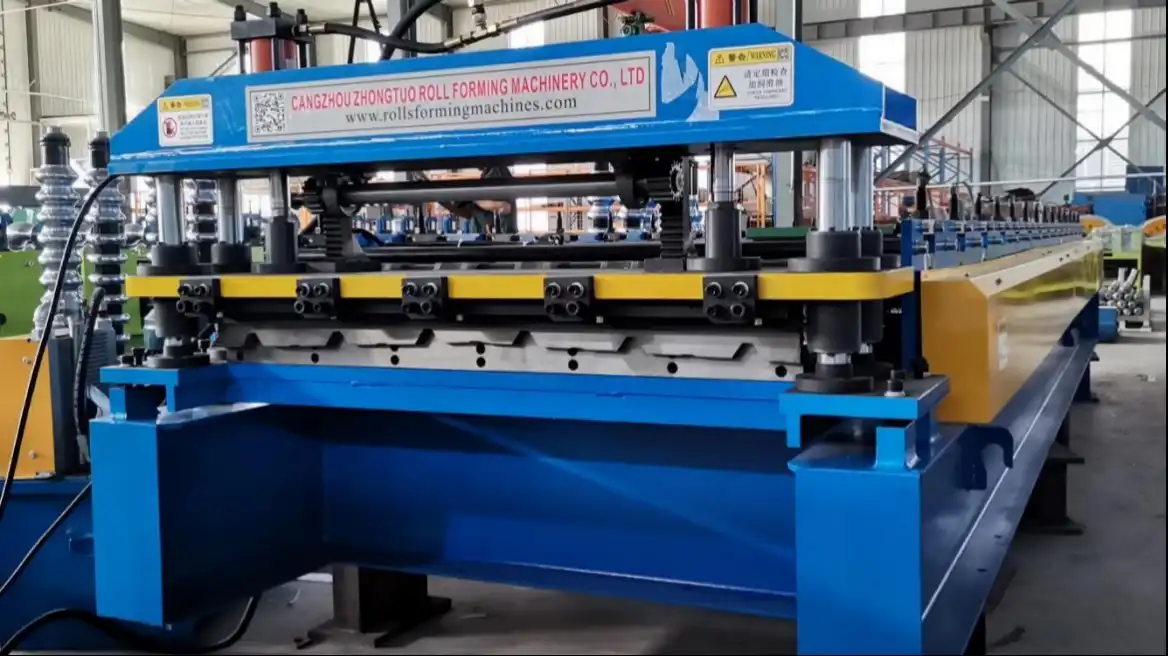
The ZTRFM factory in Cangzhou is certified by both ISO 9001 and CAS. Since our start in 2014, we have sent equipment to more than 150 countries. Because we've delivered goods all over the world, we know how to deal with issues like customs paperwork, power changes, and shipping processes that can be tricky for companies that only sell in the United States trying to sell their products in other countries. Our clients appreciate this skill when they need to coordinate the arrival of tools with installation teams and building plans.
Pricing Structures and Payment Flexibility
Prices for trapezoidal making machines range from about $25,000 to $65,000, based on how automated they are, how fast they can make things, and what other parts they need. For companies that want to save money, entry-level manual setups work well. For high-volume makers, fully automated systems with powered stacking and dual uncoilers work best. We make quotes clear by listing the costs of the base machine separately from the costs of any extra features. This way, buyers can decide which investments to make based on their current needs versus their plans for future growth.
Payment terms usually include a 30% deposit when the order is confirmed, 60% before the goods are shipped, and 10% when the job is done and the buyer is happy with it. This step-by-step process protects both buyers and sellers. Buyers keep the power to make sure the right hiring happens, and sellers get working capital to buy supplies. We've also set up lease partnerships with equipment loan companies for U.S. buyers who would rather treat operational costs as capital expenditures than capital expenditures.
Customization Capabilities and Warranty Assurances
Standard machines can handle common profile sizes, but companies that make roofing systems often need custom shapes that match building codes or current product lines. Custom roller gear development usually adds 3–4 weeks to wait times and raises the cost of equipment by 15–20%, but it keeps existing customers from having problems.
Our normal guarantee covers all mechanical and electrical parts for 18 months from the date of installation or 24 months from the date of shipment, whichever comes first. It does not cover consumables like cutting blades. There are options for longer warranties and preventative maintenance contracts. These are especially useful for foreign engineering companies that send equipment to remote areas where it can be hard to get a technician there quickly. These service agreements include remote tests every three months and on-site checks once a year, which keeps unexpected downtime to a minimum.
Technical Support and After-Sales Service for TR4/TR5 Machines
Installation Guidance and Operator Training
When something is installed correctly, it will work reliably for years to come. Our technical team makes detailed foundation plans that show the sizes of the concrete pad and where the anchor bolts should go to keep the building from shaking. Technicians check the electrical connections, set the PLC's settings for material thickness, and run test groups to make sure the accuracy of the profiles meets the requirements during commissioning.
Three days of training teach operators how to start and stop the machine, add materials, fix common problems like drops in hydraulic pressure or PLC error codes, and do basic maintenance tasks in Tr4/ Tr5 roof sheet machine. We provide training in English and include extra video materials that users can watch at a later time. This fills in the knowledge gap that small factories with few experienced metalworking staff often face.
Preventative Maintenance and Troubleshooting Protocols
We provide an in-depth care manual with lubrication plans, inspection notes, and information on when to repair parts. Cutting blades, for example, need to be sharpened every 200,000 meters of production. Roller bearings, on the other hand, can last between 5 and 7 years in everyday use. Setting up these service processes stops major failures that stop whole production lines.
Modern PLCs have built-in remote debugging features that let our technical support team figure out what's wrong over the internet. Often, they can fix the problem without sending out techs. This feature has been very helpful when there are problems in the supply chain, like when there are travel limits or parts shortages that could make downtime last for weeks instead of days.
Spare Parts Accessibility and Upgrade Pathways
We keep a parts warehouse in North America stocked with common consumables and important parts, which lets us send anywhere in the entire US in two to three days. We suggest that makers who work multiple shifts or in rural areas keep a stock of spare parts on-site. This should include things like hydraulic seals, drive chains, and electrical contactors. This is usually an investment of $3,000 to $5,000 that saves a lot of money in lost production.
Technology keeps getting better. As market needs change, machines that are already in place can be upgraded to include servo-driven cutting systems for better accuracy or integrated drill stations for making holes for fasteners. This makes the equipment more useful over time. This ability to "future-proof" an investment gives buyers peace of mind that their money will be well spent even after the original setup is done.
Conclusion
When picking trapezoidal forming tools, it's important to carefully weigh the technical skills against the needs of production and growth plans. Both the TR4 and TR5 profiles are good for different types of customers. The TR4 profile is great for low-cost domestic uses, while the TR5 profile is better for demanding business and industrial uses. Setup is easier, upkeep is easier, and the profiles are more accurate than they used to be. This is because modern roll forming machines use PLC automation, lasting component selection, and precision engineering to fix these problems. Buyers should look at more than just the initial cost of an item. They should also consider the total costs of ownership, such as how much energy it uses, how easy it is to get replacement parts, and how quickly expert help responds. In the end, the investment depends on how well you fit the machine's skills to your customers, output volume, and operational experience. This way, you can be sure that the equipment helps your business grow instead of holding it back.
FAQ
1. Can one machine produce both TR4 and TR5 profiles efficiently?
Multiple patterns can be made on a single machine frame with modern double-layer or cassette-change methods. In double-layer setups, TR4 and TR5 roller tools are stacked vertically, which lets profile switches happen in less than an hour thanks to hydraulic positioning. Changeover time is cut down to about 45 minutes with cassette-change systems because the roller sets are already put together and slide into the main frame. This versatility is helpful for companies that want to serve a variety of market groups without having to keep different production lines. However, it comes with a bigger initial investment, usually 25–30% more than single-profile machines. How long it takes to get your money back depends on how often you switch between profiles. If you switch between profiles at least once a week, you should be able to recover the fee within two years through better asset usage.
2. What maintenance tasks require external technical support versus in-house handling?
Routine upkeep, like lubrication, eye checks, and small changes, only needs basic mechanical knowledge and hand tools. You can sharpen blades in-house if you have cutting tools. If not, it will cost you $150 to $250 per set to hire someone else to do it. Roller reconditioning, PLC reprogramming, and hydraulic system overhauls usually need specialized knowledge. For many electronic problems, we offer online troubleshooting help. Getting to know a local industrial machinery service provider who works with roll forming equipment can help out when your own staff isn't able to handle a problem. This is especially helpful for smaller businesses that don't have their own repair staff.
3. How does material coating quality affect machine setup and roller lifespan?
When handling premium coats like PVDF or SMP, be more careful than when handling normal polyester finishes. To keep covering damage to a minimum, we change the hardness of the roller surfaces and put in support rollers with rubber pads at key bent points. Coatings of lower quality that don't stick to or vary in thickness may flake off during the making process, getting on the rollers and possibly hurting the next sheets. In order to keep up with upkeep, rollers need to be cleaned more often and replaced before they wear out. Setting material standards with your coil suppliers—ideally ASTM A755 or something similar—protects both the quality of your work and the life of your tools.
Partner with ZTRFM for Your Trapezoidal Forming Solutions
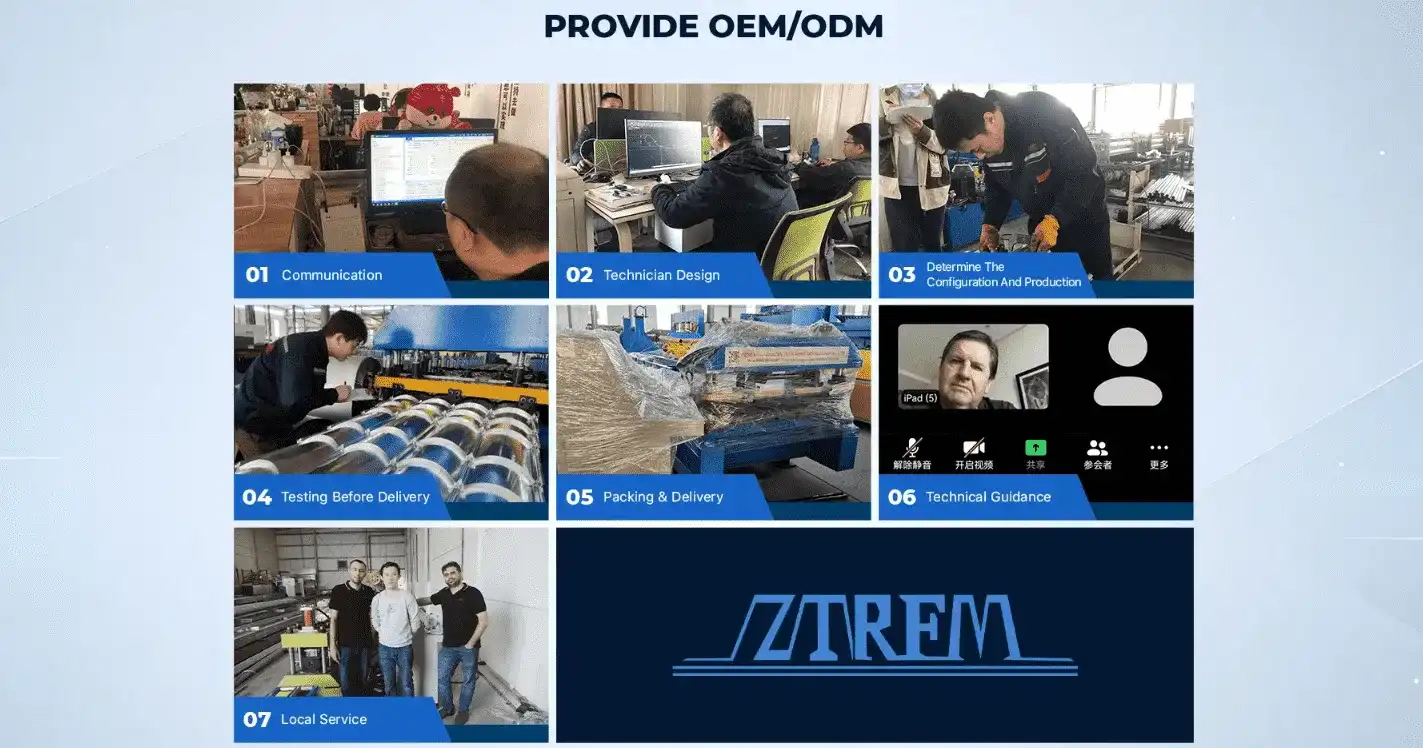
At ZTRFM, we know that buying roll forming equipment is a big investment that requires trust in both the quality of the products and the stability of the suppliers. Our triangular sheet machines are a combination of strong engineering and useful features that were made by working together with roofing makers around the world. We can make setups that fit your needs, from human entry-level systems to fully automated high-speed lines. This is true whether you're a new company building your first production line or an existing company adding to your capacity. You can email our team at zhongtuorollforming@gmail.com to talk about the details of your project, get thorough quotes, or set up a virtual tour of our plant. We can help you succeed from the first meeting all the way through installation, training, and an ongoing technical relationship. We are an experienced Tr4/ Tr5 roof sheet machine manufacturer with global delivery knowledge.
References
1. American Iron and Steel Institute. (2021). Cold-Formed Steel Framing Design Guide. Washington, DC: AISI.
2. Chen, Y., & Zhou, W. (2020). Roll Forming Processes and Equipment Design. Manufacturing Engineering Quarterly, 45(3), 112-128.
3. European Committee for Standardization. (2019). Cold Rolled Steel Products: Technical Delivery Conditions. Brussels: CEN Standards.
4. Johnson, R. T. (2022). Metal Building Systems: Design and Specification. New York: Construction Publishers.
5. National Roofing Contractors Association. (2023). Metal Panel Roofing Systems Manual. Rosemont, IL: NRCA.
6. Zhang, L., Martinez, J., & Kumar, S. (2021). Advanced Manufacturing Technologies in Metal Forming Industries. International Journal of Industrial Engineering, 38(2), 204-221.
_1750323743240.webp)