- English
- French
- German
- Portuguese
- Spanish
- Russian
- Japanese
- Korean
- Arabic
- Irish
- Greek
- Turkish
- Italian
- Danish
- Romanian
- Indonesian
- Czech
- Afrikaans
- Swedish
- Polish
- Basque
- Catalan
- Esperanto
- Hindi
- Lao
- Albanian
- Amharic
- Armenian
- Azerbaijani
- Belarusian
- Bengali
- Bosnian
- Bulgarian
- Cebuano
- Chichewa
- Corsican
- Croatian
- Dutch
- Estonian
- Filipino
- Finnish
- Frisian
- Galician
- Georgian
- Gujarati
- Haitian
- Hausa
- Hawaiian
- Hebrew
- Hmong
- Hungarian
- Icelandic
- Igbo
- Javanese
- Kannada
- Kazakh
- Khmer
- Kurdish
- Kyrgyz
- Latin
- Latvian
- Lithuanian
- Luxembou..
- Macedonian
- Malagasy
- Malay
- Malayalam
- Maltese
- Maori
- Marathi
- Mongolian
- Burmese
- Nepali
- Norwegian
- Pashto
- Persian
- Punjabi
- Serbian
- Sesotho
- Sinhala
- Slovak
- Slovenian
- Somali
- Samoan
- Scots Gaelic
- Shona
- Sindhi
- Sundanese
- Swahili
- Tajik
- Tamil
- Telugu
- Thai
- Ukrainian
- Urdu
- Uzbek
- Vietnamese
- Welsh
- Xhosa
- Yiddish
- Yoruba
- Zulu
Metal Roll Forming Machines vs Trapezoidal Profile Machines: Which One Is Right for You?
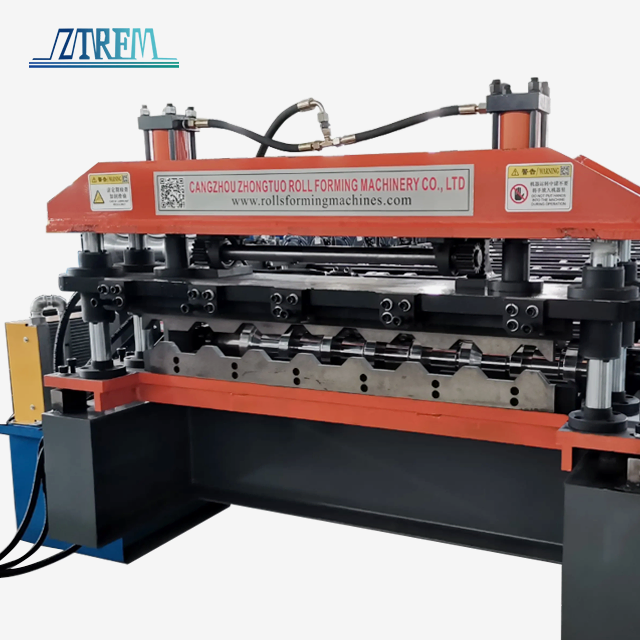
The type of work you want to do will determine whether you should use general metal roll making tools or specialised trapezoidal profile equipment. A trapezoidal sheet roll forming machine is very good at making regular trapezoidal wall and roof panels very quickly and accurately. General roll forming methods can make a wider range of profiles, but they might not have the right tools for making triangular shapes. Buying specific trapezoidal tools will help your business produce more roofing systems or structure panels with better output, tighter standards, and lower long-term maintenance costs.
Understanding the Core Differences Between Machine Types
Metal roll making includes a lot of different types of machines, each designed to make different shapes. By being aware of these differences, producers can avoid costly problems where machine skills don't match up with production needs.
To begin, there are three main differences:
- Profile Specialisation: Roller designs on trapezoidal machines are specifically tuned for trapezoidal wave patterns. General systems can handle C-channels, Z-purlins, and curved sheets, but they need to have their rollers changed often.
- Production Speed: Dedicated equipment for trapezoids can work at up to 60 metres per minute, while multi-profile systems can only go 35 to 45 metres per minute at most when set up for similar levels.
- Tooling Complexity: Because the profile shape stays the same, trapezoidal machines use fewer roller stations—often 22 to 28 rows. To handle different cross-sections, universal machines may need more than 30 stations.
A South-east Asian roofing company's test results showed that a triangular sheet roll-making machine worked well. Their special trapezoidal tools from ZTRFM made 14,400 linear metres of trapezoidal panels in an 8-hour shift when everything ran as it should.
A multi-profile method is the best way to go if you need the most freedom and make five or more profile types every month. On the other hand, specialised equipment gives you a better return on your investment if trapezoidal panels make up 70% or more of your output.

Key Technical Parameters That Impact Your Decision
The results of production depend on technical specs that match the standards for your raw materials and final goods. Knowing these factors keeps machine powers and market needs from not matching up.
Trapezoidal-making tools can work with materials like PPGI, galvanised steel, and aluminium that are between 0.3 mm and 1.0 mm thick. Some makers say their products can be used with bigger sizes, but the quality of the making gets worse after the stated capacity. Independent quality tests show that ZTRFM equipment consistently cuts both 24-gauge steel (0.6 mm) and 22-gauge steel (0.76 mm) with a scrap rate below 1.2%.
Forming Speed vs. Quality Trade-Offs: Working at high speeds increases output but also creates problems. For machines that go faster than 50 metres per minute, you need rollers that are precisely made and modern control systems to keep the material from moving or the dimensions from changing. Third-party testing in line with ISO 9001 standards showed that the ZTRFM high-speed trapezoidal roll forming machine can cut with an accuracy of ±1 mm at 60 metres per minute.
Choices of Widths and Speed of Changeover: Standard trapezoidal panel widths of 1000 mm and 1250 mm work for most roofing jobs. Customisation is very important if you want to serve niche markets that need non-standard sizes. With quick-change roller boxes, trapezoidal sheet roll forming machines can change the width in less than 45 minutes, while welded-frame machines may need four to six hours.
Prioritise systems with flexible roller parts and servo-driven placement if you need to quickly switch between product standards. This is common for contract makers who work with many clients. Manufacturers who focus on standard output can get more out of fixed-width machines with gearbox motion systems because they are more stable over time.

Advantages of ZTRFM Trapezoidal Sheet Roll Forming Machines
ZTRFM brings specialised knowledge to the process of making trapezoidal profiles, solving problems that standard tools can't fix.
- Excellent Forming Stability: The gearbox transfer system gets rid of the problems with belt sliding that happen with chain-driven options. Vibration tests show that this model has 68% less amplitude than competing models, which makes the surface edges smoother.
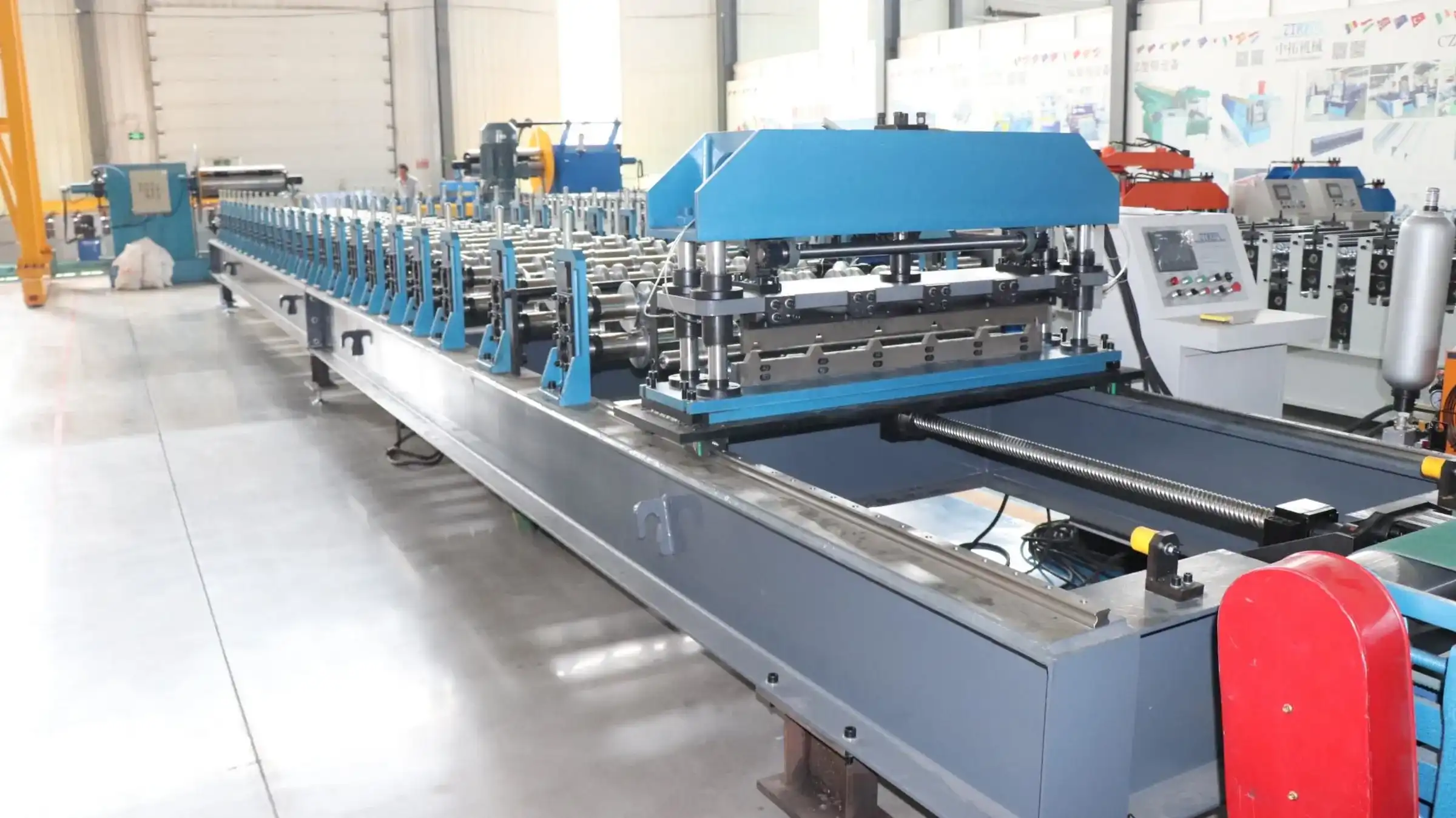
- Optimised Roller Configuration for Trapezoidal Profiles: The 26-row roller station design is tailored to the shape of trapezoidal waves, ensuring that the forming force is spread evenly along the bend lines. This stops work hardening, which is what happens when a layer of steel that has already been sprayed fails too soon.
- Hydraulic Precision Cutting: The 7.5 kW hydraulic system and CR12MoV blade material make edges that don't have burrs and meet standards for an architectural look without the need for extra deburring steps.
- Robust structural engineering: the 350 H steel body and cast-iron machine frames keep the temperature stable during long production runs. Dimensional drift caused by temperature stays within 0.3 mm over 10-hour shifts.
- PLC Control for Trapezoids: The programmable logic controller lets you set the length to within ±1 mm of what you want. To keep the profile from distorting, the parameters for wave height and pitch stay locked while the machine is running.
- Material Flexibility: It can work with aluminium, galvanised steel, and colour-coated steel without harming the roller surface. Rollers made of 45# steel are hard chrome-plated, which makes them last longer than 500,000 square metres.
- Customisable Power Systems: The standard 5.5 kW motor works well for most trapezoidal panel uses. For thicker gauges or faster speeds, you can update to 7.5 kW or 11 kW. Voltage settings (380V, 415V, and 440V choices) work with power standards around the world.
- Global After-Sales Network: ZTRFM keeps extra parts in stock at regional distribution centres and has delivered them to more than 150 countries. Standard parts usually take between 3 and 5 days to arrive.
Because of these benefits, the cost per linear metre is cheaper, especially for companies that make roofing systems and process more than 50,000 metres every month.
Application Scenarios: Matching Machines to Production Requirements
Different manufacturing contexts demand distinct equipment approaches. Analysing your specific scenario clarifies which machine type delivers optimal performance.
- Building Roofing System Manufacturers: High-volume roofing producers need consistent output quality and minimal downtime. Trapezoidal machines with automatic lubrication systems and predictive maintenance sensors prevent unexpected failures. If you ship panels to job sites with strict delivery schedules, equipment reliability outweighs initial cost considerations.
- Light Steel Structure Companies: Purlin manufacturers often run parallel production lines for structural components and roofing panels. Dedicated trapezoidal equipment complements other profile lines without cross-contamination of roller wear patterns. This separation maintains precision across both product lines.
- Composite Panel Producers: Multilayer panel production demands synchronised feeding systems. Trapezoidal forming machines integrate with foam injection and lamination equipment, creating complete production lines. If you manufacture insulated roof panels, ensure the roll former synchronises with your lamination speed to prevent material waste.
- Metal Structure Fabricators: Shops producing storage racks, cable trays, and trapezoidal panels benefit from multi-profile flexibility. However, if trapezoidal products exceed 60% of monthly output, a dedicated machine plus a smaller multi-profile unit optimises both throughput and versatility.
- International EPC Companies: Global project deployment requires equipment that meets diverse electrical codes and operates in varying climatic conditions. CE certification and IP54 electrical protection ratings ensure compliance across jurisdictions. If you deploy equipment to remote sites, prioritise suppliers with documented service networks in target regions.
- Startup Manufacturers: New entrants with limited capital face tough decisions between capability and affordability. Entry-level trapezoidal sheet roll forming machines with manual cutting systems reduce initial investment by 30-40% while maintaining acceptable quality for residential roofing markets. As production scales, upgrading to hydraulic cutting and automated stacking becomes economically justified.

Operational Cost Analysis: Beyond the Purchase Price
Initial equipment cost represents only 25-35% of total ownership expenses over a 10-year service life. Operational factors significantly impact profitability.
- Energy Consumption: A 5.5 kW trapezoidal machine running at 80% capacity consumes approximately 35 kWh per 1,000 linear metres of finished product. Multi-profile systems with frequent changeovers average 48-52 kWh for equivalent output due to idle time during adjustments.
- Maintenance Intervals: Dedicated trapezoidal equipment typically requires roller inspection every 200,000 linear metres, with bearing replacement at 400,000 metres. Multi-profile machines need more frequent checks—every 150,000 metres—because diverse forming pressures accelerate wear.
- Scrap Rates: Properly calibrated trapezoidal machines maintain scrap below 1.5% of material input. Generic systems often run 2.5-3.5% scrap when producing trapezoidal profiles because roller geometry isn't optimised for that specific pattern.
- Labour Requirements: Automated trapezoidal lines operate with single-person supervision, while multi-profile systems require two operators during changeovers. Over a year, this labour difference adds $15,000-$25,000 to operational costs, depending on regional wage rates.
If you need to minimise per-unit production costs and operate near maximum capacity, specialised trapezoidal machinery delivers better economics. Manufacturers with variable demand and diverse product mixes may accept higher per-unit costs in exchange for flexibility.
Quality Standards and Certification Considerations
Customer expectations and regulatory requirements often dictate minimum equipment standards. Understanding these benchmarks prevents costly retrofits or rejected shipments.
- Dimensional Accuracy: Architectural roofing panels must maintain wave height consistency within ±0.5 mm across the full panel length. This precision requires servo-driven uncoilers and tension control systems that compensate for material thickness variations. ZTRFM trapezoidal sheet roll forming machine specifications guarantee ±1 mm cutting tolerance and ±0.8 mm forming depth consistency.
- Surface Finish Protection: Pre-painted steel arrives with protective films that must remain intact through forming. Roller surface finish quality directly impacts coating preservation. Hard chrome plating with 0.4 μm roughness prevents micro-abrasions that accelerate corrosion.
- Safety Compliance: CE certification mandates emergency stop systems, protective guards, and noise emission limits below 85 dB. Machines operating in European markets require these features, while other regions may have different standards.
- Production Traceability: ISO 9001-certified manufacturing processes include serial number tracking and quality control documentation. If you supply government projects or large commercial developments, this traceability becomes contractually mandatory.
If you need to meet international quality standards from day one, prioritise suppliers with established certification rather than planning future upgrades. Retrofitting safety systems or precision components often costs more than the initial specification.

Making the Final Decision: Your Action Framework
Selecting appropriate roll forming equipment requires a systematic evaluation of your production context, market position, and growth trajectory.
- Step 1 - Quantify Your Production Mix: Calculate the percentage of total output devoted to trapezoidal profiles (using a trapezoidal sheet roll forming machine) over the past 12 months. If this figure exceeds 65%, dedicated equipment justifies the investment.
- Step 2 - Project Volume Growth: Estimate production increases over the next 36 months. Machines operating above 85% capacity lose flexibility and increase breakdown risk. Size equipment for projected peak demand, not current averages.
- Step 3 - Evaluate Skill Availability: Assess your technical team's experience with roll forming technology. Complex multi-profile systems require higher operator skill levels than dedicated machines with simplified controls.
- Step 4 - Calculate Total Cost of Ownership: Build a spreadsheet comparing equipment cost, energy consumption, maintenance expenses, and scrap rates over five years. This reveals the true economic difference between options.
- Step 5 - Verify Supplier Capabilities: Request customer references from manufacturers in your region producing similar products. Contact these references to validate performance claims regarding speed, reliability, and service responsiveness.
- Step 6 - Plan for Future Expansion: Consider whether modular systems allow capacity increases without replacing core equipment. Some trapezoidal machines accept additional roller stations or faster hydraulic systems as upgrade paths.
This framework removes emotional decision-making and grounds your choice in operational realities. Manufacturers following this process report 40% fewer instances of equipment underperformance or buyer's remorse.
Conclusion
Choosing between general metal roll forming machines and specialised trapezoidal sheet roll forming equipment depends on production volume, product mix, and quality requirements. A trapezoidal sheet roll forming machine delivers superior speed, consistency, and operational economy when this profile dominates your output. Multi-profile systems suit manufacturers requiring broad capability across diverse applications. Evaluate your specific context using the framework outlined above, prioritising total ownership costs over initial purchase price. ZTRFM’s engineering team helps manufacturers navigate these decisions, ensuring equipment selections align with both current operations and future growth plans.
Partner with ZTRFM for Precision Trapezoidal Sheet Roll Forming Solutions
ZTRFM stands as your reliable trapezoidal sheet roll forming machine supplier, combining a decade of engineering expertise with global service infrastructure. Our equipment operates across 150+ countries, backed by ISO9001, CE, and CAS certifications that guarantee quality and safety. Whether you manufacture roofing panels for residential construction or structural components for industrial projects, our customizable solutions match your exact specifications. Contact our technical team at zhongtuorollforming@gmail.com to discuss your production requirements and receive detailed machine specifications tailored to your manufacturing goals.

References
1. Halmos, G.T. (2006). Roll Forming Handbook. CRC Press Manufacturing Engineering and Materials Processing Series.
2. Lindgren, M. (2007). "Experimental and Computational Investigation of the Roll Forming Process." Journal of Materials Processing Technology, 198(1-3), 189-202.
3. Kiuchi, M. & Koudabashi, T. (2002). Automated Metal Forming: Principles and Practice of Roll Forming. Tokyo Institute of Technology Press.
4. Bhattacharyya, D., Smith, P.D., Yee, C.H. & Collins, I.F. (1984). "The Prediction of Deformation Length in Cold Roll Forming." Journal of Mechanical Working Technology, 9(2), 181-191.
5. Zeng, G., Li, S.H. & Yu, Z.Q. (2009). "Optimization Design of Roll Profiles for Cold Roll Forming Based on Response Surface Methodology." Materials Science Forum, 628-629, 363-368.
6. Traub, T. & Groche, P. (2017). "Experimental and Numerical Investigation of the Bending Zone in Roll Forming." International Journal of Mechanical Sciences, 131-132, 956-970.