- English
- French
- German
- Portuguese
- Spanish
- Russian
- Japanese
- Korean
- Arabic
- Irish
- Greek
- Turkish
- Italian
- Danish
- Romanian
- Indonesian
- Czech
- Afrikaans
- Swedish
- Polish
- Basque
- Catalan
- Esperanto
- Hindi
- Lao
- Albanian
- Amharic
- Armenian
- Azerbaijani
- Belarusian
- Bengali
- Bosnian
- Bulgarian
- Cebuano
- Chichewa
- Corsican
- Croatian
- Dutch
- Estonian
- Filipino
- Finnish
- Frisian
- Galician
- Georgian
- Gujarati
- Haitian
- Hausa
- Hawaiian
- Hebrew
- Hmong
- Hungarian
- Icelandic
- Igbo
- Javanese
- Kannada
- Kazakh
- Khmer
- Kurdish
- Kyrgyz
- Latin
- Latvian
- Lithuanian
- Luxembou..
- Macedonian
- Malagasy
- Malay
- Malayalam
- Maltese
- Maori
- Marathi
- Mongolian
- Burmese
- Nepali
- Norwegian
- Pashto
- Persian
- Punjabi
- Serbian
- Sesotho
- Sinhala
- Slovak
- Slovenian
- Somali
- Samoan
- Scots Gaelic
- Shona
- Sindhi
- Sundanese
- Swahili
- Tajik
- Tamil
- Telugu
- Thai
- Ukrainian
- Urdu
- Uzbek
- Vietnamese
- Welsh
- Xhosa
- Yiddish
- Yoruba
- Zulu
Stud and Track Roll Forming Machine With High-Speed Cutoff System
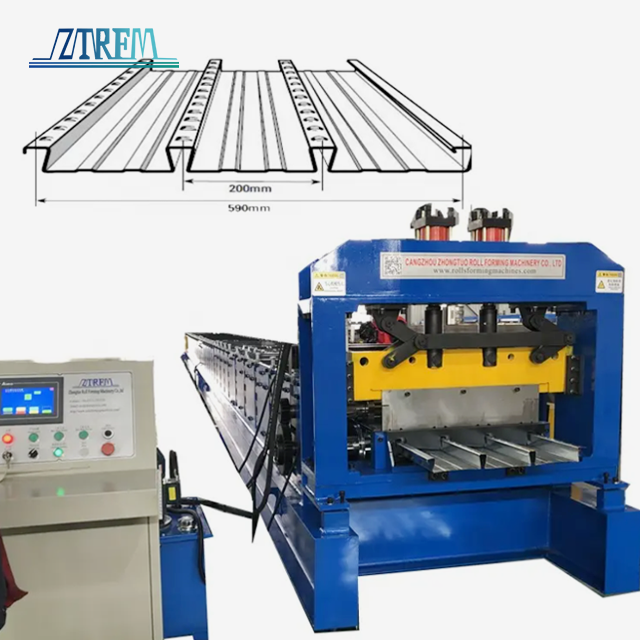
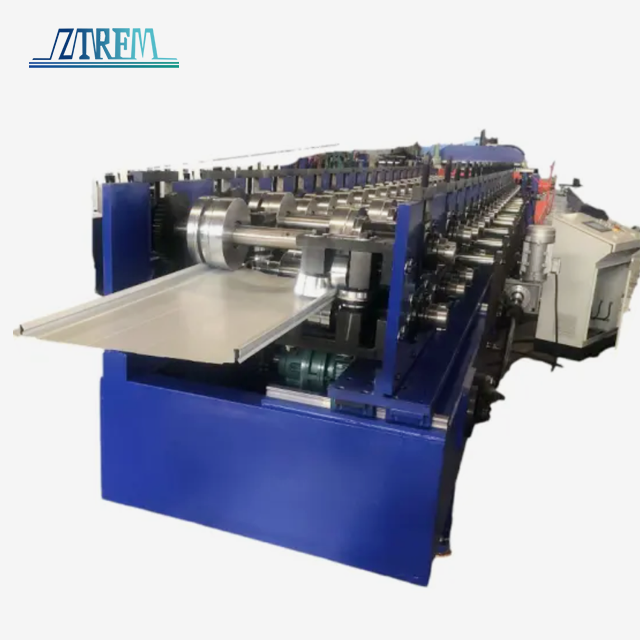
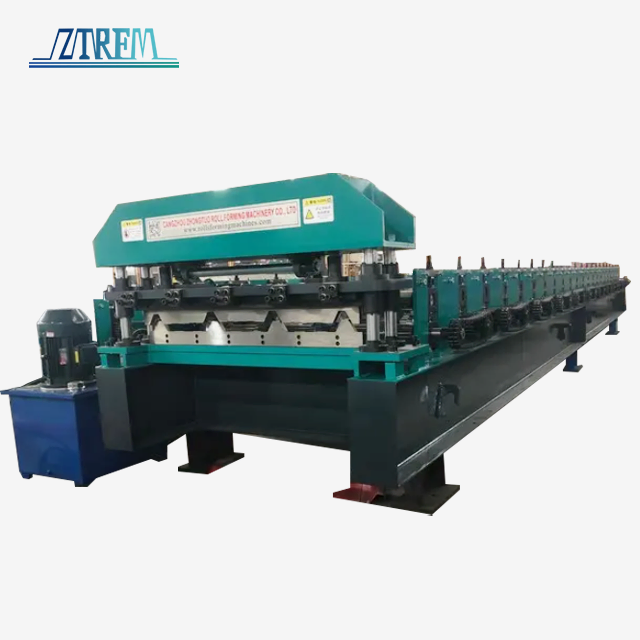
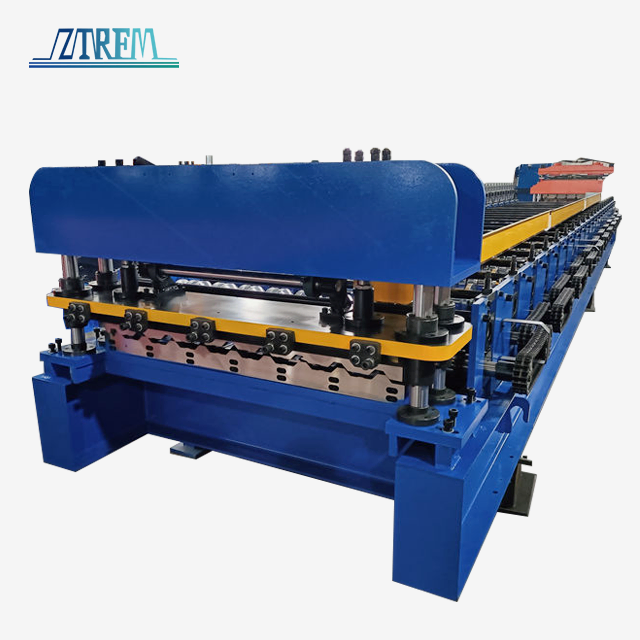
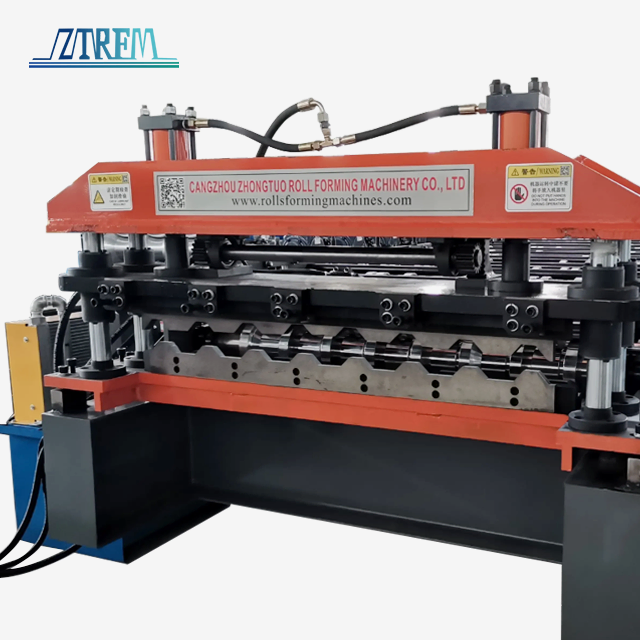
When switching from manual to automatic frame construction, a stud and track roll forming machine is the most crucial instrument for light-gauge steel production. These systems make C- and U-shaped studs and tracks from flat galvanised coil. Internal walls, external walls, and ceiling frames have these primary sections. At Cangzhou Zhongtuo, our machines can process materials from 22 to 16 gauge, maintaining ±0.5 mm dimensions at 8-10 metres per minute. These machines fulfil North American commercial builders' and prefabricated house makers' high standards.
Understanding Stud and Track Roll Forming Machines
Despite switching from wood to metal frames, many industrial projects still struggle with profile quality and manufacturing speed. Roll-forming technology solves these issues with continuous cold-forming procedures that provide reliable results.
Core Components and Their Functions
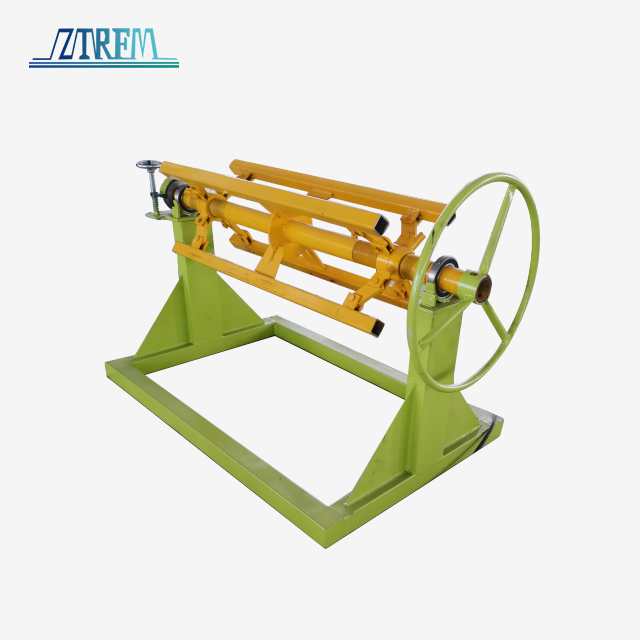
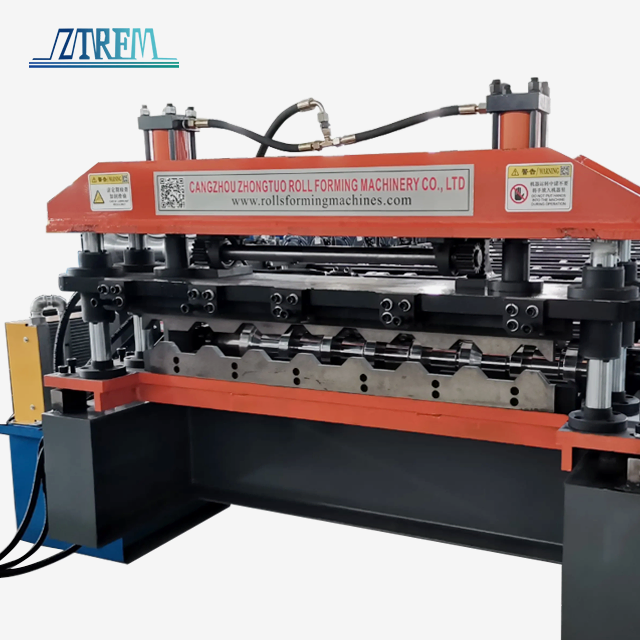
Key features of a stud and track roll forming machine include an uncoiler that feeds galvanised coil into sequential forming stations, where precisely contoured rollers bend the strip into C-shaped studs and U-shaped tracks. Heat-treated 45# steel rollers provide extended service life under continuous operation. The main drive system, typically a 7.5 kW motor with chain transmission, ensures consistent forming pressure across all stations.
PLC controls every production step. Operators enter the shape's length using a computer interface, and the machine determines feeding speeds and cutting operations. This system eliminates manual measuring errors and enables one worker to monitor many manufacturing lines.
The High-Speed Cutoff System Advantage
Older hydraulic shears stopped before each cut, slowing output. Modern high-speed cutting systems cut profiles while the material moves through the manufacturing stations using flying shear technology. Our CR12 high-grade steel blades remain sharp after thousands of cuts, producing clean ends without burrs that might harm workers or complicate assembly.
Continuous operation increases production by 30–45% over stop-and-cut systems. The control system creates the most useful coil length from order requirements by optimising cutting patterns. This greatly reduces material waste.
Material Specifications and Processing Capabilities
Flange thicknesses of 1, ⅝, and 2 inches can be utilised with profile lengths of 3, 3.5, 3.625, 4, 5.5, and 6 inches. The sizes offered meet ASTM C645 load-bearing and non-load-bearing requirements. Our equipment can handle galvanised and hot-rolled steel with yield strengths up to 80 ksi at 1.6 mm. Multi-storey building projects gain structural stability.
Quality assurance begins with material inspection. Vernier callipers regularly measure the web and hub during manufacture. We ensure 3-metre sections are straight and within 1 mm per metre for twist and camber to maintain the wall upright during installation.

Advantages of High-Speed Cutoff Systems in Track Roll Forming
Efficiency determines a company's profitability in competitive manufacturing marketplaces. Equipment that boosts production and maintains quality pays off.
Throughput and Cycle Time Improvements
Flying shear technology eliminates the stop–start pattern of conventional systems. Material flows continuously through the forming stations, so production speed is limited only by motor power and material properties, not cutting cycles. A stud and track roll-forming machine operating at 8–10 metres per minute can produce over 1,500 linear metres of framing components per eight-hour shift.
Operational Cost Reductions
Longer-lasting tools are better. Normal steel blades endure 15,000 to 20,000 cycles, while our CR12 blades last 50,000 or more. Zinc coatings don't harm heat-treated rollers, ensuring accurate measurements and scrap rates below 2% in well-kept operations.
Automation reduces labour. The PLC controls length, cut order, and group counting. Instead of changing equipment, operators add materials and evaluate quality. This allows facilities to deploy trained staff to value-added operations like bespoke punching and packaging.
Safety and Automation Benefits
Walled cutting zones protect workers from moving items. Emergency stop systems stop mobility in milliseconds when safety devices detect an obstruction. These characteristics fulfil OSHA metalworking tool requirements and make it safer than hand shearing, which can injure.
Automated length control eliminates assembly-slowing measurement errors. Installation teams may finish work faster and with fewer visits back to adjust measurements when studs match tracks. Fabricators and builders may rely on each other more, strengthening their bonds.

Comparing Stud and Track Roll Forming Machines With Other Technologies
Before investing, you must consider how alternative methods meet your production objectives and budget.
Roll Forming Versus Press Braking
Press brakes create unusual forms by bending flat sheets repeatedly. It's good for rare, unusual tasks when independence is more vital than quickness. Roll shaping is appropriate for large-scale manufacturing where homogeneous cross-sections justify tool investment. In the same period, a brake press could manufacture 20–30 studs, whereas our stud and track roll-forming machines could make 100 metres of continuous profile.
Manual Versus Automated Systems
Beginner manual machine operators must measure, arrange, and cut each piece. This level of control is appropriate for shops that sell many goods but don't create many. As order numbers rise, work becomes too much.
Our completely automated system can read digital work files to determine punch number, length, and pattern. The system completes orders without much human assistance, and quality remains consistent even when shifts vary or operators gain expertise. This homogeneity is crucial for modular construction sites because measuring precision impacts whole building sections.
Drive System Considerations
Smooth power and easy maintenance are provided by hydraulic drive systems. Zhongtuo machines use chain-driven systems, which are more dependable and simpler to maintain. Chain drives maintain precise synchronisation between manufacturing stations without seal failures or fluid leaks that might interrupt hydraulic operations. US replacement parts are inexpensive and plentiful, reducing downtime.
Building equipment frequently determines drive type. Chain-driven designs are best for mechanically simple facilities, whereas hydraulic systems may need equivalent equipment.

How to Choose the Ideal Stud and Track Roll Forming Machine for Your Business?
To pick equipment that fulfils current production demands and future expansion objectives, consider several interrelated aspects.
Technical Specifications That Matter
Production pace must meet order volume. For stud and track roll-forming machines, 6–8 metres per minute, equipment works effectively in facilities that frame 5–10 homes every month. Commercial builders building multi-storey structures need 10–12 metres per minute to achieve delivery schedules. Zhongtuo machines maintain speeds through thicknesses. This is important since some rivals' equipment slows down when working with heavier sizes.
Profile versatility affects long-term equipment utilisation.
Machines that can handle varying flange thicknesses and sizes easily may adjust to market demands. Quick-change roller cassettes allow width changes in under 30 minutes, compared to 2–4 hours with typical systems.
Supplier Credentials and Support Services
A product with ISO9001 and CE certificates fulfils global quality requirements. Businesses offering projects with tight material traceability criteria need these qualifications. Cangzhou Zhongtuo retains licenses and papers that satisfy project engineers and building code officials.
Post-sale support determines equipment reliability. Vendors with North American transport networks ship parts and provide field service faster than international vendors. Technical support is available during U.S. business hours, and typical replacement components are stored in the United States warehouses.
Customisation and Integration Options
Standard tools work well for general carpentry. Companies that create furring channels with service holes or studs with raised knurling benefit from integrated cutting stations. Zhongtuo engineers produce punching dies with custom hole shapes for customers.
Integrating software simplifies output planning. Machines that receive task files from design software eliminate manual data entry and errors. More construction projects using construction information modelling make this link more valuable.
Budget worries extend beyond pricing. Total ownership cost includes finance, installation, operator training, and repairs. Good suppliers break down their prices so financial forecasts are straightforward.

Maintenance, Troubleshooting, and Safety Tips for Optimal Machine Performance
Equipment needs regular maintenance and rapid problem-solving to last and perform great work.
Preventive Maintenance Protocols
Scheduled lubrication prevents premature wear. Chain drives need oil every 40–60 hours, while roller bearings need grease weekly during peak production times. Manufacturer-recommended oils function with seals and bearings.
Roller examination reveals wear patterns before they degrade results. Visual checks for scoring, covering accumulation, and uneven wear require minutes but save hours-long production stops. We recommend measuring the rollers monthly and comparing them to the fitting standards.
Fluid levels and filters must be monitored and replaced at manufacturer-specified periods in hydraulic systems. Dirty hydraulic fluid reduces cutting capacity and premature actuator failure. Cleaning the fluid extends the part's life.
Common Issues and Solutions
Twisting profiles indicate unequal roller pressure or alignment issues. Making sure the material enters the first forming station straight on fixes most twist concerns. Rollers may need to be replaced if the issue persists. Our operating guidelines feature step-by-step photographs and detailed instructions.
Too much rolling speed or insufficient roller engagement causes edge waviness. Waviness is usually eliminated by decreasing line speed by 10–15% without affecting output goals. Material quality can create edge problems; swap coil suppliers or request tighter thickness limitations.
Cut lengths might vary due to encoder calibration drift or worn cutting blade guides. Recalibrating the PLC system fixes software-related length disparities, and mechanical examination finds wear that needs repair.
Operator Safety and Training
Fully trained workers reduce accidents and increase production efficiency. Zhongtuo provides operating guides for starting, changing, handling crises, and shutting down. Video courses demonstrate loading and removing profiles in addition to authoring.
Personal safety remains crucial. Safety eyewear, hearing protection, and non-cutting gloves protect you from metal hazards. Machine guarding on the stud and track roll-forming machine prevents accidental contact with rollers and cutting devices.
When difficulties arise, emergency stop buttons at material entry and exit locations shut them off immediately. Regular testing ensures these safety features operate and safeguard individuals in unforeseen situations.

Conclusion
Stud and track roll-forming machines can automate metal frame manufacture from time-consuming manual labour. Business building gains production and quality stability with high-speed cutoff systems. Machines that can handle diverse shapes and material thicknesses provide operators with more project flexibility. Buy tools from firms with established engineering capabilities, complete support, and global approval for long-term reliability and performance.
FAQ
1. What materials work best with roll forming equipment?
Galvanised steel is still the most used light-gauge frame material. Zinc prevents corrosion, making it useful outside and in humid indoor environments. Indoor applications that don't need corrosion protection and cost overexposure work well with hot-rolled steel. Typical non-load-bearing wall thickness is 22 gauge (0.76 mm) to 16 gauge (1.52 mm). We can operate freely without changing rollers since our equipment can handle both materials.
2. How does high-speed cutting compare to traditional methods?
Material flow pauses before each cutting cycle in classic stop-and-cut systems. Production rates are restricted to 4–6 m/min. The material moves 8–10 metres per minute while flying shear technology cuts patterns. Efficiency increases work output by 40–60% every shift. Constant motion eliminates material placement variations that cause measurement errors in stop-start processes, improving cut quality.
3. What support services should buyers expect from suppliers?
Installation supervision, operator training, and spare parts are offered by comprehensive equipment providers. Technical papers should contain electrical schematics, hydraulic diagrams, and roller dimensions. Customer assistance during U.S. business hours swiftly resolves issues, preventing production drops. North American suppliers can provide new parts in days instead of weeks, which is important during hectic building seasons when machine malfunctions can derail projects.
Partner With ZTRFM for Your Metal Framing Production Needs
ZTRFM, a reputable provider of stud and track roll forming machines for over 10 years, can aid your production area. Building builders trust our equipment's precision and durability. ISO9001 and CE certifications are world-renowned. We've shipped tools to over 150 countries and created custom solutions for novice fabricators and veteran modular house designers. Contact our engineering team at zhongtuorollforming@gmail.com to discuss your production needs, acquire specs, or schedule a demonstration. Our experts provide solutions that improve your operations and product quality, whether you need a single-line installation or a whole building design.

References
1. American Iron and Steel Institute. (2018). Cold-Formed Steel Framing Design Guide. Washington, DC: AISI Committee on Specifications.
2. Davies, J.M. (2016). Recent Research Advances in Cold-Formed Steel Structures. Journal of Constructional Steel Research, Volume 122, pp. 1-15.
3. Halmos, G.T. (2006). Roll Forming Handbook. Boca Raton: CRC Press, Taylor & Francis Group.
4. Yu, W.W. and LaBoube, R.A. (2010). Cold-Formed Steel Design, Fourth Edition. Hoboken: John Wiley & Sons, Inc.
5. Bhattacharyya, D. (2012). Composite Sheet Forming: Developments in Roll Forming and Stamping. Amsterdam: Elsevier Science Publishers.
6. Metal Construction Association. (2020). Technical Bulletin: Light Gauge Steel Framing Systems Standards and Testing Protocols. Glenview, IL: MCA Publications.