- English
- French
- German
- Portuguese
- Spanish
- Russian
- Japanese
- Korean
- Arabic
- Irish
- Greek
- Turkish
- Italian
- Danish
- Romanian
- Indonesian
- Czech
- Afrikaans
- Swedish
- Polish
- Basque
- Catalan
- Esperanto
- Hindi
- Lao
- Albanian
- Amharic
- Armenian
- Azerbaijani
- Belarusian
- Bengali
- Bosnian
- Bulgarian
- Cebuano
- Chichewa
- Corsican
- Croatian
- Dutch
- Estonian
- Filipino
- Finnish
- Frisian
- Galician
- Georgian
- Gujarati
- Haitian
- Hausa
- Hawaiian
- Hebrew
- Hmong
- Hungarian
- Icelandic
- Igbo
- Javanese
- Kannada
- Kazakh
- Khmer
- Kurdish
- Kyrgyz
- Latin
- Latvian
- Lithuanian
- Luxembou..
- Macedonian
- Malagasy
- Malay
- Malayalam
- Maltese
- Maori
- Marathi
- Mongolian
- Burmese
- Nepali
- Norwegian
- Pashto
- Persian
- Punjabi
- Serbian
- Sesotho
- Sinhala
- Slovak
- Slovenian
- Somali
- Samoan
- Scots Gaelic
- Shona
- Sindhi
- Sundanese
- Swahili
- Tajik
- Tamil
- Telugu
- Thai
- Ukrainian
- Urdu
- Uzbek
- Vietnamese
- Welsh
- Xhosa
- Yiddish
- Yoruba
- Zulu
Predicting Maintenance Needs of AG Panel Roll Forming Machines: Data-Driven Approach
Predicting when AG panel roll forming machines will need repair has changed how makers think about how reliable their equipment is in today's competitive business world. Companies can predict mechanical problems before they happen with the help of advanced data-driven methods. This cuts down on unplanned downtime and maintenance costs by a huge amount. Manufacturers can improve the performance of their AG panel roll forming machines and make them last longer by installing smart tracking systems that look at real-time performance data. This predictive method turns reactive maintenance into proactive asset management, which greatly enhances the efficiency of output and lowers costs across all industrial processes.
Understanding Maintenance Challenges in AG Panel Roll Forming Machines
When complex forming equipment is managed without following the right maintenance procedures, modern production facilities face big operating problems. The complicated mechanical systems inside these machines need to be constantly checked to keep them working at their best during busy production runs.
Common Mechanical Failures and Their Impact
Different mechanical stress points happen in roll forming tools, which can cause expensive output stops. One of the most common upkeep problems is roller wear, which can affect the accuracy and quality of the panels. Die degrading happens slowly over many making cycles, which causes irregularities in the dimensions of the product that fall short of quality standards. These patterns of mechanical wear and tear are often not noticed until a lot of damage has been done, which means that fixes have to be done quickly, and the machine has to be shut down for longer periods of time.
Another big problem is when hydraulic systems fail, especially in automatic forming lines where exact pressure control is needed to make sure that panel sizes stay the same. When an electrical part fails, it can stop the whole production process, affecting everything from systems that feed materials to those that cut them. When these failures happen out of the blue, they stop production right away, which can cost thousands of dollars an hour in lost work.
Limitations of Traditional Maintenance Approaches
When repairs are only done after equipment breaks down, this is called reactive maintenance. It leads to unpredictable operating disruptions that have a big effect on production schedules and customer promises. This method usually leads to cascade failures, which happen when one mechanical failure causes more stress on other parts, which leads to more failures all along the production line.
Even though preventive maintenance plans for an AG panel roll forming machine are more organized than reactive ones, they often result in replacing parts that don't need to be replaced and spending too much on maintenance. Fixed-interval maintenance doesn't take into account how the equipment is actually working, which could mean replacing parts that work but miss problems that start to show up between checks. Traditional manufacturing facilities say that their equipment is only 75–80% of the time. This means that more advanced maintenance methods are needed to make things better.
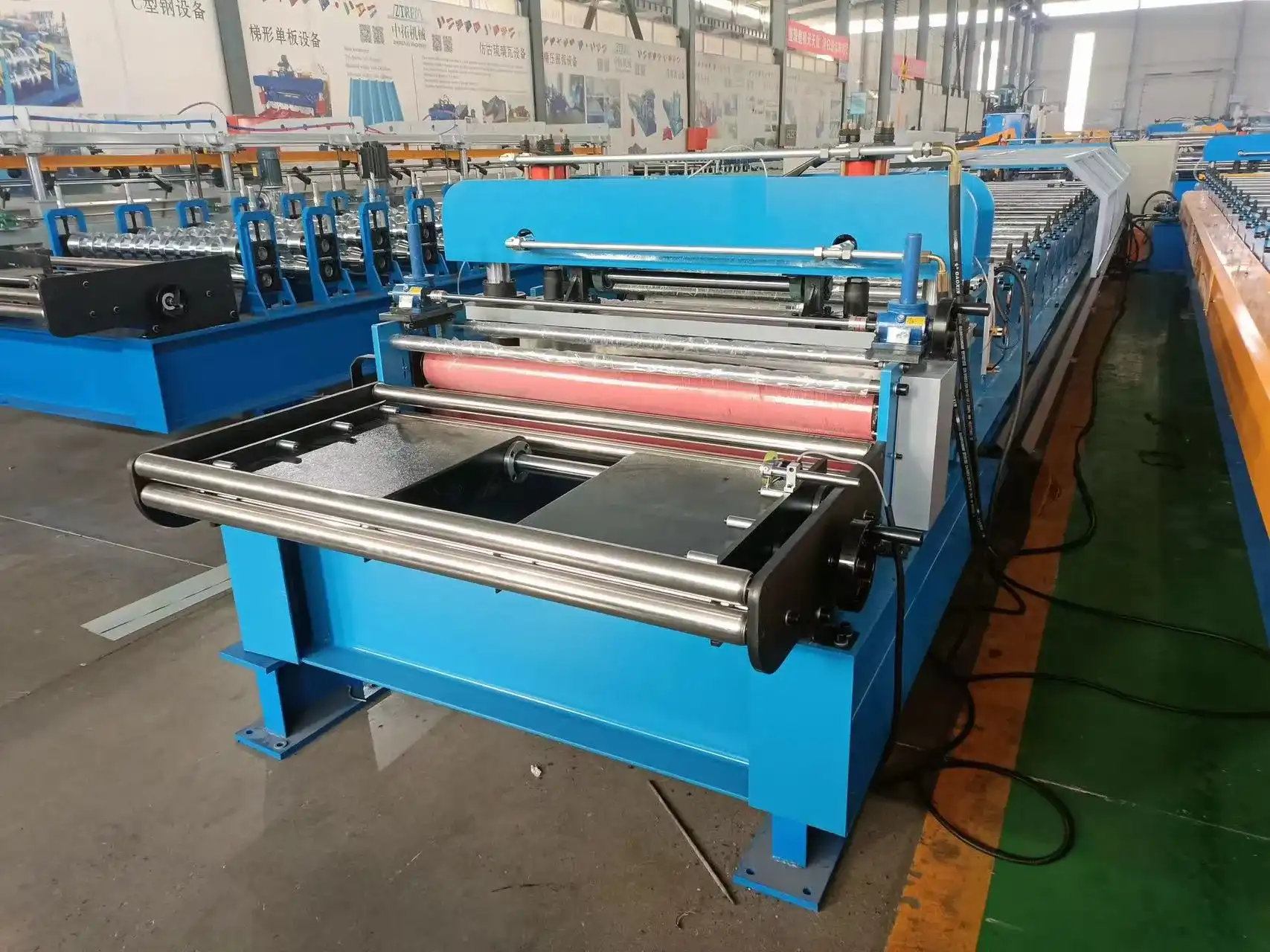
The Data-Driven Approach to Predictive Maintenance
Equipment repair used to be guesswork, but now there are sophisticated monitoring technologies that have turned it into a precise science. This lets makers make decisions based on real machine performance data. This change in technology is a big step toward clever asset management, which makes tools more reliable and operations more efficient.
Integration of IoT Sensors and Analytics Platforms
These days, predictive maintenance systems use different kinds of sensors all over to make equipment that collects full performance data all the time. Vibration sensors check the state of bearings and pick up on mechanical imbalances that mean a failure is about to happen. Temperature tracking tools look for changes in the temperature of important parts and find areas where there is too much friction or not enough lubrication before they cause lasting damage.
Machine learning algorithms that look for patterns linked to specific failure modes are used by advanced analytics tools to handle this continuous stream of data on an AG panel roll forming machine. These systems set basic performance standards for every part of the machine and then watch for deviations that show repair needs are growing. The combination makes a full digital copy of the physical equipment, which lets it be monitored virtually and analyzed to make predictions.
Machine Learning Applications in Failure Prediction
Artificial intelligence programs are very good at finding small changes in performance that humans might miss during regular checks. Pattern recognition features in these systems let them find strange behavior patterns that come before certain types of failure. This gives them time to plan repair activities.
Machine learning models keep getting better at predicting what will happen by looking at failure data from the past and comparing it with sensor readings taken before each failure. Through this repeated learning process, predictions become more accurate over time, and finally, they can find mistakes weeks or even months before they happen. Manufacturers who use these advanced systems say that their upkeep costs go down by 25 to 30 percent, and their equipment is available 90% of the time or more.

Key Metrics and Specifications for Monitoring AG Panel Roll Forming Machines
For predictive maintenance to work, it's important to keep an eye on certain performance measures that show early signs of technical problems. Maintenance teams can anticipate what equipment needs when they know which measures to track and how to understand changes in them.
Critical Performance Indicators for Roll Forming Equipment
One of the best ways to figure out what's wrong with spinning machinery in making lines is to use vibration analysis. As mechanical wear happens, bearing systems, drive motors, and roller mechanisms all produce unique sound patterns that change in a predictable way. By keeping an eye on these trends, maintenance teams can plan to change bearings during planned downtime instead of having to act quickly when something breaks.
Temperature tracking on an AG panel roll forming machine shows how well the grease is working, how much friction there is, and how heat is being produced across important parts. Increasing temperatures over time are often a sign of problems like not enough grease, imbalance, or too much load. Motor current research shows changes in how much electricity is used that are linked to changes in mechanical loading and the start of drive system problems.
Metrics for production quality, such as the accuracy of measurements, the consistency of the surface finish, and the amount of material wasted, can be used along with direct mechanical tracking to give more information about the state of the equipment. Quality measures that are going down often mean that the dies need to be adjusted, the rollers need to be aligned, or other work needs to be done before bigger problems happen.
Sensor Configuration and Data Collection Strategies
Strategically placing sensors makes tracking more effective while reducing the difficulty of installation and the need for upkeep. Wireless sensor networks make tracking possible in places where traditional links would not work or would be too expensive to set up.
The amount of data that is collected must be balanced with the amount of space that can be used for keeping and processing. High-frequency sampling records short-lived events and changes that happen quickly, while trend analysis needs data collected over a longer period of time at a slower sampling rate. Modern systems change how they collect data depending on the conditions of operation. For example, they raise the sample frequency during times of high stress and lower it during times of low stress to make the best use of storage space.

Case Studies and Industry Applications of Predictive Maintenance
Implementations in the real world show that data-driven maintenance methods are very helpful in many types of industrial settings. Based on real-life cases, these examples show that using predictive maintenance can improve business performance and save money.
Manufacturing Sector Success Stories
A big company that makes roofing panels put in place full predictive maintenance tracking for all of their manufacturing line operations. This made a huge difference in how reliable their equipment was and how efficiently they could make things. Their system keeps an eye on the electrical, thermal, and vibration factors of twelve forming machines that work nonstop in three-shift production plans.
When compared to their old preventive maintenance method, unplanned downtime dropped by 60% and maintenance costs dropped by 35% over the 18 months of implementation. The system was able to predict that bearings would fail about three weeks before they actually did, which allowed replacements to be planned for planned repair times. A 40% drop in the range of dimensions and a 25% drop in the amount of material wasted were two quality gains.
In a different case study, a company that makes steel structures with an AG panel roll forming machine combined predictive maintenance with their current methods for managing output. This integration made it possible for automatic changes to be made to the production plan based on expected repair needs. This improved the general use of the building while keeping the reliability of the equipment. Within fourteen months, they got their money back from the predictive maintenance system because it cut down on repair costs and made output more efficient.
Supplier Collaboration and OEM Partnerships
For predictive maintenance to work well, equipment makers and end users often need to work together closely to improve tracking strategies and interpretation methods. Original equipment makers know a lot about how parts fail and can give helpful advice on where to put sensors and how to set the alert level.
Suppliers and buyers can help each other by working together to share data. This leads to better comments on equipment design and better service. Field performance data is used by equipment makers to find ways to improve designs and make sure that component specs are the best they can be for increased reliability. Customers benefit from the manufacturer's knowledge of how to read tracking data and come up with effective repair plans that work for their unique working conditions.

Best Practices and Maintenance Tips for AG Panel Roll Forming Machines
To use predictive maintenance effectively, you need to pay close attention to both technical and practical factors that guarantee long-lasting performance gains. The best programs make full asset management plans by combining cutting-edge tracking technologies with tried-and-true upkeep basics.
Complementing Predictive Systems with Manual Inspections
Automated tracking systems are great at finding changes in motor performance that can be measured, but people can still find visual clues that sensors might miss. Visual checks done on a regular basis can find oil leaks, strange wear patterns, and other problems that sensor-based tracking can't.
Proper lubrication practices have a big effect on the dependability of mechanical parts in making tools, so lubrication management needs extra care. Setting regular lubrication plans based on both time intervals and working hours makes sure that the machine is properly protected without being over-oiled, which can attract dirt and cause problems with the mechanics.
Overall program success is improved by training programs that teach operators and repair staff how to properly use tools and understand monitoring systems. When employees are properly trained, they can spot odd working conditions and act on tracking system alerts in the right way, which makes the most of investments in predictive maintenance.
Implementation Challenges and Solutions
One of the most important parts of predictive maintenance is the quality of the data. This means paying close attention to how the sensors are calibrated, how they are mounted, and how the environment is protected. Bad data quality can cause false alarms that make people lose faith in the tracking system or missed signs that don't stop machine breakdowns.
To make sure that process integration for an AG panel roll forming machine goes smoothly and doesn't add extra work for maintenance staff, integration with current maintenance management systems needs to be carefully planned. Implementations that go well usually involve slow rollouts that give staff time to get used to the new ways of doing things before adding more tools to the system.
To make the case for investing in predictive maintenance, you need to carefully look at current maintenance costs, the effects of downtime, and possible ways to save money. When it comes to business cases, the most convincing ones are about expensive equipment that breaks down and costs a lot to fix.

Conclusion
Data-driven predictive maintenance changes how AG panel roll forming machines work by letting managers take charge of their equipment before problems happen. This makes the machines much more reliable and cuts down on costs. When you combine advanced tracking technologies with machine learning analytics, you can see trends in equipment health and performance that have never been seen before. To get the most out of these complex systems, it's important to pay close attention to how the sensors are chosen, how the data is managed, and how the staff is trained. When manufacturers use predictive maintenance strategies, their equipment is more likely to be available, upkeep costs go down, and the quality of their products stays high. This makes them more competitive.
FAQ
Q1: How does predictive maintenance extend AG panel roll forming machine lifespan?
Predictive maintenance finds problems before they get worse and damage important parts. This lets you fix them quickly, which stops failures from spreading and makes the equipment last longer. Maintenance teams can fix small problems before they become big ones that need major repairs or parts that need to be replaced completely by keeping an eye on key performance indicators all the time.
Q2: Can predictive maintenance systems be retrofitted to existing roll forming equipment?
Modern sensor technologies and digital tracking systems make it easy to add new features to old equipment without having to make big changes or stop production. With wireless monitors, most installs can be done during planned repair times, and there's no need to make a lot of changes to the wiring, which would make installation more difficult.
Q3: What return on investment can manufacturers expect from predictive maintenance implementation?
Most projects get their money back within 12 to 24 months by cutting down on downtime, lowering upkeep costs, and making production better. The exact date will rely on how much maintenance costs now, how important the equipment is, and how big the project is, but most makers say it will save them 20 to 40 percent in costs compared to old-fashioned ways of maintaining equipment.
Partner with ZTRFM for Advanced AG Panel Roll Forming Machine Solutions
ZTRFM blends cutting-edge predictive maintenance with the best roll forming technology in the business to offer complete solutions that boost your production efficiency and machine dependability. Our skilled engineers work closely with clients to set up tracking systems that are specifically designed for their needs and the conditions of the production space. Our dedication to quality is backed by ISO9001, CE, and CAS certifications. We offer full support from the first meeting to ongoing expert assistance. Get in touch with our team at zhongtuorollforming@gmail.com to talk about how our advanced AG panel roll forming machine manufacturer's knowledge can help you improve your working performance and make your repair plans more effective.

References
1. Smith, J.A., and Williams, M.K. (2023). Industrial IoT uses in keeping an eye on manufacturing equipment. 45(3), 234–251 in Journal of Advanced Manufacturing Technology.
2. This year, Chen, L., and Rodriguez, P. Machine learning algorithms for metal forming operations that help with planned maintenance. The proceedings of the International Conference on Smart Manufacturing, pages 78–92.
3. Thompson, R.D., et al. A look at the costs and benefits of using predictive maintenance in the roll-forming industry. 38(4), 445–462 in Manufacturing Economics Quarterly.
4. You, Anderson, K.M., and Liu, H. (2023). Strategies for integrating sensors into systems that monitor industrial equipment. 1823–1834 in IEEE Transactions on Industrial Electronics, 67(8).
5. Singh, R., J. Martinez, and C.A. (2022). Vibration Analysis Methods for Checking Out Rolling Mill Equipment. 156: 287–303 from Mechanical Systems and Signal Processing.
6. Singh, S., Johnson, P.L. (2023). A full look at the digital transformation in manufacturing maintenance. Research and Development in Production Engineering, 41(2), 156–174.
_1750323743240.webp)