- English
- French
- German
- Portuguese
- Spanish
- Russian
- Japanese
- Korean
- Arabic
- Irish
- Greek
- Turkish
- Italian
- Danish
- Romanian
- Indonesian
- Czech
- Afrikaans
- Swedish
- Polish
- Basque
- Catalan
- Esperanto
- Hindi
- Lao
- Albanian
- Amharic
- Armenian
- Azerbaijani
- Belarusian
- Bengali
- Bosnian
- Bulgarian
- Cebuano
- Chichewa
- Corsican
- Croatian
- Dutch
- Estonian
- Filipino
- Finnish
- Frisian
- Galician
- Georgian
- Gujarati
- Haitian
- Hausa
- Hawaiian
- Hebrew
- Hmong
- Hungarian
- Icelandic
- Igbo
- Javanese
- Kannada
- Kazakh
- Khmer
- Kurdish
- Kyrgyz
- Latin
- Latvian
- Lithuanian
- Luxembou..
- Macedonian
- Malagasy
- Malay
- Malayalam
- Maltese
- Maori
- Marathi
- Mongolian
- Burmese
- Nepali
- Norwegian
- Pashto
- Persian
- Punjabi
- Serbian
- Sesotho
- Sinhala
- Slovak
- Slovenian
- Somali
- Samoan
- Scots Gaelic
- Shona
- Sindhi
- Sundanese
- Swahili
- Tajik
- Tamil
- Telugu
- Thai
- Ukrainian
- Urdu
- Uzbek
- Vietnamese
- Welsh
- Xhosa
- Yiddish
- Yoruba
- Zulu
Solar Strut Channel Roll Forming Machine for PV Mounting Bracket Production
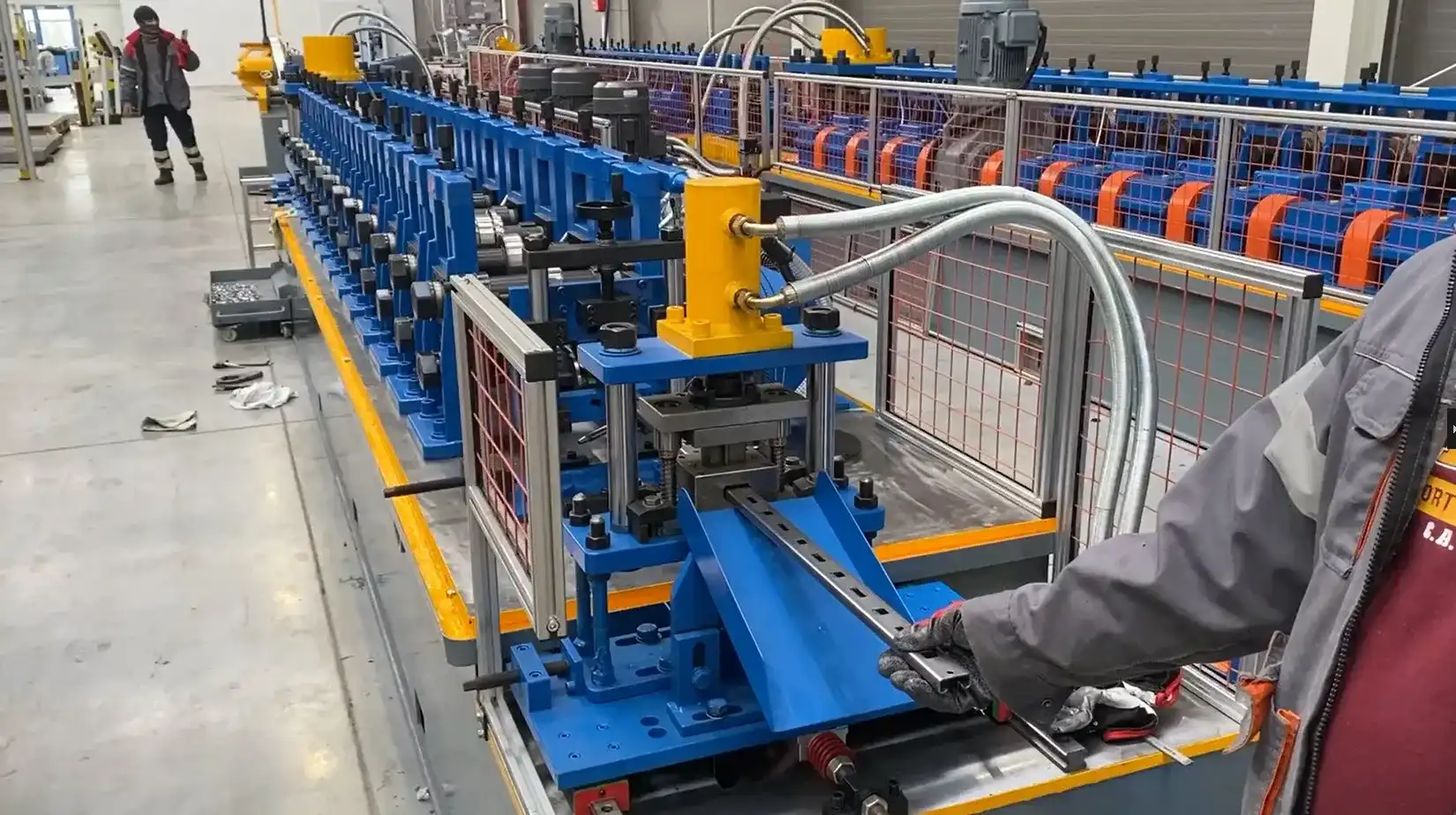
The green energy industry has grown very quickly, which has created a huge need for efficient manufacturing tools. The Solar Strut Channel Roll Forming Machine is an important part of making photovoltaic infrastructure. It is a specialized machine that turns metal coils into precisely made channels that are used to support solar panel mounting systems. These tools take over a process that used to require a lot of manual work. They turn galvanized steel coils into finished strut channels by continuously decoiling, leveling, punching, rolling, and cutting them. Unlike regular roll formers, these systems have hydraulic punching features that make the long slot shapes needed for field-adjustable solar installations. This meets important industry standards for both structural stability and installation flexibility.
Understanding Solar Strut Channel Roll Forming Technology
What Makes This Equipment Essential for PV Manufacturing
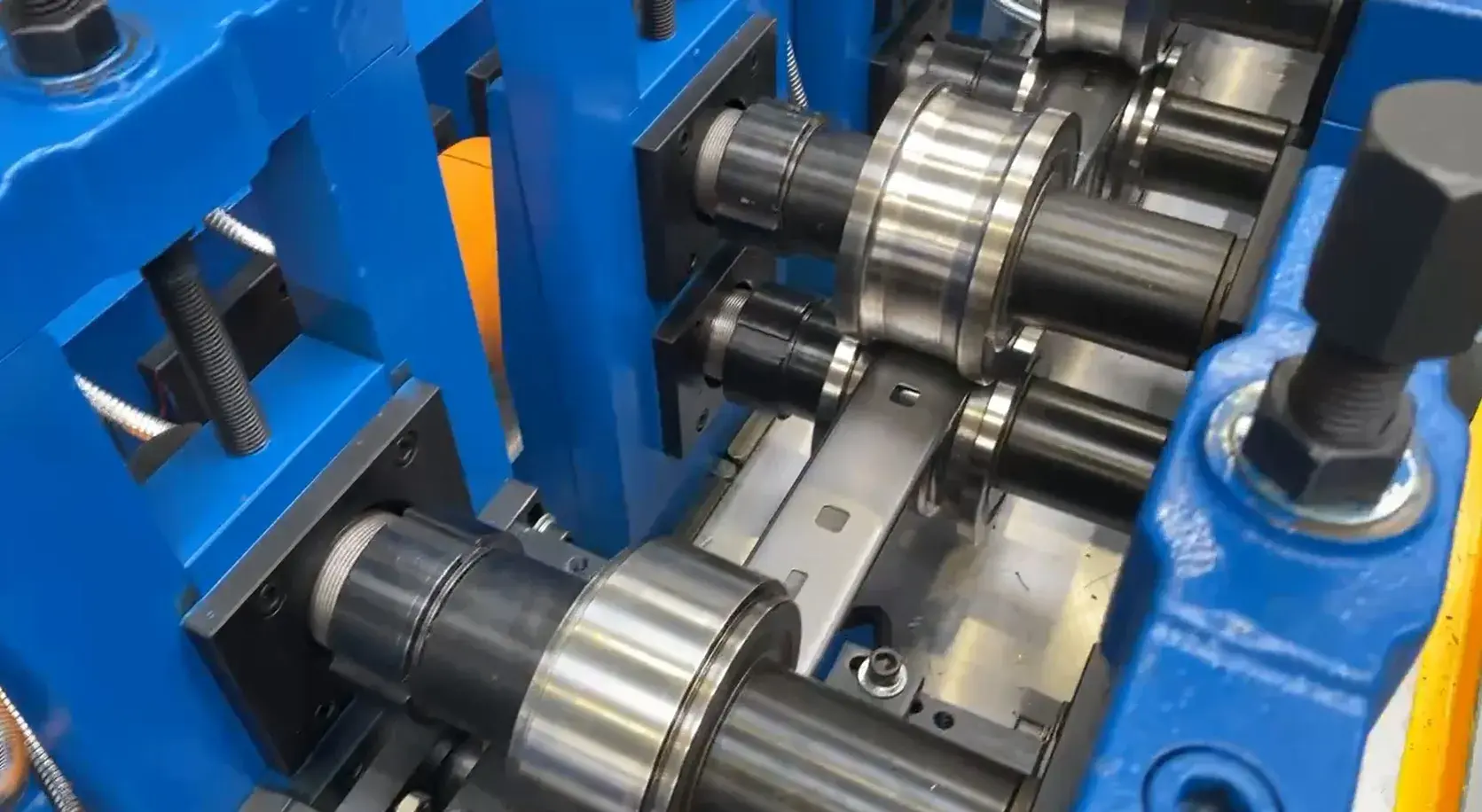
Modern solar installation is based on cold roll forming technology, which keeps the strength of the material while making it possible to have complex cross-sectional shapes. This continuous manufacturing process keeps the yield strength of high-tensile steel between G350 and G550 MPa, which is important for utility-scale solar systems that need to handle static loads and wind pressure. The machine works with progressive bending stations, which have 24 wheels in industrial setups. Each forming station uses small amounts of deformation to keep the material's stress from building up in one place.
Core Components and Their Functions
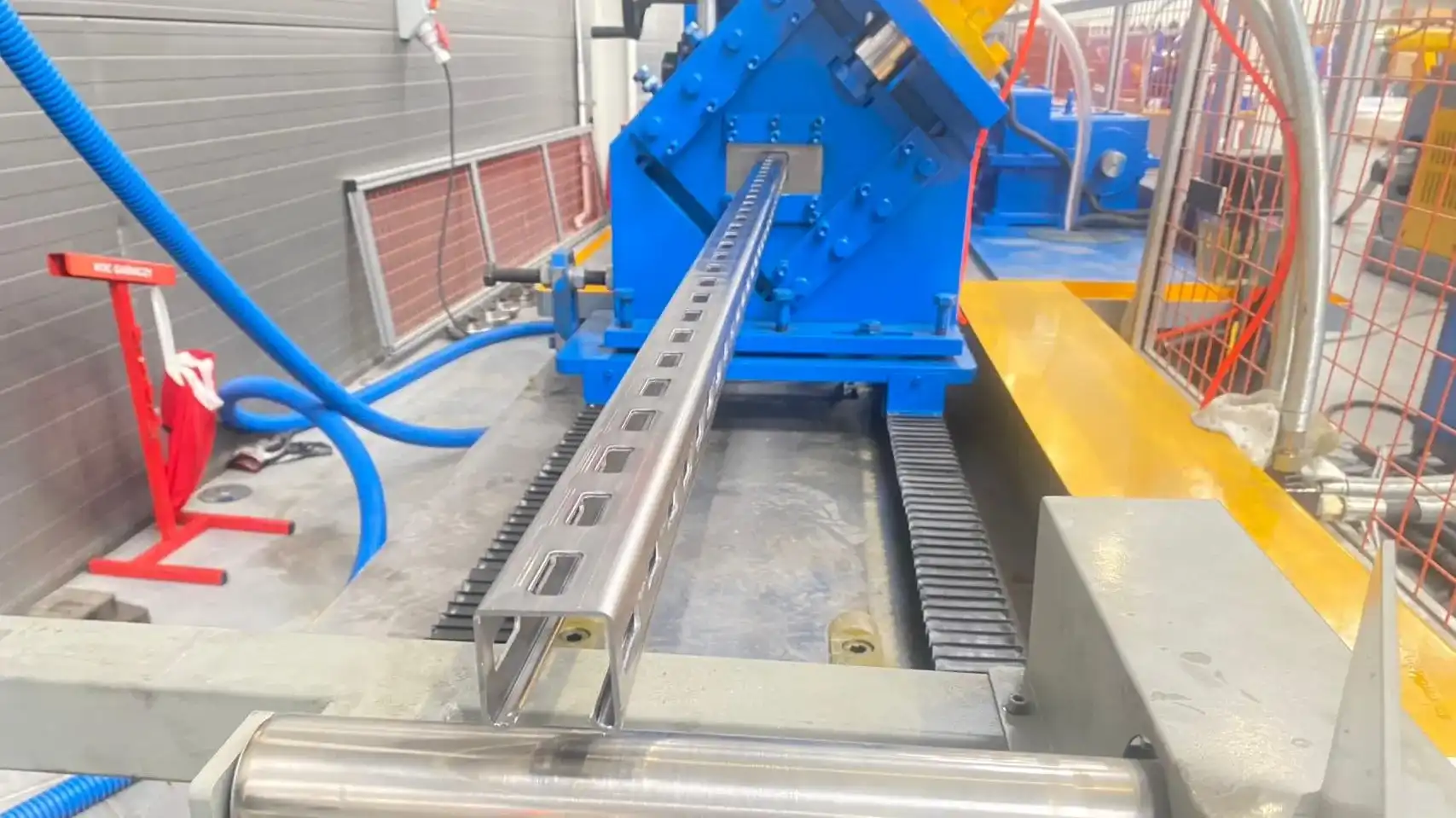
Each high-performance strut channel production line is made up of several combined parts that work together in sync. The decoiling unit works with steel coils that weigh several tons and feeds material into the leveling device at a constant tension. This removes coil memory and makes sure the material is flat. With hydraulic cutting stations, hole shapes can be made with positional accuracy of within ±0.5mm, which is important for aligning connectors while they are being installed. A 22kW main motor powers the forming section, which bends the flat steel piece by piece using carefully machined GCR15 steel rollers that have been treated with chrome to protect the surface of materials that have already been galvanized. Up to 8 meters per minute of material can move through the system, and the double-chain transfer keeps the power stable even when working with bigger gauges of 1.5 mm to 2.5 mm. The 11kW station powers the hydraulic cutting system, which shears with Cr12 mold steel blades that are cooled to keep their sharpness between 58 and 62 HRC. This makes clean cuts without burrs.
Benefits of Using Solar Strut Channel Roll Forming Machines
Production Efficiency Gains That Impact Your Bottom Line
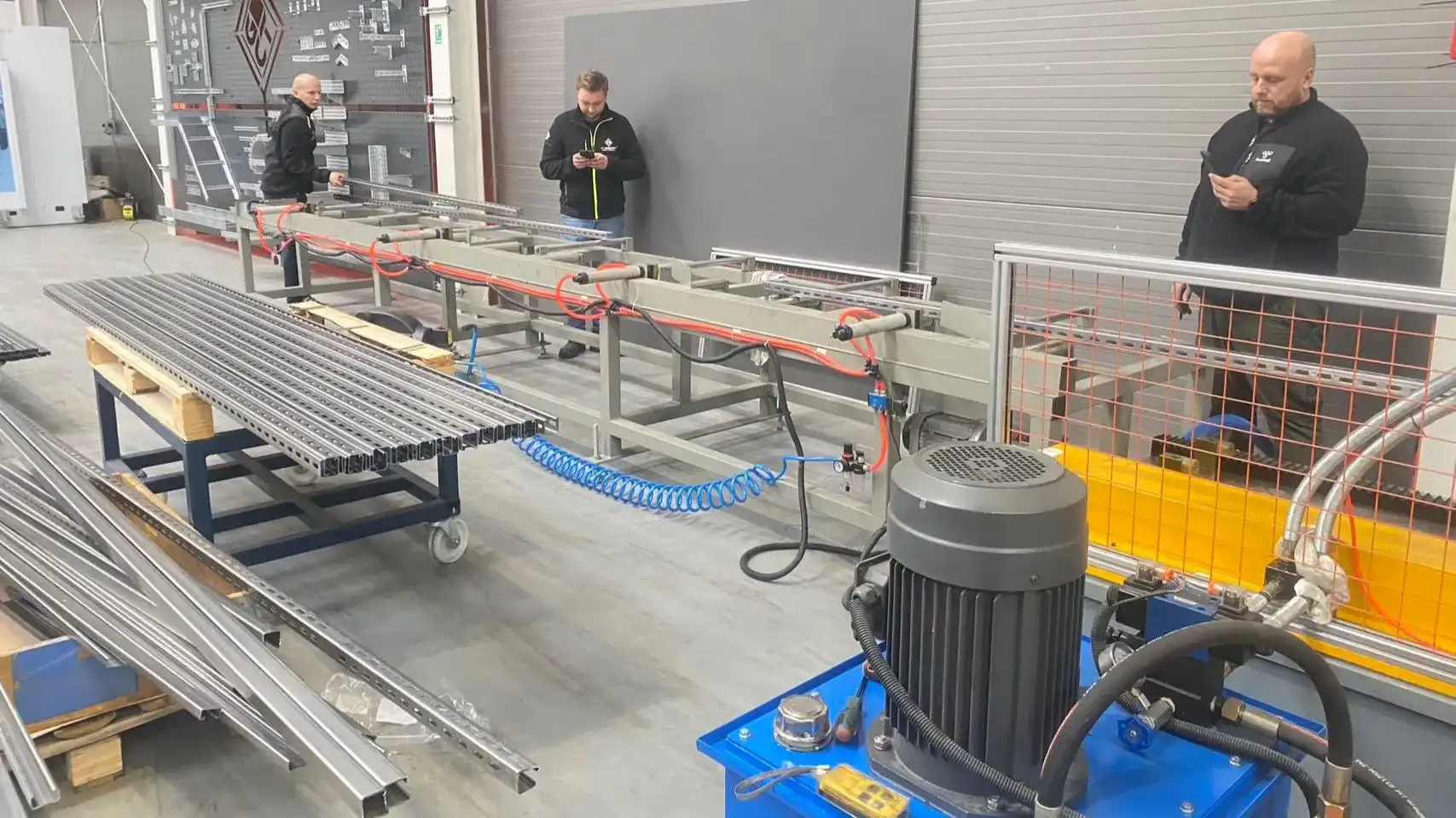
Moving from hand fabrication or Solar bracket roll forming machine press brake work to automatic roll forming leads to measured performance gains that have a direct effect on profits. Since one person runs the whole production line, labor costs can drop by as much as 70%, and output goes through the roof compared to batch processing. The constant method cuts down on setup waste, and precise forming lowers the rate of dimensional rejects. This makes much better use of the materials. The constant dimensional accuracy—keeping limits of ±1.5mm across production runs—gets rid of the mistakes that happen over time when things are done by hand. This accuracy makes sure that connectors fit together perfectly when they are being put together in the field, which cuts down on installation time and returns for mounting system installers. Manufacturers say that scrap rates are always less than 2% in computerized output, compared to 5–8% in manual methods.
Quality, Consistency, and Material Integrity
When it comes to metals, cold roll forming technology is clearly better than other ways of making things. The slow bending process makes the steel work harder, which makes the made parts stronger in tension without making them less flexible. This cold-hardening effect is especially helpful for shapes that are used for seismic bracing or installations in places with harsh weather. The method keeps protective layers strong because it doesn't use a heat cycle or mechanical shock like stamping or welding does. It can be hot-dip galvanization or magnesium-aluminum-zinc alloys. The strong construction of the machine, which is made up of 25 mm thick 45# steel frames and 80 mm diameter cast steel rods, keeps the forming stable even during long production runs. Because the structure is rigid, the profile shape stays the same across thousands of pieces. This meets the strict requirements of foreign engineering firms that are in charge of managing solar projects on multiple sites.
Market Overview and Product Comparison
Understanding Equipment Variations and Configurations
The market for PV mounting bracket-making equipment gives buyers a range of design choices to fit their production needs and budgets. Economic design models use middle plate frames and chain motion systems to offer basic automation that is good for new businesses and regional makers whose yearly outputs are less than 500 tons. Most of the time, these setups come with GCR15 roller material and manual width control. They work well and cost between $20,000 and $25,000.All-steel frames that are soldered together, gearbox transmission, servo feeding systems, and flying saw cutting technology are all part of the premium designs. These strong systems use GCR12MoV forming rollers, which are made of vacuum-heated tool steel that is very resistant to wear, and linear guide rails for automatic width adjustment. The stronger structure makes sure that the edges stay straight on corners that are bent, which is very important for high-tolerance uses in building solar integration projects. These high-tech systems cost between $35,000 and $50,000, which shows how complex the engineering is and how different the quality of the parts is.
Evaluating Drive Systems and Performance Trade-offs
The choice between a chain drive and a gearbox transmission is a big one that will affect both the speed right away and the efficiency in the long run. Chain drive systems are cheaper and easier to set up mechanically, making them good for lighter materials, solar bracket roll forming machine, and low production numbers. However, processing steel thicker than 2.0 mm or working nonstop shifts speeds up the wear on chain systems, which could mean they need to be replaced within three years of operation. Gearbox transmissions are the best way to control torque and spread power, which is very important when shaping thick-gauge high-tensile steel. Maintenance is done less often because of the sealed lube systems, and the mechanical advantage lets the machine keep running at design speeds for a long time without any damage to the parts. Manufacturers who want to build utility-scale solar projects or who work shifts find that the consistent performance is worth the higher original investment.
How to Choose the Right Solar Strut Channel Roll Forming Machine
Matching Equipment Capacity to Production Requirements
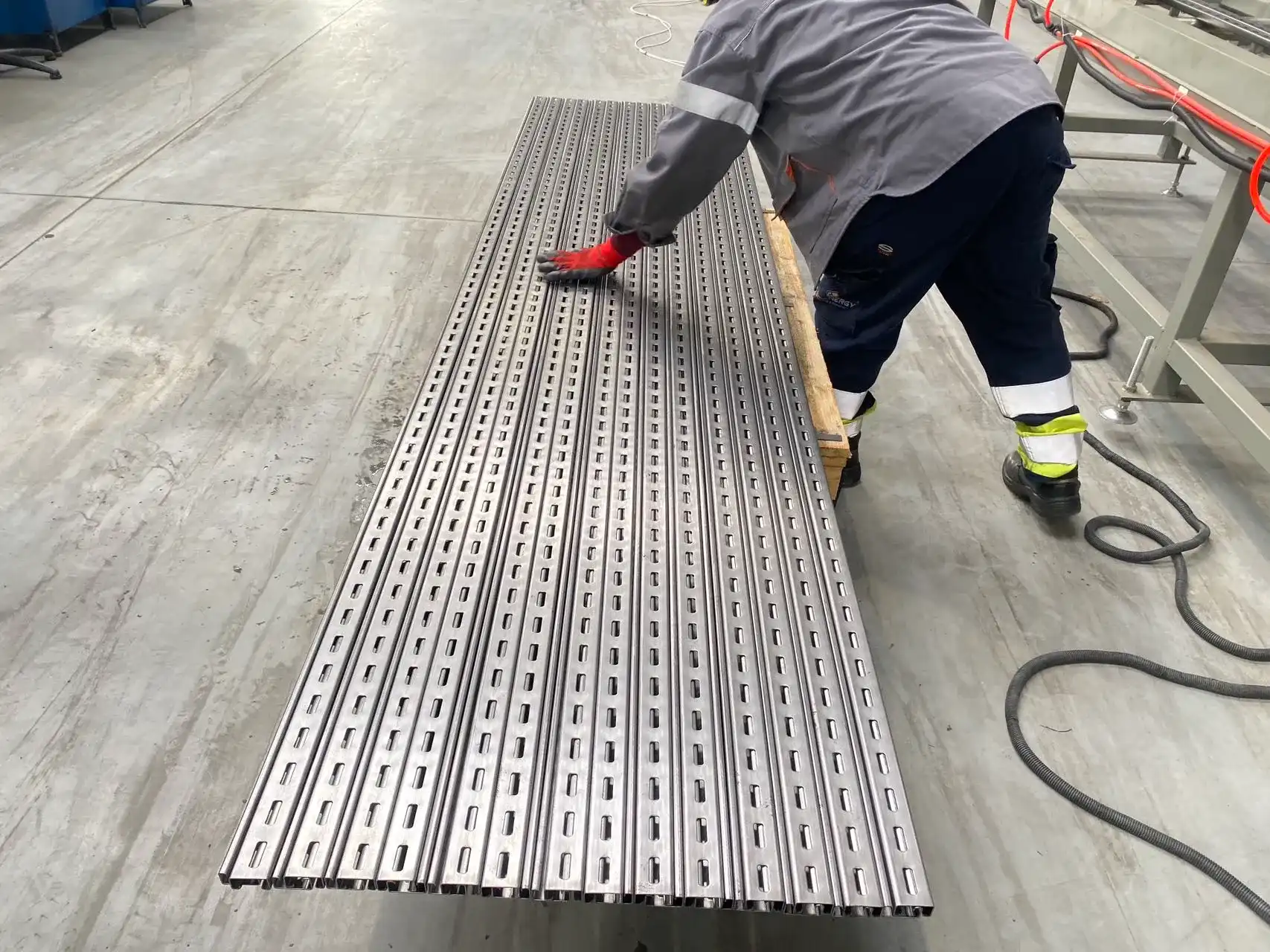
To make accurate specifications, you must first look at the current and planned production amounts, which are shown in linear meters per month or yearly tons. A machine that works at 8 meters per minute for eight hours makes about 3,800 meters of channels every day, which is about 900 tons of material every year when the channels are 2 mm thick. Manufacturers who expect their businesses to grow should choose equipment with capacity headroom instead of running it at full speed all the time. This working margin protects parts from wear and tear and lets them handle rush orders.The range of thicknesses for the material—usually 1.5 mm to 2.5 mm—must match the products you want to make. If you try to work with materials that aren't within the planned width range, the forming will be bad, the tools will wear out quickly, and the machine frame could be damaged. In the same way, the filling width capacity, which is usually between 90mm and 230mm, tells you what kinds of channel patterns you can make without having to change the equipment.
Technical Specifications That Indicate Quality
Smart buyers look closely at certain technical details that show how well the product was made and how reliable it is in use. The diameter of the shaft directly affects how much it deflects under forming loads. For example, 80 mm diameter formed steel shafts are strong enough for industrial production needs. The number of rollers—usually 20 to 24 points for strut channel profiles—shows how slowly the profile bends, which reduces material stress and surface marks. The accuracy of measurement tolerance guarantees—±1.5 mm is considered okay by industry standards—affects the production steps that follow, and the happiness of the customer. Tighter tolerances, sometimes set at ±0.5mm, are needed by manufacturers who work with foreign engineering firms or original equipment manufacturers (OEMs). This means they need tools with better structural rigidity and automatic measurement systems.
Purchasing and Procurement Guidance
Direct Manufacturer Engagement Versus Distributor Networks
Sourcing methods have a big effect on both the cost of acquisition and the level of ongoing help. When you deal directly with makers like Cangzhou Zhongtuo, which has been around since 2014 and has experience in markets around the world, you can usually get better prices by 15 to 25 percent compared to going through a middleman. This direct relationship makes it easier to talk about customization, lets you check out the plant, and sets up ways to communicate for when you need technical help in the future. The direct connection with the maker is especially helpful when requesting custom features like different voltage configurations—standard specs call for 380V three-phase 50Hz, but installations in North America need to adapt to 440V 60Hz. Direct involvement lets engineers talk about things like strengthening frames in earthquake zones, making roller coatings for rough materials, or adding upstream coil coating lines for operations that are vertically integrated.
Logistics Planning and Installation Coordination
Buying tools from other countries requires careful planning of shipping operations, customs paperwork, Solar Strut Channel Roll Forming Machine, and installation times. Roll-making equipment usually needs 40-foot high-cube containers because of the height of the machines. Depending on the design, the total shipping weight can be anywhere from 8,000 to 12,000 kilograms. Custom configurations have delivery times that range from 4 to 8 weeks, so you need to plan ahead and make sure that your building preparation routines work with them. Professional installation by maker experts makes sure that the machine is level, that the electrical connections are correct, and that the initial testing processes set the standard for performance. In-depth operator training programs, which usually last between three and five days, teach people how to use machines, do regular upkeep, fix problems, and follow safety rules. This is because sharing knowledge is essential for getting the most out of equipment and avoiding mistakes that void warranties.
Investment Structuring and Financial Planning
Buying capital tools requires a lot of money, so it's important to carefully consider all of your funding options. When you borrow money from a traditional bank to buy industrial equipment, the terms are usually good because the collateral is valuable and the equipment will increase output. Leasing programs have higher total costs, but they help keep working capital and can save you money on taxes in some places by treating operating costs as expenses instead of capital loss. Talking to producers about payment terms depends on the size of the order and the buyer's credit score. Standard terms usually include a 30% deposit when the order is confirmed, 60% payment before shipping, and the remaining 10% balance after the installation is accepted. These payment schedules are meant to spread risk among all parties while still ensuring the maker has enough cash to make the product.
Conclusion
Roll forming technology is becoming more and more important in the production of PV fixing brackets as the world's solar power grows. Choosing equipment is more than just a purchase choice; it sets up production powers that affect how competitive a business is in the market, how happy its customers are, and how profitable it will be in the years to come. The technical details in this guide, such as the types of forming rollers and drive systems, have an effect on the consistency of output, the amount of upkeep needed, and the total cost of ownership, all of which affect how well the business does overall. When manufacturers work with experienced equipment suppliers, they get access to a wealth of engineering knowledge, designs that have been tested and proven in thousands of installations, and a support system that includes technical help, the logistics of spare parts, and ways to upgrade as production needs change. Investing in good pressing equipment pays off with lower scrap rates, more accurate measurements, more output options, and reliable operations that keep customers happy and keep the business making money.
FAQ
1. What maintenance intervals should I expect for continuous operation?
Depending on how much is being made and the properties of the material, routine repair plans are usually every three to six months. Standard steps include checking the lubrication system, making sure the hydraulic fluid level is correct, looking at the forming roller for surface wear, and checking the sharpness of the cutting blades. When working with abrasive materials in large quantities, inspections may need to be done more often. On the other hand, makers who work single shifts with clean galvanized steel can stretch the time between inspections to the upper range. Setting up preventive maintenance plans based on what the maker suggests stops unexpected breakdowns that mess up production schedules.
2. Can one machine handle multiple channel profile sizes?
Modern machines have quick-change tooling systems or servo-controlled adjustment devices that let them make strut channels in a variety of sizes. Some typical sizes are 41x41mm, 41x21mm, and 41x62mm. Changeover methods range from quick adjustments that only take 15 to 30 minutes for automatic systems to full tooling changes that take several hours of human roller replacement. Manufacturers who have to meet a wide range of customer needs can save a lot of money by not having to buy expensive single-purpose lines. This is called multi-profile flexibility.
3. What lead times should I plan for customized equipment orders?
Standard setup machines with common specs usually ship between 4 and 6 weeks after the deposit is confirmed. This gives time for final assembly, quality testing, and making export paperwork. When you place a custom order with unique features like different voltage systems, strengthened frames for very thick materials, or built-in punching patterns, it takes 6 to 8 weeks to make the necessary technical changes and get the parts. Rush orders can be taken care of for extra fees, but quality control rules should never be broken to meet random targets.
Partner With ZTRFM for Your Solar Manufacturing Success
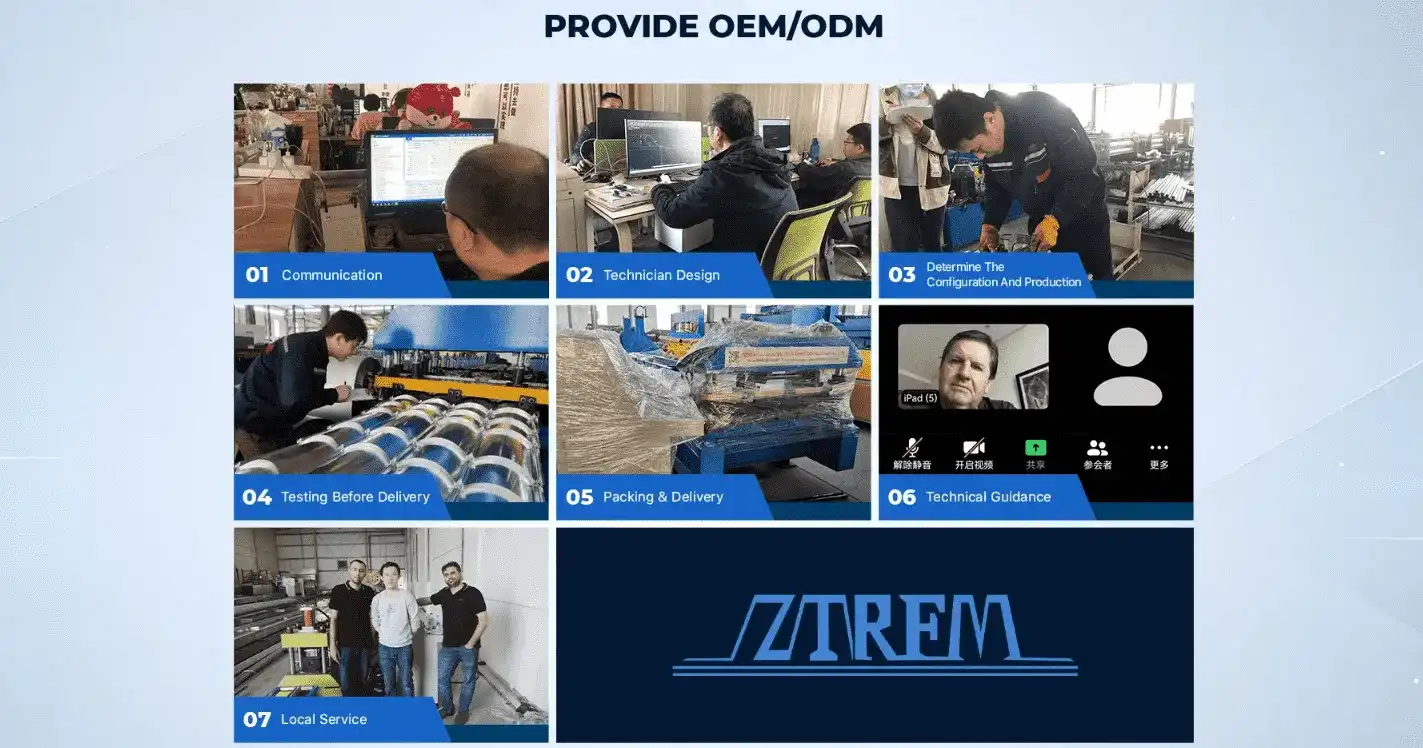
ZTRFM is ready to help you reach your output goals for solar mounting brackets with precision-engineered roll forming solutions. They have been helping makers in 150+ countries for over ten years. As a maker with ISO9001 and CE certifications that specializes in custom forming equipment, we don't just sell machines; we also offer full production partnerships that include technical advice, installation support, user training, and access to parts for life. Our engineering team makes sure that the equipment you need fits your output volume, material needs, and budget, whether you're a new company joining the PV components market or an existing company growing its capacity.
As part of our full range of services, we offer free advice on production line design, clear quotes that show the true total cost of ownership, and detailed technical specs that match the needs of your facility. Contact us at zhongtuorollforming@gmail.com or go to rollformingmachinemanufacturer.com to learn more about how working with a reliable Solar Strut Channel Roll Forming Machine manufacturer can help you make more products and be more competitive in the market.
References
1. Manufacturing Engineering Society. "Cold Roll Forming: Principles and Applications in Structural Profile Production." Industrial Press, 2022.
2. Halmos, George T. "Roll Forming Handbook: Advanced Engineering and Production Techniques." CRC Press, 2021.
3. International Renewable Energy Agency. "Global Trends in Solar PV Mounting Systems and Structural Components." IRENA Technical Report, 2023.
4. American Iron and Steel Institute. "Material Properties and Forming Characteristics of High-Strength Galvanized Steel." AISI Standards Publication, 2022.
5. European Committee for Standardization. "Metal Forming Equipment: Safety Requirements and Quality Standards." EN Standards Documentation, 2023.
6. Society of Manufacturing Engineers. "Precision Metal Forming: Equipment Selection and Process Optimization." SME Technical Paper Series, 2024.
_1750323743240.webp)