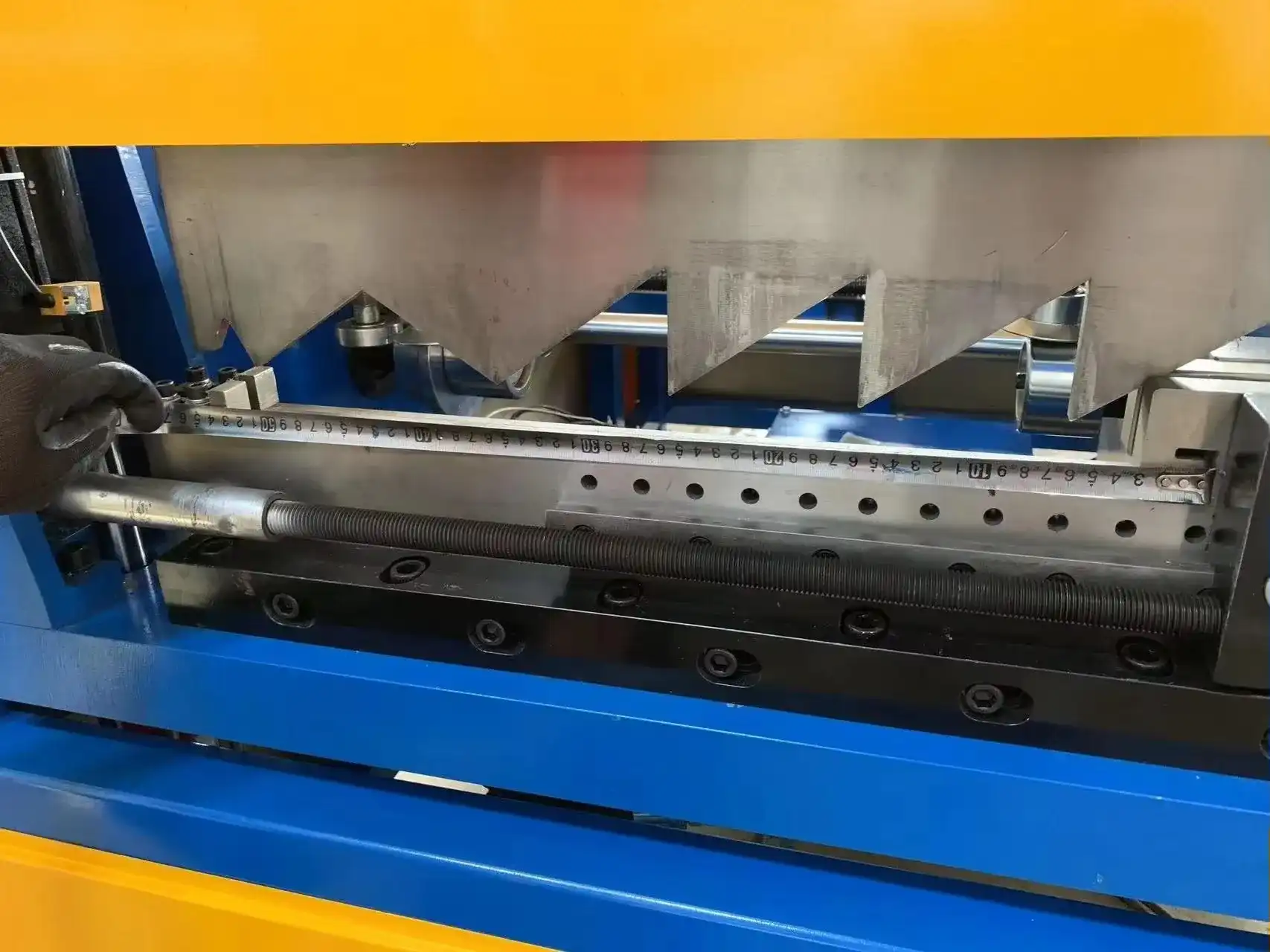
Feed the material through the first three making stations of a standing seam rolling machine by hand, and make sure it is tracking correctly. Misalignment in the early stages gets worse as it goes through more stations, which could damage the edges or cause differences in the sizes of the parts. Keep the tension the same throughout the threading process to avoid slack that could cause feeding problems."
English
- English
- French
- German
- Portuguese
- Spanish
- Russian
- Japanese
- Korean
- Arabic
- Irish
- Greek
- Turkish
- Italian
- Danish
- Romanian
- Indonesian
- Czech
- Afrikaans
- Swedish
- Polish
- Basque
- Catalan
- Esperanto
- Hindi
- Lao
- Albanian
- Amharic
- Armenian
- Azerbaijani
- Belarusian
- Bengali
- Bosnian
- Bulgarian
- Cebuano
- Chichewa
- Corsican
- Croatian
- Dutch
- Estonian
- Filipino
- Finnish
- Frisian
- Galician
- Georgian
- Gujarati
- Haitian
- Hausa
- Hawaiian
- Hebrew
- Hmong
- Hungarian
- Icelandic
- Igbo
- Javanese
- Kannada
- Kazakh
- Khmer
- Kurdish
- Kyrgyz
- Latin
- Latvian
- Lithuanian
- Luxembou..
- Macedonian
- Malagasy
- Malay
- Malayalam
- Maltese
- Maori
- Marathi
- Mongolian
- Burmese
- Nepali
- Norwegian
- Pashto
- Persian
- Punjabi
- Serbian
- Sesotho
- Sinhala
- Slovak
- Slovenian
- Somali
- Samoan
- Scots Gaelic
- Shona
- Sindhi
- Sundanese
- Swahili
- Tajik
- Tamil
- Telugu
- Thai
- Ukrainian
- Urdu
- Uzbek
- Vietnamese
- Welsh
- Xhosa
- Yiddish
- Yoruba
- Zulu
Feb 25,2026
Step-by-Step Guide: How to Use a Standing Seam Rolling Machine Effectively
To use a standing seam rolling machine effectively, you need to know how to set it up, how to handle materials, and how to follow safety rules. This complete guide walks you through every important step, from the first steps of planning to the last checks for quality. Mastering these methods will help you make more things while keeping the quality of your seams the same, whether you're working with PPGI, coated steel, or aluminum sheets. Professional workers get the best results by following organized steps that reduce waste and guarantee consistent performance over long production runs.
Essential Pre-Operation Preparations for Metal Roofing Equipment
Thorough planning is the key to successful operations before you turn on your roofing tools. Make sure that the material's specs match what your machine can do. For most normal units, thicknesses between 0.3mm and 0.8mm work best. Make sure the weight of the coil doesn't go over its lifting ability, which for commercial uses is usually around 5 tons.
Check the threading line and the uncoiler device. Clean the roller surfaces and greasing points of any dirt or dust. When sewing guides are lined up correctly with the making stations, it's easier to feed the material. Before using automated systems, test the human settings to make sure they work properly.
Power needs to be carefully considered for a standing seam rolling machine; normal 380V three-phase connections offer stable performance, but unique voltage setups can be used to meet the needs of different regions. Motor systems that use 3kW for major operations and hydraulic power need enough electricity to keep the voltage from dropping when they're under a lot of stress.
Environmental factors have a big effect on success. Temperature changes can change the qualities of materials, especially coated steel that has already been painted. Controlling humidity keeps cold-rolled surfaces from condensing, which could damage the finish or make them hard to work with.
Proper Material Loading and Threading Techniques
Material handling is a key step in the production process, where the method has a direct effect on how well the product is made. Place the coils firmly on the uncoiler and make sure the weight is spread out evenly so that the machine doesn't wobble while it's turning. Before threading can start, the sides of the cloth and the guide rollers must be carefully lined up.
When the sheet width changes, the roller gaps need to be adjusted. Gradual changes between making sites keep material stress from building up in one place, which could cause cracks or surface flaws. During the first threading, keep an eye on the material flow to find possible binding places.
Edge training often makes the end effect better. Material with slightly rounded edges feeds more easily than material with sharp edges, so there is less friction against the guide surfaces. This care to detail pays off in the form of less upkeep and a more consistent surface finish.
Machine Setup and Configuration Parameters
The factors for configuration must match the needs of the output. Forming speed is usually between 10 and 15 meters per minute, but the best choices rely on the thickness of the material and the complexity of the seam. Higher speeds are usually possible with thinner gauges, while slower speeds that make sure full shaping are better for heavy materials.
"Seam tension force on a standing seam rolling machine is affected by the pressure in the hydraulic system. When adjustments are done correctly, joints stay in place without the material warping. Start with what the maker says to do, and then make small changes based on how the material reacts and what kind of seam qualities you want. Work hardening or surface marking can happen when there is too much pressure.
The progressive forming process is shaped by roller changes made at each stage. Each spot makes a difference in the end profile, so they need to be placed exactly right to get accurate measurements. Gap measurements should be done according to technical standards, but regular changes in material thickness should be taken into account.
When running for a long time, temperature becomes an important factor. Heat from hydraulic systems can change the viscosity of oil and how the system responds. Keep an eye on the operating temperatures and make sure there is enough cooling to keep up with the output plan.

Operating the Standing Seam Roll Former Safely
Safety rules keep workers safe while keeping the quality of the work high. Safety glasses, hearing protection, and cut-resistant gloves that can be used to handle metal sheets are all examples of personal protective equipment. When you're near spinning machinery, loose clothes or jewelry can get caught and hurt you.
The emergency stop buttons must stay easy to reach and be clearly labeled. Before starting production runs, make sure all workers know how to shut down. Set up clear ways for people to talk to each other during activities with more than one person, especially when adding materials and moving products.
Lockout/tagout rules are used when doing maintenance or making adjustments on a standing seam rolling machine. Do not try to clear out jams or make changes to equipment that is running. Rotating parts and hydraulic systems pose major risks of injury that can be avoided by following the right steps.
Regular safety checks find possible dangers before they cause problems. Check the locations of guards, emergency buttons, and warning systems on a regular basis. Keep records of checks to make sure that safety standards are being met at work.
Quality Control During the Seam Formation Process
Continuous monitoring makes sure that the standard of the result stays the same throughout production runs. Checking the dimensions means making sure the seams are the right width and the panels are the right width. Use measuring tools that have been properly adjusted and set up, and check rates that will catch changes before they cause a lot of material waste.
Visual analysis finds flaws on the surface, problems with alignment, and irregularities. Set high guidelines that spell out the limits of what is considered normal variation. Instructors should teach workers how to spot problems early and take quick action to fix them.
"Testing the seam's stability on a standing seam rolling machine makes sure that the mechanical qualities meet the needs of the design. Joint strength is checked by destructive testing regularly, and gaps or partial contact are checked by eye analysis. Keep track of achievement changes over time by writing down results.
Material tracking helps figure out where changes in quality come from. Connect coil numbers to production factors and quality tests. This information is very helpful for fixing problems that keep happening or making settings work best for certain groups of materials.

Troubleshooting Common Operational Challenges
Feeding issues usually happen because the coil is not placed correctly or the guide parts are worn out. When material tracking isn't stable, check the tightness of the uncoiler brake and the orientation of the threads. Over time, small wear on the guide surfaces can add up to big tracking mistakes.
Changes in dimensions on a standing seam rolling machine usually mean that the rollers need to be adjusted or that the material's properties have changed. If the real thickness is different from the specified thickness, check the actual width or height against the goals. Temperature changes can affect the size of both the material and the machine in a way that needs to be compensated for.
Surface quality problems can happen when rollers are dirty, greasing isn't done right, or the making forces are too high. Regularly clean the forming areas and keep the right amount of oil on them. Make sure that the making speeds are right for the material to avoid damaging the surface.
Problems with the hydraulic system show up as creating pressure that isn't stable or cycle times that are too slow. According to the maintenance plan, check the system pressures, fluid levels, and the state of the filters. Take care of small problems before they get worse and need big fixes that will take a long time.
Maintenance and Optimization Strategies
Schedules for preventive repair protect the investment in equipment and make sure it works reliably. Every day, lubrication spots, safety systems, and simple changes are checked. As part of weekly maintenance, the system is cleaned and checked in more detail.
Roller state has a direct effect on the quality of the output and how well the machine works. Regularly check the surface for damage and wear patterns. Instead of replacing or fixing up the rollers at random times, do it based on how often they are used. To improve inventory management, write down the past of replacements.
Fluid analysis, filter replacement, and part checking are all parts of hydraulic system upkeep on a standing seam rolling machine. Using clean hydraulic oil keeps the system running smoothly and stops it from wearing out too quickly. Plan when to change the fluid based on the hours of operation and the results of the contamination study.
Performance optimization means looking at production data to find ways to make things better. To set a baseline for efficiency, keep an eye on throughput rates, quality measures, and upkeep needs. Use this knowledge to help you improve operations and buy new tools.
Conclusion
To get good at using a standing seam rolling machine, you have to pay close attention to details during many stages of operation. Systematic methods get consistent results and protect the investment in tools from the first setup to quality control. Safety is the most important thing in all activities, keeping people safe while keeping processes running smoothly.
By monitoring, maintaining, and optimizing, continuous improvement increases the life of tools and improves the quality of output. Keep records of steps taken and results to build up institutional knowledge that will help the business succeed in the long run. Work with suppliers who have been in business for a while and can offer ongoing expert help and real replacement parts.
Professional results come from using the right techniques, having good tools, and having a lot of help available.
Partner with ZTRFM for Superior Standing Seam Rolling Machine Solutions
ZTRFM delivers industry-leading standing seam rolling machine technology backed by comprehensive support services. Our experienced engineering team provides customized solutions for demanding roofing applications worldwide. Contact coo@zhongtuocn.com to discuss your specific requirements and discover how our ISO9001-certified equipment can enhance your production capabilities.

References
1. Johnson, R.M. "Advanced Metal Forming Techniques for Standing Seam Roofing Systems." Industrial Manufacturing Technology Journal, Vol. 45, 2023, pp. 123-141.
2. Chen, L.W. "Quality Control Standards for Roll-Formed Metal Roofing Components." Construction Materials Engineering Quarterly, No. 3, 2023, pp. 78-95.
3. Rodriguez, A.P. "Hydraulic System Optimization in Cold Roll Forming Equipment." Mechanical Engineering Applications Review, Vol. 28, 2022, pp. 234-251.
4. Thompson, K.D. "Safety Protocols for Industrial Roll Forming Operations." Workplace Safety in Manufacturing, 4th Edition, Industrial Press, 2023, pp. 445-467.
5. Kumar, S.R. "Material Handling Best Practices for Metal Forming Equipment." Production Engineering Handbook, Vol. 12, 2022, pp. 189-207.
6. Williams, J.B. "Preventive Maintenance Strategies for Roll Forming Machinery." Equipment Reliability and Maintenance Quarterly, Vol. 31, 2023, pp. 56-73.
Contact Us
ZTRFM | Global Expert in Intelligent Roll Forming Solutions We are
your one-stop supplier of full cold roll forming systems. Backed by
Siemens Cloud IoT and AI remote maintenance, we deliver stable
equipment and worldwide support. Adopting innovative forming
technologies, we offer reliable, cost-effective customized solutions
for global clients.
_1750323743240.webp)