- English
- French
- German
- Portuguese
- Spanish
- Russian
- Japanese
- Korean
- Arabic
- Irish
- Greek
- Turkish
- Italian
- Danish
- Romanian
- Indonesian
- Czech
- Afrikaans
- Swedish
- Polish
- Basque
- Catalan
- Esperanto
- Hindi
- Lao
- Albanian
- Amharic
- Armenian
- Azerbaijani
- Belarusian
- Bengali
- Bosnian
- Bulgarian
- Cebuano
- Chichewa
- Corsican
- Croatian
- Dutch
- Estonian
- Filipino
- Finnish
- Frisian
- Galician
- Georgian
- Gujarati
- Haitian
- Hausa
- Hawaiian
- Hebrew
- Hmong
- Hungarian
- Icelandic
- Igbo
- Javanese
- Kannada
- Kazakh
- Khmer
- Kurdish
- Kyrgyz
- Latin
- Latvian
- Lithuanian
- Luxembou..
- Macedonian
- Malagasy
- Malay
- Malayalam
- Maltese
- Maori
- Marathi
- Mongolian
- Burmese
- Nepali
- Norwegian
- Pashto
- Persian
- Punjabi
- Serbian
- Sesotho
- Sinhala
- Slovak
- Slovenian
- Somali
- Samoan
- Scots Gaelic
- Shona
- Sindhi
- Sundanese
- Swahili
- Tajik
- Tamil
- Telugu
- Thai
- Ukrainian
- Urdu
- Uzbek
- Vietnamese
- Welsh
- Xhosa
- Yiddish
- Yoruba
- Zulu
The Power of CZ Purlin Forming Machines in Modern Construction
Modern buildings require speed, accuracy, and structural stability, which are all things that traditional ways of making things have trouble constantly meeting. The CZ purlin roll former has become a game-changing tool for companies that make structural steel frame parts. This high-tech cold-forming machinery makes both C-shaped and Z-shaped purlins quickly and easily on a single machine base, so there is no need for expensive downtime that comes with having two separate production lines. These machines solve important problems in the industry by using smart switching systems and computer-controlled accuracy. They also provide the stability and output that today's building projects need.
Understanding CZ Purlin Roll Former Machines
What Defines a CZ Purlin Roll Former?
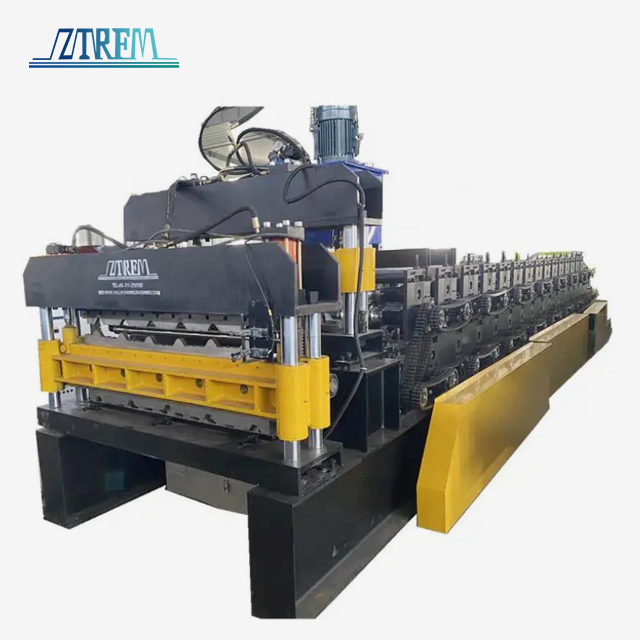
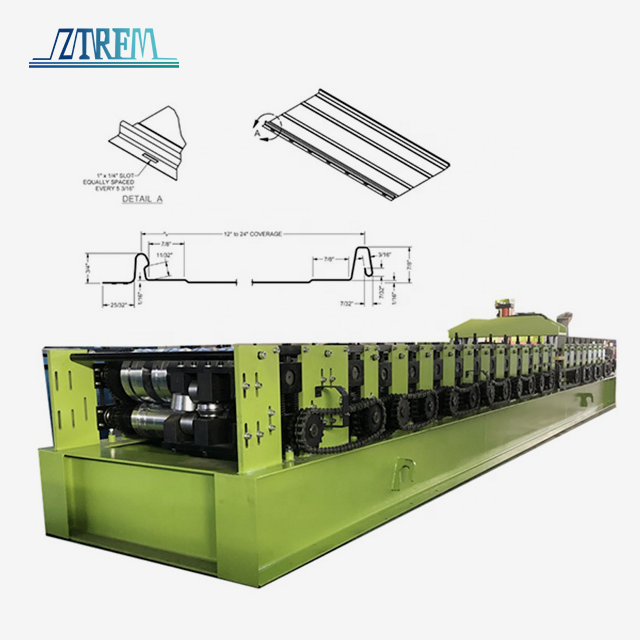
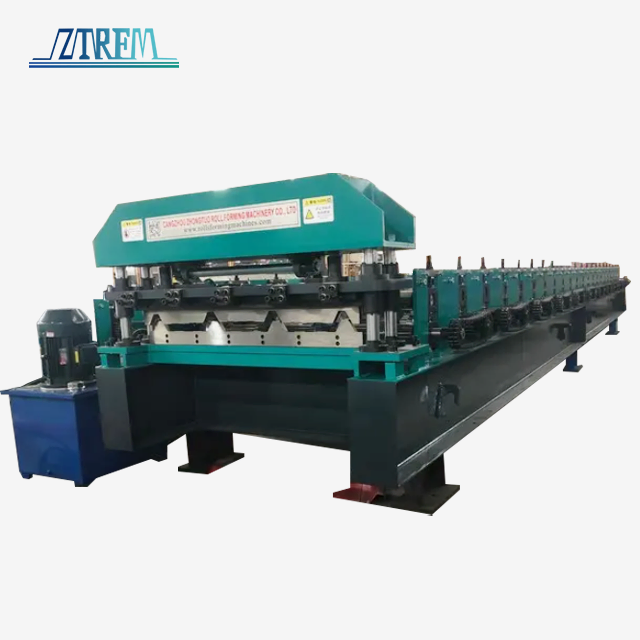
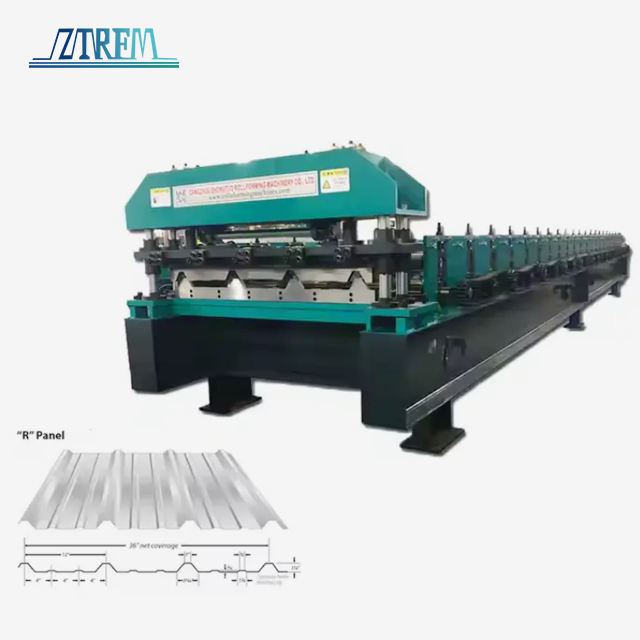
A CZ purlin roll former is a special piece of industrial equipment that is designed to cut galvanised steel strips into precise shapes for building structures. Unlike most machines that only work with one design, this one can work with different cross-sectional shapes without needing separate production sets. The machine works with progressive cold-forming stations. In these stations, steel moves through a series of roller pairs that shape flat material into finished C or Z forms. This process goes at speeds of up to 15 to 22 meters per minute, and the height can be changed from 40 mm to 100 mm to meet different structural needs.
The machine is technically advanced because it can quickly switch between profile types. Modern systems use positioning devices managed by a PLC to change the layout of the rollers in less than 10 minutes. This is a huge improvement over the old ways of changing dies, which took 4 to 8 hours. Overall Equipment Effectiveness (OEE) is directly affected by this efficiency, which lets makers respond quickly to different project requirements.
Core Components and Operational Principles
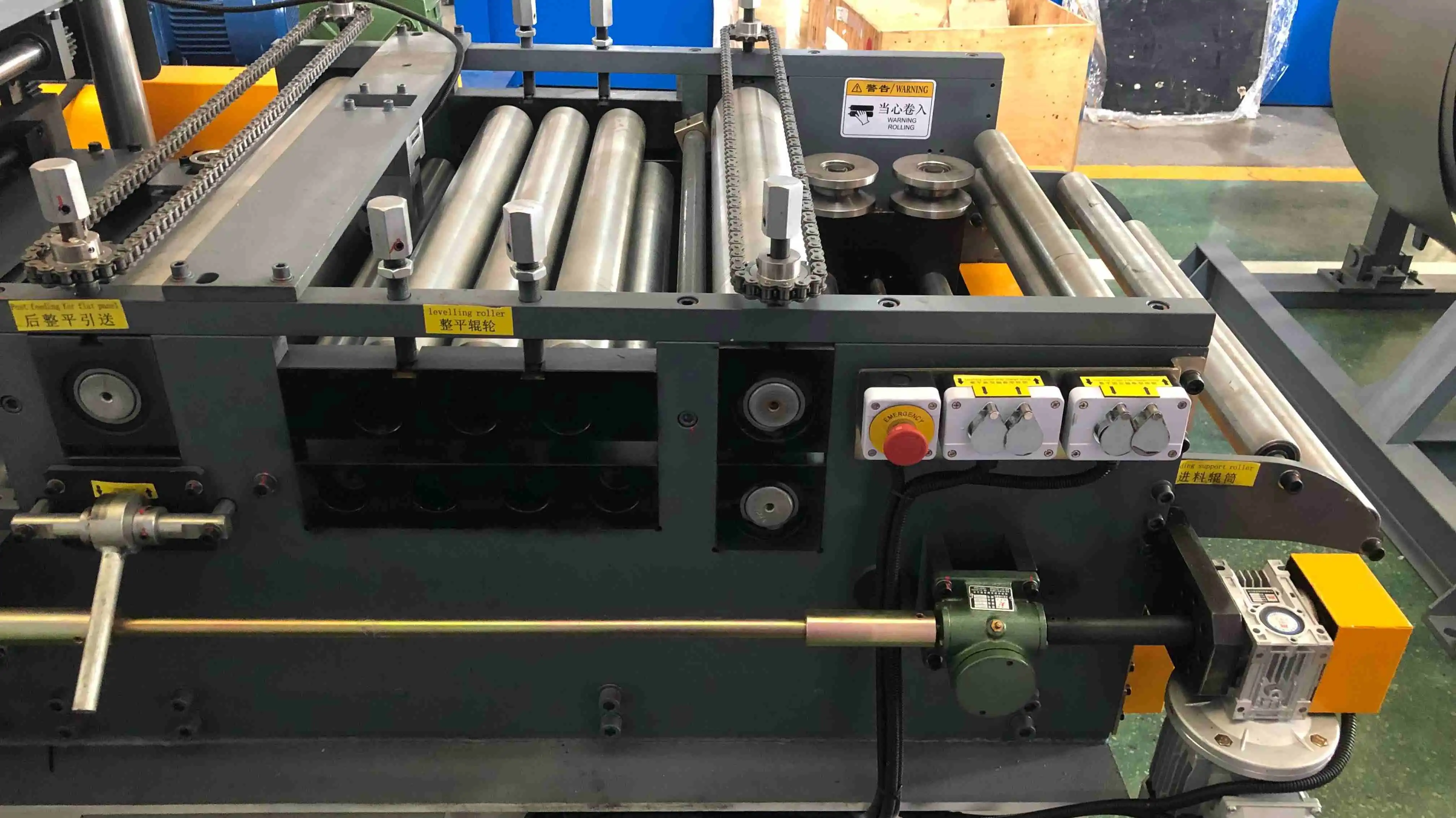
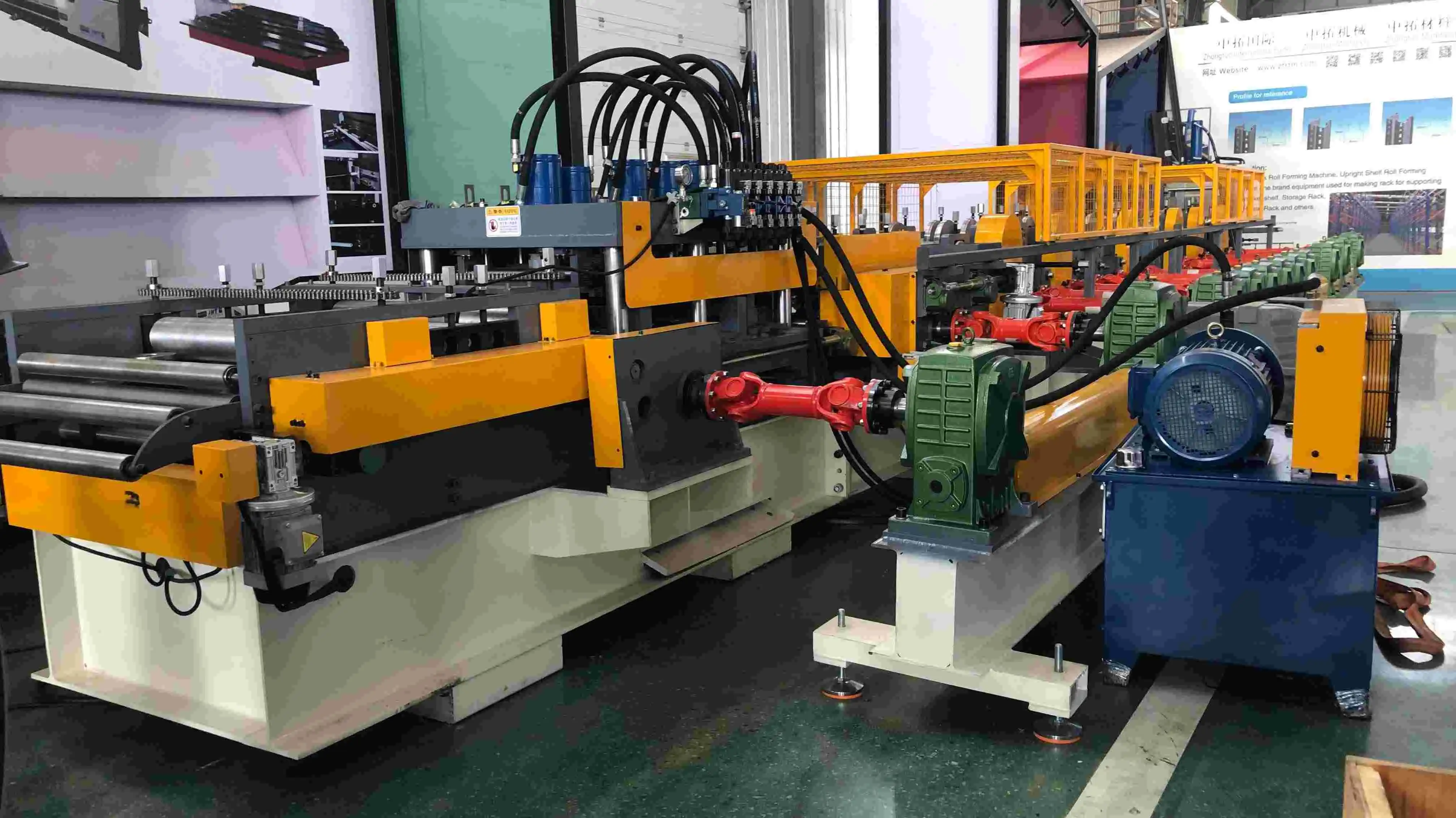
Knowing how the gadget is assembled helps buyers assess its quality and usefulness. The base has a human or automated uncoiler that can handle 3–5-ton steel coils with 460–520 mm inner diameters. Straightening rollers—three top and four lower—prepare the material for shaping.
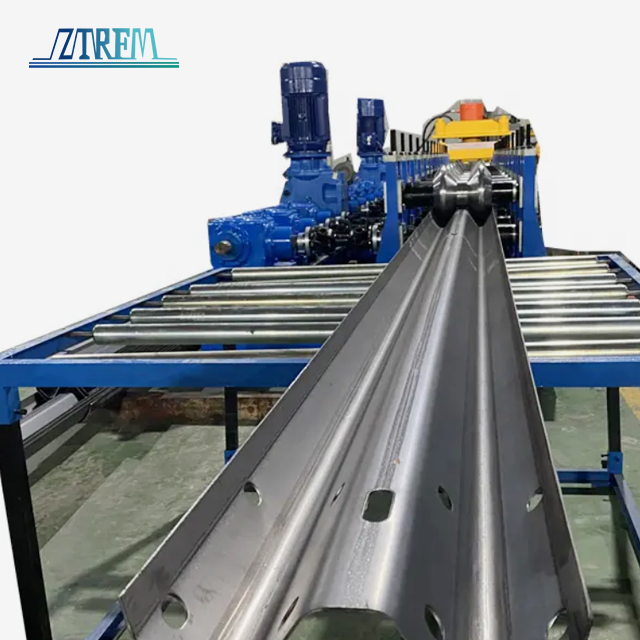
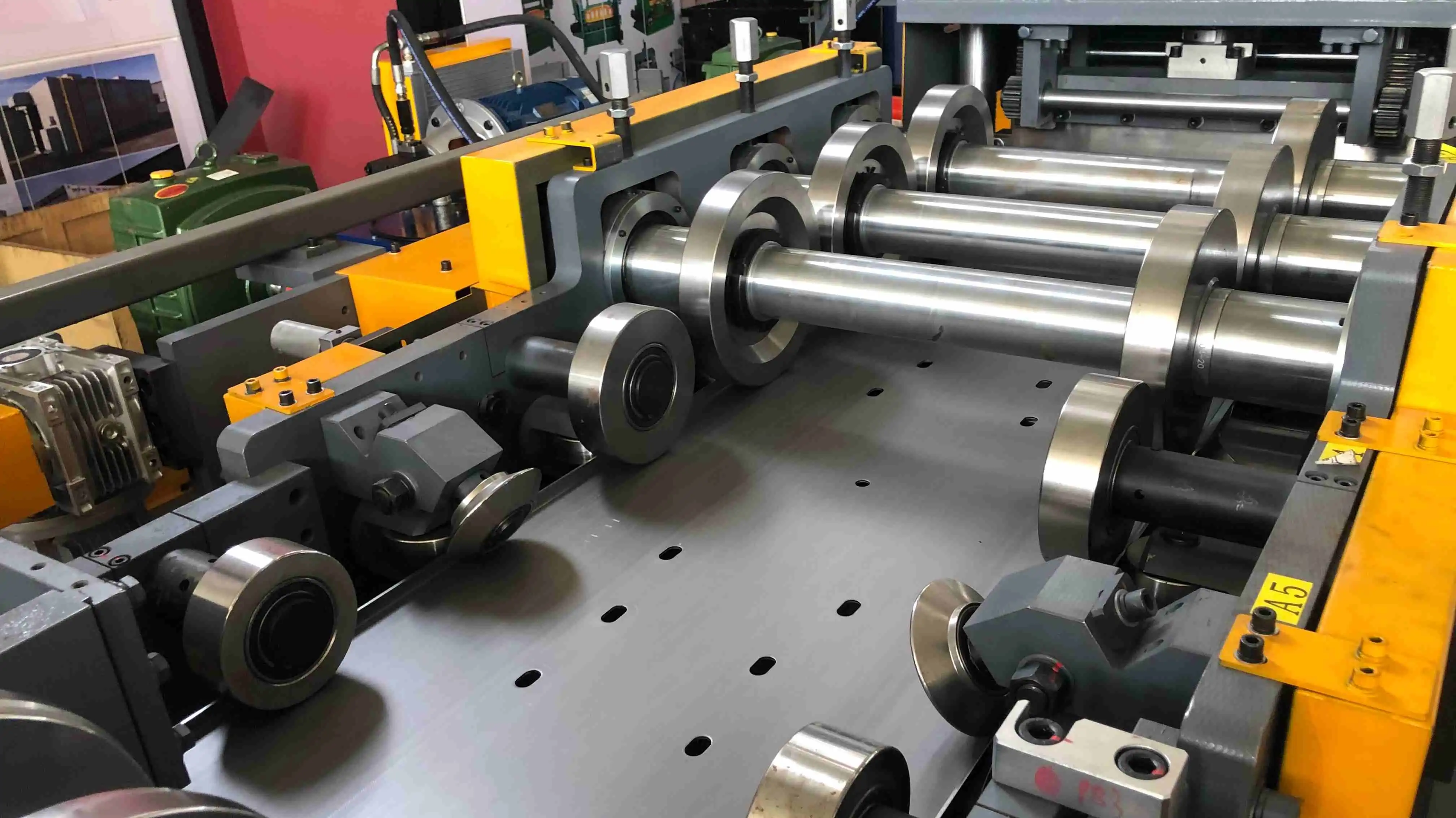
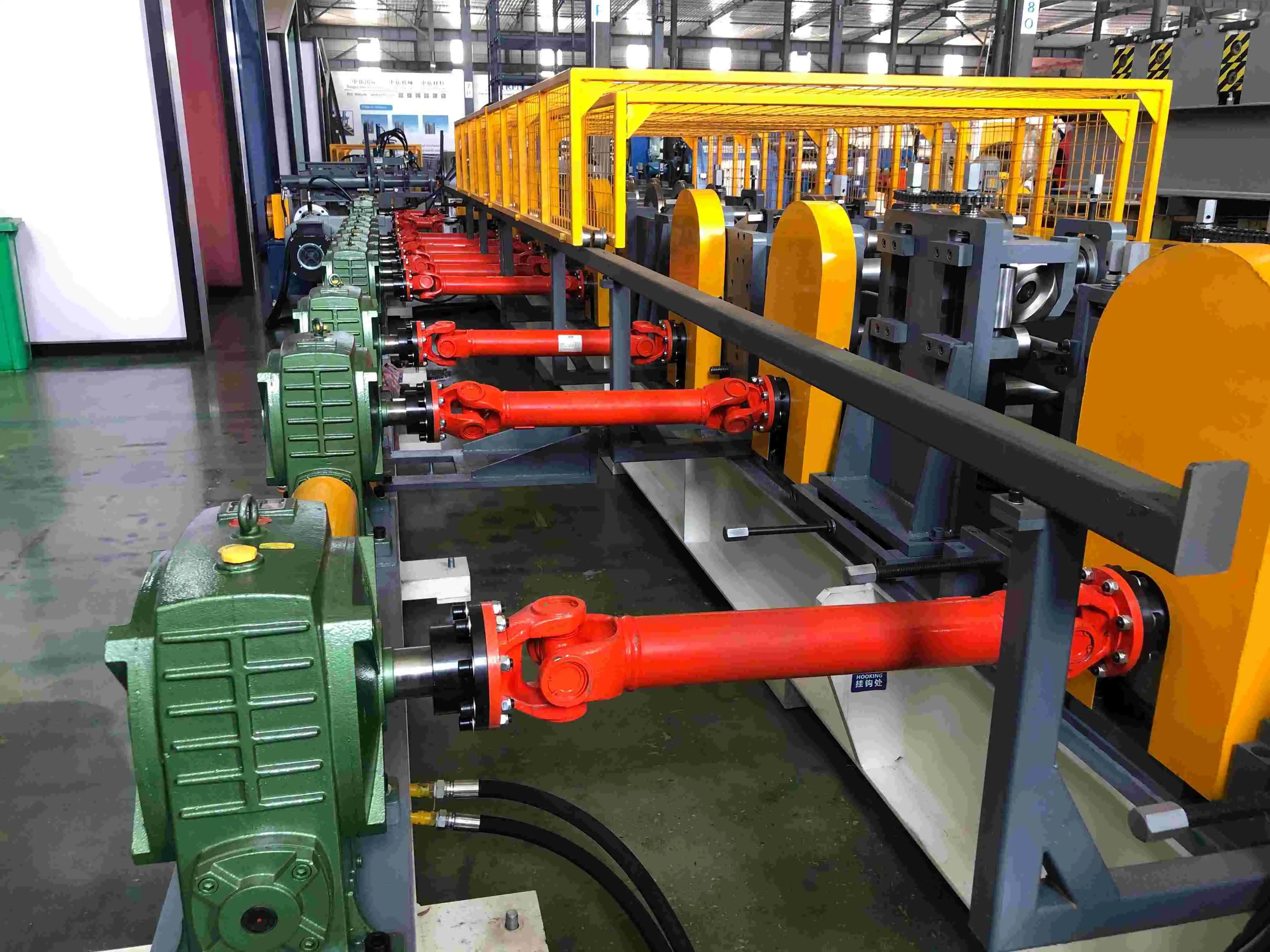
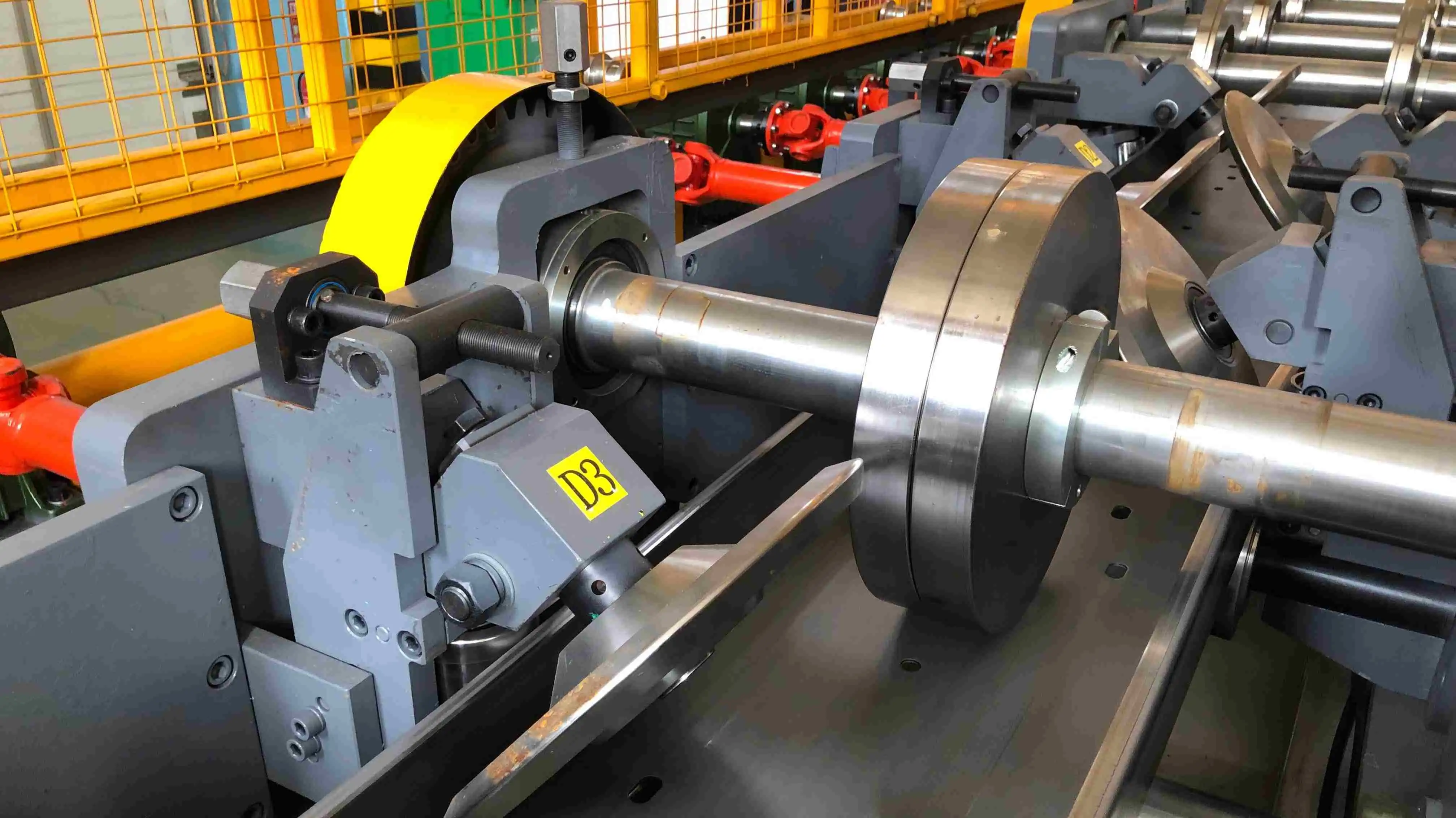
The forming system contains 11–16 roller stations, depending on shape complexity. 40Cr solid steel rods, generally 75 mm in diameter, hold GCr15 tool steel rollers at each station. A strong structure preserves form even when severe stresses are applied during manufacture, so measurements remain precise throughout lengthy production runs. Drive systems employ a chain gearbox aligned with servo motors for 1.0mm feed precision. This is crucial for structural elements because tolerance accumulation might compromise assembly.
Hydraulic punching stations slot into the manufacturing line and create fastener holes at specific periods using Cr12 die steel plates. The cutting mechanism of a hydraulic post-cutter or moving saw automatically adjusts to the profile form, so you don't have to change blade sizes by hand. Control design relies on well-known industrial PLCs. Touchscreen HMIs link them to the rest of the system, allowing operators to swiftly set up the production line and submit measurements.
Machine Specifications and Variants
The equipment to choose depends on production scale and work requirements. Manual techniques are straightforward to use and maintain for startups with little money or orders. These setups use hand-operated uncoilers and simpler control systems, yet core manufacturing precision is maintained.
Automatic variants feature powered uncoilers, servo-driven feeding systems, and stronger PLC control for high-output areas. Two-punching, automated stacking, and quality monitoring are common in industrial-scale models for pre-engineered construction businesses. For instance, solar mounting structure manufacturers need enhanced surface protection for highly galvanised coils (600g/m² zinc coating) to prevent damage during forming.
Freedom involves moving things. Standard versions use 1.5 to 3 mm thick galvanised steel, while heavy-duty variants can withstand high-tensile grades (G450 to G550 MPa), popular in earthquake zones or circumstances requiring additional load capacity. C and Z shapes may have widths from 175mm to 465mm and web sizes from 80mm to 300mm.
Advantages of CZ Purlin Roll Formers Over Traditional Methods
Limitations of Conventional Fabrication Approaches
Purlins were traditionally created using press brakes or unique machines that made one roll form. Press brake production is versatile yet output-limited. Each piece is handled, inserted, and bent by hand, a laborious procedure that varies per operator. Angle uniformity relies on machine calibration and human expertise. This causes dimension disparities that make structure assembly tougher. Offcuts from varying lengths increase material waste, making high-volume manufacturing difficult.
Single-profile specialised roll formers solved speed issues, but stiffened rolls. Manufacturers that separated their C and Z manufacturing lines had to buy expensive new equipment, maintain twice as much, and monitor many tool parts. For profile modifications, the line had to be shut down for roller replacement, which took hours. Inflexibility hampered production when project needs changed mid-contract, which occurs often in the construction sector.
Superior Production Performance and Economic Benefits
Today's CZ purlin roll forming technology may transform practical limits into competitive advantages. Faster production can be assessed immediately. Continuous operation at 15–22 m/min produces more work per day than batch-based press brakes. Automation reduces labour by 60%, allowing personnel to focus on quality control and transportation planning instead of repetitive chores.
Precision is a definite benefit. Computer-controlled motion systems restrict dimensions that humans can't. Web height variations are limited to ±0.5 mm and flange angles to ±0.3 degrees during manufacture. This repeatability eliminates the need for rework and field modifications in projects that employ standard components. Structural engineers prefer the homogeneity since nominal measurement load calculations correctly represent how the structure operates when put.
Over an activity, energy efficiency advantages pile up. Continuous cold-forming uses less power per linear metre than press brake cycles that speed up and slow down. The hydraulic systems of modern roll formers use 11 MPa and 7.5 KW pumps. These technologies are built for consistent task cycles, not press operations' unexpected demands. These efficiency differences reduce operational costs throughout a year of manufacturing.
Material streamlining helps the economy, too. With encoder-based length control, cutting tolerance waste is nearly nonexistent. Makers can arrange production better by swiftly changing forms, reducing material changes, and waste. A single coil can feed both profile types without rearranging the line, making it ideal for projects that must fulfil both C and Z specifications.
Real-World Performance Validation
Construction projects worldwide demonstrate these advantages. A Texas warehouse uses CZ purlin roll formers. The structural frame was built two weeks early since the sections were identical, making fitting simpler. No field rejections for dimensional issues were reported by the general builder. This was unlike press-brake-fabricated projects, where rework required 8–12% of frame labour hours.
Agricultural construction projects face challenging circumstances. A Southeast chicken farm network needs corrosion-resistant profile sizes. Innovative CZ forming tools that can deal with highly galvanised steel without harming the surface were chosen by the integrator. The structures preserved their coating integrity throughout installation, and the supplier stated profile changeover times were less than 12 minutes, making it feasible to produce the multi-building job's diverse sizes at a reasonable cost. Dedicated single-profile tools would have cost too much for this flexibility.
Selecting the Best CZ Purlin Roll Former for Your Business
Critical Decision Criteria for Procurement Teams
Tool capabilities must be carefully examined across several domains to satisfy operational demands. Making accurate production projections is the first step in output capacity planning. Sellers to pre-engineered building businesses require over 200 tonnes of throughput per week, whereas construction market manufacturers need 40–60 tonnes. Know if demand is consistent or surges during particular seasons to decide whether a single high-speed line or numerous moderate-capacity units can function together if one fails.
Energy consumption study goes beyond appliance power figures. The 15-kW primary drive motor is merely half of the operational cost. Other aspects include hydraulic systems, control electronics, and building HVAC to lower temperatures. Equipment with enhanced gearbox systems and variable-frequency drives may reduce operational power demand by 15–20%, saving money across numerous shifts.
The extent of automation depends on capital investment, the employment market, and production difficulties. Automation with recipe saving, length measuring, and quality monitoring boosts production with minimum human input. Standardised manufacturing with many units works well with these systems. Semi-automatic models that need human aid for alterations and length adjustments cost less but core well, making them ideal for firms with many bespoke specifications and a preference for flexibility over speed.
Comparative Analysis: CZ Versus Dedicated Profile Machines
The nature of work dictates whether to employ a combined CZ purlin roll former or separate C and Z tools. Manufacturers that primarily create C profiles but occasionally require Z profiles may find specialised C tools with enhanced Z capabilities cheaper. However, integrated CZ systems benefit organisations with equal demand across both profiles.
Performance upgrades go beyond speed. Simpler roller designs allow specialised machines to produce at greater rates (20–25 m/min vs. 15–22 m/min for combined units). This advantage fades fast when production plans need frequent character changes. No matter how quickly it goes, a dedicated line not utilised during profile changeover produces no output.
Cost planning should include total ownership expenses. Purchasing one dedicated machine is cheaper, but purchasing two requires two hydraulic systems, two control panels, more floor space, two sets of spare parts, and more operator training. CZ combination systems combine these expenses into a single, more modern machine with a reduced TCO for mixed-profile output.
Identifying Reliable Equipment Manufacturers
Long-term operational performance of CZ purlin roll former depends on equipment quality. Reputable producers have many distinguishing qualities. ISO 9001 accreditation ensures quality control measures are in place throughout production. Products with the CE certification fulfil European safety and performance criteria. US purchasers like this since it demonstrates the product was engineered. Established producers frequently have several licenses, indicating experience exporting in many legal contexts.
Production history matters. Roll forming equipment manufacturers with more than 10 years of experience have improved designs with each generation, which helps new startups with stability issues. Customer reference lists showing installations in various industries and places demonstrate the company's versatility. Professional producers differ from equipment merchants in their technical support system, which comprises engineers, thorough instructions, and replacement parts.
Famous companies like Cangzhou Zhongtuo are examples. We've designed and manufactured cold roll forming equipment since 2014, so we know structural profile manufacturing systems. Our ISO9001, CE, and CAS certifications demonstrate our quality commitment. Our tools function in many operational and legal situations, as shown by our exports to over 150 countries. As a national high-tech firm, we innovate in control systems and mechanical design. This keeps our solutions industry-leading.
Maintenance, Troubleshooting, and Longevity Tips
Proactive Maintenance Protocols
Tools require preventative maintenance, not reactive repairs. Rollers should be checked daily for material growth or surface damage, particularly when dealing with zinc-coated steel. To adequately lubricate all bearing locations, technicians should use manufacturer-recommended lithium-based greases authorised for industrial equipment. Checking the chain drive system tension is important because slack builds up over time and accelerates wear.
Weekly maintenance checks all roller stations for balance. A 0.5 mm misalignment between stations might cause major profile size issues. With alignment equipment or laser systems, technicians can discover and rectify these issues before they impair job quality. Hydraulic system fluid levels and filters should be checked regularly to reduce component wear and improve punching and cutting.
Monthly electrical control system inspections are required. In thermal cycling, contacts loosen slowly. This might produce unpredictable production issues that are hard to diagnose. PLC battery backup systems must be updated regularly to preserve program memory during power outages. Encoder systems are calibrated to recognised length standards to maintain cutting accuracy within constraints.
Common Issues and Diagnostic Approaches
Inconsistent dimensions of cz purlin roll former are frequently caused by worn rollers, misalignment, or driving difficulties. When web height variances exceed acceptable limits, technicians should compare roller gap settings at each station to the original standards. Replacement of worn rollers in matching pairs maintains the production process. One flange angle that doesn't meet asymmetric profile formation standards causes alignment issues or uneven roller wear that may be rectified by modifying or replacing parts.
Too much encoder drift or blade wear reduces cutting accuracy. Length measurement equipment detects tiny errors when mechanical parts wear out. For recalibration, test pieces are run at known lengths, and encoder calibration factors are adjusted until the measured and true lengths are within ±1.0mm. Hydraulic cutter blades should be changed depending on the number of linear meters they cut, instead of waiting until they break due to edge wear.
Marks on completed profiles indicate unclean or damaged rollers. When material piles up on forming rollers, it forms steel. When cleaned frequently, deposits don't build up, but if they do, you may need to manually remove them or replace the roller if the surface is damaged. Zinc accumulates more quickly in extensively galvanised material, requiring more frequent cleaning.
Extending Operational Lifespan Through Strategic Parts Management
When you alter parts affects their long-term reliability. Roller shaft bearings should be replaced every 12 to 18 months for regular duty cycles, as advised by the manufacturer, rather than waiting until they fail. Unexpected bearing seizing may damage shafts and rollers, converting regular maintenance into costly repairs and downtime.
Change the drive chain before it wears out to avoid production issues. The chain should be changed when it stretches 1.5 to 2.0%, according to measurement instruments. You may prevent production delays by repairing items during scheduled maintenance.
Original parts from CZ purlin roll former producers ensure proper fit and material compliance. Aftermarket components may seem cheap, but they may be manufactured of lower-quality materials or have slightly different dimensions that wear out more quickly or create difficulties with other parts. OEM parts are worth the slight premium since they operate properly and maintain the warranty.
Procuring CZ Purlin Roll Former Machines: How and Where
Navigating the Global Supplier Landscape
There are many equipment suppliers abroad; therefore, it requires diligent investigation to discover partners that can suit your demands. Established manufacturing centres like China's specialised industrial clusters have many specialists and low pricing due to economies of scale and specialised supply lines. Technical expertise, quality standards, and support systems distinguish professional producers from commodity suppliers; thus, proximity doesn't guarantee a good match.
Certification verification comes first. ISO 9001 quality management approval formalises production controls and documentation. CE certification verifies that a product satisfies European safety requirements via independent testing and compliance. This goes beyond quality self-declaration. Companies that service several overseas markets can adapt to diverse standards and client expectations, unlike US-only manufacturers.
Technology evaluation should go beyond sales material to include engineering depth. Tech drawings, finite element analysis papers for essential components, and extensive operating manuals indicate a lot of engineering effort. Manufacturers that provide customisation choices like size ranges, coupled automation, or specialised material handling demonstrate essential application expertise as production demands alter.
Understanding the Procurement Journey
The purchase process begins with a request for production demands such as projected output, material requirements, profile size ranges, and automation preferences. Professional providers respond with preliminary proposals that contain equipment specifics, pricing estimates, and wait times. This initial meeting should align technical details before discussing quotations.
Compare more than basic tool pricing while comparing quotations. The uncoiler capacity, number of forming stations, cutting system, control system name and specifications, and any extras were mentioned in comprehensive bids. Shipping methods and pricing vary by equipment size and logistical system. Import taxes, insurance, and customs clearance may raise landed expenses above FOB manufacturing pricing.
Lead time norms must be fairly assessed. Standard setups from well-known manufacturers ship in 30–45 days. Custom requirements need technical revisions and specialised parts, which might take 90 days. Rush orders cost extra and may be lower-quality if manufacturing plans are off. Plan purchases ahead of time to prevent these issues.
Value of Comprehensive After-Sales Support
Equipment commissioning and operator training affect operations. On-site professionals prepare the base, connect the power, and configure the basic settings. Comprehensive training programs on fundamental operation, regular maintenance, routine repairs, and parameter modification enable personnel to maximise their equipment's potential instead of restricting it due to ignorance.
Each supplier's warranty periods vary. Inclusion and removal provisions are crucial, but standard clauses cover manufacturing faults for 12–24 months. Refills and cutting blades are seldom covered by warranties. However, hydraulic, electrical, and structural components are. Knowing how to submit an insurance claim and when to anticipate a response can save frustration.
Technical support becomes crucial as the process progresses. Respondent manufacturers maintain engineering connections accessible for troubleshooting support, routinely discuss software modifications or system enhancements, and store substantial replacement parts for speedy distribution. This support system distinguishes authentic CZ purlin roll former partners from transaction tool vendors.
Conclusion
The CZ purlin roll former technology is a big step forward in making structural steel parts. It gives modern buildings the accuracy, speed, and freedom it needs. The machine can quickly make both C and Z profiles without requiring a lot of downtime for switching between them, which gets around basic production problems that plagued older methods. The advanced technology in the control systems, the strong construction, and the machines' proven ability to work make them useful assets for companies that make building equipment for a wide range of markets. Procurement decisions that offer long-term value are made by carefully choosing suppliers, focused on well-known brands with full certification, proven export experience, and strong support infrastructure. As the building industry continues to focus on speed, quality, and cost-effectiveness, producers who invest in modern CZ purlin forming capabilities will be able to compete in a global market that is always changing.
FAQ
1. What distinguishes CZ purlin roll formers from dedicated C or Z profile machines?
The main difference is how versatile the profiles are. Z profiles need their own tools because dedicated C machines can only make C-shaped parts. CZ purlin roll formers can handle both shapes because they have PLC systems that can change the direction of the rollers. This makes profile switching possible in about 10 minutes instead of the hours-long processes needed for roller changes or keeping two production lines running at the same time. This feature is especially useful for makers who work on a variety of projects that need both profile types. It gets rid of production problems caused by limited capacity.
2. Can CZ purlin forming machines accommodate custom profile dimensions?
Modern equipment can be adjusted in a lot of ways within the limits of its design. The height can be changed between 40 and 100 mm, and the width can be changed between 80 and 300 mm. By changing the design of the rollers, the sizes and angles of the flanges can be changed. Custom needs that aren't in the normal range may need special roller sets, but they can still be met with the help of the manufacturer's engineering team. Talking about specific size needs during the buying process ensures that the tools chosen can handle the expected range of production.
3. What timeline should be expected from order placement to operational production?
Standard configurations from well-known makers usually need 30 to 45 days to be made, and then 20 to 35 days for foreign shipping, based on where the goods are going and how they are being shipped. Manufacturing could take an extra 60 to 90 days if you have specific needs. After delivery, installation and testing take about five to seven days, which includes training for the operators. From the time an order is placed until full production is possible, it usually takes between 60 and 90 days for basic equipment and between 100 and 120 days for personalised systems.
Upgrade Your Structural Steel Production Capability with ZTRFM
Competence in today's building supply markets is directly linked to how efficiently and well products are made. ZTRFM offers tried-and-true CZ purlin roll former options that are built to be reliable, accurate, and useful for a long time. Our machinery is made up of strong GCr15 rollers, servo motors for precise control, and full PLC automation. It can make structural profiles at speeds of 15 to 22 meters per minute while maintaining accurate measurements. As a CZ purlin roll former maker with ISO9001 and CE certifications and tools used in more than 150 countries, we offer the technical know-how and global support that serious manufacturers need. Our engineering team can help you find solutions that are tailored to your needs, whether you're looking to increase your current production capacity or start up new production capabilities. To talk about how ZTRFM CZ purlin forming systems can help your business, email zhongtuorollforming@gmail.com.
References
1. American Institute of Steel Construction (2021). Specification for Structural Steel Buildings, ANSI/AISC 360-16, Chicago, Illinois.
2. Davies, J.M. (2019). Cold-Formed Steel Structures: Modern Applications and Design Standards, Wiley-Blackwell Engineering Publishers.
3. Metal Construction Association (2020). Purlin Design Guide for Metal Building Systems, Technical Publication Series, Cleveland, Ohio.
4. Hancock, G.J., Murray, T.M., and Ellifritt, D.S. (2017). Cold-Formed Steel Structures to the AISI Specification, Marcel Dekker Publications, New York.
5. Rondal, J. and Niazi, M. (2018). Stability of Cold-Formed Steel Members and Structures: Purlin and Girt Systems, Engineering Design Manual, Brussels.
6. Yu, W.W. and LaBoube, R.A. (2020). Cold-Formed Steel Design: Fifth Edition, John Wiley & Sons, Hoboken, New Jersey.