- English
- French
- German
- Portuguese
- Spanish
- Russian
- Japanese
- Korean
- Arabic
- Irish
- Greek
- Turkish
- Italian
- Danish
- Romanian
- Indonesian
- Czech
- Afrikaans
- Swedish
- Polish
- Basque
- Catalan
- Esperanto
- Hindi
- Lao
- Albanian
- Amharic
- Armenian
- Azerbaijani
- Belarusian
- Bengali
- Bosnian
- Bulgarian
- Cebuano
- Chichewa
- Corsican
- Croatian
- Dutch
- Estonian
- Filipino
- Finnish
- Frisian
- Galician
- Georgian
- Gujarati
- Haitian
- Hausa
- Hawaiian
- Hebrew
- Hmong
- Hungarian
- Icelandic
- Igbo
- Javanese
- Kannada
- Kazakh
- Khmer
- Kurdish
- Kyrgyz
- Latin
- Latvian
- Lithuanian
- Luxembou..
- Macedonian
- Malagasy
- Malay
- Malayalam
- Maltese
- Maori
- Marathi
- Mongolian
- Burmese
- Nepali
- Norwegian
- Pashto
- Persian
- Punjabi
- Serbian
- Sesotho
- Sinhala
- Slovak
- Slovenian
- Somali
- Samoan
- Scots Gaelic
- Shona
- Sindhi
- Sundanese
- Swahili
- Tajik
- Tamil
- Telugu
- Thai
- Ukrainian
- Urdu
- Uzbek
- Vietnamese
- Welsh
- Xhosa
- Yiddish
- Yoruba
- Zulu
Top Hat Channel Machine Uses in Construction You Should Know in 2026
In 2026, the building industry is changing quickly, and hat channel makers have become essential tools for making accurate metal frame parts. These special roll-forming tools make steel tubes in the shape of hats that are very important for modern building projects' structural needs. The hat channel machine technology of today meets the growing need for fast, high-quality metal-making solutions in the household, commercial, and industrial building sectors around the world. It does this by offering advanced automation features and better measurement accuracy.
Understanding the Hat Channel Machine and Its Role in Construction
The hat channel machine is a high-tech piece of metal-forming gear that uses precise roll-forming techniques to make steel profiles in the shape of hats. With great consistency in both depth and quality of surface, these tools turn flat metal loops into three-dimensional channels. The unique hat shape makes them better at spreading loads than regular C- or Z-shaped channels, which is why they are so valuable in structural uses.
Core Components and Technical Specifications
Modern tools for hat channel making have a number of important parts that work together to make sure they work well. The precise feeding of materials is controlled by the decoiler system, which can be set up either hydraulically and automatically or by hand. Even though hydraulic systems are more productive for high-volume processes, most makers offer hand decoilers as extras.
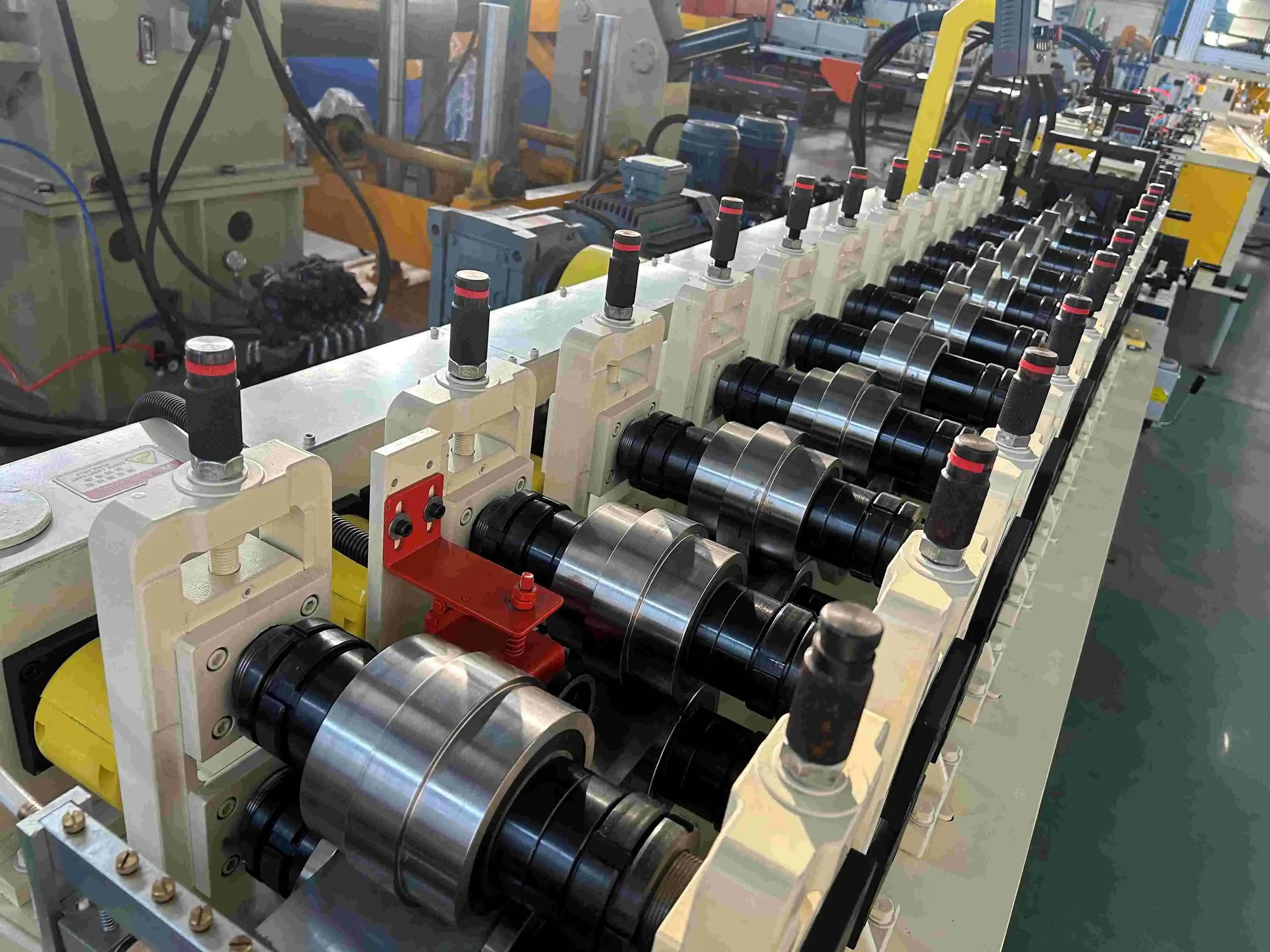
The main making part usually has 14 roller stations that are set up in a way that meets the needs of the job. These stations use 50 mm solid rods made from high-quality steel, which keeps the structure strong while it's running all the time. The rollers are made from 45# steel and have a hard chrome finish on the sides that touch things. This gives them great wear protection and a longer useful life.
Material Compatibility and Thickness Range
These tools can work with galvanized iron (GI) products that are between 0.3 mm and 1.0 mm thick, which is thick enough for most normal building projects. Because of this, producers can make channels for a wide range of structural needs without having to change the tools they use. The exact making process makes sure that the cross-sectional measurements are the same across the whole range of thicknesses. This upholds quality standards that are necessary for building uses.
The metal steel frame is bonded together, which makes it strong for high-speed activities. Gearbox transmission systems reliably move power while keeping operations running smoothly. Strong building and careful planning work together to make sure that high-quality hat ducts are always made that meet strict industry standards.

Top Uses of Hat Channel Machines in Construction Projects
Hat channel tools, including the hat channel machine, are used for many different things in modern construction projects, from making homes to building complex business buildings. Manufacturers and builders can get the most out of their making equipment investments if they know how to use it in these ways.
Structural Framing and Support Systems
Hat channels are very good at supporting weight while still being lightweight, which makes them ideal for structural uses. The special shape of the profile evenly spreads stress across the channel width, which means that less material is needed without affecting the strength of the structure. Construction crews like how easy hat channels are to install and how flexible they are when it comes to connecting things.
When used in suspended ceiling systems in commercial buildings, hat channels are often used because they are strong for their weight. The channels hold up sound walls, light fixtures, and HVAC parts while keeping the total load on the structure as low as possible. This example shows how specialized toolmaking can help make building methods more efficient.
HVAC and Mechanical Systems Integration
Here are the main benefits that hat channels offer in HVAC applications:
- Better Load Distribution: The hat profile form makes it easier for big mechanical equipment setups to get structural support.
- Flexible mounting options: the channel has multiple connection spots that let you set up different kinds of equipment.
- Resistance to corrosion: a galvanized covering protects against corrosion and provides long-term success in a wide range of weather conditions.
- Installation Efficiency: Standardized sizes and ways of connecting parts cut down on installation time and costs for workers.
These benefits make it easier to deal with common problems in installing mechanical systems, where standard frame methods don't always work well for complicated equipment setups.
Partition and Interior Framework Applications
Hat channels are being used more and more for internal dividers in lightweight steel frames. The lines keep the structure stable and allow for water and electricity connections inside the walls. This dual feature makes building easier and speeds up the project schedule.
Manufacturers of metal studs really like how consistent automatic making equipment is. Each channel stays the same size and straightness, which makes sure that everything fits together correctly during building. This accuracy gets rid of common frame problems that can ruin the flatness of walls and the quality of finishes in business settings.

How to Choose the Right Hat Channel Machine for Your Construction Needs?
Selecting appropriate forming equipment requires careful evaluation of production requirements, material specifications, and operational considerations. Understanding these factors helps manufacturers make informed decisions that optimize productivity and profitability.
Production Capacity and Automation Level
Production volume expectations directly influence equipment selection decisions. High-capacity operations benefit from fully automated systems with integrated cutting and stacking capabilities. These systems minimize manual handling while maintaining consistent output quality throughout extended production runs.
Smaller manufacturers often prioritize flexibility over maximum speed, choosing semi-automatic configurations that accommodate varied production schedules. The ability to quickly change between different channel profiles without extensive setup procedures proves valuable for custom fabrication operations serving diverse customer requirements.
Material Handling and Processing Capabilities
Effective material handling systems ensure smooth production flow while minimizing waste. Hydraulic decoilers provide consistent tension control during forming operations, reducing material stress and improving surface finish quality. The precision feeding mechanisms prevent material slippage that can cause dimensional variations in finished channels.
Quality control considerations extend beyond basic dimensional accuracy to include surface finish standards and edge quality requirements. Chrome-plated forming rollers maintain smooth contact surfaces that preserve material appearance while extending tooling life. This attention to surface quality becomes particularly important when channels remain visible in finished construction applications.
Integration with Existing Production Systems
Successful equipment integration requires compatibility with existing material handling and quality control procedures. Standardized electrical interfaces and control systems simplify integration while reducing training requirements for production personnel. Many manufacturers appreciate equipment designs that accommodate future expansion or modification as production requirements evolve.
The welded steel frame construction provides stability necessary for precision forming operations while supporting additional equipment attachments. This structural foundation enables integration of auxiliary systems such as automatic cutting units, hat channel machines, marking equipment, or quality inspection stations without compromising forming accuracy.

Maintenance Tips and Quality Assurance for Long-Term Performance
Proper maintenance protocols ensure consistent equipment performance while minimizing unexpected downtime. Understanding these requirements helps manufacturers develop effective maintenance strategies that protect their investment in forming equipment.
Routine Maintenance Procedures
Daily maintenance activities focus on lubrication points and visual inspections of critical components. The 14-station roller system requires systematic attention to bearing assemblies and drive connections. Regular lubrication using manufacturer-specified grades prevents premature wear while maintaining smooth operation throughout production cycles.
Chrome-plated roller surfaces benefit from periodic cleaning to remove material residue that can affect surface finish quality. Gentle cleaning methods preserve the protective coating while ensuring optimal contact conditions. This attention to roller maintenance directly impacts the quality of formed channels and extends tooling replacement intervals.
Quality Control and Calibration Standards
Dimensional accuracy verification requires systematic measurement protocols using calibrated inspection equipment. Regular checks of channel width, height, and wall thickness ensure compliance with design specifications. Documentation of these measurements provides valuable data for identifying trend changes that might indicate developing equipment issues.
The precision forming process depends on proper roller alignment and consistent material feeding. Periodic calibration of these systems maintains forming accuracy while preventing quality variations that can affect customer satisfaction. Professional calibration services ensure measurement accuracy and compliance with industry standards such as ISO9001 and CE certification requirements.
Procurement Strategies: How to Buy Hat Channel Machines with Confidence?
Strategic procurement approaches help manufacturers secure appropriate equipment, including the hat channel machine, while managing investment risks. Understanding market options and supplier capabilities enables informed decision-making that supports long-term business objectives.
Evaluating Supplier Credentials and Support Services
Supplier evaluation should encompass technical capabilities, service infrastructure, and long-term support commitments. Companies with ISO9001, CE, and CAS certifications demonstrate commitment to quality management systems that ensure consistent product performance. Global delivery experience across 150+ countries indicates operational maturity and logistics capabilities essential for international business relationships.
Comprehensive after-sales service programs provide valuable support during equipment commissioning and ongoing operations. Training programs for production personnel ensure optimal equipment utilization while minimizing operational issues. Technical support availability becomes particularly important when production schedules cannot accommodate extended downtime periods.
Investment Analysis and Total Cost Considerations
Equipment investment analysis must consider total ownership costs, including installation, training, maintenance, and spare parts requirements. Transparent pricing structures help manufacturers develop accurate budget projections while avoiding unexpected expenses during implementation phases.
The balance between initial investment and operational capabilities varies with production requirements and market positioning. High-efficiency equipment often justifies premium pricing through reduced labor costs and improved material utilization. This economic analysis becomes particularly relevant for manufacturers serving competitive market segments where operational efficiency directly impacts profitability.
Conclusion
Hat channel machines continue revolutionizing construction metal forming through advanced automation and precision engineering capabilities. These specialized systems address growing demands for high-quality structural components while improving production efficiency across diverse manufacturing environments. Understanding application requirements, maintenance protocols, and procurement strategies enables manufacturers to maximize equipment value while supporting sustainable business growth.
The construction industry's evolution toward standardized, high-precision components positions hat channel forming equipment as essential infrastructure for competitive manufacturing operations. Investment in quality equipment with comprehensive support services ensures long-term operational success in dynamic market conditions.
FAQ
1. What materials can hat channel machines process effectively?
Hat channel machines accommodate galvanized iron materials ranging from 0.3 mm to 1.0 mm in thickness. This range covers most standard construction applications while maintaining dimensional accuracy across the complete thickness spectrum.
2. How many roller stations are typically required for quality hat channel production?
Standard configurations utilize 14 roller stations arranged according to specific profile requirements. This number provides sufficient forming stages to achieve precise dimensions while maintaining material integrity throughout the forming process.
3. What maintenance schedule should manufacturers follow for optimal equipment performance?
Daily lubrication and visual inspections, weekly dimensional checks, and monthly comprehensive system evaluations ensure consistent performance. Professional calibration services annually maintain measurement accuracy and compliance with industry standards.
4. How do chrome-plated rollers improve production quality?
Chrome-plated roller surfaces provide superior wear resistance while maintaining smooth contact conditions. This surface treatment preserves material finish quality and extends tooling life, reducing replacement costs and production interruptions.
5. What certifications should manufacturers look for when selecting equipment suppliers?
ISO9001, CE, and CAS certifications indicate comprehensive quality management systems and compliance with international standards. These credentials demonstrate supplier commitment to consistent product quality and reliable service support.
Partner with ZTRFM for Premium Hat Channel Machine Solutions
Cangzhou Zhongtuo (ZTRFM) brings over a decade of specialized expertise in cold roll forming equipment manufacturing, serving customers across 150+ countries with innovative hat channel machine solutions. Our comprehensive portfolio includes customizable 14-station forming systems with advanced hydraulic decoilers and precision chrome-plated roller assemblies designed for optimal performance in demanding production environments.
As a certified hat channel machine manufacturer with ISO9001, CE, and CAS credentials, we provide complete OEM and ODM services supporting raw material supply, equipment manufacturing, and ongoing technical assistance. Contact our technical team at coo@zhongtuocn.com to explore customized forming solutions that match your specific production requirements and operational objectives.

References
1. Smith, J.R. "Advanced Metal Forming Technologies in Modern Construction Applications." Journal of Construction Engineering, Vol. 45, 2025, pp. 123-135.
2. International Steel Framing Association. "Hat Channel Profile Standards and Specifications for Commercial Construction." ISFA Technical Bulletin 2026-02, February 2026.
3. Chen, L.M. "Roll Forming Equipment Design Principles for Structural Steel Components." Manufacturing Technology Review, Issue 78, 2025, pp. 67-82.
4. American Society of Civil Engineers. "Lightweight Steel Framing Systems: Performance Standards and Installation Guidelines." ASCE Standard 341-25, December 2025.
5. Thompson, R.K. "Quality Control Protocols for Cold-Formed Steel Manufacturing Processes." Industrial Manufacturing Quarterly, Vol. 29, No. 3, 2025, pp. 45-58.
6. European Committee for Standardization. "Metal Forming Equipment Safety and Performance Requirements." EN 15204:2025, CEN Publications, Brussels, 2025.
_1750323743240.webp)