- English
- French
- German
- Portuguese
- Spanish
- Russian
- Japanese
- Korean
- Arabic
- Irish
- Greek
- Turkish
- Italian
- Danish
- Romanian
- Indonesian
- Czech
- Afrikaans
- Swedish
- Polish
- Basque
- Catalan
- Esperanto
- Hindi
- Lao
- Albanian
- Amharic
- Armenian
- Azerbaijani
- Belarusian
- Bengali
- Bosnian
- Bulgarian
- Cebuano
- Chichewa
- Corsican
- Croatian
- Dutch
- Estonian
- Filipino
- Finnish
- Frisian
- Galician
- Georgian
- Gujarati
- Haitian
- Hausa
- Hawaiian
- Hebrew
- Hmong
- Hungarian
- Icelandic
- Igbo
- Javanese
- Kannada
- Kazakh
- Khmer
- Kurdish
- Kyrgyz
- Latin
- Latvian
- Lithuanian
- Luxembou..
- Macedonian
- Malagasy
- Malay
- Malayalam
- Maltese
- Maori
- Marathi
- Mongolian
- Burmese
- Nepali
- Norwegian
- Pashto
- Persian
- Punjabi
- Serbian
- Sesotho
- Sinhala
- Slovak
- Slovenian
- Somali
- Samoan
- Scots Gaelic
- Shona
- Sindhi
- Sundanese
- Swahili
- Tajik
- Tamil
- Telugu
- Thai
- Ukrainian
- Urdu
- Uzbek
- Vietnamese
- Welsh
- Xhosa
- Yiddish
- Yoruba
- Zulu
Tr4/ Tr5 Roof Sheet Machine with Hydraulic Cutting Design
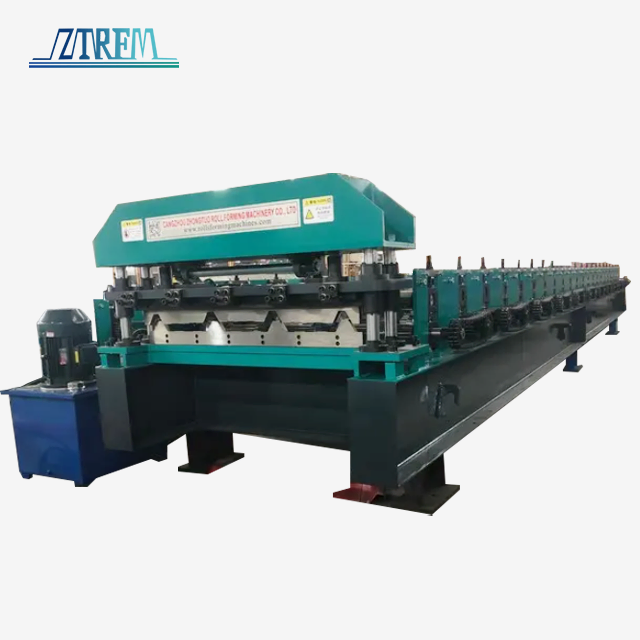
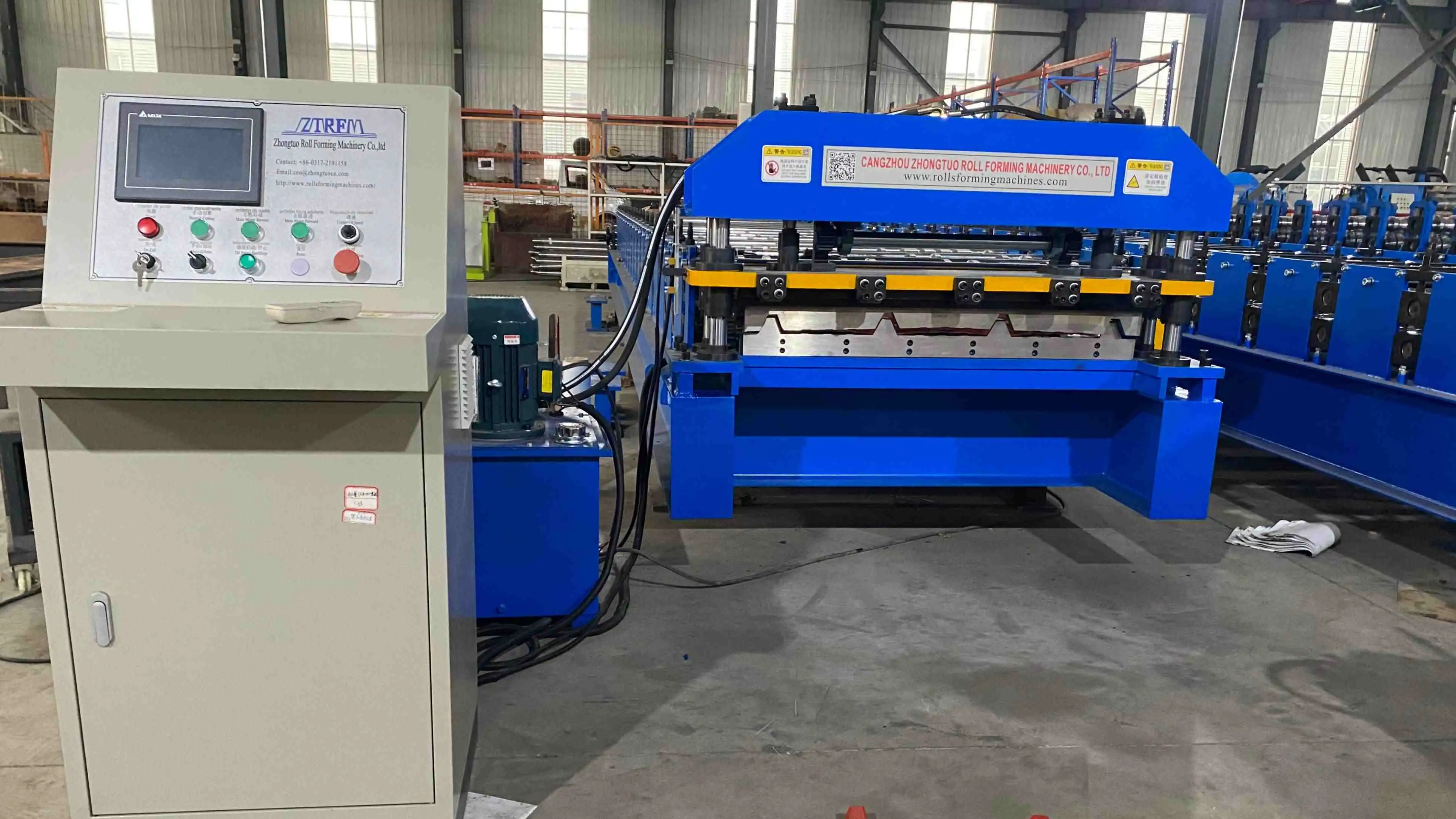
When metal roofing manufacturers face production bottlenecks—like inconsistent profile dimensions, excessive material waste, or sluggish cutting speeds—the solution often lies in upgrading to a precision-engineered forming system. The Tr4/Tr5 roof sheet machine is a specialized cold roll forming solution that transforms galvanised or pre-painted metal coils into trapezoidal roofing profiles with either four or five ribs. The integrated hydraulic cutting design eliminates the manual trimming errors common in older systems, delivering clean, burr-free edges at production speeds reaching 25 meters per minute. This technology addresses critical pain points for building roofing system manufacturers seeking stable, high-speed equipment that maintains tight tolerances across extended production runs.
Understanding Tr4 and Tr5 Roof Sheet Machines with Hydraulic Cutting Design
How Does Trapezoidal Profile Roll Forming Work?
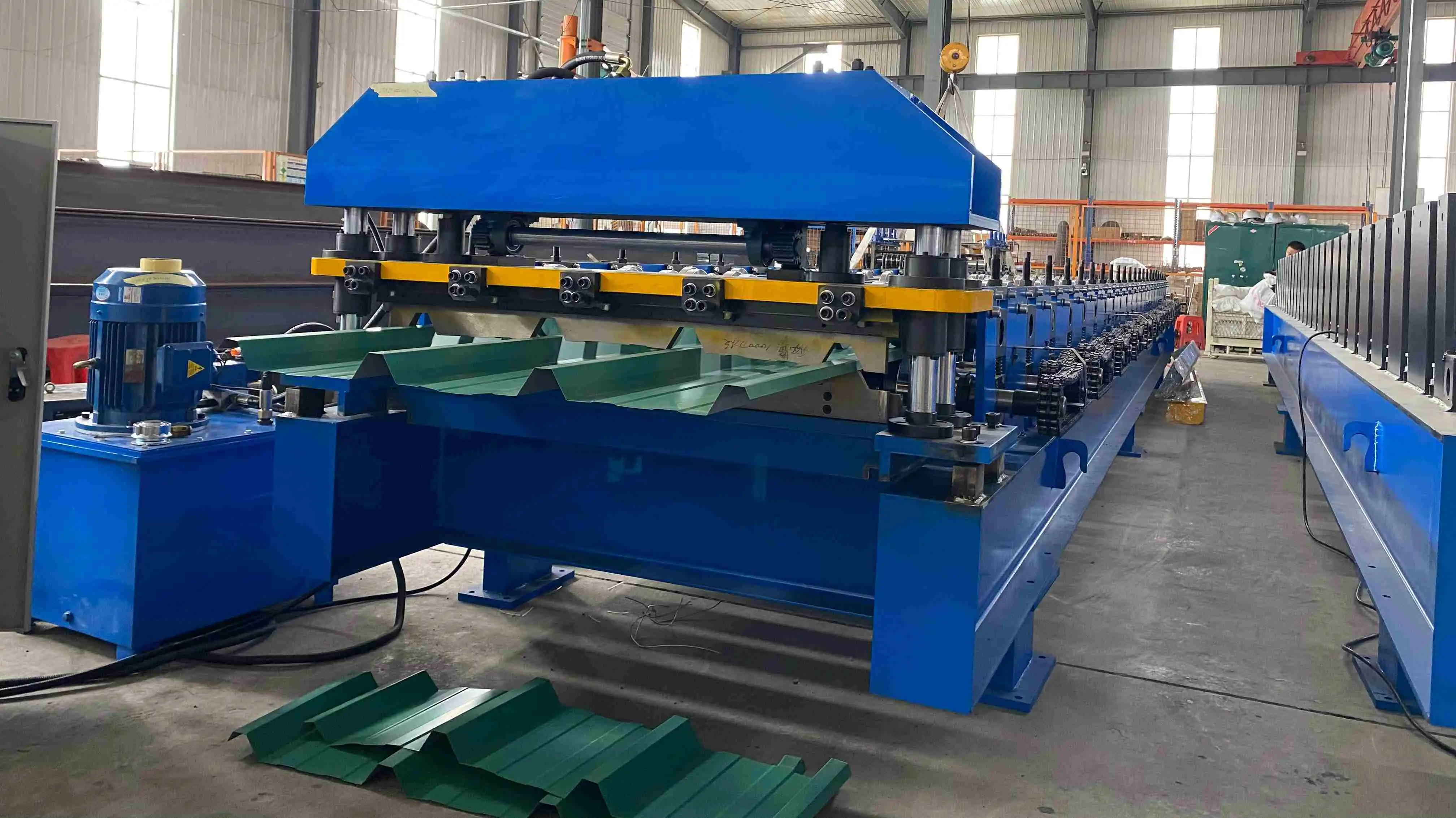
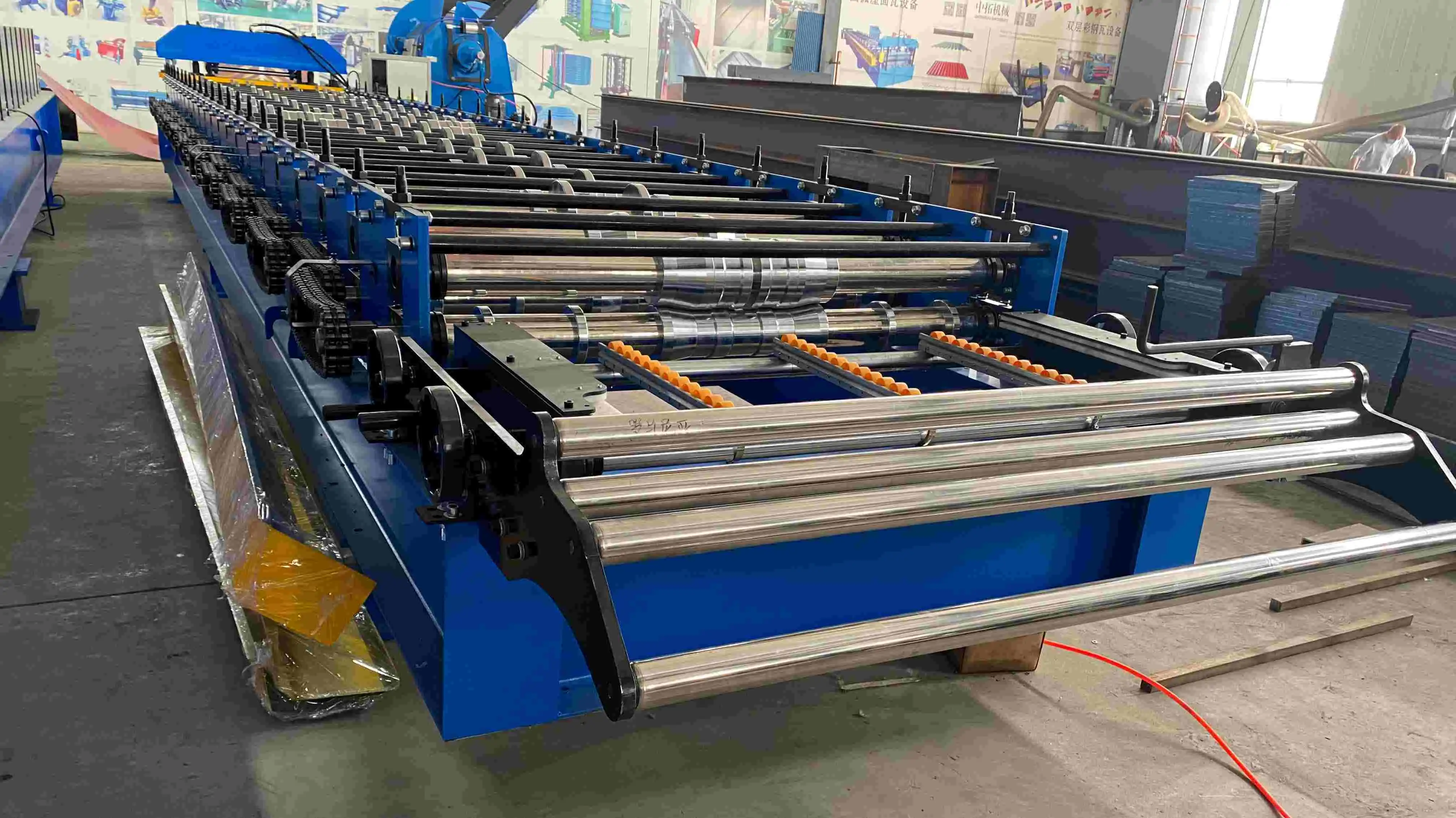
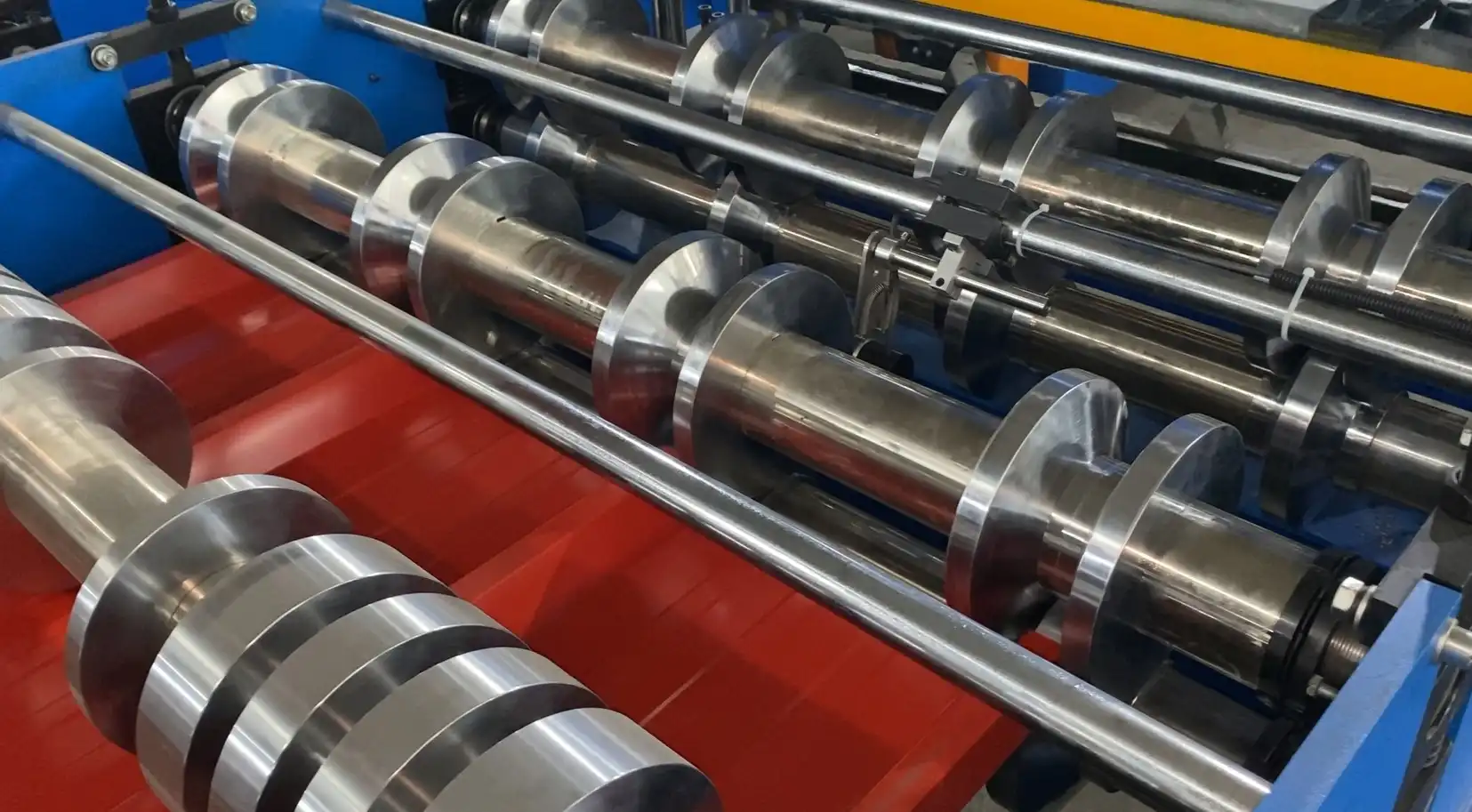
Cold roll forming machines convert flat metal coils into structural profiles through a progressive bending process. Metal passes through 13 to 15 forming stations, each equipped with precision-ground rollers that incrementally shape the material without applying heat. The trapezoidal IBR profile—whether configured as Tr4, Tr5, or Tr6—gains its load-bearing strength from vertical ribs that create section modulus. This geometry proves essential for large-span industrial buildings where roofing panels must resist wind uplift and snow accumulation without intermediate support beams.
The Advantage of Hydraulic Cutting Systems
Traditional shearing mechanisms rely on mechanical flywheels that struggle with thicker gauge materials and create edge distortion. Hydraulic cutting units integrate a 4 kW power system that delivers consistent downward force through a hardened Cr12MoV steel blade. This approach ensures perpendicular cuts with minimal burr formation, even when processing 1.0 mm galvanised steel at full production speed. The hydraulic actuator responds instantly to PLC commands, achieving cut-to-length accuracy within a ±1 mm tolerance—a specification that matters when roofing contractors need panels to fit precisely during field installation.
Manufacturers processing coated materials benefit particularly from hydraulic precision. The controlled descent speed prevents paint cracking along cut edges, preserving warranty compliance for PVDF and SMP finishes. This capability becomes invaluable when serving coastal construction markets where corrosion resistance depends on intact protective coatings.
Core Technical Specifications
Production-grade trapezoidal forming equipment balances throughput capacity with component durability. Our systems accommodate material thickness ranging from 0.3 to 1.0 mm, suitable for both lightweight residential applications and heavy-duty industrial roofing. The roller shafts with an 80 mm diameter, machined from 45# steel and chrome-finished, resist deflection under continuous load. This robust construction maintains profile consistency throughout multi-shift operations, addressing the "unstable forming" complaint common with undersized shaft designs.
Speed capability varies with material properties. Softer aluminum processes comfortably at 25 meters per minute, while high-tensile G550 steel may require reduced speeds to counteract spring-back effects. The variable frequency drive motor allows operators to dial in optimal speeds based on coil hardness, preventing roller slip that causes surface scratching.
Control Platform and Automation Features
Modern PLC touchscreen interfaces replace the confusing button arrays found on legacy equipment. Operators input desired panel length and production quantity through an intuitive HMI, with the system automatically counting finished pieces and halting at preset batch limits. This automation reduces the supervision burden for small manufacturers operating with limited technical staff. Integrated length measurement uses encoder feedback from the forming rollers, removing the need for manual tape measures that can cause cumulative error over production runs.
Comparing Tr4 and Tr5 Roof Sheet Machines: Which One is Right for Your Business?
Profile Geometry and Coverage Width
The fundamental distinction lies in rib count and effective covering width. Tr4 profiles feature four vertical ribs across a nominal 1000 mm sheet width, yielding approximately 960 mm effective coverage after accounting for side-lap overlap. Tr5 configurations add a fifth rib, typically reducing effective width to 920 mm but increasing panel stiffness through closer rib spacing. This difference impacts material consumption calculations—projects covering identical roof areas require roughly 4% more coil footage when using Tr5 panels.
Structural engineers specify Tr5 profiles when span distances exceed six meters or when local building codes mandate higher load ratings. The additional rib provides extra section depth, raising the panel's moment of inertia without increasing gauge thickness. Conversely, Tr4 panels offer material cost advantages for standard residential applications where spans remain under five meters, and wind zones fall within moderate classifications.
Production Capacity and Throughput
Both profiles process through the same base machine platform, sharing identical 13-station forming lines and hydraulic cutting assemblies. Throughput depends primarily on operator efficiency during coil changeovers and material gauge selection. Thinner 0.4 mm material runs at peak 25 m/min speeds, producing approximately 140 panels per hour at standard two-metre lengths. The heavier 0.8 mm gauge requires speed reduction to 18 m/min, yielding around 100 panels hourly.
The energy use is still about the same for all profiles. The main 5.5 kW drive motor and 4 kW hydraulic unit use about 10 kW of power when they are actively forming. Standby power drops to under 2 kW when the system idles between production runs. These figures support cost-per-panel calculations that procurement teams need when evaluating ROI against manual fabrication methods or outsourced panel purchasing.
Maintenance Requirements and Component Lifespan
Chrome-plated forming rollers withstand abrasive contact with galvanised coatings, typically requiring replacement only after processing two million linear meters. The hydraulic cutting blade demands more frequent attention—expect resharpening every 500,000 meters when cutting 0.6 mm material, sooner if processing dirty or rust-contaminated coils. Preventive maintenance schedules recommend monthly inspection of roller alignment, quarterly hydraulic fluid changes, and annual gearbox lubrication.
Component accessibility affects downtime duration. Our cassette-style roller stations enable operators to swap complete upper and lower die sets in under 90 minutes using overhead lifting equipment. This design supports dual-profile operations where manufacturers switch between Tr4/Tr5 roof sheet machines and Tr4 and Tr5 production based on order mix, maximizing equipment utilization without dedicating separate lines to each profile type.
Operating and Maintaining Your Tr4/Tr5 Roof Sheet Machine for Peak Performance
Pre-Operation Safety Protocols
Before energising the system, operators must verify that emergency stop buttons function correctly and that safety guards cover all pinch points near the forming rollers. Coil loading requires particular caution—unrestrained coils weighing 3 to 5 tons pose crushing hazards during mandrel insertion. Hydraulic decoilers with expanding mandrels eliminate manual lifting, improving both safety and setup speed compared to manual uncoiling stands.
Electrical lockout procedures apply during roller adjustments or blade replacements. The PLC control system includes password-protected maintenance modes that prevent accidental machine starts while technicians work inside guarded zones. These safeguards align with OSHA standards governing industrial machinery operation in the United States.
Hydraulic Cutting Procedure and Adjustment
The cutting unit operates through a two-stage sequence. During forming, the hydraulic cylinder remains retracted while the blade clears the material path. When the encoder signals that the programmed length has been fed through the machine, the PLC triggers the hydraulic valve. The blade descends through the formed profile in 0.8 seconds, shearing cleanly before retracting for the next cycle.
Blade gap adjustment compensates for wear and material thickness changes. A precision spacer block maintains 0.1 mm clearance between upper and lower blades—insufficient clearance causes premature dulling, while excessive gaps create ragged edges. Operators check cut quality hourly during production, adjusting the gap screw if the burr height exceeds acceptable limits.
Routine Inspection and Preventive Care
Daily maintenance begins with a visual inspection of the forming rollers for coating buildup. Galvanised zinc can accumulate on roller surfaces, creating raised spots that emboss the finished panel. A brass wire brush removes deposits without scratching the chrome plating. Chain drive systems require tension checks weekly, with proper adjustment maintaining 10 mm deflection under finger pressure at the chain's midpoint.
Hydraulic fluid condition affects cutting performance and system longevity. Contaminated fluid reduces pressure response, causing incomplete cuts that jam the forming line. We recommend annual fluid replacement using ISO 46 hydraulic oil rated for industrial press applications. Filter cartridges warrant quarterly changes, particularly in dusty fabrication environments where airborne particles infiltrate reservoir vents.
Troubleshooting Common Production Issues
Profile dimension drift often traces to roller wear or loose mounting bolts. When finished panels measure outside specifications, technicians use precision gauge blocks to verify each forming station's gap settings against the machine's original setup chart. Rollers creating excessive back pressure cause material buckling between stations, observable as waviness in the finished rib valleys.
Inconsistent cutting length typically indicates an encoder calibration error or slipping drive rollers. The encoder wheel must stay in firm contact with the material's bottom surface; if oil or metal debris builds up, it can cause slip and lead to length discrepancies. Cleaning the encoder wheel and recalibrating against a certified tape measure restores accuracy to the ±1 mm specification.
Procurement and After-Sales Support: How to Buy and Service Tr4/Tr5 Roof Sheet Machines?
Selecting Qualified Equipment Suppliers
Reputable manufacturers demonstrate their credibility through third-party certifications and documented export history. The Tr4/Tr5 roof sheet machine's ISO 9001 quality management certification indicates systematic production controls, while CE marking confirms compliance with European machinery safety directives. These credentials matter when your company's insurance underwriter reviews the origin of your equipment or when export customers require conformity documentation.
Verify supplier capabilities beyond marketing claims. Request factory inspection videos showing assembly processes and quality control procedures. Established manufacturers maintain component inventory systems that support rapid spare parts shipment—a critical consideration when a broken blade or damaged roller threatens to halt production. Our facility stocks complete roller sets, hydraulic cylinders, PLC modules, and drive components for same-week delivery anywhere in the continental United States.
Customization Options for Specific Applications
Standard machines accommodate the most common profile configurations, but specialized applications may warrant design modifications. Manufacturers processing extra-wide coils can specify extended forming beds and 1250 mm roller lengths. Operations requiring dual-profile capability benefit from double-layer machine configurations that stack Tr4 and Tr5 roller sets vertically, selectable through a clutch engagement system.
Coating-sensitive applications justify upgraded roller materials. Standard chrome-plated 45# steel suits most galvanised and Galvalume materials, but ultra-premium architectural finishes demand GCr15 bearing steel rollers hardened to HRC 60. This upgrade reduces the microscopic surface texture that could damage delicate PVDF coatings during high-volume production runs.
Warranty Terms and Technical Support
Comprehensive warranty coverage should extend 18 months from the commissioning date or 24 months from shipment, whichever occurs earliest. Coverage includes all structural components, drive systems, hydraulic assemblies, and electrical controls. Exclusions typically apply to wear items like cutting blades and encoder wheels, which experience predictable degradation based on usage intensity.
Remote technical support via video consultation resolves most operational questions without deploying field technicians. Our engineering team maintains detailed machine documentation, including hydraulic schematics, PLC programming backups, and roller dimension drawings. This information enables your maintenance staff to perform routine repairs using local machine shops for component fabrication when needed.
Why Choose Tr4/Tr5 Roof Sheet Machines with a Hydraulic Cutting Design?
Competitive Advantages Over Alternative Technologies
Mechanical shear systems, though lower in initial cost, incur higher long-term expenses through frequent blade replacement and motor maintenance. Hydraulic cutting extends blade life by 40% through controlled impact dynamics that prevent shock loading. The cleaner cut edges reduce downstream handling damage—panels stack without interlocking burrs, simplifying packaging and shipping operations.
Plasma cutting tables offer flexibility for custom lengths but operate at one-tenth the throughput of integrated roll forming lines. Plasma also introduces heat-affected zones that discolour galvanised coatings and compromise corrosion resistance. The cold cutting method used by hydraulic shears keeps the substrate properties the same across the entire panel, so the structural integrity is maintained at cut edges where stress concentrations develop during wind loading.
Matching Equipment Capability to Production Demand
Startups entering the metal roofing market benefit from single-profile machines that minimise capital outlay while building a customer base. A dedicated Tr4 line requires approximately a $35,000 investment, including a decoiler, forming machine, hydraulic cutter, and run-out table. This configuration supports annual production volumes up to 500,000 square meters—sufficient for regional contractors serving residential and light commercial markets.
Established manufacturers handling diverse order types justify dual-profile investments. A cassette-changeover system enables switching between Tr4 and Tr5 production in under two hours, compared to the three-day retrofit required when swapping entire roller sets. This flexibility prevents lost sales when customers specify particular profiles, eliminating the need to outsource production or maintain redundant equipment lines.
Future-Proofing Through Upgradable Design
Industry trends toward smart manufacturing create opportunities for incremental automation upgrades. Our base machines can be upgraded with bolt-on enhancements such as automatic stackers that eliminate manual handling, barcode systems that track panel serial numbers for inventory control, and network connectivity that enables production monitoring through cloud dashboards. These additions don't require replacing the core forming and cutting components, protecting your initial equipment investment while adapting to evolving operational requirements.
Emerging building codes increasingly mandate tighter dimensional tolerances and enhanced wind resistance specifications. Hydraulic cutting systems maintain compliance margins that mechanical shears cannot match. When local authorities reduce allowable panel length variance from ±3 mm to ±1 mm, your existing hydraulic equipment continues meeting specifications without expensive retrofits.
Conclusion
Investing in TR4/TR5 roof sheet machine trapezoidal profile forming equipment requires balancing immediate budget constraints against long-term production goals. The hydraulic cutting advantage manifests through reduced material waste, lower maintenance expenses, and superior edge quality that satisfies demanding architectural specifications. Whether your operation focuses on high-volume residential roofing or specialized industrial projects, understanding the technical distinctions between Tr4 and Tr5 configurations guides informed purchasing decisions. Proper operation and preventive maintenance maximise equipment lifespan while delivering consistent panel quality that builds your reputation among contractors and developers.
FAQ
1. What maintenance does the hydraulic cutting system require?
The hydraulic unit needs quarterly fluid condition checks and annual complete oil changes using ISO 46 grade hydraulic fluid. Inspect hose connections monthly for seepage, and monitor system pressure during operation—readings below 160 bar indicate pump wear or internal leakage requiring professional service.
2. Can these machines process materials beyond standard steel?
Yes, the forming stations accommodate aluminum alloys, copper, and stainless steel within the 0.3-1.0 mm thickness range. Softer materials like aluminum require reduced forming speeds to prevent roller marking, while stainless steel demands upgraded tooling with polished surfaces to avoid galling during the forming process.
3. How do Tr4 and Tr5 models differ in energy consumption?
Both profiles utilize identical drive motors and hydraulic systems, resulting in a comparable energy draw of around 10 kW during active production. Operational expenses vary primarily based on production speed and daily runtime hours rather than profile selection. Material gauge thickness influences power consumption more significantly than rib configuration.
4. What customization options exist for special thickness requirements?
Machines can be engineered for extended thickness ranges up to 1.2 mm through reinforced frame construction and oversized roller shafts. Processing materials beyond 1.0 mm requires specifying these upgrades during the initial order, as retrofitting standard machines risks shaft deflection and premature component failure.
Partner with ZTRFM for reliable TR4/TR5 roof sheet machine solutions.
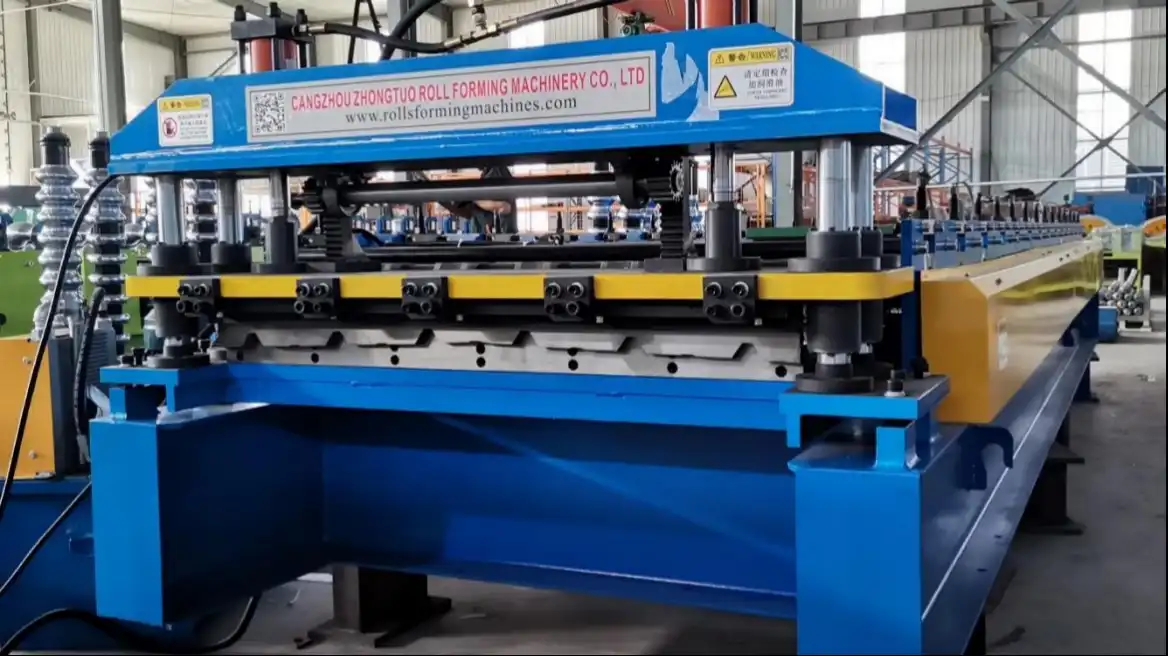
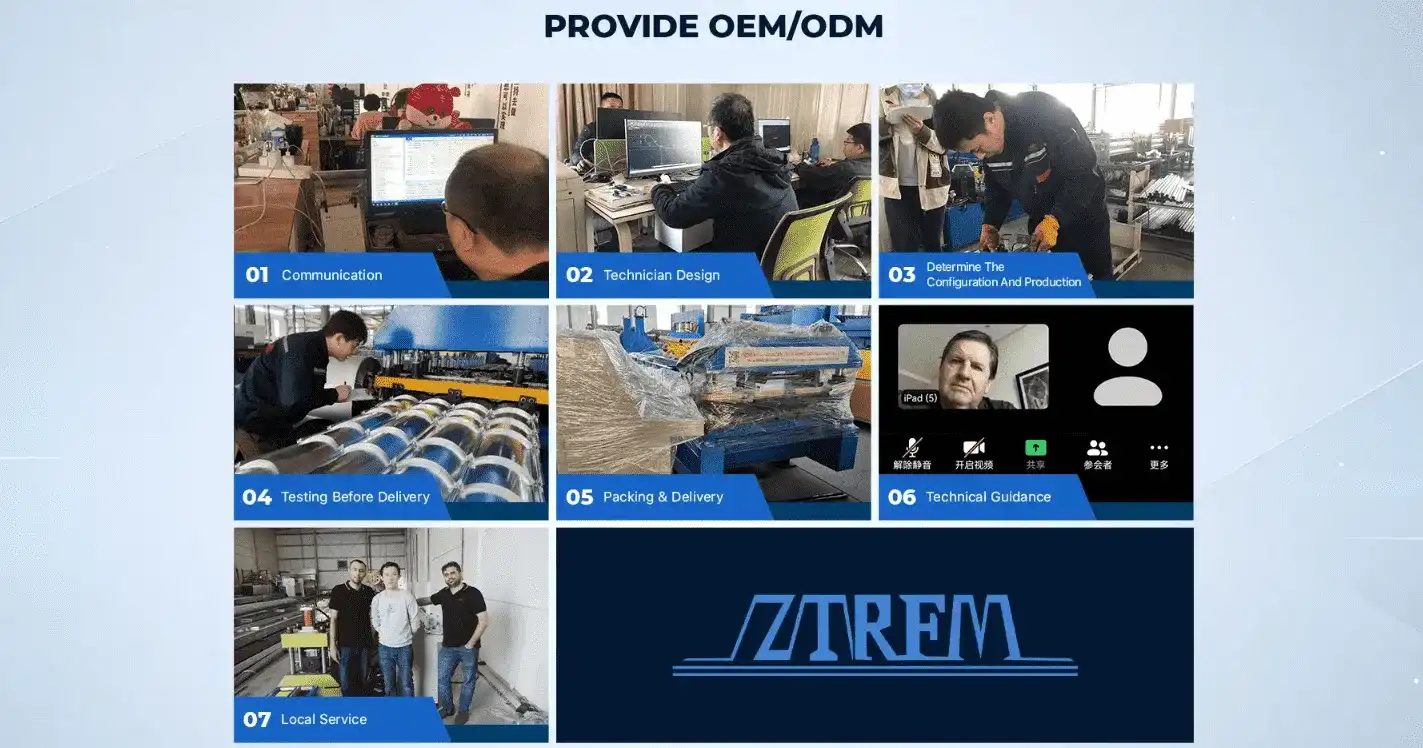
Cangzhou Zhongtuo (ZTRFM) brings a decade of cold-roll-forming expertise to metal roofing manufacturers seeking dependable trapezoidal profile equipment. As a national high-tech enterprise certified under ISO 9001 and CE standards, we've supplied roofing system manufacturers across 150 countries with forming solutions engineered for consistent performance under demanding production schedules. Our TR4/TR5 roof sheet machine supplier services include comprehensive technical training, rapid spare parts fulfilment, and ongoing process optimisation support that extends far beyond initial installation. Whether you're scaling up production capacity or replacing outdated mechanical equipment, our engineering team collaborates with your operations staff to configure systems matching your specific material grades, profile requirements, and throughput targets. Contact our specialists at zhongtuorollforming@gmail.com to discuss how our hydraulic cutting technology and customisable forming platforms can eliminate your current production bottlenecks while positioning your operation for long-term growth.
References
1. Smith, J.R. & Anderson, K.L. (2021). Advanced Metal Forming Technologies for Architectural Roofing Systems. Industrial Press Association.
2. Chen, W. & Rodriguez, M. (2020). "Hydraulic Cutting Systems in Cold Roll Forming: Performance Analysis and Optimisation." Journal of Manufacturing Processes, 58, 234-247.
3. Thompson, D.A. (2022). Roll Forming Equipment Selection Guide for Metal Building Components. Machinery Technical Publishers.
4. European Committee for Standardization (2019). EN 10346: Continuously Hot-Dip Coated Steel Flat Products - Technical Delivery Conditions. Brussels: CEN Publications.
5. Williams, P.T. & Kumar, S. (2023). "Economic Evaluation of Automated Metal Roofing Production Lines." International Journal of Industrial Engineering, 41(3), 187-202.
6. National Roofing Contractors Association (2022). Metal Roofing Systems Design and Installation Manual, 8th Edition. Rosemont: NRCA Technical Services.