- English
- French
- German
- Portuguese
- Spanish
- Russian
- Japanese
- Korean
- Arabic
- Irish
- Greek
- Turkish
- Italian
- Danish
- Romanian
- Indonesian
- Czech
- Afrikaans
- Swedish
- Polish
- Basque
- Catalan
- Esperanto
- Hindi
- Lao
- Albanian
- Amharic
- Armenian
- Azerbaijani
- Belarusian
- Bengali
- Bosnian
- Bulgarian
- Cebuano
- Chichewa
- Corsican
- Croatian
- Dutch
- Estonian
- Filipino
- Finnish
- Frisian
- Galician
- Georgian
- Gujarati
- Haitian
- Hausa
- Hawaiian
- Hebrew
- Hmong
- Hungarian
- Icelandic
- Igbo
- Javanese
- Kannada
- Kazakh
- Khmer
- Kurdish
- Kyrgyz
- Latin
- Latvian
- Lithuanian
- Luxembou..
- Macedonian
- Malagasy
- Malay
- Malayalam
- Maltese
- Maori
- Marathi
- Mongolian
- Burmese
- Nepali
- Norwegian
- Pashto
- Persian
- Punjabi
- Serbian
- Sesotho
- Sinhala
- Slovak
- Slovenian
- Somali
- Samoan
- Scots Gaelic
- Shona
- Sindhi
- Sundanese
- Swahili
- Tajik
- Tamil
- Telugu
- Thai
- Ukrainian
- Urdu
- Uzbek
- Vietnamese
- Welsh
- Xhosa
- Yiddish
- Yoruba
- Zulu
Tr4/ Tr5 Roof Sheet Machine with PLC Auto Control System
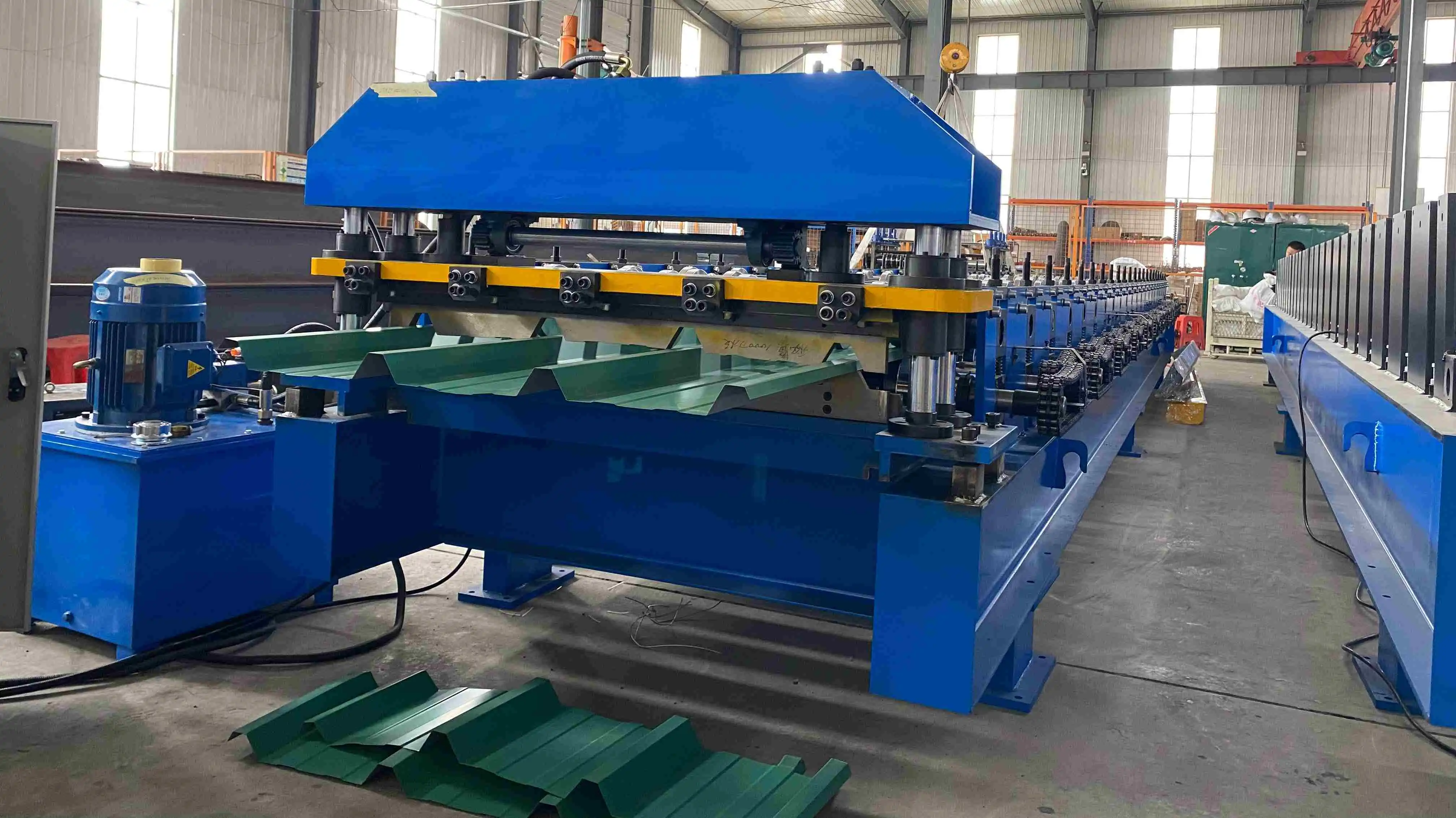
The Tr4/ Tr5 roof sheet machine is a game-changer when your roofing production line needs accuracy, speed, and dependability. With these special cold roll making methods, galvanized steel, galvalume, or pre-painted metal coils are used to make trapezoidal roofing shapes with either 4 or 5 ribs. At our factory, we've seen these tools fix problems that metal roofing makers keep having, like wasteful waste of materials, inconsistent panel sizes, and production bottlenecks. When PLC Auto Control Systems are added to these machines, they go from being simple forming tools to smart factory assets that can produce stable quality at up to 25 meters per minute.
Understanding Tr4 and Tr5 Roof Sheet Machines with PLC Auto Control System
Core Design and Profile Differences
The main difference between Tr4 and Tr5 designs is the structure of their ribs and the width of their useful coverage. Tr4 shapes have four trapezoidal ribs running across the width of the sheet. From a 1000mm raw coil, panels with a useful cover width of 914mm to 1000mm can usually be made. This design makes great use of materials for projects that need to stay within a budget, and it still holds up well for household and light business uses.
Tr5 shapes have five ribs that make the trapezoidal sections smaller and increase the section modulus by a large amount. Because of their shape, these panels can hold more weight, which makes them perfect for industrial stores, buildings near the coast that are subject to strong winds, and projects that need to be able to span long distances without any support in the middle. The denser rib design also makes the material look better in building settings where shadow lines add to the illusion of depth.
Our tools can work with materials that are between 0.3 mm and 1 mm thick and can handle bare steel, aluminum-zinc alloy coats, and color-coated materials. The process of shaping goes through 13 to 15 progressive stations, with each pair of rollers gradually shaping the flat coil into the final trapezoidal shape without damaging the protective coats on the outside.
PLC Control Integration: The Intelligence Behind Performance
The PLC touchscreen control tool changes the speed of operations in many ways. Operators type in the length of the panel they want right on the screen, and the system figures out exactly where to cut while counting the sheets that are finished. This system gets rid of the mistakes that people used to make when measuring by hand, which led to wasted materials and problems with installation.
Maintaining a length consistency of ±1mm makes sure that panels fit together correctly during installation, which stops water from getting in and cuts down on the time needed for field work. The control system also checks the speed of production, which is between 15 and 25 meters per minute. It then adjusts the timing of the rollers automatically to keep pre-painted materials from getting scratched.
In addition to controlling the dimensions of Tr4/ Tr5 roof sheet machine, the PLC system also controls the 4kW hydraulic cutting unit and the time of when the blades contact in order to make clean shear cuts without changing the shape of the profile. Diagnostic features show operational data in real time, warning operators of possible problems like changes in hydraulic pressure or encoder problems before they stop production.

Comprehensive Comparison & Decision-Making Guide for Tr4 and Tr5 Machines
Production Capacity and Application Alignment
To choose between Tr4 and Tr5 configurations, you need to make sure that your professional skills meet the needs of the job. Manufacturers of building roofing systems for homes often choose Tr4 machines because the bigger rib spacing makes installation faster while still meeting building codes for standard roof lengths. Because the coverage width is wider, there are fewer panels needed per roof area. This speeds up the building process for home projects.
On the other hand, makers of light steel structures that serve factories tend to use Tr5 machines. The higher load ratings allow purlin spacing of up to 1.5 meters in some situations, which lowers the total cost of the steel structure. The increased mechanical interlocking surface area between overlapped Tr5 panels makes them better at resisting wind lifting. This is especially useful for projects in hurricane-prone areas.
Investment Considerations and ROI Analysis
Different levels of complexity show up in the way equipment costs. Standard single-profile machines that only make Tr4 or Tr5 are the best way for startups and small makers to get started. The price depends on the amount of automation, the roller material specs, and any extras like decoilers and stackers that are included.
Double-layer setups that hold both Tr4 and Tr5 tools vertically take up the same floor space and make it possible to make more products. This flexibility is appealing to medium-sized businesses that want to serve a wide range of customers without having to spend a lot of money on different production lines. When compared to running two separate machines, the shared drive method uses less energy.
The major costs of operations are upkeep and replacing parts that wear out. Roller shafts made of 45# steel and finished in chrome usually last between 1 and 2 million meters of production before they need to be fixed up. Hydraulic cutting blades made from Cr12MoV tool steel and heated to an HRC 58–62 hardness can cut the same amount of material before they need to be sharpened. These numbers have a direct effect on the cost of production per meter and the distribution of upkeep work.
Performance Validation Through User Experience
When looking at suppliers of Tr4/ Tr5 roof sheet machines, companies that work with foreign EPC companies put a lot of weight on suppliers that meet approval requirements. Validation of ISO 9001 quality management and CE marking shows that safety and performance standards are met, which is important for using tools on building sites around the world. Our delivery experience in more than 150 countries gives procurement teams faith in our ability to handle shipping, customs paperwork, and customer service after the sale.
Composite sandwich panel makers say that the correctness of the forming process has a direct effect on the lamination processes that follow. Maintaining profile dimensions within ±0.5 mm tolerances ensures that the bonding pressure is spread evenly when putting together multilayer panels. This stops glue gaps that lower the thermal insulation qualities. The PLC system's accurate length control gets rid of the need for sorting and reworking by hand, which used to take time away from production.

How to Maintain and Optimize Tr4 and Tr5 Roof Sheet Machines
Preventive Maintenance Protocols
Roller bearing cleaning is the key to making sure that the machine works well. We suggest looking at bearing housings once a week for oil leaks or strange noises while they're running. Unplanned downtime is mostly caused by bearing failure, so replacing them every 18 to 24 months is a more cost-effective option than fixing them during production runs.
Every 500 hours of use, chain drive systems that connect the main motor to roller shafts need to have their tightness checked. Too much slack makes the rollers spin at different speeds, which shows up as lengthwise waviness in the final panels. On the other hand, too much tension speeds up the wear on the sprockets. Using the right chain lube during tension checks greatly increases the life of the component.
The hydraulic cutting system needs to have the oil level checked every month and the fluid changed every year. When hydraulic oil is contaminated, it weakens seals and makes cutting force less consistent. This causes burrs on the sides of panels that make installation harder and could hurt workers. Every three months, inline filter elements should be checked for damage and changed when the difference in pressure is higher than what the manufacturer recommends.
Optimization Strategies Enabled by PLC Technology
The control system can log data, which lets you look at production patterns and find ways to make things better. Keeping track of the average cycle times for different types of material helps find the best setups for getting the most work done without losing quality. When working with 0.8 mm material, some makers find that slowing down the forming speed by two to three meters per minute actually improves hourly output by getting rid of scrap from panel distortion.
Trends in hydraulic pressure and motor power draw are tracked by predictive maintenance functions. This lets maintenance teams know when performance is dropping before problems happen. This method changes the repair schedule from responding to problems as they happen to planned actions during times when the machine isn't working. This keeps delivery promises to customers safe.
The PLC has energy efficiency settings that let the motors run at lower speeds when there is only some load on them. This lowers the amount of electricity used when making shorter panels or thinner materials. Manufacturers of metal structures that make support profiles and shelf parts say that their energy costs went down by 12 to 18% after they put these adjustable speed controls on all of their forming equipment.
Procurement and Purchasing Guide for Tr4 and Tr5 Roof Sheet Machines
Supplier Evaluation and Certification Requirements
Verifying output skills and quality certifications is the first step in finding eligible makers. Factory checks show if providers have roller machining centers in-house that can do precise grinding work or if they outsource these important parts, making quality control harder to do. Directly making rollers makes sure that new parts exactly match the original specs. This keeps panel sizes consistent over the life of the machine.
The technical approval paperwork needs to be carefully looked over. In order to get a CE mark, electrical safety, the integrity of the hydraulic system, and the fact that operator security systems meet European standards must be confirmed by independent testing labs. This certification method finds flaws in the design that might not show up in short-term use but become safety risks or reliability problems after years of production use.
Pricing Structures and Total Cost Analysis
Quotes for equipment should include full specs for each part so that you can compare them in a useful way. Differences in shaft diameter (70mm vs. 80mm) have a big effect on deflection resistance under forming loads. When working with high-tensile G550 steel substrates, bigger sizes keep the rollers in place better. Heavy-duty shafting costs more, but it pays for itself in longer repair times and better panel flatness.
Decoiler and stacker choices have a big effect on the total cost of the system. Initial capital costs are lower for manual decoiler stands, but operators are needed to load the coils, which makes it hard to keep production going for long runs. Hydraulic expanding mandrels with powered spinning allow coils to be used without being watched, which increases the output of automatic forming processes. In the same way, powered stacker systems that can count things make packing easier than using human-run-out tables.
Payment plans that work for businesses of all sizes make it easier to buy tools. As an extra value, volume buy deals for distributors that serve area markets often include installation supervision and operator training. Leasing spreads out the need for capital over the useful life of the equipment, which keeps working capital available for stocking up on raw materials and developing new markets.
Logistics Coordination and Installation Support
How the goods are shipped affects when they are delivered and how well they are in condition when they arrive. Container transport works well for single machines because it protects them from the weather and makes clearing customs easier for foreign shipping. For bigger sites with more than one forming line, it may make sense to use bulk cargo ships with special handling gear, but this needs to be coordinated with the powers of the receiving port.
Installation and testing services make sure that the base is properly prepared, that the electrical lines meet local codes, and that the initial setup is properly calibrated. Our technical teams train customers on-site on how to operate equipment, fix simple problems, and follow repair schedules that are specific to their work settings. This sharing of knowledge speeds up return on investment by lowering the learning curve that comes with integrating new tools.

Why Choose a Roof Sheet Machine with PLC Auto Control System?
Precision and Quality Advantages
Manual control systems of Tr4/ Tr5 roof sheet machines depend on the operator's judgment to keep panel lengths and production speeds constant. This introduces human error that lowers the quality of the finished product. The PLC gets rid of this problem by precisely controlling the time of cuts and making sure that roller speeds are in sync with each other. Each panel comes out exactly the same, within very small error ranges. This makes it easier for workers to keep track of their supplies and plan their installations.
Real-time monitoring features show output measures like the number of cycles, the average speed, and fault events. Because of this, production managers can see what training is needed, make the best use of shift plans, and keep records of quality performance for customer checks. By showing links between operational factors and product outputs, historical data files help with efforts to make things better all the time.
Economic and Environmental Benefits
When motor sizes are matched, and variable frequency drives are built into PLC systems, energy use goes down. Traditional fixed-speed drives always use full power, even when they're not needed for production. This wastes electricity during breaks in adding materials or when thin-gauge processing needs less force to form the shape. Intelligent speed modulation lowers running costs and carbon emissions, which is becoming more important as the building industry has to report on sustainability.
Cutting down on scrap by accurately controlling length has a direct effect on the cost of materials and the cost of getting rid of trash. A company that makes 500,000 linear meters of material a year and uses PLC accuracy to cut scrap from 3% to 0.8% saves about 11,000 meters of material, which is the same as buying several coils. This change leads directly to higher profits and helps meet goals for environmental responsibility.
Future-Ready Manufacturing Capabilities
As the industry moves toward Industry 4.0 connectivity, PLC-equipped tools become assets that are ready to be added to digital production environments. Modern control platforms have Ethernet connections that let production data flow to enterprise resource planning systems. This lets systems automatically replace materials when inventory levels are met or plan maintenance based on real running hours instead of calendar intervals.
Customization opens up more market possibilities for companies that make products for building projects that need non-standard shapes. PLC programming lets you change the rollers to make different rib patterns or panel widths, and recipe storage lets you quickly switch between versions that are made a lot. This flexibility is appealing to companies that make composite sandwich panels for specific insulation markets and metal structure makers who want to expand their product lines beyond basic shapes.

Conclusion
The choice to buy a Tr4/ Tr5 roof sheet machine with PLC Auto Control is a smart one that will affect the company's long-term success, production capacity, and product quality. The technical specs—working with 0.3-1.0 mm material at 15-25 m/min through 13–15 forming stations with 80 mm chrome-finished shafts—ensure steady performance in a range of roofing situations. If you fit the configuration of your machines to the needs of your output, your business will be set up for long-term growth, whether you make residential building systems, industrial structures, or specialized composite panels. The automation intelligence built into these systems changes how efficiently things are made while also lowering costs and harm to the environment by controlling things more precisely and using energy more efficiently.
FAQ
1. Can one machine produce both Tr4 and Tr5 profiles simultaneously?
Both tool sets can be stored in double-layer setups, but only one profile can be used at a time to keep things safe and control power. Either the upper or lower roller set can be engaged by a clutch mechanism or electronic switching. The PLC touchscreen interface makes changing quick and easy, taking less than five minutes.
2. What material thickness prevents machine damage?
Our basic designs are safe for thicknesses ranging from 0.3 mm to 1 mm. When working with materials that are stronger than what is allowed, especially high-tensile G550 steel, the cutting blades and shafts can bend and crack. Before using non-standard substrates in production, make sure you have a look at the full technical specs.
3. How does the PLC system handle voltage fluctuations?
Power fluctuations are still a problem for control systems and variable frequency drives in developing areas. Adding voltage stabilizers saves logic circuits and keeps motors from getting damaged by changes in the power source. This makes sure that the system works reliably even when the electrical infrastructure isn't working as it should.
Partner with ZTRFM for Your Tr4/ Tr5 Roof Sheet Machine Needs
Cangzhou Zhongtuo Roll Forming Machinery (ZTRFM) has been providing high-quality cold roll forming solutions for ten years, helping companies around the world make building roofing systems, light steel structures, and metal fabrications. Some of the certificates we have as a Tr4/ Tr5 roof sheet machine maker are ISO9001, CE, and CAS. We have also delivered machines to more than 150 countries. As a national high-tech company, we offer full OEM/ODM services, including customizing equipment, teaching operators, and expert support for life. Our engineering team creates solutions that fit your production rate, material needs, and budget, whether you're starting a new business or increasing the size of one you already have. You can talk to our experts about your project needs and get specific quotes that take into account the current state of the market by emailing zhongtuorollforming@gmail.com.

References
1. Construction Industry Institute, "Roll Forming Process Optimization in Metal Building Systems," Technical Report Series, 2022.
2. American Iron and Steel Institute, "Design Guide for Cold-Formed Steel Roofing and Cladding," Structural Standards Division, 2021.
3. International Journal of Advanced Manufacturing Technology, "Precision Control Systems in Progressive Roll Forming Operations," Volume 118, 2023.
4. Metal Construction Association, "Life Cycle Assessment of Automated Roll Forming Equipment," Sustainability Research Publication, 2022.
5. Industrial Machinery Manufacturing Standards, "Quality Requirements for Cold Roll Forming Machinery in Construction Applications," ISO Technical Committee Documentation, 2023.
6. Journal of Manufacturing Processes, "Energy Efficiency Analysis of PLC-Controlled Metal Forming Systems," Volume 89, 2023.
_1750323743240.webp)