- English
- French
- German
- Portuguese
- Spanish
- Russian
- Japanese
- Korean
- Arabic
- Irish
- Greek
- Turkish
- Italian
- Danish
- Romanian
- Indonesian
- Czech
- Afrikaans
- Swedish
- Polish
- Basque
- Catalan
- Esperanto
- Hindi
- Lao
- Albanian
- Amharic
- Armenian
- Azerbaijani
- Belarusian
- Bengali
- Bosnian
- Bulgarian
- Cebuano
- Chichewa
- Corsican
- Croatian
- Dutch
- Estonian
- Filipino
- Finnish
- Frisian
- Galician
- Georgian
- Gujarati
- Haitian
- Hausa
- Hawaiian
- Hebrew
- Hmong
- Hungarian
- Icelandic
- Igbo
- Javanese
- Kannada
- Kazakh
- Khmer
- Kurdish
- Kyrgyz
- Latin
- Latvian
- Lithuanian
- Luxembou..
- Macedonian
- Malagasy
- Malay
- Malayalam
- Maltese
- Maori
- Marathi
- Mongolian
- Burmese
- Nepali
- Norwegian
- Pashto
- Persian
- Punjabi
- Serbian
- Sesotho
- Sinhala
- Slovak
- Slovenian
- Somali
- Samoan
- Scots Gaelic
- Shona
- Sindhi
- Sundanese
- Swahili
- Tajik
- Tamil
- Telugu
- Thai
- Ukrainian
- Urdu
- Uzbek
- Vietnamese
- Welsh
- Xhosa
- Yiddish
- Yoruba
- Zulu
Understanding Hat Purlin Roll Forming Machine: A Beginner's Guide
A hat purlin roll forming machine is a special piece of machinery that continuously shapes steel coils into hat-shaped building designs that are used a lot today. Through progressive forming stations, these machines turn raw materials into exact, dimensionally accurate parts that hold up steel structures, roofing systems, and wall frames. Today's competitive business world means that knowing how these machines work and choosing the right tools can have a big effect on your production speed, product quality, and total production costs.
What Is a Hat Purlin Roll Forming Machine?
Defining the Equipment and Its Purpose
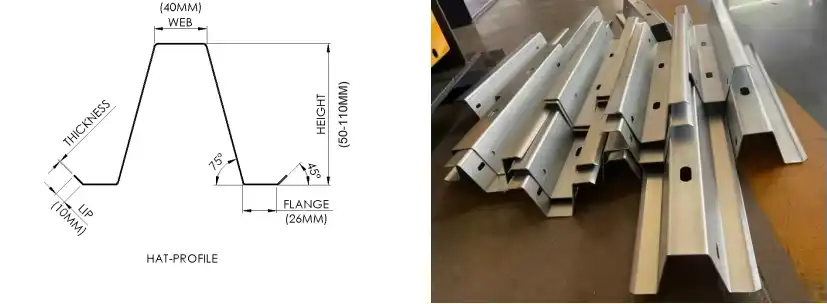
Hat purlin roll forming machines are custom-built systems that are designed to make hat-shaped steel lines that are important for supporting loads in building projects. Roll forming makes continuous profiles straight from coil stock in a single automatic process, while traditional methods of production need multiple steps and human handling. The hat's shape is like an upside-down U, with ribs that face outward. This gives it great structural strength while keeping the weight down. Because of their shape, hat purlins are great for holding metal roof panels, wall cladding, and solar mounting systems that need strong support and regular spacing.
Core Components of the System
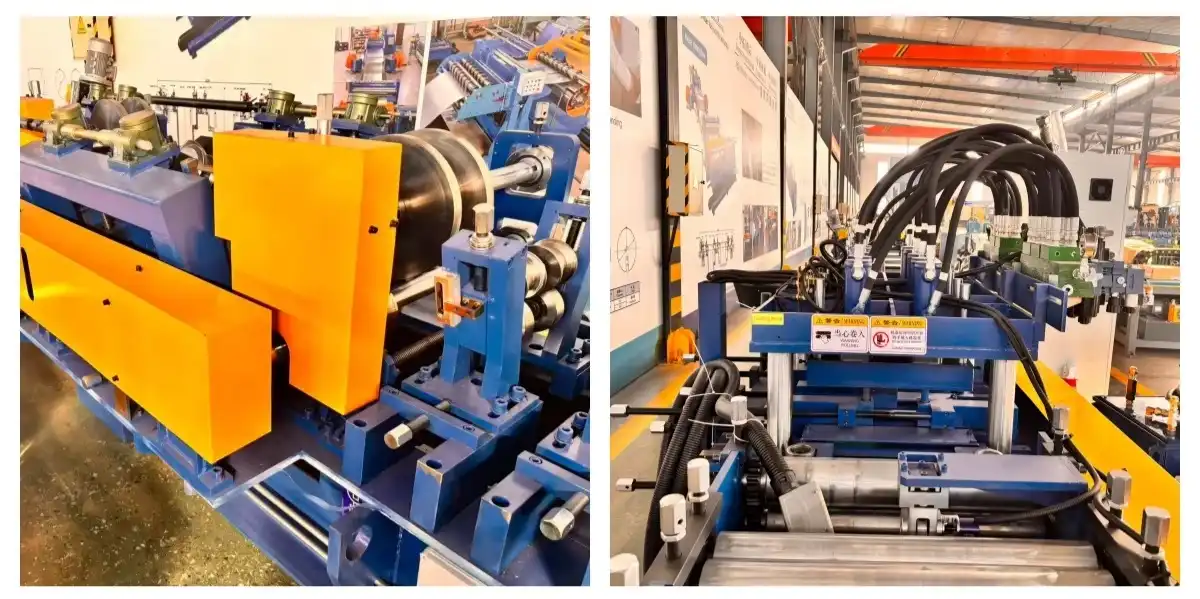
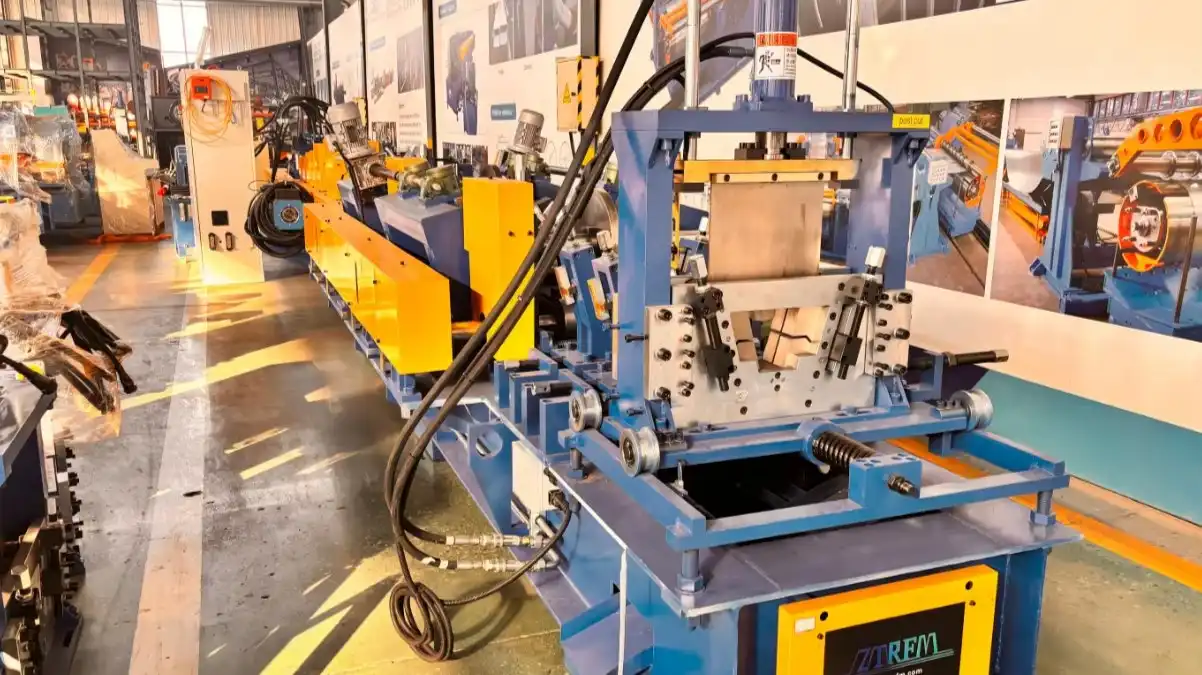
Procurement workers can judge a machine's technical skills better if they know how it is put together. The uncoiler is where the line starts. It holds and releases the steel coil with controlled force so that material always comes into the line. Then, leveling rollers straighten the material and take off the coil set, making sure that it enters the forming stations flat. The roll forming section has several pairs of perfectly shaped rollers—usually 12 to 16 stations—that bend the steel into the right shape for the hat by taking small steps.
At each forming station, a small amount of deformation is applied. Together, these small deformations make the finished shape without putting stress on the material or damaging the surface. The cutting device, which is generally hydraulic and uses dies made of Cr12 tool steel, cuts finished profiles to the lengths that were requested. PLC control systems in modern tools make sure that all processes run smoothly and that quality standards are met. Some more advanced units have pre-punching stations that make mounting holes at exact intervals before forming. This makes sure that the holes are placed accurately, which is impossible with hand drilling.
Operating Principles Behind Roll Forming
At room temperature, the basic idea is based on metal deforming gradually. The steel strip is fed through a series of roller pairs. Each station bends the material a little more than the last, until it reaches the desired cross-section. The rollers are carefully cut out of bearing steel like GCr15, heated until they are HRC 58–62 hard, and then they are often chrome-plated to keep them from wearing down. The right roller design stops material warping, edge waviness, and springback that could affect the accuracy of the measurements. Production speeds are usually between 8 and 25 meters per minute, but they depend on the thickness of the material, the complexity of the shape, and how the machine is set up. This constant process makes shapes that are all the same and have tolerances of less than 0.5 mm, which meets strict building standards.
How Does a Hat Purlin Roll Forming Machine Work?
Step-by-Step Operational Workflow
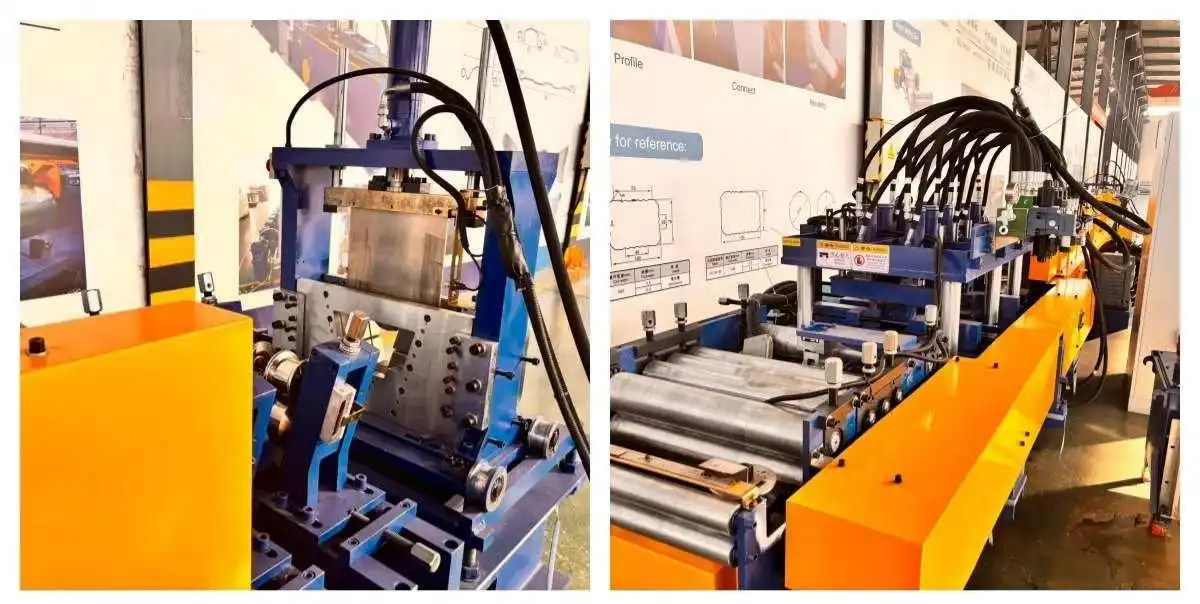
When workers put a steel coil on the decoiler in a hat purlin roll forming machine, the production cycle starts. The steel coil is usually cold-rolled or coated material that is 1.5 mm to 3 mm thick. The outside end of the coil goes through leveling rollers, which smooth the material and fix any curls that happened during storage. Before the strip goes into the forming area, it is lined up in the middle by guiding devices. As the material moves through the roller stations, each pair bends the outline more and more. The first four stations usually make the base and the first turns. The middle stations make the hat's top and side walls, and the last four stations make sure the dimensions are correct and the profile is straight.
If the machine has a cutting unit, holes are made before the shape is formed to make sure it stays in the right place. Once the encoder reads the set length, the hydraulic cutting system starts up and neatly cuts the profile without stopping the flow of material. Pieces that are done either go out onto a collection table or to an automatic stacker that puts them in order for packing. Modern systems have photoelectric sensors that count pieces, find problems with feeding materials, and sound alarms when help is needed, which cuts down on waste and downtime.
Critical Technical Specifications to Evaluate
When looking at tools to buy, production speed has a direct effect on how much they can produce. Units that can move 15 to 20 meters per minute can make 300 to 500 square meters per hour, which is a lot of material every day. What machines can handle (1.0 mm to 3.0 mm) decides how versatile they are; most construction-grade steel can be handled by machines in this range. The width of the roller shaft affects how rigid it is and how precisely it forms. Solid 80mm shafts resist deflection better than smaller ones, so the shape stays the same over long production runs.
The motor power shows how fast and easily the machine can work with thicker sizes. For medium-duty tasks, a 15kW main drive with a gearbox transmission works reliably, while 22kW systems are better for heavy-duty tasks. Cutting and punching are powered by hydraulic stations that have capacities of 4kW to 7.5kW and oil tanks that hold 150 to 300 liters. The level of automation ranges from semi-automatic units that need to be adjusted by hand for size changes to fully automatic systems that can change profile dimensions in minutes without having to replace the rollers by hand.
Maintenance Practices for Long-Term Reliability
Maintenance that is done right keeps technology working well and increases its lifespan. Roller bearings, chains, and gears don't wear out as quickly when they are oiled every day. Every week, operators should check the roller surfaces for any damage to the profile finish, such as cutting or material buildup. Hydraulic oil needs to be checked for pollution and changes in viscosity, and the filter needs to be changed every 500 hours of use. Cutting blades need to be sharpened or replaced depending on how well they cut. Burrs or cuts that aren't complete are signs that the blade is getting dull.
Connections and calibration checks should be done on a regular basis on PLC systems and electrical parts to make sure of accurate length control and smooth operation. Keeping detailed service logs helps you find problems that keep happening and plan ways to stop them. Manufacturers usually suggest getting a professional checkup once a year. During this inspection, experts check the system's alignment, bearing state, and general health. When machines are well taken care of, they usually last 10 to 15 years with few big fixes. This gives investors a good return on their investment because the machines keep working hard.
Benefits and Applications of Hat Purlin Roll Forming Machines
Operational Advantages for Industrial Buyers
Buying tools specifically made for roll forming has a lot of real benefits. One big benefit is lower labor costs—automated operation only needs one or two workers, while traditional manufacturing methods need teams. This economy in hiring is especially useful in places where the cost of labor is high. Another big benefit is that production is always the same. In manual processes, the ability of the user affects the quality. But in roll forming, the profiles are always the same, so there is no difference, and the rate of rejection is lower.
Accurate filling and cutting in a hat purlin roll forming machine reduce loss, which increases the amount of material that can be used. The amount of scrap that is usually less than 2%, is lower than the five to eight percent that is found when pressing or cutting. You can't say enough about how much faster continuous output at 10 to 20 meters per minute is compared to batch methods. Roll forming is also better for saving energy because it uses less power than heat-based methods. Manufacturers can meet a wide range of customer needs without having to retool whole production lines, especially when they use quick-changeover systems that can handle different sizes.
Diverse Application Scenarios
Hat purlins are useful in many building situations because they are strong and efficient. These profiles are used a lot as roof and wall support members in pre-engineered metal buildings because they are strong for their weight, which saves material while still meeting load standards. Hat purlins are used in warehouse and industrial building construction to support standing seam metal roofs and insulated panel systems. The profiles make sure that there is a uniform distance between the holes for fasteners and enough depth for installing heat insulation.
Hat channels are being used more and more as horizontal or vertical support rails for photovoltaic panels that are attached to solar mounting frames. The shape of the profile makes it easy to connect clamps while also standing up to wind and snow loads. If you use galvanized or covered steel for your hat purlins, they won't rust in agricultural buildings like barns, equipment storage areas, and processing plants. The shapes are also used in business buildings for things like walkway covers, canopy structures, and outer cladding frames. For household use, metal is used for garage frames, accessory buildings, and residential metal roof systems. Builders like how easy they are to install and how reliable the structure is.
Real-World Performance Evidence
When compared to older methods, manufacturers who switched to automatic roll forming saw production rises of 40 to 60 percent. After adding an automatic system that moved workers to more valuable jobs like quality control and customer service, a fabricator in the Midwest of the United States saw a 35% drop in labor costs. Over the course of six months, another company that makes solar mounting systems got 99.2 percent dimensional accuracy. This meant that customers no longer had to worry about fitting problems that happened when the products were made by hand. This shows that choosing the right tools can give you a competitive edge and help your business make more money.
How to Choose the Best Hat Purlin Roll Forming Machine for Your Business
Matching Capacity to Production Needs
Before you choose tools, you should be honest about how much you need. Smaller businesses or new businesses that only make 50 to 100 tons a month may find that semi-automatic tools that can be adjusted by hand are enough and don't cost too much. These units usually cost 30 to 40 percent less than fully automatic options, and they're good for situations where profile changes don't happen very often. Mid-sized producers who want to make 200 to 400 tons per month can benefit from automatic switching systems that cut down on setup time and make it easier to adjust production schedules. To keep up output levels above 500 tons per month, high-volume manufacturers that serve big building projects need machines that can work at top speeds and stack materials automatically.
Material Compatibility Considerations
Make sure that the tools you're interested in in hat purlin roll forming machine can handle the types and thicknesses of steel you need. When it comes to shaping, cold-rolled steel, hot-dipped galvanized steel, and pre-painted plates are all different. Machines made for 1.5 mm to 2.5 mm material may have trouble with 3.0mm material, which could cause the rollers to wear out too quickly or the motor to overload. If you sell both light-gauge architectural profiles and heavy structural parts, make sure the equipment you choose has enough power backups and is built to last. Some makers make roller sets that can be switched out, which means that the same machine frame can make different shape types by switching out the forming stations. This is a cheap way to make a wide range of products.
Automation Level and Cost-Benefit Analysis
Hand-wheel-adjustable machines are cheaper to buy at first, but they need skilled workers and take longer to switch between tasks. Electric-actuated button-controlled systems are a good middle ground because they let you make changes more quickly without having to spend a lot of money on full automation. Fully automatic machines with servo motors and PLC-driven switching can be set up the fastest (often in less than five minutes), but they cost a lot more. Figure out the best amount of automation for your business by figuring out how long your normal production runs are and how often you change the sizes of your products. Facilities that make a lot of things at once might not need full automation, but job shops that change features several times a day see a quick return on their investment through less downtime.
Hydraulic versus mechanical drive presents another decision point. For heavy gauges and stable force, hydraulic cutting systems are better. For lighter materials and lower cost, mechanical systems usually work fine. Choosing the right electrical components is important. Reliable European names like Siemens or Schneider cost more at first, but good Asian components work just fine and cost less. Think about these things in light of your income, high standards, and ability to do maintenance.
Procurement Considerations Beyond Price
The cost of the equipment is only one part of the total cost of ownership. Check out how well the maker can be supported, especially when it comes to foreign suppliers. Companies that have been around for a while and have service networks or area agents can help you faster when you need technical help. For mechanical parts, warranty terms usually last between 12 and 24 months; longer coverage shows that the maker is confident in the product. Ask about the supply of spare parts and how long the usual lead time is. You should be able to get important parts within days, not weeks.
When your profiles don't come in normal sizes, being able to customize them is important. Manufacturers with a lot of experience can change the shapes of the rollers, change the length of the machines to fit longer pieces, or add special cutting patterns. Delivery times range from 45 to 90 days, based on how complicated the order is and how busy the seller is. Plan ahead to make sure that production doesn't stop. Some suppliers offer financing or rental options that make managing cash flow easier. This is especially helpful for small businesses that are buying their first big piece of equipment.
Conclusion
Investing in hat purlin roll forming machine tool is a smart move for companies that want to boost production efficiency, product accuracy, and their place in the building supply market. Knowing how the equipment works, what its technical specs are, and what it needs to be used for lets you make smart purchasing choices that support your business goals. When choosing a machine, it's important to think about how much technology you need, how much you can spend, and how well the provider can support your needs. Modern roll forming technology gives you the dependability, accuracy, and output you need for long-term growth, whether you're making structural parts for big business projects or for a wide range of smaller customers.
FAQ
1. What materials work with that purlin-forming equipment?
Most tools can work with steel that is between 0.8 mm and 3.5 mm thick and has been cold-rolled, hot-dipped galvanized, or pre-painted. It's important that the steel meets ASTM A653 or a similar standard, and its bending strength should be between 230 and 550 MPa. The surface of the material affects how it is formed. Surfaces that are clean and smooth produce better results than surfaces that are rusty or heavily scaled. Some tools are designed to work with aluminum or stainless steel, but they need special roller materials and coatings to keep them from galling.
2. How long does installation and setup take?
It usually takes two to three days to physically install something because of all the moving, leveling, and connecting of utilities. Professional electricians who know how to work with industrial three-phase systems should connect the power. Two more days are needed for mechanical setup and calibration. During this time, workers check the alignment of the rollers, the hydraulic pressures, and the setting of the control system. Basic operation and safety methods are taught to operators over the course of one week, and maintenance training takes an extra week. Plan on about two weeks from the time the equipment arrives until it can be used for full production.
3. What after-sales support should I expect?
Reputable makers offer full support, including clear instructions on how to use their products, video tutorials, and technical help that can be accessed by phone or videoconferencing. Spare parts should be available with clear wait times, and important wear items like punching dies and cutting blades should be kept in stock and ready to ship right away. Some sellers have regional service centers or work with local tech companies to offer on-site service when fixing over the phone doesn't work. Performing regular repairs once a year can help find problems before they stop production.
Partner with ZTRFM for Your Hat Purlin Roll Forming Machine Needs
We know how hard it is for you to find the right hat purlin roll forming machine source. At ZTRFM, we offer full help that goes beyond just delivering tools, along with ten years of experience in manufacturing. Our machines are reliable and have been tested in 150 countries by makers ranging from small businesses to large industry operations. They are ISO9001 and CE-certified. We can make solutions that fit your exact production needs, including automatic switching systems, precise punching integration, and choices for automated stacking. Email our engineering team at zhongtuorollforming@gmail.com to talk about your application, get full specs, and find out how our all-in-one service approach, which includes helping you choose raw materials and teaching operators, can improve your manufacturing skills.
References
1. American Iron and Steel Institute. "Cold-Formed Steel Design Manual." AISI Standards, 2021 Edition.
2. Halmos, George T. "Roll Forming Handbook." CRC Press Manufacturing Engineering and Materials Processing Series, 2006.
3. Metal Construction Association. "Metal Building Systems: Design and Specifications." Third Edition, 2019.
4. Society of Manufacturing Engineers. "Fundamentals of Tool Design." Sixth Edition, Chapter 12: Roll Forming Tools, 2018.
5. Lindgren, Magnus. "Cold Roll Forming: Theory and Practice for High-Precision Profile Manufacturing." Industrial Press Technical Reference, 2017.
6. International Building Code. "Structural Steel Design Requirements for Cold-Formed Members." IBC Chapter 22, 2021 Edition.
_1750323743240.webp)