- English
- French
- German
- Portuguese
- Spanish
- Russian
- Japanese
- Korean
- Arabic
- Irish
- Greek
- Turkish
- Italian
- Danish
- Romanian
- Indonesian
- Czech
- Afrikaans
- Swedish
- Polish
- Basque
- Catalan
- Esperanto
- Hindi
- Lao
- Albanian
- Amharic
- Armenian
- Azerbaijani
- Belarusian
- Bengali
- Bosnian
- Bulgarian
- Cebuano
- Chichewa
- Corsican
- Croatian
- Dutch
- Estonian
- Filipino
- Finnish
- Frisian
- Galician
- Georgian
- Gujarati
- Haitian
- Hausa
- Hawaiian
- Hebrew
- Hmong
- Hungarian
- Icelandic
- Igbo
- Javanese
- Kannada
- Kazakh
- Khmer
- Kurdish
- Kyrgyz
- Latin
- Latvian
- Lithuanian
- Luxembou..
- Macedonian
- Malagasy
- Malay
- Malayalam
- Maltese
- Maori
- Marathi
- Mongolian
- Burmese
- Nepali
- Norwegian
- Pashto
- Persian
- Punjabi
- Serbian
- Sesotho
- Sinhala
- Slovak
- Slovenian
- Somali
- Samoan
- Scots Gaelic
- Shona
- Sindhi
- Sundanese
- Swahili
- Tajik
- Tamil
- Telugu
- Thai
- Ukrainian
- Urdu
- Uzbek
- Vietnamese
- Welsh
- Xhosa
- Yiddish
- Yoruba
- Zulu
Solar Strut Channel Roll Forming Machine for Steel and Aluminum Channels
A Solar Strut Channel Roll Forming Machine is a specialized piece of industrial machinery designed to shape flat coils of steel or aluminum into precisely made strut channels that are widely used in solar mounting systems. Traditional ways of making things involve cutting and gluing separate parts together, but this machine uses a constant cold-forming process instead. The metal goes through 24 roller stations in a row that gradually shape it into C-channel or slotted patterns without damaging its structural integrity. The process works with materials that are 1.5 mm to 2.5 mm thick, which makes it perfect for making long-lasting support structures that can last for decades in solar setups that are outside.
Understanding Solar Strut Channel Roll Forming Machines
What Makes Roll Forming Different from Other Metal Fabrication
Roll forming is different from pressing or extrusion because it shapes things in stages. The machine constantly feeds metal through pairs of rollers, with each set twisting it a little more than the last. This method keeps the galvanized layer on steel and stops aluminum from work-hardening, both of which are important for solar uses that need to fight corrosion. The ZTRFM type works at 8 meters per minute, combining speed and accuracy to keep the profile length within ±1.5 mm of its target.
Core Components That Ensure Consistent Quality
The design of the machine is made up of several linked systems that work together. The decoiler unwinds coils of raw material and feeds them into a leveling unit, which takes away any stresses inside the coils. The material is then moved to the forming area, where 24 rollers made of GCR15 steel that has been chrome-plated gradually bend it into the desired shape. A hydraulic cutting station with an 11 kW system cuts finished lengths with blades made of Cr12 mold steel that have been sharpened to 58–62 HRC. The 45# forged steel shafts with an 80mm diameter don't bend even when they're being used continuously, and the 25mm thick steel machine body absorbs vibrations to keep the dimensions the same.
Comparing Manual, Semi-Automatic, and Fully Automatic Systems
People who work in procurement often compare the amount of automation to the original investment and the complexity of operations. When using a manual system, workers have to regularly change settings and check output, which works well for low-volume production but costs more in terms of labor. Programmable controls set the length and cut processes on semi-automatic machines, which reduces human error but still requires material to be loaded by hand. Fully automatic lines like the ZTRFM model combine unwinding, feeding, punching, forming, cutting, and packing into a single process that is managed by a PLC with a touchscreen interface. When more than 500 meters of finished channel are made every day, this amount of automation starts to make financial sense.

Benefits and Performance of Solar Strut Channel Roll Forming Machines
Operational Efficiency Gains in Real Production Environments
When compared to traditional pressing and assembly methods of Solar Strut Channel Roll Forming Machine, roll forming technology cuts cycle times by 60 to 70%, according to manufacturers who use it. The continuous process eliminates the need for dealing with steps in between activities. One person can be in charge of the whole production line and keep an eye on the HMI screen for any changes in the feed rate or hydraulic pressure. The 22 kW main motor delivers steady power, keeping the 8 m/min forming speed constant even if the roughness of the material changes between 1.5 and 2.5 mm in thickness.
Besides speed, material efficiency also gets a lot better. In traditional manufacturing, cutting and collecting off-cuts create 15 to 20 percent waste. Roll forming cuts down on waste by working with continuous bands and is the best way to cut things. When making standard 3-meter channel lengths, the hydraulic shearing system makes perpendicular cuts that are accurate to within 0.5 mm. This makes sure that every piece meets installation limits without the need for extra finishing.
Technical Specifications That Define Performance Boundaries
The feeding sizes of the machine range from 90mm to 230mm, and it can handle most normal solar strut shapes, such as 41x41 mm, 41x21 mm, and 41x62mm cross-sections. Because of this, producers can meet the needs of a wide range of customers without having to buy a lot of different tools. The double-chain transmission method evenly spreads the driving forces across the forming stations. This stops uneven wear that could ruin the balance of the profile over long production runs.
When working with fine metal, temperature steadiness is important. The chrome-treated rollers keep their hard surface even after millions of square meters of production, even when galvanized coats wear away at them. The quenched Cr12 steel design makes the blade last a lot longer; based on the material grade, it usually only needs to be replaced after cutting 50,000 to 80,000 linear meters.
Maintenance Protocols That Minimize Unplanned Downtime
Production dependability is directly linked to how long equipment lasts. The design of the 45# steel frame can handle the cyclic pressures that come with constant forming. Three important parts of regular upkeep are checking the rollers for surface wear, checking the hydraulic fluid for contamination, and checking the chain tension to make sure it doesn't slip. ZTRFM gives thorough maintenance plans that are based on the amount of production. For example, every 200 hours of operation, the roller surfaces should be checked, and the hydraulic system should be serviced completely every 2,000 hours. Customers who do their repair regularly say that the average time between breakdowns is more than 5,000 operational hours.

How to Choose the Best Solar Strut Channel Roll Forming Machine in 2026
Aligning Machine Capabilities with Production Requirements
Before you can choose the right tools, you need to know how much output you actually need. Figure out how many linear meters of product you need each month, taking into account the mix of products you offer if your customers need different profile sizes. A plant that makes 40,000 meters of a single profile type every month works differently than one that makes 25,000 meters of five different profiles. The ZTRFM machine can handle different shapes by adjusting the rollers, which cuts down on the number of machines needed for different tasks.
Care should be taken to make sure that materials are compatible. Most companies that make solar struts use galvanized steel with a yield strength of G350 to G550 MPa. However, some uses need aluminum- or magnesium-aluminum-zinc-coated steel to make it more resistant to rust in coastal settings. Make sure the roller materials and surface processes are right for the material you'll be using as feed. The GCR15 roller standard works well with steel, but aluminum usually needs a different surface treatment to keep it from galling.
Evaluating Manufacturer Credentials and Support Infrastructure
There are a lot of different types of producers in the Solar Strut Channel Roll Forming Machine roll-forming equipment market. Companies like ZTRFM that have ISO9001, CE, and CAS certifications show that they follow safety standards and quality management systems that are accepted in all foreign markets. Their history of providing to more than 150 countries shows that they are good at operations and know how to work with different electrical standards. For example, the standard 380V/3-phase/50Hz setup can be changed to fit the power infrastructure of different regions.
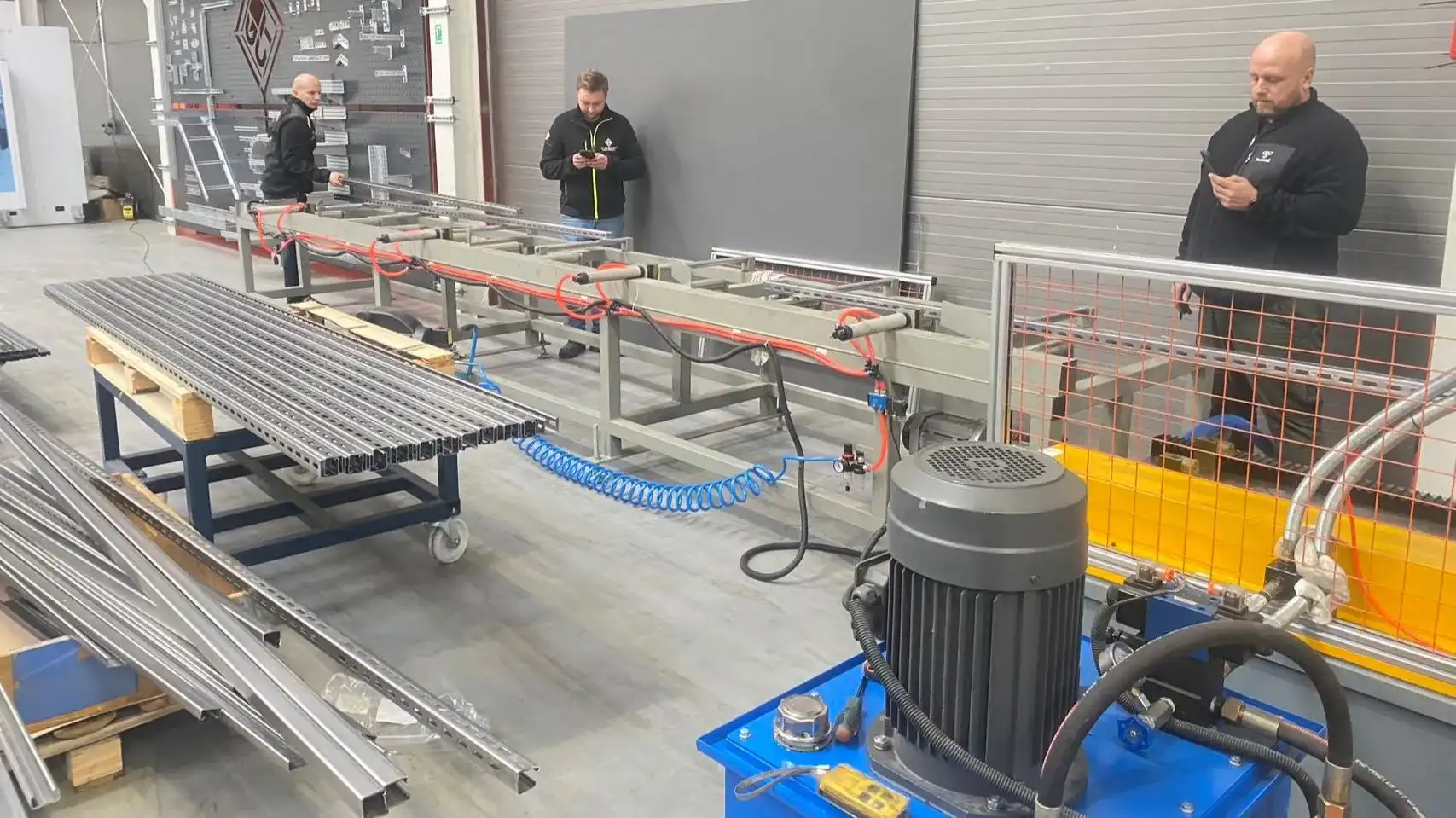
Ask to be shown around the production site or for thorough videos that show how things are actually made. Reputable makers are happy to show off their testing methods, cutting skills, and welding quality. ZTRFM uses advanced design tools like AutoCAD, SolidWorks, and COPRA for profile modeling. This shows that they have a deep understanding of engineering, which leads to reliable machine performance. Their more than 15 years of experience specializing in roll forming technology gives them historical knowledge that younger companies in the market don't have.
Understanding Total Cost of Ownership Beyond Purchase Price
The initial cost of the tools is only one part of its long-term value as an investment. Think about the costs of installation, which depend on how ready the building is and how complicated the machine is. For full setups, the whole production line, from the decoiler to the stacking station, needs about 30 linear meters of floor space. The type of foundation needed depends on the weight and vibration of the machine. The strong steel-frame building needs enough floor-loading capability.
The main electricity loads are the 22 kW motor and the 11 KW hydraulic station, which are included in the operational costs. At normal industrial power rates of $0.10 per kWh and a 75% duty cycle, the monthly cost of energy for a single shift is about $400 to $500. Consumables like hydraulic fluid, roller greasing, and replacing blades every so often can add another $200 to $300 a month, based on how much work needs to be done. To get a more accurate idea of the payback period, compare these numbers to the amount of time saved on work due to automation and higher material output.
Streamlining Procurement and After-Sales Support
Navigating the Quotation and Negotiation Process
Detailed design documents are the first step in a successful buying process. Make a clear record with the profile measurements, material types, production amounts predicted, and any special features, such as integrated punching systems, that you want. Include information about your building's electrical layout, available floor space, and time limits when you ask possible suppliers for quotes. Because they are so thorough, manufacturers can give correct prices instead of rough figures that need to be changed later.
ZTRFM and other similar companies often let you buy directly from the plant, which means you don't have to pay the markups that distributors add on. Direct connections make it easier to talk about customization, which lets normal machine configurations be changed. Some common changes are changing the feeding width range to fit non-standard profiles, selecting different electrical voltages for installations in other countries, or adding more quality control sensors. To avoid confusion during production, write down all details for customization along with detailed technical models.
Installation Support and Operator Training Programs
Professional construction services are very helpful, even for places that have done this before. Manufacturers' expert teams know a lot about how to set up machines, check their alignment, and do the first adjustment that general millwrights might not. ZTRFM offers on-site installation by engineers who know how to set up their unique equipment. Depending on how ready the building is, setup is usually done within 5–7 working days. As part of this service, all safety systems are checked to make sure they work properly, and the first production runs meet certain standards.
Another important factor for success is operator training. Modern PLC-controlled machines are easier to use than older mechanical systems, but workers still need to be taught how to properly add materials, change parameters for different profiles, fix common problems, and do regular upkeep. Comprehensive training programs teach students about machines both in the classroom and by letting them use the machines themselves while being supervised. Plan on giving primary workers three to five days of intense training. Maintenance staff and bosses will also have shorter lessons.
Long-Term Support That Protects Your Investment
Access to technical assistance throughout the machine's working life is important for its longevity. Check to see if the makers can deliver and provide extra parts. To keep fixes as short as possible, important parts like making rollers, cutting blades, and hydraulic seals should be kept on hand and ready to ship quickly. ZTRFM keeps records on each customer's machines so that they can use exact specs when providing replacement parts years after the original installation. This keeps problems with compatibility from happening.
More and more, current support services include the ability to do diagnostics remotely. Control systems that are linked to the internet let workers from manufacturers access machine settings, look at error logs, and sometimes fix problems by making software changes without having to go to the site. Facilities that are far from maker service centers find this technology to be especially useful. When figuring out how much long-term control will cost, make sure you know how much remote help is available and if there are any subscription fees.

Future Trends and Innovations in Solar Strut Channel Roll Forming Technology
Industry 4.0 Integration and Smart Manufacturing Capabilities
Through sensor integration and data analytics, the Solar Strut Channel Roll Forming Machine roll-forming business is becoming more digital. Position sensors are built into each forming station of the next generation of machines. These sensors constantly check the orientation of the rollers and alert workers to any problems before they affect the quality of the product. Manufacturing execution systems receive production data and use it to analyze efficiency in real time and plan repair based on actual working conditions rather than set schedules.
Integration with business resource planning tools makes it easier to plan production and keep track of inventory. When a customer places an order in the ERP system, compatible forming machines change the production lines and parameter settings for each type immediately. This connection cuts down on the time needed to set up between products and lowers the chance of making specs that aren't correct. This makes it easier for solar mounting makers to work with projects that have tight installation plans.
Sustainability Improvements in Equipment Design
Environmental factors affect the development of tools in more than just the solar business. Manufacturers work to make machines more energy efficient by adjusting the size of motors and adding variable frequency drives that change how much power is used based on the real forming loads. As time goes on, hydraulic systems move toward more efficient designs with better sealing to cut down on fluid leaks and the repair problems that come with it.
Cutting down on material waste will always be a goal. Advanced nesting software figures out the best way to cut so that the coils are used most efficiently. This is especially important when making batches with different channel lengths. Some systems now have automatic scrap gathering and compaction, which makes reusing the small amount of trash that roll forming creates easier. These changes are in line with the company's goals for sustainability and save money on materials.
Customization Capabilities for Specialized Applications
Specialized mounting options for difficult terrain or unique architectural needs are becoming more and more important for solar systems. Quick-change tooling methods cut profile switching times from hours to minutes, making roll forming equipment more flexible to meet these needs. Servo-driven adjustment mechanisms move rollers automatically based on patterns saved in the control system. This gets rid of the need to measure and change things by hand, which is a process that can go wrong.
Some new applications need secondary processes to be merged. Machines now have inline cutting stations that make the fixing holes that are needed for solar strut channels to be adjustable. Hydraulic punching devices that work with the making process keep the hole positions accurate to within ±0.5 mm along the length of the channel. This meets the tight limits needed for assembly in the field. These built-in features get rid of the need for different punching processes that take more time and could lead to differences in quality.
Conclusion
Buying a Solar Strut Channel Roll Forming Machine is a big business choice that will affect how much you can make, how well your products are made, and how competitive you are in the growing market for green energy infrastructure. When compared to traditional ways of making things, this technology gives real benefits in working speed, material usage, and output accuracy. For execution to go well, production needs to be carefully looked at, manufacturers must be carefully checked out, and people must be committed to using and maintaining the system correctly. As the solar industry grows around the world and mounting system designs change, manufacturers can quickly adapt to new market needs by using roll forming technology that is automated and can be set up in a variety of ways. This lets them keep the quality standards needed for long-term outdoor use.
FAQ
1. What routine maintenance does a roll forming machine require?
Lubrication, inspection, and adjustment are the major tasks of regular upkeep. Every day before work starts, operators should grease the chain drive system and make sure it is properly tensioned to keep it from slipping. As part of your weekly duties, you should check the state of the cutting blades, the amount of hydraulic fluid, and the forming rollers for damage or buildup of material. As part of the machine's monthly maintenance, precise measuring tools are used to check the rollers' alignment, all safety systems are tested, and electrical connections are checked for signs of burning. If you follow the manufacturer's thorough maintenance plan, most equipment will last longer than 15 years of steady use.
2. How does automated roll forming compare to manual fabrication methods?
Automated methods make things more consistent while requiring a lot less work. Cutting sheet metal, pressing it to make profiles, and often welding or fastening it to get the finished measures are all steps that must be taken by hand to make strut channels. Each step needs skilled workers and creates chances for differences in dimensions. Roll forming combines these steps into a single, ongoing process that is managed by a computer to make sure that every piece meets the requirements. Production speed goes up by 300–400%, and error rates drop to below 0.5%, compared to 3–5% when done by hand. Once the amount of work being done supports the investment in technology, the cost of labor per linear meter drops by 65 to 75 percent.
3. Can machines be customized for unique profile specifications?
Most manufacturers give a wide range of customization options to meet individual profile needs. Custom roller design can work with profiles that need tighter tolerances than normal specifications, cross-sections that aren't the same size, or measures that aren't the same. The process of customization starts with thorough technical sketches that show the exact shape of the profile, the materials that will be used, and the expected production volume. Engineering teams look at whether forming is possible, figure out how many roller stations are needed, and model the forming process. Custom tooling usually adds 4 to 6 weeks to normal delivery times and raises the cost of the equipment by 15 to 25 percent, based on how complicated it is. This investment pays off for companies that serve specific groups of customers or make their own mounting system designs.
Partner with ZTRFM for Advanced Channel Forming Solutions
Manufacturers who want to improve their ability to make solar mountings will find a dedicated source in ZTRFM. We are a well-known company that has been making Solar Strut Channel Roll Forming Machines for more than 150 countries. We bring both technical knowledge and real-world experience to every project. Our engineering team works closely with customers to set up equipment that meets their specific output needs, whether they need standard shapes or designs that are made just for them. Full support includes advice on the initial specifications, installation, training, and ongoing expert support to make sure your investment works reliably for as long as it's in use. Get in touch with us at zhongtuorollforming@gmail.com to talk about how our roll forming technology can help you compete in the growing market for green energy infrastructure.

References
1. Chen, W., & Martinez, R. (2023). Cold Roll Forming Technology in Renewable Energy Manufacturing. Industrial Press Publications.
2. Davidson, K. (2024). "Precision Metal Forming for Solar Infrastructure Components." Journal of Manufacturing Systems and Automation, 47(2), 156-173.
3. International Solar Mounting Standards Committee. (2023). Technical Specifications for Photovoltaic Support Structures. Global Energy Standards Organization.
4. Reynolds, P., & Thompson, J. (2024). Modern Roll Forming: Equipment, Processes, and Applications. Manufacturing Technology Institute.
5. United States Department of Energy. (2023). Solar Installation Best Practices: Structural Components and Quality Standards. DOE Technical Report Series.
6. Zhang, L., Morrison, A., & Patel, S. (2024). "Automated Forming Systems in Metal Profile Production: Efficiency Analysis and Implementation Strategies." International Journal of Advanced Manufacturing Technology, 131(5), 2847-2865.
_1750323743240.webp)