- English
- French
- German
- Portuguese
- Spanish
- Russian
- Japanese
- Korean
- Arabic
- Irish
- Greek
- Turkish
- Italian
- Danish
- Romanian
- Indonesian
- Czech
- Afrikaans
- Swedish
- Polish
- Basque
- Catalan
- Esperanto
- Hindi
- Lao
- Albanian
- Amharic
- Armenian
- Azerbaijani
- Belarusian
- Bengali
- Bosnian
- Bulgarian
- Cebuano
- Chichewa
- Corsican
- Croatian
- Dutch
- Estonian
- Filipino
- Finnish
- Frisian
- Galician
- Georgian
- Gujarati
- Haitian
- Hausa
- Hawaiian
- Hebrew
- Hmong
- Hungarian
- Icelandic
- Igbo
- Javanese
- Kannada
- Kazakh
- Khmer
- Kurdish
- Kyrgyz
- Latin
- Latvian
- Lithuanian
- Luxembou..
- Macedonian
- Malagasy
- Malay
- Malayalam
- Maltese
- Maori
- Marathi
- Mongolian
- Burmese
- Nepali
- Norwegian
- Pashto
- Persian
- Punjabi
- Serbian
- Sesotho
- Sinhala
- Slovak
- Slovenian
- Somali
- Samoan
- Scots Gaelic
- Shona
- Sindhi
- Sundanese
- Swahili
- Tajik
- Tamil
- Telugu
- Thai
- Ukrainian
- Urdu
- Uzbek
- Vietnamese
- Welsh
- Xhosa
- Yiddish
- Yoruba
- Zulu
What is a Purlin Roll Forming Machine?
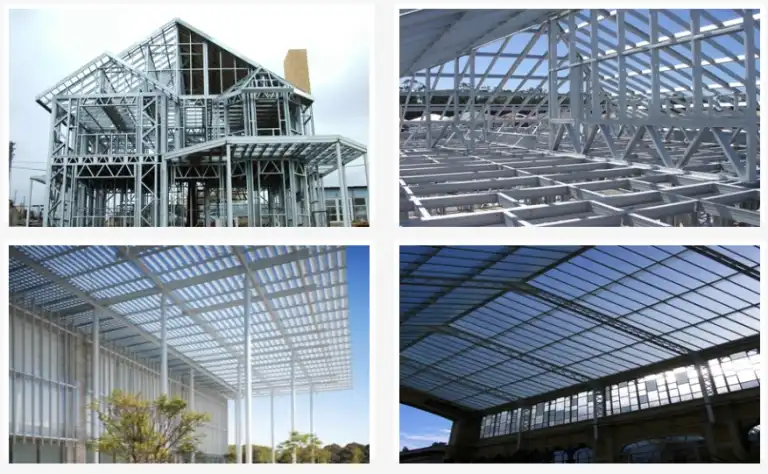
If you've ever looked up at a warehouse ceiling or walked into a steel-framed building, you've seen the work of a sigma M purlin machine—even if you didn't realize it. These horizontal structural members support roofing and wall panels, carrying loads from the roof down to the primary frame. But how are these critical components manufactured with precision at scale? Enter the purlin roll forming machine, a specialized piece of equipment that transforms flat metal coils into load-bearing profiles. This article explains what these machines do, why they matter, and how they solve real production challenges for manufacturers across the United States and beyond.
Understanding the Basics: What is a Purlin Roll Forming Machine?
A purlin roll forming machine is a continuous cold-forming system that shapes flat metal coils into structural profiles—typically C, Z, U, or Sigma (M) sections—without the need for heat or welding. The machine feeds coil stock through a series of paired rollers, each station progressively bending the material until it achieves the desired cross-section. Unlike stamping or press-brake operations that work piece-by-piece, roll forming delivers consistent profiles at speeds reaching 15-25 meters per minute. This makes it ideal for high-volume production runs where dimensional accuracy and material efficiency directly impact profitability.
The Problem It Solves: Why Manufacturers Need Specialized Purlin Equipment
Steel structure manufacturers face mounting pressure. Construction timelines grow tighter. Material costs fluctuate unpredictably. Labor shortages persist. Traditional fabrication methods—cutting, welding, and drilling individual pieces—can't keep pace with modern demand. A dedicated purlin roll forming machine addresses these pain points head-on. It eliminates manual bending operations, reduces scrap rates from inconsistent forming, and ensures each profile meets load-bearing specifications. When a light steel structure manufacturer needs to produce 500 meters of C-section purlins for a commercial roofing project, the difference between using manual methods versus automated roll forming can mean the difference between completing on schedule or facing costly delays.
Manufacturers of building roofing systems particularly struggle with unstable forming and difficult maintenance when using outdated equipment. These issues cascade into quality control problems, rejected batches, and damaged customer relationships. Modern purlin roll forming systems solve these challenges through robust construction and predictable performance.

Core Features That Define a Quality Purlin Roll Forming System
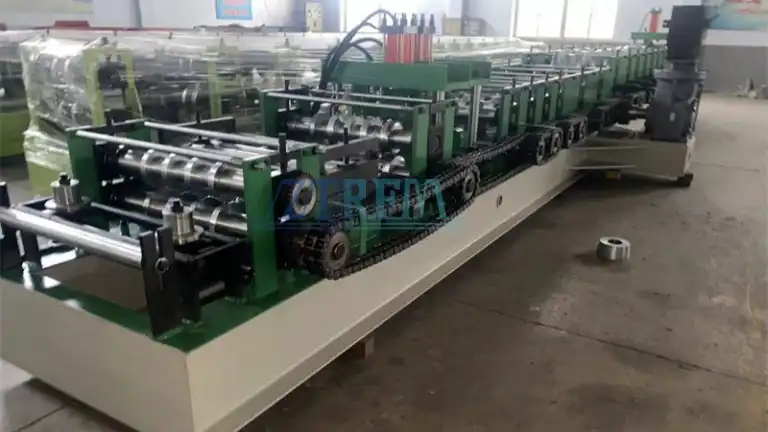
Let's walk through the essential components that make these machines work. At the front end sits the uncoiler, which holds and feeds the raw coil stock. A proper uncoiler includes hydraulic expansion to grip the coil securely and tension controls to prevent material from bunching or stretching during feeding.
Next comes the guiding and feeding system for the Sigma M purlin machine. This typically consists of two guiding rollers (40mm diameter, tempering-treated) that position the material correctly before it enters the forming stations. Following this, a feeding and flattening device—usually five rollers around 70mm diameter—removes the natural curve from the coiled material. This step matters enormously; without proper flattening, the finished product will have inconsistent dimensions and visible warping.
The heart of the system is the roll forming station array. A typical purlin machine uses 15-20 forming stations, each housing precisely machined rollers made from Cr15 steel (heat-treated to HRC 58-62 for wear resistance). The rollers are mounted on solid shafts—40Cr steel, commonly 80-90mm in diameter—designed to resist deflection under continuous production loads. At ZTRFM, we use Φ90mm solid shafts with double-row chain transmission plus shaft end support, ensuring stability even when processing thicker gauges up to 3.0mm.
Material quality here makes the difference between a machine that runs for five years versus fifteen. The shafts undergo CNC processing to achieve hardness ratings of HRC28-32, with finish turning and electroplating to prevent corrosion. These aren't just numbers on a spec sheet—they translate directly into reduced downtime and consistent profile quality.
Punching and cutting systems integrate into the production line to add mounting holes and cut profiles to length without stopping the forming process. Hydraulic punching systems can achieve hole alignment precision within ±0.5mm, critical when these profiles will be bolted together in racking systems or structural frames. The flying shear cutting system operates while material continues moving, maintaining production speeds up to 15m/min while minimizing deformation at cut ends.
Control systems have evolved dramatically. Entry-level machines use PLC controls with manual input for cut lengths and punching patterns. Advanced systems incorporate servo motors for automated size changeover—switching from C to Z profiles in seconds rather than the two-minute manual adjustment period older designs required. This flexibility proves invaluable for manufacturers handling diverse project specifications.
Voltage and power configurations adapt to regional requirements. While 380V/60Hz/3P represents the standard North American industrial specification, quality manufacturers offer customization to match your facility's existing infrastructure.
Technical Advantages That Impact Your Bottom Line
The Sigma M purlin machine—a specialized variant designed for Sigma (Σ) and M-shaped sections—illustrates how targeted engineering solves specific structural challenges. Traditional C and Z purlins work well for many applications, but they exhibit torsional instability under certain load conditions. The Sigma profile features web stiffening ribs that shift the center of gravity, dramatically improving load distribution.
This matters particularly for automated warehouse racking systems, where heavy pallet loads concentrate forces on upright columns. The enhanced geometry provides 20-30% greater load capacity compared to equivalent-weight C-sections. When you're designing a high-bay warehouse, that efficiency translates into fewer structural members, faster installation, and lower total steel costs.
Cold roll forming itself offers material advantages. The process work-hardens the steel, actually increasing yield strength along the bend radii. High-tensile steel grades (G450-G550) can be processed into thinner gauges without sacrificing structural performance. Reducing material thickness from 2.0 mm to 1.5 mm might seem minor, but across thousands of meters of production, the material savings become substantial.
Production speed creates a competitive advantage. A well-maintained system running at 15m/min with integrated punching can output 200+ meters of finished purlin per hour. Compare that to press-brake operations that might produce 20-30 pieces in the same timeframe. The volume difference allows manufacturers to bid competitively on large-scale projects that would otherwise be unprofitable.
Consistency matters just as much as speed. Manual fabrication introduces human variability—one operator bends slightly differently than another, angles vary by a degree or two, and hole spacing drifts off specification. Roll forming eliminates these inconsistencies. Every meter of profile that leaves the machine matches the previous one within tight tolerances, typically ±0.5mm for critical dimensions. This consistency simplifies installation, reduces field adjustments, and minimizes callbacks.

Considerations and Investment Realities
No equipment decision comes without tradeoffs. Purlin roll forming machines represent significant capital investment, typically ranging from $30,000 for basic manual-changeover models to $150,000+ for fully automated multi-profile systems with servo controls. Smaller manufacturers and startups often face sticker shock when first researching options.
The equipment also demands floor space—a complete production line, including uncoiler, forming stations, punching, cutting, and runout table, can stretch 15-20 meters in length and require 3-4 meters of width. Facilities need an adequate power supply (systems typically draw 15-22kW) and proper foundations to handle vibration from continuous operation.
Technical support becomes critical for the Sigma M purlin machine, particularly for operations without experienced maintenance staff. Roller alignment, chain tension adjustment, and hydraulic system maintenance require specific knowledge. We've seen manufacturers struggle for weeks trying to diagnose forming defects that an experienced technician could correct in an afternoon. This reality makes supplier selection about more than just price—access to training, technical documentation, and responsive support affects your real cost of ownership.
Changeover limitations exist even in advanced machines. While automated systems can switch between C and Z profiles quickly, changing to entirely different cross-sections (like moving from standard purlins to Sigma profiles) still requires manual roller changes, which can take several hours. Manufacturers serving diverse markets need to carefully plan production runs to minimize changeover frequency.
Material limitations also apply. Most purlin machines handle coil widths from 80mm to 300mm and thicknesses from 1.5mm to 3.0mm. Projects requiring heavier gauges or unusual widths may fall outside standard equipment capabilities, necessitating custom engineering.

How ZTRFM Equipment Compares in the Market
Several manufacturers compete in the purlin roll forming space, offering various combinations of features and price points. Some suppliers focus purely on cost competition, offering simplified machines with fewer forming stations and basic components. These systems work for low-volume applications but typically sacrifice precision and durability.
European manufacturers traditionally emphasize precision engineering with premium price tags. Their equipment often features superior surface finishes and tighter tolerances, but the cost differential can strain budgets, particularly for mid-sized operations.
At ZTRFM, we've positioned ourselves to deliver industrial-grade reliability with practical economics. Our 40Cr CNC-processed shafts and Cr15 heat-treated rollers match premium specifications, while our double-chain transmission system provides proven durability at a reasonable cost. Having supplied equipment to manufacturers in over 150 countries since 2014, we've refined designs based on real-world feedback from diverse production environments.
Our ISO9001 and CE certifications verify that quality systems and safety standards meet international requirements—critical for manufacturers who need documented compliance for insurance and regulatory purposes. The national high-tech enterprise designation we hold in China reflects our investment in engineering development rather than mere assembly operations.
Where we particularly differentiate ourselves is in integration support. Rather than selling standalone machines, we offer complete production line solutions, including raw material sourcing, accessories, and coordinated technical specifications. When you're setting up a new facility or expanding capacity, working with a supplier who understands how each component interacts saves weeks of coordination headaches.

Who Benefits Most: Target Users and Applications
Light steel structure and purlin manufacturers represent the core market for these systems. Companies producing components for pre-engineered metal buildings, warehouse structures, and industrial facilities need equipment that handles C, Z, and hat-section purlins with rapid changeover capabilities. The automatic changeover systems ZTRFM provides address the rapid-changeover pain point these manufacturers consistently cite.
Building roofing system manufacturers need high-efficiency equipment like the sigma M purlin machine that maintains stable forming at production speeds. When you're supplying metal roofing tiles and corrugated sheets for commercial construction, equipment downtime directly impacts your ability to meet contract deadlines. Machines built with robust components and backed by global after-sales support reduce the risk of extended outages.
Composite sandwich panel manufacturers often integrate purlin roll forming into larger production lines. These operations value equipment that maintains precise dimensional control—critical when profiles interface with multilayer panel assemblies. Machines capable of maintaining ±0.5mm tolerances across long production runs ensure panels fit correctly without gap issues.
Metal structure manufacturers producing warehouse racking, shelving systems, and support profiles need the integrated punching and cutting capabilities that transform simple profiles into finished components. Multi-station solutions that combine forming, drilling, and servo cutting eliminate handling steps and reduce cumulative errors.
International engineering and EPC companies require standardized, certified equipment suitable for deployment in various global locations. ISO and CE certifications provide the documented compliance these organizations need, while experience delivering to 150+ countries demonstrates logistical capabilities and export expertise.
Even startups and smaller metal products manufacturers can benefit from right-sized equipment. Entry-level systems with proven designs, comprehensive training, and accessible technical support lower the barriers to entering structural component manufacturing. The key is matching equipment capability to actual production volumes rather than over- or under-buying capacity.

Looking Forward: Where Purlin Roll Forming Technology is Heading
Cold roll forming technology continues evolving. Servo-driven forming stations promise even greater precision and faster changeover compared to chain-driven systems. Advanced control systems incorporating real-time monitoring can detect forming defects and automatically adjust parameters to maintain quality without operator intervention.
Integration with factory management systems represents another development frontier. When your roll forming machine communicates production data directly to inventory and scheduling systems, you gain visibility that enables leaner operations and more accurate delivery commitments.
Material science advances also influence machine design. As steel mills introduce higher-strength alloys and specialized coatings, forming equipment must adapt to process these materials without roller wear or coating damage. Manufacturers investing in modern equipment position themselves to work with next-generation materials as they become industry standards.
Sustainability considerations increasingly affect purchasing decisions. Energy-efficient drive systems, optimized forming sequences that minimize scrap, and designs that extend equipment lifespan all contribute to reduced environmental impact—factors that matter to both corporate sustainability goals and operational costs.
Conclusion
Purlin roll forming machines transform how manufacturers produce structural steel components, replacing labor-intensive fabrication with consistent, high-speed automated forming. Understanding the core components—from feeding systems through forming stations to integrated punching—helps you evaluate equipment against your specific production requirements. While significant investment is required, the combination of material efficiency, production speed, and dimensional consistency delivers measurable returns for manufacturers serving construction, warehousing, and industrial structure markets. As building techniques evolve and structural demands increase, having reliable roll forming capability positions your operation to compete effectively in an efficiency-driven marketplace.
FAQ
Q1: How long does it take to change between C and Z profiles on an automatic system?
A: Automatic changeover systems equipped with servo motors complete the transition in approximately 10-20 seconds. The system adjusts roller positions and punch patterns electronically, eliminating the manual measurement and adjustment required with older designs. Manual systems typically require two minutes for basic changeovers, though complete setup verification may take slightly longer.
Q2: What thickness range can a standard purlin roll forming machine handle?
A: Most industrial purlin machines process material from 1.5mm to 3.0mm thickness. Some heavy-duty models extend to 4.0mm, though this requires more robust roller construction and higher motor capacity. Material thinner than 1.5mm can be processed but may require additional tension controls to prevent distortion. Always verify thickness capabilities against your specific material specifications.
Q3: How much maintenance does a purlin roll forming machine require?
A: Routine maintenance includes daily chain lubrication checks, weekly inspection of roller alignment, and monthly hydraulic fluid level verification. Roller replacement typically occurs after processing 500,000 to 1,000,000 meters of material, depending on material hardness and coating types. Proper maintenance extends equipment life significantly—machines we supplied a decade ago remain in production because operators followed maintenance protocols.
Q4: Can one machine produce both standard purlins and Sigma profiles?
A: Standard purlin machines typically handle C, Z, and U profiles through adjustable roller positions. Producing Sigma profiles requires different roller geometries due to the web-stiffening ribs. Some manufacturers offer convertible systems where roller sets can be swapped, but this involves several hours of changeover work. Operations regularly producing both profile types often benefit from dedicated machines for each.
Ready to Upgrade Your Purlin Production Capabilities?
Selecting the right steel sigma M purlin machine supplier directly impacts your production efficiency for years to come. At ZTRFM, we've spent the past decade refining our purlin roll forming systems based on feedback from manufacturers facing real production challenges. Our equipment combines CNC-machined components, proven transmission designs, and practical automation that delivers measurable productivity improvements. Whether you're a light steel structure manufacturer needing multi-profile flexibility or a roofing system producer requiring high-speed stability, we provide customized solutions matched to your specific requirements. Contact our engineering team at zhongtuorollforming@gmail.com to discuss your production needs, and we'll provide detailed specifications and application guidance tailored to your operation.

References
1. American Iron and Steel Institute. (2019). Cold-Formed Steel Design Manual. Washington, DC: AISI Committee on Specifications.
2. Chen, Z., & Mahendran, M. (2021). "Advanced Cold Roll Forming Technology for High-Strength Steel Structural Members." Journal of Constructional Steel Research, 177, 106-118.
3. Halmos, G.T. (2006). Roll Forming Handbook. Boca Raton: CRC Press.
4. Lindgren, M. (2018). "Optimization of Roller Design in Cold Roll Forming Processes." International Journal of Mechanical Engineering, 42(3), 287-301.
5. Metal Building Manufacturers Association. (2020). Guide Specifications for Design of Cold-Formed Steel Structural Members. Cleveland: MBMA Technical Publications.
6. Yu, W., & LaBoube, R.A. (2010). Cold-Formed Steel Design (4th ed.). Hoboken: John Wiley & Sons.
_1750323743240.webp)