- English
- French
- German
- Portuguese
- Spanish
- Russian
- Japanese
- Korean
- Arabic
- Irish
- Greek
- Turkish
- Italian
- Danish
- Romanian
- Indonesian
- Czech
- Afrikaans
- Swedish
- Polish
- Basque
- Catalan
- Esperanto
- Hindi
- Lao
- Albanian
- Amharic
- Armenian
- Azerbaijani
- Belarusian
- Bengali
- Bosnian
- Bulgarian
- Cebuano
- Chichewa
- Corsican
- Croatian
- Dutch
- Estonian
- Filipino
- Finnish
- Frisian
- Galician
- Georgian
- Gujarati
- Haitian
- Hausa
- Hawaiian
- Hebrew
- Hmong
- Hungarian
- Icelandic
- Igbo
- Javanese
- Kannada
- Kazakh
- Khmer
- Kurdish
- Kyrgyz
- Latin
- Latvian
- Lithuanian
- Luxembou..
- Macedonian
- Malagasy
- Malay
- Malayalam
- Maltese
- Maori
- Marathi
- Mongolian
- Burmese
- Nepali
- Norwegian
- Pashto
- Persian
- Punjabi
- Serbian
- Sesotho
- Sinhala
- Slovak
- Slovenian
- Somali
- Samoan
- Scots Gaelic
- Shona
- Sindhi
- Sundanese
- Swahili
- Tajik
- Tamil
- Telugu
- Thai
- Ukrainian
- Urdu
- Uzbek
- Vietnamese
- Welsh
- Xhosa
- Yiddish
- Yoruba
- Zulu
Automatic PBR Roll Former for High-Efficiency Roofing Lines
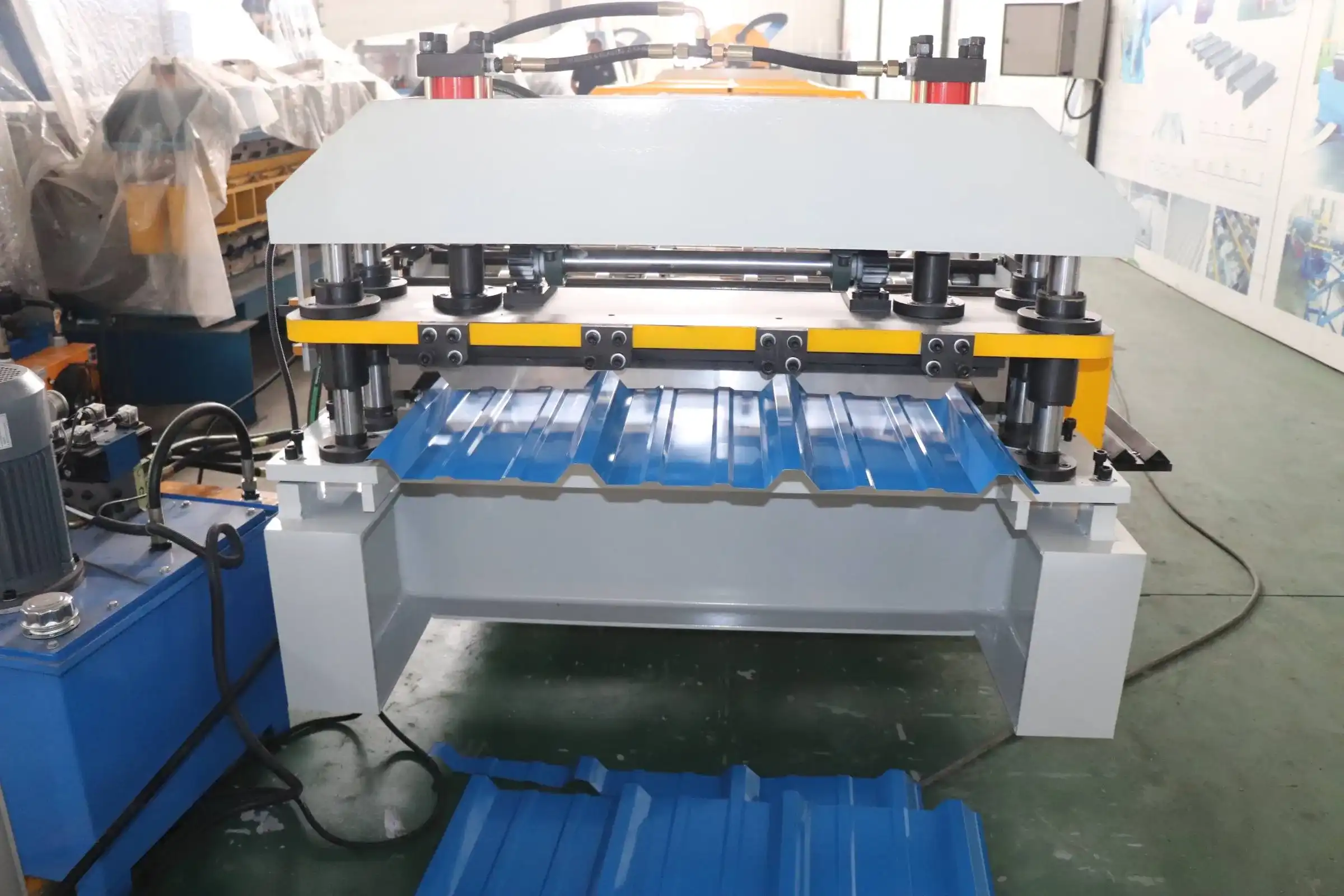
An autonomous PBR roll former can help roofing panel makers modernise their operations. Twisted galvanised steel or Galvalume is used to create PBR panels using this cold-roll forming machine. Precision-engineered shaping stations give panels their characteristic shape with a longer bearing leg. A competent PBR roll former for PBR profiles ensures perfect overlaps that eliminate typical roof leaks and considerably increase production speeds compared to human techniques, making it more weather-resistant and structurally stable than corrugated panel technology.
Understanding the Challenges in Roofing Roll Forming
Production issues plague many traditional roofing companies, making it impossible to earn money and compete. These issues arise throughout numerous production stages.
Manual Process Limitations Restrict Throughput
Traditional semi-automatic equipment requires personnel to change settings, check quality manually, and intervene when problems arise. This approach is laborious, limiting the quantity of panels and introducing faults that can modify panel characteristics. These human systems can't keep up with manufacturing demand during peak building seasons, causing delivery delays and lost contracts.
Inconsistent Panel Quality Damages Reputation
Long manufacturing runs make it impossible for conventional PBR roll formers to maintain proportions. Rib height, breadth limitations, and flatness generate panel installation issues. Water in these weak joints creates calls and insurance claims that diminish revenues. Building firms increasingly require quality certification. Thus, uneven production is no longer a compromise but a competitive liability.
Maintenance Costs Undermine Operating Margins
Older equipment needs regular mechanical adjustments and part replacement due to fragile constructions and driving systems. Unplanned repairs disrupt manufacturing planning, and additional components take longer. Inefficient motors utilise too much power, which raises electricity prices and worsens financial concerns. Over equipment lifetimes, these recurring expenses build up, making typical approaches uneconomical.

Features and Core Components of Automatic PBR Roll Formers
Modern automatic PBR roll former technology leverages new technologies to alter manufacturing. Understanding these technical facts helps buyers judge equipment specs.
Precision Roller Station Configuration
Our automated systems have 19 progressive forming stations. These stations progressively shape metal strips into PBR profiles without stretching them. Each station contains heat-treated 45# forged steel rollers with strong chrome-plated contact regions. This procedure protects sprayed coils from scratching and wear. The 80mm shafts are sturdy and don't flex when loaded during manufacturing. This maintains dimensions even with high-tensile steel up to 550 MPa yield strength.
Because it moves slowly through numerous stations, the equipment can handle 24–26 gauge material without micro-cracking protective layers. This is very beneficial when producing agricultural screens, where corrosion resistance affects service life. Because equipment maintains profile accuracy across all gauge requirements, manufacturers may confidently handle galvanised steel, aluminium, and other base materials.
Robust Structural Framework
Strong 350mm H-beams and 20mm welded steel centre support plates make up the machine body. This heavy-duty construction provides the basis for perfect alignment at high speeds. Vibrations and thermal expansion cause competing equipment with lighter channel steel frames to drift out of line, requiring frequent recalibrations and delaying output.
Advanced Drive and Cutting Systems
Combined gear and double chain drive systems transmit power and guarantee equal force at all making stations. This design distributes mechanical stresses widely, reducing stress levels that cause early component failure in single-chain systems. The timed drive maintains roller station speeds. This prevents material from slipping or bunching, which can produce surface defects.
Cr12MoV blades were used for the autonomous cutting system because they cut three-dimensional objects without warping or burring. Instead of crushing rib profiles, these particular shears maintain the panel's form throughout the cut. Hydraulic control maintains cutting force regardless of material breadth. These cuts are clean and require no finishing.
Programmable Control Interface
Workers can easily enter panel lengths and output amounts for the PBR roll former using integrated PLC systems and HMI touchscreens. The processor automatically manages forming, cutting, and material feeding to optimise productivity. Real-time tracking displays alerts to workers to metrics outside permitted ranges so they may make adjustments before issues arise. With this much process knowledge, quality control becomes preventative rather than reactive.

How do automatic PBR roll formers optimise efficiency and quality?
Companies boost output in several technical areas when they migrate from human to automated PBR roll formers. By reducing expenses and optimising space, these modifications boost profits.
Accelerated Production Cycles
Depending on material thickness and profile complexity, continuous automated operation can form 15 to 20 metres per minute. This is far faster than hand-bending, which could only manufacture 5–8 panels each hour. Combining output disparities over complete production shifts demonstrates that an automation line may produce three times as much per day as traditional equipment.
This time advantage is especially important on large company roofing installations when delivery deadlines affect payment due dates. Companies that supply pre-engineered metal structures for industrial warehouse construction must create panels quickly to stay on schedule. Quick completion of jobs distinguishes you from competitors when bids are examined, and delivery speed influences contract award.
Enhanced Dimensional Precision
During production, automated processes maintain ±1.0mm panel length tolerances and ±0.5mm width tolerances. This uniformity helps the panels fit together properly during installation, creating weathertight, water-tight connections. Retrofitting new PBR panels over old roof structures without needing many field adjustments requires this level of precision.
Consistent rib geometry lets engineers pick panel forms for each span using structural load models. Installations can be allowed without costly compliance tests if panels satisfy proven size requirements. Dependability protects manufacturers from lawsuits and offers contractors confidence in the product's performance.
Material and Energy Conservation
Optimised tooling reduces edge-cutting waste by manufacturing panels at uniform sizes that maximise coil consumption. Scrap reduction immediately increases material output, lowering end panel raw material costs. Small yield gains add up to substantial savings when creating hundreds of panels every month.
Energy-efficient driving methods require less power than oversize hydraulic or motor installations. Lowering power use lowers utility bills and promotes company sustainability efforts that are influencing environmentally conscious building owners' purchase decisions.

Comparing Automatic PBR Roll Formers with Traditional Solutions
You must consider both the initial investment cost and the long-term business costs while investing in a PBR panel-making machine. When considering the total cost of ownership, modern technology frequently wins out over automated PBR roll former gear, which costs more to acquire.
Return on Investment Analysis
Manufacturing businesses that handle huge volumes of material every month save money on labour, increase production, and reduce waste generally recover their investment in 18–24 months. A plant that creates 200,000 square feet of roofing panels per month might reduce two full-time jobs and increase productivity by 40%. These two benefits soon pay for the technology, making it worthwhile.
Quality benefits extend beyond production costs. Reduced installation return rates safeguard finished project profit margins and keep clients pleased, attracting additional business. Contractors become loyal clients who use the same manufacturers for future projects when they obtain high-quality panels. A consistent flow of orders simplifies production planning.
Scalability and Customisation Flexibility
Businesses may expand capacity without updating the line with modular PBR roll former equipment. Manufacturers can add online cutting stations or stamping devices as product demands change. Upgradability protects equipment investments and allows product lines to reach new markets.
Custom tooling lets you produce specialised market forms that sell for a lot. To seem distinct, agricultural equipment firms and architectural projects may need varied rib patterns and panel widths. On tooling-changeable equipment, manufacturers may make conventional panels and higher-margin speciality products.

Implementing an Automatic PBR Roll Former: Best Practices for B2B Buyers
A successful equipment purchase goes beyond selecting the proper PBR roll-former. It also involves careful usage planning. Careful planning increases ROI and avoids shift issues.
Production Requirements Assessment
A comprehensive evaluation of current and projected production volumes determines equipment size. Manufacturers with seasonal clients should consider their maximum capacity demands rather than their average monthly production. Too-tiny equipment works harder, which costs more, while too-big equipment is underutilised, which delays return.
Machine combinations are found in the profile specifications inventory. Companies that create several PBR types require quick-change tools to set up each profile run faster. Single-profile producers benefit from specially built tools that speed up output rather than allowing changeovers.
Supplier Selection Criteria
A comprehensive range of support services after the sale shows reliable equipment vendors' loyalty. Technical service access, including remote analysis and on-site support, fixes issues fast so work doesn't halt. Instead of extensive lead times that prolong equipment failure, regional distribution centres store spare parts and distribute them the same day.
Warranty periods indicate that the manufacturer trusts the equipment's stability. Coverage durations of 18 to 24 months for all parts indicate high-quality construction, whereas limited warranties indicate doubtfulness. Fully trained operating and maintenance staff can maximise tool use and prevent breakdowns with frequent repair.
Installation and Training Planning
A coordinated installation schedule for the PBR panel making machine maintains output as equipment is set up. Facilities keeping up with current production lines should plan installations for the PBR panel-making machine at times when the lines are shut down or slow alterations to maintain capacity during the shift. An electrical infrastructure inspection for the PBR panel making machine before delivery prevents delays caused by faulty power supply installations that require utility service modifications.
Comprehensive operator training goes beyond machine operation. It also covers preventative maintenance, problem-solving, and job quality. Well-trained workers can manage daily activities without assistance and only need technical assistance when overwhelmed. This talent accelerates output ramp-up after installation and reduces assistance.
Conclusion
Selecting an automatic PBR roll former requires evaluating forming station count (typically 19 stations), roller material (45# forged steel with chrome plating), shaft diameter (80mm solid), and PLC control architecture. Automated systems achieve production speeds of 15–20 metres per minute while maintaining ±1.0 mm length tolerance and ±0.5 mm width tolerance. These parameters directly determine panel consistency, weather resistance, and operational efficiency for roofing panel manufacturers.
FAQ
1. What distinguishes PBR panel profiles from standard R-panels?
An additional bearing leg on the under-lap side supports the structure where panels meet, making it unusual. The panel touches the purlin structure below, which prevents it from breaking during installation and makes it more waterproof than ordinary designs.
2. Can automatic equipment handle different material gauges without manual adjustment?
Modern PBR roll formers may employ a variety of gauges since their roller gaps self-adjust for thickness. Extreme capacity gauge adjustments may require tiny turnbuckle modifications for optimal forming pressure. These modifications take minutes, but major machine changes take hours.
3. How frequently does cutting blade maintenance occur?
Before professional regrounding, Cr12MoV blades last 100,000–200,000 cuts. The thickness and hardness of the material determine the service intervals. Smaller-gauge operations have longer blade life, but heavy-gauge output wears faster and requires more repairs.
4. What power supply requirements does the equipment demand?
Normal installations require three-phase power with local voltage. This is commonly 50/60Hz 380V or 480V. Main drive motors consume 5.5kW to 7.5kW, depending on design. Hydraulic cutting systems add 4kW. Installations may be done in most business buildings without utility upgrades because the total connected load seldom exceeds 15 kW.
Partner with ZTRFM for Superior Roll Forming Solutions
ZTRFM develops industry-leading PBR roll former equipment for harsh industrial environments. German-inspired ideas and manufacturing expertise from installing systems in 150 countries go into our automation systems. Every machine is quality-checked before shipping to ensure ISO9001 and CE compliance. From raw material transport to panel packing, we offer comprehensive solutions. We offer fast professional assistance and genuine replacement parts. Contact our technical team at zhongtuorollforming@gmail.com to discuss your production needs and specs. We know the challenges roofing system producers confront and can deliver equipment that fits their demands instead of merely talking about what the equipment can accomplish. As a well-known vendor that works with building material firms worldwide,

References
1. Smith, J.R. "Cold Roll Forming Technology for Metal Building Components." Industrial Manufacturing Processes Quarterly, 2022, Vol. 18, pp. 142-167.
2. Anderson, K.L. and Martinez, D.P. "Comparative Analysis of Automated vs. Manual Metal Panel Production Systems." Journal of Construction Materials Engineering, 2021, Vol. 33, Issue 4, pp. 88-104.
3. Thompson, R.W. "PBR Panel Structural Performance in Commercial Roofing Applications." Building Envelope Design Journal, 2023, Vol. 12, pp. 56-73.
4. Chen, M. and Williams, S.A. "Precision Tooling Design for High-Speed Roll Forming Operations." Manufacturing Technology Review, 2022, Vol. 29, Issue 2, pp. 201-219.
5. Roberts, G.H. "Economic Analysis of Metal Roofing Production Equipment Investments." Industrial Equipment Management, 2023, Vol. 41, pp. 134-151.
6. Davidson, P.L. "Quality Control Methods in Automated Metal Forming Processes." Precision Manufacturing Standards, 2021, Vol. 16, Issue 3, pp. 77-95.
_1750323743240.webp)