- English
- French
- German
- Portuguese
- Spanish
- Russian
- Japanese
- Korean
- Arabic
- Irish
- Greek
- Turkish
- Italian
- Danish
- Romanian
- Indonesian
- Czech
- Afrikaans
- Swedish
- Polish
- Basque
- Catalan
- Esperanto
- Hindi
- Lao
- Albanian
- Amharic
- Armenian
- Azerbaijani
- Belarusian
- Bengali
- Bosnian
- Bulgarian
- Cebuano
- Chichewa
- Corsican
- Croatian
- Dutch
- Estonian
- Filipino
- Finnish
- Frisian
- Galician
- Georgian
- Gujarati
- Haitian
- Hausa
- Hawaiian
- Hebrew
- Hmong
- Hungarian
- Icelandic
- Igbo
- Javanese
- Kannada
- Kazakh
- Khmer
- Kurdish
- Kyrgyz
- Latin
- Latvian
- Lithuanian
- Luxembou..
- Macedonian
- Malagasy
- Malay
- Malayalam
- Maltese
- Maori
- Marathi
- Mongolian
- Burmese
- Nepali
- Norwegian
- Pashto
- Persian
- Punjabi
- Serbian
- Sesotho
- Sinhala
- Slovak
- Slovenian
- Somali
- Samoan
- Scots Gaelic
- Shona
- Sindhi
- Sundanese
- Swahili
- Tajik
- Tamil
- Telugu
- Thai
- Ukrainian
- Urdu
- Uzbek
- Vietnamese
- Welsh
- Xhosa
- Yiddish
- Yoruba
- Zulu
What Is a Trapezoidal Roll Forming Machine?
A trapezoidal roll forming machine is a specialized trapezoidal sheet roll forming machine, industrial equipment that transforms flat metal coils—typically galvanized steel, PPGI, or aluminum—into high-strength roofing and wall panels with a distinctive trapezoid profile. Through a continuous cold-forming process, a series of precisely aligned roller stations incrementally shape the metal strip into specific geometric patterns without altering its thickness. This machine addresses critical manufacturing challenges, including inconsistent profile quality, low production efficiency, and the need for durable structural panels capable of spanning wide distances between supports in modern construction projects. Over the past decade, I've watched countless roofing manufacturers struggle with outdated forming equipment that couldn't keep pace with demand. The breakthrough came when trapezoidal sheet roll forming technology evolved to deliver both speed and precision. At Cangzhou Zhongtuo, we've been refining this technology since 2014, and the transformation in our clients' operations has been remarkable.
The Core Production Challenge This Machine Solves
Building roofing system manufacturers face a persistent dilemma: how to produce metal roofing panels that combine structural strength, aesthetic appeal, and production efficiency without breaking the budget. Traditional methods of creating trapezoidal profiles involved manual brake forming or press operations that couldn't maintain dimensional consistency across thousands of panels.
The trapezoidal sheet roll forming machine eliminates these bottlenecks through automated continuous production. When a roofing contractor in Texas needed to produce 50,000 square feet of R101 panels for a commercial warehouse project, manual methods would have required weeks and multiple workers. With roll forming technology, that same output took just three days with a two-person crew.
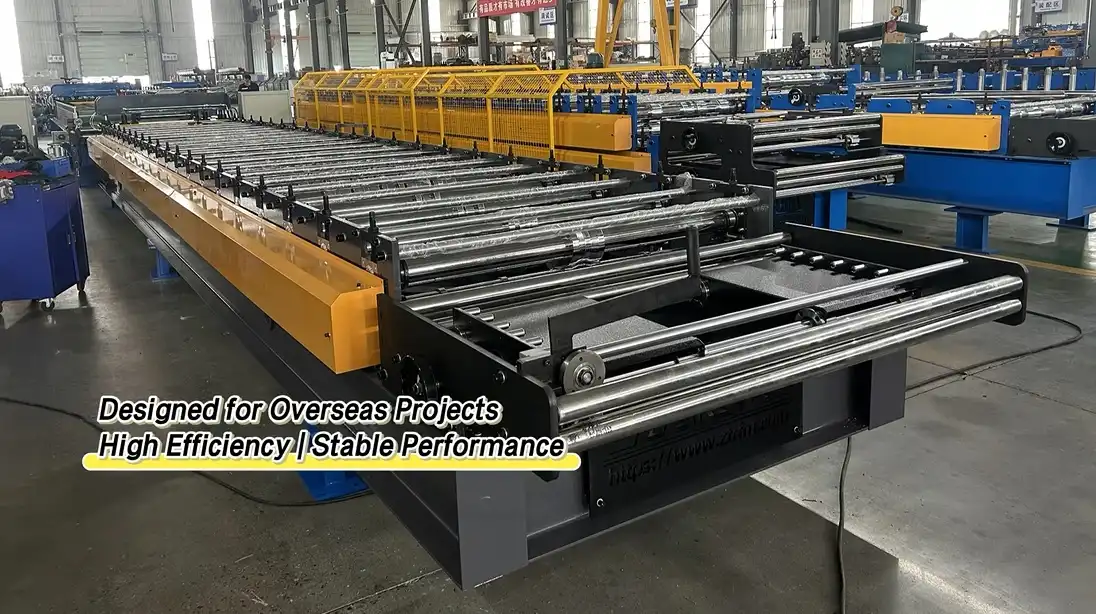
The machine processes coil stock through 16 to 26 progressive forming stations, each applying incremental bends until the final trapezoid shape emerges. This gradual forming prevents material stress concentrations that cause cracking or surface damage. The resulting panels exhibit superior flatness and rib uniformity—critical factors when panels must nest together on a roof without gaps that leak water.
Production efficiency jumps dramatically compared to alternative methods. While a press brake operator might produce 8-12 panels per hour, a roll forming line operates continuously at 15 to 60 meters per minute, depending on material thickness and profile complexity. This translates to producing a complete panel every 10-20 seconds during operation.
Material waste drops significantly as well. The continuous process minimizes scrap generation, and modern control systems optimize cutting patterns to maximize yield from each coil. Manufacturers report scrap rates below 2% compared to 5-8% with traditional trapezoidal sheet roll forming machine methods.
How Trapezoidal Roll Forming Machines Actually Work
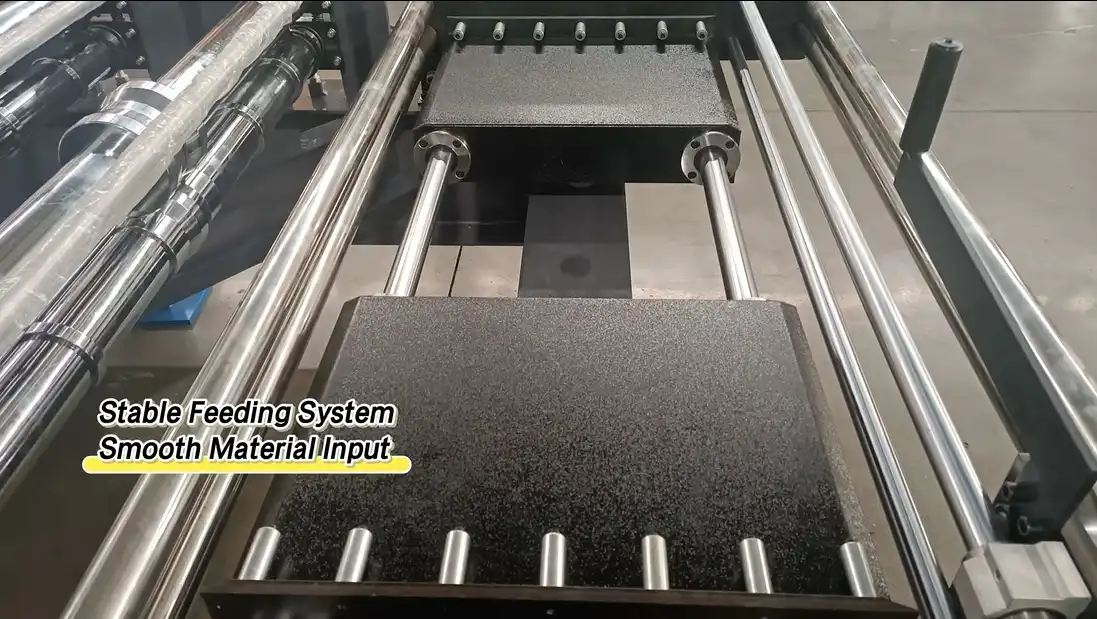
Understanding the mechanical process helps explain why these machines deliver such consistent results. The system begins with a decoiler that holds metal coils weighing up to 5 tons. As the coil unwinds, the material feeds into a leveling section that removes coil set—the natural curvature retained from being wound on a mandrel.
The heart of the machine is the roller station assembly. Each station contains a matched pair of rollers—upper and lower—machined from 45# forged steel and chrome-plated for wear resistance. These rollers are precision-ground to create specific bend angles. As material passes through sequential stations, the profile gradually takes shape.
A critical aspect involves the shaft diameter and frame rigidity. Our machines use 80mm solid shafts supported by heavy-duty bearings within a 350H steel frame. This robust construction prevents deflection under forming loads, which would otherwise create dimensional variations across the panel width.
The transmission system deserves attention because it directly impacts panel quality. Gear-driven systems provide superior synchronization compared to chain drives, ensuring all roller stations rotate at precisely matched speeds. Any speed mismatch between stations causes surface scratching or dimensional distortion.
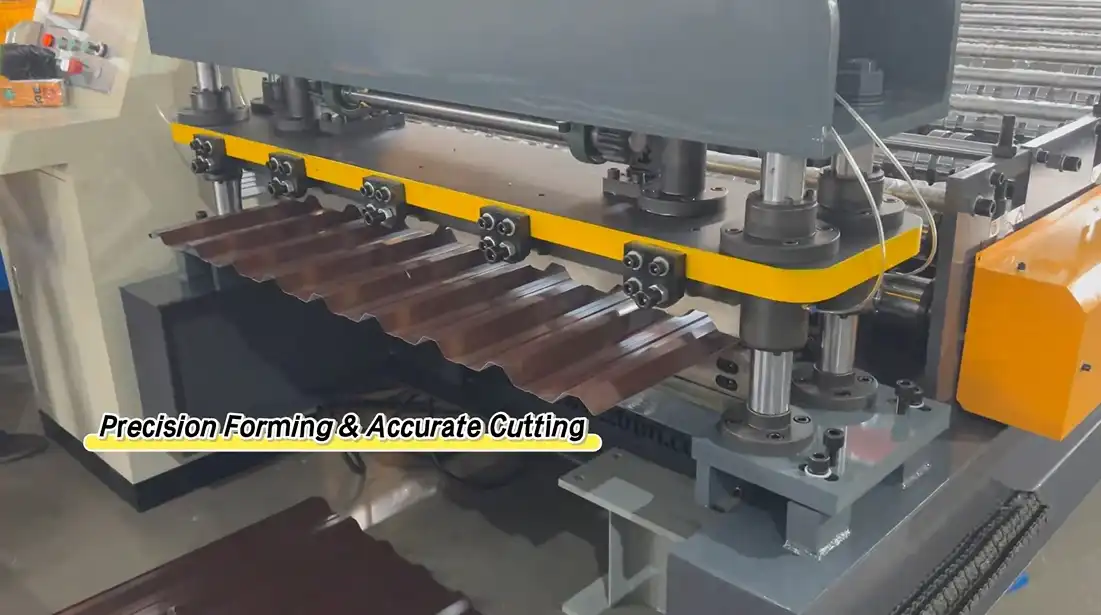
At the line's end, a hydraulic cutting system shears panels to programmed lengths with ±1mm tolerance. The cutting blade, manufactured from CR12MoV tool steel, maintains sharp edges through thousands of cuts while leaving clean, burr-free edges that won't cause rust initiation.
Key Performance Advantages That Drive ROI
Speed capabilities set modern trapezoidal forming machines apart. Our high-speed models reach 60 meters per minute on lighter gauge material, producing approximately 180 linear feet of panel every 60 seconds. A typical 10-foot panel takes just 5 seconds from start to cut-off.
This velocity matters tremendously when calculating production capacity. A manufacturer running a single-shift operation can produce 12,000 to 20,000 linear feet daily, depending on changeover frequency and material handling efficiency. That volume supports projects ranging from residential housing developments to massive industrial facilities.
Precision forming delivers panels that fit together perfectly on the jobsite. The trapezoid shape must maintain exact rib spacing and height across the entire panel width and throughout production runs spanning days or weeks. Our machines hold tolerances within 0.5mm on critical dimensions, ensuring panels from different production batches interlock seamlessly.
Customization flexibility addresses diverse market requirements. Machine width can accommodate coil stock from 914mm to 1250mm, producing panels with 6 to 8 waves depending on the chosen profile. Roller stations are configurable from 16 to 26 passes based on profile complexity and material thickness range.
Material compatibility extends beyond basic galvanized steel. The machines process PPGI (pre-painted galvanized steel) without damaging decorative coatings, aluminum for coastal applications requiring superior corrosion resistance, and Aluzinc for enhanced weathering performance. Thickness capacity typically ranges from 0.3mm to 1.0mm, trapezoidal sheet roll forming machine with heavy-duty variants handling up to 1.2mm for structural applications.
Important Considerations Before Investment
Initial capital outlay represents a significant decision point. Complete production lines, including decoiler, forming machine, cutting system, and run-out tables, typically range from $25,000 to $85,000, depending on automation level, speed capabilities, and customization features. Startups with limited capital may find this barrier challenging without financing options.
Floor space requirements shouldn't be underestimated. A complete line occupies approximately 12-15 meters in length and requires 3-4 meters of width for safe operation and material handling. Facilities must provide adequate clearance for coil loading equipment and finished panel storage.
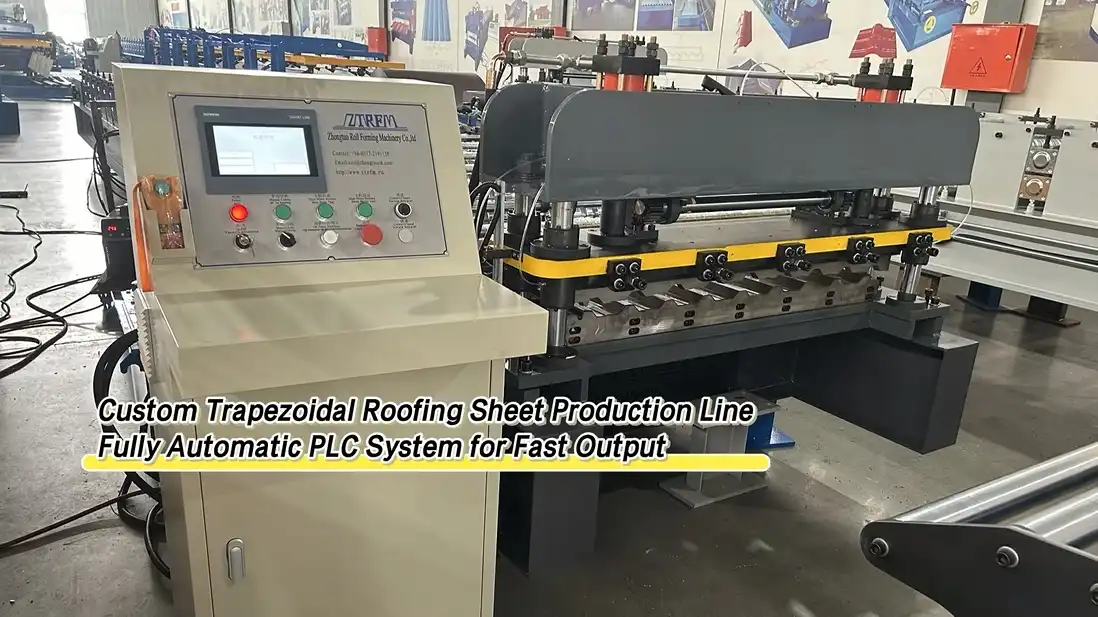
Technical skill demands affect operational success. While PLC controls simplify operation, staff still need training in material handling, roller adjustment for different gauges, and preventive maintenance procedures. Manufacturers transitioning from manual methods should budget time for this learning curve.
Changeover time between different profiles impacts production flexibility. Switching from one trapezoid configuration to another requires roller change-out, which can take 4-8 hours depending on machine design and technician experience. Manufacturers serving diverse markets must balance profile variety against the production time lost during changes.
Maintenance commitment ensures long-term reliability. Roller surfaces require periodic inspection and re-chroming after producing several million linear feet. Hydraulic systems need fluid changes and seal replacement according to schedules. Bearing lubrication and chain tension adjustment (on chain-drive models) must occur regularly.
Trapezoidal vs. Corrugated Roll Forming Equipment
Many buyers confuse trapezoidal and corrugated profile machines, but important distinctions exist. Corrugated panels feature rounded, sinusoidal waves providing excellent flexibility and impact resistance. Trapezoidal panels use angular ribs that deliver superior structural strength and spanning capability.
Spanning distance represents the most significant functional difference. Trapezoidal panels with properly designed rib geometry can span 6-8 feet between purlins in roofing applications, while corrugated panels typically require support every 4-5 feet. This allows builders to reduce structural steel costs in trapezoidal designs.
Aesthetic preferences vary by region and application. Corrugated profiles carry a traditional agricultural or industrial appearance. Trapezoidal panels present a more contemporary, linear aesthetic favored in commercial and residential construction.
Machine complexity differs as well. Corrugated profiles generally require fewer forming stations (12-16) due to the simpler curved geometry. Trapezoidal machines need 18-26 stations to achieve the precise angular bends and flat sections characteristic of these profiles.
Water-shedding performance favors trapezoidal designs. The angular ribs create positive drainage channels, and properly designed side-lap configurations include anti-capillary grooves that prevent water migration between overlapping panels—critical in high-rainfall environments.
Who Benefits Most From This Technology
Building roofing system manufacturers represent the primary market. Companies producing metal roofing for residential, commercial, trapezoidal sheet roll forming machine, and industrial projects achieve the efficiency and quality consistency their customers demand. The ability to offer custom panel lengths from 3 to 20 feet without upcharges provides a competitive advantage.
Light steel structure fabricators use trapezoidal panels as roof decking in pre-engineered metal buildings. The structural capacity allows direct attachment to purlins without additional substrate, accelerating building erection schedules.
Composite panel manufacturers integrate trapezoidal forming into multilayer production lines. These systems sandwich insulation foam between two metal skins, creating thermally efficient building envelopes. The trapezoid geometry on outer faces provides structural rigidity while maintaining insulation continuity.
Small metal products manufacturers and startups find entry-level machines accessible. Investing in reliable, maintainable equipment with comprehensive technical support allows new businesses to establish quality reputations quickly.
International engineering and EPC companies require standardized equipment with global support capabilities. Machines certified to ISO9001 and CE standards ensure compliance with international construction specifications across different project locations.
Real-World Application Success Stories
A roofing manufacturer in the southeastern United States approached us facing a common challenge: their manual forming operation couldn't meet growing demand from residential developers. After installing our R101 trapezoidal forming line, their daily production jumped from 3,000 to 18,000 linear feet. The investment paid for itself within 14 months through increased contract volume and reduced labor costs.
An international project in Central America required standardized roofing panels for 200 warehouse structures across multiple countries. The consistency achieved through roll forming technology ensured panels manufactured in different locations would interchange perfectly during construction. This reliability eliminated costly field modifications and kept the project on schedule.
A startup metal products company in the Midwest began operations with a used corrugated machine but struggled with the limited market for that profile style. Switching to a trapezoidal forming machine opened access to commercial construction markets where spanning capability and aesthetic appeal commanded premium pricing. Their business scaled rapidly once producing the right product for their regional market.
Conclusion
Trapezoidal roll forming machines have fundamentally transformed metal panel manufacturing by delivering the speed, consistency, and quality modern construction markets demand. These systems convert flat coil stock into structural panels through precision-engineered roller stations that maintain tight tolerances across massive production volumes. The technology addresses real manufacturing pain points—production bottlenecks, quality inconsistency, and labor intensity—while opening opportunities for business growth through expanded capacity and product offerings. As construction methods continue emphasizing prefabrication and standardization, the role of reliable forming equipment becomes increasingly central to manufacturing success.
FAQ
Q1: What material thickness range can trapezoidal sheet roll forming machines handle?
A: Standard machines process material from 0.3mm to 1.0mm thickness, covering most roofing and wall panel applications. Heavy-duty models accommodate up to 1.2mm for structural panels requiring maximum load capacity. Thinner gauges run at higher speeds, while thicker materials require reduced forming velocity to prevent material stress. The machine specifications should match your typical material range—oversizing leads to unnecessary capital expense, while undersizing limits market flexibility.
Q2: How long does installation and setup take for a new trapezoidal forming line?
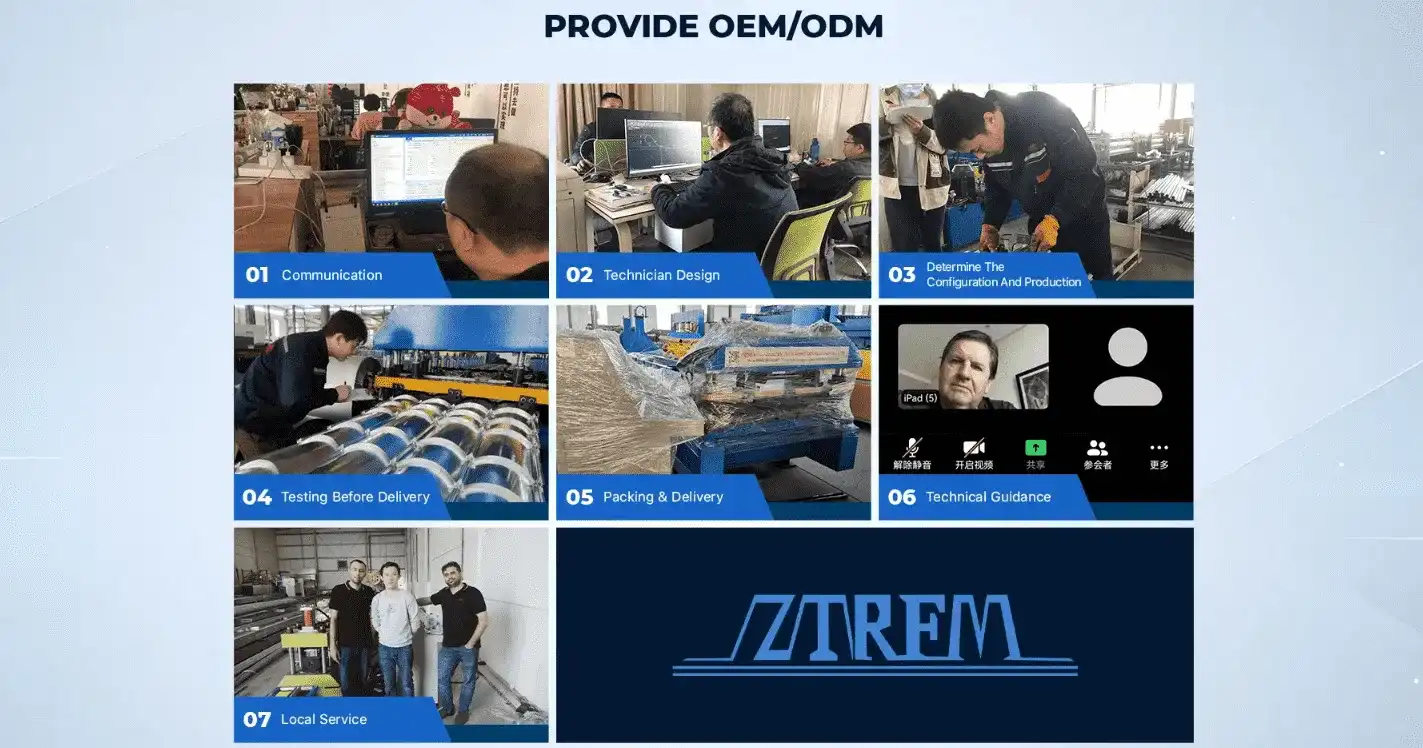
A: Physical installation typically requires 3-5 days, including equipment positioning, electrical connections, and hydraulic system setup. Commissioning and operator training add another 2-3 days for test runs and adjustment. Most manufacturers achieve production-ready status within one week of delivery. Complex installations with integrated automation or material handling systems may extend to two weeks. At ZTRFM, we provide on-site technical support during installation and can offer remote assistance for troubleshooting after commissioning.
Q3: What ongoing maintenance does trapezoidal roll forming equipment require?
A: Daily maintenance involves visual inspection and cleaning of rollers to remove any coating buildup. Weekly tasks include lubricating bearings and checking hydraulic fluid levels. Monthly schedules should verify chain tension on chain-drive models and inspect cutting blade condition. Annual maintenance requires detailed roller surface inspection, hydraulic seal replacement, and PLC backup verification. Properly maintained machines routinely operate 10-15 years before requiring major overhaul. We provide detailed maintenance schedules and can supply replacement parts to minimize downtime.
Partner With ZTRFM for Your Trapezoidal Sheet Roll Forming Machine Needs
Finding the right trapezoidal trapezoidal sheet roll forming machine sheet roll forming machine manufacturer makes the difference between a profitable investment and years of frustration. At ZTRFM, we've delivered equipment to manufacturers in over 150 countries since 2014, building our reputation on engineering excellence and responsive support. Our ISO9001 and CE-certified machines incorporate proven designs refined through thousands of installations.
We understand that choosing equipment represents a significant commitment. That's why we offer comprehensive consultation to match machine specifications to your production requirements, market demands, and growth plans. Contact our team at zhongtuorollforming@gmail.com to discuss your specific application. We'll provide detailed specifications, production samples, and ROI projections tailored to your business model.
References
1. Smith, J. M. (2019). Cold Roll Forming Technology: Principles and Applications in Metal Construction. Industrial Press Publishing.
2. Anderson, R. K. & Williams, P. T. (2021). "Performance Characteristics of Trapezoidal Metal Roofing Systems." Journal of Building Envelope Design, 15(3), 112-128.
3. Martinez, C. L. (2020). Manufacturing Equipment Selection for Metal Building Components. Construction Technology Institute.
4. Thompson, D. A. (2018). "Comparative Analysis of Metal Panel Forming Methods." International Journal of Manufacturing Engineering, 42(7), 89-104.
5. Zhang, H. & Peterson, M. (2022). Precision Metal Forming: Equipment Design and Process Optimization. Engineering Materials Press.
6. Roberts, S. E. (2023). "Economic Analysis of Automated Roll Forming Systems in Building Product Manufacturing." Industrial Production Quarterly, 28(1), 45-62.
_1750323743240.webp)