- English
- French
- German
- Portuguese
- Spanish
- Russian
- Japanese
- Korean
- Arabic
- Irish
- Greek
- Turkish
- Italian
- Danish
- Romanian
- Indonesian
- Czech
- Afrikaans
- Swedish
- Polish
- Basque
- Catalan
- Esperanto
- Hindi
- Lao
- Albanian
- Amharic
- Armenian
- Azerbaijani
- Belarusian
- Bengali
- Bosnian
- Bulgarian
- Cebuano
- Chichewa
- Corsican
- Croatian
- Dutch
- Estonian
- Filipino
- Finnish
- Frisian
- Galician
- Georgian
- Gujarati
- Haitian
- Hausa
- Hawaiian
- Hebrew
- Hmong
- Hungarian
- Icelandic
- Igbo
- Javanese
- Kannada
- Kazakh
- Khmer
- Kurdish
- Kyrgyz
- Latin
- Latvian
- Lithuanian
- Luxembou..
- Macedonian
- Malagasy
- Malay
- Malayalam
- Maltese
- Maori
- Marathi
- Mongolian
- Burmese
- Nepali
- Norwegian
- Pashto
- Persian
- Punjabi
- Serbian
- Sesotho
- Sinhala
- Slovak
- Slovenian
- Somali
- Samoan
- Scots Gaelic
- Shona
- Sindhi
- Sundanese
- Swahili
- Tajik
- Tamil
- Telugu
- Thai
- Ukrainian
- Urdu
- Uzbek
- Vietnamese
- Welsh
- Xhosa
- Yiddish
- Yoruba
- Zulu
How Solar Strut Channel Roll Forming Machines Improve PV Production Efficiency
The rise of solar energy has transformed how we produce electricity, but behind every photovoltaic installation lies a complex supply chain. Solar Strut Channel Roll Forming Machines have become essential tools for manufacturers looking to streamline production. These automated systems convert raw steel tubes into precision-formed structural channels used in solar mounting systems, dramatically increasing output speed while maintaining tight dimensional tolerances. By integrating decoiling, punching, forming, and cutting into a single continuous process, these machines reduce labor costs by up to 70% while ensuring consistent product quality across thousands of meters of production.
Understanding Solar Strut Channel Roll Forming Machines What These Machines Actually Do
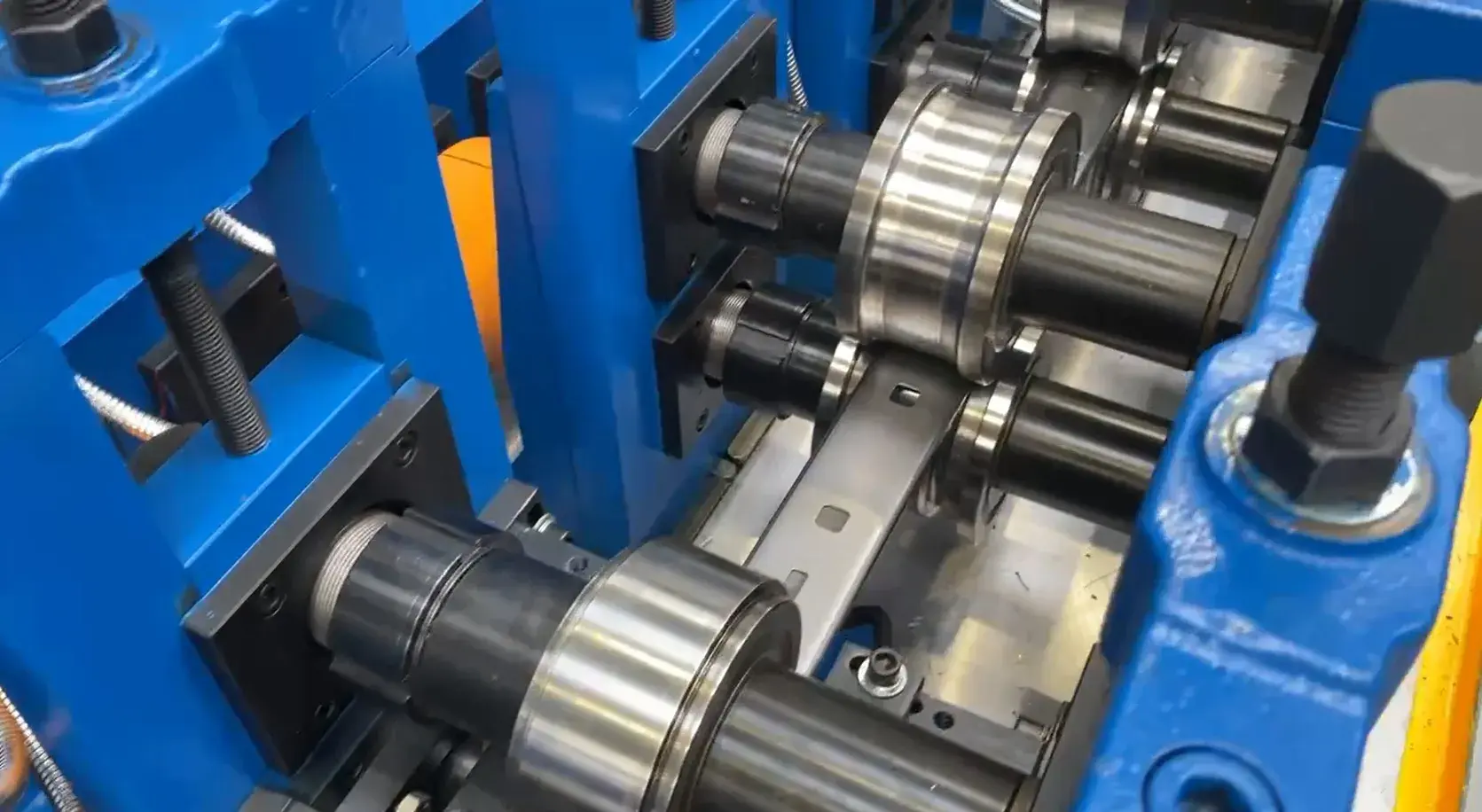
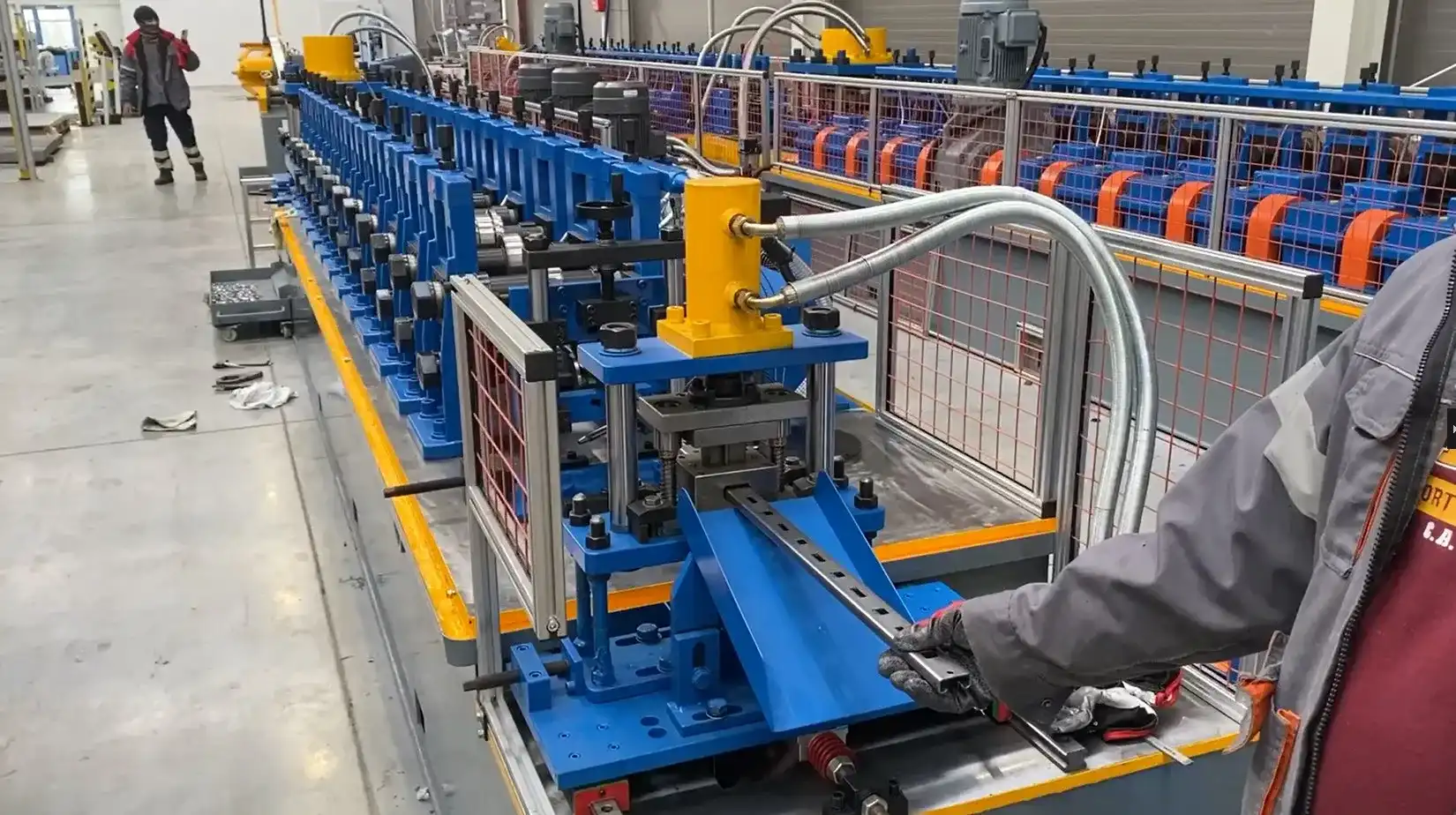
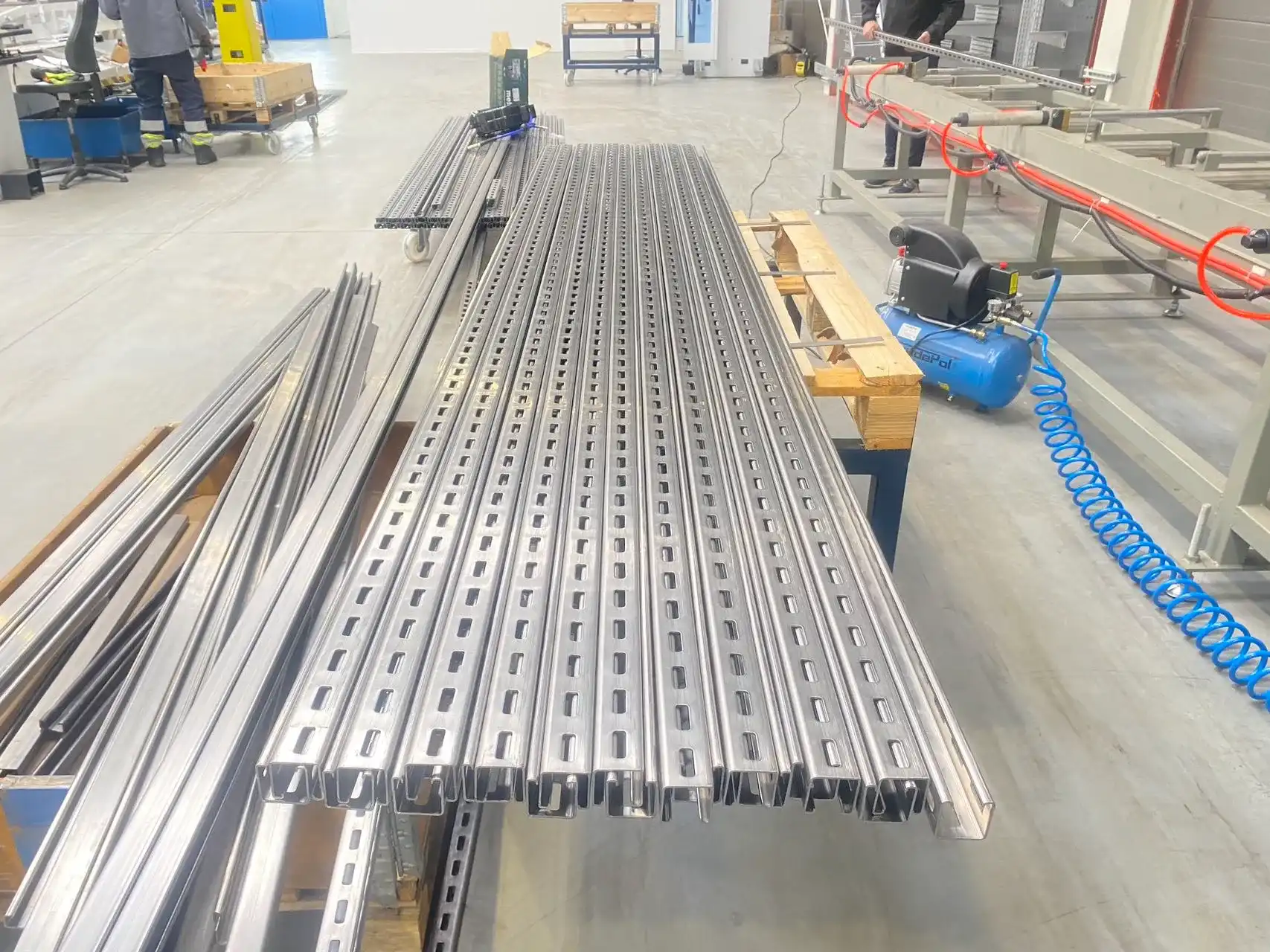
Basically, Solar Strut Channel Roll Forming Machine equipment automates the fabrication of metal profiles that serve as the structural backbone for PV installations. The process begins with a steel coil loaded onto an uncoiler, which feeds material through a leveling unit to remove any waviness or curvature. The steel then passes through a series of precisely engineered rollers—typically 24 forming stations—that gradually shape the flat material into the familiar C-channel or U-channel profile. Each roller set applies incremental bends, avoiding material stress that could compromise structural integrity. The ZTRFM solar mounting channel production line demonstrates this integrated approach effectively. With a 22 kW main motor driving the forming stations through a double-chain transmission system, the machine handles material thicknesses ranging from 1.5mm to 2.5mm. The 80mm diameter shafts, constructed from 45# forged steel, provide the rigidity needed to maintain forming precision even when processing high-tensile galvanized steel. The rollers themselves are made from GCR15 steel with chrome coating, which prevents scratching of pre-galvanized surfaces—a critical consideration since surface damage can compromise corrosion resistance over the 25-year lifespan expected from solar installations.
Key Components That Drive Performance
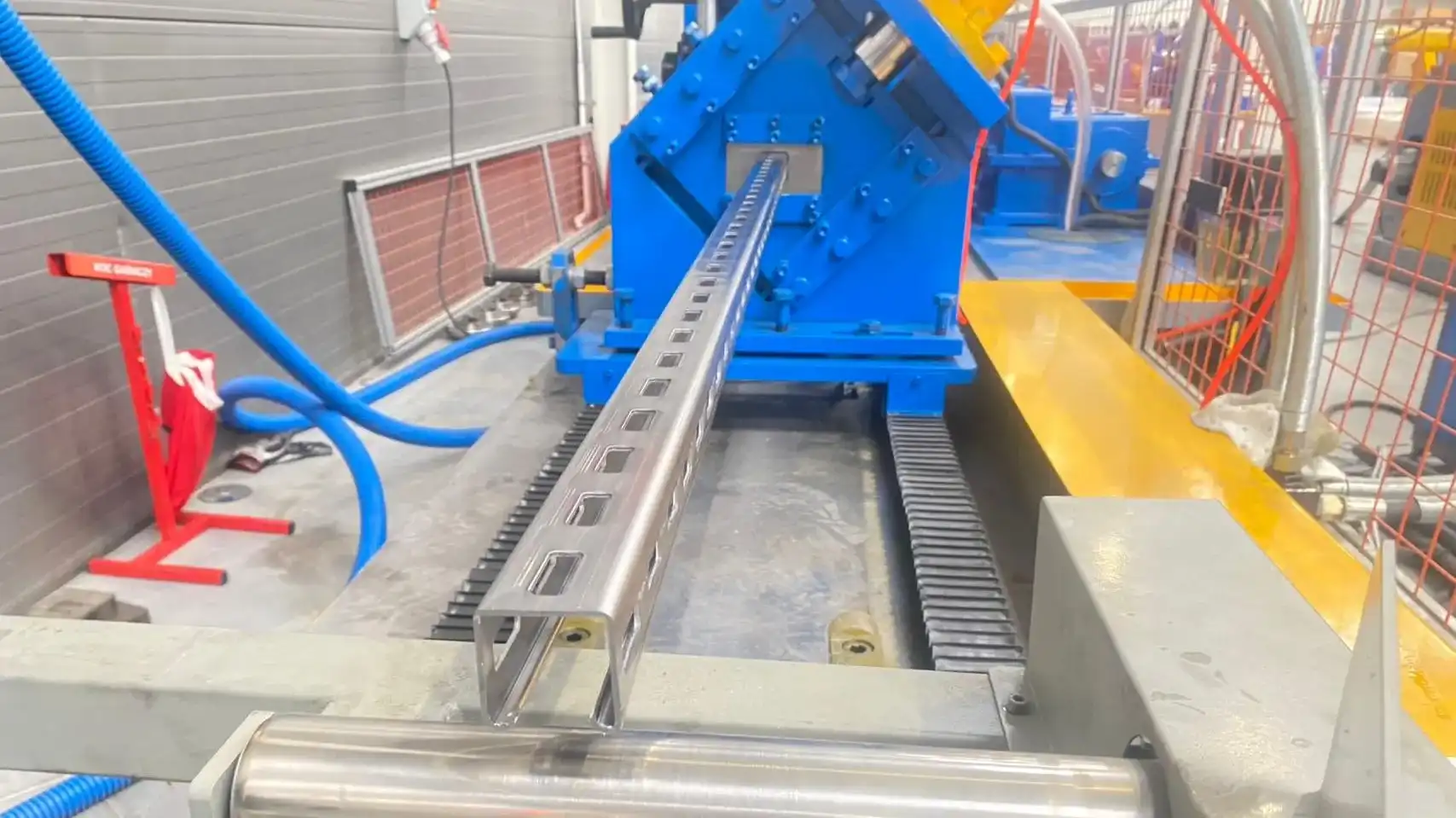
Three subsystems determine how effectively these machines improve production efficiency. The hydraulic punching station creates the elongated slots and mounting holes essential for solar racking assembly. Operating at 11 kW, the hydraulic system delivers consistent punching force across the material width, maintaining hole position accuracy within ±1.5mm. This precision matters enormously during installation; misaligned holes can delay field assembly by hours and increase labor costs significantly. In the forming section, raw material transforms into a finished profile. The 24-roller configuration allows for gradual bending that preserves material strength while achieving tight radius bends at the channel edges. Speed capabilities of 8 meters per minute might seem modest compared to simpler profiles, but strut channels require careful forming to prevent edge distortion or dimensional variation. The machine body, constructed from 25mm thick 45# steel, provides the structural stability necessary to maintain these tolerances across continuous production runs. Cutting precision has a direct effect on how much material is used. The hydraulic shearing system uses Cr12 mold steel blades with quenched treatment (58-62 HRC hardness), which maintain sharp cutting edges through thousands of cycles. Clean cuts reduce the need for secondary deburring operations and minimize scrap rates, contributing to overall cost efficiency.
Current Challenges in PV Strut Channel Production and How Roll Forming Machines Address Them
Speed Limitations in Traditional Manufacturing
Many solar mounting manufacturers still rely on press brakes, solar channel roll forming machines, or manual forming methods that create bottlenecks. A skilled operator using a press brake might produce 100-150 meters of strut channel per shift, requiring multiple setups for punching, forming, and cutting. Material handling between stations consumes significant time, and human variability introduces dimensional inconsistencies that complicate assembly. Automated Solar Strut Channel Roll Forming Machine systems eliminate these constraints through continuous processing. Material flows from coil to finished part without interruption, with the hydraulic punching integrated directly into the production sequence. The 8 m/min forming speed translates to approximately 480 meters per hour under normal operation. Even accounting for coil changes and minor adjustments, a single-shift operation can easily produce 3,000+ meters daily—representing a 20-fold increase over manual methods. This throughput improvement directly addresses the production capacity challenges faced by manufacturers trying to meet growing demand from utility-scale solar projects.
Material Waste and Quality Control Issues
Traditional fabrication methods generate substantial scrap through several mechanisms. Offline punching requires leaving unpunched lead and tail sections that become waste. Manual measuring and cutting introduce cumulative errors that result in out-of-spec parts requiring rework or disposal. Surface damage from repeated material handling reduces the effective yield of expensive galvanized or coated steel. Automated forming equipment addresses waste reduction through integrated processing and precision control. The PLC-controlled servo feeding system ensures that punching patterns begin and end at exact positions, minimizing unpunched material. Automatic length measurement and hydraulic cutting deliver consistent part lengths without the cumulative errors inherent in manual processes. The chrome-treated forming rollers protect surface coatings throughout the forming process, preserving the corrosion resistance that galvanized steel provides. These improvements typically reduce material waste from 8-12% down to 2-3%, generating substantial cost savings over high-volume production runs.
Comparing Solar Strut Channel Roll Forming Machines With Alternative Solutions
Roll Forming Versus Press Brake Fabrication
Press brakes remain common in job shops and small fabricators due to their versatility and lower initial investment. A quality press brake with appropriate tooling might cost $30,000-50,000, making it accessible for businesses with limited capital. However, the operational limitations become apparent in production environments. Each bend requires a separate setup, with the operator positioning material, activating the press, then repositioning for subsequent bends. Producing a strut channel cross-section typically requires four to six bends, meaning each part passes through the press multiple times. This repetitive handling slows production and introduces positioning errors. Skilled press brake operators become bottlenecks—their output defines production capacity, and their availability limits operational flexibility. The initial investment of a Solar Strut Channel Roll Forming Machine is higher, but it transforms the economic equation for volume production. The continuous forming process handles all bends simultaneously as material passes through the roller stations. Once setup is complete, the machine produces consistent parts at predictable speeds without requiring constant operator intervention. The crossover point typically occurs around 200,000-300,000 linear meters annually; beyond this volume, roll forming delivers lower per-meter costs even after factoring in equipment amortization. Speed differences prove dramatic in real-world conditions. Where press brake production might average 2-3 meters per minute, accounting for material handling, roll forming sustains 8 meters per minute throughout the shift. This 3-4x speed advantage compounds across multiple shifts and weeks of production, enabling manufacturers to fulfill large contracts that would be impractical using press brake methods.
Manual Systems Versus Automated Production Lines
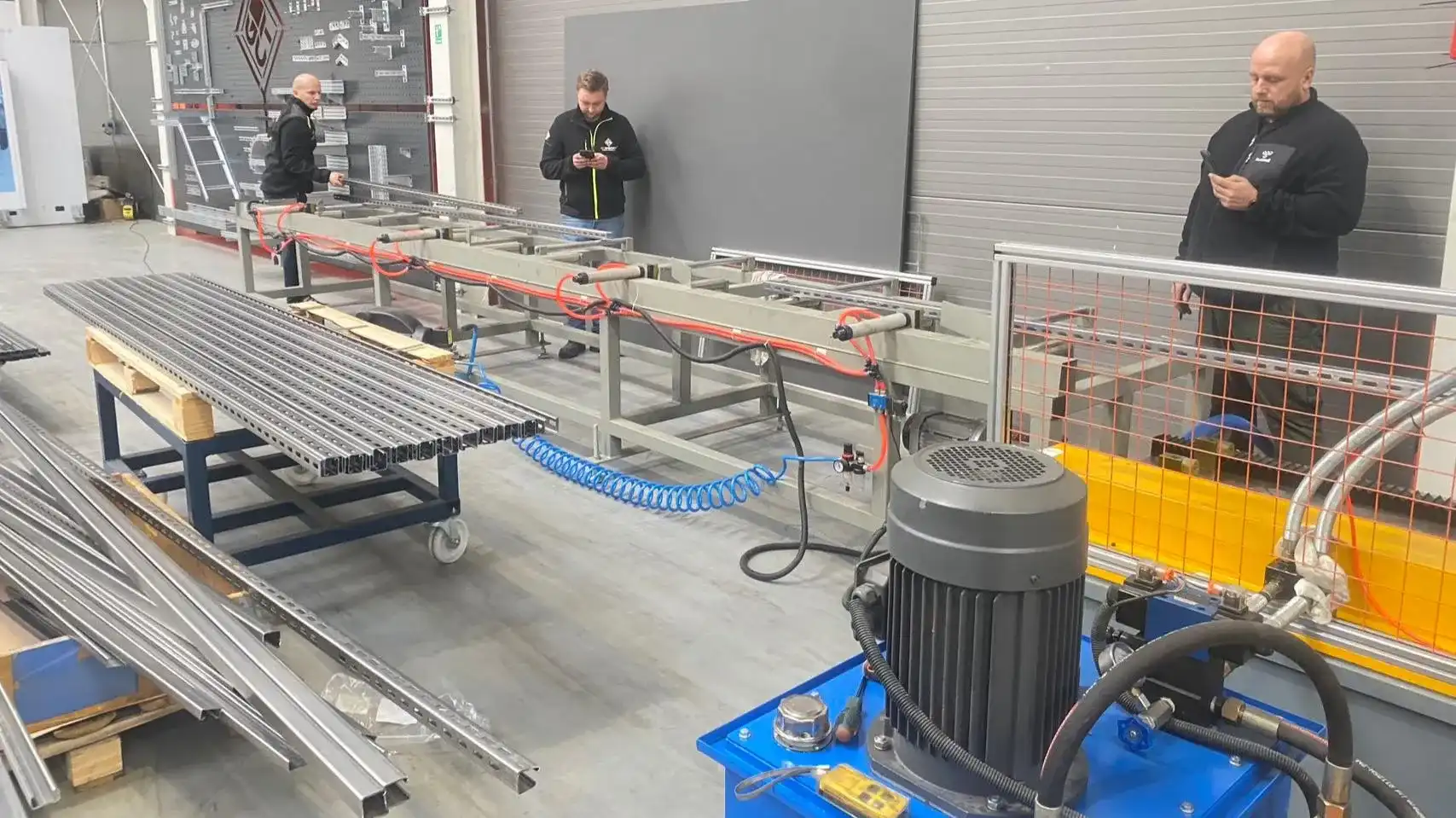
Some manufacturers employ semi-automated approaches with standalone punching machines, manual forming equipment, and separate cutting stations. This approach offers flexibility and requires modest investment, but operational inefficiencies accumulate quickly. Material must be transported between stations, creating handling damage risks and requiring floor space for work-in-progress inventory. Quality control becomes challenging since each station operates independently without integrated measurement systems. Fully automated roll forming lines integrate all operations under unified control. The PLC system coordinates punching, forming, and cutting to ensure that dimensional specifications are maintained throughout production. Automatic length measurement eliminates manual measuring errors, while integrated stacking systems organize finished parts for efficient shipping and handling. This operational integration reduces floor space requirements by 40-50% compared to distributed workstations while simultaneously improving product consistency. The automation advantage extends beyond immediate production efficiency. Maintenance requirements decrease substantially when a single production line replaces multiple standalone machines. Spare parts inventory becomes simpler, and technician training focuses on one integrated system rather than multiple equipment types. These operational simplifications, the Solar channel roll forming machine, reduce long-term ownership costs and improve equipment reliability.
Maintenance, Longevity, and Operational Best Practices
Routine Maintenance Tasks That Prevent Downtime
Regular lubrication of Solar Strut Channel Roll Forming Machine tools is the most critical maintenance activity. The 24 forming rollers rotate continuously during operation, with each bearing assembly requiring proper lubrication to prevent premature wear. Daily inspection of lubrication points takes approximately 15-20 minutes but prevents bearing failures that could require days of downtime and expensive repairs. The roller bearings should be inspected for unusual noise or heat, which often signals insufficient lubrication or contamination. The chain transmission system requires monthly tension checks and lubrication application. Chains that become too loose can skip teeth during operation, potentially damaging gears and causing dimensional variations in formed parts. Conversely, excessive tension accelerates wear on both chains and drive sprockets. Maintaining proper tension extends chain life from 18-24 months to 3-4 years, reducing replacement costs and avoiding production interruptions. Hydraulic system maintenance focuses on fluid cleanliness and seal condition. The 11 kW hydraulic station should undergo fluid analysis every six months to check for contamination and degradation. Dirty hydraulic fluid accelerates wear on pump components and valve assemblies, reducing punching precision and increasing failure risk. Replacing filters at recommended intervals—typically every 1,000-1,500 operating hours—maintains fluid cleanliness and protects system components. Inspecting hydraulic seals monthly helps identify leaks before they cause fluid loss or pressure drops that affect punching force consistency.
Quality Component Choices That Extend Equipment Life
The materials used in critical machine components directly influence operational longevity. The ZTRFM equipment specifies GCR15 steel rollers with chrome treatment. These rollers are very resistant to wear and protect the surface of formed materials. Lower-cost machines might use standard steel rollers without surface treatment, but these wear rapidly when processing galvanized or coated materials, requiring replacement every 12-18 months. The chrome-treated rollers typically operate for 5-7 years before requiring refurbishment, reducing long-term maintenance costs substantially. Cutting blade material and heat treatment determine cutting quality and blade life. The Cr12 mold steel blades with quenched treatment (58-62 HRC) maintain cutting edges through approximately 800,000-1,000,000 cuts when processing 2.0mm galvanized steel. Softer blade materials might require sharpening or replacement every 200,000-300,000 cycles, creating frequent production interruptions. The initial cost premium for high-quality blades—typically 40-50% higher than standard tooling—pays back through extended service life and superior cut quality that eliminates secondary deburring operations. Machine frame rigidity affects both forming precision and long-term structural integrity. The ZTRFM machine body, constructed from 25mm thick 45# steel, provides the structural stability necessary to maintain these tolerances across continuous production runs. Lighter frame construction might save initial manufacturing costs, but it leads to dimensional drift as the structure fatigues over time. Manufacturers planning multi-shift operations or extended production campaigns should prioritize robust frame construction that maintains precision across years of continuous operation.
Procurement Insights: How to Source the Best Solar Strut Channel Roll Forming Machine
Supplier Reliability and Certification Standards
Equipment procurement represents a substantial capital investment that affects operational capabilities for years. Supplier selection should begin with verification of manufacturing certifications and quality management systems. ISO 9001 certification indicates systematic quality control processes that reduce equipment defects and ensure consistent manufacturing standards. CE certification demonstrates compliance with European safety standards, which provide valuable guidance even for equipment operating outside Europe. Manufacturing experience in the specific application—solar mounting component production—matters enormously. Suppliers serving multiple industries might offer technically competent Solar Strut Channel Roll Forming Machines equipment that nevertheless lacks features critical for PV component manufacturing. ZTRFM's focus on Solar Strut Channel Roll Forming Machine technology since 2014 has enabled the development of specialized capabilities like the chrome-treated rollers that protect galvanized surfaces and integrated punching systems optimized for solar mounting hole patterns. This application-specific experience translates to equipment that performs reliably in actual production environments rather than just meeting general specifications. Global delivery experience provides assurance that suppliers understand international logistics, documentation requirements, and technical support across different regions. Companies with equipment operating in 150+ countries have proven their ability to handle export procedures, voltage conversions, and compliance with diverse national standards. This international presence also suggests an established parts supply chain that can deliver replacement components to remote locations within reasonable timeframes.
Technical Specification Evaluation
Published specifications provide the starting point for equipment comparison, but understanding the practical implications of those specifications requires careful analysis. The 1.5-2.5mm material thickness range accommodates most solar mounting applications, but manufacturers processing specialized high-strength steels might require equipment rated for 3.0mm material. The 90-230mm feeding width flexibility allows production of various channel sizes without equipment changes, providing operational versatility that supports diverse customer requirements. Motor power specifications indicate the equipment's capability to handle demanding applications. The 22 kW main motor provides sufficient torque for forming thick, high-tensile materials without speed reduction or quality compromise. Underpowered equipment might meet specifications with thin material but struggle when processing 2.5mm galvanized steel, leading to reduced speed or dimensional inconsistencies. Similarly, the 11 kW hydraulic station ensures consistent punching force across the material width, preventing the incomplete holes or deformed edges that can occur with insufficient hydraulic capacity. Tolerance specifications directly affect product quality and assembly compatibility. The ±1.5mm tolerance provided by the ZTRFM equipment meets requirements for most solar mounting applications, where field installation allows minor dimensional adjustments. Manufacturers supplying premium markets or specialized applications might require tighter tolerances of ±0.5mm, which typically necessitates additional roller stations and more sophisticated control systems. Understanding customer requirements helps match equipment capabilities to actual application demands without over-specifying—and over-paying for—unnecessary precision.
Conclusion
Solar Strut Channel Roll Forming Machines have become indispensable for manufacturers seeking a competitive advantage in the rapidly expanding photovoltaic industry. The integration of decoiling, punching, forming, and cutting into continuous automated processes delivers efficiency gains that manual methods simply cannot match. Equipment selection requires careful evaluation of technical specifications, supplier credentials, and long-term support capabilities to ensure that initial investment translates into years of reliable production. As solar installations continue growing globally, manufacturers equipped with advanced forming technology will capture the opportunities that this expanding market provides.
FAQ
1. Why choose automated roll forming over press brake fabrication for solar strut channels?
With automated Solar Strut Channel Roll Forming Machine systems, production speed can be 3-4 times faster than press brake operations while maintaining superior dimensional consistency. The continuous forming process eliminates material handling between operations, reducing labor requirements and minimizing surface damage to protective coatings. Volume manufacturers processing 200,000+ linear meters annually achieve substantially lower per-unit costs through automation despite higher initial equipment investment.
2. What maintenance practices prevent unexpected downtime?
Daily lubrication of roller bearings and monthly chain tension checks prevent the majority of mechanical failures. The punching system performs reliably as long as the hydraulic fluid is checked every six months and filters are replaced every 1,000-1,500 operating hours. Operator training covering routine maintenance and quality inspection enables proactive issue identification before problems affect production output.
3. Can one machine produce multiple strut channel sizes?
Modern equipment accommodates profile variations through roller changes or adjustment mechanisms. The ZTRFM system handles feeding widths from 90mm to 230mm, supporting common solar mounting channel dimensions. Changeover between profiles typically requires 30-60 minutes, allowing manufacturers to serve diverse customer specifications without maintaining separate production lines for each profile type.
Partner With a Trusted Solar Strut Channel Roll Forming Machine Manufacturer
ZTRFM specializes in delivering precision-engineered Solar Strut Channel Roll Forming Machine equipment backed by ISO 9001 and CE certifications that guarantee quality and reliability. Our solar channel production machines integrate hydraulic punching, automated forming, and precision cutting into streamlined systems designed for high-volume PV component manufacturing. With equipment operating across 150+ countries and comprehensive technical support, including on-site installation and training, we help solar mounting manufacturers worldwide improve production efficiency and product consistency. Contact our engineering team at zhongtuorollforming@gmail.com for detailed technical specifications and customized equipment solutions that match your specific production requirements and operational goals.
References
1. Zhang, W., & Chen, L. (2022). Advanced Metal Forming Technologies for Renewable Energy Infrastructure. Journal of Manufacturing Processes, 78, 234-247.
2. Industrial Fasteners Institute. (2021). Structural Channel Systems: Design and Manufacturing Standards for Solar Applications. Cleveland: IFI Technical Publications.
3. Roberts, M. (2023). Roll Forming Process Optimization for High-Volume Production. International Journal of Production Engineering, 45(3), 412-428.
4. Solar Energy Industries Association. (2023). U.S. Solar Market Insight: Component Manufacturing and Supply Chain Analysis. Washington: SEIA Research Division.
5. Thompson, J., & Martinez, R. (2022). Comparative Analysis of Metal Forming Methods for Structural Components. Manufacturing Technology Today, 19(2), 56-71.
6. European Committee for Standardization. (2021). Cold-Formed Steel Structural Components: Quality Requirements and Testing Methods. Brussels: CEN Technical Report 15-2021.
_1750323743240.webp)