- English
- French
- German
- Portuguese
- Spanish
- Russian
- Japanese
- Korean
- Arabic
- Irish
- Greek
- Turkish
- Italian
- Danish
- Romanian
- Indonesian
- Czech
- Afrikaans
- Swedish
- Polish
- Basque
- Catalan
- Esperanto
- Hindi
- Lao
- Albanian
- Amharic
- Armenian
- Azerbaijani
- Belarusian
- Bengali
- Bosnian
- Bulgarian
- Cebuano
- Chichewa
- Corsican
- Croatian
- Dutch
- Estonian
- Filipino
- Finnish
- Frisian
- Galician
- Georgian
- Gujarati
- Haitian
- Hausa
- Hawaiian
- Hebrew
- Hmong
- Hungarian
- Icelandic
- Igbo
- Javanese
- Kannada
- Kazakh
- Khmer
- Kurdish
- Kyrgyz
- Latin
- Latvian
- Lithuanian
- Luxembou..
- Macedonian
- Malagasy
- Malay
- Malayalam
- Maltese
- Maori
- Marathi
- Mongolian
- Burmese
- Nepali
- Norwegian
- Pashto
- Persian
- Punjabi
- Serbian
- Sesotho
- Sinhala
- Slovak
- Slovenian
- Somali
- Samoan
- Scots Gaelic
- Shona
- Sindhi
- Sundanese
- Swahili
- Tajik
- Tamil
- Telugu
- Thai
- Ukrainian
- Urdu
- Uzbek
- Vietnamese
- Welsh
- Xhosa
- Yiddish
- Yoruba
- Zulu
What Is a Trapezoidal Sheet Roll Forming Machine and How Does It Work?
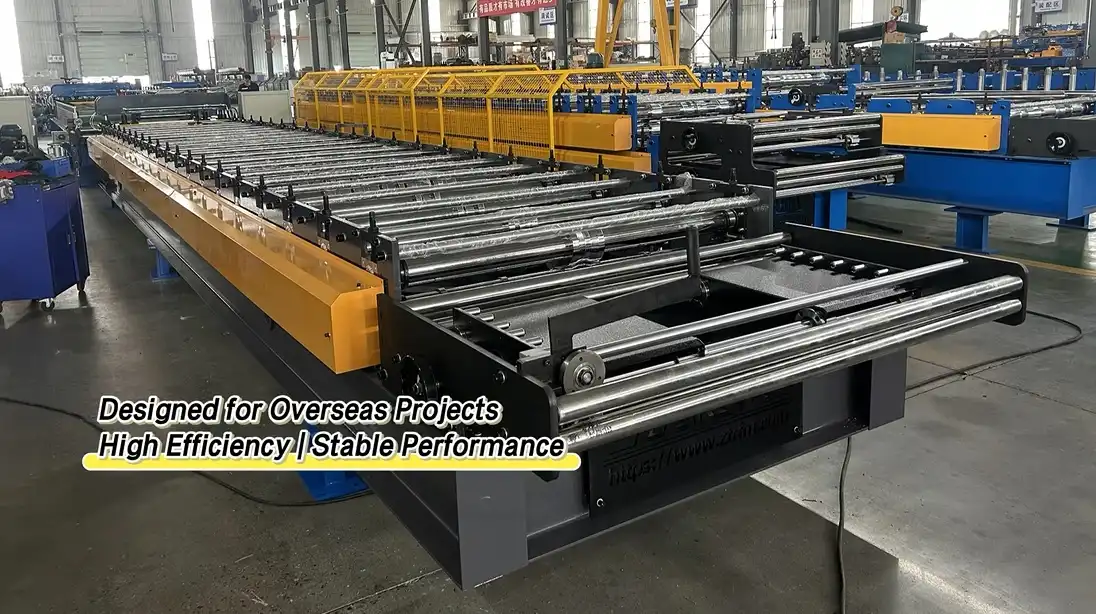
A trapezoidal sheet roll forming machine transforms galvanised steel, pre-painted galvanised iron (PPGI), or aluminium into high-strength trapezoidal roofing and wall panels. This machine moves raw materials via 18–26 successive roller stations using continuous cold-forming. The metal is gradually shaped without altering its thickness. These panels answer significant modern construction challenges by being robust, water-shedding, and precise, even when mass-produced.
Introduction
From pre-engineered structures to storefronts, trapezoidal metal sheets are needed for industrial construction projects worldwide. Roofing system, light steel structure, and metal profile builders across the US must make large equipment selections to make these panels. Knowing how these tools function and what distinguishes high-performance versions from regular equipment will affect your product quality, long-term profitability, and production efficiency. This paper covers technological principles, how things function, and strategy decision elements for purchasing teams and manufacturing executives considering facility alternatives.
Understanding the Trapezoidal Sheet Roll Forming Machine
Core Components and Design Architecture
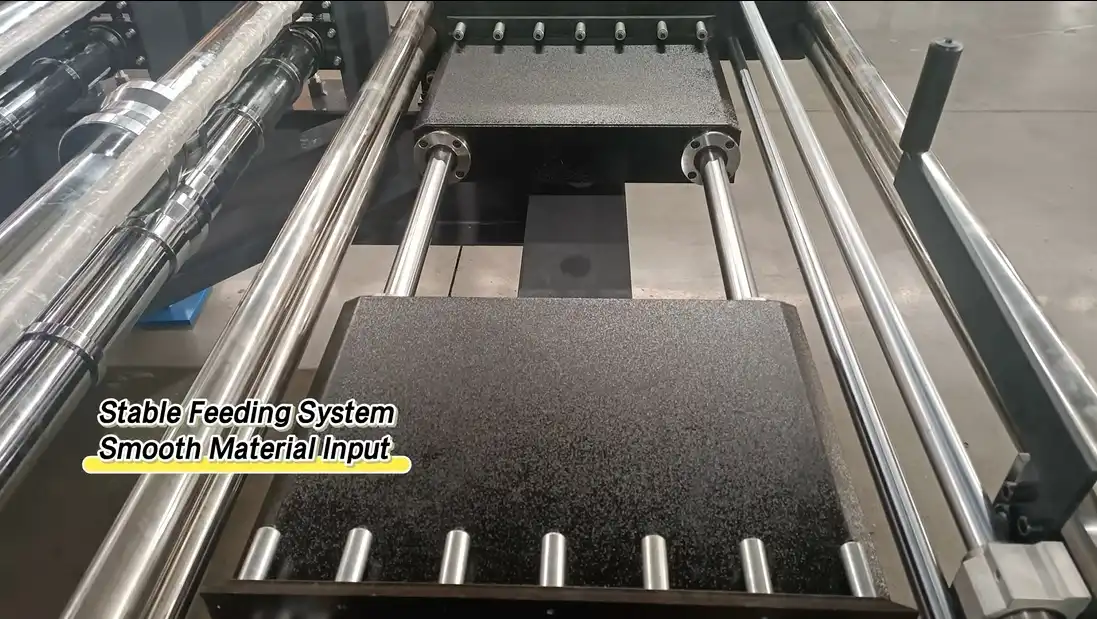
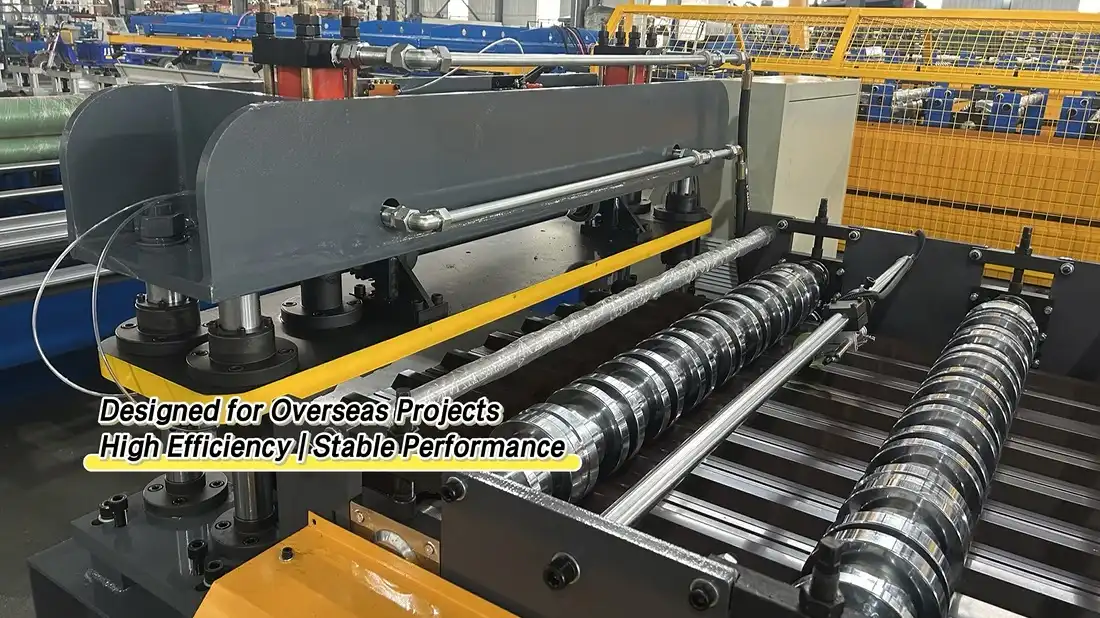
The trapezoidal form system has multiple completely coordinated sections. Vacuum heat hardens 45# high-grade steel forming rollers to HRC 58–62. Hard chrome plating makes them stronger and smoother. The robust steel rods that hold these rollers are 70mm to 90mm in diameter and designed not to bend under continual working stresses.
Modern machine body frames are composed of 350 H steel for stability throughout quick manufacturing cycles. The uncoiling mechanism feeds raw material into the machine under regulated tension, and accurate levelling rollers remove inherent tensions before shaping. Using CR12MoV blades in hydraulic cutting systems results in clean, burr-free sides with ±1mm cutting tolerances. This guarantees all completed panels satisfy standards.
Technical Specifications and Customisation Range
Different tools can manufacture different objects, but most trapezoidal sheet roll forming machines can operate with 0.3 mm–1.0 mm thick, 1000 mm–1250 mm wide materials. With customised settings, advanced machines can create flashings longer than 20 feet 11 inches and panels from 3 to 20 feet. PPGI, galvanised steel, and aluminium substrates can be used, and certain techniques can handle G550 yield strengths.
Industry Applications Across Manufacturing Sectors
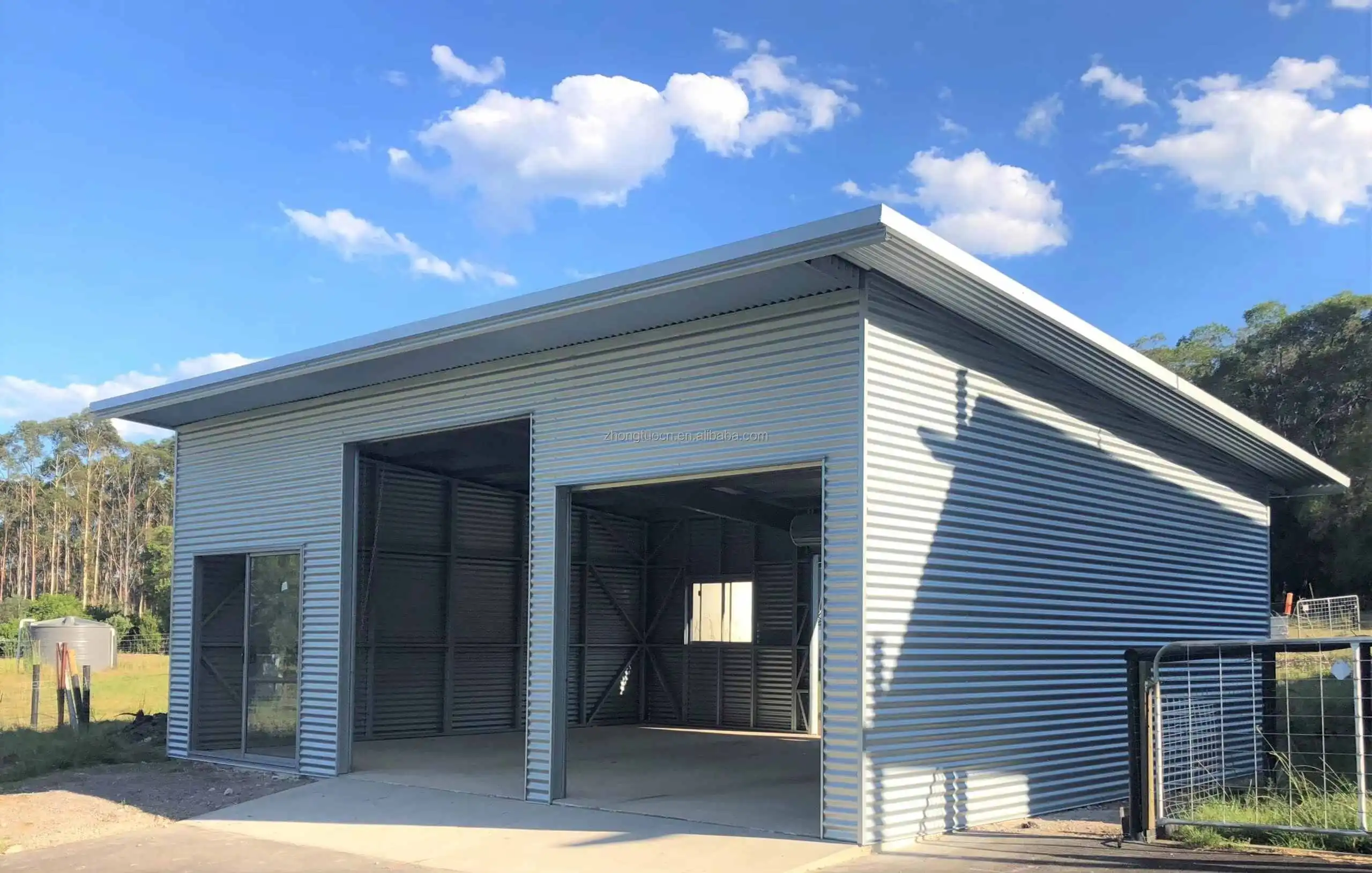
Pre-engineered building roofs are made of trapezoidal sheets. Inertia from the geometric profile allows sheets to cover great distances between support structures. The classic inverted box rib design makes these forms robust while using resources effectively. These technologies create precise side-lap shapes for coastal dwellings. They manufacture leak-proof roofing systems for rainy areas where salt spray and dampness are constants.
Trapezoidal siding looks excellent and lasts long; therefore, more commercial buildings are using it. The right equipment setup produces consistent linearity and scratch-free shaping, which leads to modern building finishes and wind-load resistance. The high-quality work these machines generate in all worldwide placements impresses international engineering and EPC organisations.
How Does a Trapezoidal Sheet Roll Forming Machine Work?
Material Feeding and Preparation Stage
Production begins when the decoiler receives metal coil stock. The decoiler controls back-tension during production. Levelling rollers remove coil set and internal pressures from storage and shipment as the material travels ahead. The next phases of shaping on the trapezoidal sheet roll-forming machine worsen any waviness or slope in the raw material; therefore, this preparatory step is crucial for achieving the correct-sized output.
PLC-based control systems track material progress and synchronise feed rates with downstream operations using accurate stepper motors. Modern setups use automated width adjustment devices to deal with various materials without manual changes for lengthy durations. If materials are lined up correctly early on, edge waviness and profile distortion that reduce panel quality can be prevented.
Progressive Roll Forming Process
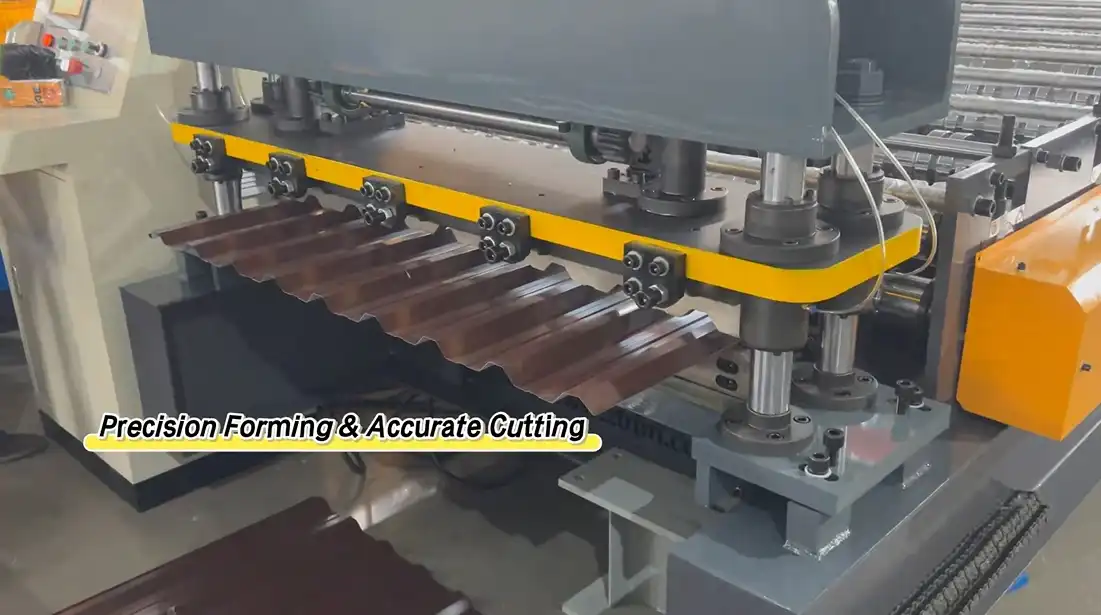
Each pair of roller stations bends the metal into a trapezoidal form. The profile is produced this way. Unlike pressing or press brake operations, cold-forming employs moderate deformation to preserve material integrity and surface smoothness. Roller stations—usually 26 in high-performance setups—impact the capacity of the trapezoidal sheet roll forming machine to generate intricate profiles and maintain geometric tolerances.
Cutting, Quality Control, and Stacking
After leaving the last roller station, the completed panels go to the hydraulic cutting system, where air or servo-controlled shears cut them to length. Cutting at 60 metres per minute and with tolerances of less than one millimetre, the cutting equipment is fast and precise. This precision eliminates additional cutting, saving time, money, and resources.
Profile measurements are regularly verified utilising laser measuring devices or mechanical gauges in modern systems for quality assurance. Any violation of limits triggers automatic or human alarms that stop panel manufacture. Runout tables or automated stacking systems arrange finished panels for fast packing and shipping.
Automation Integration and Production Efficiency
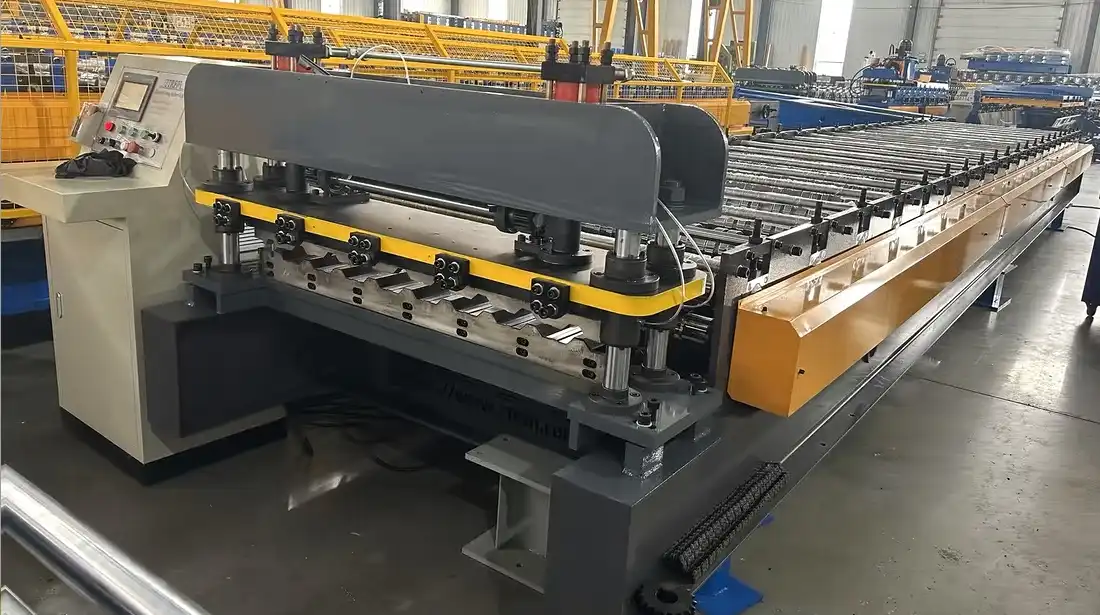
Workers can adjust panel length, quantity, forming speed, and cutting procedures using PLC control systems' touchscreen displays. Recipe management systems with profile type setup data make switching production runs fast. This automated function helps companies make several goods quickly to meet consumer demands.
Upstream coil handling equipment and downstream packaging systems work together to ease production and reduce human material handling. Automatic quality checking devices employ machine vision to increase uniformity and reduce manpower at some sites. These technical advances benefit small metal product producers and firms that seek to compete despite limited resources and labour.
Key Benefits of Using Trapezoidal Sheet Roll Forming Machines
Production Efficiency and Throughput Capabilities
Current roll forming tools are great for high-speed operations. Machines that can manufacture trapezoidal sheet roll forming machines at 60 m/min are faster than other methods. Higher daily output capacity allows producers to satisfy greater orders in less time due to quicker manufacturing rates. Continuous forming eliminates press brake batch constraints due to setup time and cycle duration.
Strong gearbox transfer systems prevent system instability over lengthy manufacturing runs. High-quality cast iron components and building procedures prevent mechanical vibrations that might impact dimensions and surface quality. Building roofing system manufacturers have worried about equipment stability, and this operating dependability answers those issues. In busy building seasons, manufacturers can't afford downtime.
Cost Optimisation Through Reduced Waste and Labour
Roll forming uses materials more efficiently than rival procedures by a lot. The continual forming process wastes just the leader and trailer portions at coil changes. This economy is even more significant when working with expensive materials like architectural-grade pre-painted steel or aluminium alloys, where raw materials are a major cost.
Modern manufacturing lines are automated, reducing labour expenses. Usually, one experienced individual can monitor the PLC interface and control material flow for the whole production system. This hiring efficiency contrasts with traditional manufacturing, which requires multiple workers to carry supplies, set up machinery, and verify quality. Tiny firms benefit most from labour productivity since they can produce more without worrying about a tiny team.
Quality, Consistency, and Product Durability
Matching roller sets for precise shaping provide extraordinary geometric stability over huge production quantities. Well-maintained equipment produces panels with uniform rib height, bottom width, and effective cover width. This dimensional stability makes installation easier and ensures robust structural performance in finished structures.
The cold-forming technique strengthens the material by work hardening, making the panels stiffer than coil stock. The trapezoidal sheet roll forming machine produces these panels, and the innate geometric benefits of trapezoidal forms and their excellent strength-to-weight ratios make this structural panel design require fewer support pieces. Lower building costs benefit the end customer beyond the manufacturing site.
Surface finish preservation is another qualitative feature. Hard chrome-plated rollers prevent pre-applied paint systems and protective layers from abrasion. This finish quality is crucial for construction purposes, where appearance impacts product and project selection.
How to Choose the Right Trapezoidal Sheet Roll Forming Machine for Your Business?
Assessing Production Requirements and Capacity Needs
Matching equipment capabilities to production demands is the first step to prudent buying. Light steel structure manufacturers can utilise quick-adjustment roller systems to swap profiles between C-purlins and trapezoidal panels. However, roofing sheet producers may prioritise forming speed above swapping flexibility. The proper level of automation is determined by your usual order patterns, such as extended runs of the same profiles or many specification revisions.
Comparing Equipment Options and Brand Considerations
Procurement teams must pick between fundamental shaping tools that can't be updated and current systems that can. The overall cost of ownership exceeds the MSRP, yet budget frequently influences these selections. Even though they cost less to acquire, machines that require a lot of maintenance, have worn rollers, or generate a lot of scrap cost more over time.
Well-known manufacturers with goods in several workplaces may be trusted for long-term success. ISO9001, CE, and CAS-licensed companies demonstrate quality management and compliance. For international engineering businesses that utilise standard tools, this is crucial. In addition to technical parameters, reference installations and user evaluations can reveal how something performs in real life.
Evaluating Supplier Support and Service Infrastructure
Full after-sales services enhance operational performance, especially for organisations with few professionals. Installation support, operator training, and professional assistance ensure equipment functionality and integration. Startup owners benefit most from complete training in basic maintenance and troubleshooting.
Parts supply and servicing speed are crucial when manufacturing is halted. When parts need to be changed, vendors with big supplies and speedy shipment can save downtime. Global service networks with regional technical representatives react faster than remote producers without local help. For firms with several shifts or fast order turnaround, service abilities may be more crucial than equipment requirements.
Customisation lets you satisfy the demands of speciality usage or non-standard materials. OEM and ODM can provide customised solutions that stock equipment can't. Metal structure firms that develop their own profiles require a trapezoidal sheet roll forming machine vendor that can build bespoke roller sets to their specifications. This design incorporates control systems, material-moving setups, and production-line equipment connections.
Maintenance and Troubleshooting Guide for Optimal Machine Performance
Routine Maintenance Protocols and Schedules
Systematic repair techniques for the trapezoidal sheet roll forming machine contribute to tool longevity and output quality. Look for material growth or surface damage on roller surfaces during daily operating checks. Oil all bearing points and check the hydraulic system pressure. These brief inspections detect issues before they halt production.
Weekly maintenance lets you focus on key worn components. Using precise measurement equipment to confirm roller position ensures proper panel dimensions. Cutting blade checking detects dulling that affects edge quality, so blades may be rotated or changed regularly instead of in an emergency. Checking hydraulic fluid regularly is vital because dirty or low fluid reduces system performance and wears out parts faster.
Common Issues and Practical Solutions
Uneven rollers, worn bearings, or insufficient material strain during feeding can cause profile measurements to differ. Measure panels often during manufacturing cycles to find issues before they grow. Symptoms may need roller adjustments, bearing replacement, or decoiler tension recalibration.
Companies that employ pre-painted construction materials struggle with final panel surface marking. Dirty roller surfaces, insufficient greasing, or too-fast creating speeds cause these flaws. Cleaning the rollers with the right chemicals, using the right lubricants, and slowing production usually fixes surface quality issues. Rollers may need repair or resurfacing if issues persist.
As cutting accuracy decreases, panel lengths stray more from plan. Blade dullness is the main cause; however, encoder calibration slips and PLC programming errors can also occur. Regular blade maintenance and cut length comparisons ensure cutting precision. A specialist may be needed to diagnose and control system issues for extensive repair.
Maximising Equipment Service Life
The trapezoidal sheet roll forming machine manufacturer recommends using original replacement parts to maintain performance and prevent premature failure. When you buy aftermarket parts that look cheaper, they often employ lower-quality materials or less exact production standards, which makes them last less and break down more often.
Putting money into operator training programmes pays off big time because they cut down on user mistakes and make it easier to fix problems. Well-trained personnel can recognise problems quickly, make modifications, and avoid activities that wear out parts more quickly. This human aspect typically distinguishes firms with long-lasting equipment from those with regular issues, even with the same machines.
Upgrading systems and installing retrofit kits can extend the life of ageing equipment and incorporate new technology. Updating a PLC processor gives it more features and makes it easier to connect to current production management systems. Replace servo motors for more precise tracking and energy savings. These planned modifications allow mechanically sound equipment to continue operating.
Conclusion
Because they can produce metal quickly, consistently, and efficiently, trapezoidal sheet roll forming machines are highly valuable to manufacturers in the building, industrial, and artistic metal industries. If procurement teams comprehend the technological principles, operational mechanics, and strategy selection criteria in this book, they can make sensible investment decisions that help the business succeed.
Advanced industrial machinery requires careful consideration of production demands, supplier expertise, and long-term support infrastructure. In challenging factories where quality and efficiency immediately affect earnings, companies that prioritise machine stability, exact shaping, and simple access to all services may stay ahead of the competition.
FAQ
1. What materials can trapezoidal sheet roll forming machines process effectively?
These trapezoidal sheet roll-forming machines can normally deal with 0.3–1 mm thick galvanised steel (GI), pre-painted galvanised iron (PPGI), and aluminium substrates. It may be used for building and ornamentation with G550 grade steel yield strengths up to 550 MPa. Custom designs can accommodate 1.2 mm thick panels for heavy-duty usage. Matching roller stiffness and motor power to material specifications is the most crucial factor to avoid premature wear or insufficient forming pressure.
2. How long does installation and commissioning typically require?
It takes 5–10 working days to install new equipment, depending on site preparation, integration difficulty, and operator training. Turnkey setups, including foundation construction, electrical hookups, and training, prolong this timeframe. Manufacturers should check floor space, electrical source (typically 380V, 50Hz, 3-phase), and lifting equipment before installation. Preparation before installation helps maintain the schedule and launch smoothly.
3. Can machines be customised for specific profile requirements?
Industry-specific manufacturing demands are met by several customisation options. The number of roller stations, shaft thickness, machine width, and forming speed may be adjusted to suit varied demands. Custom roller sets allow non-rectangular profile forms. Changing the PLC code might suit various manufacturing or quality control procedures. Reputable manufacturers provide OEM and ODM services to build unique solutions for corporate goals and product needs.
Partner With ZTRFM for Advanced Roll Forming Solutions
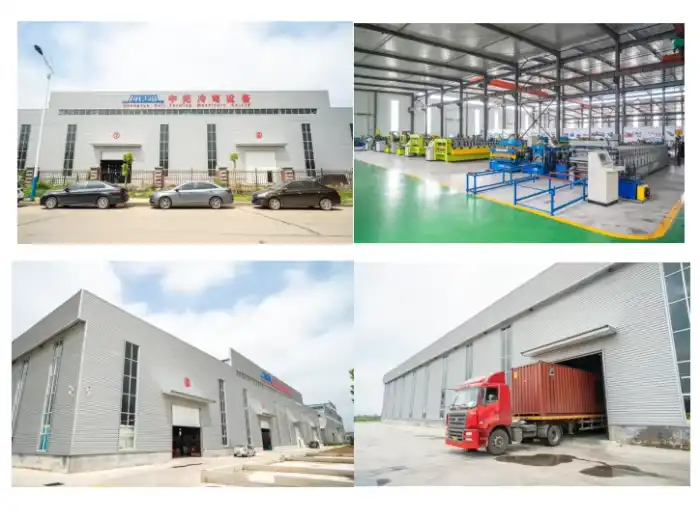
We at Cangzhou Zhongtuo (ZTRFM) believe that choosing the correct trapezoidal sheet roll forming machine is a long-term investment that will impact your competitiveness. Since 2014, we've developed and made reliable, fast-acting cold roll forming equipment. Our engineering team works with clients to design systems that meet their specific needs, whether you're a roofing system manufacturer that needs high-speed output or a new business that needs flexible, easy-to-maintain equipment.
We provide OEM, ODM, and turnkey installations. From raw materials to finished tools and part support, we provide it all. ISO9001, CE, and CAS certifications demonstrate our commitment to global standards. We apply established knowledge to every work, big or small. Over 150 nations have successfully employed our equipment.
Contact our skilled application engineers at zhongtuorollforming@gmail.com to discuss your production needs. We'll provide detailed specs, individual prices, and helpful information to help you pick the finest vendor for your production business. Discover why industry leaders choose ZTRFM for dependable tools and top-notch technical assistance during your ownership.
References
1. American Iron & Steel Institute. (2021). Cold-formed steel design guide: Part IV: Profiled Sheets. Washington, DC: AISI Standards Division.
2. GT Greene. (2006). How to Roll Form. Boca Raton-based Taylor & Francis Group publishes Manufacturing Engineering Series.
3. Manufacturing engineers. (2019). Now available: Metal Forming: Mechanics and Metallurgy, fourth edition. Cambridge, UK, houses Cambridge University Press.
4. Association for Metal Construction. (2020). Technical Note: Metal Wall and Roof Panel Systems with a Trapezoidal Shape. MCA Engineering Committee, Glenview, Illinois.
5. A. Bhattacharyya; D. (2012). Composite Sheet Forming: Material and Method Changes. Elsevier Science Amsterdam publishes.
6. Convention for Constructional Steelwork in Europe. (2018). Cold-formed steel structural member design guide. Technical Committee 7 of ECCS in Brussels.
_1750323743240.webp)