- English
- French
- German
- Portuguese
- Spanish
- Russian
- Japanese
- Korean
- Arabic
- Irish
- Greek
- Turkish
- Italian
- Danish
- Romanian
- Indonesian
- Czech
- Afrikaans
- Swedish
- Polish
- Basque
- Catalan
- Esperanto
- Hindi
- Lao
- Albanian
- Amharic
- Armenian
- Azerbaijani
- Belarusian
- Bengali
- Bosnian
- Bulgarian
- Cebuano
- Chichewa
- Corsican
- Croatian
- Dutch
- Estonian
- Filipino
- Finnish
- Frisian
- Galician
- Georgian
- Gujarati
- Haitian
- Hausa
- Hawaiian
- Hebrew
- Hmong
- Hungarian
- Icelandic
- Igbo
- Javanese
- Kannada
- Kazakh
- Khmer
- Kurdish
- Kyrgyz
- Latin
- Latvian
- Lithuanian
- Luxembou..
- Macedonian
- Malagasy
- Malay
- Malayalam
- Maltese
- Maori
- Marathi
- Mongolian
- Burmese
- Nepali
- Norwegian
- Pashto
- Persian
- Punjabi
- Serbian
- Sesotho
- Sinhala
- Slovak
- Slovenian
- Somali
- Samoan
- Scots Gaelic
- Shona
- Sindhi
- Sundanese
- Swahili
- Tajik
- Tamil
- Telugu
- Thai
- Ukrainian
- Urdu
- Uzbek
- Vietnamese
- Welsh
- Xhosa
- Yiddish
- Yoruba
- Zulu
Features of a CZ Purlin Roll Former
A CZ purlin roll former automates the production of C- and Z-shaped structural purlins on the same basis, revolutionising steel manufacturing. This single-profile machine offers sophisticated changeover mechanisms that enable designers to convert between C and Z settings in minutes instead of hours, unlike others. This machine forms flat galvanised steel coils into accurate structural parts using synchronised forming stations. Without various production lines, light steel structure manufacturing facilities are more productive.
What is a CZ Purlin Roll Former?
A CZ purlin roll former is a cold-forming machine that converts flat galvanised steel coils into C-shaped or Z-shaped structural purlins on a single equipment platform. It achieves this through a series of roller stations that progressively bend the material, with an integrated guideway or rotating station mechanism enabling rapid profile switching without disassembling tooling components.
The Automation Process Behind Profile Formation
Steel is constantly cold-formed from raw to finished purlin. Decoilers feed galvanised steel strip into entrance guides. Precise rollers slowly bend the material at several shaping stations. Each station makes flanges, then the web, and ultimately the design parameters' C or Z shape to produce the flat strip. Slow shaping prevents material stress from affecting structural performance.
Modern methods control feeding using servo motors to keep material moving at 15–22 metres per minute. This speed range balances production speed and shaping precision, especially with springy high-tensile galvanised steel.
Essential Components Working in Harmony
Many pieces operate together in the machine design. The decoiler retains and releases coils with proper tension. Roll forming stations, generally 14 to 20 depending on profile complexity, have precision-ground GCr15 steel rollers on robust 40Cr steel shafts. These components must tolerate high forming pressures without deforming.
Hydraulic punching tools create holes at predetermined timings, aligning with material flow and maintaining ±1mm precision. The cutting mechanism cuts final objects to length using a flying shear or hydraulic scythe. The procedure is controlled by computers. They save several profile recipes and automatically place making stations for easy changes.
Why This Matters to Your Production Workflow?
The CZ purlin roll former directly addresses production bottlenecks by merging two separate production lines into one configurable system. When a customer switches an order from 150mm Z-purlins to 120mm C-purlins, operators simply modify parameters on the human-machine interface, and the PLC-controlled mechanisms automatically reposition the roller stations, completing the changeover in under 10 minutes instead of the 4–8 hours required by traditional die-changing methods.
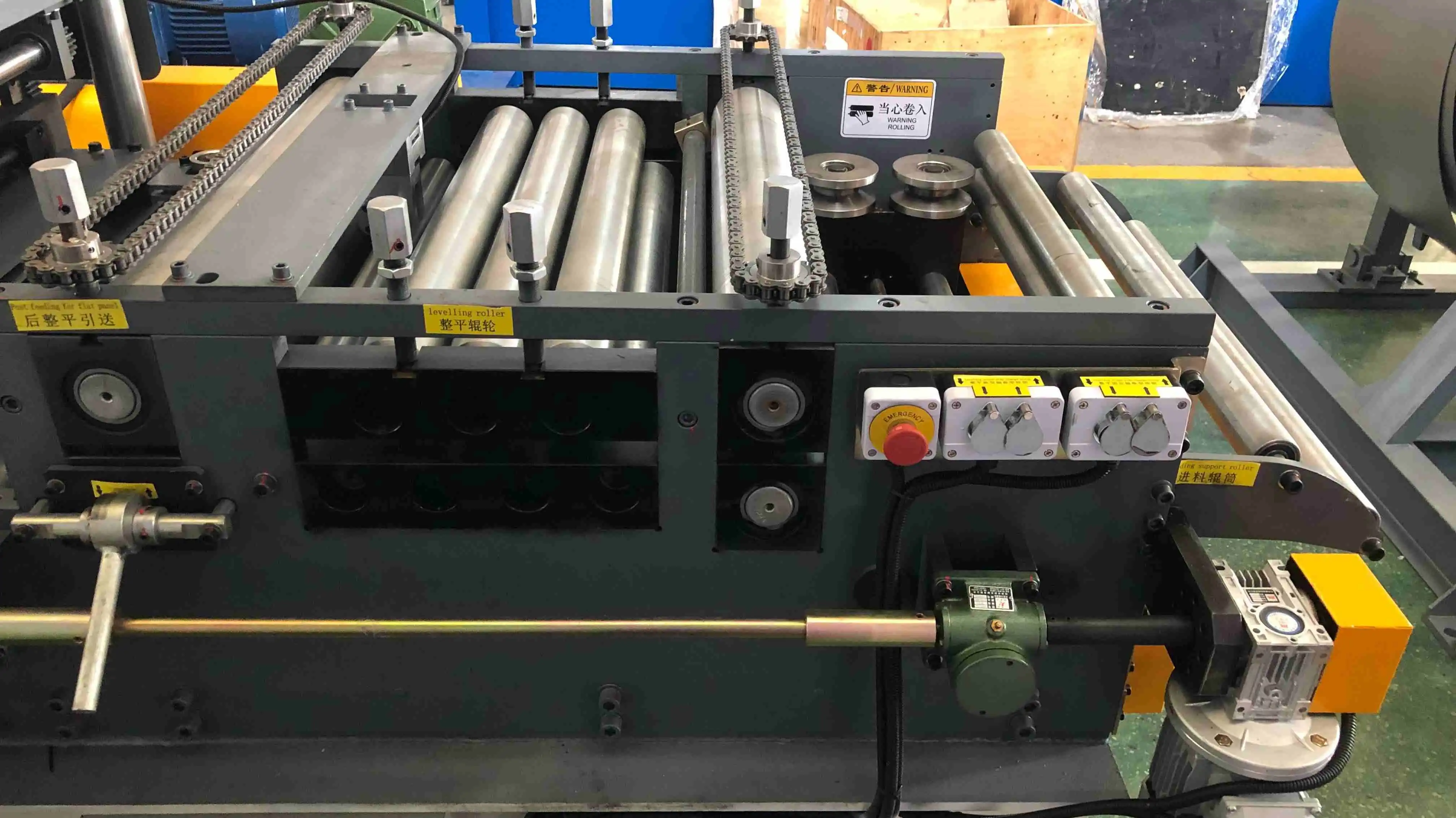
Key Features and Advantages of CZ Purlin Roll Formers
Modern CZ purlin roll former technology can maintain quality at big scales and meet diverse manufacturing objectives. Manufacturers of U.S. pre-engineered buildings and solar infrastructure must fulfil tight regulations. Dimensional problems affect field building installation.
Precision Engineering and Structural Consistency
Maintaining ±1mm web width and ±0.5mm ring dimensions requires more than simply precision mechanics. You also need built-in control systems that monitor and adjust formation settings in real time. Servo motor drive systems feed in the right quantity of material, and PLC algorithms adjust for steel quality and thickness variations that affect spring back.
GCr15 roller material doesn't wear down when heated to HRC 58–62, even with rough zinc-coated materials. Due to its durability, the profile form remains unchanged during manufacturing runs that last for months without maintenance. Buyers of tools should realise that roller quality affects the long-term durability of dimensions and surface polish.
Versatility Across Profile Specifications
The height may be adjusted from 40 to 100 mm to meet North American construction purlin sizes, using a CZ purlin roll former. This lets makers service many clients without buying many tools. A solar mounting structure manufacturer can build 80mm panel rail C-sections in the morning. The afternoon may be spent creating 100mm Z-purlins for farm building frames.
Personalising a profile goes beyond adjusting dimensions. The manufacturing station can accommodate structural engineering-requested flange widths, lip angles, and web lengths. Companies that interact with engineering, procurement, and construction businesses that need particular profiles for load circumstances or building limits need this versatility.
These practical advantages distinguish a high-quality CZ purlin roll former:
- Rapid Changeover Capability: Automated positioning systems swap between C and Z profiles in 5–10 minutes, enabling economical short-run production.
- Energy Efficiency Through Servo Technology: Servo motors consume 30–40% less power than continuous-run hydraulic systems during CZ purlin forming.
- Material Yield Optimisation: Precise cutting and minimal setup waste achieve over 97% raw material utilisation for CZ profile production.
- Integrated Punching Accuracy: Servo-driven punch systems maintain correct hole centre spacing for construction site bolt-up assembly on both C and Z profiles.
Light steel structure builders need to reconcile production efficiency with flexibility, maintain quality across order requirements, and keep costs low in competitive marketplaces. These abilities help them manage these difficulties.
Durability and Simplified Maintenance
Strong construction and well-made pieces determine longevity. Heavy-duty machines feature stronger steel frames that don't flex when loaded, keeping rollers in place for years. The machine's 70–90 mm steel rods provide torsional strength to work at high speeds without bending.
Accessibility for maintenance affects operating uptime. Well-designed machines situate lubrication points, bearing housings, and control systems for simple access without disassembly. Instead of taking breaks, shift changes might be used to inspect rollers, lubricate drive chains, and monitor hydraulic fluid.

Types of CZ Purlin Roll Forming Machines
Consider how much you intend to produce, how difficult your items are, and what technical support is available when picking equipment. Market options range from manually adjusted systems for startups to fully automated lines for continuous industrial output. The CZ purlin roll former comes in various configurations to meet these needs.
Manual Versus Automatic Operation
A manual machine requires the user to physically adjust the rollers and enter new cutting lengths for each profile change. Companies that produce stock profiles in big batches with few changeovers benefit from this strategy. Manual equipment costs less, making it suitable for beginning purlin makers or those with limited funds.
A touchscreen enables you to adjust the form of automatic systems with PLC control and controlled placement. These machines are more expensive since they operate less and make smaller quantities more cheaply. A manufacturer that works with many regional enterprises may swiftly adjust output to satisfy varied demands without any setup.
Capacity Considerations: Light Versus Heavy-Duty Models
These lightweight tools are suitable for home building and small business tasks since they can work with 2 mm-thick materials and 80 mm profile heights. These machines are tiny and power-efficient, making them suitable for smaller industrial facilities.
Long-span usage and industrial structures require heavy-duty variants that can accommodate 3.5 mm-thick materials and 300 mm profile depths. Bigger roller widths and stronger frame design manage increased forming pressures without impacting precision. Industrial customers of pre-engineered metal construction components need heavy-duty tools for G450 and G550 steel.
Customisation and Specialised Features
Custom solutions are needed for unique jobs, although standard tools can cover most manufacturing demands. Automatic packaging systems that order finished purlins for delivery might reduce manual labour for manufacturers, and a CZ purlin roll former can also play a role in such custom lines. Continuous punching systems eliminate the stop-punch-resume rhythm of typical hydraulic punch devices, sustaining productivity.
Some buyers demand pre-cutting setups instead of post-cutting ones, depending on their quality standards and manufacturing methods. Pre-cutting separates the material before forming, which speeds up the process but may impact shape accuracy. In post-cutting systems, flying shears cut after shaping to improve end forms for structural linkages.

How to Choose the Best CZ Purlin Roll Former?
Equipment purchases affect a company's manufacturing and competitiveness. A systematic evaluation helps align machine specs with company goals and eliminate costly gaps between what the CZ purlin roll former can accomplish and what it needs to create.
Defining Your Production Requirements
Read your typical order description first. Determine how many tonnes of material must be moved monthly, the typical order size, and how often the form must be altered. A local fabricator that deals with steel construction contractors may appreciate rapid switching and moderate speed over a national producer. Maximum throughput speed on standard profiles benefits large-scale manufacturers more.
Material specifications matter. If you build with 0.8-1.2 mm galvanised coil, you just need lighter tools. Industries that employ 2.0 mm high-tensile steel need instruments with a suitable pressing force and roller strength. Knowing what materials you use prevents you from buying too little equipment to handle odd heavy-gauge requests or too much equipment you rarely use.
Profile complexity impacts machine demands. Simple C and Z sections with conventional flanges require fewer forming stations than complex profiles with reinforcing ribs or irregular forms. Buyers should offer full profile drawings to potential suppliers to ensure that the recommended machine configuration can create the desired forms within the constraints.
Evaluating Supplier Credentials and Support
The relationship with the provider continues beyond buying the first piece of gear. Established manufacturers with ISO9001 and CE certifications are devoted to quality management systems and worldwide safety requirements. These licences assure you that the tools you're buying fulfil design and manufacturing requirements.
Global delivery experience indicates you have the logistics and international support to execute the task. ZTRFM has sent equipment to over 150 countries, so they understand international electricity regulations, shipping documentation, and technical assistance. With this understanding, installation and operational issues are resolved faster.
Examine the after-sales support framework. Quick technical assistance, a large spare parts inventory, and rigorous operator training programmes distinguish suppliers that view equipment sales as a partnership. Buyers should find out how long technical queries take to respond, if parts are available, and if training covers operating and maintenance approaches.
Investment Analysis: Upfront Cost Versus Lifetime Value
The purchase price is only part of the ownership cost. Operating economics includes energy usage, maintenance, and output efficiency. A machine that costs 20% less but consumes 40% more power and needs roller replacements costs more over five years.
The complexity of the equipment and building readiness determines installation costs. Stable bases, power, and compressed air are needed for automated machinery. Buyers should know what the purchase contains. Do you pay separately for shipment, installation, and first user training?
When calculating ROI, consider the extra labour, faster modifications and greater speeds that may be performed, for example, with a CZ purlin roll former. Extra-cost equipment that changes profiles in 10 minutes instead of 45 adds hundreds of hours of effort per year. Going from 15 to 20 metres per minute of production increases output by 33%, which equals more sales or less work.

Conclusion
The CZ purlin roll former is essential for construction organisations that need speed, versatility, and precision. This gadget solves major industry issues. Its rapid profile switching eliminates manufacturing bottlenecks that made meeting order criteria difficult. Servo motor technology and automated controls allow structural uses to achieve uniform sizes with less energy and effort. Equipment selection requires assessing production demands, supplier expertise, and overall ownership costs, not simply pricing. Use and maintenance provide years of reliable output that grow the firm and please consumers, making the hefty investment worthwhile.
FAQ
1. What distinguishes CZ purlin roll formers from single-profile machines?
The CZ purlin roll former's capacity to manufacture C- and Z-shaped objects without multiple manufacturing lines makes it unique. Spinning tooling stations or variable forming systems that move rollers may create either profile geometry. PLC control allows modern automated equipment to change configurations in 5–10 minutes, while manually changing dies would take hours. This flexibility is especially useful for organisations that create products for many distinct clients with changing order requirements. It allows cheaper small-batch production, unlike single-profile equipment.
2. How does material type affect machine selection?
Various galvanised steels have various tensile strengths and manufacturing qualities. Standard G300 steel is used in residential construction and may be formed by small machinery. Industrial uses of high-strength G550 steel require machines with multiple forming stations to slowly attain the intended shape and over-form angles for elastic recovery due to its strong spring-back characteristic. Zinc coating thickness matters too. Heavy-coated hot-dip galvanised material requires reinforced rollers to handle the rough zinc coating. Buyers who work with high-strength materials should choose tools with the correct forming power and roller roughness to maintain dimensions and avoid premature wear.
3. What delivery timeframes should buyers expect?
From purchase confirmation to shipment, standard machine models take 45–60 days. It allows time for assembly, electrical system installation, and factory testing. Customised tools with unique punching patterns, longer forming lengths, or profile characteristics may take 75 to 90 days, depending on complexity. International delivery might take three to six weeks longer, depending on location and logistics. Ship timeframes should be discussed early in the purchase process. This is especially significant when equipment arrives at the end of a building project or the start of a manufacturing season.
Partner with ZTRFM for Your CZ Purlin Manufacturing Needs
Successful purlin manufacturing requires reliable, market-agile equipment and competent assistance. ZTRFM has 10 years of cold roll forming experience and has developed and built machinery for North American and international light steel structure builders. A servo motor, GCr15 reinforced rollers, and easy-to-use computer settings make our CZ purlin roll former straightforward to operate while providing exact structural measures. Whether you're a factory trying to expand or a new purlin producer, we provide specific solutions tailored to your production output and technical demands. Our ISO9001 and CE certifications demonstrate our commitment to quality, and our ability to complete projects in over 150 countries demonstrates our global reach. Please contact our technical team at zhongtuorollforming@gmail.com to discuss your demands. We'll assist you in picking the finest configuration, provide straightforward pricing, and explain the support services that will make your equipment investment pay off. As the manufacturer and supplier, we don't pay third-party markups.

References
1. American Institute of Steel Construction. (2017). Steel Construction Manual, 15th Edition. Chicago: AISC Publications.
2. Yu, W.W. & LaBoube, R.A. (2010). Cold-Formed Steel Design, Fourth Edition. Hoboken: John Wiley & Sons, Inc.
3. Halmos, G.T. (2006). Roll Forming Handbook. Boca Raton: CRC Press, Taylor & Francis Group.
4. Metal Construction Association. (2019). Best Practices for Cold-Formed Steel Framing Systems. Glenview: MCA Technical Publication.
5. International Organization for Standardization. (2016). ISO 10217: Continuously Hot-Dip Coated Steel Sheet. Geneva: ISO Standards Development.
6. Bhattacharyya, D. (2012). Composite Sheet Forming: Developments in Advanced Roll Forming Technology. Amsterdam: Elsevier Science Publishers.
_1750323743240.webp)