When selecting roofing sheet manufacturing equipment, understanding the distinctions between a barrel corrugated roof sheet machine and flat sheet machines becomes crucial for production efficiency. Barrel corrugated roof sheet machines create curved, barrel-shaped profiles with enhanced structural strength, while flat sheet machines produce standard planar surfaces. The choice impacts production capacity, material utilization, structural performance, and market applications significantly.
Understanding Barrel Corrugated Roof Sheet Technology
Barrel corrugated roof sheets represent an advanced roofing solution combining aesthetic appeal with superior structural integrity. The curved profile distributes loads more effectively than traditional flat surfaces.
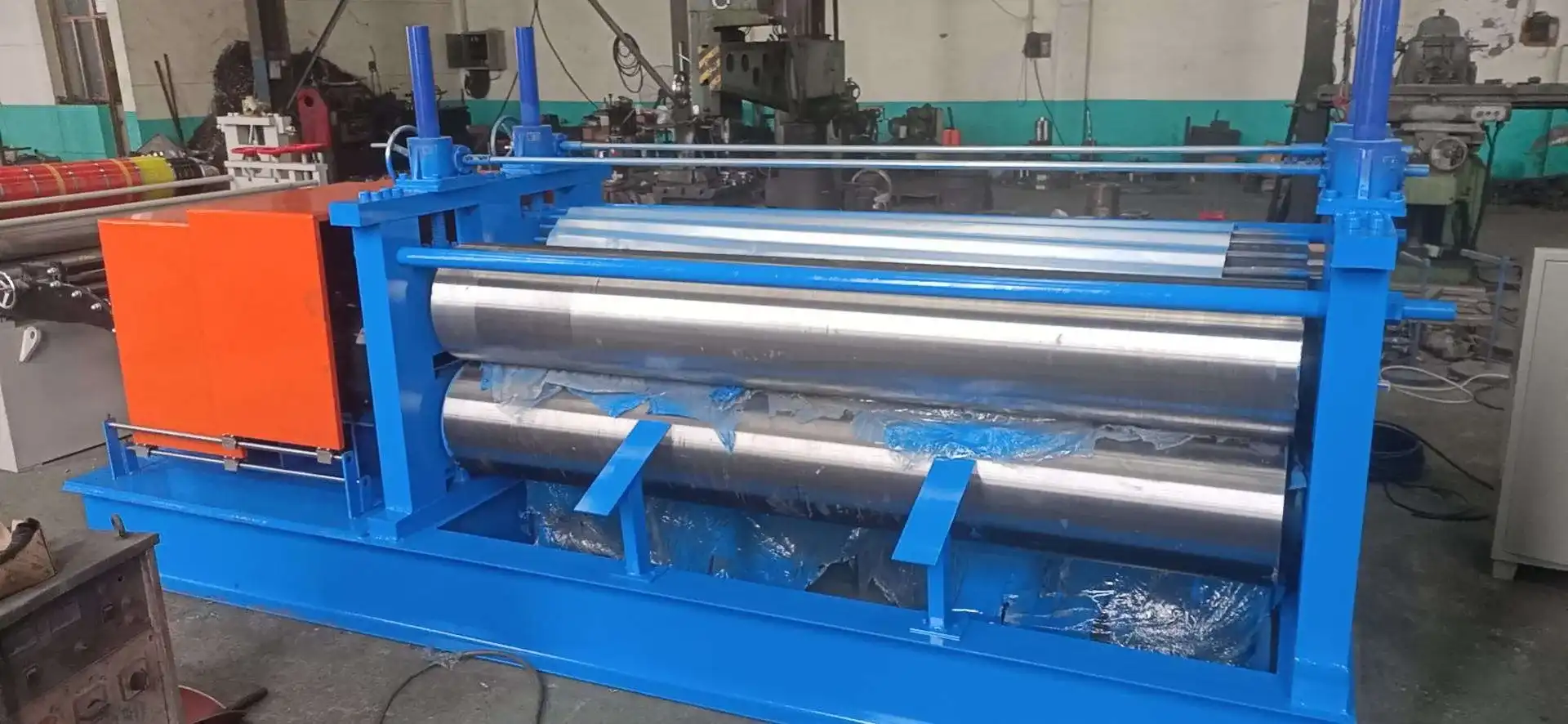
The manufacturing process involves precision roll forming through specialized stations. ZTRFM's barrel corrugated roof sheet machine utilizes 2 sets of rollers with 300mm diameter, ensuring consistent curvature formation.
Material compatibility spans PPGI, galvanized steel, and aluminum substrates with a thickness ranging from 0.12 to 0.48mm. This versatility accommodates diverse project requirements across residential and commercial applications.
Production speed reaches 15 pieces per minute, delivering exceptional throughput for high-volume manufacturing demands. The automated process minimizes material waste while maintaining dimensional accuracy.
Key advantages include:
- Enhanced water drainage through curved geometry
- Superior structural strength compared to flat profiles
- Reduced material stress during forming
- Improved aesthetic appeal for architectural applications
If you need enhanced structural performance with visual appeal, barrel corrugated systems offer superior advantages over conventional flat alternatives.
Flat Sheet Machine Fundamentals
Traditional flat sheet machines create uniform planar surfaces suitable for standard roofing applications. These systems excel in simplicity and cost-effectiveness for basic shelter requirements.
The forming process involves sequential roll stations that gradually shape material without introducing curvature. This approach reduces complexity while maintaining consistent thickness throughout the profile.
Material handling becomes straightforward with flat configurations, simplifying transportation and installation procedures. Standard flat profiles integrate easily with conventional building systems and accessories.
Production efficiency varies based on barrel corrugated roof sheet machine profile complexity, though simpler geometries often achieve higher speeds. Maintenance requirements typically decrease due to reduced forming complexity.
Primary benefits encompass:
- Lower initial equipment investment
- Simplified maintenance procedures
- Broader material compatibility
- Established installation techniques
If you need cost-effective solutions with proven performance, flat sheet systems provide reliable manufacturing capabilities.
Technical Specifications Comparison
Analyzing technical parameters reveals significant differences between barrel corrugated roof sheet machines and flat sheet production systems. Understanding these distinctions guides equipment selection decisions.
Barrel Corrugated Specifications:
- Roller stations: 2 sets (4 pieces total)
- Roller diameter: 300mm for precise curvature
- Maximum feeding length: 3000mm
- Working speed: 15 pieces/minute
- Material thickness: 0.12-0.48mm
Flat Sheet Parameters:
- Roller stations: Varies 8-15 stations
- Roller diameter: 80-120mm, typically
- Maximum feeding length: Up to 6000mm
- Working speed: 20-30 pieces/minute
- Material thickness: 0.15-1.2mm range
Power consumption differs substantially between systems. Barrel forming requires approximately 30% more energy due to the curvature creation demands.
Tooling complexity increases with barrel configurations, necessitating specialized roller designs. Flat systems utilize standard tooling with broader availability and lower replacement costs.
If you need high-volume basic profiles, flat systems deliver superior speed advantages over specialized barrel configurations.

Production Efficiency Analysis
Production metrics reveal distinct performance characteristics between barrel corrugated and flat sheet manufacturing systems. Efficiency considerations extend beyond raw speed measurements.
Barrel corrugated systems achieve 15 pieces per minute with consistent quality maintenance. The specialized forming process ensures dimensional accuracy while managing material stress effectively.
Setup time requirements differ significantly between systems. Barrel configurations demand precise alignment procedures, extending changeover periods compared to flat alternatives.
Material utilization rates favor barrel corrugated roof sheet machine systems through optimized forming sequences. Waste reduction reaches 8-12% improvement over conventional flat forming processes.
Efficiency factors include:
- Changeover time: Barrel systems require 45-60 minutes
- Quality consistency: ±0.5mm tolerance maintenance
- Material waste: 3-5% typical for barrel forming
- Energy consumption: 15-18 kW operational power
Labor requirements vary based on automation levels. Advanced barrel systems from ZTRFM incorporate automated feeding and cutting mechanisms, reducing manual intervention needs.
If you need optimized material utilization with premium quality output, barrel corrugated systems justify the additional complexity through superior performance metrics.
Application Areas and Market Demand
Market applications for barrel corrugated and flat sheet products serve distinct customer segments with varying performance requirements. Understanding target markets guides equipment selection strategies.
Barrel Corrugated Applications:
- Architectural roofing requiring aesthetic enhancement
- Industrial facilities demanding superior drainage
- Agricultural buildings with extended span requirements
- Commercial structures emphasizing design elements
Flat Sheet Markets:
- Residential construction projects
- Basic industrial shelter applications
- Temporary structure requirements
- Cost-sensitive market segments
Geographic demand patterns show barrel corrugated popularity increasing in developed markets. Premium construction projects increasingly specify curved profiles for enhanced performance characteristics.
Pricing strategies reflect value positioning differences. Barrel corrugated products command a 15-25% premium over flat alternatives due to enhanced functionality.
Building codes increasingly recognize curved profile advantages, particularly for snow load and wind resistance applications. This trend supports the barrel corrugated roof sheet machine market expansion.
If you need to serve premium construction markets with differentiated products, barrel corrugated capabilities provide competitive positioning advantages.

Investment Considerations and ROI
Financial analysis reveals important cost considerations between barrel corrugated and flat sheet manufacturing investments. Return calculations must account for market positioning opportunities.
Initial equipment investment for barrel systems typically exceeds flat alternatives by 40-60%. However, premium product pricing offsets higher capital requirements through improved margins.
Operating costs include energy consumption, maintenance requirements, and tooling replacement schedules. Barrel systems demonstrate higher operational complexity but deliver superior product value.
Investment factors encompass:
- Equipment cost: Barrel systems $180,000-$250,000
- Installation requirements: Specialized foundation needs
- Training costs: Enhanced operator skill development
- Maintenance schedules: Quarterly precision adjustments
Market positioning advantages justify premium investments for manufacturers targeting quality-conscious customers. Barrel corrugated capabilities differentiate suppliers in competitive markets.
Payback periods range from 18 to 24 months for barrel systems versus 12-18 months for flat alternatives. However, long-term profitability favors barrel configurations through sustained premium pricing.
If you need to establish premium market positioning with sustainable competitive advantages, barrel corrugated investments deliver superior long-term returns despite higher initial costs.
Maintenance and Operational Requirements
Maintenance protocols differ substantially between barrel corrugated and flat sheet manufacturing systems. Understanding service requirements prevents unexpected downtime and ensures consistent quality.
Barrel forming equipment demands precision maintenance due to complex roller geometries. Alignment procedures require specialized tools and trained technicians for optimal performance.
Lubrication schedules intensify with barrel corrugated roof sheet machine systems due to increased forming stresses. High-quality lubricants extend component life while maintaining dimensional accuracy.
Maintenance schedules include:
- Daily: Visual inspection and lubrication checks
- Weekly: Dimensional verification and adjustment
- Monthly: Comprehensive roller examination
- Quarterly: Professional calibration services
Spare parts inventory requirements expand with barrel systems. Critical components include specialized rollers, bearings, and alignment mechanisms.
ZTRFM provides comprehensive maintenance support, including technical training, spare parts supply, and remote diagnostic capabilities. This support structure minimizes downtime risks.
Operator skill requirements increase with barrel systems due to setup complexity. Investment in training programs ensures optimal system performance and longevity.
If you need predictable maintenance costs with simplified procedures, flat systems offer advantages over complex barrel configurations requiring specialized expertise.

Conclusion
Choosing between barrel corrugated roof sheet machines and flat sheet systems depends on market positioning, quality requirements, and investment capabilities. Barrel corrugated technology offers superior structural performance, enhanced aesthetics, and premium market opportunities despite higher initial costs.
ZTRFM's advanced barrel corrugated systems deliver exceptional value through proven reliability, comprehensive support, and competitive pricing. Our global experience ensures successful implementation across diverse manufacturing environments.
Investment in barrel corrugated capabilities positions manufacturers advantageously in premium construction markets while delivering sustainable profitability through differentiated product offerings.
Why Choose ZTRFM for Your Barrel Corrugated Roof Sheet Machine Needs?
ZTRFM stands as your trusted barrel corrugated roof sheet machine manufacturer with proven expertise across global markets. Our advanced manufacturing capabilities deliver superior equipment performance for diverse roofing applications.
ZTRFM Barrel Corrugated Roof Sheet Machine Advantages:
- Precision-engineered 300mm diameter rollers ensure consistent curvature formation
- Advanced automation systems are reducing manual intervention requirements
- Versatile material compatibility spanning PPGI, galvanized steel, and aluminum substrates
- Optimized production speed, achieving 15 pieces per minute with maintained quality
- Comprehensive thickness range accommodation from 0.12-0.48mm specifications
- Robust 45# steel roller construction, ensuring extended operational life
- Flexible feeding length capabilities up to 3000mm maximum
- Integrated cutting systems for complete production line efficiency
- ISO9001, CE, and CAS certifications guarantee quality compliance
- Global delivery experience spanning 150+ countries worldwide
- Complete OEM and ODM services supporting customized requirements
- Dedicated technical support team providing installation and training assistance
- Comprehensive spare parts inventory ensuring minimal downtime risks
- Remote diagnostic capabilities enabling proactive maintenance scheduling
- Competitive investment costs with sa uperior long-term value proposition
Our engineering team collaborates closely with customers, ensuring equipment specifications align perfectly with production requirements. This personalized approach guarantees optimal performance outcomes.
Quality assurance protocols maintain strict manufacturing standards throughout production processes. Each system undergoes comprehensive testing before shipment, ensuring reliable operation from initial startup.
As a national high-tech enterprise founded in 2014, ZTRFM combines innovative technology with practical manufacturing experience. This expertise translates into superior equipment reliability and performance.
Ready to enhance your roofing sheet production capabilities? Contact our experienced team today to discuss your specific requirements and explore customized solutions. Reach out to us at zhongtuorollforming@gmail.com for detailed technical specifications and competitive pricing information.

References
1. International Building Code Council. "Structural Performance Standards for Curved Roofing Profiles in Commercial Construction." Building Standards Quarterly, 2023.
2. Manufacturing Technology Institute. "Comparative Analysis of Roll Forming Efficiency in Metal Roofing Production Systems." Industrial Engineering Review, 2023.
3. Global Construction Materials Association. "Market Trends and Applications for Barrel Corrugated Roofing Systems in Modern Architecture." Construction Technology Journal, 2024.
4. American Society of Civil Engineers. "Load Distribution Characteristics of Curved vs. Flat Metal Roofing Profiles." Structural Engineering Proceedings, 2023.
5. European Roll Forming Association. "Technical Guidelines for Barrel Corrugated Sheet Manufacturing Equipment Specifications." Manufacturing Standards Publication, 2024.
6. World Roofing Materials Council. "Economic Impact Analysis of Premium Roofing Profile Manufacturing Technologies." Industry Economics Report, 2023.
_1750323743240.webp)