- English
- French
- German
- Portuguese
- Spanish
- Russian
- Japanese
- Korean
- Arabic
- Irish
- Greek
- Turkish
- Italian
- Danish
- Romanian
- Indonesian
- Czech
- Afrikaans
- Swedish
- Polish
- Basque
- Catalan
- Esperanto
- Hindi
- Lao
- Albanian
- Amharic
- Armenian
- Azerbaijani
- Belarusian
- Bengali
- Bosnian
- Bulgarian
- Cebuano
- Chichewa
- Corsican
- Croatian
- Dutch
- Estonian
- Filipino
- Finnish
- Frisian
- Galician
- Georgian
- Gujarati
- Haitian
- Hausa
- Hawaiian
- Hebrew
- Hmong
- Hungarian
- Icelandic
- Igbo
- Javanese
- Kannada
- Kazakh
- Khmer
- Kurdish
- Kyrgyz
- Latin
- Latvian
- Lithuanian
- Luxembou..
- Macedonian
- Malagasy
- Malay
- Malayalam
- Maltese
- Maori
- Marathi
- Mongolian
- Burmese
- Nepali
- Norwegian
- Pashto
- Persian
- Punjabi
- Serbian
- Sesotho
- Sinhala
- Slovak
- Slovenian
- Somali
- Samoan
- Scots Gaelic
- Shona
- Sindhi
- Sundanese
- Swahili
- Tajik
- Tamil
- Telugu
- Thai
- Ukrainian
- Urdu
- Uzbek
- Vietnamese
- Welsh
- Xhosa
- Yiddish
- Yoruba
- Zulu
Top PBR Roll Former Machines for Metal Roofing Factories
When you're searching for the right equipment to elevate your metal roofing production, finding a PBR roll former that delivers both precision and reliability can feel overwhelming. These specialized machines turn raw metal coils into strong roofing panels with the distinctive Purlin Bearing Rib profile, which offers excellent weather-tightness and load-bearing capacity. Modern PBR roll formers address critical manufacturing challenges: eliminating roof leaks through precise overlaps, extending panel spans between supports, and boosting production speeds up to 20 meters per minute. This guide walks you through everything procurement managers and factory engineers need to know about selecting, operating, and maintaining these essential machines in 2024.
Understanding PBR Roll Former Machines
What Makes PBR Roll Formers Different?
A PBR roll former stands apart from standard corrugated panel equipment through its ability to create an extended bearing leg on one side of each panel. This specialized feature ensures full purlin support when panels overlap during installation, drastically reducing water infiltration risks that plague generic profiles. The machine processes galvanised steel, Galvalume, or pre-painted aluminium coils through a series of precisely calibrated forming stations, gradually shaping flat material into deep trapezoidal ribs that typically measure 1-1/4 inches in height.
Core Components and Operational Principles
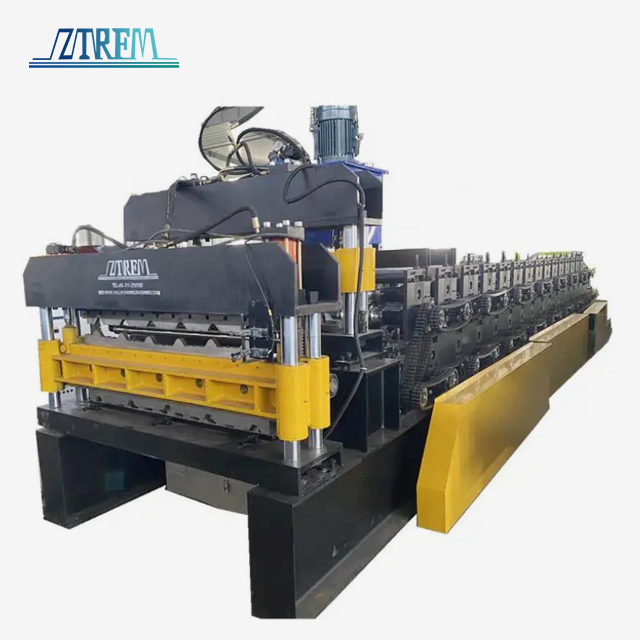
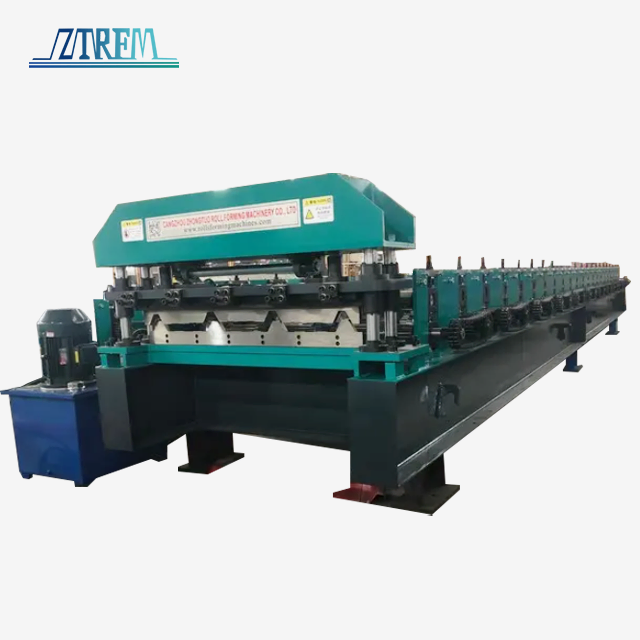
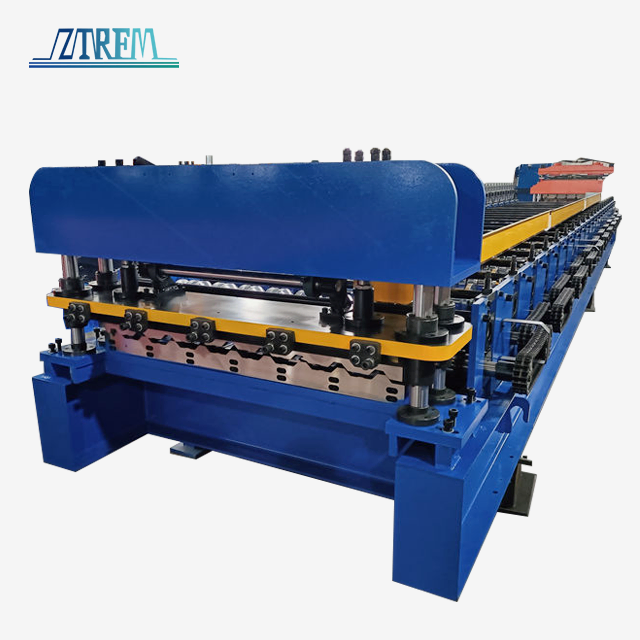
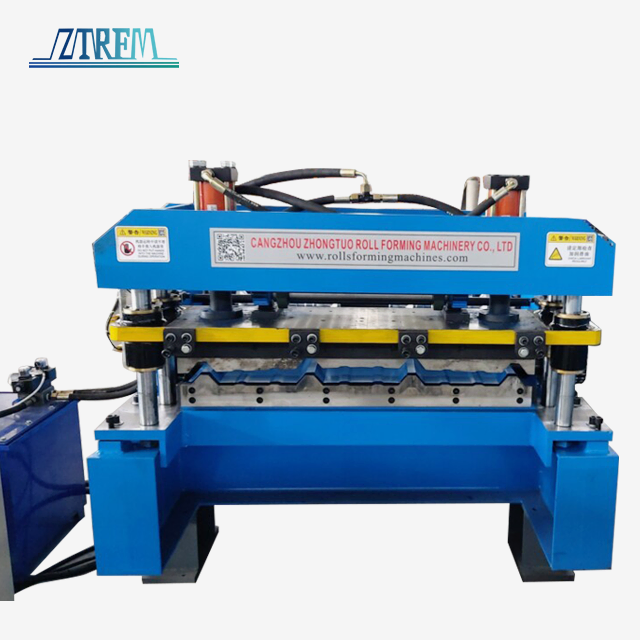
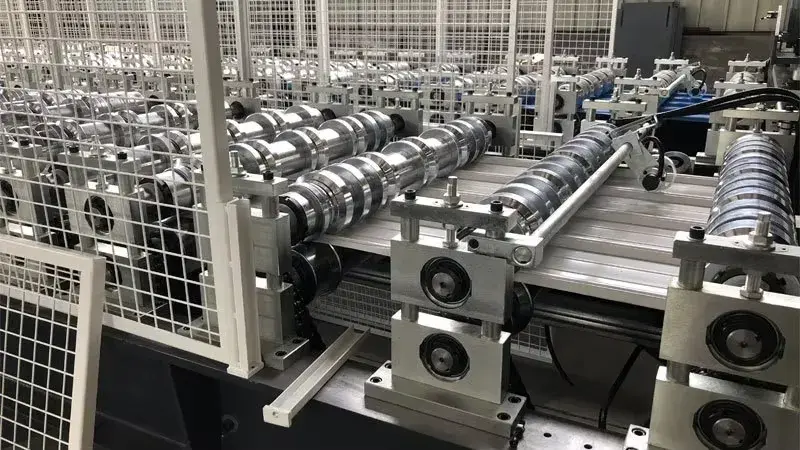
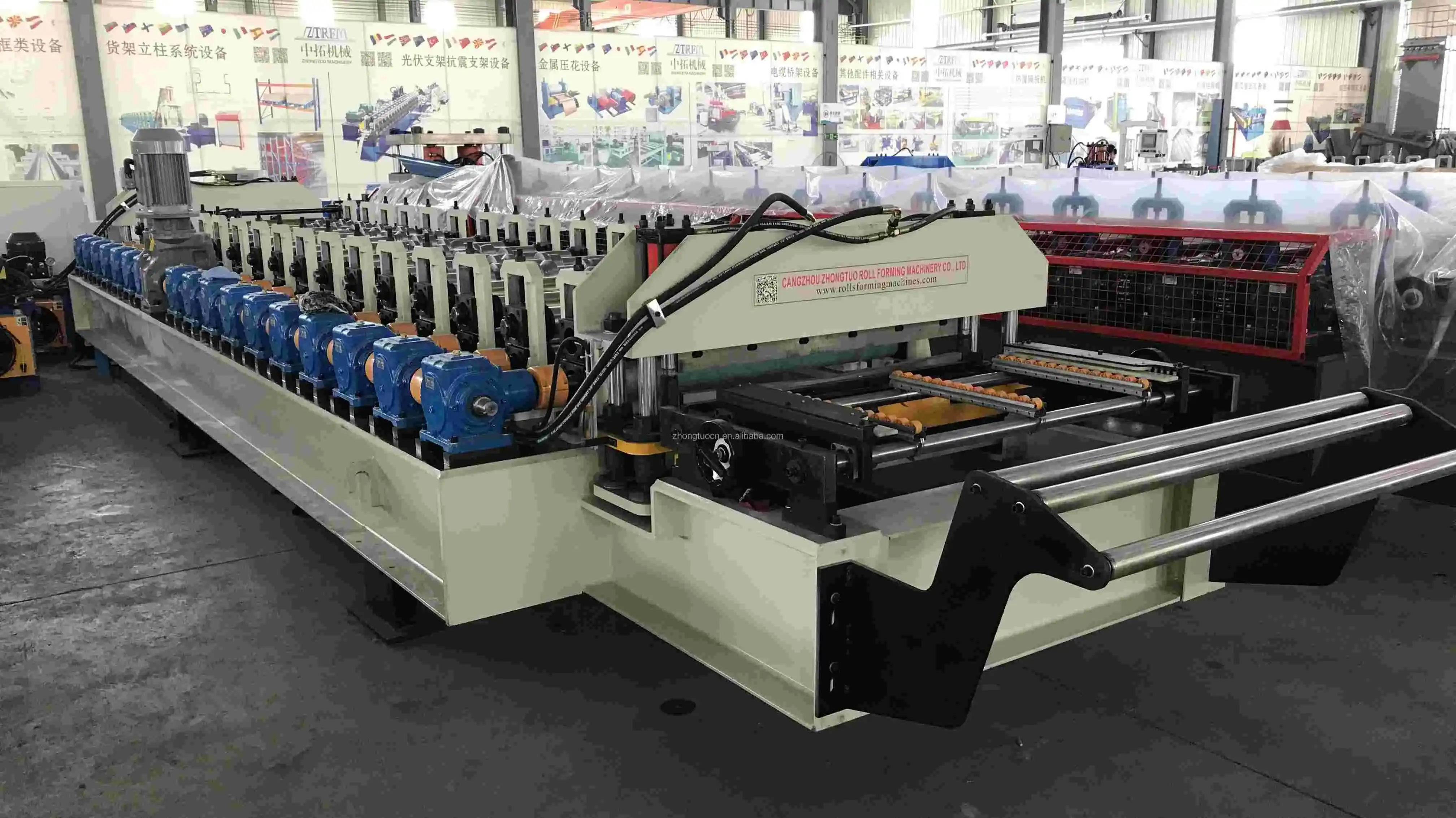
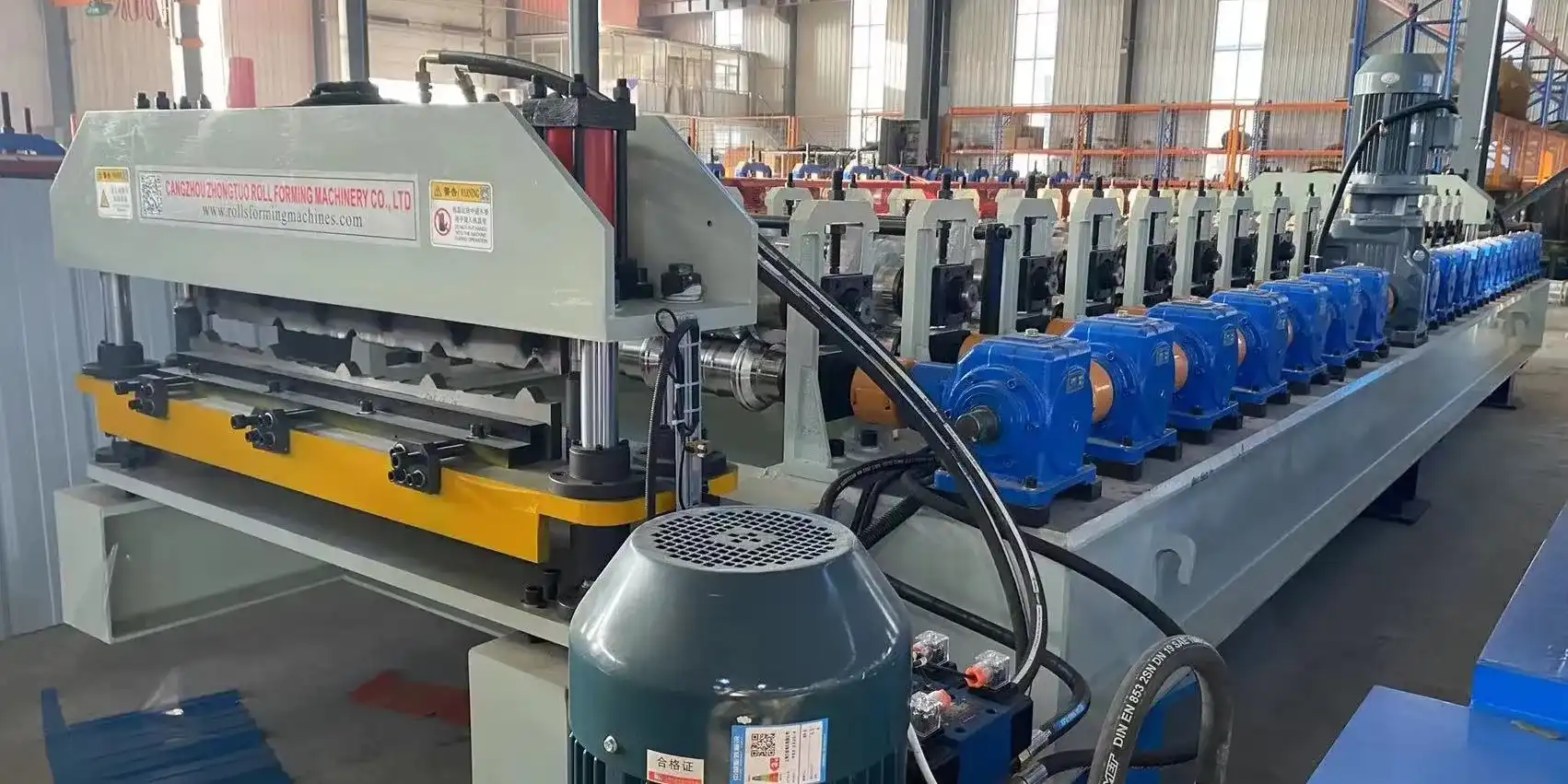
The heart of any quality PBR roll former lies in its roller stations, frame rigidity, and cutting system. Professional-grade machines feature between 18 and 24 forming stations to handle high-tensile steel without coating damage or micro-cracking. Each station has precisely machined rollers mounted on solid shafts, usually 80mm in diameter, made from 45# forged steel and coated with hard chrome for excellent wear resistance. The machine body typically utilises a 350mm H-beam structure reinforced with 20mm welded steel support plates, providing the stability needed for continuous high-speed operation.
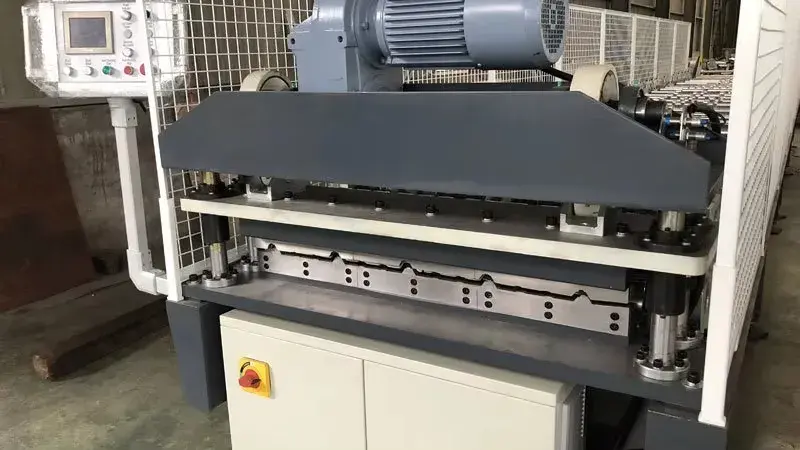
Material flows through the system via a decoiler, passes through sequential roller stations where it gradually takes shape, and finally meets an automatic hydraulic cutting system. Advanced units employ Cr12MoV material blades that deliver clean cuts without scratches or deformation and can consistently handle 24-26 gauge steel. Drive systems using gear and double-chain transmission ensure uniform torque distribution across all forming stations, preventing uneven panel profiles.
Technical Specifications That Matter
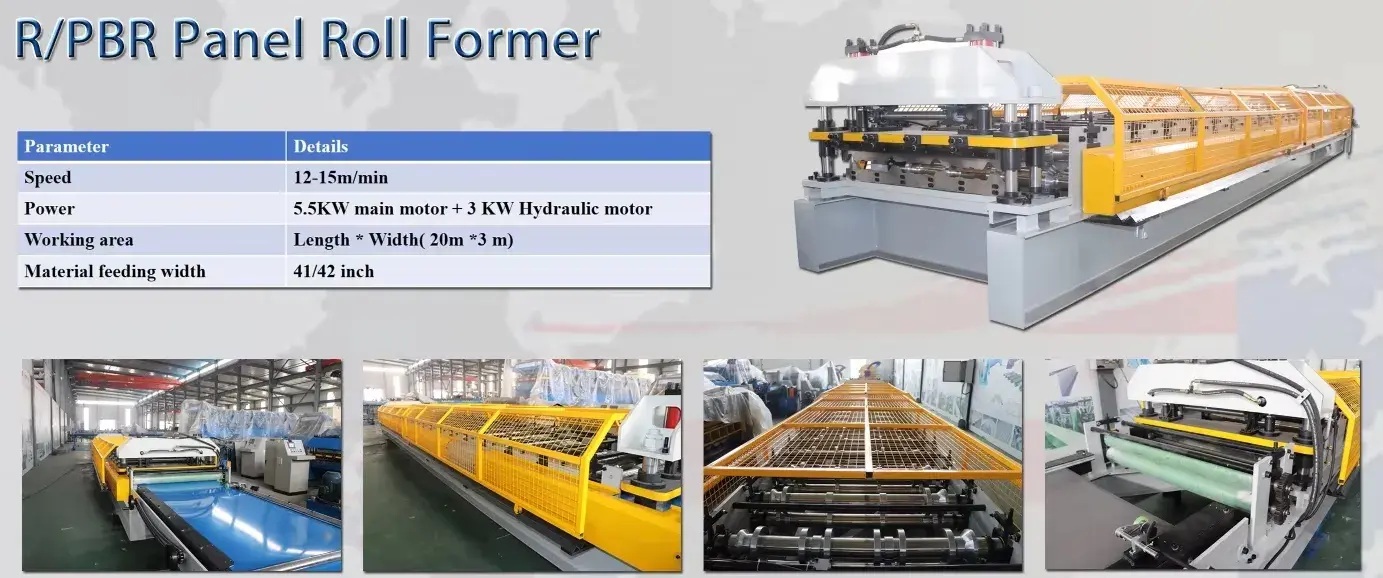
Understanding capacity parameters helps match machines to factory requirements. Material thickness capability typically ranges from 0.3mm to 0.8mm (29 gauge to 22 gauge), with professional models handling high-tensile grades up to 550 MPa yield strength. Production speeds vary between 10 and 25 meters per minute, depending on material gauge and machine configuration. The standard PBR profile produces panels with a 36-inch cover width, though custom tooling can accommodate alternative dimensions.
Power requirements usually involve three-phase electricity (220V/380V/480V at 50/60Hz) with main motor capacities between 5.5kW and 7.5kW, plus hydraulic station power around 4kW. Dimensional tolerances on quality machines achieve width accuracy within ±1mm and length precision within ±2mm, meeting ASTM A792 specifications critical for structural roofing applications.
Top 5 PBR Roll Former Machines in 2024 for Metal Roofing Factories
Machine Performance Comparison
The 2024 market has various notable alternatives for different manufacturing scales. For continuous operation in big pre-engineered metal building projects, heavy-duty industrial variants include 22-24 forming stations with roller shafts above 90mm. These machines use turnbuckle mechanisms to automatically alter thickness from 29 ga to 22 ga, retaining profile definition without operator recalibration.
Mid-range 19-station production machines balance capabilities and investment cost. These devices efficiently produce conventional commercial roofing quantities at 15 meters per minute while maintaining dimensional control. Quality mid-range units use GCr15 bearing steel quenched to HRC 58-62 hardness and hard chrome-plated with 0.05mm thickness to minimise premature wear and coating scratches on pre-painted materials.
Space-constrained or starting models have 16-18 forming stations with smaller footprints. Despite producing only 10-12 meters per minute, these machines produce professional-quality output for farm buildings and minor commercial projects. Compact units are ideal for metal roofing startups and leased enterprises due to the speed-floor-space trade-off.
Automation and Energy Efficiency
Modern PBR roll formers increasingly incorporate PLC control systems that synchronise feeding, forming, and cutting operations. Automated length measurement eliminates manual calculation errors, while hydraulic pressure monitoring ensures consistent cut quality throughout production runs. Energy-efficient designs optimise motor sizing and hydraulic system capacity, reducing operational costs without compromising performance.
Environmental compliance has become a standard consideration, with leading manufacturers designing equipment that minimizes noise levels below 85 decibels and incorporates safety interlocks meeting CE certification requirements. These features protect operators while satisfying increasingly stringent workplace regulations in North American markets.
Investment Analysis
Pricing structures vary considerably based on configuration and automation level. Entry-level manual-adjustment machines start around $15,000-$25,000, suitable for operations processing limited material varieties. Mid-tier automated systems with PLC controls and quick-change capabilities range from $35,000-$55,000, offering excellent value for diversified production environments. Premium heavy-duty lines capable of continuous industrial operation command $65,000-$95,000, justified by their superior throughput and minimal downtime requirements.
Total cost of ownership extends beyond the initial purchase price. Machines requiring frequent blade sharpening or roller replacement increase long-term expenses significantly. Quality Cr12MoV cutting blades typically handle 100,000 to 200,000 cuts before regrinding becomes necessary, while properly maintained chrome-plated rollers can process millions of linear feet before replacement.
How to Choose the Best PBR Roll Former for Your Metal Roofing Factory?
Matching Capabilities to Requirements
Production volume projections should guide machine selection more than any single feature. Facilities producing fewer than 500,000 linear feet annually can operate efficiently with compact or mid-range units, while operations exceeding 2 million linear feet require industrial-grade equipment to avoid bottlenecks. Panel dimension requirements also influence decisions—standard 36-inch profiles suit most applications, but custom agricultural or architectural projects may need specialized tooling.
Available floor space constrains options in many facilities. Measuring not just machine footprint but also required clearances for coil loading, panel exit, and maintenance access prevents costly surprises during installation. Ceiling height becomes critical when considering equipment with elevated decoiler configurations designed to handle large-diameter coil rolls.
Evaluating Supplier Credentials
Long-term PBR roll forming equipment satisfaction depends on supplier reputation. Manufacturers with ISO9001 accreditation use quality management systems, whereas CE conformity follows worldwide safety regulations. Delivery in multiple regions—ideally 100+ countries—indicates logistical and regulatory expertise that streamlines installation.
Superior providers have an after-sales service infrastructure. Rapid email and phone support avoids minor issues from becoming major outages. When components need replacement, regional distribution networks provide spare parts quickly. Detailed video or on-site operator training increases learning and lowers production faults during the first operation.
Procurement Pathways
By eliminating middlemen, direct factory buying delivers the best prices. When language doesn't hinder technical communication and customers are knowledgeable enough to articulate criteria, this strategy works well. Customised machines for specific features or materials cost 15-30% more but offer capabilities not accessible in regular models.
Used equipment marketplaces offer budget-friendly operations, but inspection is necessary. Checking roller hardness, shaft run-out with dial indicators, and hydraulic system integrity prevents buying equipment with hidden maintenance issues. Reliable merchants supplying refurbished computers with limited warranties offer a compromise between new and used.
Operation and Maintenance Best Practices for PBR Roll Formers
Establishing Efficient Workflows
Proper machine operation starts with material pretreatment. Cleaning the coil edges of oil can prevent feeding slippage. Aligning coils on the decoiler mandrel prevents lateral movement and wavy panel margins. Setting initial tension through the levelling unit removes coil set memory, assuring straight panels.
After setup, operations follow predictable patterns. During starting, operators manually feed the material leading edge through all forming stations, then switch to automatic feeding at the cutting station. Monitoring hydraulic pressure gauges while cutting detects blade dulling before the cut quality degrades. Drive components are less stressed by continuous production speeds than by numerous starts and pauses.
Safety protocols safeguard operators and equipment. Multiple emergency stop buttons provide quick termination when problems develop. Safety guards on drive chains limit drive chain tangling and serious injuries from roller pinch points. Regular safety training strengthens protocols and informs teams of operational changes.
Preventive Maintenance Schedules
Daily maintenance tasks take just minutes but prevent many common failures. Inspecting roller surfaces for metal buildup or coating residue allows quick cleaning before accumulation causes panel scratches. Checking hydraulic fluid levels and observing for leaks catches problems before system pressure drops affect cutting performance. Lubricating chain drives according to manufacturer specifications—typically every 8-10 operating hours—extends component life significantly.
Weekly maintenance involves more thorough inspections. Measuring roller alignment using precision tools identifies developing issues before they create noticeable panel defects. Testing emergency stops and safety interlocks confirms protective systems remain functional. Cleaning accumulated metal chips from cutting areas prevents interference with blade operation.
Monthly procedures include complete lubrication of all moving parts, inspection of electrical connections for signs of overheating or corrosion, and verification that all mounting bolts remain properly torqued. PBR roof panel machine hydraulic oil changes at manufacturer-recommended intervals—usually 1,000-2,000 operating hours—maintain cleanliness in the system and prevent component wear from contaminated fluid.
Troubleshooting Common Issues
Panel camber or twist typically results from misaligned rollers or uneven roller wear. Checking run-out with dial indicators across all stations identifies problem areas, while adjusting roller positions through turnbuckles restores proper alignment. Excessive spring-back in high-tensile materials may require adding forming stations or reducing production speed to allow adequate material relaxation.
Burrs along cut edges indicate blade gap issues or dull cutting edges. Inspecting clearance between upper and lower blades should reveal gaps within manufacturer specifications—typically 0.1-0.3mm depending on material thickness. Blade sharpening or replacement resolves cutting quality problems when gaps prove correct. Coating scratches on pre-painted materials usually trace to rough roller surfaces or accumulated debris, remedied through thorough cleaning or roller refinishing.
Leading PBR Roll-Former Manufacturers and Trusted Suppliers in 2026
Global Industry Leaders
The metal-forming equipment industry includes several manufacturers recognized for consistent innovation and reliable performance. Companies with decades of operational history typically offer mature designs refined through extensive field testing. Their engineering teams understand the nuanced challenges of forming various steel grades and coating systems, translating that knowledge into robust machine configurations.
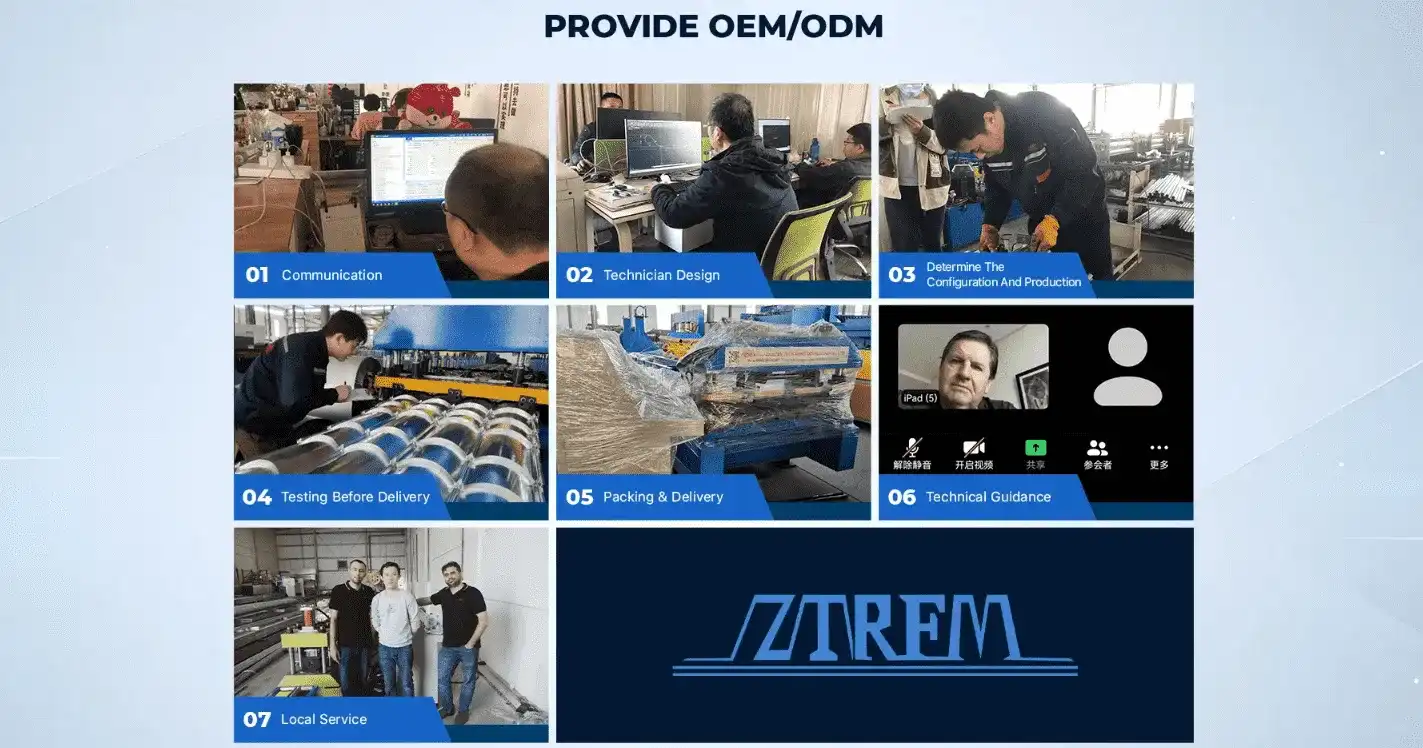
Cangzhou Zhongtuo represents the calibre of a manufacturer transforming metal roofing production since 2014. Specialising in cold roll forming technology, the company provides comprehensive OEM and ODM services spanning raw material supply through finished machine delivery. Their ISO9001, CE, and CAS certification manufacturer that has been transforming management systems, while export experience covering over 150 countries demonstrates global capability. Recognition as a national high-tech enterprise underscores their commitment to innovative solutions tailored to diverse customer requirements.
Evaluating Dealer Networks
Regional dealers and distributors help manufacturers reach local markets beyond equipment sales. Established dealers stock spare parts for same-day or next-day delivery, minimising unscheduled maintenance downtime. Their professionals have hands-on experience with certain equipment models and can troubleshoot better than remote technical help centers.
Checking dealer credentials requires manufacturer authorisation and service infrastructure evaluation. Dealers with specialised service vehicles and factory-trained technicians care about customers. Customer references from facilities with similar equipment show service responsiveness and technical expertise beyond marketing claims.
Warranty and Support Expectations
Standard warranty coverage typically extends 12-24 months from installation or commissioning, protecting against manufacturing defects and premature component failures. Comprehensive warranties include both parts and labour, while limited warranties may cover only component replacement, with installation costs borne by customers. Extended warranty options provide additional protection for operations where downtime carries severe financial consequences.
Value-added services distinguish superior suppliers in competitive markets. On-site installation supervision ensures proper machine setup and initial adjustment, preventing problems traceable to incorrect installation. Operator training programmes covering both routine operation and basic troubleshooting empower factory teams to maximise equipment utilisation. Ongoing technical consultation addresses production challenges as they emerge, helping customers optimise processes around their specific material requirements and quality standards.
Conclusion
Selecting the right PBR roll former requires balancing technical capabilities against budget constraints while prioritising supplier reliability and support infrastructure. Machines featuring 19+ forming stations with hard-chrome-plated rollers, robust H-beam construction, and automated cutting systems deliver consistent performance across diverse production environments. Understanding your facility's volume requirements, material specifications, and space limitations will guide equipment choices that optimise both immediate productivity and long-term operational costs. Partnering with established manufacturers offering comprehensive after-sales support, operator training, and responsive technical assistance protects your investment while ensuring production continuity throughout the machine's operational lifespan.
FAQ
1. What lifespan can I expect from a quality PBR roll former?
Professional-grade machines with proper maintenance typically operate effectively for 15-20 years. The rollers and cutting blades require periodic replacement—rollers after processing 5-10 million linear feet, depending on material abrasiveness, and blades after 100,000-200,000 cuts. Frame structures and drive systems generally outlast multiple roller sets when preventive maintenance schedules are followed consistently.
2. Can one machine handle both thin architectural panels and heavy industrial gauges?
Most PBR roll formers accommodate a range of approximately 6-8 gauges without tooling changes, though minor roller gap adjustments become necessary at range extremes. Switching between 29-gauge and 22-gauge materials on a machine designed for that span involves turnbuckle adjustments requiring 15-30 minutes. Attempting to process materials outside the designed thickness range risks coating damage, profile distortion, or mechanical component failure.
3. How does energy consumption impact operational costs?
Typical PBR roll formers with 5.5-7.5 kW main motors and 4 kW hydraulic systems consume 9-12 kW during active production. At industrial electricity rates averaging $0.10 per kWh, hourly operating costs reach $0.90-$1.20 for energy alone. Over 2,000 annual operating hours, energy expenses total approximately $1,800-$2,400, representing a minor fraction of total operational costs compared to labour, materials, and facility overhead.
Partner With ZTRFM for Your PBR Roll Former Needs
Metal roofing manufacturers seeking dependable production solutions benefit from ZTRFM's specialized expertise in cold roll forming technology. Our PBR roll former systems feature 19-station configurations with 80mm solid shafts, high-grade 45# forged steel rollers with hard chrome plating, and automatic Cr12MoV cutting systems that deliver scratch-free panels consistently. The 350mm H-beam construction with 20mm welded steel support plates provides the rigidity essential for precision forming across 24-26 gauge materials.
As an established PBR roll former manufacturer with ISO9001 and CE certifications, we've delivered equipment to 150+ countries since 2014, backed by comprehensive installation support and operator training. Our engineering team customises solutions matching your specific production volumes, material preferences, and facility constraints. Contact our specialists at zhongtuorollforming@gmail.com to discuss your metal roofing production requirements and receive detailed specifications with competitive pricing. We'll help you select the optimal configuration that balances performance capabilities with your operational budget, ensuring reliable production for years ahead.
References
1. American Iron and Steel Institute. (2023). Cold-Formed Steel Design Manual: Part II - Roof and Wall Panel Design.
2. Metal Construction Association. (2024). Technical Bulletin: PBR Panel Installation Guidelines and Structural Performance Standards.
3. Thompson, R.J., & Martinez, K.L. (2023). Modern Roll Forming: Process Engineering and Equipment Selection for Metal Panel Manufacturing. Industrial Press.
4. Building Research Institute. (2023). Comparative Analysis of Metal Roofing Profiles: Load Capacity and Weather Performance in Commercial Applications.
5. Zhang, W., & Peterson, D.M. (2024). "Optimising Roll Forming Operations: Maintenance Strategies and Production Efficiency in Metal Panel Manufacturing." Journal of Manufacturing Processes, 48(2), 156-172.
6. National Metal Roofing Alliance. (2024). Equipment Selection Guide for Metal Roofing Contractors: Technical Specifications and Supplier Evaluation Criteria.