- English
- French
- German
- Portuguese
- Spanish
- Russian
- Japanese
- Korean
- Arabic
- Irish
- Greek
- Turkish
- Italian
- Danish
- Romanian
- Indonesian
- Czech
- Afrikaans
- Swedish
- Polish
- Basque
- Catalan
- Esperanto
- Hindi
- Lao
- Albanian
- Amharic
- Armenian
- Azerbaijani
- Belarusian
- Bengali
- Bosnian
- Bulgarian
- Cebuano
- Chichewa
- Corsican
- Croatian
- Dutch
- Estonian
- Filipino
- Finnish
- Frisian
- Galician
- Georgian
- Gujarati
- Haitian
- Hausa
- Hawaiian
- Hebrew
- Hmong
- Hungarian
- Icelandic
- Igbo
- Javanese
- Kannada
- Kazakh
- Khmer
- Kurdish
- Kyrgyz
- Latin
- Latvian
- Lithuanian
- Luxembou..
- Macedonian
- Malagasy
- Malay
- Malayalam
- Maltese
- Maori
- Marathi
- Mongolian
- Burmese
- Nepali
- Norwegian
- Pashto
- Persian
- Punjabi
- Serbian
- Sesotho
- Sinhala
- Slovak
- Slovenian
- Somali
- Samoan
- Scots Gaelic
- Shona
- Sindhi
- Sundanese
- Swahili
- Tajik
- Tamil
- Telugu
- Thai
- Ukrainian
- Urdu
- Uzbek
- Vietnamese
- Welsh
- Xhosa
- Yiddish
- Yoruba
- Zulu
How a cable tray manufacturer streamlined production with advanced roll forming solutions?
If manufacturers want to automate the production of metal cable management systems, a cable tray machine is the answer. Through an ongoing, automated process, this specialised roll-forming equipment shapes raw metal coils—mostly galvanised steel, cold-rolled steel, or stainless steel—into precisely formed cable trays. The machine eliminates the problems that come with manual bending by combining decoiling, punching, roll forming, and cutting. It also produces profiles that are accurate in size and meet strict standards for electrical infrastructure. Procurement professionals can make better decisions that improve production efficiency and product quality when they understand how this technology works.
How Advanced Roll Forming Solutions Address Manufacturing Inefficiencies?
The machine architecture is made up of several connected systems that work together in sync. Up to 5 tonnes of raw material can be decoiled in one step, and the tension stays the same as the material moves into the levelling section. In this first step, residual stress is taken away, and the steel is flattened to avoid problems with warping that could lower the quality of the finished product.
Once the material is level, it goes through a hydraulic punching press, which makes patterns of slots and holes based on the design requirements. The dies are made from Cr12 steel that has been heated until they are HRC56–58 hard. They make clean holes in the cable that are needed for mounting and air flow. What makes advanced systems different is that these blades can be adjusted. This means that operators can make different cable tray sizes without having to replace dies, which saves a lot of time.
The roll forming section has 14 sets of forming stations with roller axes that are 85 mm in diameter. The GCr15 bearing steel used to make these rollers is chrome-plated to make them last longer. They gradually bend the metal strip into the typical U-channel or C-channel shape. Each station adds a little more pressure, spreading the forming stress out evenly to keep the material from cracking or damaging the surface. The precision and stability of the forming process are directly affected by the diameter of the roller axis. For heavy-gauge materials, larger diameters make the process more rigid.
For different production sizes, modern cable tray forming equipment has different levels of automation. Operators of manual systems must change the width settings by turning handwheels that can handle different thicknesses of material. This is a cost-effective solution for smaller manufacturers. Motorised adjustments speed up profile changes in semi-automatic configurations while still allowing an operator to keep an eye on important parameters.
The most efficient way to make things is with fully automatic production lines. These machines use PLC control systems, usually made by Delta or Siemens, that run the whole process, from feeding in materials to stacking finished goods. Touchscreens let operators set the lengths of trays, punching patterns, and cutting sequences. A 5.5kW hydraulic station powers the hydraulic cutting unit, which makes precise cuts with few burrs. This makes sure that the unit is safe to handle during installation.
Automation has benefits beyond speed. Integrated control systems make sure that the forming pressure is the same at all roller stations. This gets rid of the differences in size that happen when operations are done by hand. Monitoring in real time notices changes in the thickness of the material and adjusts the positions of the rollers automatically to avoid problems that could cause expensive production stops.
Understanding technical specs helps manufacturers make sure that the capabilities of their equipment match the needs of their production. Most cable tray machine setups can work with materials that are between 1.0 mm and 3.0 mm thick and have yield strengths of up to 550 MPa. Depending on the number of holes and the gauge of the material, production speeds range from 10 to 25 metres per minute. High-speed models can meet the needs of large-volume contracts with their high throughput rates.
Different grades of steel and surface treatments are all compatible with each other. Hot-dip galvanised materials offer better protection for petrochemical and coastal installations, while pre-galvanised steel is resistant to corrosion and can be used in most commercial settings. Stainless steel is used for specific tasks in food and drug processing plants that need to follow hygiene rules that require surfaces that don't rust. The machine's feeding device handwheels let operators work with different thicknesses of material without having to make any mechanical changes. This keeps production flexible.
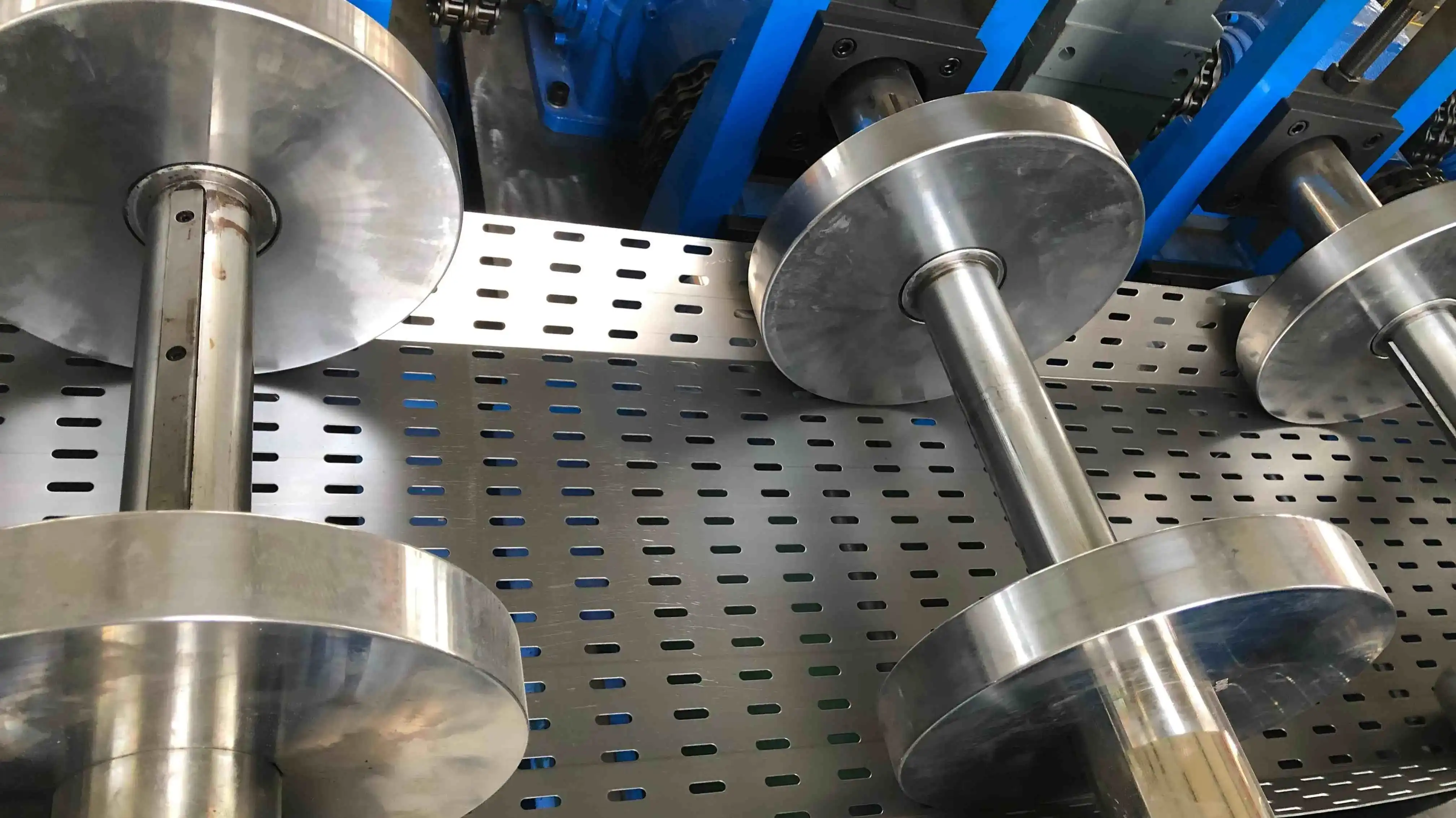
Case Study: Streamlining Production through Roll Forming
Cable tray machine types are made with a wide range of different types of equipment that are set up in different ways to meet different production needs. By being aware of these differences, buyers can choose systems that fit their operational goals and position in the market.
There are different types of equipment used to make cable trays based on their functions. When manufacturers want to make sure their product lines are always the same, standard roll forming machines are the best way to go. They can make trays with solid bottoms or perforated bottoms with fixed width ranges. These systems provide reliable output while requiring little initial investment. This makes them appealing to small and new businesses.
Advanced servo-driven punching systems are used on high-speed production lines to greatly increase throughput without lowering precision. When the servo punch is timed with the speed of the forming, it can make complex patterns of holes at speeds of more than 30 strokes per minute. For manufacturers working on data centre projects that need high-density ventilated trays as standard, this feature is very helpful.
The most advanced choice is a flexible manufacturing system, which can be set up with two-sided roll forming to make trays of different sizes on a single line. With the help of servo motors and linear rails, width adjustment mechanisms make it easy to switch quickly between profiles that are 100 mm to 900 mm wide. This flexibility makes it easier to keep track of inventory and lets manufacturers quickly meet the needs of custom orders without having to keep separate production lines.
Tray formers and cable ladder machines are very different. Cable ladder machines make side rails and rungs that can be put together to make ladder-style cable supports. While both ladders and trays can be used to organise cables, ladders are better for heavy industrial cables, and trays are better for protecting sensitive wiring in commercial buildings.
A number of engineering factors affect how well and how long equipment lasts in harsh manufacturing environments. Stability and vibration control are directly affected by how the machine frame is built. The rigidity of welded steel frames is what keeps the rollers in place during continuous operation. This stops the twist defects that make 6-metre-long products less straight.
The quality of the rollers should be given extra attention when evaluating equipment. For high-end systems, GCr15 bearing steel rollers are used. These rollers are hard enough to reach HRC58–62 after being vacuum quenched. This metal treatment makes sure that rollers don't wear down when working on rough galvanised surfaces. This means that they don't need to be serviced as often and costs less to maintain. The extra layer of protection that hard chrome plating adds reduces friction and keeps the zinc coating from getting damaged during the forming process.
Designing the cutting mechanism affects both the quality of the product and how well it works. With hydraulic shear systems, the cutting force stays the same no matter how hard the material is. This makes clean edges without burrs that could catch cables during installation. With flying shear designs, materials are cut while the production line keeps moving. This means that there are no stop-and-start cycles, which slow down regular systems.
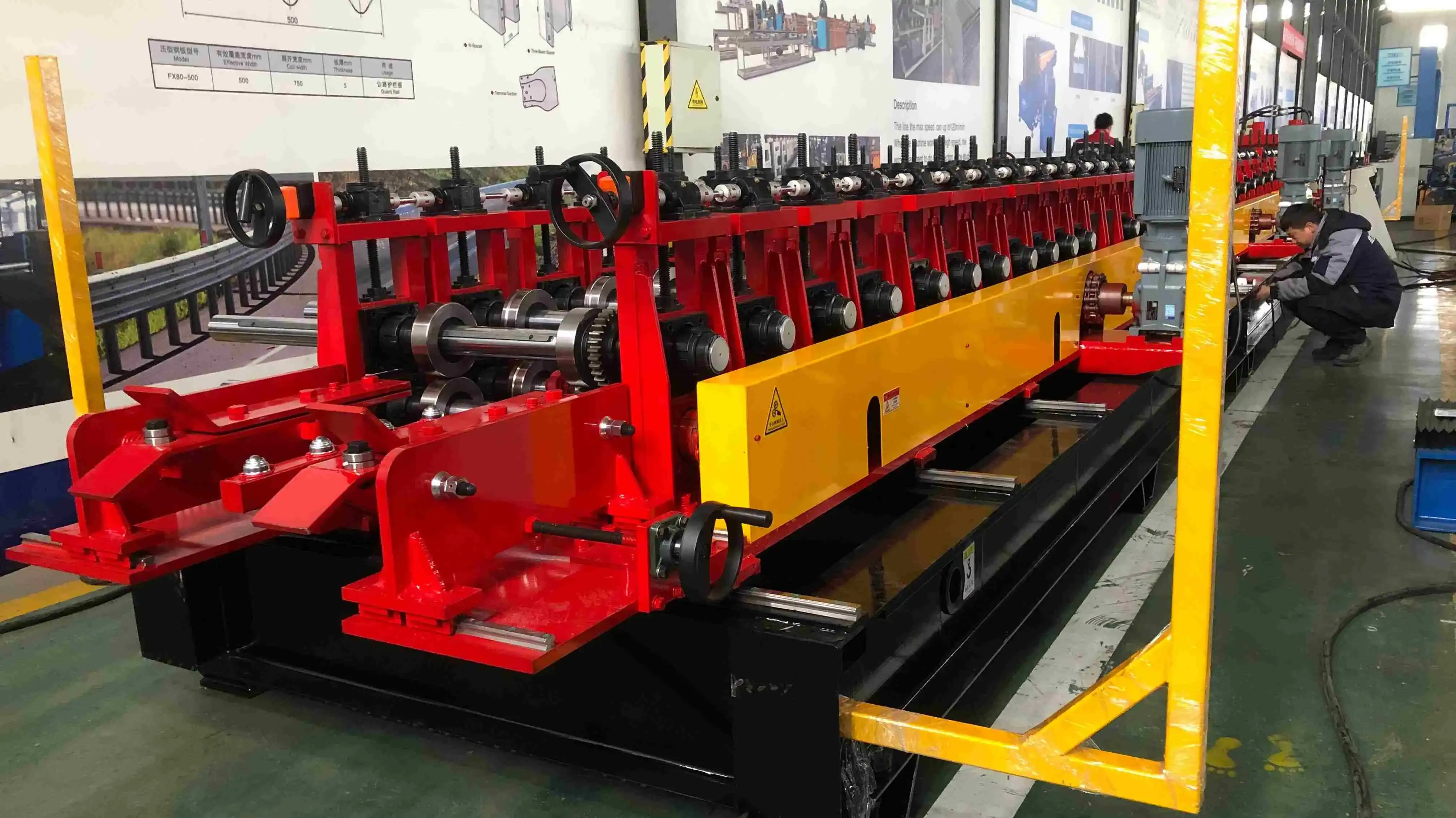
Selecting the Right Roll Forming Machinery for Your Cable Tray Production
In order to choose the right roll-forming equipment, you need to carefully consider your long-term business goals, operational limitations, and production goals. When manufacturers set short-term budget limits, they have to weigh them against expected growth and costs over the product's entire life. Predictions of production volumes are used to choose the right equipment. Standard-speed machines may be enough for manufacturers who want to get into regional markets with moderate demand. These systems usually cost 30–40% less than high-speed alternatives, but they work reliably for businesses that only work one shift.
Growing companies that expect their order volumes to grow quickly should invest in equipment that can be easily expanded. Semi-automatic systems are a good way to get better—servo controls can be added to pneumatic or hydraulic width adjustments as production needs require it. This step-by-step method makes the best use of capital while keeping the options for future growth open.
Large-scale manufacturers that sell to national or international markets need production lines that are fully automated and can work nonstop during multiple shifts, such as a cable tray machine. These systems cost more to buy—often two to three times as much as basic models—but they pay for themselves in reduced labour costs and increased throughput. A fully automatic line run by two technicians can produce the same amount of work as four traditional systems that need eight to ten operators each. This cuts down on labour costs dramatically per unit while also improving consistency.
The economics of production are directly affected by how much energy equipment uses, especially in places where electricity costs a lot. Even when they are not in use, hydraulic systems use power all the time to keep the pressure up. Instead of wasting energy, servo-driven alternatives only use power when they are actively shaping and cutting. This could lower electrical costs by 25–35% in normal production scenarios.
How long and how often equipment works depend a lot on how well the manufacturer can support it. Buyers-to-be should look into a supplier's track record and look for proof of successful installations in production environments like their own. Companies that have helped businesses in more than one country show that they have the organisational skills to provide quick technical support no matter how far away the location is.
The total cost of ownership is greatly affected by how easy it is to get replacement parts. When equipment uses parts that are unique and only come from one source, it can be vulnerable to long downtimes if replacement parts take too long to arrive. Standardised parts, like commercial hydraulic valves, common PLC models, and standard bearings, make maintenance easier and lower the cost of emergency repairs. People who want to buy something should ask for a detailed list of spare parts and make sure that important wear items like cutting blades and punching dies are available locally.
Operator skill has a direct effect on how much work gets done and how long the cable tray machine lasts. Production staff learn faster when they have access to comprehensive training programmes that cover setup procedures, routine maintenance, troubleshooting diagnostics, and safety protocols. Suppliers that offer on-site commissioning and training that lasts for several weeks show that they are committed to a successful implementation. Maintenance staff can quickly figure out what's wrong and fix it by using detailed manuals that include illustrated assembly drawings, electrical schematics, and hydraulic circuit diagrams.
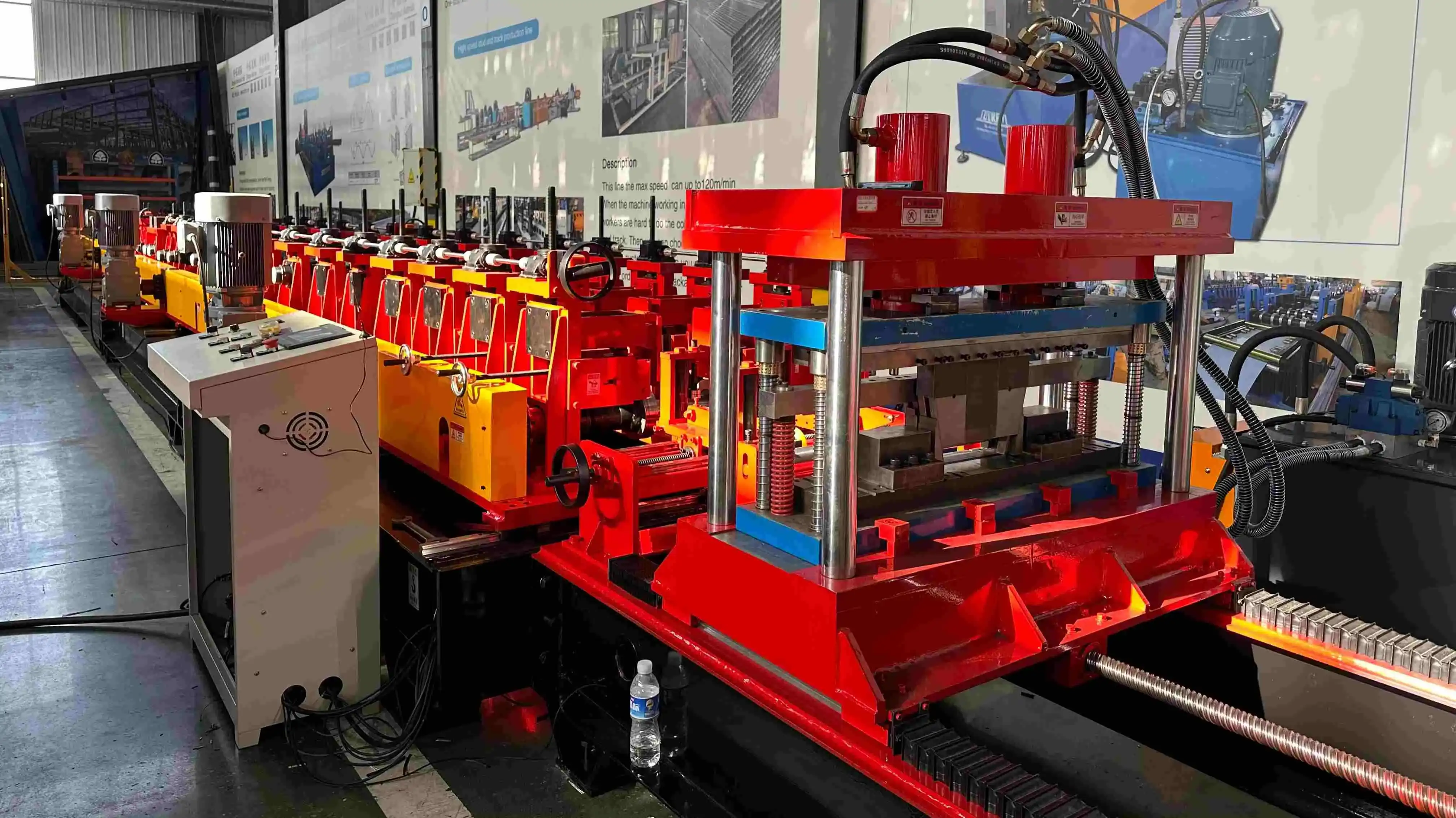
Future Trends in Cable Tray Manufacturing and Roll Forming Innovations
Connected production monitoring systems are slowly bringing Industry 4.0 ideas into the manufacturing of cable trays. In the real world, IoT sensors keep track of machine operating parameters, wear indicators for parts, and production metrics. This lets maintenance plans plan ahead and avoid sudden failures. With cloud-based dashboards, production managers can see how equipment is working in multiple locations from afar, which helps them make decisions based on data.
Sustainability concerns are becoming more and more important in the design of equipment and the choice of materials, including for cable tray machines. Energy-efficient servo systems use less electricity, and variable-frequency drives make motors work best with different loads. Cutting down on material waste by using better nesting algorithms and scrap recovery systems helps the environment and saves money on raw materials. By showing measurable improvements to sustainability in their production processes, companies that sell to environmentally conscious customers gain a competitive edge.
Conclusion
Manufacturers that want to serve the growing global market for electrical infrastructure must buy cable tray machine solutions. The technology uses automated processes that are built into raw metal coils to make precision-formed cable management products that are more consistent than manual fabrication methods. A good way to choose equipment is to carefully look at what the production needs are, how reliable the supplier is, and the total cost of ownership, which includes the initial purchase price. Today's systems with servo controls, programmable automation, and quick-changeover options give businesses the operational flexibility they need to meet a wide range of customer needs while still keeping production costs low. When a manufacturer works with an experienced supplier, they get access to tried-and-true technology and ongoing support that makes sure the equipment works well and the business succeeds in the long term.
FAQ
1. Which one do I need—a fully automatic or a manual cable tray forming system?
The main decision factors are the amount of production and the cost of labour. For operations that make less than 500 tonnes a year, where lower equipment costs outweigh inefficient labour, manual systems work best. When yearly production goes over 1,500 tonnes or when labour costs make up more than 20% of manufacturing costs, fully automatic configurations become economically viable. Product mix complexity also affects automation choices. For example, companies that make more than 10 different tray sizes benefit a lot from automatic changeover systems that cut down on the time needed to set up between production runs.
2. How often does a cable tray machine need to be serviced, and what does routine maintenance include?
Daily maintenance includes checking the roller surfaces visually and making sure the lubrication system works. This takes about 15 to 20 minutes per shift. Every week, tasks like checking the level of hydraulic fluid, inspecting the cutting blade, and making sure the electrical connections are correct take between one and two hours. Maintenance that is done once a month includes checking the roller alignment in great detail, replacing the hydraulic filter, and diagnosing the control system. This usually takes 4 to 6 hours.
3. Can one machine produce multiple cable tray widths?
Modern roll forming systems offer adjustable width capabilities through cantilevered or servo-driven side rail positioning, enabling production of tray widths ranging from 100mm to 800mm on a single line. Width changes typically require 10-20 minutes for adjustment and verification, depending on system design. This flexibility allows manufacturers to accommodate diverse customer specifications without maintaining separate dedicated lines for each size variant.
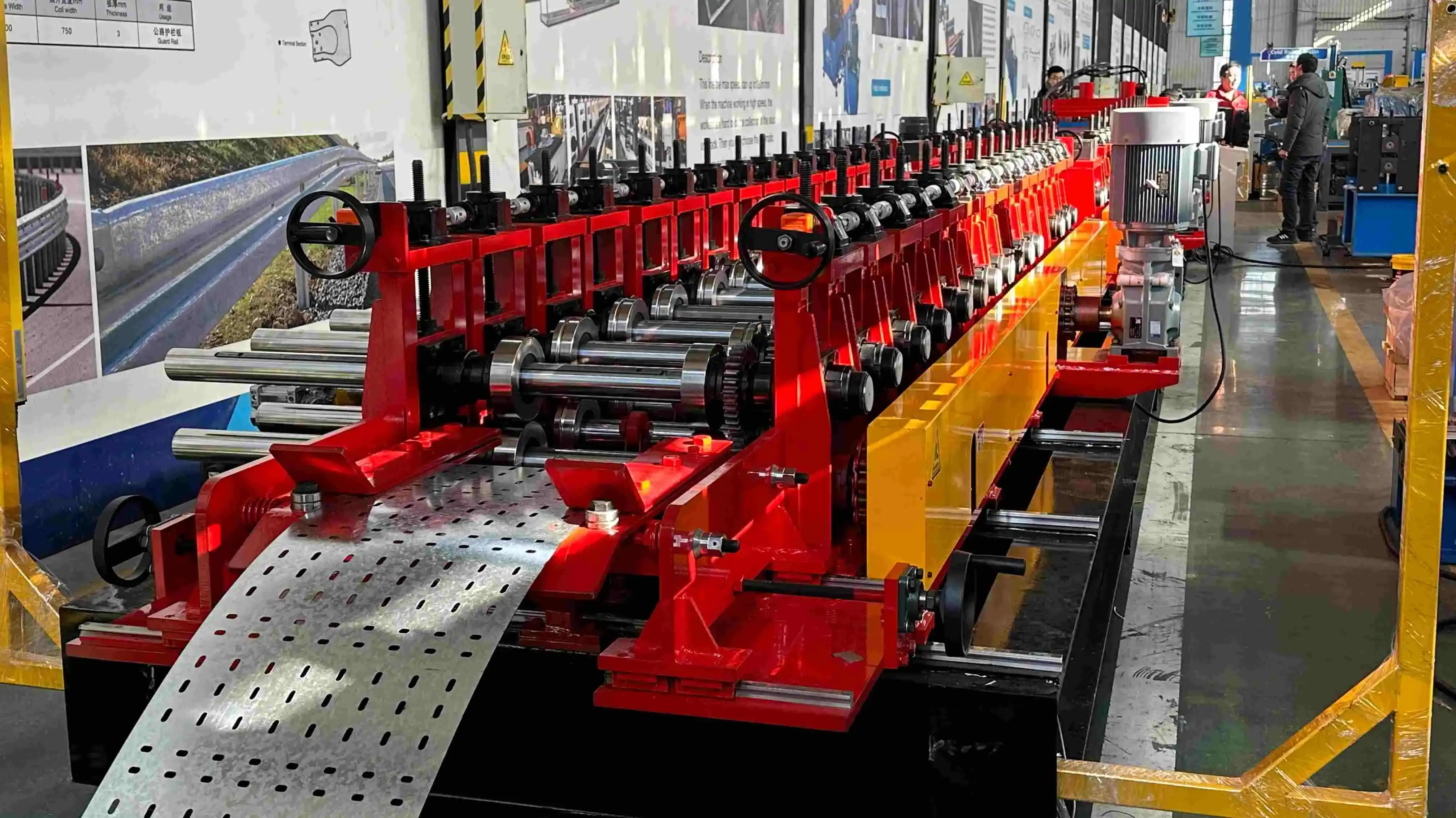
Partner with ZTRFM for Superior Cable Tray Roll-Forming Solutions.
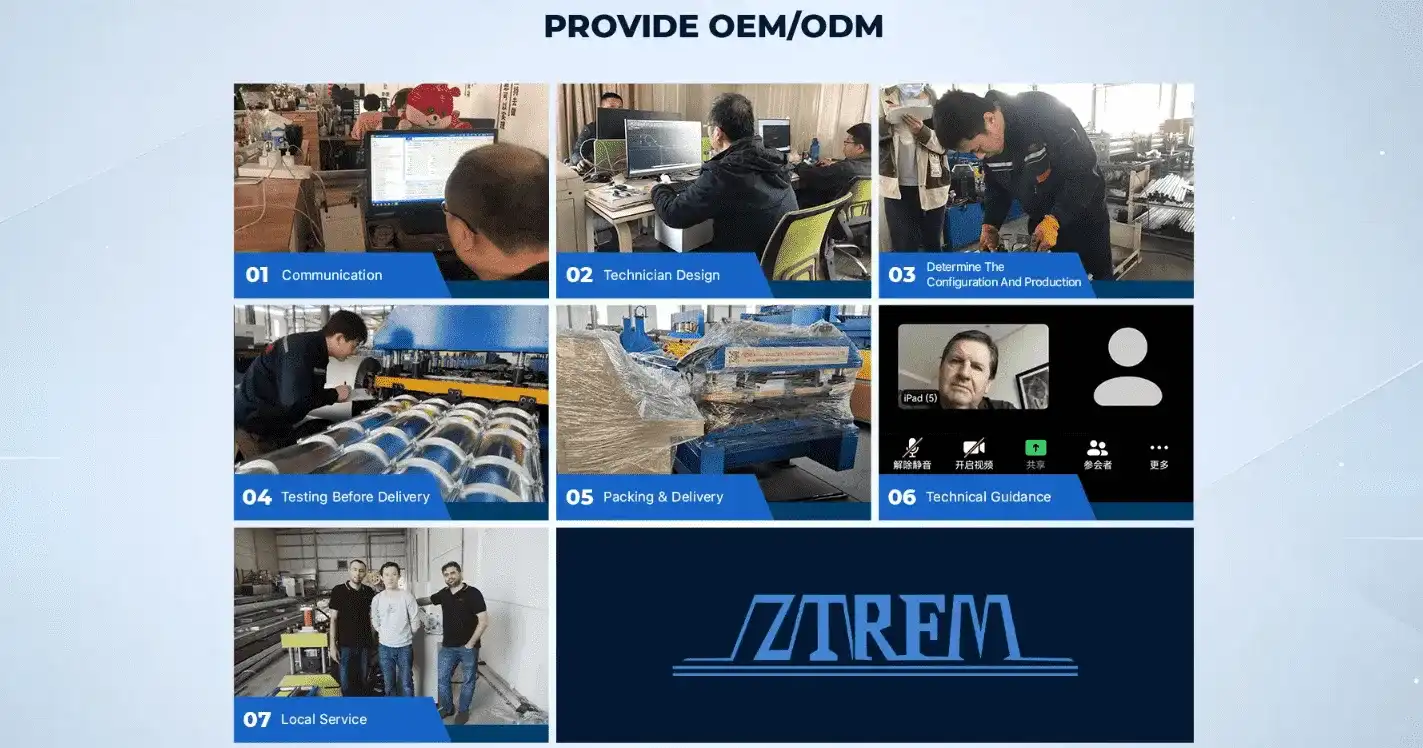
Understanding the whole production process helps you figure out what needs to be done for quality control and how to make the process run more smoothly. Integrated automation turns raw materials into finished products with little to no human input in modern cable tray machine operations.
The first step in the manufacturing process is the decoiling station, where coils of raw materials are put on mandrels that can hold up to three to five tonnes of weight. Hydraulic expansion mechanisms hold the coil in place, and motorised rotation feeds material into the production line at speeds that match those of operations further downstream. When you punch or form something, tension controls stop the material from sagging, which could lead to problems with alignment.
The material then goes through the levelling unit, which uses several small-diameter rollers set up in upper and lower positions to get rid of coil set. This step of levelling is very important for making sure that the finished trays are the right size because the flatness of the material affects both the accuracy of the shaping and the straightness of the finished product. The flattened strip is moved to the servo punching press, which makes holes and slots in a pattern that has been programmed ahead of time.
After the material is perforated, it goes into the cable tray machine roll forming section. There are 14 progressive forming stations that slowly bend the flat strip into the shape of a cable tray. At the hydraulic cutting station, 5.5kW hydraulic cylinders move the shear blades through the material as the profile is formed. Because of how the cutting system is built, the length can be changed through PLC programming, which means that custom lengths can be made without any mechanical changes.
Throughout the production process, strategic quality checks make sure that finished products meet the requirements. Dimensional verification after shaping checks the profile's height, width, and the straightness of its edges. IEC 61537 standards are used to test the structural integrity of finished trays. This makes sure that the forming pressure was high enough to achieve the needed strength without microcracking the galvanized coating. Multiple performance metrics show that integrated automation is good for business. Improving labor productivity is one of the biggest benefits. Fully automated lines cut the amount of direct labor needed by 60–75% compared to manual operations while also increasing output.Please contact us immediately via email at rollformingmachinemanufacturer.com.
References
1. Industrial Metal Forming Association. (2022). Advanced Roll Forming Technologies: Applications and Best Practices in Cable Management Systems. Chicago: IMFA Technical Publications.
2. Henderson, R. & Martinez, J. (2023). "Automation Impact on Metal Profile Manufacturing Efficiency: A Comparative Analysis." Journal of Manufacturing Processes and Systems, 47(3), 215-234.
3. Global Infrastructure Equipment Review. (2023). Cable Tray Production Equipment: Market Analysis and Technology Trends 2023-2028. London: Industrial Insights Publishing.
4. Thornton, M. (2021). Precision Metal Forming: Engineering Principles and Production Applications. New York: Manufacturing Technology Press.
5. American Society of Mechanical Engineers. (2022). "Quality Control Standards for Cold Roll Formed Cable Support Systems." ASME Technical Standards Bulletin, Issue 8, 112-129.
6. Zhao, L., Peterson, K., & Ivanov, D. (2023). "Industry 4.0 Integration in Roll Forming Operations: Performance Outcomes from IoT Implementation." International Journal of Advanced Manufacturing Technology, 118(5-6), 1847-1863.
_1750323743240.webp)