- English
- French
- German
- Portuguese
- Spanish
- Russian
- Japanese
- Korean
- Arabic
- Irish
- Greek
- Turkish
- Italian
- Danish
- Romanian
- Indonesian
- Czech
- Afrikaans
- Swedish
- Polish
- Basque
- Catalan
- Esperanto
- Hindi
- Lao
- Albanian
- Amharic
- Armenian
- Azerbaijani
- Belarusian
- Bengali
- Bosnian
- Bulgarian
- Cebuano
- Chichewa
- Corsican
- Croatian
- Dutch
- Estonian
- Filipino
- Finnish
- Frisian
- Galician
- Georgian
- Gujarati
- Haitian
- Hausa
- Hawaiian
- Hebrew
- Hmong
- Hungarian
- Icelandic
- Igbo
- Javanese
- Kannada
- Kazakh
- Khmer
- Kurdish
- Kyrgyz
- Latin
- Latvian
- Lithuanian
- Luxembou..
- Macedonian
- Malagasy
- Malay
- Malayalam
- Maltese
- Maori
- Marathi
- Mongolian
- Burmese
- Nepali
- Norwegian
- Pashto
- Persian
- Punjabi
- Serbian
- Sesotho
- Sinhala
- Slovak
- Slovenian
- Somali
- Samoan
- Scots Gaelic
- Shona
- Sindhi
- Sundanese
- Swahili
- Tajik
- Tamil
- Telugu
- Thai
- Ukrainian
- Urdu
- Uzbek
- Vietnamese
- Welsh
- Xhosa
- Yiddish
- Yoruba
- Zulu
The Top Benefits and Best Uses For metal wall panel machine
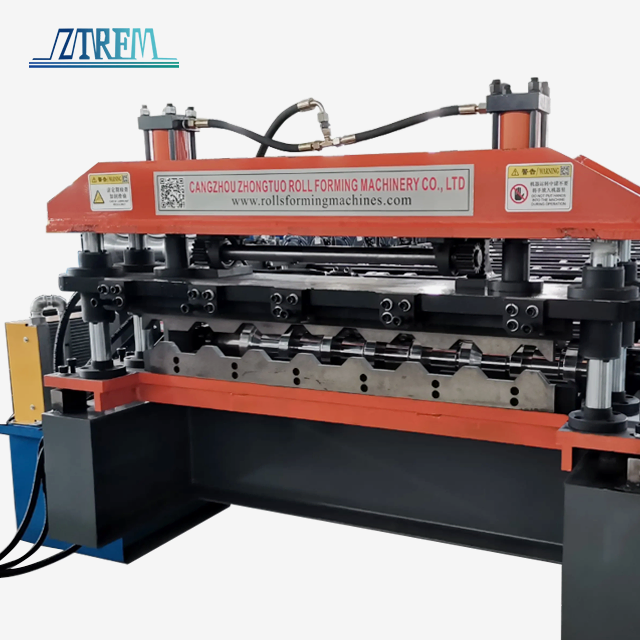
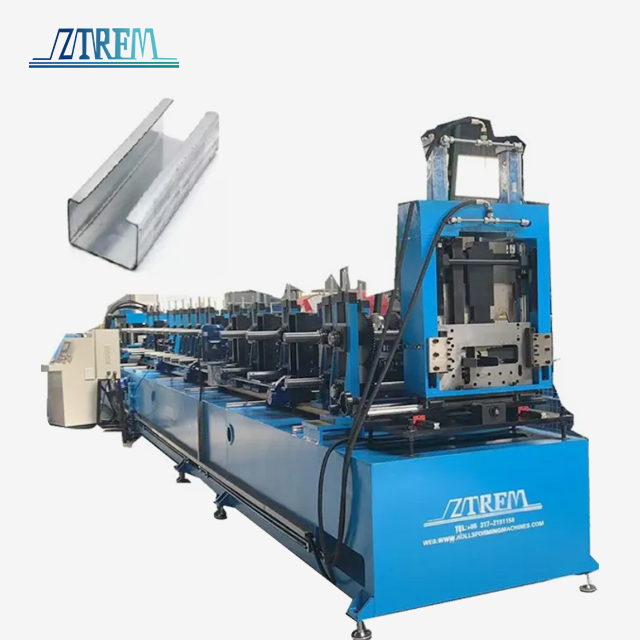
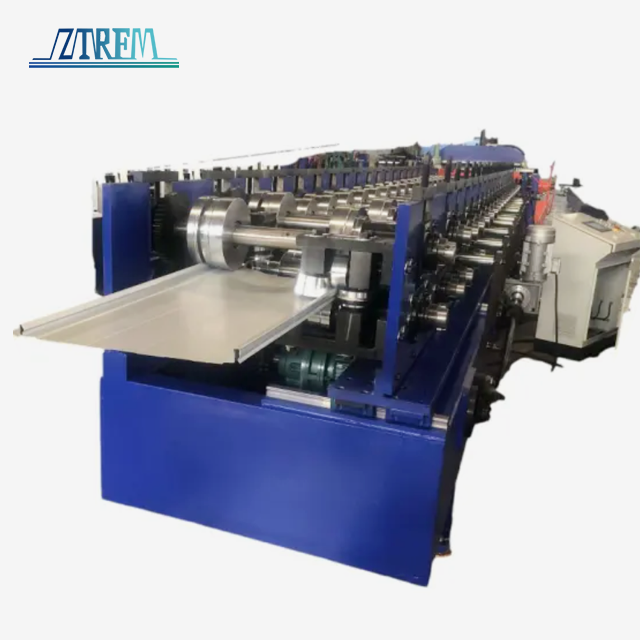
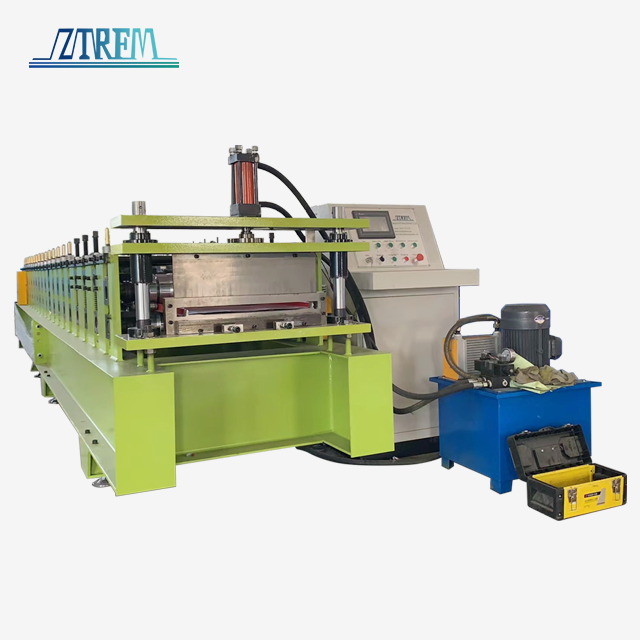
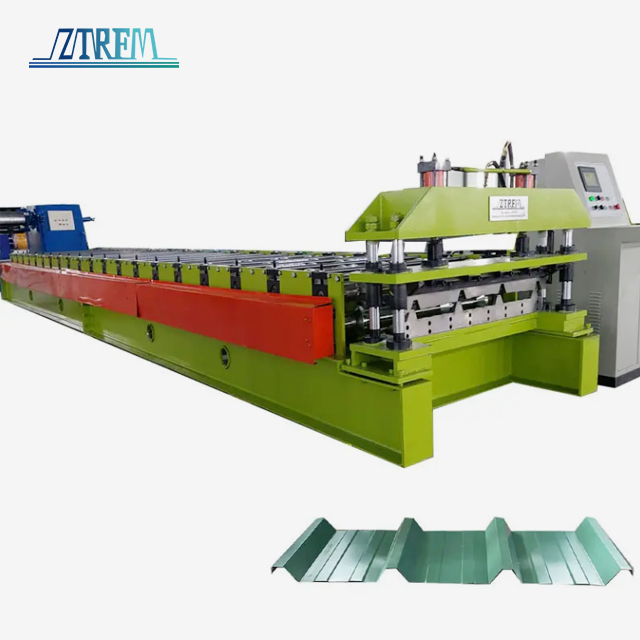
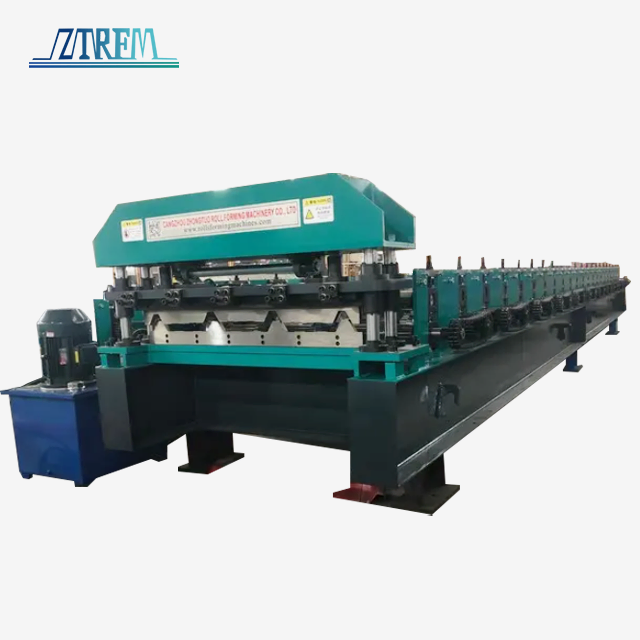
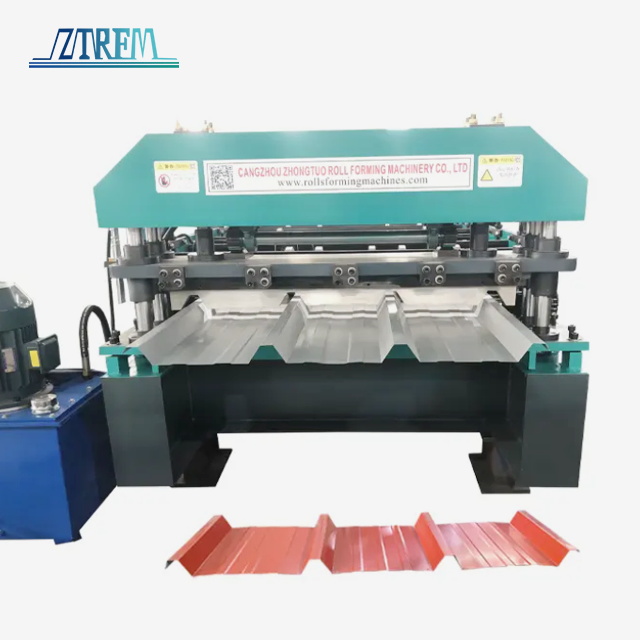
When roofing system manufacturers and steel structure fabricators face tight project deadlines alongside demands for flawless panel consistency, the metal wall panel machine emerges as the definitive solution. This continuous cold roll-forming equipment transforms flat steel coils into precise architectural cladding profiles at speeds reaching 40 metres per minute, eliminating the variability inherent in manual fabrication. By integrating automated cutting, embossing, and stacking capabilities, these production lines address the construction industry's most pressing challenges: reducing material waste below 2%, maintaining geometric tolerances within 0.5 mm, and scaling output without proportional labour increases. For building envelope contractors and pre-engineered building suppliers operating in competitive U.S. markets, investing in advanced panel-forming technology directly translates to winning bids through faster turnaround times and superior product quality.
Understanding Core Technical Advantages
Production efficiency stands as the primary benefit driving adoption across metal fabrication shops. Modern roll forming lines process coil material continuously rather than in discrete press brake operations, achieving throughput rates 6-8 times faster than traditional bending methods. The machine's multiple roller stations—typically 18 to 24 pairs depending on profile complexity—progressively shape metal without stress concentrations that cause cracking in abrupt bends.
Material versatility represents another critical strength. Equipment handles galvanised steel, Galvalume, and PPGI coatings ranging from 0.3 mm to 0.8 mm thickness without tooling changes for gauge variations within this range. The heavy-duty side-stand construction absorbs rolling pressures exceeding 15 tonnes per station, preventing frame deflection that would compromise dimensional accuracy. Heat-treated Cr12MoV rollers maintain surface hardness ratings of HRC 58-62, ensuring they resist wear even when processing abrasive zinc-coated substrates over multi-year production cycles.
Precision control through industrial PLCs allows operators to programme cutting lengths with +/- 1.0 mm accuracy across panels spanning 12 metres. This repeatability proves invaluable when fabricating concealed-fixing wall systems where adjacent panels must interlock seamlessly. The servo-driven hydraulic cutting system delivers clean shears without burrs that could scratch protective coatings or create safety hazards during installation. Compared to plasma or abrasive cutting, mechanical shearing preserves the substrate's integrity at cut edges, reducing corrosion initiation points.
Automation integration reduces labour requirements dramatically. Auto-stacking systems accumulate finished panels in bundled quantities matching job site delivery specifications, eliminating manual handling that risks surface damage. Entry coil handling equipment—including decoilers with hydraulic expansion and motorised loading carriages—allows single operators to manage 5-tonne coils safely. These ergonomic improvements not only cut payroll expenses but also minimise workplace injuries associated with heavy material manipulation.

Key Applications Across Industrial Sectors
Warehouse and distribution centre construction consumes significant volumes of high-rib trapezoidal panels produced by these machines. The deep corrugations—often 40mm to 60mm in height—provide superior structural spanning capabilities, allowing builders to space secondary framing at wider intervals. When forming G550 high-tensile steel, the equipment's adjustable over-bending stations compensate for material spring-back, ensuring profiles maintain design geometry under load. Environmental conditions in logistics facilities frequently involve forklift impacts and temperature cycling, making the machine's ability to form thicker gauges without roller damage economically significant.
Commercial facade applications demand entirely different capabilities. Architectural siding for retail complexes and office buildings requires perfectly flat surfaces free from oil canning—the visible waviness that occurs when residual stresses remain in thin-gauge panels. Sophisticated levelling systems within the entry section of premium production lines precondition coil material, removing inherent coil set before forming begins. The machine's capacity to incorporate embossing rollers adds subtle texture patterns that both stiffen the panel structurally and create visual interest without additional finishing operations.
Modular construction and temporary housing sectors rely on rapid panel fabrication to meet accelerated building schedules, and the metal wall panel machine supports this. Container home manufacturers value equipment configurations that process lighter 0.3 mm to 0.4 mm materials efficiently. Despite reduced thickness, the machine maintains profile fidelity through roller surface preparation—hard chrome plating, polished to mirror finishes, prevents the micro-scratching that would compromise pre-painted surfaces. The ability to produce shorter panel lengths (1.5m to 3.0m) without production speed penalties aligns perfectly with modular unit dimensions.
ZTRFM Equipment Advantages Over Competitors
Our engineering approach at ZTRFM prioritises long-term production stability rather than minimising initial equipment costs. The difference becomes apparent in structural design: we employ a 16mm steel plate for machine frames versus the 10mm plate used in economy models. This mass increase dampens vibrations that accumulate during continuous operation, preserving roller alignment over years rather than months. Customers operating three-shift schedules report our machines maintain original tolerances after processing 2,000 tonnes of material—a durability benchmark competitors rarely publish.
Component selection reflects our quality-first philosophy. Mitsubishi or Siemens PLCs provide control reliability far exceeding generic alternatives, with failure rates below 0.1% annually based on our installed base data across 150 countries. The hydraulic cutting system incorporates German-engineered proportional valves that modulate pressure dynamically, extending blade life by 40% compared to fixed-pressure designs. When blades do require replacement after processing approximately 500,000 cuts, our quick-change cartridge design completes the service in under 30 minutes without specialised technicians.
Customisation capabilities distinguish our solutions for specialised applications. Composite sandwich panel manufacturers need synchronised material feeding when combining steel faces with insulation cores—our equipment integrates servo-controlled unwinders, maintaining constant web tension across dissimilar materials. For clients producing interlocking concealed-fixing profiles, we engineer roller geometries that form the locking ribs without material thinning, a common failure mode in standard equipment. OEM and ODM services extend to control interface customisation, allowing integration with existing factory management systems.
Global after-sales support addresses the reality that production line downtime costs $500 to $2,000 hourly in lost output and labour. We maintain spare parts inventories in regional distribution centres, guaranteeing 48-hour delivery for consumables like cutting blades and 7-day delivery for major components such as gearboxes. Remote diagnostic capabilities through cellular modem connections enable our technicians to troubleshoot 70% of operational issues without site visits, dramatically reducing resolution times.

Maximising Return on Investment
Selecting appropriate specifications for a metal wall panel machine begins with accurate production volume forecasting. Operations targeting 50,000 to 100,000 square metres of annual panel output benefit from single-profile machines optimised for one geometry, achieving price points between $45,000 and $75,000. Manufacturers serving diverse project types should evaluate cassette-change systems or dual-layer configurations that produce two profiles from one frame, despite 30-40% cost premiums. The break-even calculation depends on changeover frequency—cassette swaps requiring 4 hours justify investment when profile changes occur weekly.
Material specifications directly impact equipment configuration. Clients processing exclusively thin PPGI (0.3 mm-0.5 mm) for residential siding avoid unnecessary costs by specifying lighter roller loading capacities. Conversely, industrial fabricators forming 0.7mm to 0.8mm structural panels require reinforced drive systems with 15kW to 22kW motors versus the 7.5kW units adequate for lighter gauges. Mis-specifying motor capacity leads to either premature failure from overload or wasted energy from oversized drives.
Operational training determines whether sophisticated equipment delivers theoretical performance. Our comprehensive programmes cover four critical areas: material preparation, including coil edge inspection and tension adjustment; roller alignment verification using dial indicators; PLC parameter optimisation for different steel grades; and preventive maintenance scheduling. Operators mastering these fundamentals reduce scrap rates from the industry average of 5-7% down to 2-3%, translating to $15,000 to $30,000 annual savings on typical production volumes.
Preventive maintenance extends equipment lifespan significantly. Bearing assemblies require re-greasing every 500 operating hours using lithium-based lubricants rated for rolling mill applications. Chain drives need tension checks monthly, as slack exceeding 15mm accelerates sprocket wear exponentially. The hydraulic system demands annual fluid analysis to detect contamination before valve failures occur—replacement fluid costs $200, while valve repairs exceed $3,000. Documenting these services creates valuable operational data that predicts component replacement timing, preventing unplanned downtime.

Quality Benchmarks and Inspection Protocols
Roller surface integrity determines final panel appearance. Before shipment, we conduct hardness testing at 12 points per roller using Rockwell C scale equipment, rejecting any reading below HRC 56. This threshold ensures rollers resist the micro-deformation that creates longitudinal streaking on pre-painted surfaces. The hard chrome plating thickness—specified at 0.08mm to 0.12mm—receives ultrasonic measurement verification; insufficient plating wears through within months when processing abrasive galvanised coatings.
Shaft alignment accuracy directly affects panel straightness. We measure run-out using dial indicators positioned at roller centres, accepting maximum deviations of 0.03 mm. Excessive run-out generates oscillating forces that appear as wavy edges on finished panels, a defect particularly visible on long panels exceeding 8 metres. The alignment process involves shimming bearing housings and precision-grinding shaft journals—time-intensive procedures that economy manufacturers skip to reduce costs.
Full-load running tests validate integrated performance under realistic conditions. We process 3 to 5 tonnes of actual coil material at specified production speeds, monitoring motor amperage, hydraulic pressure stability, and panel dimensional consistency across 100 consecutive pieces. Temperature rise in gearboxes and bearings receives infrared scanning—hotspots indicate inadequate lubrication or misalignment requiring correction before customer delivery. This rigorous testing identifies integration issues that bench testing individual components cannot reveal.
Cutting system evaluation focuses on edge quality. Burr height measurements using micrometre gauges must not exceed 0.05 mm—larger burrs create handling injuries and accelerate edge corrosion by disrupting coating continuity. For the metal wall panel machine, blade gap settings between upper and lower shears require adjustment to within 0.1 mm; excessive clearance produces ragged edges while insufficient clearance causes premature blade dulling. We document optimal gap settings for each material thickness, providing customers with reference data that simplifies production setup.

Conclusion
Investing in advanced roll forming technology represents a strategic decision that impacts competitiveness across multiple dimensions. The immediate benefits—tripled production speeds, sub-2% scrap rates, and reduced labour requirements—deliver measurable ROI within 18-24 months for typical fabrication operations. Long-term advantages, including consistent quality, expanded profile capabilities, and reduced maintenance downtime, compound these gains over equipment lifespans exceeding 15 years. For manufacturers committed to growth in increasingly competitive metal building markets, partnering with experienced suppliers who provide comprehensive technical support and proven global service networks makes the difference between adequate performance and industry-leading results.
FAQ
1. Can equipment produce multiple panel profiles efficiently?
Single-profile machines optimise precision and cost for dedicated production. Dual-layer configurations or cassette-change systems accommodate multiple profiles within limited floor space, though initial investment increases 35-50%. The decision depends on changeover frequency—cassette swaps requiring 3-4 hours become economical when profile changes occur weekly or more often.
2. How do machines handle spring-back in high-tensile steel?
Advanced equipment incorporates adjustable over-bending stations at final forming stages. These stations deliberately bend material beyond target geometry, allowing elastic recovery to settle at precise dimensions. The over-bend angle—typically 2 to 5 degrees depending on steel grade—requires calibration when switching between G550 and lower-yield materials.
3. What maintenance cycle applies to cutting blades?
Blade lifespan depends on production volume and material hardness. Typical schedules call for inspection every 200,000 cuts, with sharpening or replacement needed after 500,000 to 1,000,000 cuts. Regular gap adjustment checks every 50,000 cuts prevent burr formation. Using blades beyond optimal service life increases edge defects and risks catastrophic blade failure.
4. Does the equipment accommodate aluminium coil processing?
Aluminium compatibility requires specialised roller surface preparation—hard chrome plating, polished to mirror finishes, prevents galling, the metal transfer that occurs with softer substrates. Forming station pressures need to be reduced by 30-40% compared to steel settings. While technically feasible, dedicated aluminium equipment delivers superior results for high-volume applications.
Partner with ZTRFM for Superior Wall Panel Manufacturing Solutions
As an established metal wall panel machine manufacturer with ISO9001 and CE certifications, ZTRFM delivers production line solutions engineered for demanding North American markets. Our equipment combines precision German components with cost-effective engineering, providing the reliability international EPC companies require alongside the value small fabricators need. Contact our technical team at zhongtuorollforming@gmail.com to discuss your specific panel profiles, production volumes, and material specifications—we'll design customised solutions that transform your manufacturing capabilities.

References
1. Johnson, M. R. (2021). Cold Roll Forming Technology for Metal Building Components. Industrial Press Publications.
2. Martinez, S. & Chen, L. (2020). Precision Manufacturing in Steel Construction: Equipment and Processes. American Society of Mechanical Engineers Technical Papers.
3. Thompson, D. A. (2022). Advanced Roll Forming Systems: Design, Operation, and Maintenance. Metal Construction Association Technical Bulletin Series.
4. Wu, H. & Peterson, K. (2019). Material Handling and Processing in Modern Metal Fabrication. International Journal of Manufacturing Engineering, Vol. 34, pp. 127-145.
5. Bradford, T. E. (2023). Pre-Engineered Building Systems: Manufacturing Technologies and Quality Standards. Construction Industry Institute Research Report.
6. Anderson, J. P. (2020). Automated Metal Forming Equipment: Comparative Performance Analysis. Fabricators & Manufacturers Association Technical White Paper.