- English
- French
- German
- Portuguese
- Spanish
- Russian
- Japanese
- Korean
- Arabic
- Irish
- Greek
- Turkish
- Italian
- Danish
- Romanian
- Indonesian
- Czech
- Afrikaans
- Swedish
- Polish
- Basque
- Catalan
- Esperanto
- Hindi
- Lao
- Albanian
- Amharic
- Armenian
- Azerbaijani
- Belarusian
- Bengali
- Bosnian
- Bulgarian
- Cebuano
- Chichewa
- Corsican
- Croatian
- Dutch
- Estonian
- Filipino
- Finnish
- Frisian
- Galician
- Georgian
- Gujarati
- Haitian
- Hausa
- Hawaiian
- Hebrew
- Hmong
- Hungarian
- Icelandic
- Igbo
- Javanese
- Kannada
- Kazakh
- Khmer
- Kurdish
- Kyrgyz
- Latin
- Latvian
- Lithuanian
- Luxembou..
- Macedonian
- Malagasy
- Malay
- Malayalam
- Maltese
- Maori
- Marathi
- Mongolian
- Burmese
- Nepali
- Norwegian
- Pashto
- Persian
- Punjabi
- Serbian
- Sesotho
- Sinhala
- Slovak
- Slovenian
- Somali
- Samoan
- Scots Gaelic
- Shona
- Sindhi
- Sundanese
- Swahili
- Tajik
- Tamil
- Telugu
- Thai
- Ukrainian
- Urdu
- Uzbek
- Vietnamese
- Welsh
- Xhosa
- Yiddish
- Yoruba
- Zulu
What is a metal roof roll-forming machine?
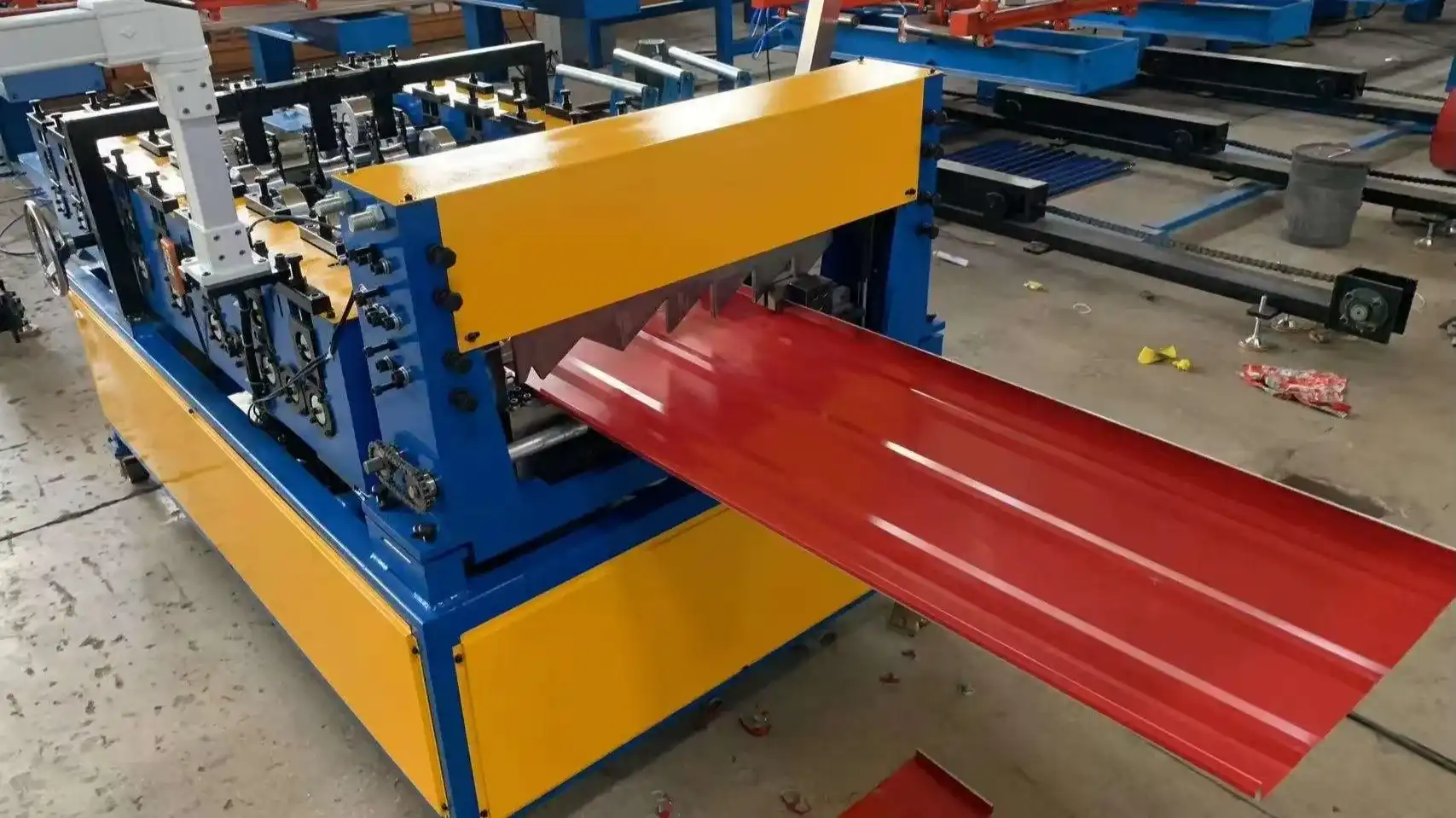
When you think about the metal roofs protecting warehouses, commercial buildings, metal wall panel machines, and modern homes across America, have you ever wondered how those perfectly profiled panels are created? A metal roof roll forming machine is a specialized industrial cold forming system that continuously transforms flat metal coils—typically galvanized steel, Galvalume, or pre-painted steel—into precisely shaped roofing profiles through a series of sequential roller stations. Unlike traditional press brakes that bend metal piece by piece, this automated equipment executes smooth, continuous forming at speeds reaching 15-30 meters per minute, delivering consistent quality that manual methods simply cannot match.
The Critical Problems Metal Roof Roll Forming Equipment Solves
Throughout my years working with roofing manufacturers and metal building contractors, I've witnessed the same frustrations repeatedly. Production bottlenecks crush delivery schedules. Inconsistent panel profiles lead to installation headaches and callbacks. Material waste eats into already thin margins.
Metal roof roll forming machines address these pain points head-on. Building roofing system manufacturers face relentless pressure to increase output without sacrificing quality. Traditional fabrication methods create variation between panels—sometimes imperceptible individually but catastrophic when installers discover mismatched profiles on-site.
The cold roll forming process eliminates human error from the equation. Each panel emerges identical to the last, with tolerances measured in fractions of millimeters. This consistency translates directly to faster installation, reduced site labor costs, and virtually zero callback rates for fit issues.
Material optimization represents another massive advantage. When you're processing thousands of square feet daily, even small reductions in scrap percentages add up quickly. Advanced metal wall panel manufacturing equipment incorporates PLC-controlled measurement systems that calculate exact cut lengths, minimizing waste to less than 2% in most applications.
Core Features That Drive Manufacturing Excellence
Understanding what separates professional-grade equipment from basic models matters enormously when you're making a capital investment decision.
The decoiler system serves as the foundation of the entire production line. Heavy-duty hydraulic decoilers handle coil weights exceeding 10 tons, maintaining consistent tension as the coil diameter decreases. Automatic expansion mandrels adjust to different coil inner diameters, eliminating time-consuming manual adjustments during material changeovers.
Leveling systems correct the inherent curve memory in coiled material. Professional machines incorporate 5-7 leveling rollers with adjustable pressure, ensuring the metal strip enters the forming stations perfectly flat. This seemingly minor detail in the metal wall panel machine prevents progressive misalignment that compounds through subsequent forming stages.
The roll forming stations themselves represent the heart of the machine. High-quality equipment features 18-25 forming stations machined from hardened steel, chrome-plated, and precision-ground. Each station incrementally shapes the profile, distributing the forming stress to prevent material work-hardening or surface damage.
Servo-driven length measurement and cutting systems deliver accuracy within ±1mm across panels extending 40 feet or more. Hydraulic cutting mechanisms slice through 24-gauge steel cleanly, without burrs that slow installation or create safety hazards.
The Technology Powering Consistent Performance
The engineering principles behind metal roof roll-forming machines combine metallurgical knowledge with mechanical precision. Cold forming works the metal below its recrystallization temperature, work-hardening the material slightly while maintaining the protective coating integrity.
Roller design requires sophisticated finite element analysis. Engineers must calculate the exact profile progression through each station, accounting for material spring-back—the tendency of formed metal to partially return to its original shape. High-tensile strength materials like G550 steel exhibit greater spring-back, requiring over-bending compensation in the final forming stages.
Synchronization systems ensure all driven components operate in perfect harmony. The decoiler feed rate, forming station speed, cutting mechanism cycle, and run-out table conveyance must maintain identical linear velocities. Even slight speed mismatches create surface scratches on pre-painted materials or dimensional inaccuracies.
For manufacturers producing architectural metal wall panels with visible surface requirements, roller surface finish becomes paramount. Mirror-polished chrome plating prevents micro-scratching of PVDF or polyester coatings that metal wall panel machine would be unacceptable on commercial facades.
Key Advantages of Transforming Roof Panel Production
The strategic benefits of implementing automated roll forming extend far beyond simple production speed increases.
Labor efficiency improvements typically range from 300-500% compared to traditional fabrication. A single operator manages the entire production line, performing quality checks and handling material loading rather than manually operating the bending equipment. This labor reduction directly impacts your per-square-foot production cost.
Quality consistency eliminates the variation inherent in manual processes. Every panel profile matches engineering specifications exactly, reducing installation time by 20-30% according to multiple contractor testimonials I've gathered. Installers work faster when panels align perfectly without field adjustments.
Production flexibility allows manufacturers to respond quickly to market demands. Changeover between different profiles—switching from corrugated roofing to standing seam panels, for instance—takes 2-4 hours with cassette-style roller systems compared to days of downtime with older equipment designs.
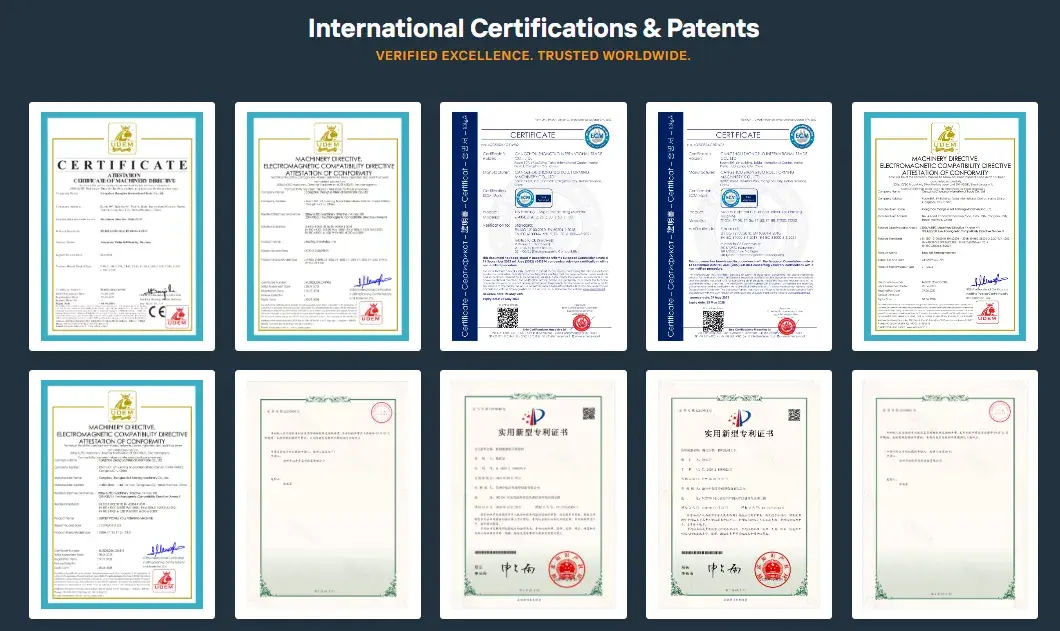
Global competitiveness depends increasingly on certification compliance. ISO9001 and CE-marked equipment meets international quality standards, opening export opportunities that inferior machinery cannot access. Many international engineering firms and EPC companies specifically require certified equipment in their supplier qualification criteria.
Important Considerations Before Your Investment
Honest discussion of limitations and practicalconsiderations helps you make informed decisions rather than discovering issues after purchase.
Initial capital investment represents a significant hurdle, particularly for startups and small metal products manufacturers. Quality metal wall panel machines range from $45,000 for basic corrugated sheet equipment to $250,000+ for sophisticated dual-layer systems with automatic changeover capability. However, financing options and the rapid ROI from increased production capacity typically justify the expense within 18-24 months.
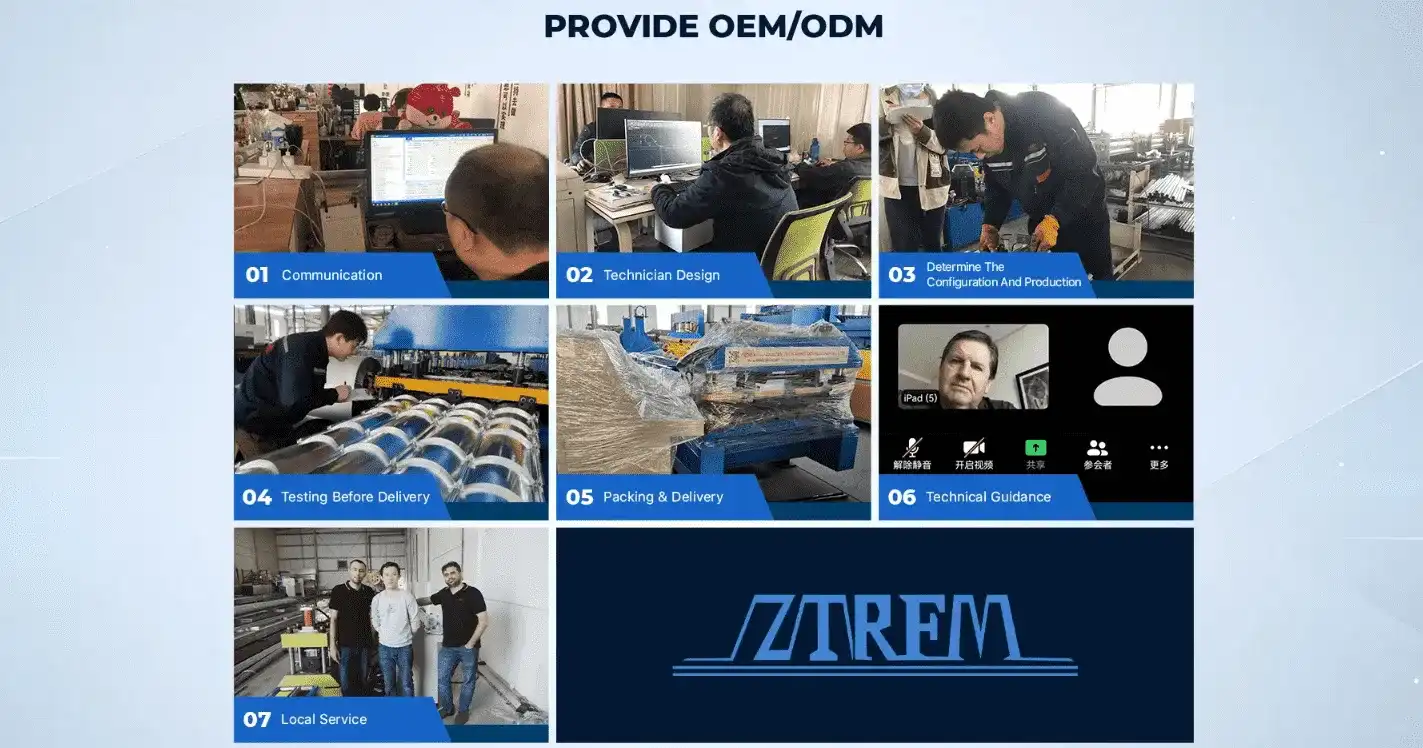
Technical expertise requirements shouldn't be underestimated. While modern machines feature user-friendly controls, proper operation demands understanding of material properties, roller adjustment procedures, and preventive maintenance protocols. Comprehensive training from your equipment supplier—something we provide extensively at ZTRFM—makes the difference between smooth operations and constant troubleshooting headaches.
Facility requirements extend beyond the machine footprint. You'll need adequate ceiling height for coil loading equipment, sufficient electrical service (typically 3-phase 60Hz power), and climate-controlled environments in regions with extreme temperatures. Metal contracts and expands with temperature changes, affecting dimensional accuracy if your facility lacks environmental control.
How Professional Equipment Outperforms Basic Alternatives
The market offers various forming equipment options at the metal wall panel machine, with dramatically different price points. Understanding the distinctions helps justify investment in quality systems.
Manual bending machines and basic panel formers cost 60-70% less than automated roll forming lines. However, production speed rarely exceeds 5 meters per minute, and consistency depends entirely on operator skill. For low-volume specialty work, these tools serve adequately. For production manufacturing, they represent a false economy—the labor cost differential alone negates the equipment savings within months.
Generic imported equipment floods the market with attractive pricing. Many manufacturers report initial satisfaction followed by mounting frustration with dimensional drift as roller bearings wear, difficulty sourcing replacement parts, and non-existent technical support. The $20,000 saved on purchase price becomes $50,000 in lost production and retrofit costs within two years.
Premium European and North American equipment commands top-tier pricing with legitimate justification—precision machining, proprietary roller coatings, and comprehensive support networks. These machines excel in high-specification architectural applications where zero defects are non-negotiable.
Ideal Customers and Applications for Roll Forming Systems
Different buyer segments derive distinct value from metal roof roll-forming equipment based on their operational priorities.
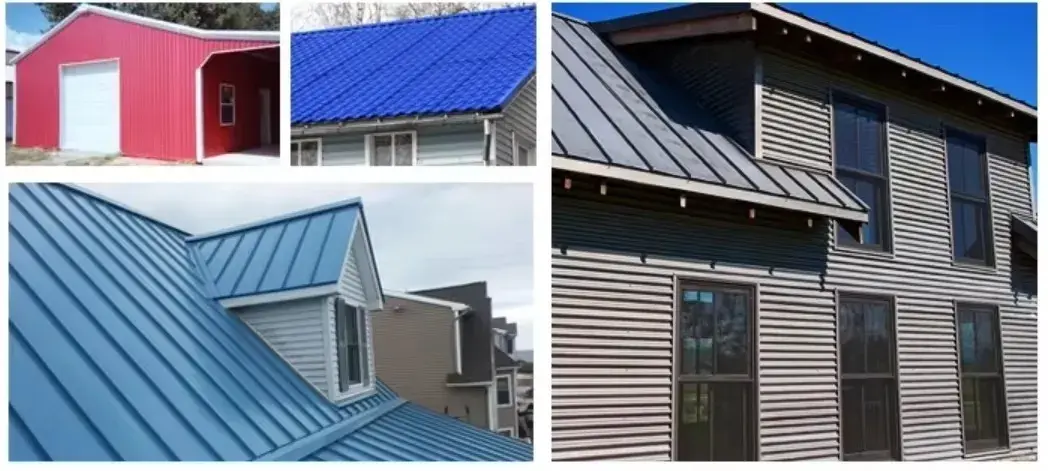
Building roofing system manufacturers represent the primary market segment. These companies produce standing seam panels, corrugated sheets, and architectural metal roofing for commercial and residential construction. Production volumes justify automation investment, and product consistency directly impacts market reputation.
Light steel structure manufacturers incorporate roof panel production alongside purlin and frame manufacturing. Integration of multiple roll forming lines creates vertical integration advantages, reducing dependence on external suppliers and improving project coordination.
International engineering firms and EPC companies sometimes establish temporary on-site fabrication facilities for massive projects in remote locations. Transportable roll forming equipment enables local production, eliminating logistics challenges and import duties while providing employment to local workers.
Metal building contractors with consistent volume increasingly bring production in-house rather than purchasing panels from suppliers. This vertical integration captures additional margin while guaranteeing material availability during peak construction seasons.
FAQ
1. Can one machine produce multiple roofing profiles?
Standard single-profile machines deliver maximum precision for one specific panel design. However, dual-layer machines accommodate two different profiles within the same footprint, while quick-change cassette systems allow switching between profiles in 2-4 hours. The investment decision depends on your product mix—high-volume single-product manufacturers benefit from dedicated single-profile machines, while custom fabricators serving diverse markets justify the additional cost of multi-profile capability. We typically recommend starting with your highest-volume profile on a dedicated machine before adding multi-profile flexibility.
2. What maintenance schedule keeps the equipment running reliably?
Daily maintenance includes cleaning metal shavings from cutting areas and checking hydraulic fluid levels—about 15 minutes total. Weekly tasks involve lubricating drive chains and inspecting roller alignment, requiring approximately one hour. Monthly maintenance adds detailed roller inspection for wear patterns and bearing noise assessment. Annual service includes complete roller removal for inspection, cutting blade sharpening or replacement, and electrical connection tightening. Following this schedule, quality machines operate 15-20 years before requiring major rebuilds. We provide detailed maintenance protocols and video tutorials to every customer.
3. How do you handle different material thicknesses and types?
Professional machines accommodate material thickness ranges through adjustable roller gaps and pressure settings. A typical machine configured for roofing applications handles 0.3mm to 0.8mm (26-gauge to 20-gauge) material without roller changes. Switching between galvanized steel and aluminum requires pressure reduction since aluminum's lower yield strength forms with less force. Pre-painted materials demand particular attention to roller surface finish and pressure distribution to prevent coating damage. The PLC system stores these parameters for each material type, enabling quick changeovers without trial-and-error adjustment.
4. What causes panels to twist or show waviness after forming?
Panel distortion typically stems from leveling issues or uneven forming pressure. If material enters the forming stations with residual coil curvature, that stress manifests as twist in the finished panel. The leveling unit requires adjustment to remove all coil memory. Waviness or "oil canning" in flat panel areas results from over-stressing the material in forming stations—reducing pressure or adding intermediate forming steps distributes the stress more evenly. Temperature variations between the material and machine can also contribute, which is why climate-controlled facilities produce superior results.
Ready to Transform Your Metal Roofing Production?
If you're evaluating metal wall panel machine suppliers for metal wall panel machine your next equipment investment, ZTRFM brings a decade of specialized expertise in cold roll forming technology. We've engineered solutions for building roofing system manufacturers facing efficiency bottlenecks, supported startups through their first production runs, and supplied standardized equipment to international EPC companies requiring global deployment capability. Our comprehensive approach includes not just machinery, but complete production line design, operator training, and ongoing technical support. Contact our team at zhongtuorollforming@gmail.com to discuss your specific profile requirements, production volume targets, and facility constraints—we'll develop a customized solution that optimizes your investment return.
References
1. Smith, J. & Anderson, K. (2021). Cold Roll Forming Technology and Applications in Modern Metal Construction. Industrial Manufacturing Press.
2. Peterson, R. (2020). "Material Behavior in Progressive Metal Forming Processes," Journal of Manufacturing Science and Engineering, Vol. 142, Issue 8, pp. 45-62.
3. Williams, D. (2022). Pre-Engineered Metal Building Systems: Design, Fabrication, and Installation Standards. Construction Industry Publications.
4. Chen, L. & Rodriguez, M. (2023). "Automation Integration in Sheet Metal Fabrication: Efficiency Analysis and ROI Modeling," International Journal of Production Research, Vol. 61, No. 4, pp. 1203-1221.
5. Thompson, E. (2019). Architectural Metal Panels: Specification Guide for Building Envelopes. Architectural Press.
6. Martinez, S. (2022). "Quality Control Protocols in Continuous Metal Forming Operations," Quality Engineering Quarterly, Vol. 34, No. 2, pp. 78-95.
_1750323743240.webp)