- English
- French
- German
- Portuguese
- Spanish
- Russian
- Japanese
- Korean
- Arabic
- Irish
- Greek
- Turkish
- Italian
- Danish
- Romanian
- Indonesian
- Czech
- Afrikaans
- Swedish
- Polish
- Basque
- Catalan
- Esperanto
- Hindi
- Lao
- Albanian
- Amharic
- Armenian
- Azerbaijani
- Belarusian
- Bengali
- Bosnian
- Bulgarian
- Cebuano
- Chichewa
- Corsican
- Croatian
- Dutch
- Estonian
- Filipino
- Finnish
- Frisian
- Galician
- Georgian
- Gujarati
- Haitian
- Hausa
- Hawaiian
- Hebrew
- Hmong
- Hungarian
- Icelandic
- Igbo
- Javanese
- Kannada
- Kazakh
- Khmer
- Kurdish
- Kyrgyz
- Latin
- Latvian
- Lithuanian
- Luxembou..
- Macedonian
- Malagasy
- Malay
- Malayalam
- Maltese
- Maori
- Marathi
- Mongolian
- Burmese
- Nepali
- Norwegian
- Pashto
- Persian
- Punjabi
- Serbian
- Sesotho
- Sinhala
- Slovak
- Slovenian
- Somali
- Samoan
- Scots Gaelic
- Shona
- Sindhi
- Sundanese
- Swahili
- Tajik
- Tamil
- Telugu
- Thai
- Ukrainian
- Urdu
- Uzbek
- Vietnamese
- Welsh
- Xhosa
- Yiddish
- Yoruba
- Zulu
What is the difference between PBR and R panels?
PBR panels and R panels are two different types of metal roofing shapes. PBR panels have a longer purlin supporting leg that makes them stronger and more weathertight than normal R panels. To make PBR panels, you need special tools, like a PBR roll former, which makes the exact rib shape needed for heavy-duty business and industrial uses where long-term performance and structural stability are very important.
Understanding PBR and R Panels: Basic Definitions and Applications
Roofing panels made of metal are the most important part of business and industrial buildings. PBR and R panels are two basic shape designs that meet different structural and aesthetic needs. It's important to understand these changes when choosing the right industrial tools and making project specs.
PBR Panel Characteristics and Design Features
PBR panels, which stand for "Purlin Bearing Rib," have a unique shape with high ribs that are usually 1.25 inches high and a bearing leg that sticks out on one side. Because of its unique shape, the panel can rest fully on the purlin structure, making a continuous seal that keeps water out and makes the structure very stable. The bigger rib spacing, which is usually 9 inches apart, helps the material hold more weight while keeping its efficiency.
To make the complicated shape, the manufacturing process needs precise making stations. Modern production lines use 19-station roller setups with 80 mm solid shafts made from high-grade 45# cast steel. This makes sure that the shape stays accurate over long production runs. Hard chrome coating is put on the rollers to protect the surface and keep the same size standards over thousands of linear feet.
R Panel Profile and Construction Applications
R panels have a basic curved form, and their ribs are usually straight and range in height from 0.75 to 1 inch. The design of regular ribs makes it a cost-effective choice for situations where structural needs are modest. When it comes to homes, light business buildings, and projects where looks are more important than maximum structural performance, these panels are the best choice.
Because R panels don't have as many complicated shapes, they can be made with fewer making tools. But the quality standards are still very high, especially when it comes to controlling the thickness of the material and keeping the top finish. Standard production works with material sizes ranging from 24 to 26. This gives you options for different projects while keeping costs low.

Core Differences Between PBR and R Panels: Dimensional and Functional Analysis
The main differences between PBR and R panels, and the PBR roll former used to produce them, are not just how they look; they also have different structural performance, fitting methods, and long-term longevity traits that have a direct effect on the success of a project and the costs of running it.
Structural Performance and Load Capacity
Because their ribs are higher and their shape is more strategic, PBR panels have better structural performance. The 1.25-inch rib height makes the section modulus much higher than in R panels. This lets the widths between the purlins be longer without lowering the displacement limits. PBR panels can span up to 5 feet between supports when subjected to normal wind loads, while gauge R panels of the same type usually only allow widths of 3.5 feet.
The longer bearing leg supports the purlin line all the way along, spreading the weight more evenly and lowering stress concentrations. This design benefit is especially useful in places with a lot of wind and snow, since the performance of the panels directly affects the safety and stability of the building and its occupants.
Installation Complexity and Weather Sealing
Different types of panels have very different installation processes. For example, PBR panels need to be aligned more precisely but offer better weather protection. The design that overlaps makes a layered link that naturally moves water away from the joint, making it less likely to leak even in bad weather.
R panels have easier overlap connections, but in serious situations, they may need more closing agents. The uniform rib design makes them easier to install quickly in simple situations. This makes them a good choice for projects with tight deadlines and reasonable performance needs.
Manufacturing Equipment Compatibility
The tools needed for production are very different for each type of panel. PBR roll former machines have special forming stations that make the complicated bearing leg shape while keeping the exact rib dimensions. The 350 mm H-beam structure and 20 mm welded steel support plates give the structure the strength it needs to form consistently at high production speeds.
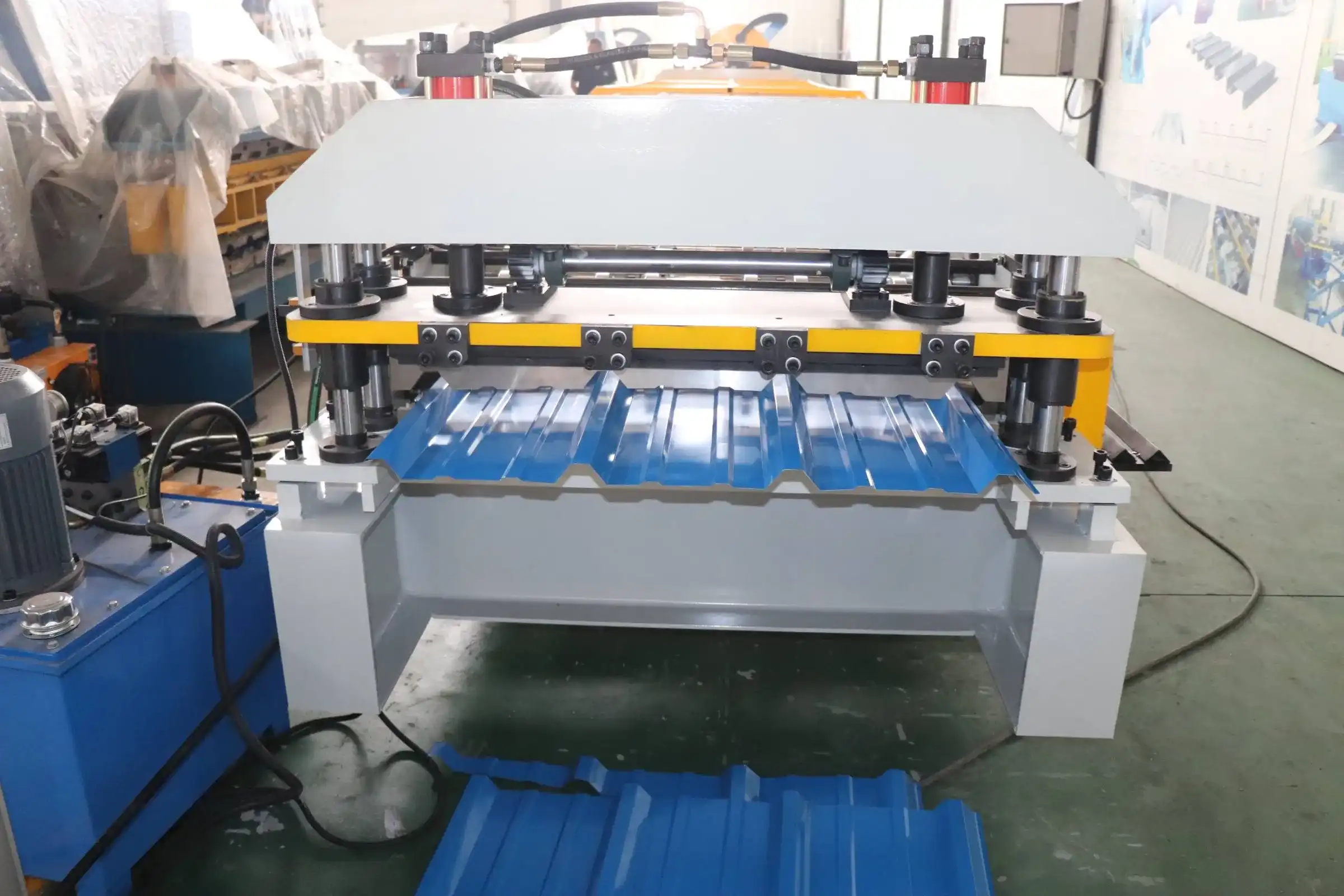
PBR Roll Former Technology: Key Features and Advantages over Traditional Methods
Modern roll forming technology has changed the way PBR panels are made, letting companies get more precise and efficient while also cutting costs and making the quality of their products better.
Mechanical Design and Engineering Excellence
Modern PBR roll former systems use complicated engineering to make it easier to shape panels with odd shapes. By deforming the metal in small steps, the 19-station roller set forms the metal slowly. That keeps the stuff from getting too stressed, which could hurt the coating or make tiny cracks in high-strength steels.
Two chains and gears make up the drive system. The rollers move at the same time at all of the making places. When machines work together, the material doesn't bend, and the panel width stays the same during production runs, even if the material gets harder or the production speed goes up or down.
In terms of science, these are the main benefits of advanced roll forming:
- Precision Tooling: Rollers made of high-quality 45# cast steel and hard chrome finishing last a long time and have a high-quality finish. They keep panels from getting scratched, and the tool lasts longer than 2 million linear feet of production.
- Automated Cutting System: The CR12MoV material cutting blades make clean, deformity-free panel ends while keeping the exact measurements needed for fitting in the field.
- Structurally Stable: The 350 mm H-beam frame design with built-in support plates keeps the machine from breaking at high speeds. This means that the panels are always of the same high quality, no matter how many are made.
These changes in technology have successfully fixed common production issues that used to happen a lot in metal panel making, such as odd panel sizes, surface flaws, and tools wearing out too quickly.
Quality Control and Production Efficiency
Advanced tracking systems keep an eye on important factors like roller orientation, cutting accuracy, and the regularity of material feed. Modern PBR roll formers have servo-controlled systems that keep the right forming pressure throughout production cycles and automatically adjust for changes in material thickness.
The hydraulic system doesn't get too hot during long production runs because it tracks temperature, and the roller bearings of the PBR roll former work well because of automatic greasing systems. These parts work together to let you make more than 15 meters per minute while keeping the measurements within ±1 mm of accuracy.

Decision-Making Guide: Choosing Between PBR and R Panels for Your Business Needs
Selecting the appropriate panel type requires careful analysis of project requirements, performance expectations, and long-term cost implications that extend well beyond initial material costs.
Structural Requirements Assessment
Project specifications should drive panel selection decisions, with structural load requirements serving as the primary determining factor. Buildings subject to high wind loads, significant snow accumulation, or extended purlin spacing typically benefit from PBR panel performance characteristics.
The enhanced structural capacity allows for reduced purlin quantities in many applications, potentially offsetting the higher panel costs through structural steel savings. Engineering analysis should evaluate the complete structural system to identify optimal panel specifications for each specific application.
Cost-Benefit Analysis and Lifecycle Considerations
Initial material costs represent only one component of total project economics. PBR panels typically command premium pricing compared to R panels, but the enhanced performance characteristics often justify the investment through reduced structural requirements and superior weather protection.
Installation labor costs may vary depending on crew familiarity with panel types and project complexity. The improved weather sealing capabilities of PBR panels reduce long-term maintenance requirements and potential leak-related repairs that can significantly impact building operating costs over time.
Equipment Investment and Manufacturing Considerations
Manufacturers must evaluate equipment capabilities when considering panel product mix decisions. PBR roll former machines require a higher initial investment compared to standard R panel equipment, but the premium pricing and growing market demand for high-performance panels often support the additional capital expenditure.
Production efficiency considerations include changeover time requirements, tooling costs, and maintenance complexity. Modern roll forming equipment offers quick-change capabilities that minimize production downtime when switching between panel profiles, enhancing manufacturing flexibility and market responsiveness.

Procurement Insights: Buying and Financing Your PBR Roll Former Machine
Strategic equipment procurement, including PBR roll formers, requires a comprehensive evaluation of supplier capabilities, financing options, and long-term support infrastructure to ensure successful implementation and sustained operational performance.
Supplier Evaluation and Technical Specifications
Equipment suppliers should demonstrate proven experience in roll forming technology with documented installation success across diverse industrial applications. Technical specifications must address critical performance parameters, including forming speed, material thickness range, and dimensional accuracy capabilities that align with market requirements.
Quality certifications, including ISO9001, CE compliance, and material traceability documentation, provide assurance of manufacturing standards and regulatory compliance. Suppliers with international delivery experience offer valuable insights into logistics coordination and installation support that can significantly impact project timelines.
Financing Strategies and Capital Planning
Equipment financing options range from traditional capital purchases to lease arrangements and performance-based payment structures. Large-scale manufacturers often benefit from bulk purchasing agreements that include spare parts inventory and extended warranty coverage.
Lead time considerations become critical for production planning, particularly during periods of high equipment demand. Establishing relationships with qualified suppliers before immediate equipment needs arise enables more favorable terms and reduces procurement risk during market volatility periods.
The investment analysis should encompass the total cost of ownership, including energy consumption, maintenance requirements, and operator training costs. Modern PBR roll former machines incorporate energy-efficient drive systems and simplified maintenance procedures that reduce operational expenses throughout the equipment lifecycle.

Conclusion
The choice between PBR and R panels fundamentally depends on project structural requirements, performance expectations, and long-term cost considerations. PBR panels offer superior structural capacity and weather protection through their distinctive bearing leg design, while R panels provide economical solutions for applications with moderate performance demands. Manufacturing considerations require careful evaluation of equipment capabilities, with specialized roll forming technology enabling precise panel production that meets demanding quality standards. Understanding these differences empowers procurement managers to make informed decisions that optimize project outcomes while balancing performance requirements with cost constraints.
FAQ
1. Can PBR and R panels be used interchangeably in construction projects?
PBR and R panels cannot be used interchangeably without considering structural implications. PBR panels provide superior load-bearing capacity due to their higher rib profile and extended bearing leg design, making them suitable for longer spans and higher wind loads. R panels work well for lighter-duty applications but may require additional structural support when substituted for PBR panels in demanding environments.
2. What maintenance differences exist between PBR and R panel installations?
PBR panels typically require less maintenance due to their superior weather sealing capabilities and structural stability. The extended bearing leg design reduces stress concentrations and minimizes panel movement under thermal cycling. R panels may require periodic inspection of overlap seams and occasional resealing in high-exposure applications, particularly in coastal or industrial environments.
3. How does production efficiency differ between PBR and R panel manufacturing?
Production efficiency varies significantly between panel types due to equipment complexity and forming requirements. PBR roll former machines typically operate at slightly reduced speeds compared to R panel equipment due to the complex forming process, but modern systems achieve production rates exceeding 15 meters per minute while maintaining precise dimensional accuracy essential for proper field installation.
Partner with ZTRFM for Advanced PBR Roll Forming Solutions
ZTRFM brings over a decade of specialized experience in designing and manufacturing precision PBR roll former equipment that delivers exceptional performance and reliability for demanding industrial applications. Our comprehensive approach combines cutting-edge technology with proven engineering solutions, enabling manufacturers to achieve superior product quality while optimizing operational efficiency and reducing total cost of ownership.
As a certified PBR roll former manufacturer, we provide complete turnkey solutions, including equipment design, installation support, operator training, and ongoing technical assistance backed by our global service network spanning over 150 countries. Our commitment to innovation and customer success has established ZTRFM as a trusted partner for manufacturers seeking competitive advantages through advanced roll forming technology.
Contact our technical team at zhongtuorollforming@gmail.com to explore how our customized solutions can enhance your production capabilities and market competitiveness through proven PBR roll former supplier expertise.

References
1. American Iron and Steel Institute. "Metal Building Systems Manual." 2023 Edition. Steel Construction Standards and Guidelines.
2. Metal Construction Association. "Technical Bulletin: Panel Profile Performance Characteristics." Industrial Roofing and Siding Applications, 2023.
3. Building Officials and Code Administrators International. "Structural Performance Standards for Metal Panel Systems." Commercial Construction Guidelines, 2023.
4. International Association of Roll Forming Engineers. "Advanced Manufacturing Techniques in Cold Roll Forming." Industrial Equipment Standards, 2023.
5. National Roofing Contractors Association. "Installation Standards for Metal Panel Roofing Systems." Professional Construction Practices, 2023.
6. Steel Manufacturing Institute. "Quality Control Procedures for Metal Building Components." Industrial Manufacturing Standards, 2023.
_1750323743240.webp)