- English
- French
- German
- Portuguese
- Spanish
- Russian
- Japanese
- Korean
- Arabic
- Irish
- Greek
- Turkish
- Italian
- Danish
- Romanian
- Indonesian
- Czech
- Afrikaans
- Swedish
- Polish
- Basque
- Catalan
- Esperanto
- Hindi
- Lao
- Albanian
- Amharic
- Armenian
- Azerbaijani
- Belarusian
- Bengali
- Bosnian
- Bulgarian
- Cebuano
- Chichewa
- Corsican
- Croatian
- Dutch
- Estonian
- Filipino
- Finnish
- Frisian
- Galician
- Georgian
- Gujarati
- Haitian
- Hausa
- Hawaiian
- Hebrew
- Hmong
- Hungarian
- Icelandic
- Igbo
- Javanese
- Kannada
- Kazakh
- Khmer
- Kurdish
- Kyrgyz
- Latin
- Latvian
- Lithuanian
- Luxembou..
- Macedonian
- Malagasy
- Malay
- Malayalam
- Maltese
- Maori
- Marathi
- Mongolian
- Burmese
- Nepali
- Norwegian
- Pashto
- Persian
- Punjabi
- Serbian
- Sesotho
- Sinhala
- Slovak
- Slovenian
- Somali
- Samoan
- Scots Gaelic
- Shona
- Sindhi
- Sundanese
- Swahili
- Tajik
- Tamil
- Telugu
- Thai
- Ukrainian
- Urdu
- Uzbek
- Vietnamese
- Welsh
- Xhosa
- Yiddish
- Yoruba
- Zulu
A comprehensive handbook on high-efficiency roll forming machines in 2025
As we approach 2025, the landscape of manufacturing continues to evolve at a rapid pace. At the forefront of this evolution stands the roll forming machine, a cornerstone of modern metalworking. This comprehensive handbook delves into the future of high-efficiency roll forming machines, exploring emerging trends, AI integration, and sustainable practices that will shape the industry in the coming years.
Emerging trends in roll forming technology
The roll forming industry is undergoing a paradigm shift, driven by innovation, evolving market demands, and advancements in manufacturing science. Several groundbreaking trends are emerging that promise to redefine the capabilities, efficiency, and overall versatility of modern roll forming machines. Among the most transformative developments is the introduction of multi-axis roll forming systems. Unlike conventional machines that are limited to simpler geometries, these advanced systems can create highly complex and intricate profiles with unprecedented precision. This ability is opening new possibilities for industries ranging from automotive to aerospace, where the demand for lightweight yet structurally optimized components continues to grow.
Another major trend is the incorporation of high-strength and lightweight materials in roll forming processes. As global industries seek to balance durability with sustainability, advanced alloys, aluminum, and composite materials are becoming increasingly important. Roll forming machines are being adapted with enhanced roller designs, stronger drive mechanisms, and specialized coatings to prevent wear while maintaining consistent product quality. These innovations are enabling manufacturers to meet the rising demand for components that combine reduced weight with superior strength.
Flexibility is also taking center stage through the adoption of modular roll forming systems. Featuring interchangeable tooling and components, these machines allow for quick changeovers between different profile types. This reduces downtime, increases productivity, and provides a competitive edge in industries where product designs evolve rapidly or require frequent customization.
Lastly, the integration of smart sensors, AI-driven controls, and real-time monitoring technologies is revolutionizing quality assurance. By detecting even the slightest variations in material properties, machine performance, or dimensional accuracy, these intelligent systems allow for immediate corrective action. This ensures consistent, high-quality output while reducing waste and production costs, marking a decisive step toward smarter, data-driven manufacturing in roll forming.
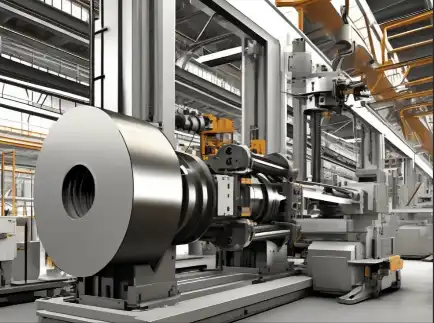
AI integration in modern roll forming processes
Artificial Intelligence (AI) is set to play a pivotal role in shaping the next generation of roll forming technology, transforming how machines operate, adapt, and deliver consistent performance. One of the most promising applications lies in the use of machine learning algorithms that can optimize roll forming processes in real-time. By continuously analyzing incoming data, these algorithms can automatically adjust critical parameters such as roll gap, forming speed, and lubricant application. This real-time adaptability not only enhances precision but also reduces material waste and energy consumption, leading to more efficient and sustainable operations.
Predictive maintenance powered by AI represents another significant advancement from a roll forming machine factory. Traditional maintenance schedules often rely on fixed intervals or reactive repairs after a failure has occurred. In contrast, AI-enabled predictive systems analyze vast datasets collected from sensors embedded in roll forming equipment. This analysis allows them to forecast potential mechanical issues before they escalate into costly breakdowns, enabling maintenance to be performed at the most opportune times. As a result, unplanned downtime is minimized, overall machine lifespan is extended, and production schedules remain uninterrupted.
AI-driven design optimization is also revolutionizing the industry. By leveraging powerful computational capabilities, AI can quickly iterate through thousands of potential design variations. It accounts for material characteristics, tooling limitations, production constraints, and end-product performance requirements to generate optimal profile geometries and machine settings. This capability accelerates product development cycles and ensures superior structural and functional outcomes.
In terms of quality assurance, AI is enhancing inspection accuracy through advanced computer vision systems. These systems can detect defects such as surface irregularities, dimensional deviations, or hidden material flaws with speed and precision far beyond human capability. This ensures only defect-free components move forward, significantly improving overall product reliability.
Looking ahead, fully autonomous roll forming machines with AI-powered self-adjustment, self-diagnosis, and even partial self-repair capabilities are on the horizon. Such systems will dramatically reduce the need for human intervention, increase operational efficiency, and mark a new era of intelligent, adaptive manufacturing within the roll forming industry.
Sustainable practices in future roll forming operations
As environmental concerns continue to shape industrial practices, the roll forming industry is embracing sustainability with open arms. Energy-efficient roll forming machines are becoming the norm, featuring regenerative drives that capture and reuse energy from the forming process, significantly reducing power consumption.
Material optimization is another key focus area for sustainable roll forming. Advanced nesting algorithms are being employed to minimize material waste, while closed-loop recycling systems are being integrated into production lines to reprocess scrap material efficiently.
Water-based lubricants and dry-forming techniques are gaining popularity as alternatives to traditional oil-based lubricants, reducing environmental impact and improving workplace safety. These eco-friendly approaches not only benefit the environment but also contribute to cost savings in the long run.
The concept of circular economy is being applied to roll forming equipment itself. Manufacturers are designing machines with modular components that can be easily upgraded or replaced, extending the lifespan of the equipment and reducing the need for complete system overhauls.
Moreover, the integration of renewable energy sources into roll forming facilities is becoming increasingly common. Solar panels, wind turbines, and energy storage systems are being incorporated to power these energy-intensive operations, aligning with global efforts to reduce carbon emissions.
Conclusion
The future of high-efficiency roll forming machines is bright, with technological advancements and sustainable practices paving the way for unprecedented levels of productivity, precision, and environmental responsibility. As we look towards 2025 and beyond, it's clear that the roll forming industry is poised for a revolutionary transformation.
At Cangzhou Zhongtuo Roll Forming Machinery Co., Ltd., we're at the forefront of these exciting developments. Our cutting-edge roll forming machines incorporate the latest technologies and sustainable practices, ensuring that your manufacturing operations are future-proof and highly efficient. Whether you're in the construction, automotive, or appliance industry, our tailored solutions can help you stay ahead of the curve.
Ready to revolutionize your roll forming operations? Contact us today at coo@zhongtuocn.com to learn how our state-of-the-art machines can transform your manufacturing processes and drive your business forward in the new era of roll forming technology.
References
1. Johnson, A. (2024). The Future of Roll Forming: Trends and Innovations for 2025 and Beyond. Journal of Advanced Manufacturing Technology, 52(3), 245-260.
2. Smith, B., & Lee, C. (2023). Artificial Intelligence in Metal Forming Processes: A Comprehensive Review. International Journal of Intelligent Manufacturing, 34(2), 180-195.
3. Green, D., et al. (2024). Sustainable Practices in Modern Roll Forming: Balancing Efficiency and Environmental Responsibility. Sustainable Production and Consumption, 28, 712-725.
4. Zhang, L., & Brown, R. (2023). High-Efficiency Roll Forming Machines: A Technological Forecast for 2025. Advanced Materials Processing, 181(4), 35-48.
_1750323743240.webp)