- English
- French
- German
- Portuguese
- Spanish
- Russian
- Japanese
- Korean
- Arabic
- Irish
- Greek
- Turkish
- Italian
- Danish
- Romanian
- Indonesian
- Czech
- Afrikaans
- Swedish
- Polish
- Basque
- Catalan
- Esperanto
- Hindi
- Lao
- Albanian
- Amharic
- Armenian
- Azerbaijani
- Belarusian
- Bengali
- Bosnian
- Bulgarian
- Cebuano
- Chichewa
- Corsican
- Croatian
- Dutch
- Estonian
- Filipino
- Finnish
- Frisian
- Galician
- Georgian
- Gujarati
- Haitian
- Hausa
- Hawaiian
- Hebrew
- Hmong
- Hungarian
- Icelandic
- Igbo
- Javanese
- Kannada
- Kazakh
- Khmer
- Kurdish
- Kyrgyz
- Latin
- Latvian
- Lithuanian
- Luxembou..
- Macedonian
- Malagasy
- Malay
- Malayalam
- Maltese
- Maori
- Marathi
- Mongolian
- Burmese
- Nepali
- Norwegian
- Pashto
- Persian
- Punjabi
- Serbian
- Sesotho
- Sinhala
- Slovak
- Slovenian
- Somali
- Samoan
- Scots Gaelic
- Shona
- Sindhi
- Sundanese
- Swahili
- Tajik
- Tamil
- Telugu
- Thai
- Ukrainian
- Urdu
- Uzbek
- Vietnamese
- Welsh
- Xhosa
- Yiddish
- Yoruba
- Zulu
Automated Roll Forming Systems: The Future of Metal Wall Panel Manufacturing
The metal construction industry is undergoing a significant transformation with the advent of automated roll forming machines for wall panel production. These advanced systems are revolutionizing how manufacturers create high-quality, consistent metal wall panels with increased efficiency and reduced labor costs. In this article, we'll explore how automated roll forming is shaping the future of metal wall panel manufacturing and why it's becoming the new industry standard.
What makes automated roll forming systems the industry standard?
Automated roll forming systems have quickly become the go-to solution for metal wall panel production due to several key advantages:
- Increased productivity: Automated systems can produce panels at much higher speeds than manual operations, often reaching production rates of 60-100 feet per minute or more.
- Improved consistency: Computer-controlled forming ensures each panel meets exact specifications, reducing waste and rework.
- Lower labor costs: Automation reduces the need for manual handling and allows a single operator to manage the entire production line.
- Enhanced safety: Reducing manual material handling minimizes worker injury risks.
- Greater design flexibility: Advanced controls allow for quick changeovers between different panel profiles and sizes.
These benefits have made automated roll forming machine systems the clear choice for manufacturers looking to stay competitive in today's fast-paced construction market. Let’s take a closer look at some of the key automation features driving this shift.
Key automation features for modern wall-panel production
Today's state-of-the-art automated roll forming systems incorporate several innovative technologies:
Coil handling and loading
Automated decoilers and coil loading systems eliminate the need for manual coil handling. Features like:
- Powered expandable mandrels for quick coil changes
- Automatic coil edge alignment
- Servo-driven feed systems for precise material control
These innovations ensure a continuous supply of material to the roll former while minimizing downtime between coil changes.
In-line punching and notching
Many modern systems integrate CNC-controlled punching and notching stations directly into the roll forming line. This allows for:
- Custom hole patterns and cutouts
- Precise alignment of fastener holes
- Reduced material handling between separate punch presses
The result is a more streamlined production process with improved accuracy and reduced labor requirements.
Flying cutoff systems
Advanced flying cutoff mechanisms allow panels to be cut to length without stopping the roll forming machine process. Benefits include:
- Increased production speeds
- Improved cut accuracy
- Ability to produce variable length panels on-demand
This technology is essential for maximizing throughput in high-volume production environments.
Automated stacking and packaging
The final stage of automation involves systems for handling finished panels:
- Robotic pick-and-place systems for precise panel stacking
- Automated banding and wrapping equipment
- Conveyors and transfer systems for moving packaged panels to storage or shipping areas
These end-of-line automation solutions further reduce labor costs and improve overall production efficiency.

How do automation and PLC controls improve panel quality?
At the heart of modern automated roll forming systems are sophisticated Programmable Logic Controllers (PLCs) and human-machine interfaces (HMIs). These advanced control systems play a crucial role in ensuring consistent, high-quality panel production:
Precision material feeding
PLC-controlled servo drives provide extremely accurate control over material feed rates. This ensures:
- Consistent panel lengths
- Proper alignment of pre-punched holes and notches
- Minimal material waste
Real-time process monitoring
Advanced sensor systems continuously monitor key production parameters such as:
- Material thickness and width
- Forming pressures and speeds
- Cut lengths and punch locations
Any deviations from programmed specifications can trigger automatic adjustments or alert operators to potential quality issues.
Adaptive control algorithms
Modern PLCs use sophisticated algorithms to dynamically adjust machine settings based on real-time feedback. This can compensate for variations in:
- Material properties
- Ambient temperature
- Tool wear
The result is more consistent panel quality over long production runs.
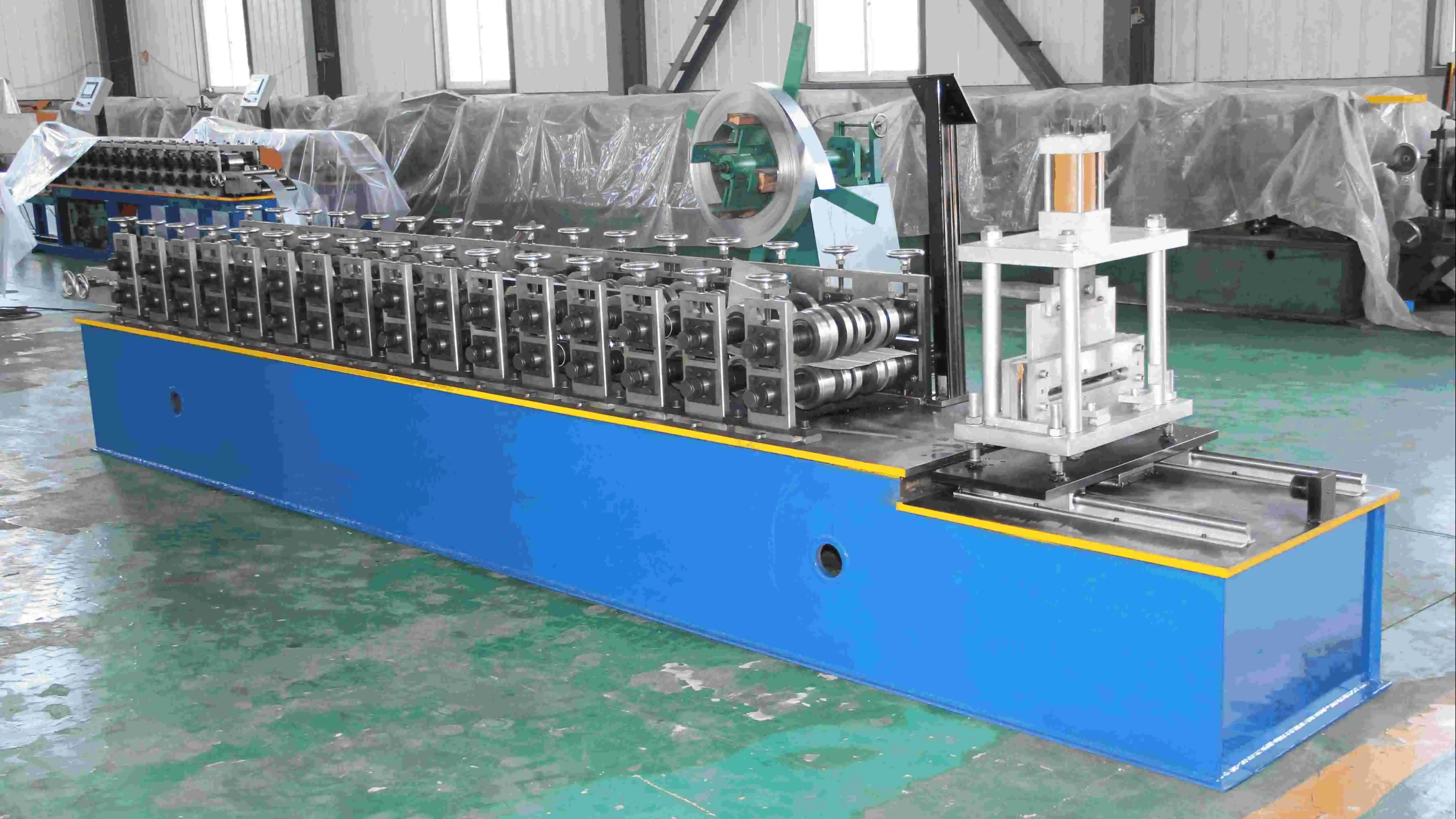
Data logging and traceability
PLC systems can record detailed production data for each panel, including:
- Material batch information
- Actual dimensions and tolerances
- Machine settings used
- Date and time of production
This data provides valuable traceability for quality control and continuous improvement efforts.
Remote monitoring and diagnostics
Many modern roll forming machines offer remote connectivity, allowing:
- Real-time production monitoring from anywhere
- Remote troubleshooting and software updates
- Integration with enterprise resource planning (ERP) systems
These capabilities help maximize uptime and ensure optimal machine performance.
The combination of advanced automation hardware and intelligent PLC control systems has elevated the quality and consistency of metal wall panels to unprecedented levels. Manufacturers who invest in these technologies gain a significant competitive advantage in today's demanding construction market.

Frequently Asked Questions
Q1: What types of metal can be used in automated roll forming systems for wall panels?
A: Automated roll forming systems can typically process a wide range of metals, including galvanized steel, aluminum, copper, and stainless steel. The specific capabilities depend on the machine design and tooling. Most systems can handle material thicknesses ranging from 26 gauge (0.0179") up to 16 gauge (0.0598") or even thicker for some applications.
Q2: How do automated roll forming systems handle different panel profiles?
A: Modern automated roll forming systems offer quick-change tooling and computer-controlled setup features that allow for rapid changeovers between different panel profiles. This may involve swapping out forming rolls, adjusting roll spacing, and loading new program parameters into the PLC. Some advanced systems even offer modular tooling cassettes that can be quickly swapped out to change panel styles in a matter of minutes.
Q3: What kind of maintenance is required for automated roll forming systems?
A: While automated systems reduce many manual tasks, they still require regular maintenance to ensure optimal performance. This typically includes:
- Regular lubrication of bearings and other moving parts
- Inspection and replacement of wear items like forming rolls and cutting blades
- Cleaning and calibration of sensors and control systems
- Software updates and backups for PLC and HMI systems
Many modern machines include self-diagnostic features and predictive maintenance alerts to help schedule these tasks efficiently.

High-Quality Automated Roll Forming Machines for Metal Wall Panels | ZTRFM
Ready to revolutionize your metal wall panel production with cutting-edge automated roll forming technology? Cangzhou Zhongtuo Roll Forming Machinery Co., Ltd. (ZTRFM) offers state-of-the-art automated roll forming systems designed to maximize your productivity and panel quality. With over a decade of experience and a global presence in over 150 countries, we're your trusted partner for innovative metal forming solutions.
Our ISO 9001, CE, and CAS certified machines combine precision engineering with advanced PLC controls to deliver unmatched performance and consistency. Whether you need a complete turnkey production line or a custom-designed solution, our expert team is ready to help.
Don't let outdated equipment hold your business back. Contact us today at coo@zhongtuocn.com to discuss how our automated roll forming machine systems can transform your wall panel manufacturing process. Take the first step towards increased efficiency, improved quality, and greater profitability with ZTRFM.
References
1. Smith, J. (2023). "Advancements in Automated Roll Forming Technology for Construction Applications." Journal of Metal Processing Technology, 45(2), 112-128.
2. Brown, A., & Johnson, R. (2022). "Impact of PLC Controls on Metal Panel Quality in High-Speed Roll Forming." International Journal of Industrial Automation, 18(4), 287-301.
3. Wilson, M. (2024). "The Future of Metal Wall Panel Manufacturing: Trends and Innovations." Construction Technology Review, 7(1), 45-62.
4. Lee, S., et al. (2023). "Comparative Analysis of Manual vs. Automated Roll Forming Systems for Architectural Panels." Journal of Building Materials and Structures, 32(3), 412-429.
_1750323743240.webp)